How to Start a Garden: A First-Year Plan With Costs
How to start a garden in one season: check your light first, build one small bed without digging, plant six easy crops. Costs from $60, step by step.
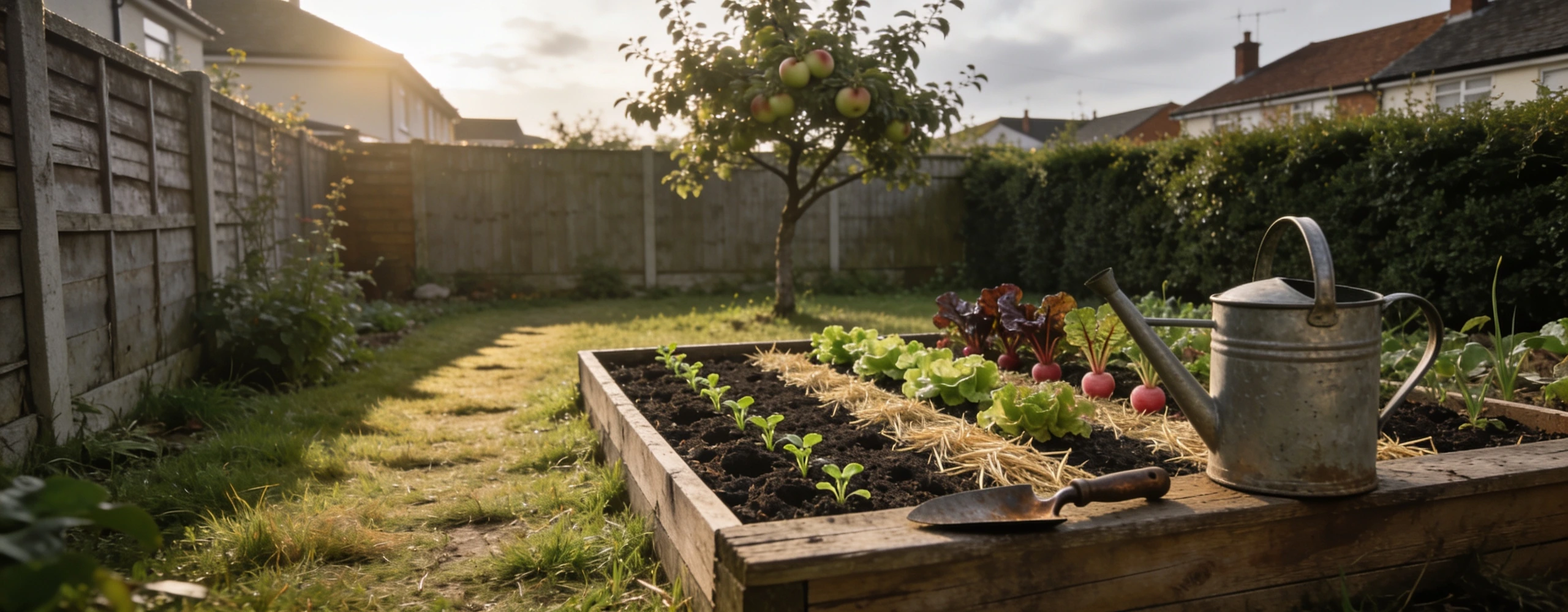
Time5 hr
Rough cost$150
You'll need
- Compost, about 250 litres for a 4 by 4 foot bed
- Plain brown cardboard, tape and labels pulled off
- Seeds or young plants for five or six crops
- Mulch: straw, bark, leaf mould or more compost
- Plant labels and a pencil
Tools
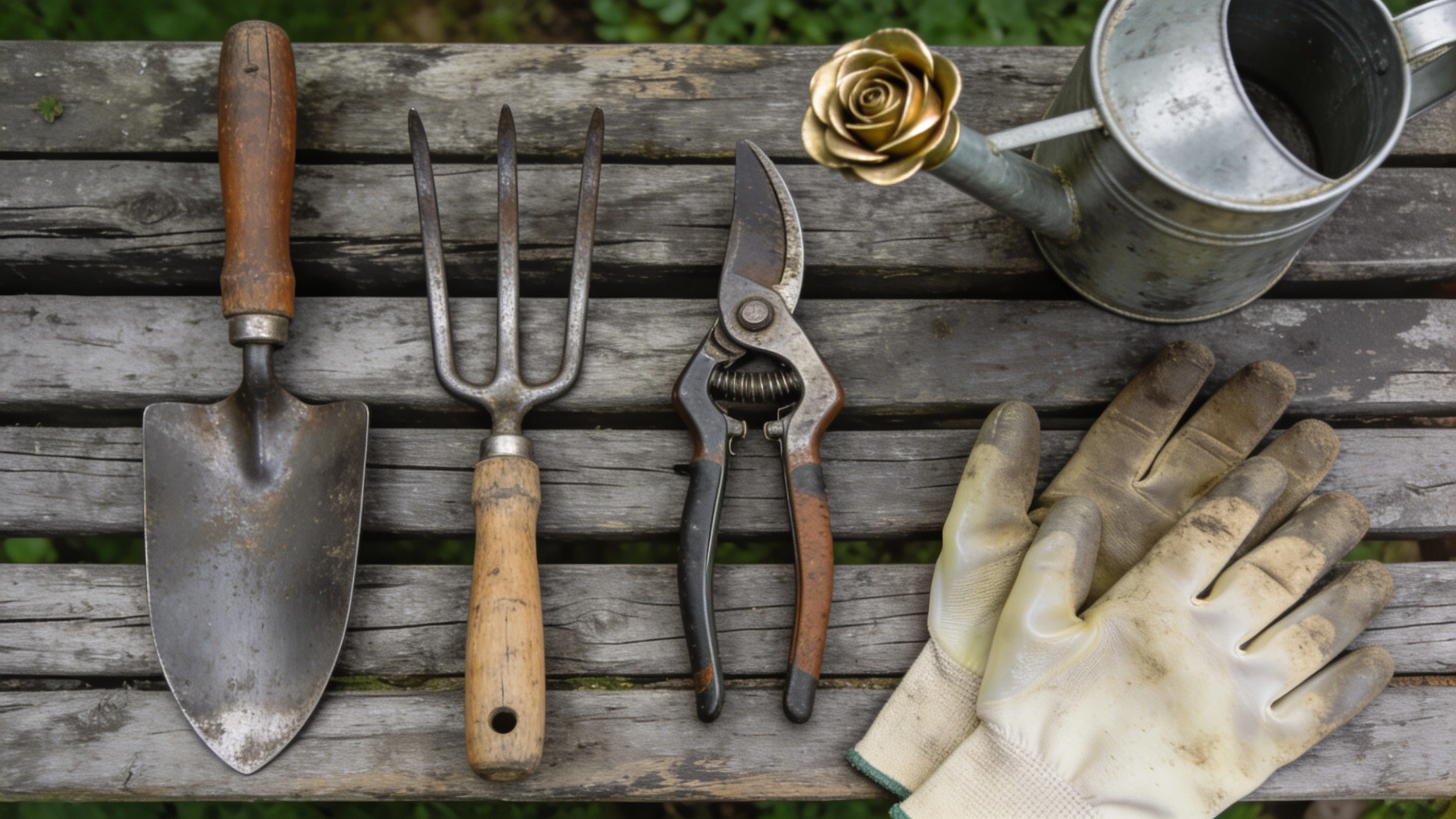
- Garden fork
- Hand trowel
- Watering can with a rose head
- Gloves that fit
Most first gardens fail for three reasons, and none of them is a lack of talent. Not enough sun. Too much ground taken on at once. Soil nobody fed before planting into it. Sort those three out and plants mostly get on with it, because growing is what they do.
The short answer
How to start a garden, in order. Check how much sun your spot gets before you buy anything. Build one bed about 4 feet square by laying cardboard over the grass and piling 6 to 8 inches of compost on top. Plant radish, lettuce, bush beans, chard and one courgette. Water deeply, cover the soil with mulch, and look at it every day.
That is the whole plan. The rest of this page is the detail, what it costs, and where people go wrong. If you mainly want to grow food, our guide to planning a first vegetable bed goes further on what to plant.
Step 1: Check how much sun the spot gets#
Sun is the one thing you cannot fake. You can improve soil. You can carry water. You can buy a better trowel. You cannot make more light.
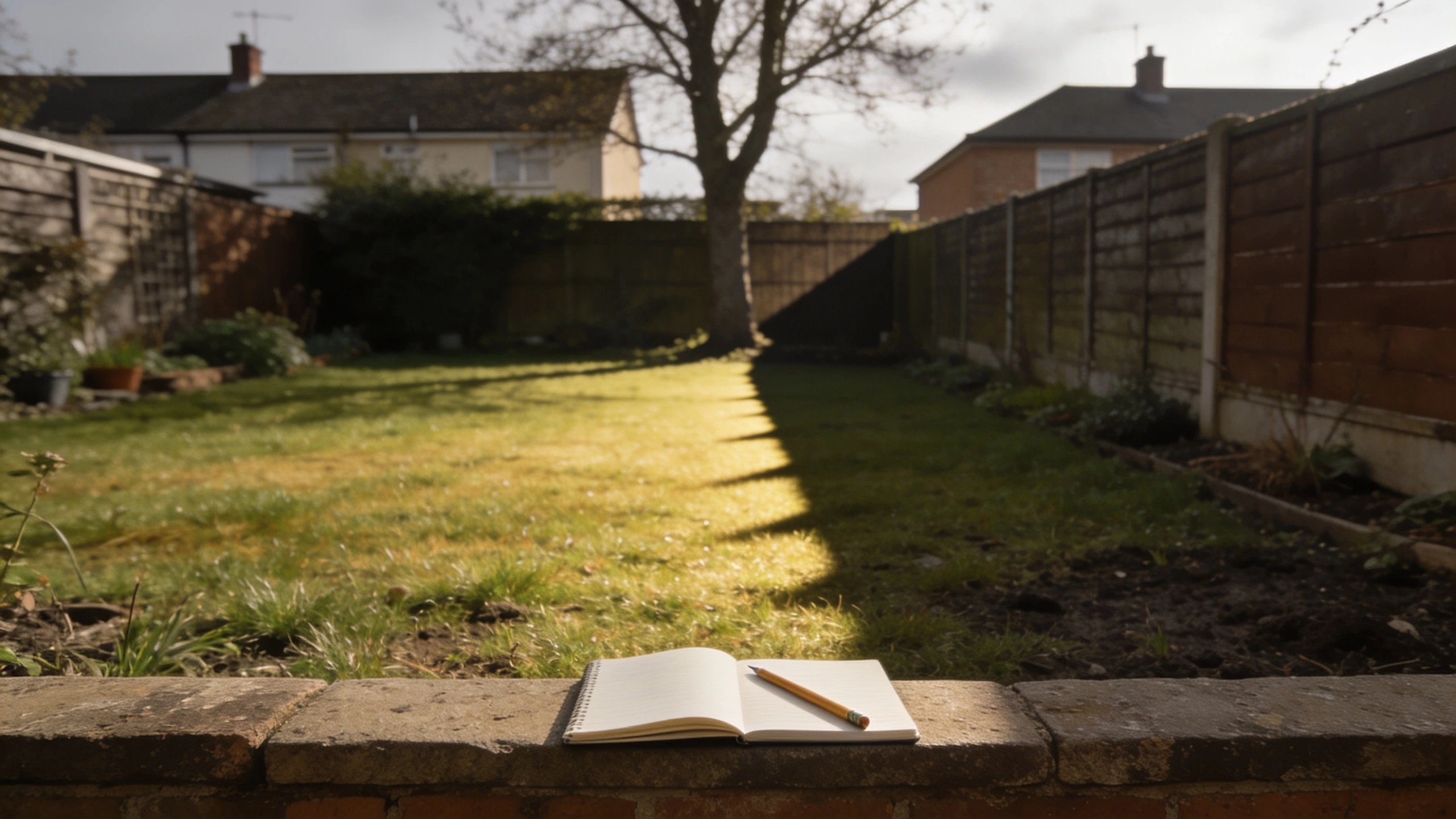
So pick one clear day and check the spot every couple of hours. Write down whether it is in sun or shade. It takes no effort and it changes what you buy.
Here is why it matters more than it sounds. A south-facing garden with a big tree next door can get less sun than an east-facing one with open sky. Which way the garden faces is a poor guide. Only the hours count.
| Hours of summer sun | What will grow well | What to skip |
|---|---|---|
| 6 or more | Tomatoes, peppers, chillies, courgettes, beans, strawberries, herbs | Not much |
| 4 to 6 | Salad, chard, kale, spinach, beetroot, spring onions, bush beans | Peppers, aubergine, melon |
| 3 to 4 | Salad leaves, chard, spinach, mint, parsley, chives | Anything that makes fruit |
| Under 3 | Mint, parsley, ferns, shade plants | Most vegetables |
Those bands are the ones used in general growing advice. They are not readings taken in your garden, so treat them as a starting point.
Now the honest bit. If your only spot gets three hours of sun, this guide will not get you a ripe tomato. It will get you very good salad. Salad you cut yourself for two months beats a tomato plant that flowers and then sulks. Pick the crop to fit the light, not the other way round.
In the United States you can look up your frost dates on the USDA Plant Hardiness Zone Map. In the UK, the Royal Horticultural Society advice pages do the same job.
Step 2: Make one bed, and make it small#
The best guess at whether someone is still gardening in three years is whether year one was small enough to work.
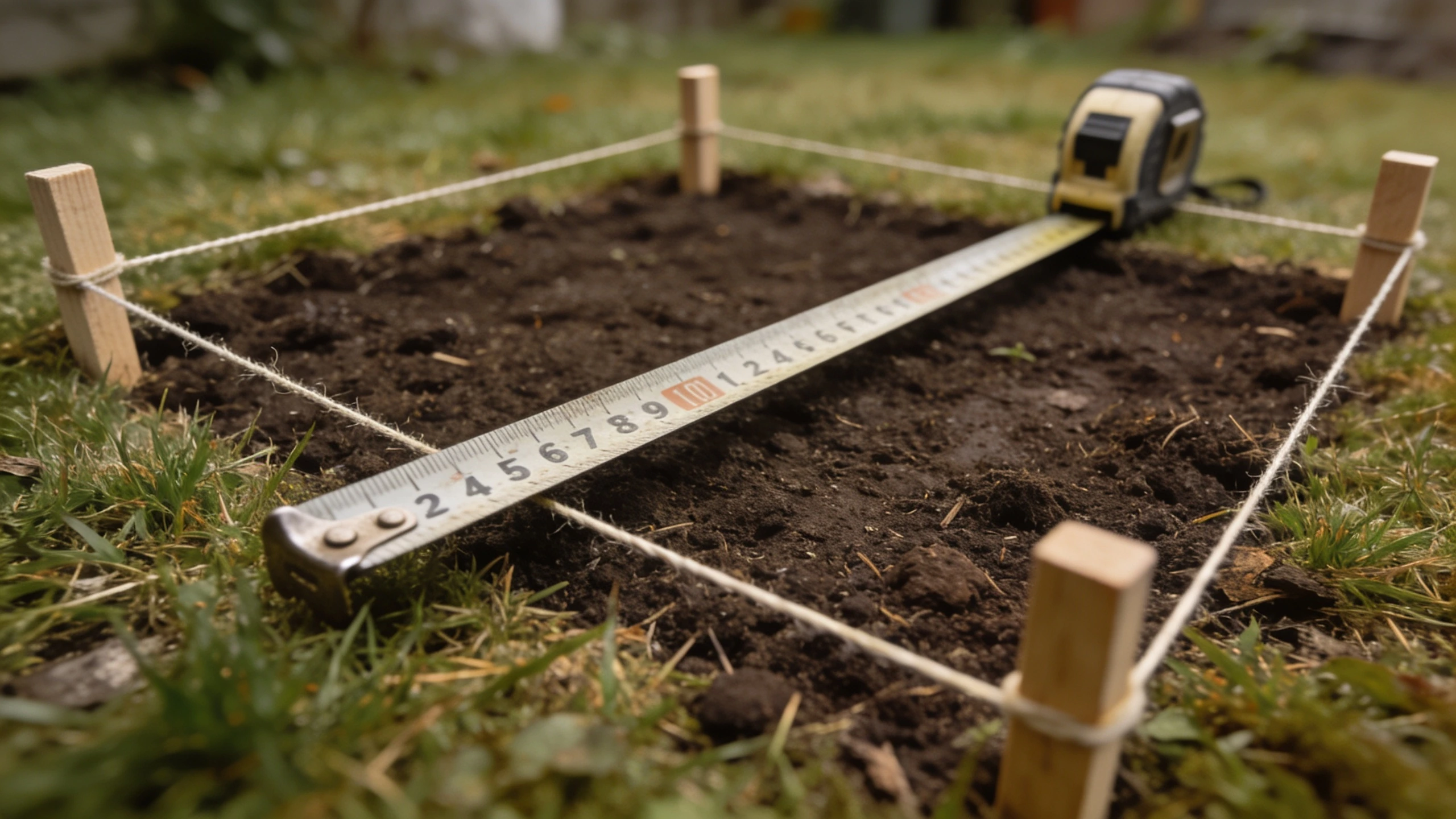
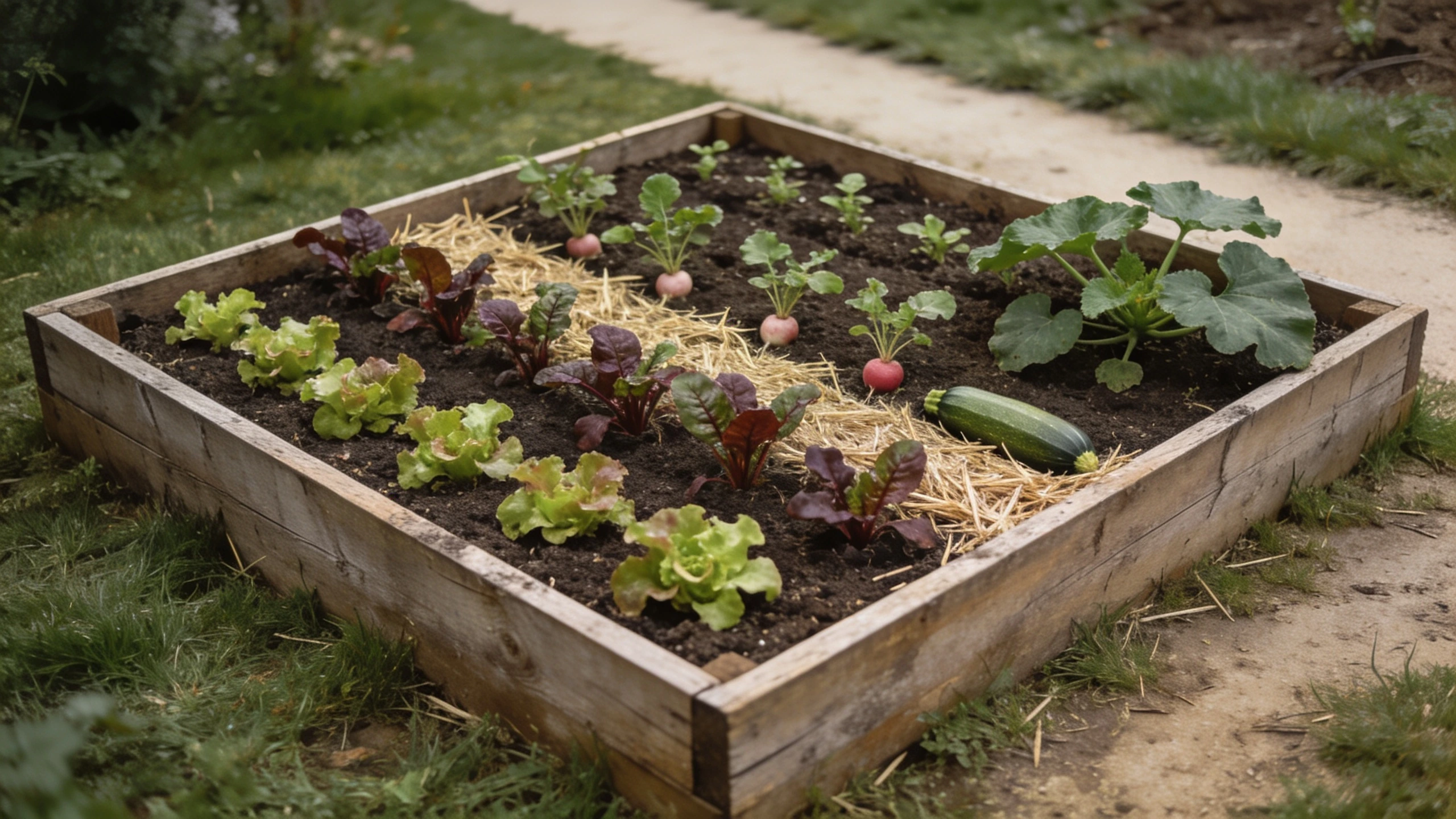
One bed of 4 by 4 feet gives you 16 square feet. Planted sensibly, that is real food: salad you cut a few leaves at a time for two months, forty or so radishes, a few pounds of beans, chard until the frosts, and more courgettes than you asked for.
It also takes about twenty minutes a week once planted. Four beds take eighty. That is the gap between a hobby and a chore.
Four feet is not a random number. It is about twice a comfortable kneeling reach, so you can work the whole bed from the edges. Stand on the soil and you squash it, which undoes the thing you just paid for. If the bed sits against a wall and you can only reach one side, make it 2 feet wide instead. Our notes on bed sizes and path widths cover the rest.
Step 3: Build on top of the ground, not into it#
You do not need to dig. Building on top is faster, kinder to your back, and it leaves the soil in one piece.
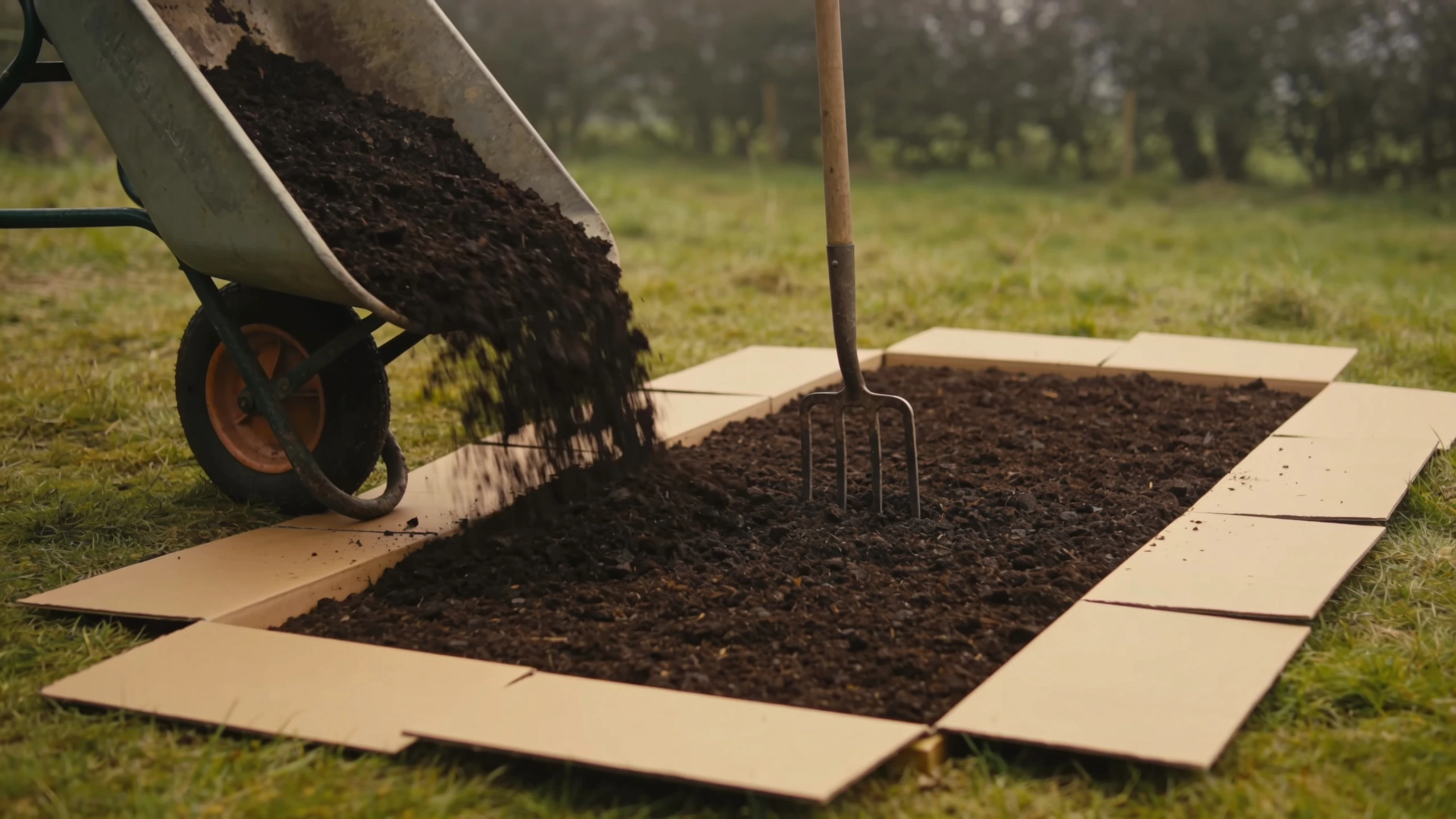
- Mow or flatten whatever is growing. Leave it there. It feeds the soil as it rots.
- Lay plain brown cardboard over the whole area. Overlap the edges by about 4 inches so nothing grows up through the gaps. Pull off any tape, staples and shiny labels.
- Soak the cardboard.
- Pile 6 to 8 inches of compost straight on top.
- Add edging if you want it neat. Untreated timber, scaffold boards or a kit all work. That is for looks, not for the plants.
- Plant into the compost. Roots push down through the softening cardboard within weeks.
One thing to watch. If you cannot push a fork more than an inch or two into the ground, the soil below is packed hard. Push the fork in and rock it back and forth to open it up. Do not turn it over. Then lay the cardboard.
Where does the money go? Compost, mostly. A 4 foot bed at 6 inches deep needs about 250 litres, and small bags from a garden centre are the dear way to buy it.
Loose compost from a bulk supplier, or green waste compost from your council, often costs about a third as much for the same amount. Buying compost loose is the biggest saving open to a new gardener.
The reason for not digging comes from soil science, not tradition. The USDA soil health pages explain how leaving soil alone keeps its structure, so water soaks in instead of running off. Once your bed is going, making your own compost stops the yearly bill.
Step 4: Pick six things that forgive you#
Easy crops have three things in common. They sprout reliably, they cope with patchy watering, and they show you something within weeks.
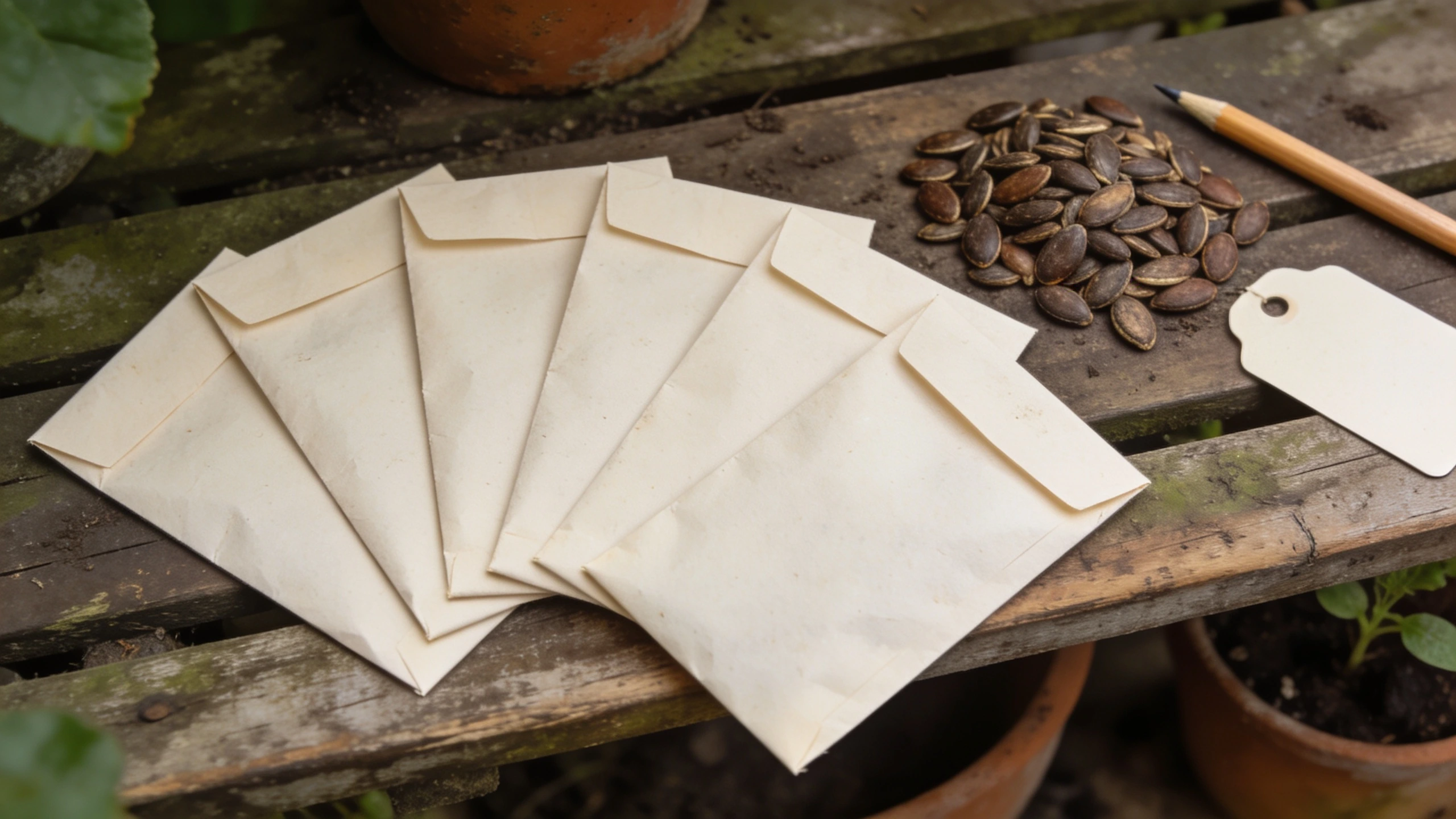
Plant these:
- Radish. Sprouts in four to seven days, ready to eat in about 25. Nothing else proves this fast that it works.
- Lettuce and loose salad leaves. Cut a few leaves at a time and they keep growing for two months.
- Bush beans. No canes needed, heavy crops, and they feed the soil while they grow.
- Chard. Puts up with heat, neglect and light frost. Still going when everything else has stopped.
- Spring onions. Sow them thinly, pull them as you want them.
- One courgette plant. One. Two people cannot eat what two plants produce.
Leave these for later: cauliflower, celery, aubergine and melon. They want steady warmth, water and feeding, and when they fail you get nothing rather than less. Sweetcorn and brussels sprouts eat a lot of space for one picking.
Buy young plants for anything you only need one or two of, like the courgette. Sow seed for anything you want lots of, or want again and again, like radish and salad. A tray of six courgette plants is money and space wasted when you need one.
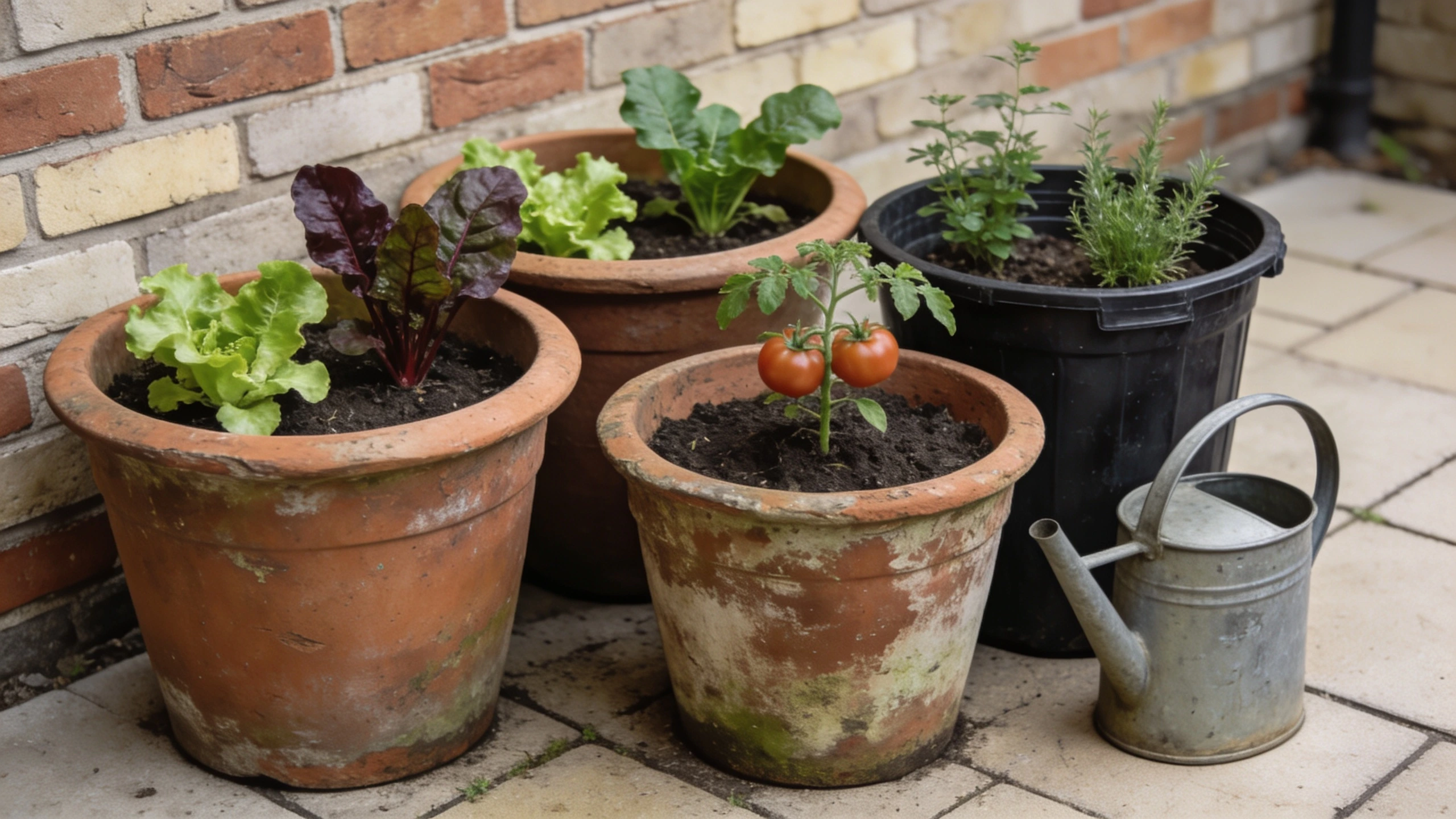
Step 5: Space them properly#
This is the instruction nearly every beginner quietly skips, and it costs the most.
A seedling looks silly at the right spacing. Six weeks later, full grown, it does not. Crowded plants fight each other for light and water, stay small, dry the bed out faster, and hold damp still air around their leaves. Damp still air is exactly what mildew wants.
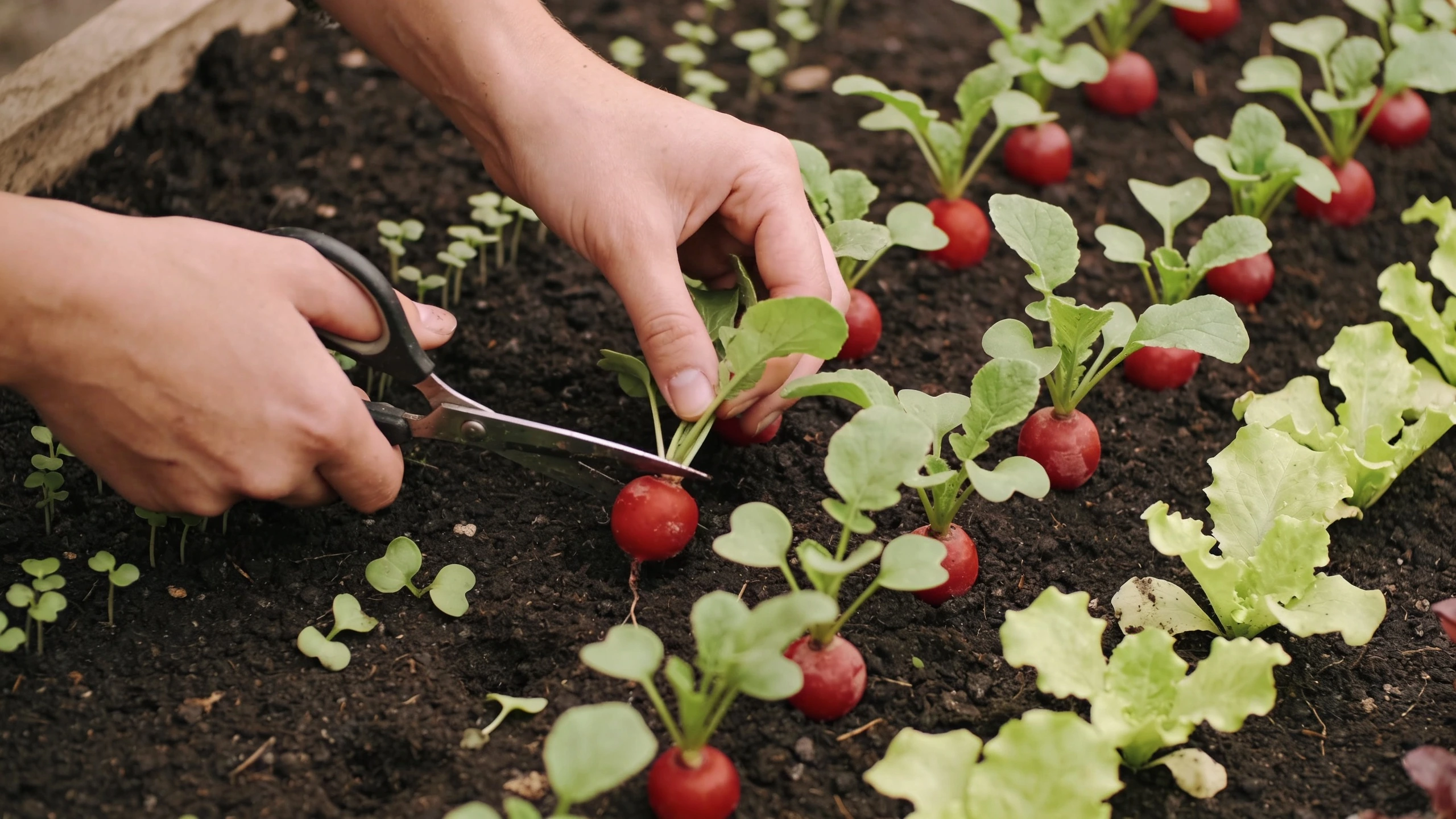
Two things help.
Sow a short row every two or three weeks instead of the whole packet at once. Otherwise all your radish and salad is ready in the same week, and nobody eats forty radishes in a week.
Thin with scissors, not fingers.
Sowing into cold soil is the other big waste of seed. It rots instead of sprouting. As rough minimums: peas and broad beans from about 40F or 5C, carrots and beetroot from 45 to 50F or 7 to 10C, beans and courgettes from 60F or 15C, tomatoes and squash from 65F or 18C. A soil thermometer costs a few pounds and takes the guessing out. Your local extension service, such as Oregon State Extension gardening or Minnesota Extension yard and garden, lists sowing dates for your area.
Step 6: Water deeply, and less often#
A quick splash every evening only wets the top inch. Roots grow where the water is, so they stay up there, in the layer that dries out first and gets hottest. You have made the plant depend on you.
Water deeply and less often and the roots go down, into cooler soil that holds its moisture. Those plants survive a hot weekend you did not plan for.
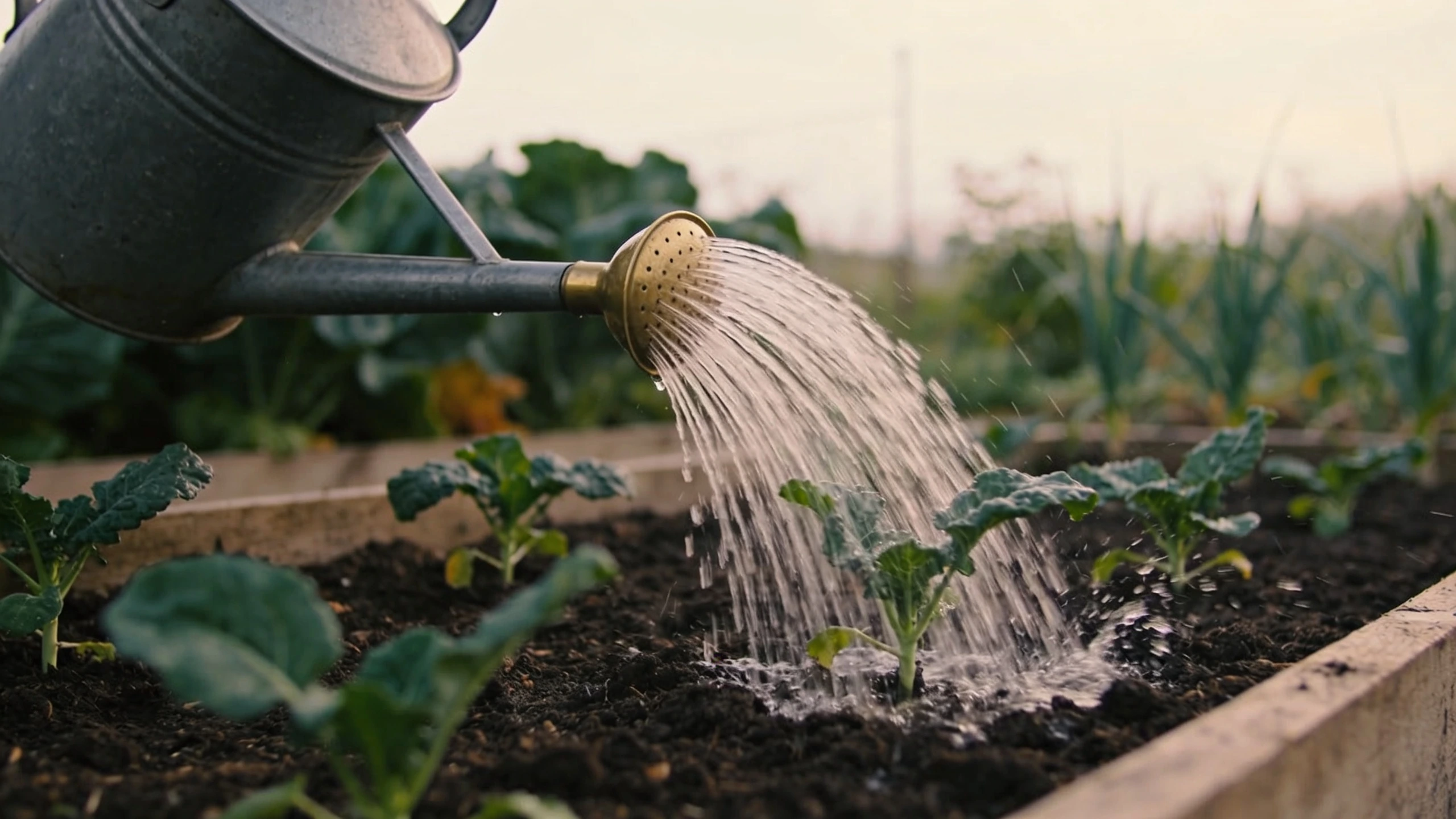
Push a finger two inches into the soil. Dry down there means water. Damp means wait. Do that instead of watering on a fixed day, because the surface tells you almost nothing.
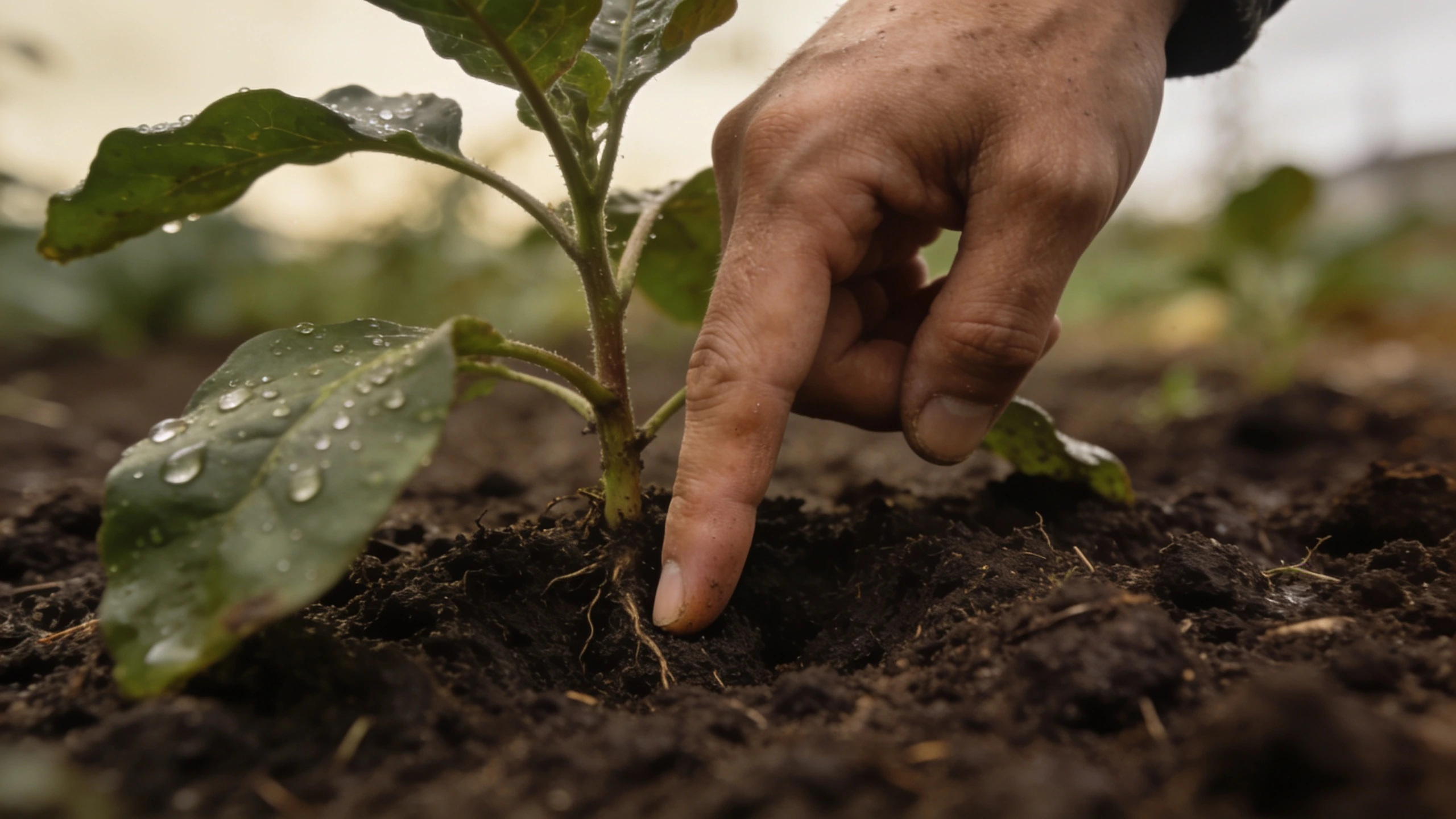
When you do water, aim to get it about six inches down. Morning is best, because less of it dries off and the leaves dry as the day warms up.
Pots are a different job. They hold no spare water, so a pot in full summer sun often needs watering every day, and a hanging basket twice. Water until it runs out of the bottom every time. Watering halfway wets the top inch and leaves the roots dry. Our guide to watering deeply rather than daily has the amounts and a hot weather plan.
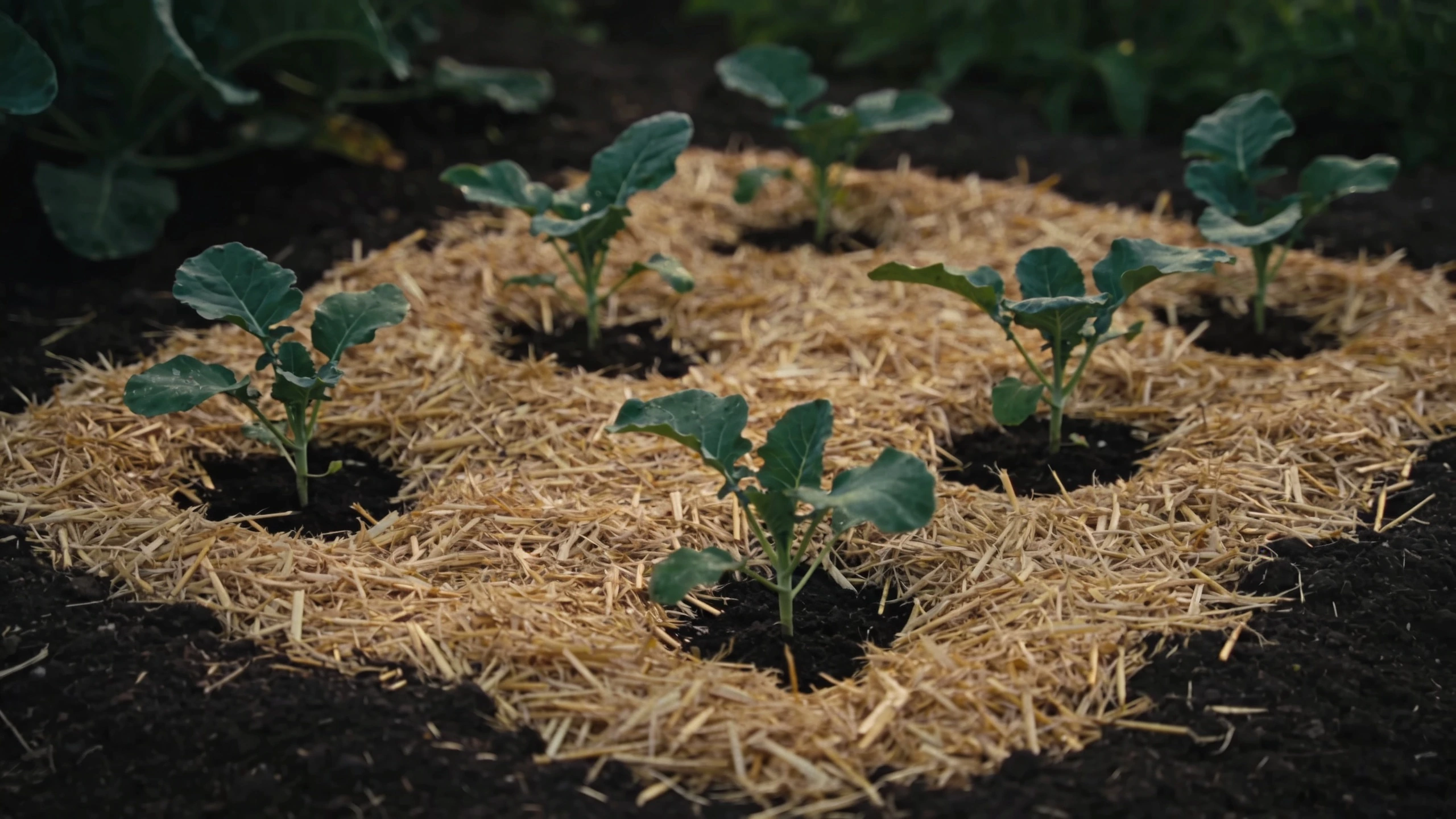
Then mulch. Two inches of straw, bark, leaf mould or compost over the bare soil stops a lot of water drying off, and stops most weed seeds sprouting. Put it on damp soil, never dry, and leave a small gap around each stem.
Step 7: Five minutes a day is the real skill#
Good gardeners are not doing anything clever. They are looking.
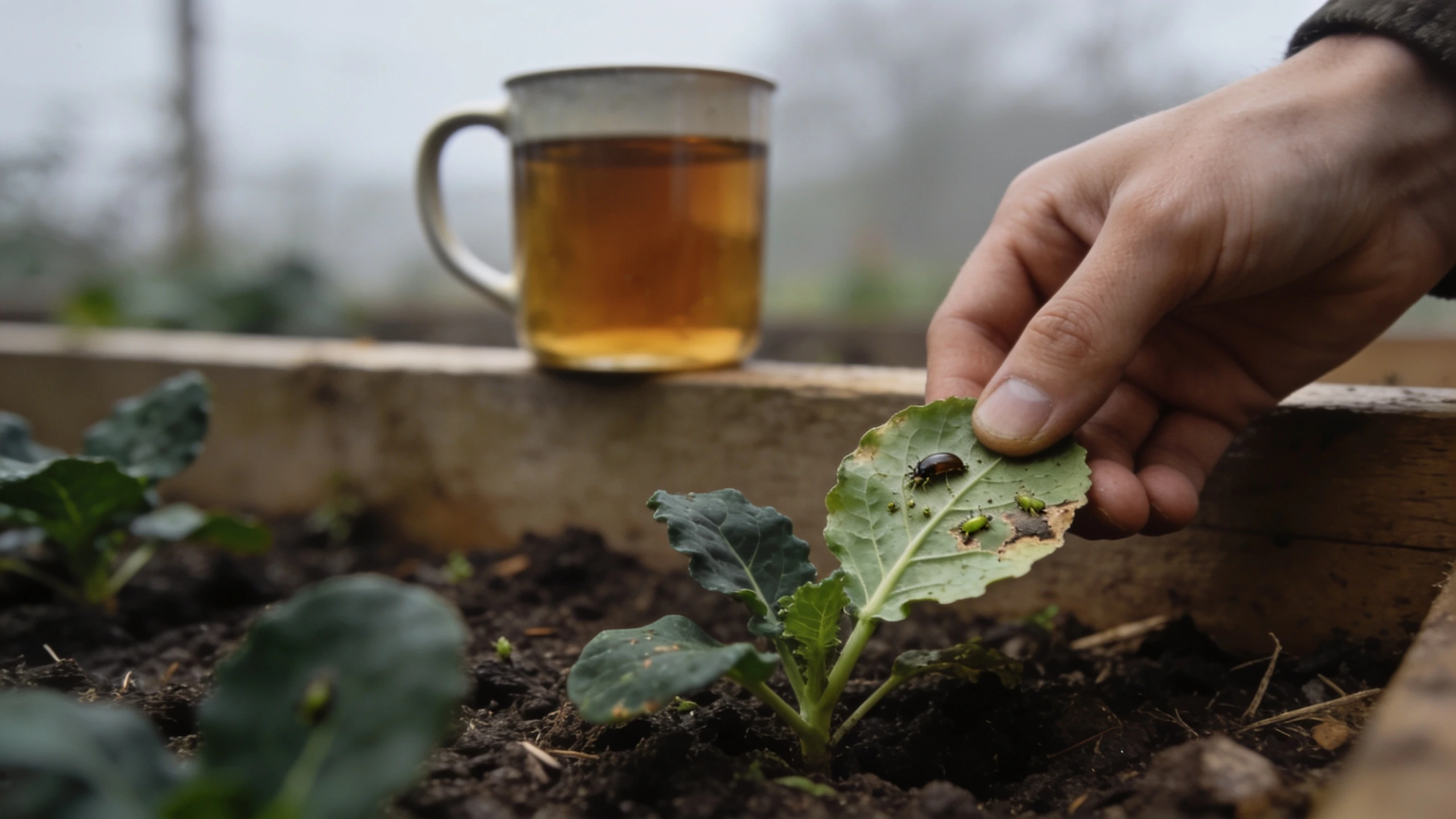
Slugs, aphids, the first spots of mildew, a drooping plant, a lettuce about to run to seed. Every one of those is easy on day one and hard on day ten. Walk round with a cup of tea. That is it.
It is also how you learn your own garden, which no guide can tell you. Where the frost sits. Which corner dries out first. Whether the slugs come from the fence or the compost heap.
How to start a garden on a budget#
| Item | Cheapest that works | Comfortable |
|---|---|---|
| Compost, about 250 litres | $25 loose or council green waste | $45 in bags |
| Edging | $0, none needed | $30 timber or scaffold boards |
| Cardboard | Free | Free |
| Seed, five or six crops | $12 | $20 |
| Young plants, one or two | $6 | $12 |
| Forged hand trowel | $15 | $30 |
| Hand fork | $12 | $25 |
| Secateurs | $0, not needed yet | $30 |
| Watering can with rose head | $12 | $30 |
| Gloves | $8 | $14 |
| Mulch | Free, grass clippings or leaves | $15 straw |
| Total | about $90 | about $250 |
Rough prices as of August 2026, based on what garden centres and builders' merchants normally charge. They are not quotes from named shops, so check before you buy. Compost and plants both jump in price in spring.
If you already have pots and a watering can, the real floor is nearer $60: compost, seed and a trowel. Our list of the five tools worth buying first says what to spend on and what to skip.
Mistakes people make in a first garden#
Picking the spot because it is handy. People put a bed near the back door or out of sight. You will happily walk thirty feet to a bed that is producing food, and ignore one three feet away that is not.
Taking on too much. Big plans in March turn into guilt in July. The far half gets abandoned, and the weeds there seed into the half you still care about.
Planting into poor soil. Compost is not a top-up here. On a new bed it is the stuff the roots live in.
Watering little and often. It feels caring. It gives you shallow roots and weak plants.
Ignoring the spacing. Crowding costs you food and invites disease.
Feeding too soon. New compost has plenty in it. Extra feed on top gives you soft sappy growth, and aphids find that first.
When this plan does not apply#
Some gardens need different advice, and it is better to know now.
If the soil might be polluted, which is worth thinking about on an old industrial site or near old painted buildings, do not grow food in the ground. Use raised beds with a liner and bought-in soil, and get the soil tested first.
If you are on a roof or a balcony, weight is a real limit. Wet compost weighs about 700 kg per cubic metre, so a row of big planters is a serious load. Check your building rules before you commit, and read container gardening on a balcony for the rest.
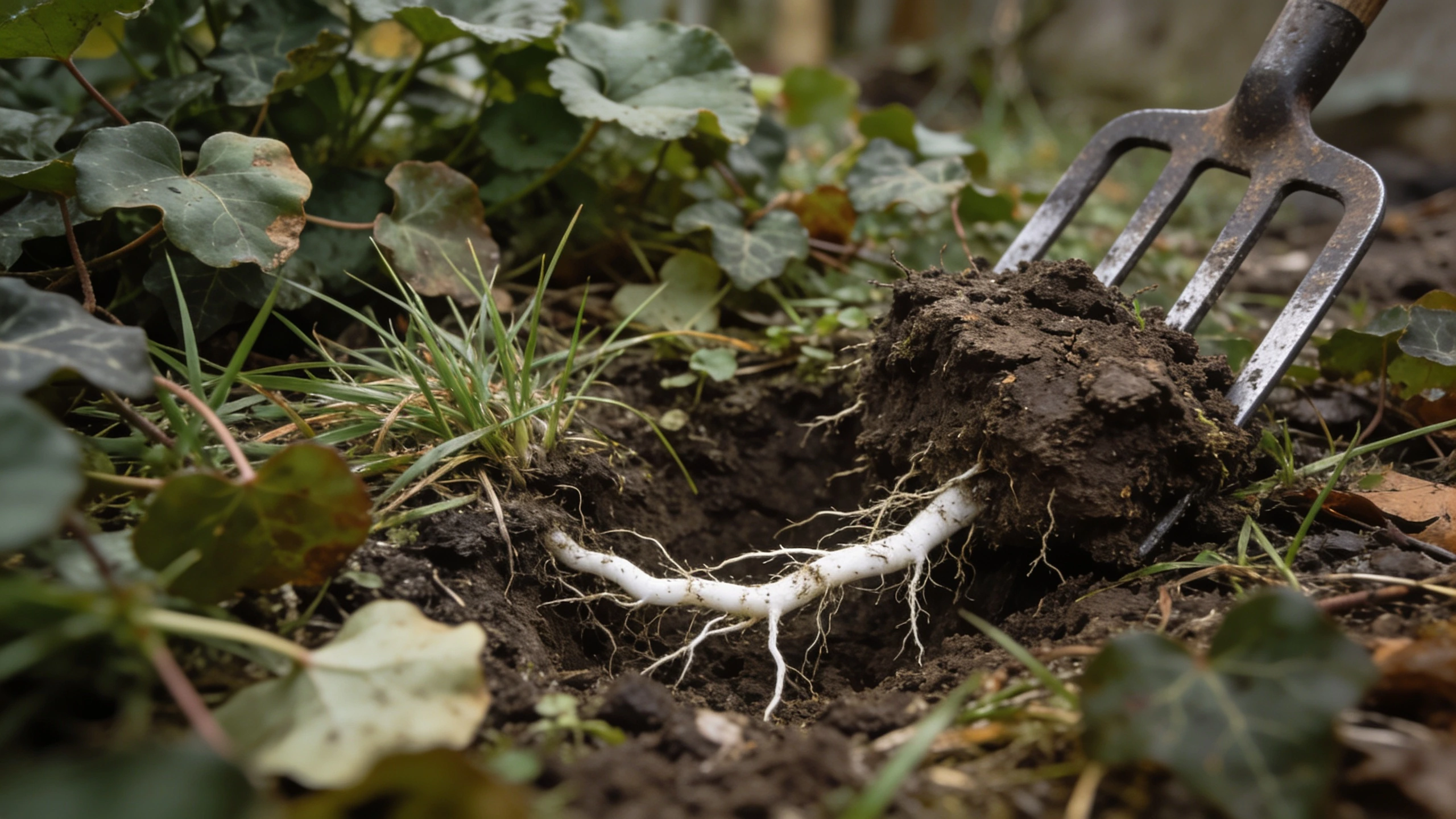
If bindweed, ground elder or Japanese knotweed are already there, cardboard will not hold them. Knotweed also comes with legal rules in the UK and needs a professional.
If deer or rabbits can get in, fence first. Plant before you fence and you can lose the lot in one night.
And if kneeling is hard, build the bed 30 to 36 inches high so you can work standing up. Decide that before you fill it, not after.
How we know this#
No original testing sits behind this guide, and it would be wrong to pretend otherwise. What is here is general growing advice, checked against extension service publications, the Royal Horticultural Society and USDA soil and frost data, all linked above.
Where a number is a rough band rather than a reading, the text says so. The cost table is an estimate and is labelled as one. If something here does not match your garden, tell us. Our editorial policy explains how corrections work.
Bottom line#
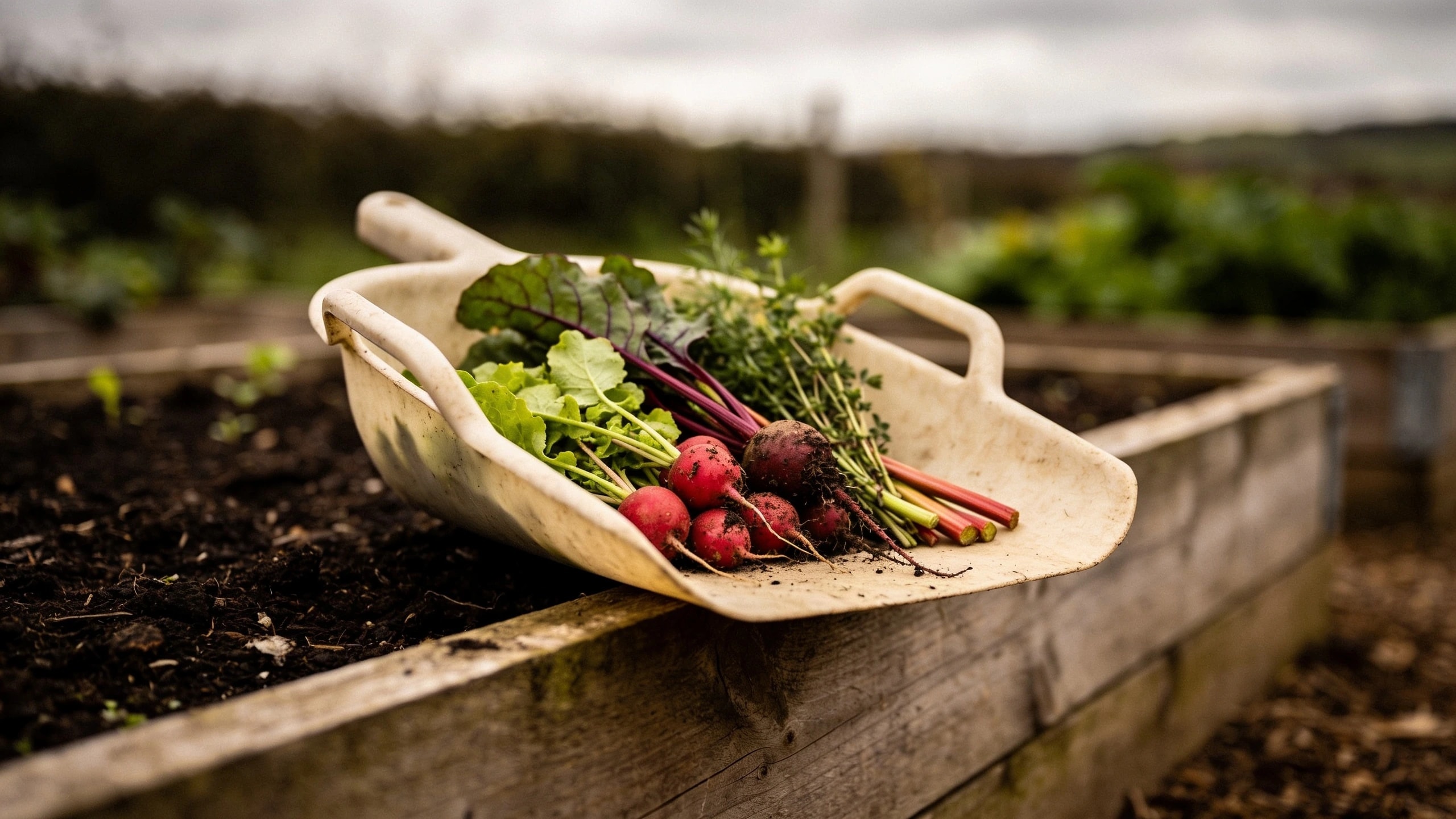
Build one bed, not four. Put it where the light is, even if that spot is not handy, and count the sun hours before you spend a penny. Lay cardboard, add six to eight inches of compost, and plant radish, lettuce, beans, chard, spring onions and one courgette.
Treat year one as a year of finding out rather than a harvest. You are learning how much sun you really get, how much time you really have, and what your garden likes. Expect one of the six to let you down.
Then make it bigger in year two, when you know all three answers.
Frequently asked questions
How do I start a garden if I have never grown anything?
Start with one bed about 4 feet square, in the sunniest spot you have. Lay cardboard over the grass, add 6 to 8 inches of compost on top, then plant radish, lettuce, bush beans, chard and one courgette. Water deeply twice a week and cover the soil with mulch. That is a whole first year, for under $150.
How much sun does a garden need?
Six hours of direct summer sun for anything that makes fruit, which means tomatoes, peppers, courgettes and beans. Three to five hours is fine for salad leaves, chard, kale, beetroot and most herbs. Under three hours, stick to mint, parsley and shade plants. Count the hours on a clear day instead of guessing.
What is the best month to start a garden?
Early spring is easiest, because the soil is warming up and a long season is ahead of you. Autumn is the better time to build the bed, since winter lets the compost settle and the weeds rot down. If it is the middle of summer now, sow fast salad crops in pots rather than waiting a year.
Do I need to dig the ground first?
No. Cardboard on the surface with 6 to 8 inches of compost on top works on grass, weeds and hard ground, and it leaves the soil in one piece. You only need to dig if the ground below is packed solid, or if deep-rooted weeds like bindweed are already there. Loosen hard ground with a fork without turning it over.
How much does it cost to start a garden?
About $60 at the cheapest, if you use pots you already own plus bagged compost and seed. A 4 foot bed with loose compost, timber edging, seed and five hand tools comes to roughly $150. Buying compost loose instead of in small bags is where most of the saving is, often about a third of the price.
What should a beginner not plant in the first year?
Cauliflower, celery, aubergine and melon. All four want steady warmth, water and feeding, and when they fail they give you nothing at all instead of a smaller crop. Sweetcorn and brussels sprouts are poor first picks too, because they take up a lot of room for one harvest.
How much time does a small garden take each week?
About twenty to thirty minutes for a 4 foot bed once it is planted, plus watering. A bed with mulch on it needs water every three or four days in warm weather. Pots in full sun often need it daily. The weekend you spend building the bed is the only big block of time.
Can I start a garden without a garden?
Yes. A balcony, doorstep or sunny windowsill will grow herbs, salad, chillies, small tomatoes and strawberries in pots. Light matters more than floor space. Use pots of 30 to 40 litres for anything that fruits, because small pots dry out fast and the plant stops growing.
Topics in this article
About the author
Jeff has gardened professionally for over twenty years, mostly on heavy clay, and writes everything here from beds he still works himself. More from Jeff Tanun →
Keep reading
Garden Soil vs Potting Soil
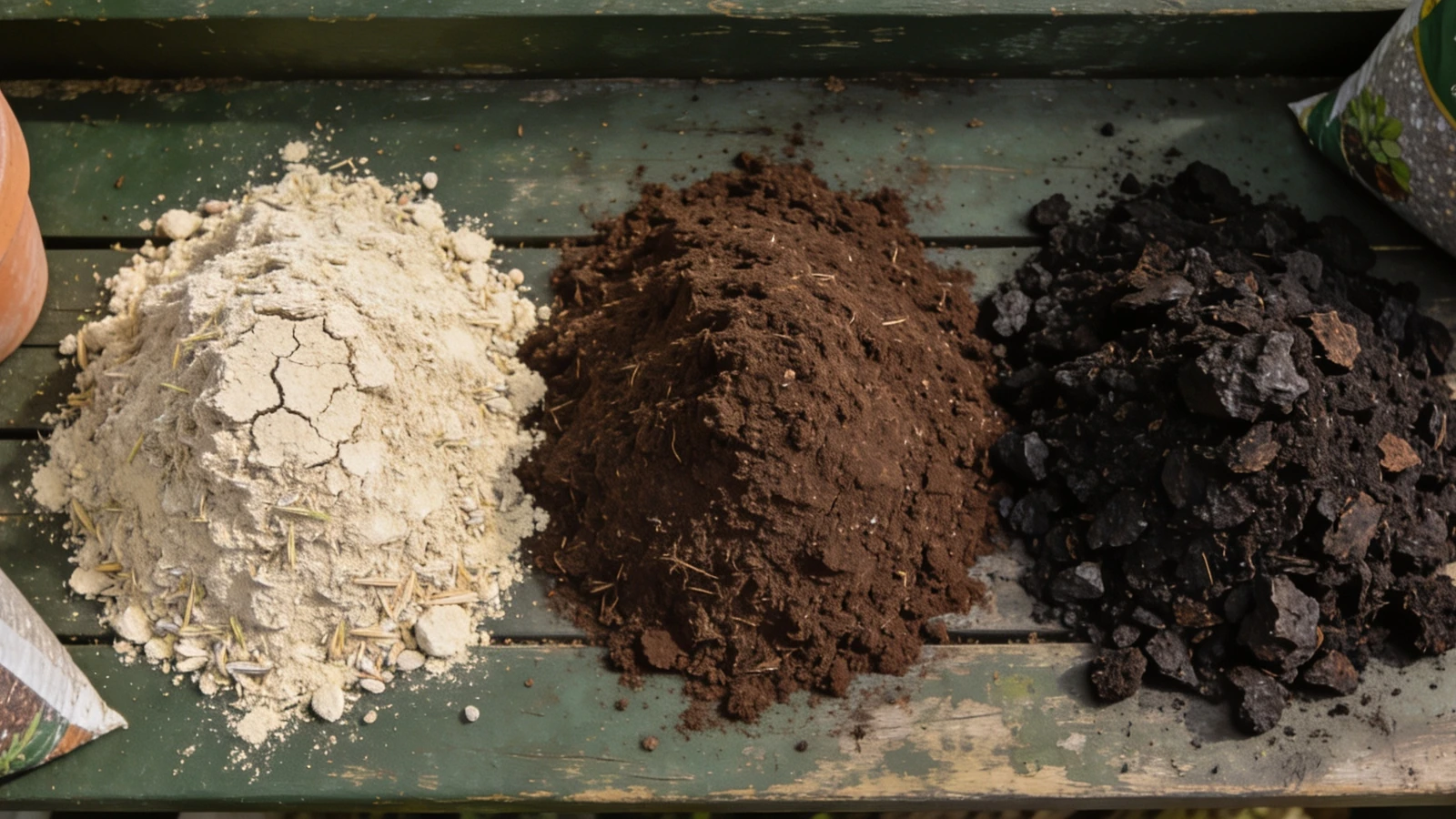
Garden soil vs potting soil, explained by what each one is for. Why garden soil fails in a pot, why potting compost is wasted in a bed, and what to buy for what.
Updated
Zones & Growing Conditions
Gardening zones tell you what survives winter, not what grows well. Here is how to read your zone, and the five garden conditions that matter more.
Updated
How to Grow Courgettes
How to grow courgettes and zucchini: how many to plant, why the first fruits rot, hand pollination, and picking small enough to keep the plant producing.
Updated