Garden Planner: A Simple System That Survives a Season
A garden planner you will still be using in August: one bed map, one sowing list and one page of notes. What to record, what to skip, and free templates.
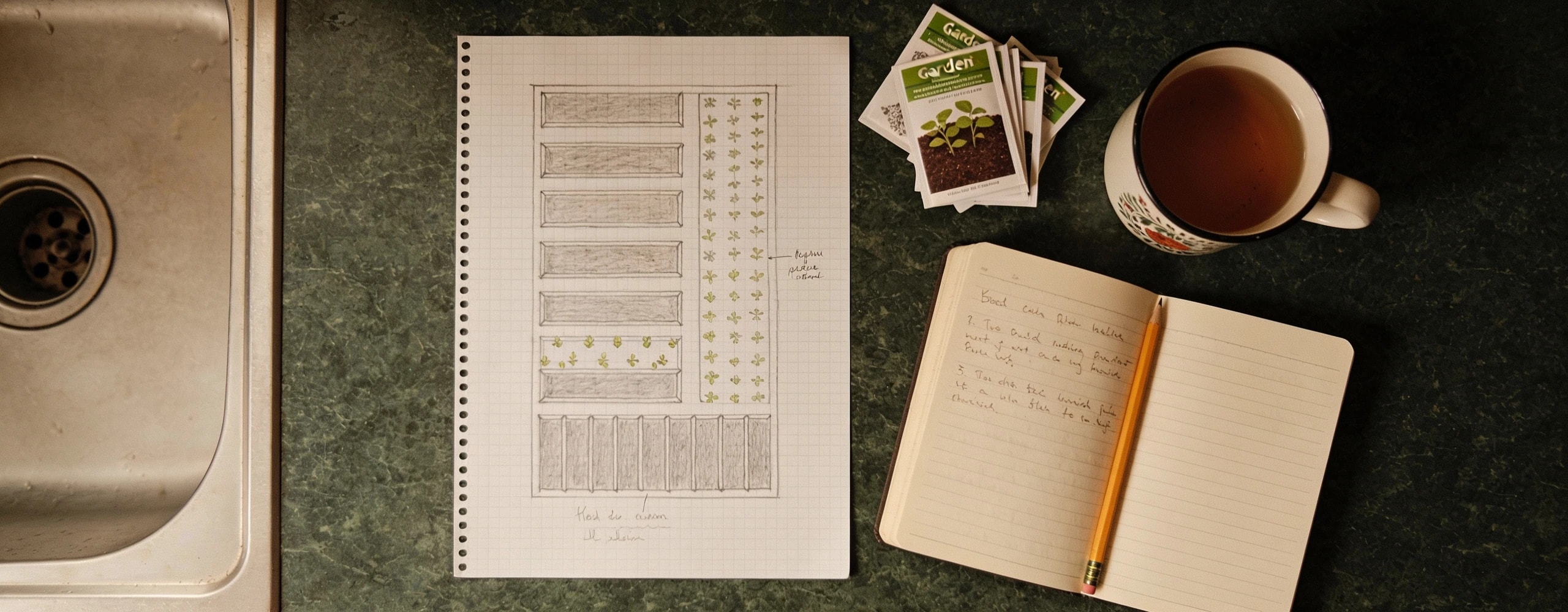
Every garden planner I have started in January and abandoned by May failed for the same reason: it asked too much of me at the exact moment I had the least to record. The system I use now is three pages, and it has survived four seasons. It is also, usefully, mostly a record rather than a plan, because the notes from last August turn out to be worth more than the intentions from last January.
The short answer
Keep three things: a bed map showing what is where, a sowing list ordered by date rather than by crop, and a running notes page. Write succession dates into the list in January, because deciding in June to sow more salad is when you forget. Record what you ate and what you did not, which almost nobody does and which is the most useful column you will keep. Paper beats software for anything under about six beds.
Three pages, and why only three#
The failure mode of garden planning is elaboration. A planner with twelve sections gets filled in for three weeks.
- The bed map
- One sheet of squared paper, one square per 30 cm. Draw the beds, write in what is planted where. Update it when you plant, not before.
- The sowing list
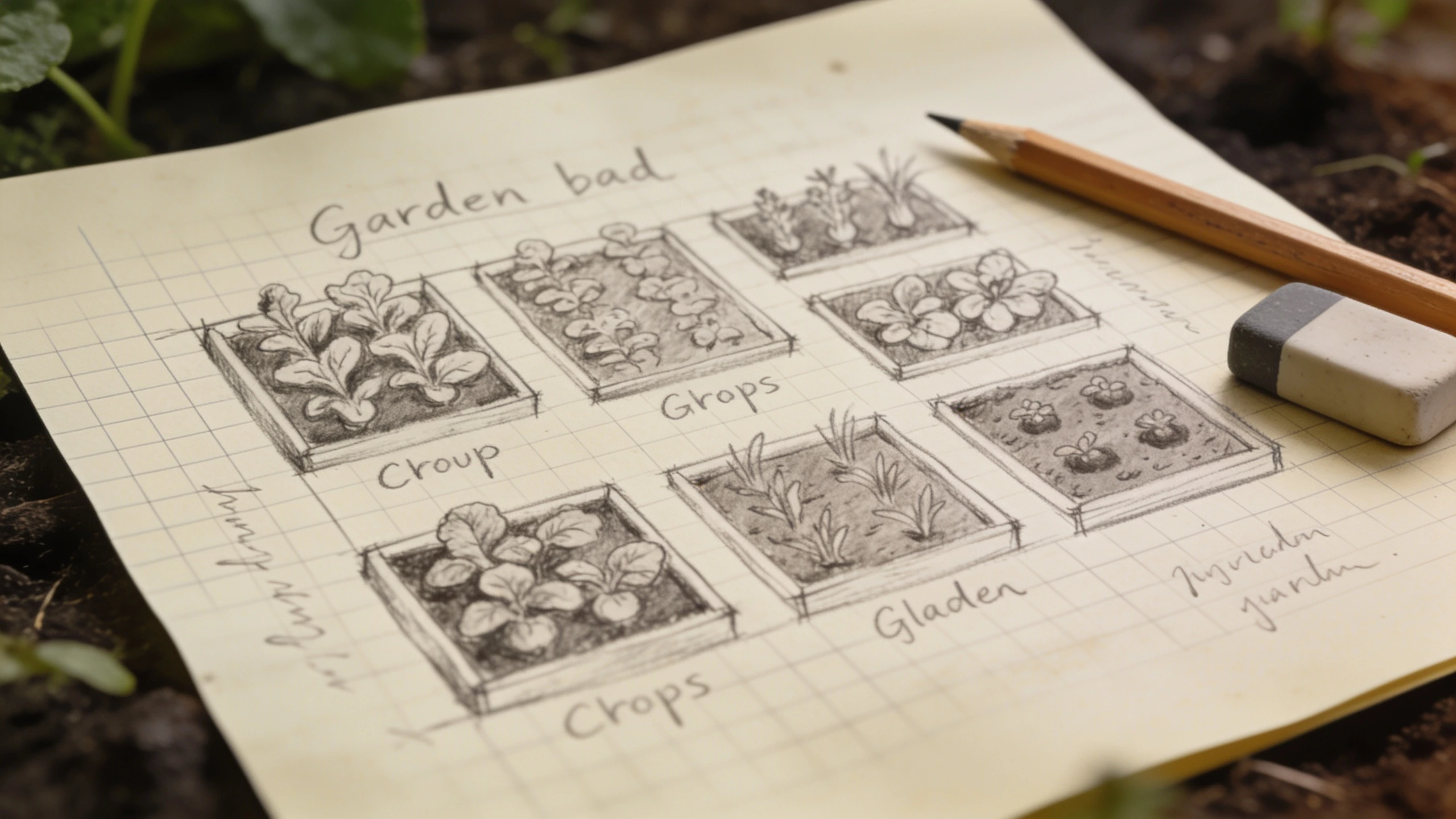
- Every sowing you intend, in date order, one line each. Ordered by date, never by crop, because dates are what you act on.
- The notes page
- Undated running notes. What went in, what came up, what failed, what you ate, what you never touched. Two lines a week is plenty.
That is the whole system. Rotation, succession and spacing all live inside those three, rather than getting a section each.
The sowing list, ordered by date#
This is the page that does the work, and the ordering is the whole trick.
Most seed packets and most books organise by crop, which is useless in practice. You do not stand in the shed in March asking what to do about carrots. You ask what needs sowing this week.
So: one line per sowing, in date order, with the crop, where it goes and roughly how much. Then when a week comes round you read three lines and go and do them.
- Late February
- Indoors: tomatoes, chillies, aubergine. Under cover: broad beans, first salad. Chit potatoes.
- March
- Indoors: courgette late in the month. Outdoors under fleece: radish, spinach, first carrots, peas. Onion sets.
- April
- Outdoors: beetroot, chard, more carrots, parsnip, salad every fortnight from here. Potatoes in.
- May
- After last frost: beans, courgette, squash, sweetcorn out. Tomatoes out or into the greenhouse. Keep sowing salad.
- June
- Successions only: salad, radish, beetroot, French beans. Last chance for anything needing a long season.
- July and August
- Autumn and winter crops: kale, chard, spring cabbage, oriental leaves, overwintering onions late August.
- September onwards
- Garlic, broad beans and winter salad under cover. Then the important job, which is writing up the year.
Those months are for a temperate northern garden and they will be wrong for you by two to six weeks in either direction. The fix is to check your own frost dates once, write them at the top of the list, and shift everything accordingly. The USDA plant hardiness map is the quickest way to place yourself if you are in the US, and any local extension or horticultural society will publish frost dates.
Rotation, in the simplest form that works#
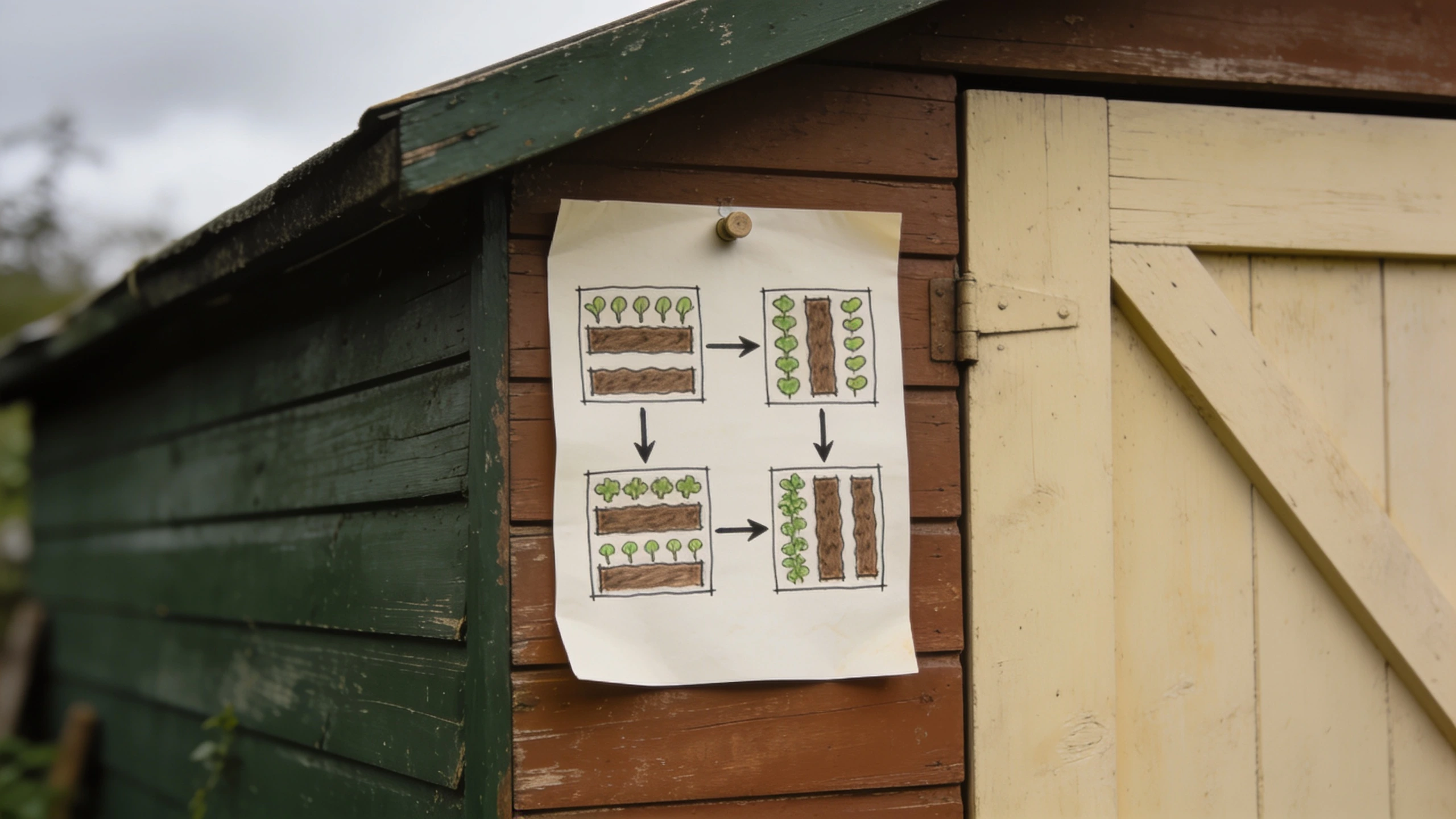
Rotation is often presented as complicated. The version that matters is four groups moved one bed along each year.
- Legumes
- Peas, broad beans, French and runner beans. Fix nitrogen, so they leave the soil better than they found it.
- Brassicas
- Cabbage, kale, broccoli, sprouts, radish, turnip. Follow the legumes to use that nitrogen. Club root lives in soil for years, which is the main reason to bother rotating at all.
- Roots
- Carrot, parsnip, beetroot, potato. Want soil that has not just been manured, or the roots fork.
- Alliums and everything else
- Onion, garlic, leek, plus squash, sweetcorn and tomatoes. White rot in alliums is the other soil-borne reason rotation earns its place.
Four beds, four groups, move along each year and nothing comes back to the same soil for four years.
If you have one or two beds, rotation is not available and it is not a disaster. You lean on compost, on choosing resistant varieties, and on not growing the two things that most punish repetition, brassicas and onions, in the same spot every year.
The notes page, and the column nobody keeps#
Here is the part I would defend hardest, because it changed what I grow more than any plan did.
Record what you actually ate.
Almost every gardener records what was sown and what was harvested. Very few record what got eaten, and the gap between harvested and eaten is the most useful information about your own garden that exists. I grew a bed of turnips for two years running, harvested them dutifully, and ate approximately four. I stopped growing turnips.
Alongside that, three more things worth a line each:
Dates that surprised you. The week the tomatoes actually ripened, not the week the packet promised.
What bolted and when. Spinach and coriander in particular, because next year you sow those earlier or later rather than repeating it.
What you ran out of. If you finished the salad in three weeks, next year is more successions rather than a bigger row.
Paper against software#
I have tried both properly and my conclusion is unfashionable.
For one to six beds, paper wins. Not because software is bad, but because paper goes outside in the rain, opens instantly, needs no account, and does not tempt you into planning as a substitute for gardening.
Software genuinely earns its place at two points: when you are managing many beds with overlapping successions, and when you want rotation remembered across five years without trusting your memory. Both are real, and neither applies in a first or second season.
Whichever you use, take a photograph of the bed map on your phone in June. It is the single most useful thing to have with you at a garden centre.
What it costs#
- Squared paper pad
- $3 to $8. One sheet per year and you will use the rest for shopping lists.
- A pencil
- A pencil. Pen is a mistake, because the plan changes.
- A cheap notebook
- $4 to $10, kept somewhere you pass on the way in from the garden rather than on a shelf.
- Plant labels
- $8 to $18 for zinc or slate, which last. Marker on plastic fades in six weeks and then the plan is guesswork.
- Software, if you get there
- $0 to $40 a year. Worth it for many beds and multi-year rotation, and not before.
What to skip#
Detailed spacing calculations for every crop. Sow a bit thicker than you need and thin, which is what everyone does anyway.
Yield estimates in kilograms. Nobody weighs their beans twice.
A watering schedule. Watering depends on weather, not on dates, and a schedule teaches you to ignore the soil.
Colour-coded anything. It is a sign the plan has become the hobby.
Where the guidance here comes from#
The three-page system and the eaten-versus-harvested idea are mine, from four seasons of abandoning more elaborate versions. The sowing months are conventional for a temperate northern garden and should be checked against your own frost dates. For crop-by-crop timing and spacing, the RHS advice on growing your own is the reference I use, and Garden Organic is good on rotation and on the soil-borne diseases that make it worth doing.
The short version#
A bed map in pencil, a sowing list in date order with successions written in, and a notes page that records what you ate. Four rotation groups moved one bed a year. Check your own frost dates once and shift everything to suit. Then do the real planning in August, while you can still see what happened.
Related reading#
- How to start a vegetable garden: what to put in the plan in a first year.
- Growing conditions and zones: finding your frost dates, which the whole sowing list depends on.
- Raised bed garden layout ideas: bed sizes and spacing that the map is drawn from.
- Composting for beginners: what keeps a rotation working when you only have two beds.
Frequently asked questions
What should a garden planner actually contain?
Three things, and nothing else at first. A map of your beds with what is in each one, a sowing list ordered by date rather than by crop, and a running page of notes on what happened. Everything beyond those three is optional, and every planner I have abandoned failed because it asked for more than that in February.
Do I need software or an app?
No, and the free options are mostly worse than paper for a home garden. Software is genuinely useful for succession planting across many beds and for remembering rotation over years. For one to six beds, a single sheet of squared paper and a notebook beat any app, mainly because you will actually take them outside in the rain.
When should I plan the garden year?
January and February for the sowing list, because the earliest sowings start indoors in late February and seed orders arrive faster than you expect. But the far more valuable planning happens in August, while you can still see what worked, what bolted and what you never once ate. Notes taken in August are worth more than plans made in January.
How does crop rotation fit into a plan?
Group crops into four families, legumes, brassicas, roots and alliums, and everything else, then move each group one bed along each year so nothing returns to the same soil for four years. That is the whole system. It matters most for club root and onion white rot, which live in soil for years. If you have only one or two beds, rotation is impossible and you rely on compost and variety instead.
How do I plan successions so I am not eating everything at once?
Sow a short row every two or three weeks rather than a long row once. For salad, radish, carrots and beetroot this single habit is the difference between a glut and a supply. Write the repeat dates into the sowing list at the start of the year, because deciding in June to sow more is exactly when you will forget.
What is the one thing worth recording?
What you actually ate, and what you did not. Almost every planner records what was sown and almost none record what got eaten, and the gap between the two is the most useful information you will ever have about your own garden. I stopped growing three crops entirely on the basis of that column.
How much space do I need to bother planning?
Anything from one bed upwards benefits, because the value of a plan is mostly about timing rather than space. Even three containers benefit from a sowing list, because the question of when to start the tomatoes has the same answer whether you have one plant or twenty.
Topics in this article
About the author
Jeff has gardened professionally for over twenty years, mostly on heavy clay, and writes everything here from beds he still works himself. More from Jeff Tanun →
Keep reading
Square Foot Gardening
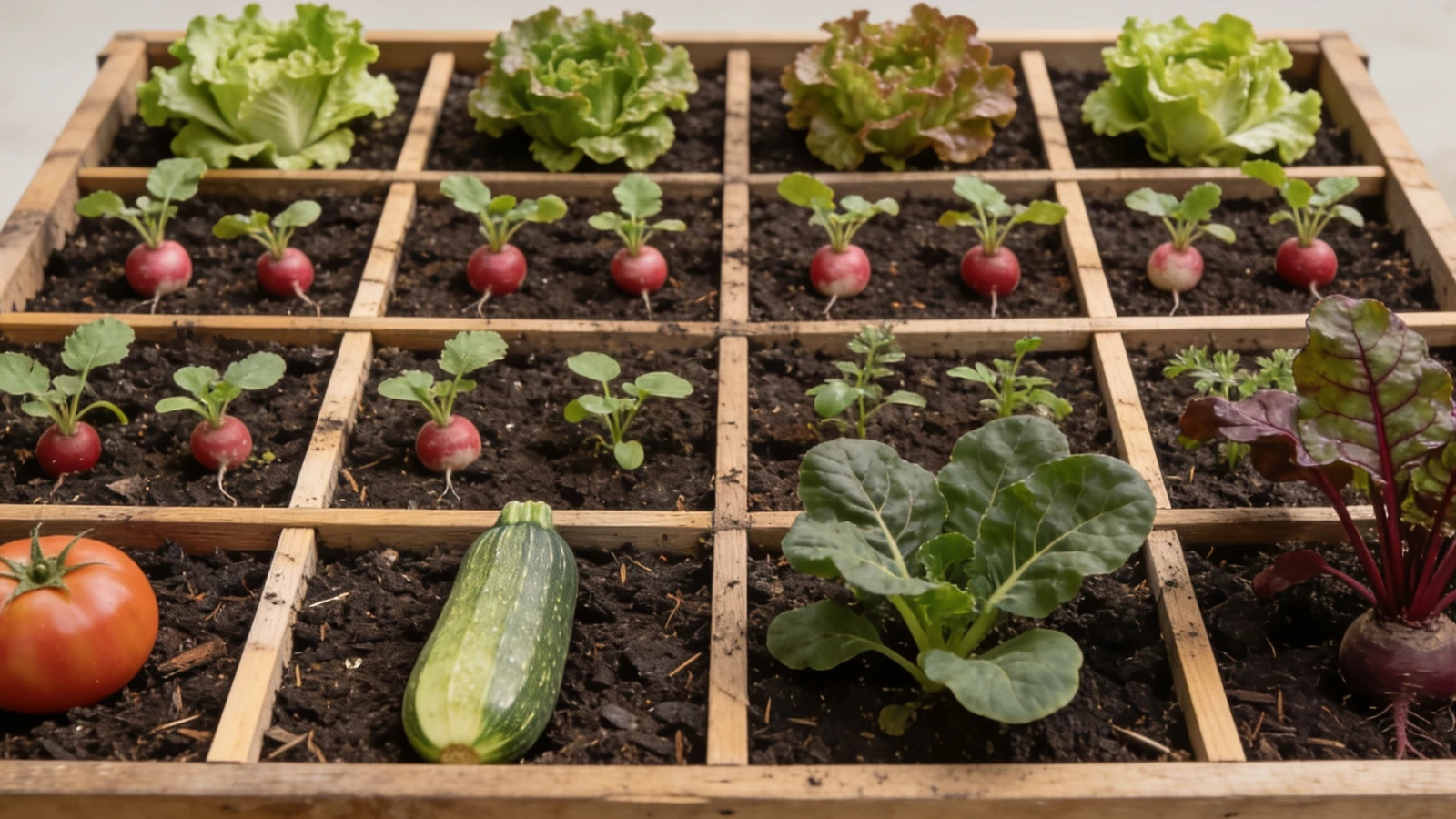
Square foot gardening explained honestly: the grid and the spacing chart are genuinely useful, the compulsory soil mix and the shallow bed depth are not.
Updated
Zones & Growing Conditions
Gardening zones tell you what survives winter, not what grows well. Here is how to read your zone, and the five garden conditions that matter more.
Updated
How to Start a Garden
How to start a garden in one season: check your light first, build one small bed without digging, plant six easy crops. Costs from $60, step by step.
Updated