How to Grow Courgettes: Two Plants Is Plenty
How to grow courgettes and zucchini: how many to plant, why the first fruits rot, hand pollination, and picking small enough to keep the plant producing.
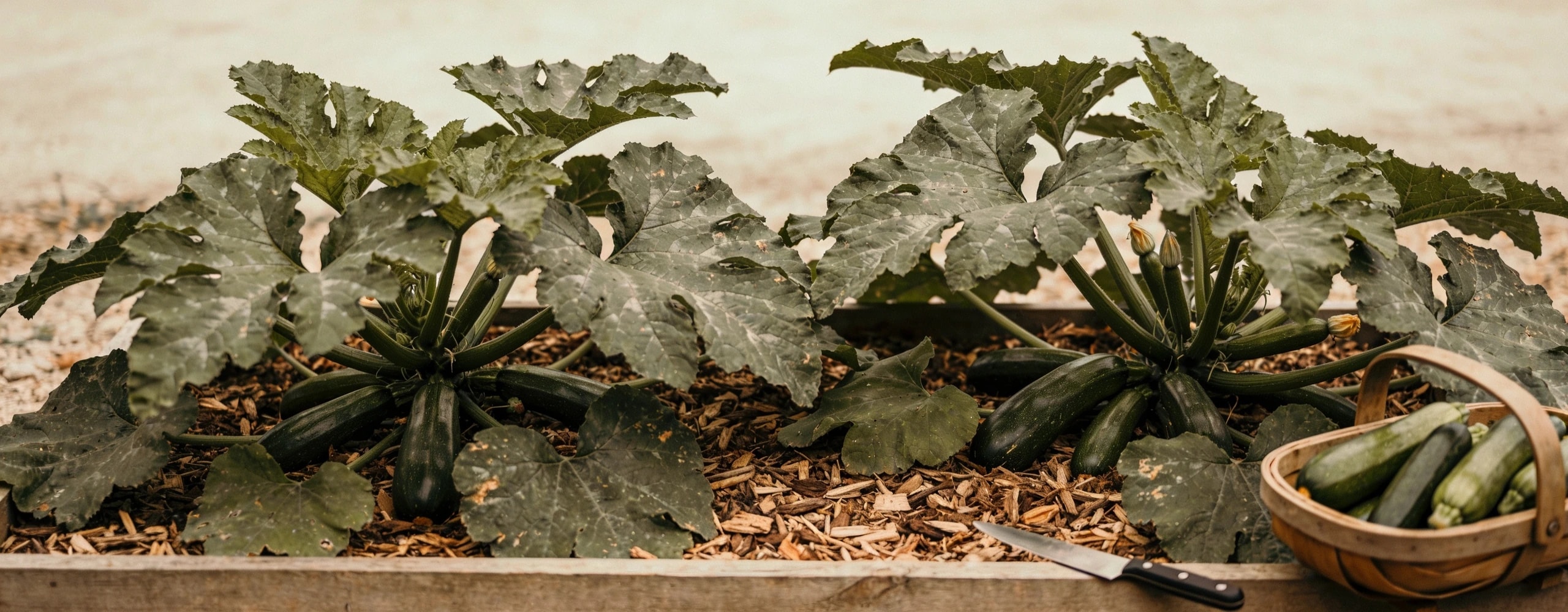
Courgettes are the crop that teaches people to grow vegetables, mostly because they are almost impossible to fail with and they produce far more than anyone expects. The two things worth knowing before you start are how few plants you need and how small to pick, and both are the opposite of what instinct suggests.
The short answer
Plant two, not five. Give each one at least a square metre in the ground or 30 to 40 litres in a pot. Water at the base, never over the leaves. Pick at 10 to 15 cm and pick every couple of days, because a fruit left to swell slows the whole plant down. If the first small fruits rot at the tip, that is incomplete pollination, so hand pollinate for a fortnight and it stops.
Two plants, and why#
A single healthy courgette plant produces roughly twenty to thirty fruits across a season if you keep picking. Two plants feeds a household through summer with some to give away.
The reason people plant five is that the seedlings are cheap and small and it seems mean not to. Then July arrives and there are courgettes in every meal and neighbours crossing the road to avoid you.
Space matters as much as number. Each plant wants about a square metre, because those leaves get big, and crowded plants get mildew earlier through poor air movement.
Sowing and planting out#
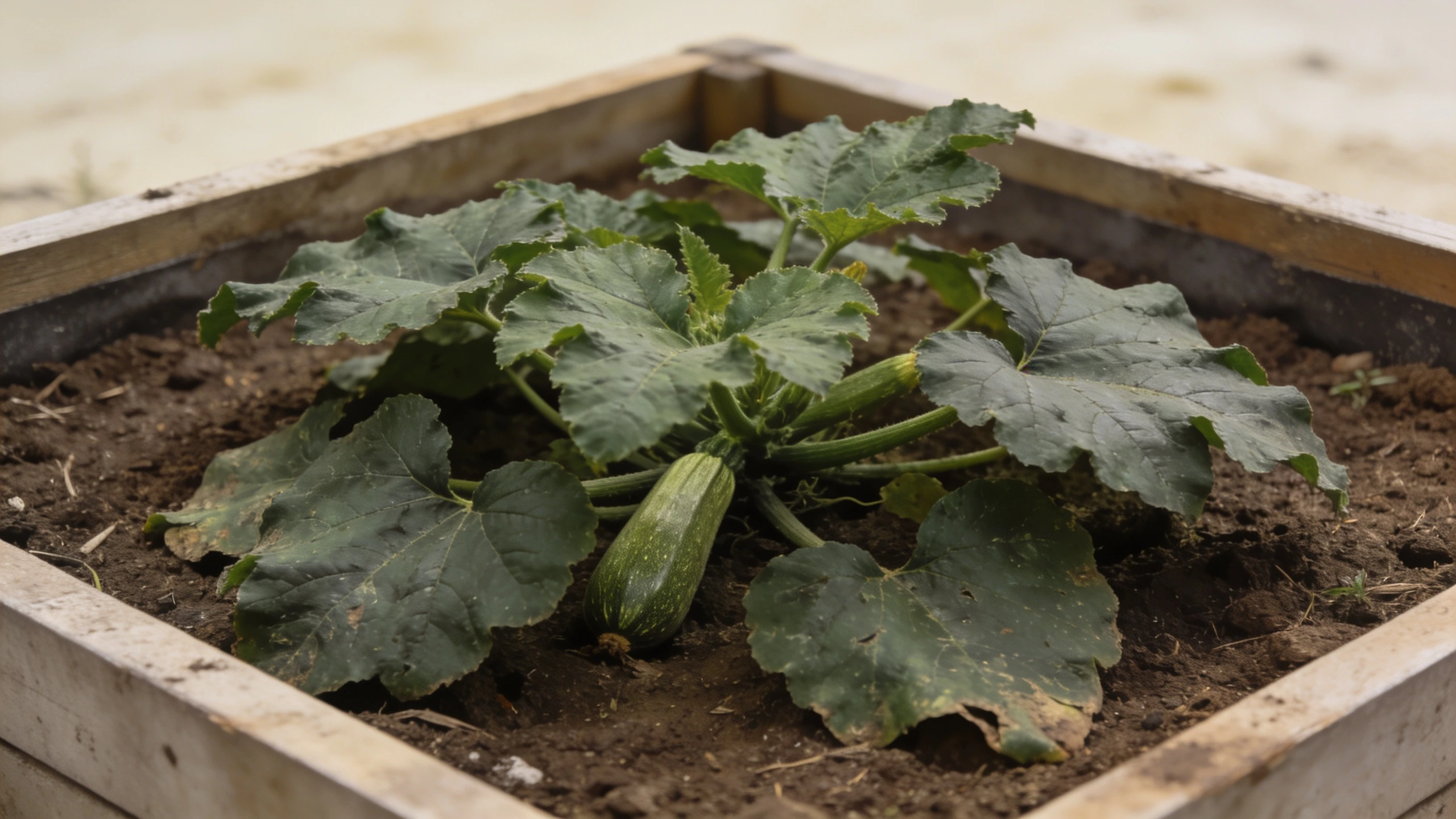
Courgettes are frost tender and grow fast, so timing beats getting ahead.
Sow indoors two to four weeks before your last frost date, one seed per pot, on their side about 2 cm deep. They germinate in under a week in warmth.
Plant out only after the last frost, and harden them off for a week first. Sown too early they sit indoors getting leggy and check badly when planted out. Sown directly outdoors after the frost date they catch up with indoor-sown plants surprisingly quickly.
Plant into ground with plenty of compost worked in. They are hungry and thirsty and it shows.
- Bush varieties
- Compact, upright, suited to containers and small beds. The default choice for most gardens.
- Trailing varieties
- Send out long stems and cover ground. More fruit per plant, and they need the space or a frame.
- Yellow varieties
- Same plant, easier to spot among the leaves, which genuinely helps you pick before they turn into marrows.
- Round varieties
- Good for stuffing, and they hide even more effectively than the long ones.
The rotting baby fruit problem#
This is the most common courgette question and the answer is reassuring: it is usually not a disease.
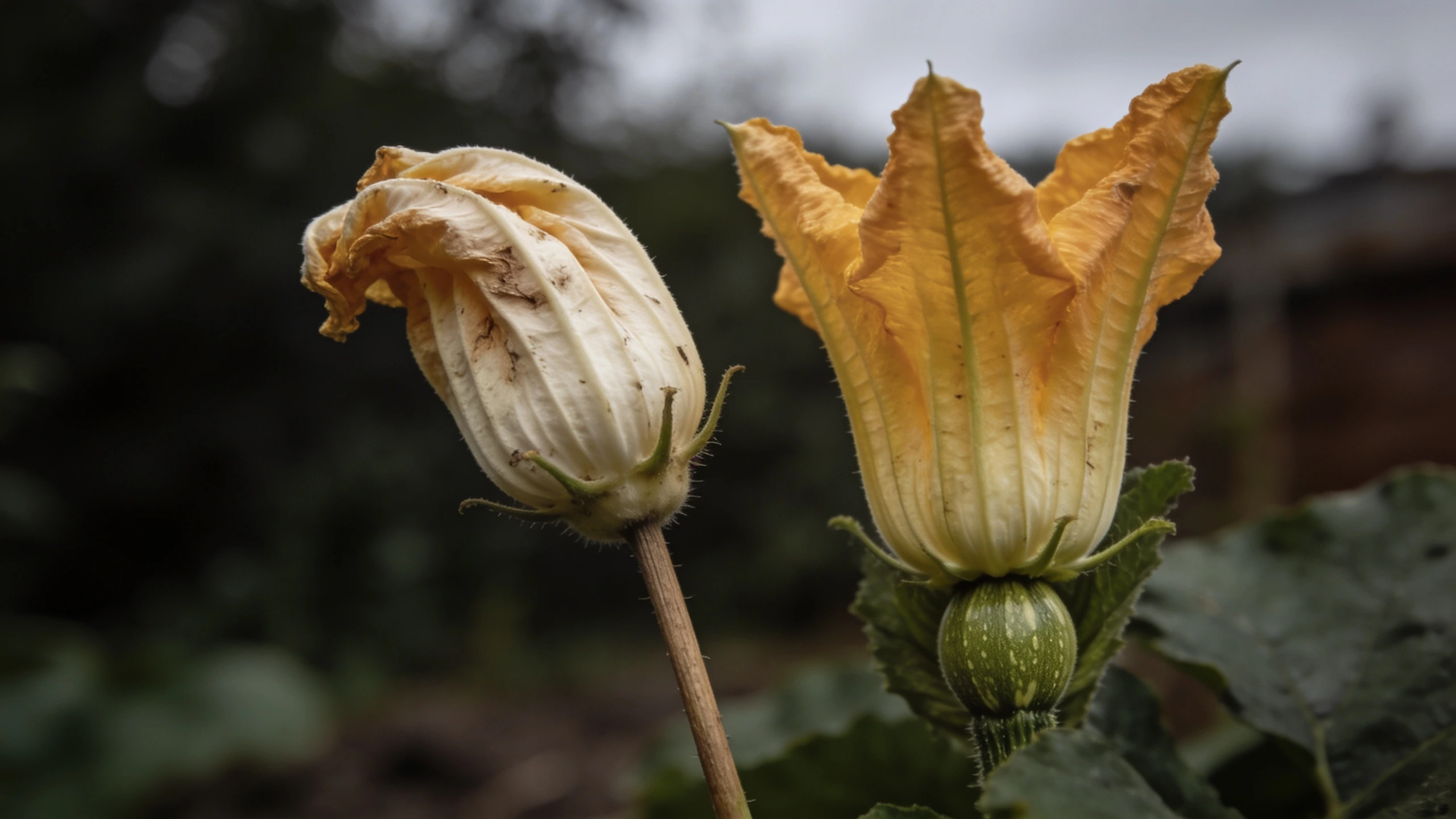
Courgettes carry separate male and female flowers. The female has a tiny fruit behind it before it even opens. If that flower is not pollinated, the fruit it is attached to gets a short way and then shrivels and rots from the flower end.
It happens most in early season, when plants often produce a run of male flowers first and there are fewer insects about in cool weather.
The fix takes ten seconds. Pick a male flower, which sits on a plain thin stem with nothing behind it. Peel the petals back to expose the pollen. Dab it into the centre of a female flower. Do it in the morning while both are open.
Two weeks of that and the plant will usually be setting on its own.
Watering, and the one rule#
Water at the base, not over the leaves.
Courgette leaves are enormous and they are the entry point for powdery mildew, which is the disease that eventually finishes every courgette plant. Wet foliage in the evening is exactly what it wants.
Water deeply and consistently rather than a little often. Drought stress makes mildew worse and it also causes fruit to abort.
Midday wilting in hot weather is normal and not a sign of underwatering: the leaf surface area is simply too large to keep up. Judge by the morning, not the afternoon.
Picking small, and picking often#
This is the part that decides how much you get.
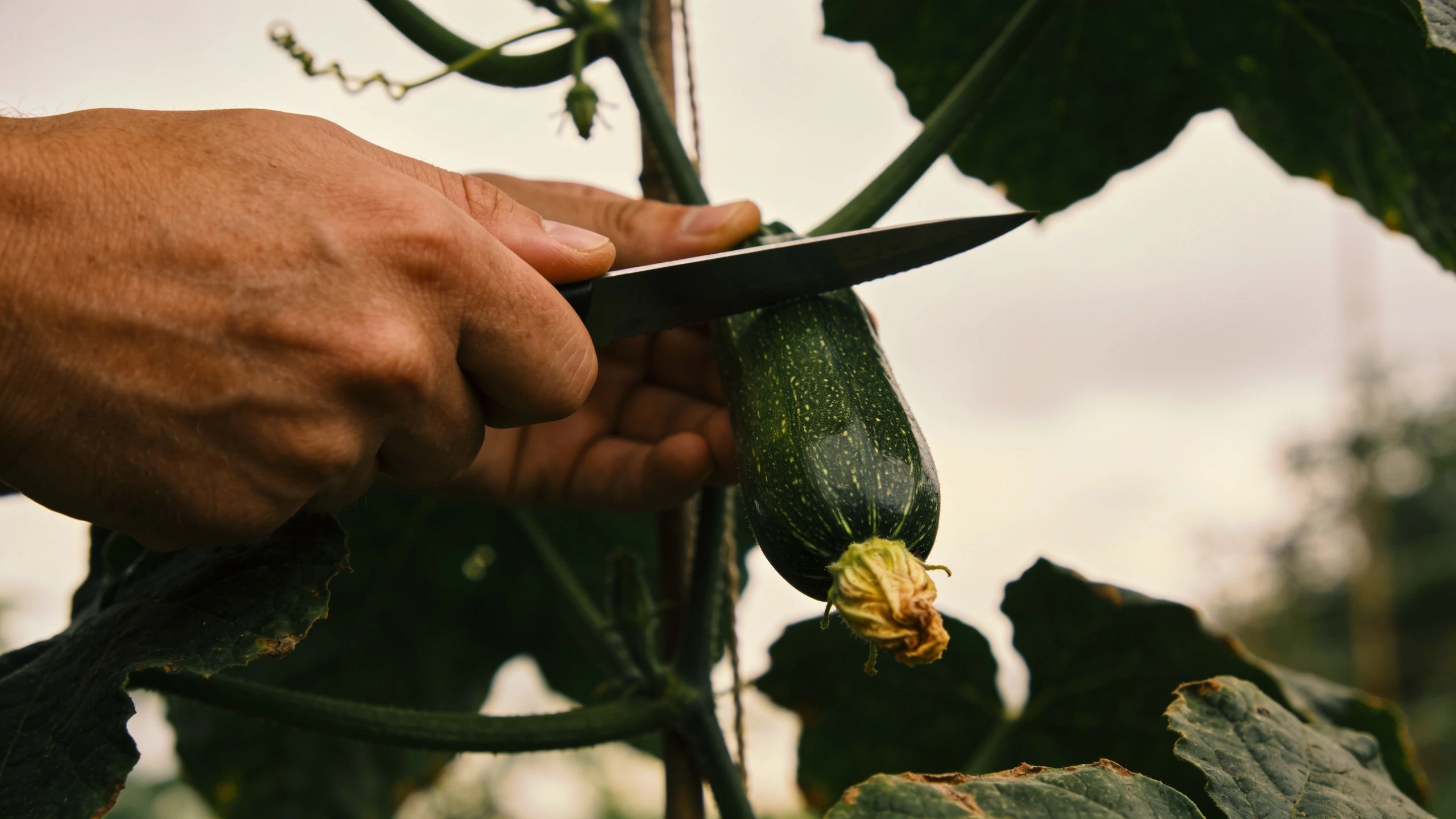
Pick at 10 to 15 cm. The texture and flavour are much better small, and more importantly, every fruit you leave to swell signals to the plant that it has reproduced successfully and it slows down setting new ones. One marrow left on the plant can cost you a fortnight of production.
They swell fast in high summer. Check every two days, and look underneath the leaves, where the ones you miss are hiding.
Cut with a knife rather than twisting, because a torn stem is an infection route.
The flowers are also worth eating. Male flowers can be picked freely once the plant is setting well, since you only need a few for pollination.
Powdery mildew, realistically#
By late summer courgette leaves go grey and dusty. That is powdery mildew and it is close to inevitable.
What you can do is delay it: space the plants, water at the base, water consistently, and remove the worst leaves as they go rather than letting them sit.
What I would not do is spray. By the time mildew is established the plant has usually produced most of what it is going to, and the season is ending anyway. Milk sprays and bicarbonate mixtures circulate widely; the evidence for them is thin and I would not present them as reliable.
A courgette plant that mildews in September has done its job.
Growing in containers#
Perfectly workable with the right volume.
Thirty to forty litres minimum for one plant. Below that it stalls, the fruit stays small, and people blame the variety. Bush varieties suit pots better than trailing ones.
Expect to water daily in summer and to feed weekly with a high potash feed once fruiting starts, because a container runs out of nutrients in about six weeks.
What it costs#
- A packet of seed
- $3 to $6, and it contains far more seed than you need. It will do two or three seasons.
- Two plants from a nursery
- $8 to $18, and worth it if you missed the sowing window.
- Compost for the planting hole
- $10 to $20, or free if you make your own. They repay generosity here.
- One 40 litre container
- $25 to $70 if you are growing in pots. Do not economise on volume.
- High potash liquid feed
- $10 to $18, and only needed for container plants or poor soil.
Where this needs adjusting#
In a short or cool season, start indoors and choose a bush variety, and expect a later, shorter run of fruit. Fleece over the young plants for the first fortnight helps.
In a hot dry climate, they will need afternoon shade and much more water, and mildew arrives earlier. Mulch becomes essential rather than optional.
And if you are in a very small space, one plant in a large container is a genuinely worthwhile crop, whereas five plants anywhere is a mistake regardless of the space available.
Where the guidance here comes from#
The hand pollination method and the pick-small rule are conventional, and both are things I only started doing properly after two seasons of losing early fruit and letting marrows form. For sowing dates, spacing and mildew management the RHS advice on growing your own is the reference, and Garden Organic covers non-chemical disease management honestly, including being clear about what is not well supported.
The short version#
Two plants, a square metre each, plenty of compost. Sow two to four weeks before your last frost and plant out after it. Water at the base, consistently, and mulch. Hand pollinate for the first fortnight if the small fruits rot. Then pick at 10 to 15 cm every couple of days and keep looking under the leaves.
Related reading#
- How to start a vegetable garden: where courgettes fit in a first year plan.
- Container gardening: the pot volume this crop needs, and why.
- Garden planner: sowing dates and why two plants is a decision worth writing down.
- Food garden ideas: growing this in a border rather than a vegetable bed.
Frequently asked questions
How many courgette plants do I need?
Two, for most households, and one is enough for a couple. A single healthy plant produces something like twenty to thirty fruits over a season if you keep picking. The classic beginner mistake is planting five, because they are cheap and small in the pot, and then giving courgettes away by August.
Why are my baby courgettes rotting at the end?
Almost always incomplete pollination rather than disease. A female flower that is not pollinated sets a small fruit that then shrivels and rots from the flower end. It is common early in the season when there are more male flowers than female ones and fewer insects about. Hand pollinate for a couple of weeks and it resolves itself.
How do I hand pollinate a courgette?
Pick a male flower, the one on a plain thin stem, peel the petals back to expose the pollen, and dab it onto the centre of a female flower, the one with a tiny fruit already behind it. Do it in the morning while the flowers are open. It takes about ten seconds per fruit and it fixes early season rot reliably.
How big should I let courgettes get?
Pick at 10 to 15 cm. Two reasons: the flavour and texture are far better small, and every fruit left to swell tells the plant it has succeeded and slows down new production. A marrow left on the plant can stop it setting for a fortnight. Check every couple of days in high summer, because they double in size fast.
Why is my courgette plant wilting even though I water it?
In hot weather the huge leaves lose water faster than the roots supply it, and a plant that wilts at midday and recovers by evening is usually fine. If it is still wilted in the morning, check for underwatering first, then for rot at the stem base. Water at the base rather than over the leaves, because wet foliage is what powdery mildew wants.
How do I stop powdery mildew?
You mostly delay it rather than prevent it, and by late summer some mildew is normal on courgettes. What helps: space plants properly for air movement, water at the base rather than the foliage, water consistently since drought stress makes it worse, and remove the worst affected leaves. A plant that mildews in September has usually done its job anyway.
Can I grow courgettes in a pot?
Yes, in a big one. Thirty to forty litres minimum for a single plant, and it will need watering daily in summer and feeding weekly once it starts fruiting. Bush varieties suit containers better than trailing ones. In anything smaller than thirty litres the plant stalls and the fruit stays small, which people blame on the variety.
Topics in this article
About the author
Jeff has gardened professionally for over twenty years, mostly on heavy clay, and writes everything here from beds he still works himself. More from Jeff Tanun →
Keep reading
How to Grow Potatoes
How to grow potatoes in beds or bags. Why first earlies earn their space and maincrop often does not, how deep to plant, when to earth up, and avoiding blight.
Updated
How to Grow Tomatoes
How to grow tomatoes from seed to harvest. Cordon or bush, the watering that prevents split skins and blossom end rot, when to feed, and how to spot blight early.
Updated
How to Water a Garden
How to water a garden properly: how much plants need, how to tell when they need it, and why a daily splash does more harm than none at all.
Updated