How to Water a Garden Properly (Deeply, and Less Often)
How to water a garden properly: how much plants need, how to tell when they need it, and why a daily splash does more harm than none at all.
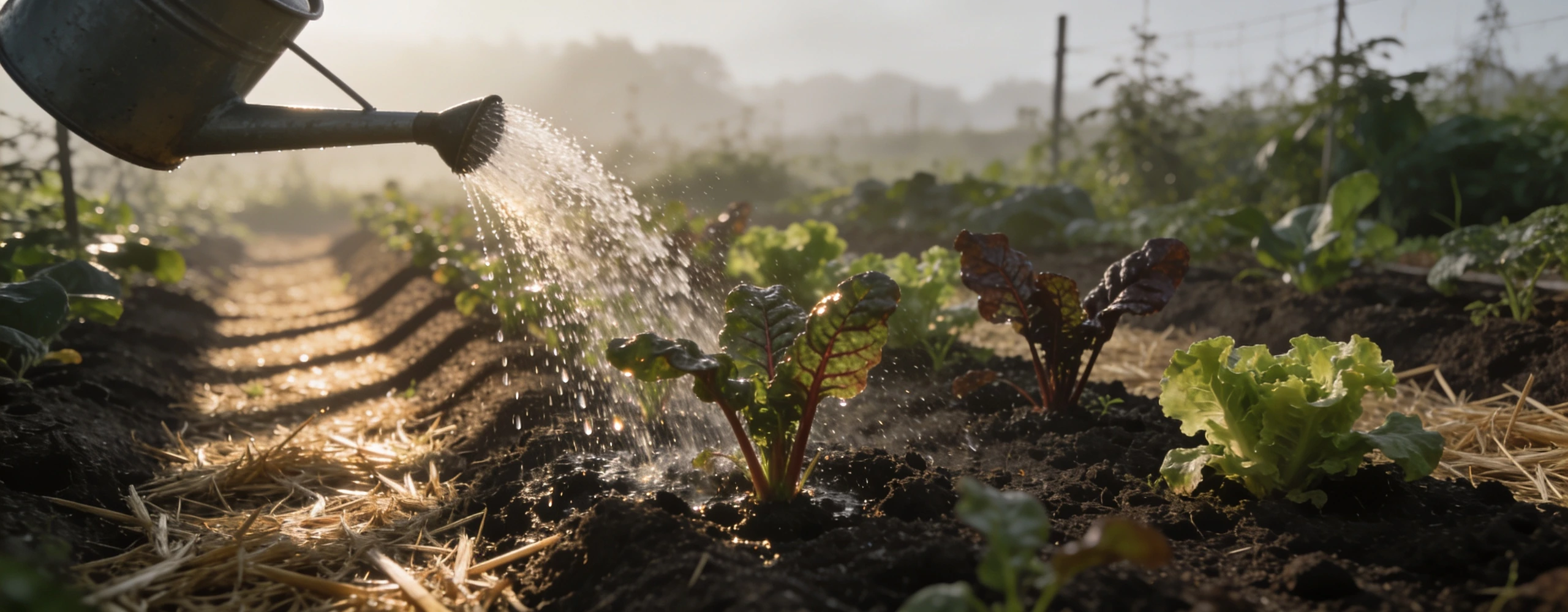
Time20 min
You'll need
- Mulch: straw, bark, compost or leaf mould
- A rain gauge or a straight-sided tin
Tools
- Watering can with a rose head
- Hose with an adjustable nozzle, or a soaker hose
- Trowel or finger, for checking depth
How to water a garden properly is the question I get asked least and should be asked most. It is the job every gardener does constantly and thinks about hardly at all. It is also where the biggest, easiest improvements live: the difference between a bed watered well and a bed watered badly shows up in yield, disease and how long plants survive a hot week.
The core principle takes one sentence. Deep and infrequent beats shallow and daily, because it is what builds deep roots.
The short answer
Check the soil two inches down with a finger before watering. When it is dry at that depth, water slowly at the base of the plant until moisture reaches about six inches deep, roughly 10 to 15 litres per square metre, then mulch. For most established beds that means once or twice a week, not daily. Containers are the exception: water until it runs out of the bottom, and in high summer that is often every day.
Why daily light watering is worse than it feels#
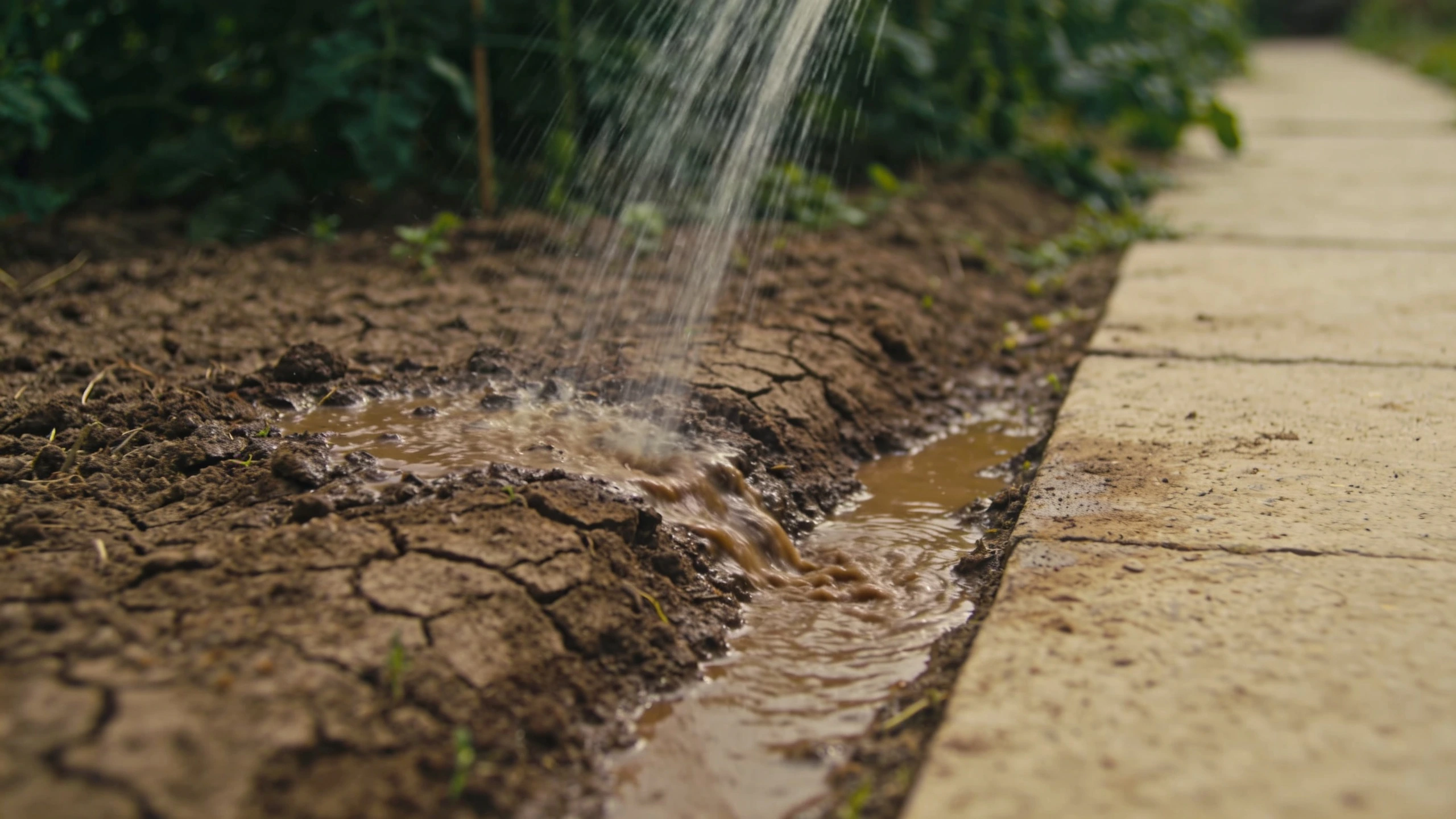
A quick pass with the hose every evening wets the top inch of soil. Roots grow where the water is, so they stay in that top inch, the layer that dries out fastest, heats up most, and holds the least reserve. You have trained the plant into total dependence on you.
Water deeply and infrequently and roots chase the moisture downwards into cooler, more stable soil. Those plants ride out a hot weekend you had not planned for. They also access nutrients further down the profile.
How to tell when to water#
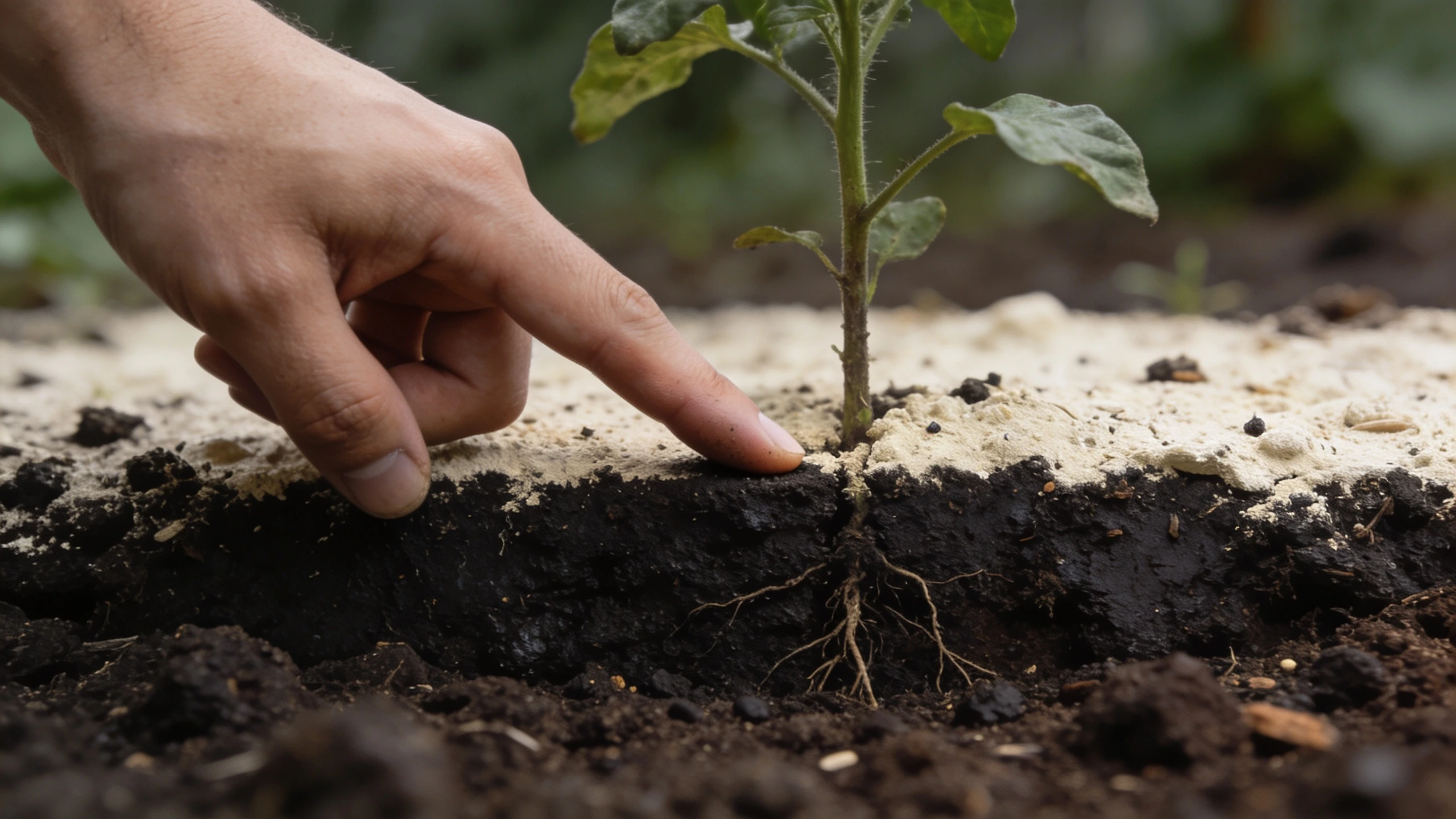
Four checks, in order of usefulness:
- The finger test. Two inches down. Dry means water, damp means wait. Free, fast, and more reliable than any schedule.
- Weight, for containers. Lift the pot. You learn the difference between full and empty within a week, and it is the fastest check there is.
- Colour and sheen. Dry soil goes pale and dusty; peat-based compost pulls away from the pot sides. Useful but only for the surface.
- A rain gauge. Knowing you got 4 mm rather than 20 mm changes the week's plan. A straight-sided tin works.
How much is enough#
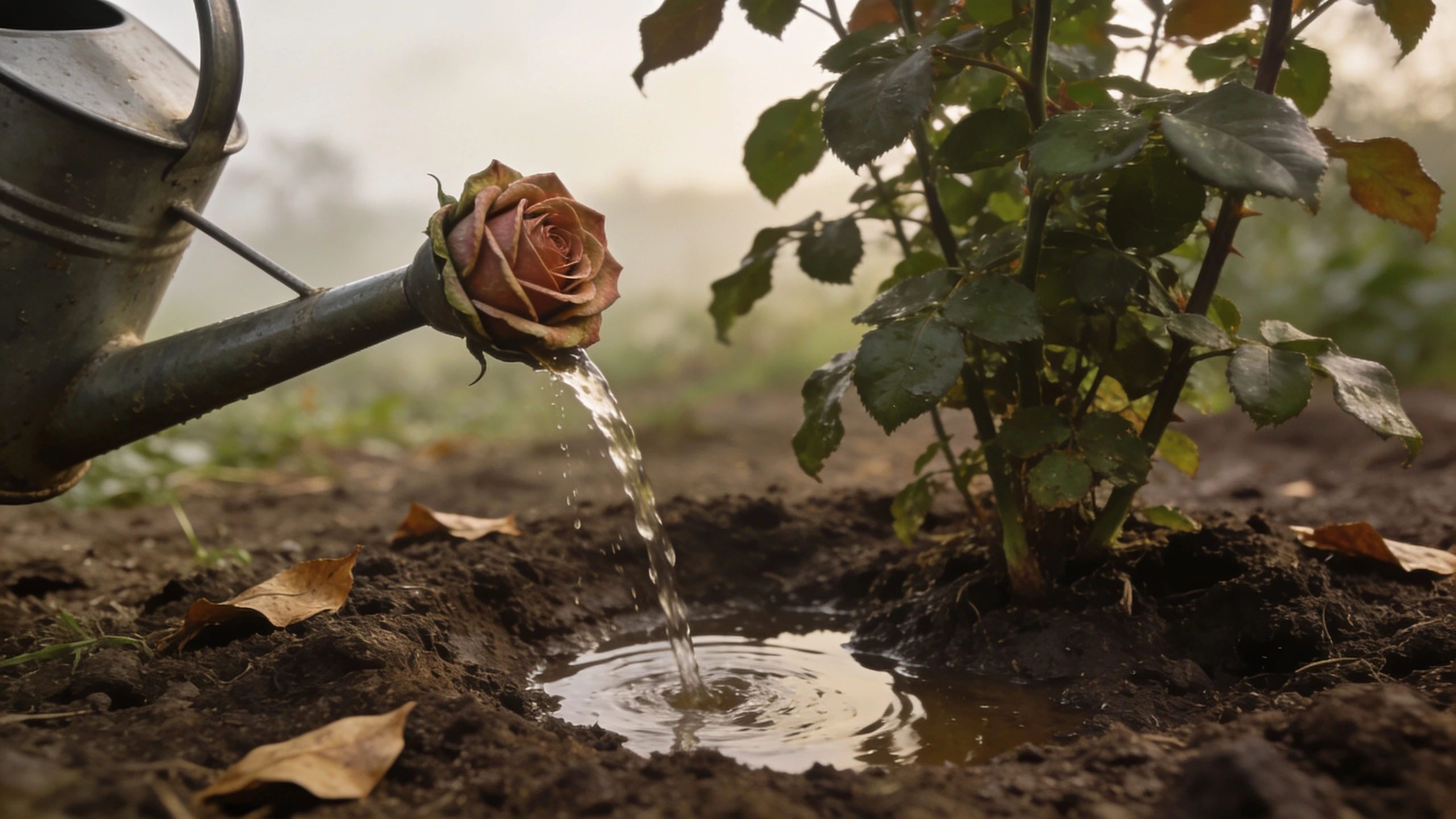
The target is water reaching about six inches down, where the working root mass of most vegetables sits.
| Situation | Roughly how much | Frequency in warm weather |
|---|---|---|
| Established bed, mulched | 10–15 l/m² | Once or twice a week |
| Established bed, bare soil | 15–20 l/m² | Two or three times a week |
| Newly sown seeds | Light, keep surface damp | Daily until germination |
| Young transplants | 1–2 l per plant | Every day or two for 2–3 weeks |
| Container, 30 cm diameter | Until it drains freely | Daily in high summer |
| Hanging basket | Until it drains freely | Once or twice daily |
| Newly planted tree or shrub | 20–30 l per watering | Weekly for the first two seasons |
The first time you water a bed properly, dig a small hole afterwards and see how far it actually got. Almost everyone underestimates by half. After one or two checks you will know what "enough" looks like from your own can or hose.
How to water a garden properly, in practice#
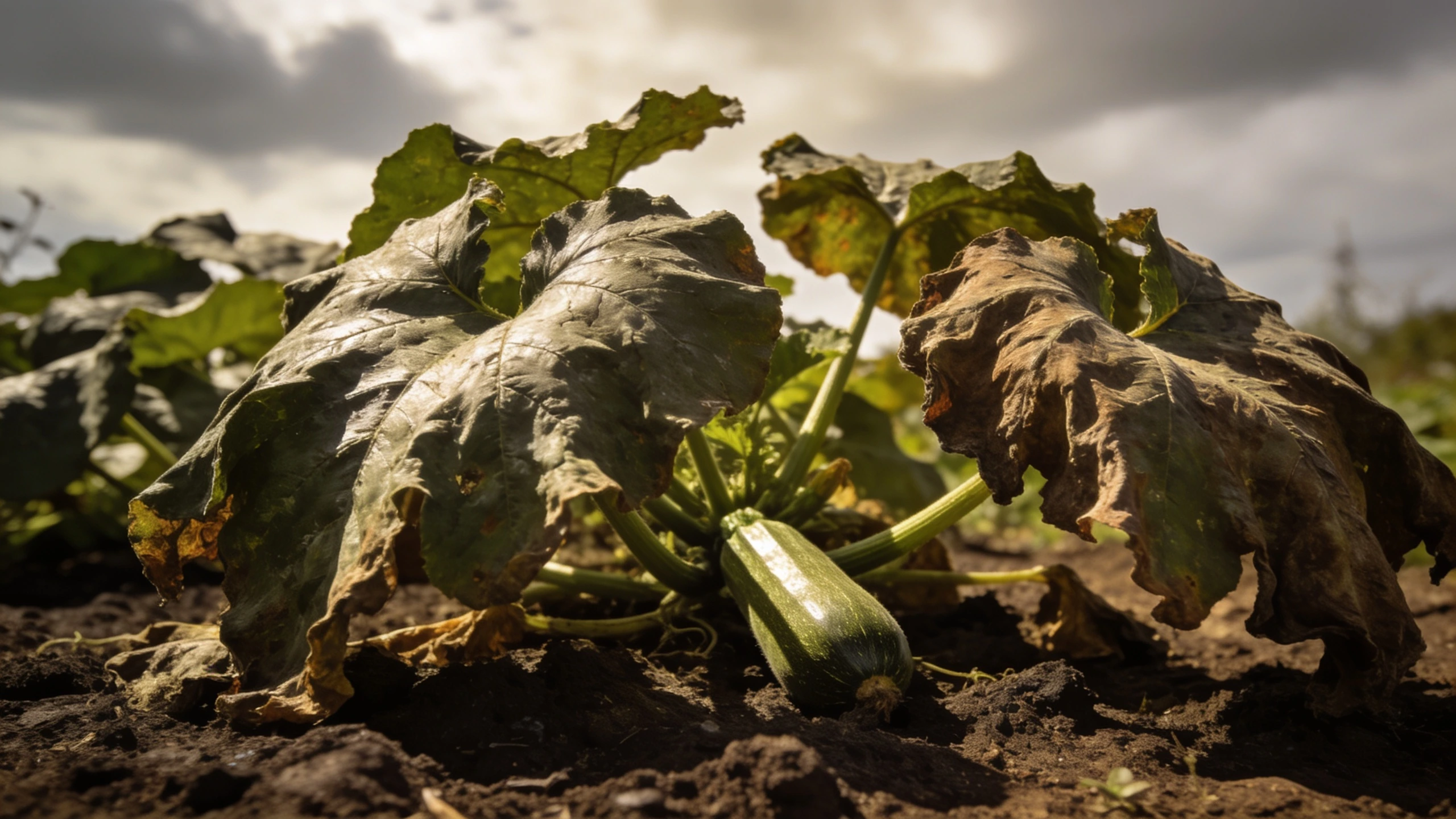
- At the base, not over the top. You are watering roots. Wetting foliage wastes water to evaporation and raises humidity around the leaves, which is what blight, mildew and black spot want.
- Slowly. If water runs off or pools, it is arriving faster than the soil can take it. Reduce the flow, or do two passes ten minutes apart, the first opens the surface, the second soaks in.
- A rose head on the can. A bare spout blasts a crater in the soil and washes seeds sideways. The rose spreads the flow and is essential for seed trays and seedlings.
- Morning, ideally. Least evaporation, and foliage dries as the day warms.
- Skip the hose when it has genuinely rained. 20 mm of steady rain is a full watering. A five-minute shower is not.
Mulch is half of watering#
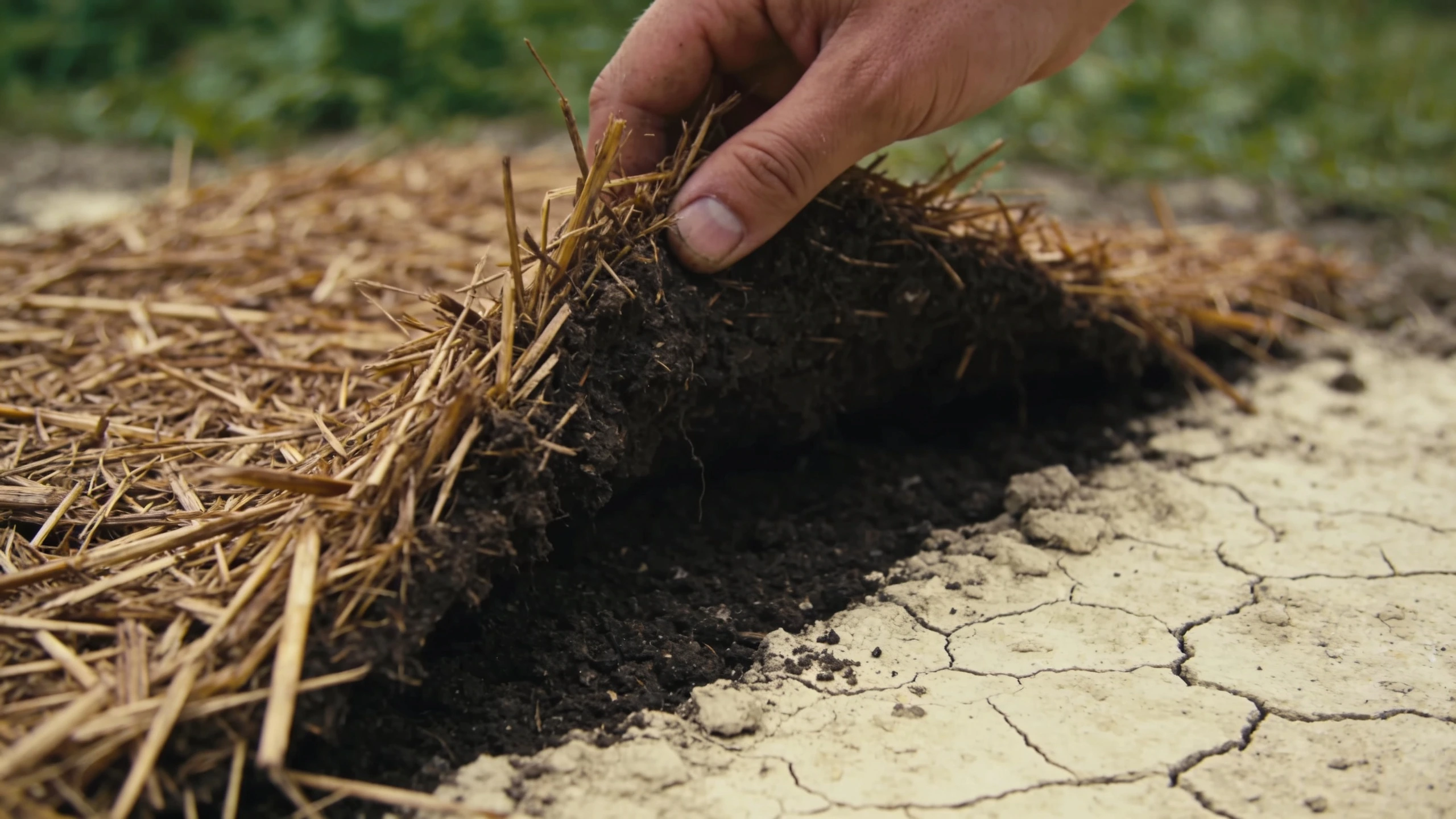
Two inches of mulch over damp soil substantially reduces evaporation from the surface, keeps root-zone temperature down, and suppresses the weeds that would otherwise compete for the same water.
Options, roughly in order of usefulness for vegetable beds:
- Compost: feeds the soil as it breaks down. The default choice.
- Straw: cheap, excellent for strawberries, courgettes and squash. Can harbour slugs, so keep it clear of stems.
- Leaf mould: free if you have trees. Superb structure.
- Bark or woodchip: long-lasting, best around perennials and shrubs rather than annual vegetable beds.
- Grass clippings: free and effective in thin layers. Thick layers become a hot slimy mat.
Apply mulch to damp soil, never dry. You will otherwise seal the dryness in. Leave a small gap around stems.
Containers are a different problem#
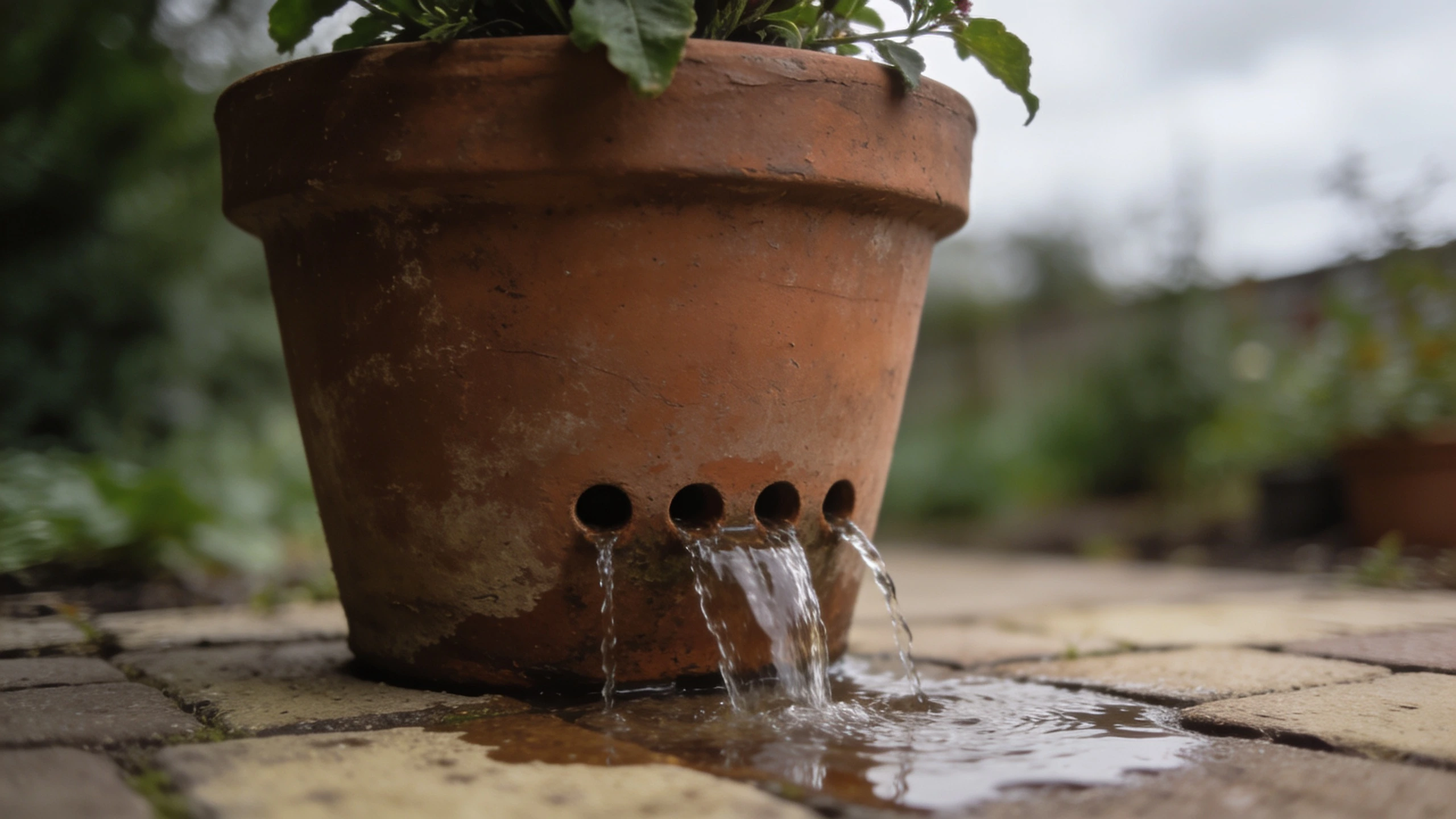
Containers have no water reserve beyond what is in the pot, and terracotta loses moisture through its walls as well as the surface.
- Water until it runs freely from the bottom, every time. Half-measures leave the lower root ball dry, and roots then circle in the wet upper layer.
- Choose bigger pots. A large container holds more water and swings less in temperature. Small pots in full sun are a losing battle.
- Use saucers in summer, remove them in winter. A reservoir helps in July; standing in cold water in January kills roots.
- Rehydrate a bone-dry pot by standing it in water for twenty minutes. Once compost has dried and shrunk from the sides, water poured on top runs straight down the gap and out of the bottom without wetting anything.
- Group pots together. They shade each other's sides and raise local humidity, which measurably cuts water loss.
Our guide to small balcony garden ideas goes deeper on containers, wind and light.
A heatwave plan#
When the forecast is 30°C or more for several days:
- Water deeply the evening before it starts. Going in with a full soil reserve is worth more than any intervention afterwards.
- Mulch everything. Even a scattering of grass clippings helps.
- Move containers into afternoon shade, and group them.
- Prioritise honestly. Trees and established shrubs can wait; newly planted things, containers and anything fruiting cannot. Lawns go brown and recover, leave them.
- Do not water at midday unless something is genuinely collapsing. Most of it evaporates before it reaches roots.
- Skip fertiliser. Feeding pushes soft growth that needs more water than a stressed plant can supply.
Dressing for those days matters more than people expect, see our guide to gardening clothes for hot weather.
How I know this#
The depths, volumes and timings here are the working figures used in general growing advice rather than readings I have taken myself. I have cross-checked them against the Royal Horticultural Society advice pages and Oregon State Extension gardening, both of which publish watering guidance for their own regions.
Where a number is a rough band rather than a measurement, the text says so. If something here does not match your soil, tell me. Our editorial policy explains how corrections work.
What I would fix first#
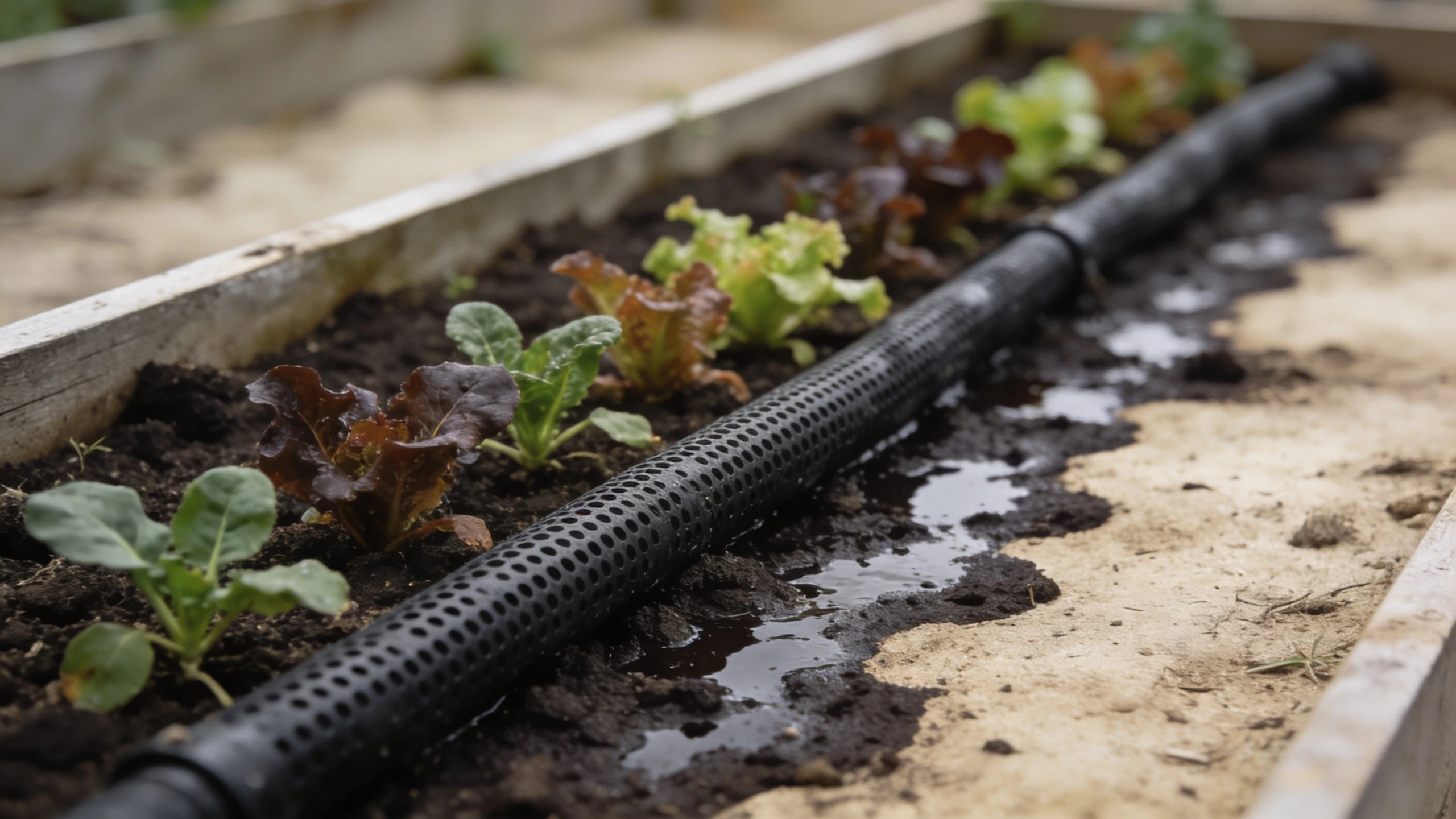
If you change one thing, mulch. If you change two, mulch and stop watering on a schedule. Those two adjustments cut water use, cut disease, and produce visibly better plants, and the kit involved is a bag of compost and a finger.
For the watering gear itself, cans, soaker hoses, timers and what is worth the money, see gardening accessories every gardener needs.
Frequently asked questions
How often should I water my vegetable garden?
For an established, mulched bed in temperate summer weather, one or two deep waterings a week is usually right, more in a heatwave, none after real rain. Seedlings and newly planted things need lighter watering more often until their roots establish, typically for two to three weeks. Containers are a different regime entirely and often need daily attention.
Is it better to water in the morning or evening?
Morning, clearly. Evaporation is low, wind is usually light, and leaves dry as the day warms rather than staying wet overnight. Evening watering is the second choice and much better than not watering, but persistent overnight leaf wetness increases fungal disease on tomatoes, courgettes, roses and phlox in particular.
How do I know if I am overwatering?
Yellowing lower leaves, soft or mushy stems at soil level, a sour smell from the soil, and soil that is still wet several inches down two days after watering. Confusingly, overwatered plants often wilt, because drowned roots cannot take up water at all. Always check soil moisture before adding more.
How much water does a plant in a pot need?
Enough that water runs freely out of the drainage holes, every time. Half-watering a container only wets the top inch and leaves the lower root ball bone dry. In high summer, a pot in full sun may need this daily, and a hanging basket twice daily.
Do plants need less water when it rains?
Usually, but check rather than assume. A brief shower may deliver only 2 to 3 mm of rain, which does not reach the root zone at all, and dense foliage can shed most of it away from the stem, leaving the soil beneath dry. A cheap rain gauge or a straight-sided tin tells you what you actually got.
Topics in this article
About the author
Jeff has gardened professionally for over twenty years, mostly on heavy clay, and writes everything here from beds he still works himself. More from Jeff Tanun →
Keep reading
How to Grow Courgettes
How to grow courgettes and zucchini: how many to plant, why the first fruits rot, hand pollination, and picking small enough to keep the plant producing.
Updated
Garden Soil vs Potting Soil
Garden soil vs potting soil, explained by what each one is for. Why garden soil fails in a pot, why potting compost is wasted in a bed, and what to buy for what.
Updated
Vertical Gardening
Vertical gardening done properly: which crops climb, what a wall can carry, how to water it, and why most living wall kits fail in their first summer.
Updated