Vertical Gardening: Grow Up When You Cannot Grow Out
Vertical gardening done properly: which crops climb, what a wall can carry, how to water it, and why most living wall kits fail in their first summer.
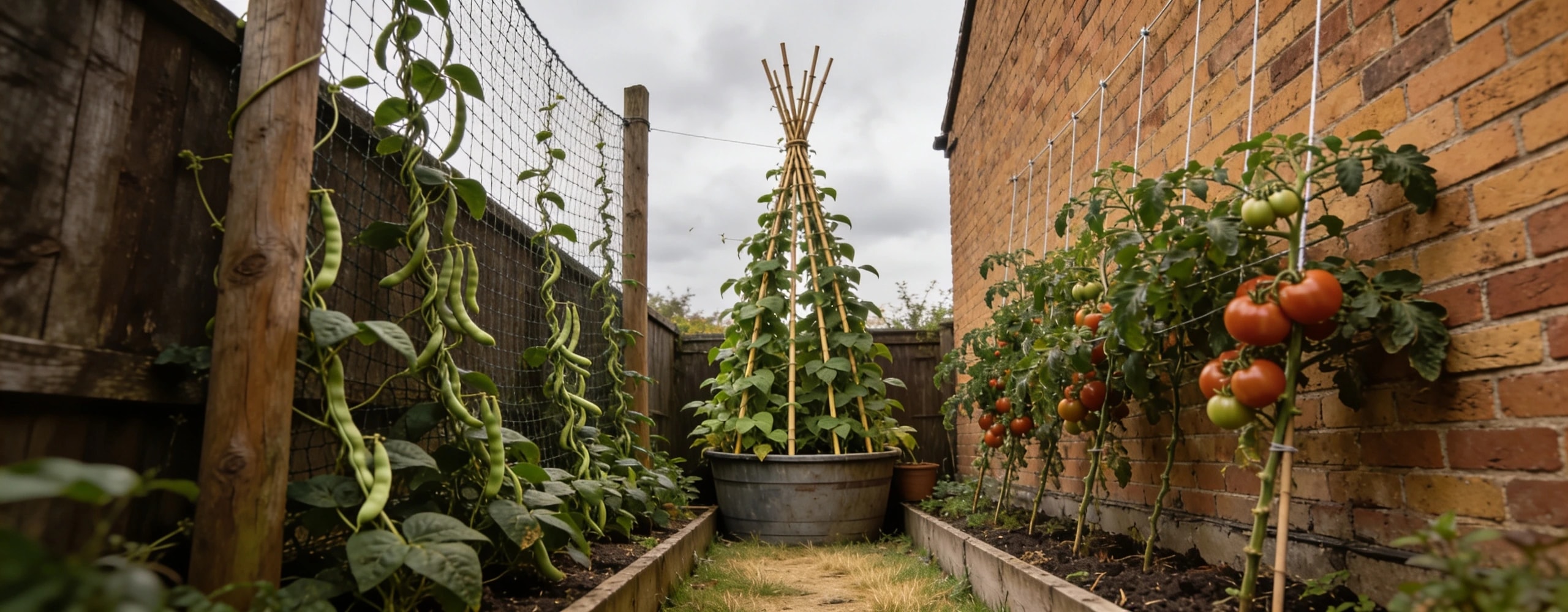
Vertical gardening is the honest answer when you have run out of ground and still want to grow something worth eating. I came to it the way most people do, by running out of bed space and looking at a bare fence. What I learned quickly is that growing upwards works brilliantly for some plants and is close to pointless for others, and that almost every disappointment comes down to one thing: water.
The short answer
Grow climbers upwards, not everything upwards. Beans, peas, cucumbers and cordon tomatoes will give you four or five times the crop per square metre of ground. Give them one deep container or a strip of bed, at least 30 litres per plant, and a net or canes above it. Skip pocket-style living walls unless you are fitting drip irrigation on a timer, because a three litre pocket on a sunny wall dries out in a day.
What vertical gardening is good at, and what it is not#
There are two different things sold under the same name, and they behave nothing alike.
The first is training climbers up a support. The roots stay in the ground or in a decent container, and only the plant goes up. This is the version that works, and it has worked for centuries.
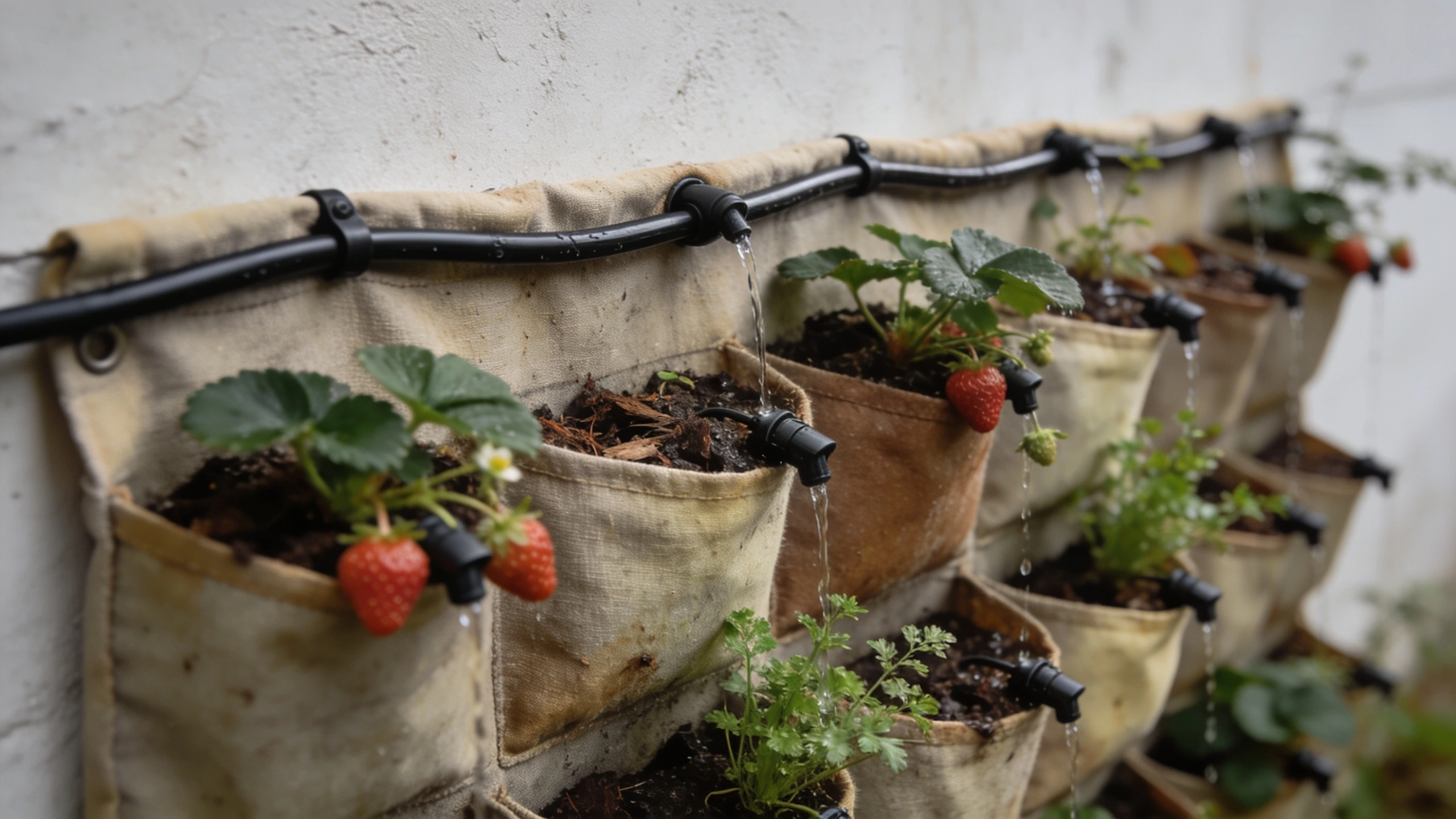
The second is a planted wall: pockets, stacked trays or modular panels, each holding a small volume of compost. It looks wonderful in photographs. It is also a set of tiny containers hanging in the windiest, sunniest, most exposed position in the garden, which is the hardest possible place to keep a plant alive.
Key points
- Climbers give the real space saving. One square metre of soil under a net carries what would sprawl across four or five on the ground.
- Pocket systems save footprint but lose root volume, and root volume is what buys you a margin for error on watering.
- Wet compost weighs about a kilogram per litre, so a planted wall is a structural load, not a decoration.
- Everything on a wall dries from the top down, so the top row always suffers first and you will water unevenly by hand.
- Height gains you light. A frame lifts leaves out of the shade cast by a fence, which is often the real limit in a small garden.
What to grow: the shortlist that earns its frame#
I keep coming back to the same handful. These are the plants that climb willingly, crop heavily and do not need daily attention.
- Climbing French beans
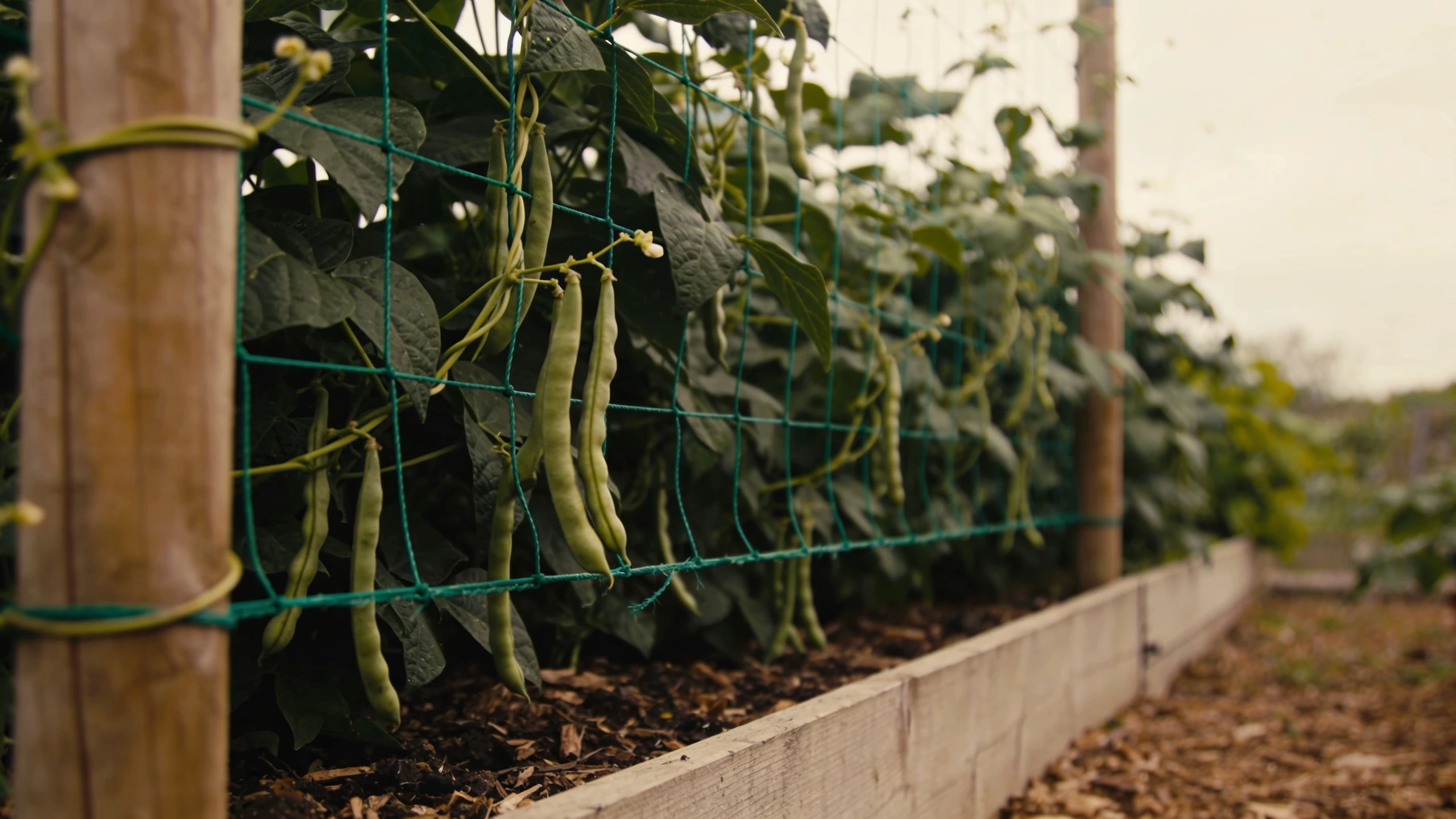
- The best vertical crop there is. Self-twining, crops for six to eight weeks, tolerates a missed watering. Two metres of net, five plants.
- Runner beans
- Heavier cropping, slightly tougher pods if you pick late. Needs the most water of anything here once flowering starts.
- Peas
- Earliest crop, then finished. Tall varieties want netting rather than canes because the tendrils are fine.
- Cucumbers
- Excellent up a string or mesh under glass or on a warm wall. Needs tying in and a steady supply of water or the fruit turns bitter.
- Cordon tomatoes
- Grown as a single stem up a string, side shoots pinched out. Far more fruit per square metre than a bush type.
- Squash, small-fruited only
- Cucumbers' bigger cousin works vertically if the fruit is under about 1 kg. Anything larger needs a sling.
- Strawberries
- The one pocket-planter crop I would still recommend, because the fruit stays clean and away from slugs.
Build the support before you plant, not after#
This sounds obvious and I have still got it wrong. Once a bean is 40 cm tall and reaching, pushing a frame in around it means breaking roots and snapping stems.
Three supports cover almost everything:
- Net between two posts
- Cheapest and best for beans and peas. Two 2.4 m posts sunk 60 cm, pea and bean netting stretched between. Nothing to tie in.
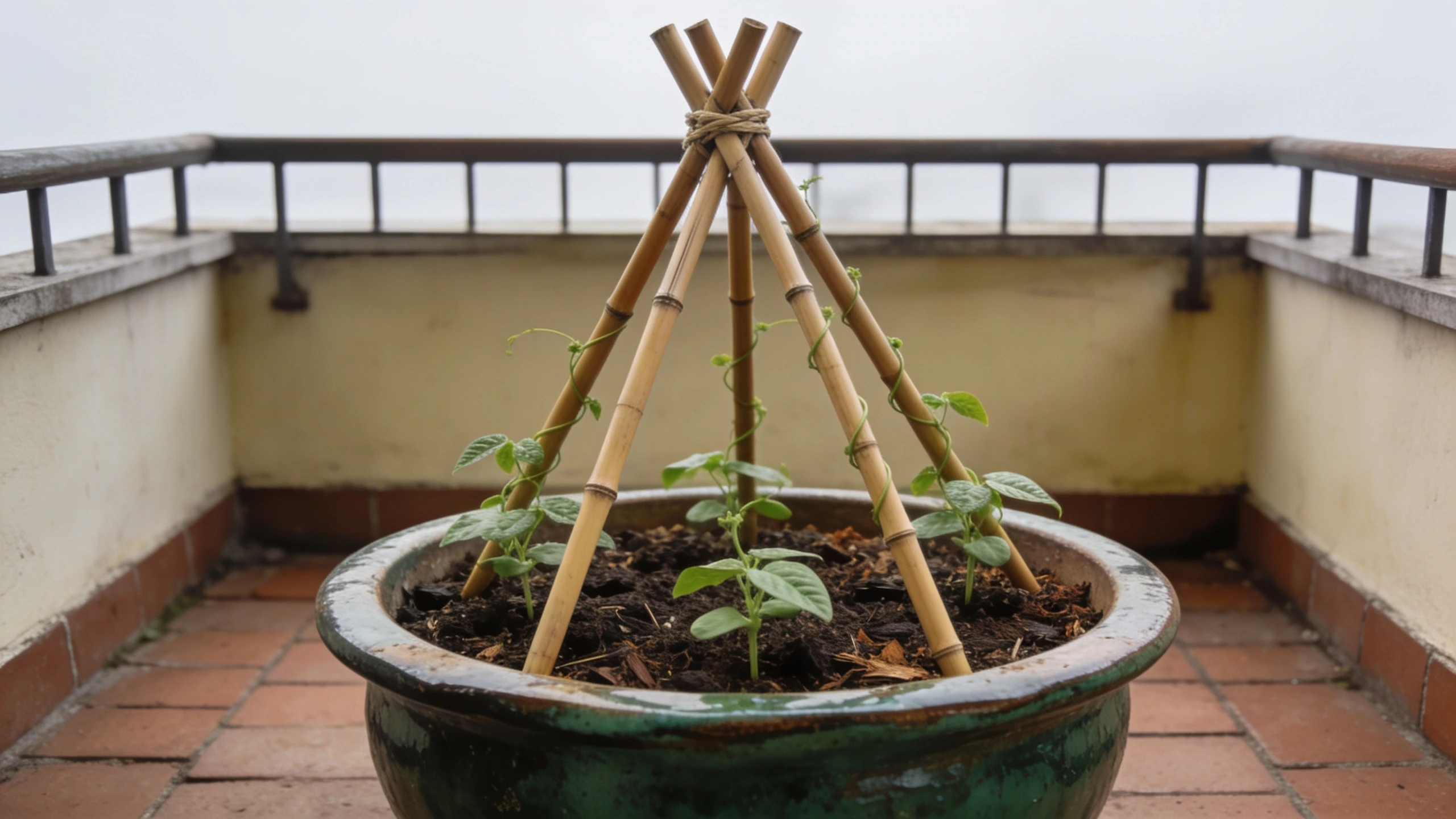
- Cane wigwam
- Six canes tied at the top. Stable in wind because it is a tripod, and it fits a container. Slightly less growing area than a flat net.
- String cordons
- A wire at head height, strings dropped to each plant. The commercial way to grow tomatoes and cucumbers, and the easiest to manage.
Sink posts deeper than feels necessary. A net covered in beans in August is a sail, and I have had a shallow-set post lever itself out of wet ground in one gusty afternoon.
Water is the whole problem, and here is the arithmetic#
This is the part the pretty photographs leave out, so it is worth being specific.
A plant in the ground can send roots down and sideways for water. A plant in a 3 litre wall pocket cannot. On a sunny wall in July, that pocket can lose most of its available water in a single day, and once compost has dried to the point of shrinking away from the sides, water runs down the gap and out of the bottom without wetting anything.
So the rule I work to is simple. Thirty litres of compost per fruiting plant, minimum. A tomato or cucumber in 30 litres can be watered once a day and be fine. The same plant in 5 litres needs watering twice a day in a heatwave, and will stall the first time you are out.
If you want a planted wall anyway, fit drip irrigation on a battery timer at the same time as you fit the frame. Retrofitting it around established plants is miserable. The EPA WaterSense guidance on watering explains why deep and infrequent beats little and often, and the principle holds on a wall too, it is just far harder to achieve.
What a wall or fence can actually carry#
Wet compost weighs roughly a kilogram a litre. A planted wall of sixty litres is therefore about 60 kg of soil, plus the frame, plus the plants, plus the water you just added.
A lapped fence panel is not a structural element. It is thin boards in a frame, designed to stop the wind and nothing else. I would not hang more than a couple of small pots on one.
So: fix into masonry with proper plugs, or fix to the fence posts rather than the panels, or best of all stand the frame on the ground and use the wall only to stop it tipping over. That last option is the one I use now, and it removes the whole question.
Leave an air gap of about 5 cm behind anything you fix flat to a wall. It keeps the wall dry, and on an older wall with soft mortar it also keeps roots out of the joints. The RHS advice pages cover which climbers are self-clinging and which need support, which is the distinction that matters here.
Why most vertical garden kits disappoint#
I have tried enough of these to have a view. The frames are usually fine. The problem is the specification everything else is built to.
The second failure is drainage. Stacked systems drain from one level to the next, which sounds efficient and means the bottom row sits permanently wet while the top row bakes. Plants at the two ends of that gradient want opposite treatment and you only have one watering can.
What it costs to start#
I would spend the money in this order, and the first line does most of the work.
- Two posts and pea netting
- $25 to $45. Grows beans and peas for several seasons. The highest return of anything on this page.
- Six bamboo canes and twine
- $10 to $18. Enough for one wigwam in a container.
- One 40 litre container
- $20 to $50. Deep enough for a cordon tomato or cucumber to be watered once a day.
- Wall trellis and battens
- $35 to $80. For ornamental climbers on a wall, with the air gap built in.
- Drip kit and battery timer
- $40 to $90. Only worth it for a pocket system, where it is not optional.
- Modular pocket wall
- $60 to $250. Buy last, and only with the drip kit above.
Mistakes I made so you do not have to#
Growing courgettes up a net. They are sold as space savers and the fruit weight simply tears the stem off the frame. Every fruit needs its own sling. I gave up.
Planting into a pocket wall before fitting irrigation. I told myself I would water by hand twice a day. I managed four days.
Using a fence panel as the fixing point. It bowed within a fortnight and I had to unpick the whole thing and start again off the posts.
Planting the top row with the thirstiest plants because they looked best up there. The top row dries first. Put the toughest things at the top and the thirsty ones at the bottom.
When growing upwards is the wrong answer#
If your limit is light rather than floor space, a frame can make it worse by shading what is behind it. Check where the shadow falls at four in the afternoon before you build.
If you want root crops, storage onions or brassicas, stay on the ground. Depth is not negotiable for those.
And if you are on an exposed balcony, be honest about wind before you build anything tall. A two metre frame on the eleventh floor is a structural decision, not a gardening one.
Where the guidance here comes from#
The plant choices and the 30 litre rule are mine, worked out by killing things in containers that were too small. For the parts I would not guess at, the RHS advice on growing your own covers spacing and timing properly, and Garden Organic is good on keeping a container system fed without synthetic feed. Structural fixings are a job for whoever knows your wall, not for a gardening page.
The short version#
Grow climbers up and leave everything else on the ground. Build the support first. Give each fruiting plant 30 litres of compost, and if you cannot, fit irrigation instead of promising yourself you will water twice a day. That is genuinely most of it.
Related reading#
- Small balcony garden ideas: what to put where when the whole garden is two metres square.
- Gardening tools for small spaces: the four tools that do everything, and the wall rail that stores them.
- Raised bed garden layout ideas: where a net or wigwam sits in a bed plan.
- How to water a garden properly: the depth and frequency this page keeps referring to.
Frequently asked questions
Does vertical gardening actually save space?
For climbing crops, yes, and dramatically. A single square metre of soil with a net or cane frame above it will carry the same crop of beans, peas or cucumbers that would sprawl over four or five square metres on the ground. For anything that does not climb, the saving is smaller than it looks, because a stack of shallow pockets holds far less compost than one deep container of the same footprint.
What is the easiest thing to grow vertically?
Climbing French beans and runner beans. They send up their own stems, grip a net or cane without any tying in, crop for weeks and forgive irregular watering better than most. Peas are nearly as easy but finish earlier. Cucumbers and cordon tomatoes both work well and both need tying in, which is a job every ten days rather than a one-off.
Do living wall planters work?
The frames work. The failure is almost always water. A pocket holding two or three litres of compost on a sunny wall can dry out inside a day in July, and the pockets at the top dry first while the bottom row sits wet. If you want a planted wall rather than a crop frame, budget for drip irrigation on a timer from the start, and treat the plants as short-lived.
How much weight can a fence or wall take?
Far less than people assume, because wet compost is heavy. A litre of soaked compost weighs roughly a kilogram, so a modest planted wall of sixty litres is around 60 kg hanging off the structure, plus the frame. A lapped fence panel cannot carry that. Fix into masonry, or into fence posts rather than panels, or stand the frame on the ground and use the wall only to stop it tipping.
Will a vertical garden damage my wall?
Self-clinging climbers like ivy and Boston ivy can get into failing mortar and lift render, so on an old or soft-mortared wall use a trellis held off the surface on battens instead. Twining climbers on a trellis do no harm. The bigger practical risk is trapped damp behind a solid planted panel, which is another argument for a 5 cm air gap behind anything you fix on.
How much sun does a vertical garden need?
Six hours of direct sun for anything you intend to eat, and a south or west aspect for fruiting crops. A shaded wall will still grow ferns, ivy, heuchera and mint happily. Be careful with a hot south-facing wall in high summer, though: the reflected heat that ripens tomatoes early also cooks a shallow pocket planter by lunchtime.
What should I not grow vertically?
Root crops, brassicas and anything you want to store. Carrots, parsnips and potatoes need depth you cannot get in a wall system, and cabbage and kale get top heavy and rock loose. Courgettes are the classic mistake: they are sold as a climber often enough, but the fruit weight tears the stem off the frame unless you support every single one.
Topics in this article
About the author
Jeff has gardened professionally for over twenty years, mostly on heavy clay, and writes everything here from beds he still works himself. More from Jeff Tanun →
Keep reading
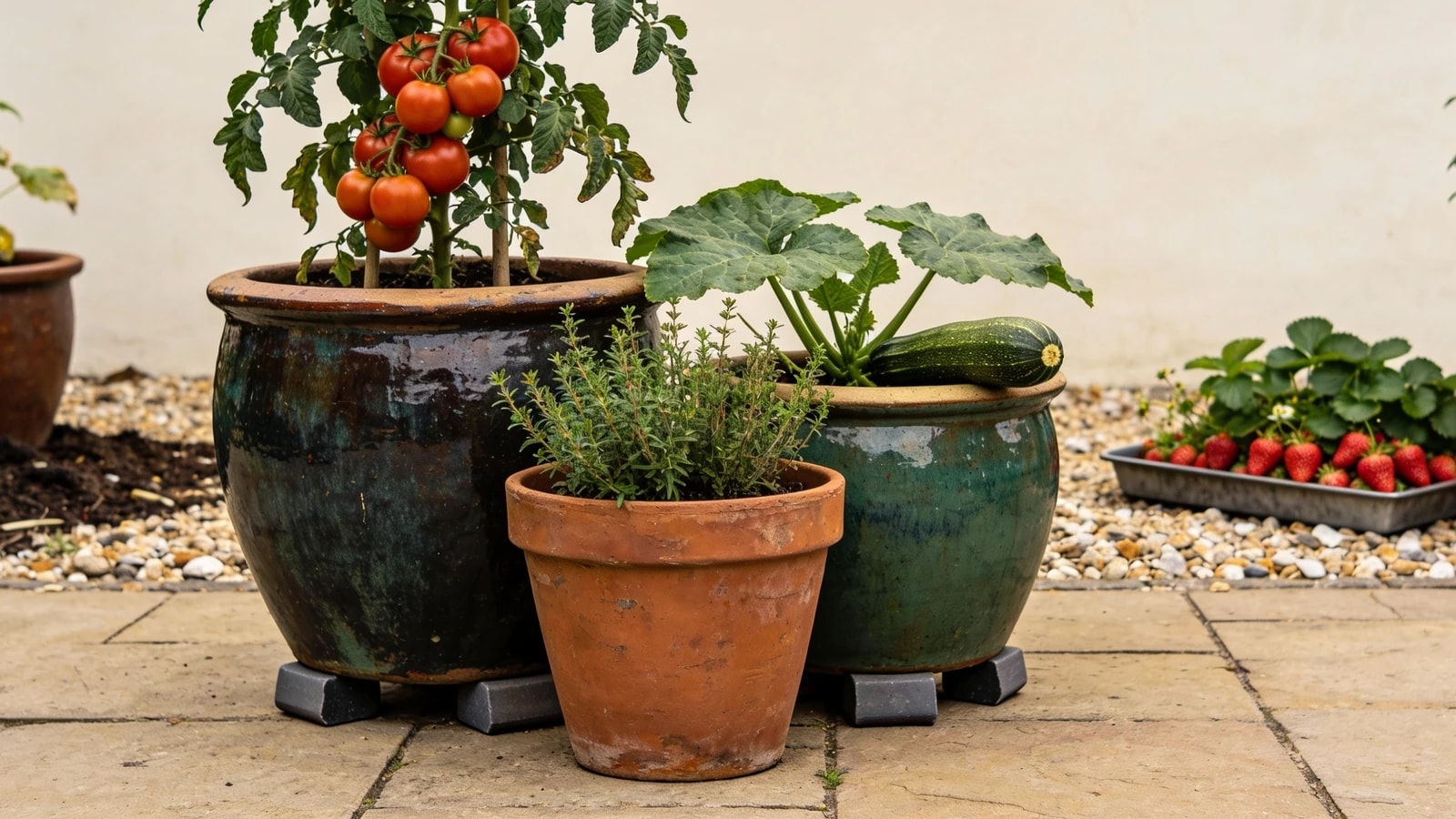
Container Gardening
Container gardening done properly. Why pot volume matters more than compost or feed, what to plant in what size, and how to water so nothing stalls in July.
Updated
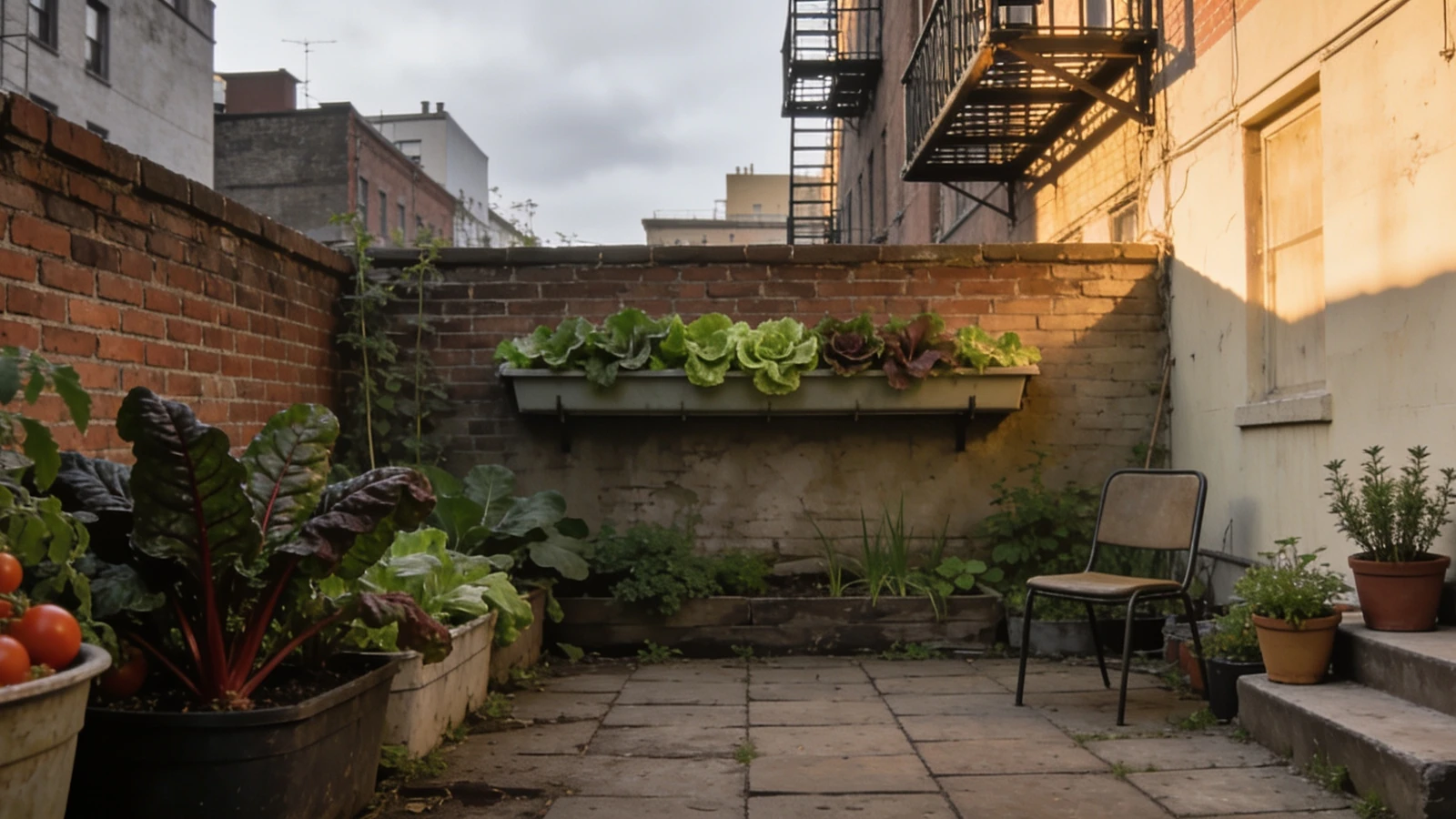
Small Space & Urban Gardening
Urban gardening comes down to light, pot size and wind. Get those three right and a courtyard or balcony feeds you. Here is how I work out what will grow.
Updated
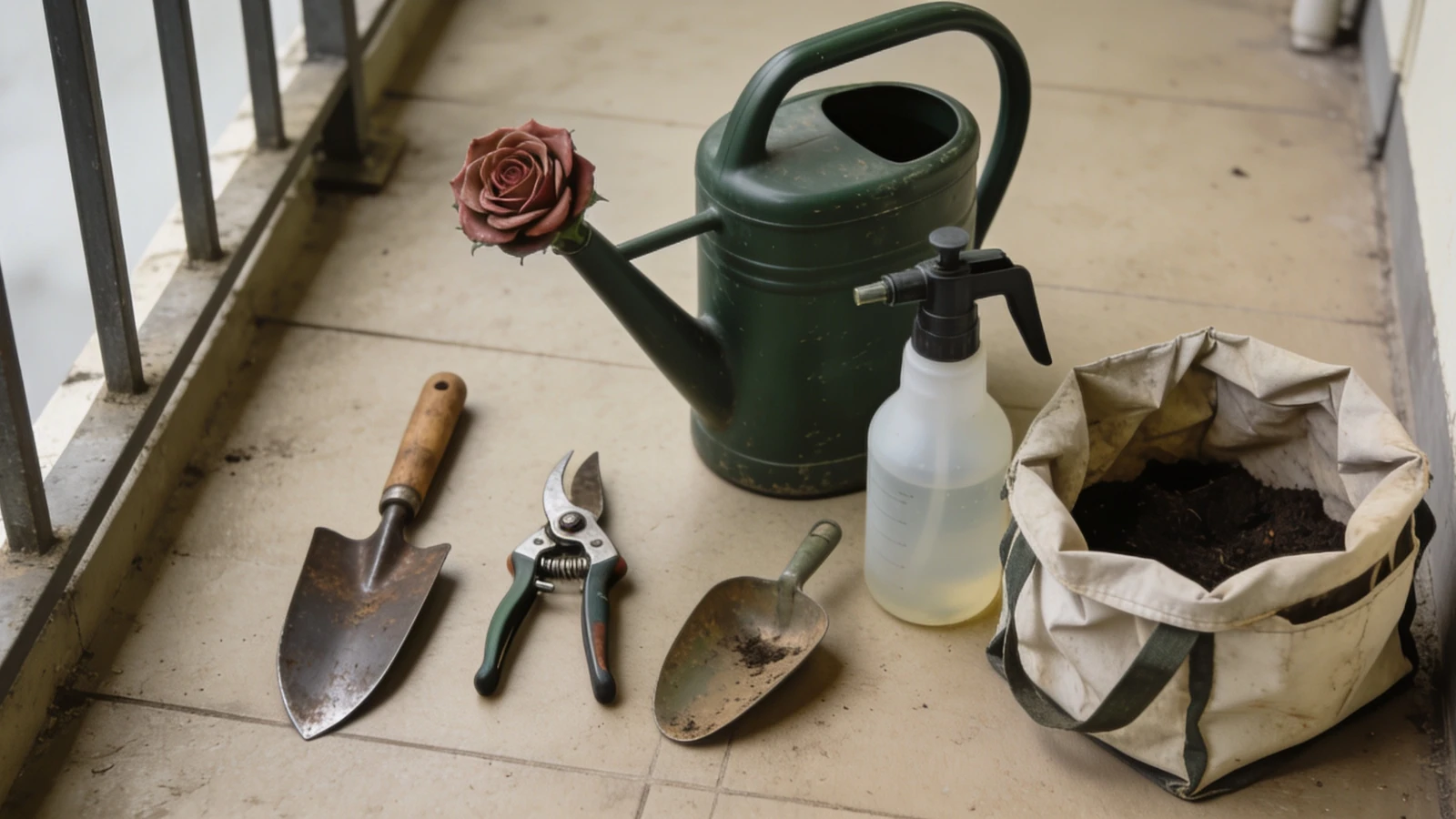
Gardening Tools for Small Spaces
A short, cheap tool kit for container gardening: what you need on a balcony or patio, what to leave out, and how to store it in a metre of space.
Updated