How to Grow Peas: Sow Early, Support Everything
How to grow peas that crop before the mildew. Why early sowing beats late, support even for dwarf varieties, and picking from the bottom of the plant up.
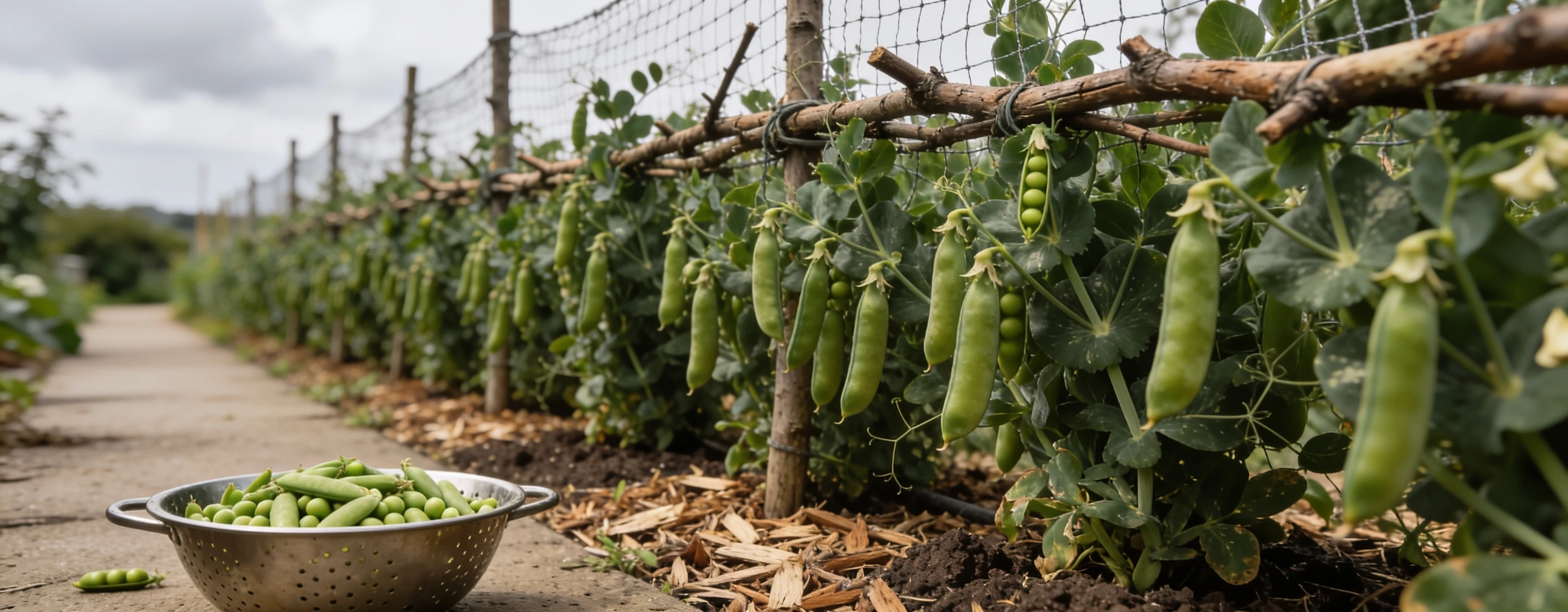
Peas are a cool weather crop that most people sow too late. Sown early they crop before powdery mildew and pea moth arrive, and sown in May they run straight into both. The other thing worth knowing is that every pea needs support, including the ones sold as dwarf.
The short answer
Sow as soon as the soil is workable, late winter or early spring, then every three weeks until early summer. Support everything, including dwarf varieties, because pods lying on wet soil rot. Water deeply at the base and mulch, since drought stress brings on the mildew that ends the crop. Pick from the bottom of the plant upwards every two or three days. Consider mangetout or sugar snap, which give more edible weight for the space.
Sow early, and keep sowing#
Peas germinate in cool soil and dislike heat. That single fact sets the whole calendar.
An early sowing, under a cloche or fleece if your winters are hard, is up and cropping in early summer before the two things that finish pea crops turn up: powdery mildew, which arrives in warm dry weather, and pea moth, which flies in early summer.
A May sowing meets both at exactly the wrong moment.
So: first sowing as soon as the soil is workable, then a short row every three weeks until early summer. Stop after that, because midsummer sowings rarely repay the space.
- Late winter, under cover
- Cloche, fleece or a cold frame. Gets you picking in late spring, well ahead of both pests.
- Early spring, direct
- The main sowing for most gardens. Soil workable, still cool, germination reliable.
- Every three weeks to early summer
- Successions. Each sowing crops for two or three weeks, so overlapping keeps peas coming.
- Autumn sowing
- Possible with hardy round-seeded varieties in mild areas, overwintering for a very early crop. Mice are the main risk.
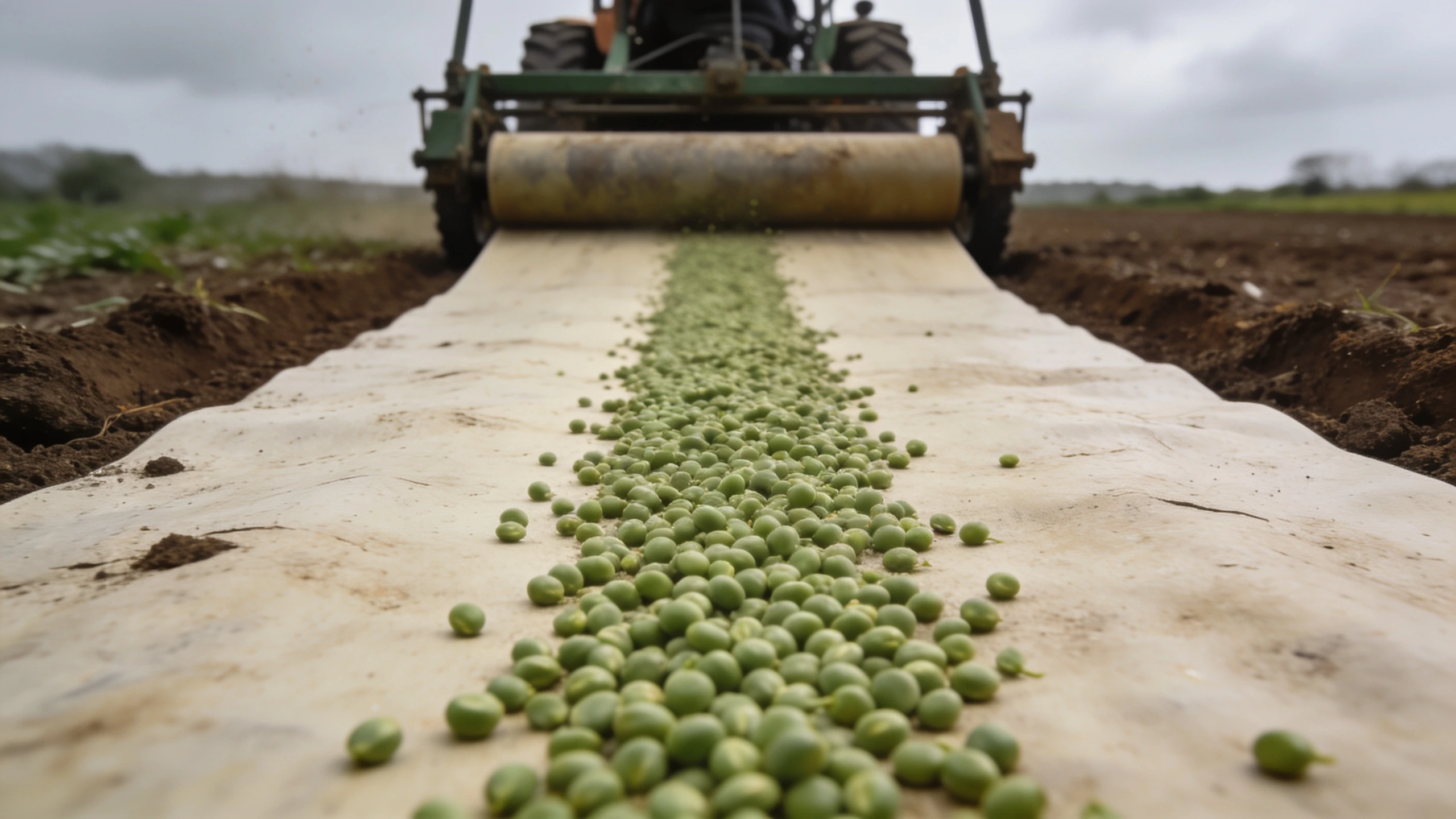
Sow 4 to 5 cm deep in a flat bottomed drill about 15 cm wide, seeds scattered 5 cm apart in a broad band rather than a single line. That band supports itself better and yields more per length of row.
Support everything#
Dwarf peas are only dwarf compared to the two metre kinds. A 45 cm plant still collapses onto the soil, and pods lying on wet ground rot and get eaten.
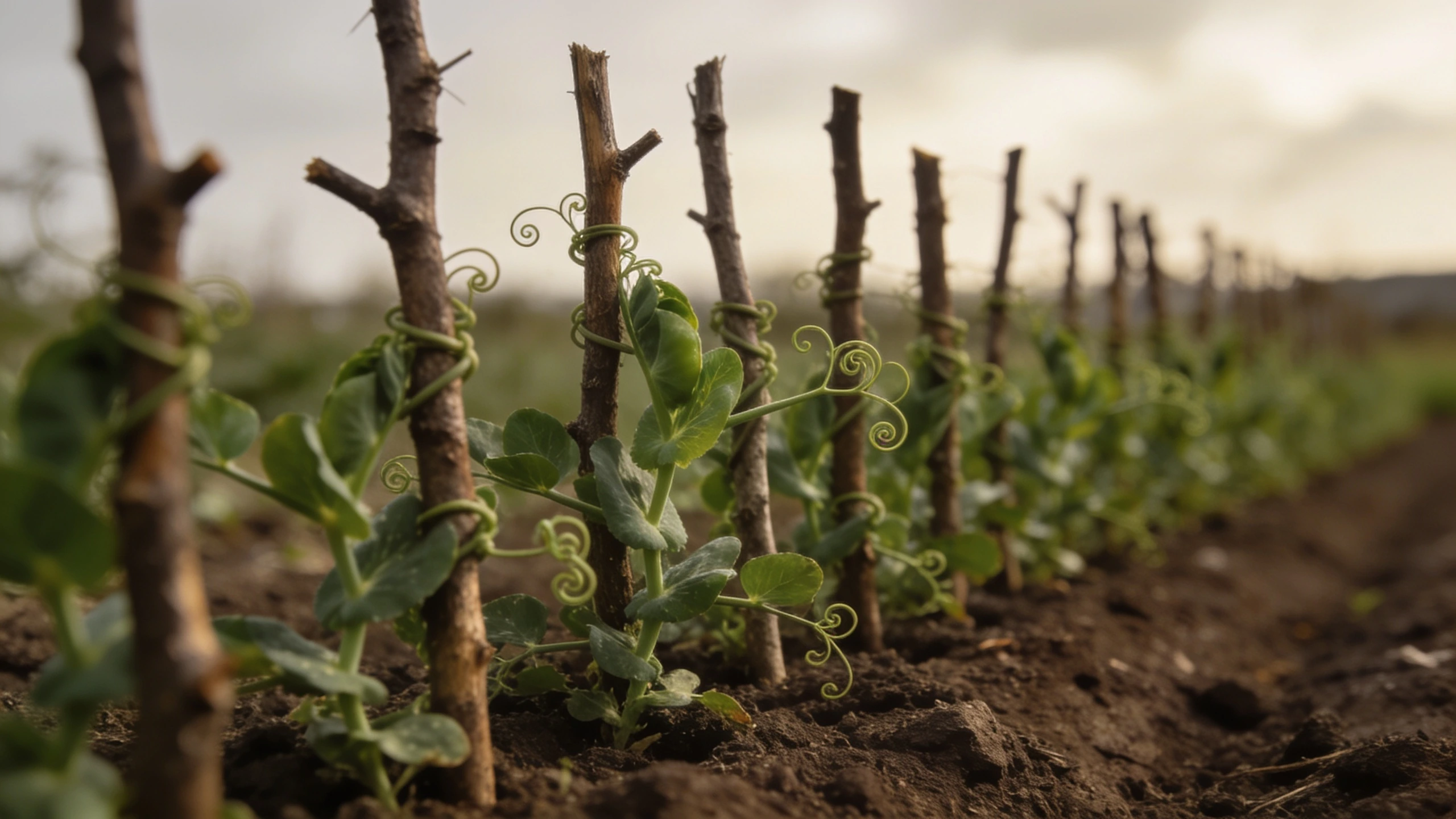
The good news is that support for peas costs nothing. Peas climb with tendrils and want something thin to grip, which makes twiggy prunings ideal and better than canes.
Key points
- Twiggy prunings pushed in along the row, at sowing time. Free, and exactly the right thickness for a tendril.
- Pea netting between two posts for taller varieties. Two metres for the tall kinds.
- Chicken wire bent into an arch over the row also works and is easy to store.
- Put the support in at sowing, not later. Pea tendrils reach within days and a flopped row is hard to lift.
- Canes alone are too thick for tendrils to grip. Add netting or string between them.
Shelling, mangetout or sugar snap#
Worth thinking about, because it changes the yield per square metre considerably.
- Shelling peas
- Grown for the peas inside. Wonderful raw straight off the plant, and you compost most of the weight.
- Mangetout
- Picked flat before the peas swell, eaten whole. Pick every two days or they get stringy.
- Sugar snap
- Picked plump and eaten pod and all. My pick for a small garden: the eating quality is excellent and nothing is wasted.
- Pea shoots
- Any pea variety sown thickly in a shallow tray and cut at 10 cm. Four weeks from seed to salad, and a good winter windowsill crop.
If space is the constraint, sugar snap and mangetout give you far more edible weight for the same row, because the pod is the crop rather than the packaging.
Watering, mildew and the link between them#
Powdery mildew, the white dusty coating, is what ends most pea crops. It arrives in warm dry weather and it is made much worse by plants that are short of water at the roots.
So watering is disease management as much as it is growth. Water deeply at the base, particularly once flowering starts, and mulch the row to hold it.
Space the rows for air movement. Crowded double rows mildew first.
And accept the timing: a late sowing will get mildew, and an early one will usually have been picked before it matters. That is the argument for sowing early rather than any treatment.
Pea moth, and the timing answer#
Pea moth lays eggs on flowering peas in early summer, and the maggots develop inside the pods. You find them when you open the pods, and by then nothing can be done.
The answer is timing rather than treatment. A crop early enough to be picked before the main flight, or one flowering after it, largely escapes. Fine mesh over the row during flowering also works and is the reliable version if your timing cannot avoid it.
This is the second and stronger argument for sowing as early as you can.
Picking, from the bottom up#
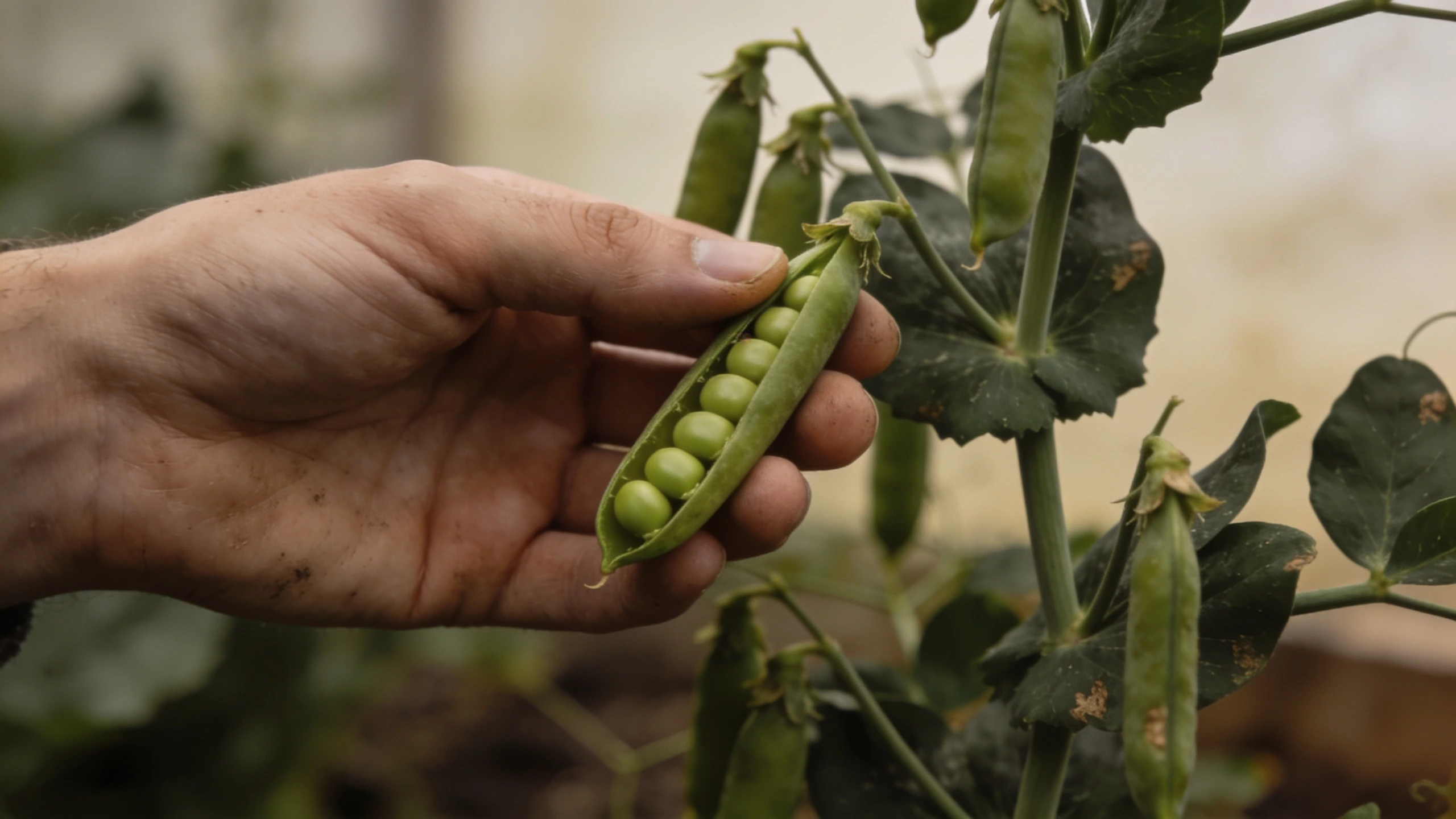
Peas mature from the bottom of the plant upwards, so start at the base and work up.
Pick every two or three days once they begin. Shelling peas when the pods are well filled but still bright green, mangetout while flat, sugar snap when plump and crisp.
Once pods go pale, dull or lumpy they are past it: the sugars have turned to starch and the pods are tough. Those are worth leaving to dry and saving for seed rather than eating.
Frequent picking keeps the plant producing. Mature pods left on it tell the plant it has finished, and cropping slows and stops.
At the end of the season#
Cut the tops off for the compost heap and leave the roots in the ground. Like beans, peas fix nitrogen in root nodules, and leaving the roots returns it rather than carting it away.
Then follow the peas with a leafy crop. Brassicas and salad both use the nitrogen, which is why legumes sit before brassicas in a traditional rotation.
What it costs#
- A packet of seed
- $2 to $5, and peas are large seeds so a packet holds fewer than you might expect. Two packets for a season of successions.
- Twiggy prunings
- Free, and better than anything you can buy. Save them when you prune in winter.
- Pea netting and two posts
- $20 to $45 for tall varieties, reused for years.
- Fine mesh
- $15 to $40 if pea moth is a persistent problem locally.
- Mulch
- $0 to $30, and it is doing mildew prevention as much as water retention.
Where this needs adjusting#
In a hot climate, peas are a winter and early spring crop only. Sow in autumn, pick in spring, and do not attempt summer.
In a very cold garden, start under a cloche and expect the first sowing to sit for a while before moving. Round seeded varieties are hardier than wrinkled ones for early and autumn sowings.
Watch for mice on autumn and very early sowings, which take the seed out of the ground before it germinates. Sowing into pots and planting out is the reliable workaround.
Where the guidance here comes from#
The sow-early argument, and the point that it is simultaneously the answer to both mildew and pea moth, is the thing I would most want someone to take from this. The support-everything rule came from a flopped row of dwarf peas rotting on wet soil. For sowing depths, variety types and pest timing the RHS advice on growing your own is the reference I check, and Garden Organic is good on timing-based pest avoidance, which is what this crop mostly relies on.
The short version#
Sow as early as the soil allows, then every three weeks to early summer, in a wide band 4 to 5 cm deep. Push twiggy support in at sowing, including for dwarf varieties. Water deeply at the base and mulch, because dry roots bring the mildew on. Pick from the bottom upwards every two or three days. Cut the tops for compost and leave the roots in.
Related reading#
- How to grow beans: the same family, the same nitrogen point, and a warm season rather than a cool one.
- Vertical gardening: supports, and why a netted row yields more per square metre.
- Garden planner: successions and why legumes come before brassicas.
- How to grow salad leaves: pea shoots, which belong in the same tray system.
Frequently asked questions
When should I sow peas?
As early as the soil is workable, usually late winter or early spring, and then again every three weeks until early summer. Peas are hardy, they germinate in cool soil and they hate heat, so an early sowing crops before the mildew and the pea moth arrive. A first sowing under a cloche in February often outperforms one made in May.
Do dwarf peas need support?
Yes, despite the name. A 45 cm dwarf pea still flops onto the soil without something to grip, and once the pods are lying on wet ground they rot and the slugs find them. Twiggy prunings pushed in among the row are enough and cost nothing. Taller varieties need netting or canes to two metres.
What is the difference between peas, mangetout and sugar snap?
Shelling peas are grown for the peas inside and the pod is discarded. Mangetout are picked flat before the peas swell and eaten whole. Sugar snap are picked when plump and eaten pod and all. For a small garden mangetout and sugar snap give more edible weight per square metre, because you are not throwing the pod away.
How do I stop pea moth?
Timing, mostly. Pea moth lays in early summer and the maggots end up inside the pods. A sowing early enough to be picked before the flight period, or late enough to flower after it, largely avoids the problem. Fine mesh over the row during flowering also works. There is no useful treatment once the maggots are inside the pods.
Why did my peas get white powdery leaves?
Powdery mildew, and it is the thing that finishes most pea crops. It arrives in warm dry weather, particularly when the plants are short of water at the roots. Water deeply at the base, mulch, space the rows for air movement, and accept that late sowings will get it. An early crop is usually picked before it matters.
How should I pick peas?
From the bottom of the plant upwards, because the lowest pods mature first. Pick every two or three days once they start, and pick before the pods go pale and tough. Frequent picking keeps the plant producing; leaving mature pods on it signals that the job is done and cropping slows and then stops.
Can I grow peas in containers?
Yes, and a dwarf or sugar snap variety in a 30 litre container with twiggy support works well. Peas are shallow rooted but thirsty, so expect to water daily in warm weather. Pea shoots are also worth growing in a shallow tray purely for the tips, which are cut at 10 cm and used as a salad leaf.
Topics in this article
About the author
Jeff has gardened professionally for over twenty years, mostly on heavy clay, and writes everything here from beds he still works himself. More from Jeff Tanun →
Keep reading
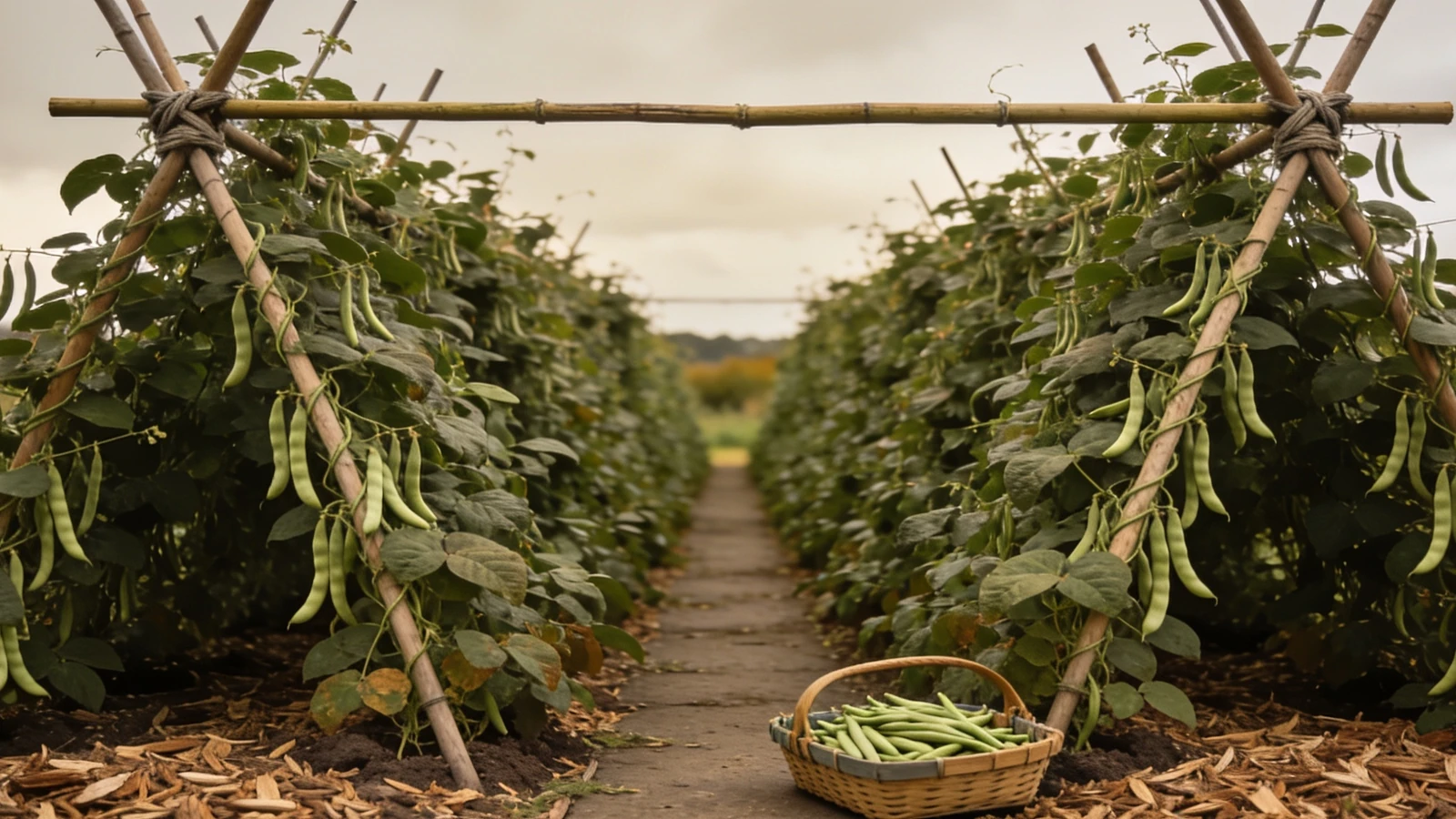
How to Grow Beans
How to grow climbing and dwarf beans. Runner against French, why flowers fail to set in heat, how to keep picking, and the nitrogen the roots leave behind.
Updated
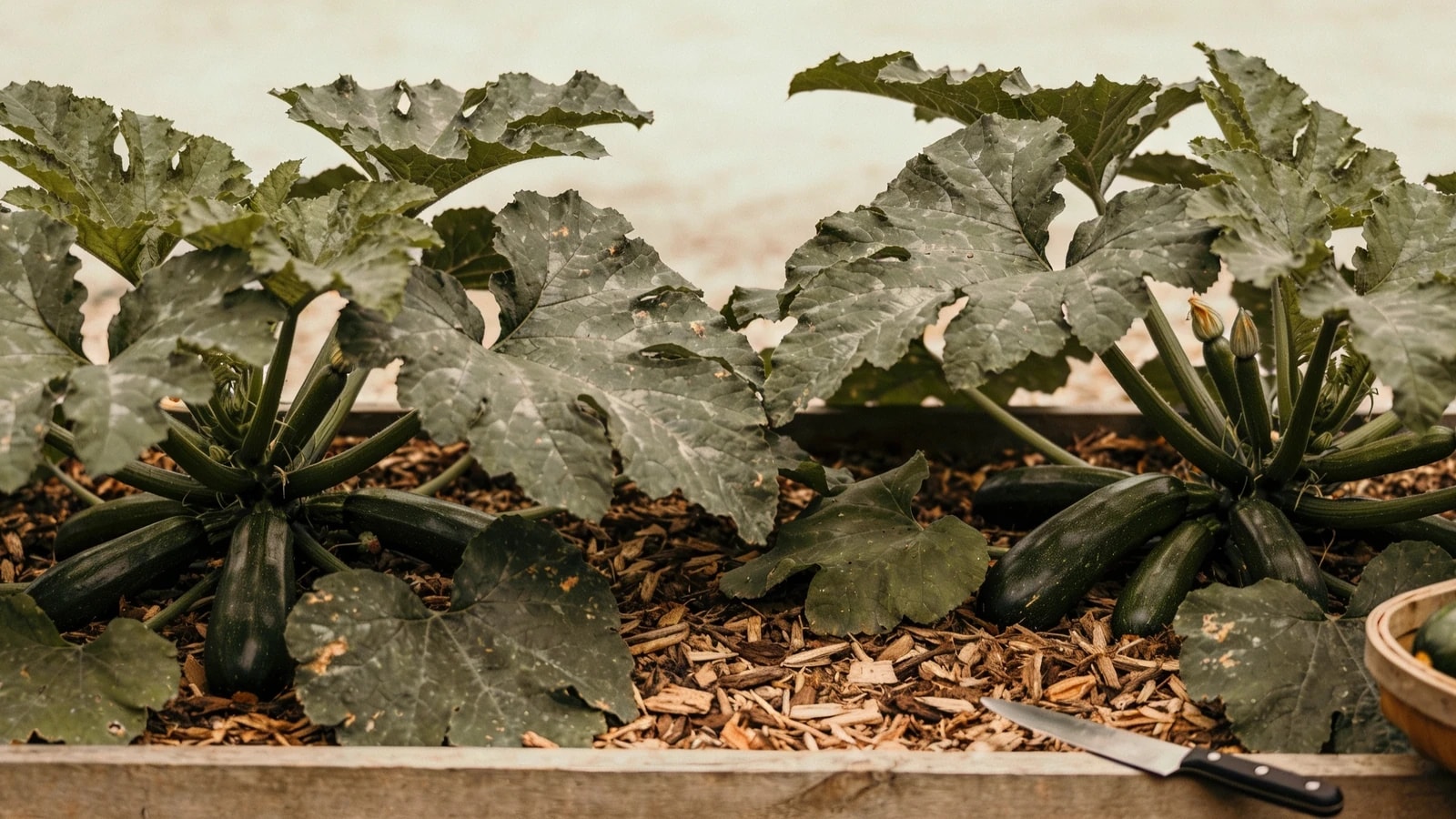
How to Grow Courgettes
How to grow courgettes and zucchini: how many to plant, why the first fruits rot, hand pollination, and picking small enough to keep the plant producing.
Updated
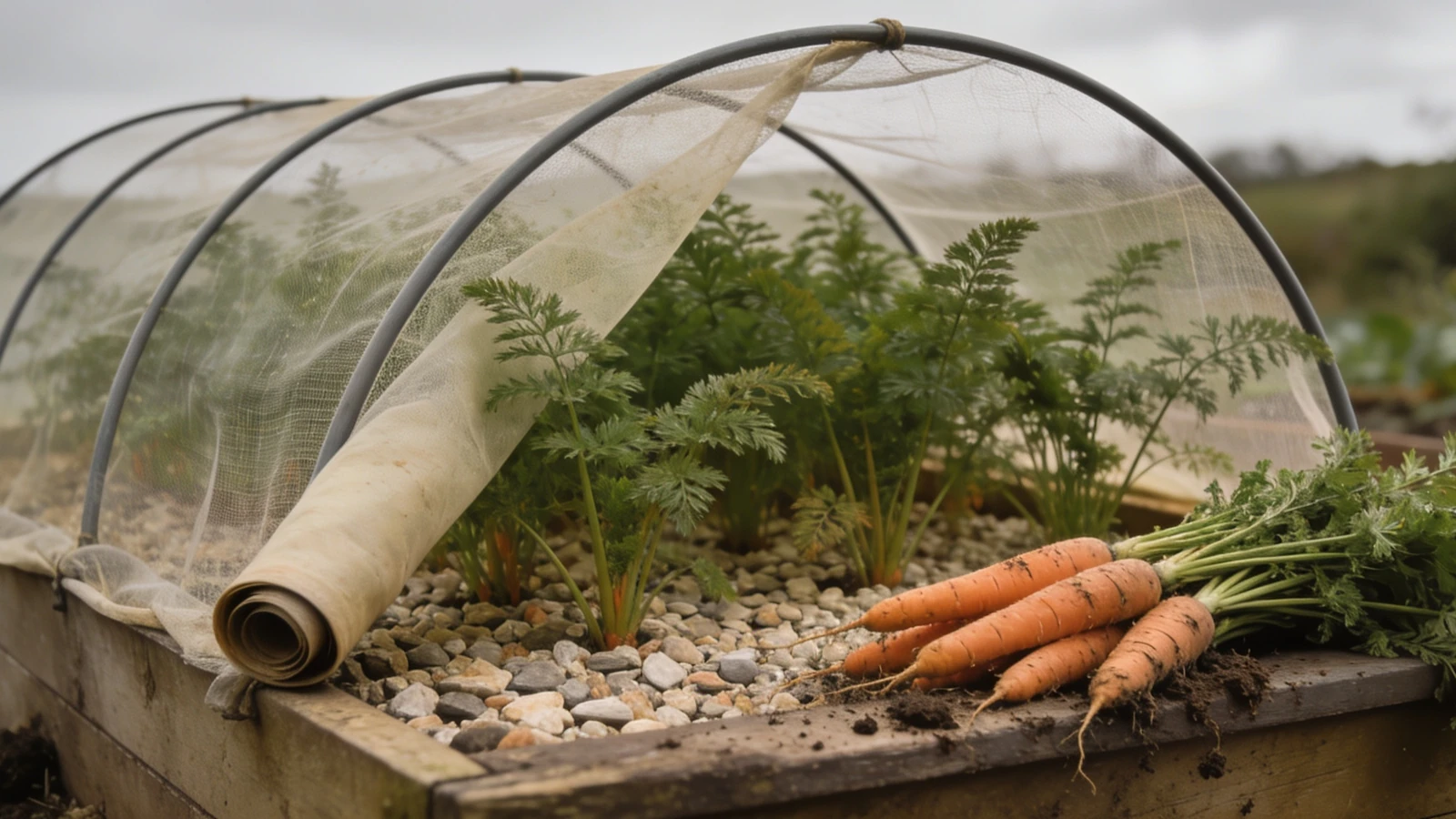
How to Grow Carrots
How to grow carrots that are not forked or stumpy. Why manure ruins them, how to sow so you barely thin, and the mesh height that stops carrot fly.
Updated