How to Grow Carrots: Stony Soil Is the Whole Problem
How to grow carrots that are not forked or stumpy. Why manure ruins them, how to sow so you barely thin, and the mesh height that stops carrot fly.
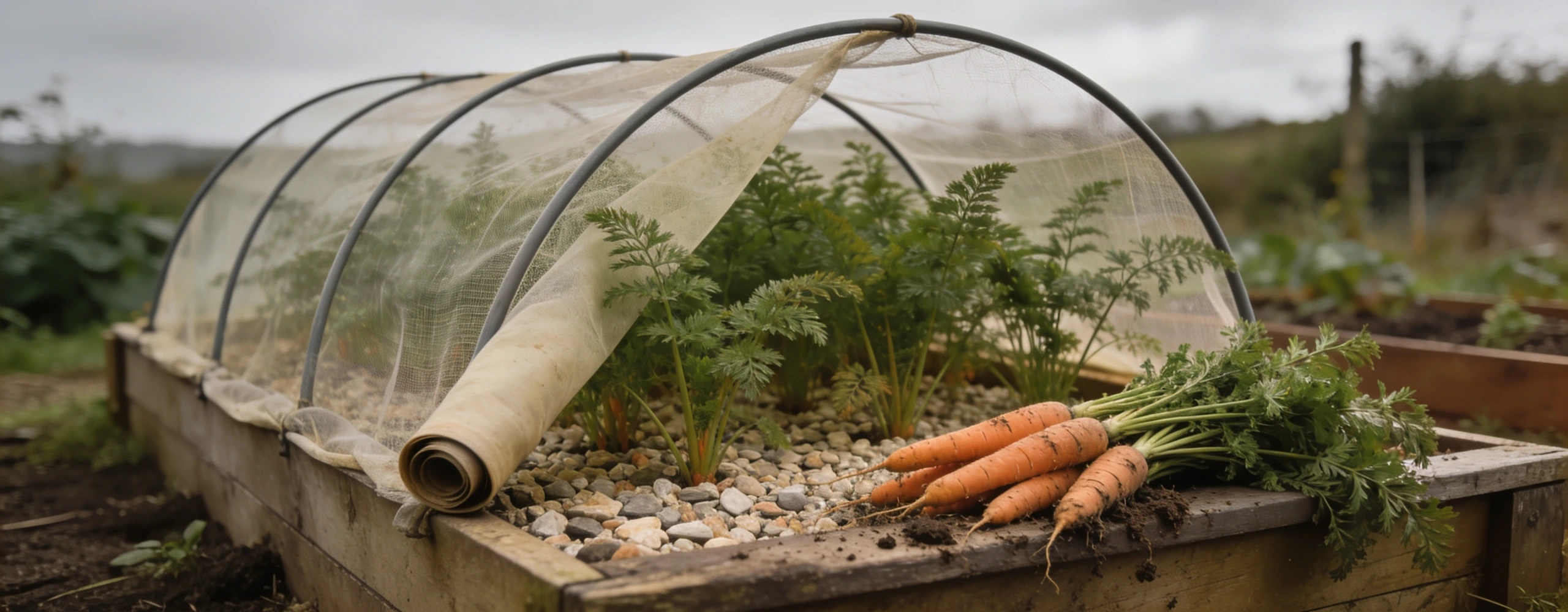
Carrots are the crop that most exposes your soil. Everything else about growing them is easy, and the difference between long clean roots and a handful of forked stumps is almost entirely what the seed had to push through. That, and the fly.
The short answer
Sow into deep, stone free soil that has not been manured recently, because fresh organic matter makes roots fork. Sow thinly, a seed every 2 to 3 cm, so you barely thin, and keep the drill damp for the two to three weeks germination takes. Cover with fine mesh or build a 75 cm barrier, since carrot fly flies low. On stony or heavy ground, grow a short variety or use a deep container instead.
Soil decides the crop#
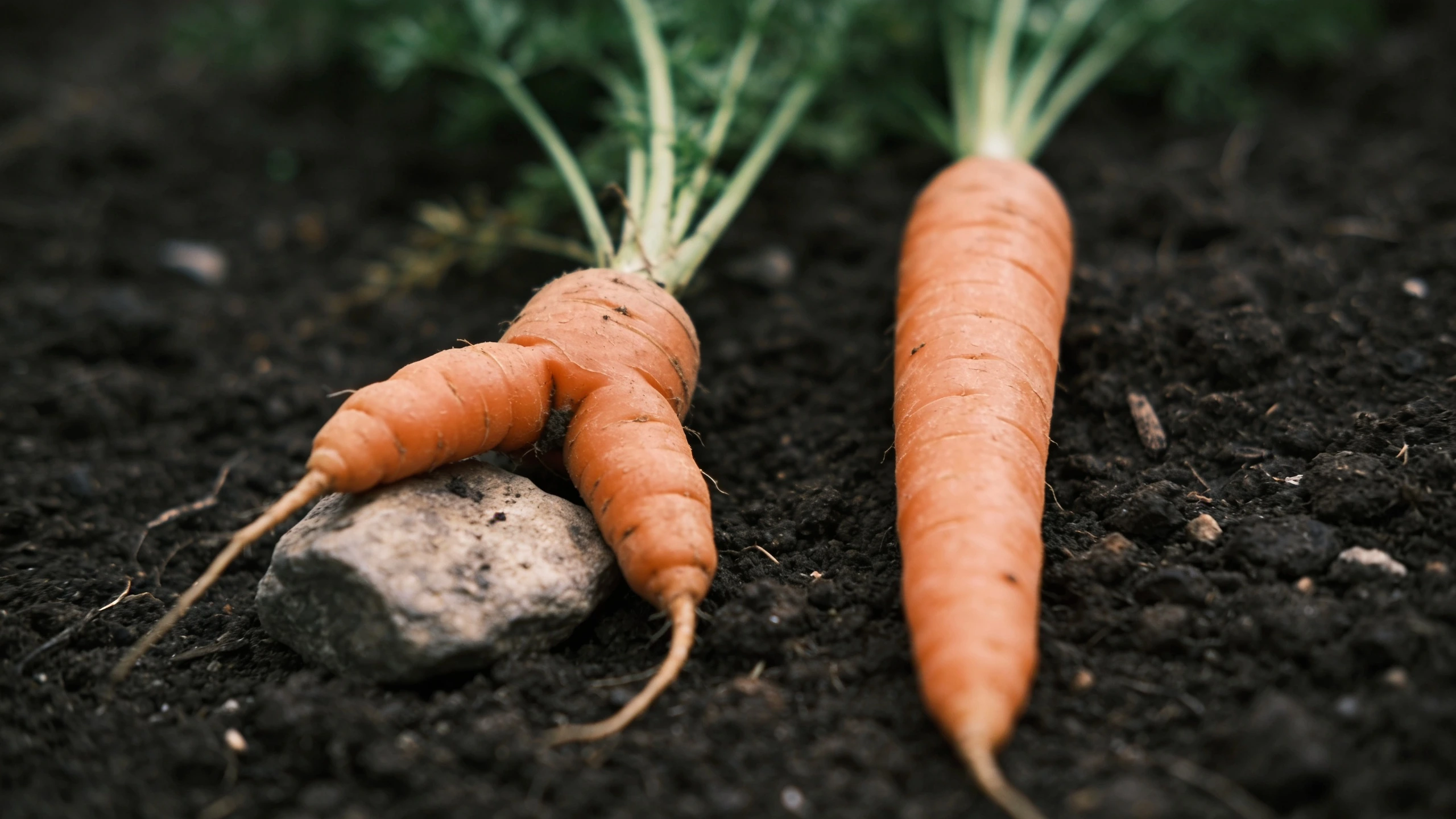
A carrot is a taproot trying to go straight down. Anything in the way diverts it.
- Stones
- The obvious one. Each stone forks a root. Sieve the top 25 cm if you are serious, or accept short varieties.
- Fresh manure or compost
- Causes forking and lush tops with thin roots. Carrots follow a manured crop by a year rather than being manured themselves.
- A compacted pan
- Common in beds that were dug once and then trodden. The root reaches it and stops, giving a stumpy blunt end.
- Heavy clay
- Resists the root and holds water. Short stumpy varieties or a raised bed are the realistic answers.
- Lumps of undecomposed matter
- Half rotted material in a new bed acts like stones. Sheet mulched beds are often best given a year before carrots.
If your ground fails on any of those, do not fight it. A 30 cm deep container of compost mixed with a third sand grows better carrots than a stony bed ever will.
Sowing, thinly and patiently#
Two things go wrong at sowing: too thick, and drying out.
Sow 1 cm deep in a shallow drill, aiming for a seed every 2 to 3 cm. The seed is tiny, so mix it with dry sand to spread it, or buy pelleted seed. Firm the drill back gently and water with a fine rose.
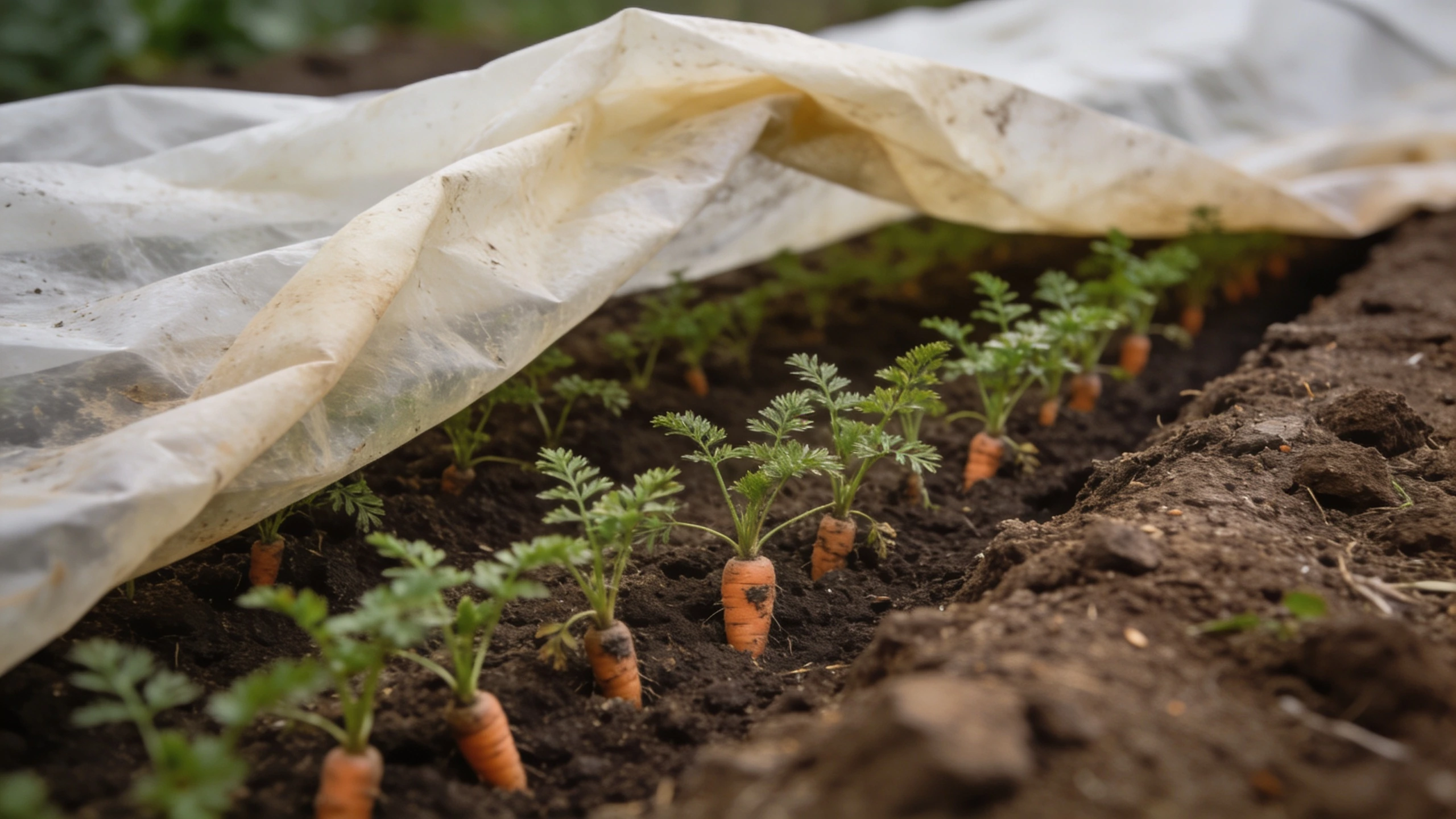
Then keep it damp. Germination takes two to three weeks, which is longer than most crops, and a single dry spell in that window loses the sowing. Covering the drill with fleece or a plank until the seedlings show holds the moisture and stops the surface crusting.
Buy fresh seed each year. Carrot seed loses viability faster than most, and a failed sowing that was actually old seed wastes a month.
Carrot fly, and the 75 cm rule#
Carrot fly is the reason people give up on carrots. The larvae tunnel into the roots and ruin them, and by the time you see the damage the crop is done.
The insect flies low, generally below about 60 cm. That single fact gives you two reliable defences.
Key points
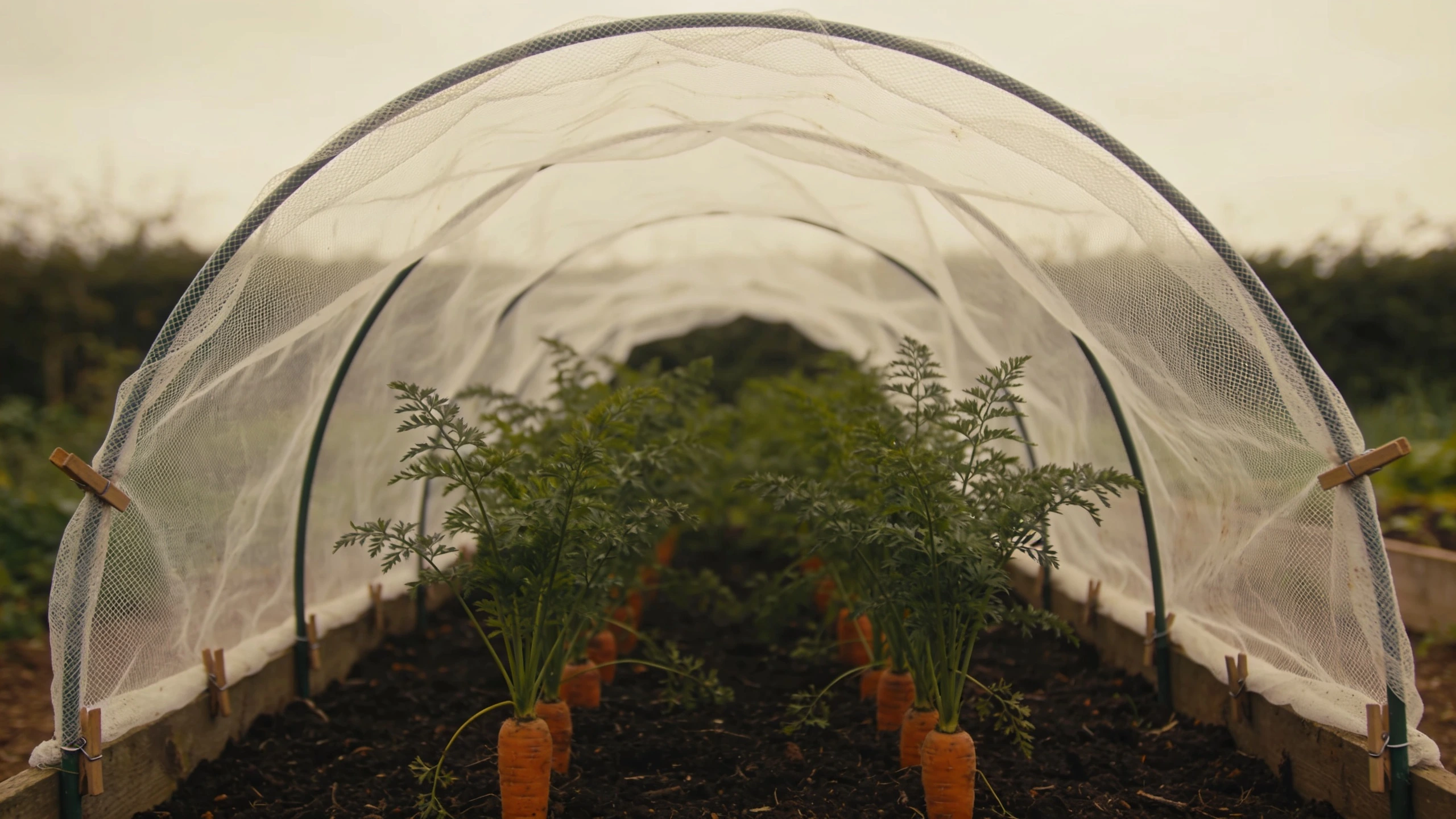
- Cover the bed with fine insect mesh from sowing, sealed at the edges. This is the most reliable method and it also excludes other pests.
- Or build a barrier 75 cm high around the bed from mesh or fleece. The fly will not climb over it.
- Or grow in containers raised above that height, which works for the same reason.
- Sow thinly so you barely thin, because crushed foliage releases the smell that attracts the fly.
- Thin in the evening, water afterwards, and take every thinning away rather than leaving it on the soil.
Companion planting with onions is widely recommended and the evidence for it is weak. Mesh works; the smell of alliums is not a substitute.
Thinning, watering and feeding#
If you sowed thinly you may not need to thin at all, which is the goal. If seedlings are crowded, thin to about 5 cm apart for maincrop and 3 cm for earlies, in the evening, and remove the thinnings.
Water consistently rather than heavily. Irregular watering causes splitting, the same mechanism as in tomatoes: the root swells faster than its skin after a drought.
Do not feed. Carrots in reasonable soil need nothing, and nitrogen gives you magnificent foliage and disappointing roots.
Harvest and storage#
Start pulling at any usable size. There is no need to wait for a target, and pulling every other root gives the rest room.
Water the row before pulling if the soil is dry, which stops the root snapping.
Maincrop carrots can stay in the ground into winter in mild areas, covered with straw or fleece if hard frost is forecast. Otherwise lift them, twist off the tops rather than cutting, and store in boxes of dry sand somewhere cool and frost free. They keep for months that way.
What it costs#
- A packet of seed
- $2 to $5, and buy it fresh each year rather than using the remains of last year's.
- Fine insect mesh, 2 m
- $15 to $40. The single purchase that decides whether the crop survives, and it lasts years.
- Hoops for the mesh
- $10 to $25, or free from old plastic pipe.
- A 30 cm deep container
- $20 to $50 if your ground is stony. Better carrots than a poor bed.
- Sand for the compost mix and for storage
- $8 to $18 a bag, and it does both jobs.
Where this needs adjusting#
On stony or heavy ground, switch to short stumpy varieties like the Chantenay and Paris Market types, which are bred for exactly this, or grow in containers and stop trying.
In a hot climate, sow earlier and later and avoid the hottest months, because carrots germinate poorly in hot soil and roots become woody.
In a very short season, stick to early varieties and sow under fleece to get the soil warm enough for germination.
Where the guidance here comes from#
The no-manure rule and the 75 cm carrot fly barrier are conventional and both are things I ignored once and paid for. For variety choice by soil type, sowing depth and storage the RHS advice on growing your own is the reference I check, and Garden Organic is the better source on carrot fly barriers and on why the companion planting claims do not hold up well.
The short version#
Deep, stone free, unmanured soil, or a deep container instead. Sow thinly every three weeks, 1 cm deep, and keep it damp for the three weeks germination takes. Mesh over the bed or a 75 cm barrier around it. Do not feed. Pull at any size, and store maincrop in sand.
Related reading#
- Garden planner: rotation, and why carrots follow a manured crop rather than being manured.
- Container gardening: depth and compost mix for growing them in pots.
- Gardening tools for raised beds: hoops and mesh, which do several jobs at once.
- Garden soil vs potting soil: what to fill a deep container with.
Frequently asked questions
Why are my carrots forked or stumpy?
Something stopped the root going down. Usually a stone, a lump of undecomposed compost, a hard pan below the surface, or fresh manure, which makes the root fork toward the richest patches. Carrots want deep, stone free, unmanured soil that has not been recently enriched. On heavy or stony ground grow a short stumpy variety or grow them in a deep container instead.
Should I add manure or compost before sowing carrots?
No, and this is the mistake that catches people who do everything else right. Carrots are one of the few crops that resent freshly enriched soil: it causes forking and lush tops with poor roots. Grow them in ground that was manured for a previous crop a year ago, which is exactly why they sit after legumes and brassicas in a rotation.
How do I stop carrot fly?
Fine insect mesh, and the height matters. Carrot fly flies low, generally under about 60 cm, so either cover the bed completely with mesh fine enough to exclude the fly, or build a barrier 75 cm high around it. Both work. The other measures help at the margins: sow thinly to avoid thinning, thin in the evening, and never leave thinnings on the soil, because the smell attracts the fly.
How thickly should I sow carrots?
Thinly, and it is worth the patience. Aim for a seed every 2 to 3 cm so you barely need to thin at all, because thinning releases the smell that brings carrot fly in. Carrot seed is tiny, so mix it with dry sand to spread it more evenly, or use pelleted seed. Sow 1 cm deep in a shallow drill and firm it back gently.
How long do carrots take to grow?
Early varieties are ready in about ten to twelve weeks and maincrop in sixteen to twenty. You can start pulling them at any usable size rather than waiting for a target, and pulling every other one from a row gives the rest more space. Maincrop carrots can stay in the ground into winter in mild areas, or be lifted and stored in boxes of sand.
Can I grow carrots in containers?
Very well, and it sidesteps both stony soil and carrot fly. Use a deep container, at least 30 cm for maincrop and 20 cm for a short variety, filled with a mix of multipurpose compost and a third sand or grit for an open texture. Raising the container off the ground also puts the crop above the height carrot fly flies at.
Why did my carrot seed never come up?
Almost always the soil dried out during germination. Carrot seed is slow, two to three weeks, and it must stay damp the whole time. Cover the drill with fleece or a board until the seedlings appear, water gently with a rose, and be patient. Old seed is the other cause: carrot seed loses viability faster than most, so buy fresh each year.
Topics in this article
About the author
Jeff has gardened professionally for over twenty years, mostly on heavy clay, and writes everything here from beds he still works himself. More from Jeff Tanun →
Keep reading
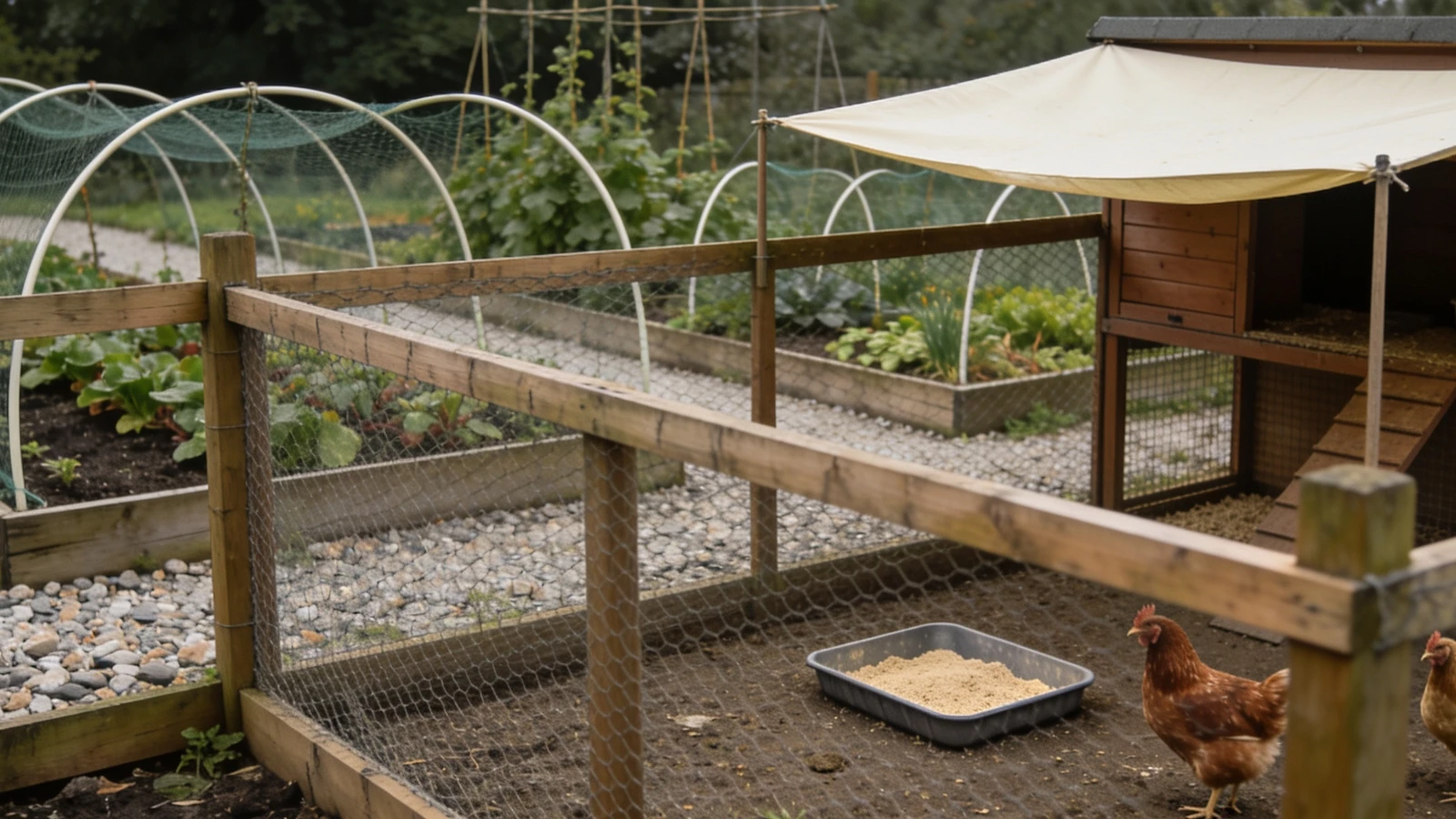
Chickens in the Garden
Chickens in the garden, honestly. What they wreck, what they are genuinely good for, and the fenced-run-plus-supervised-access system that keeps both alive.
Updated
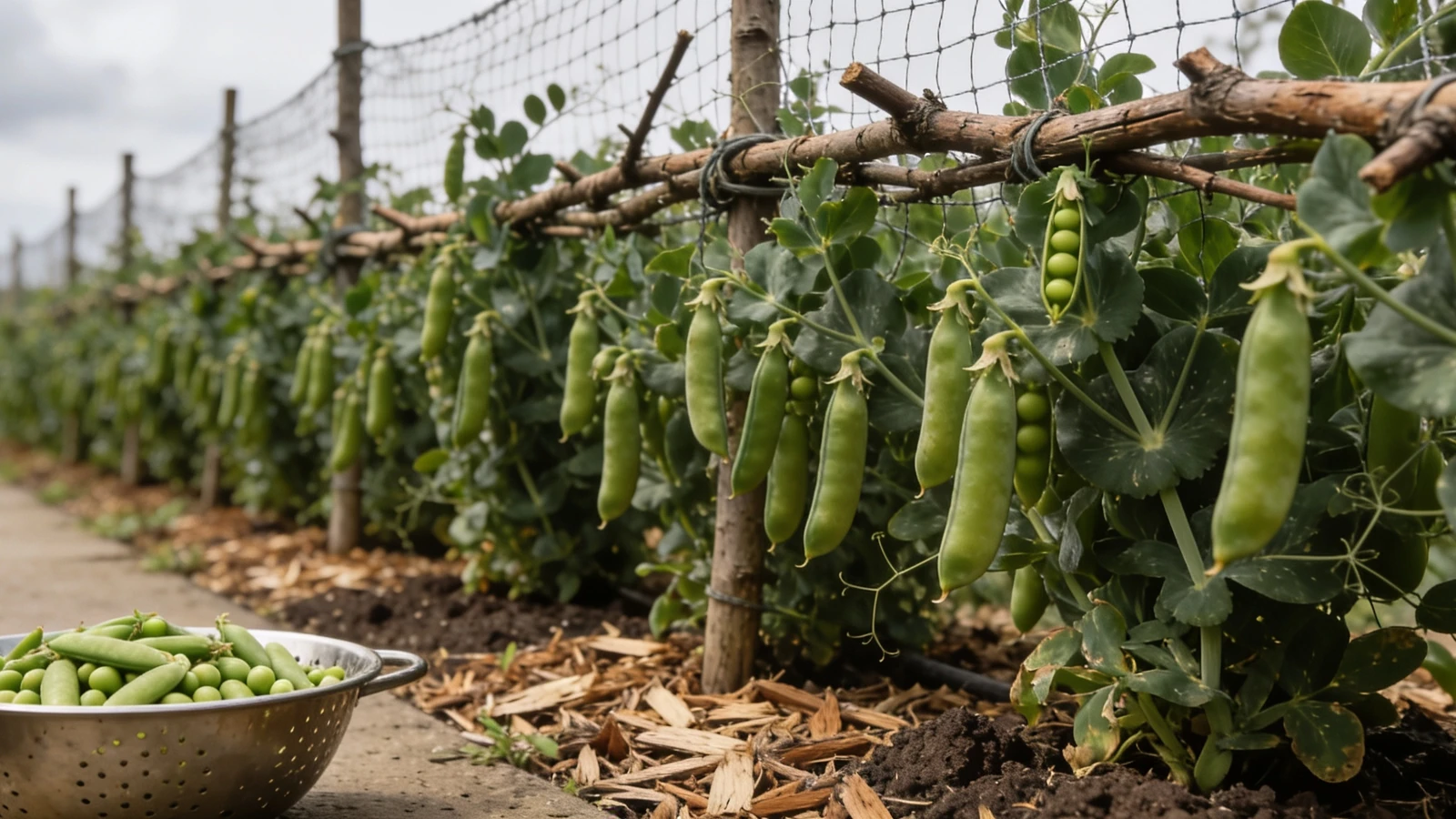
How to Grow Peas
How to grow peas that crop before the mildew. Why early sowing beats late, support even for dwarf varieties, and picking from the bottom of the plant up.
Updated
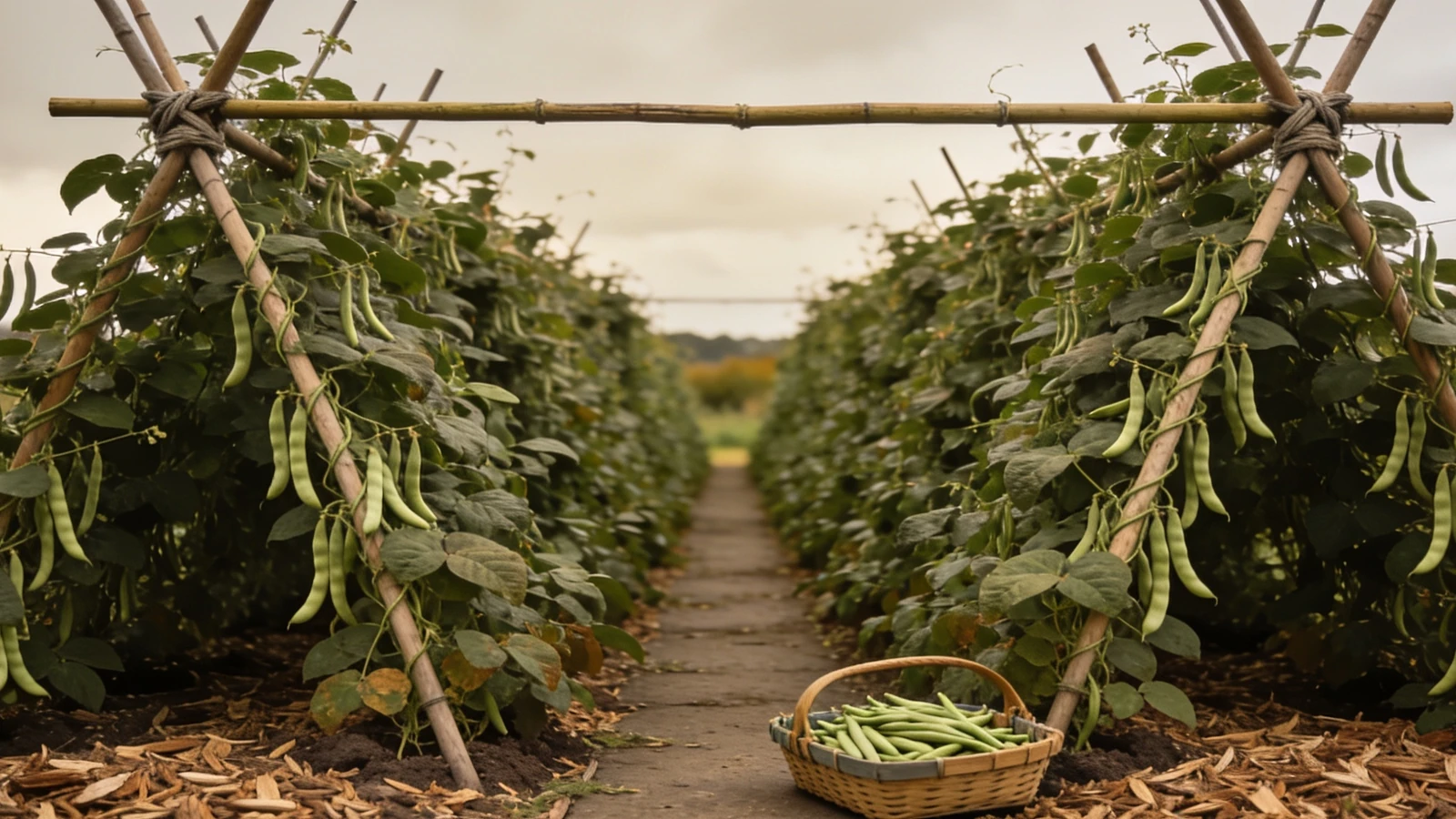
How to Grow Beans
How to grow climbing and dwarf beans. Runner against French, why flowers fail to set in heat, how to keep picking, and the nitrogen the roots leave behind.
Updated