Chickens in the Garden: They Will Destroy a Border
Chickens in the garden, honestly. What they wreck, what they are genuinely good for, and the fenced-run-plus-supervised-access system that keeps both alive.
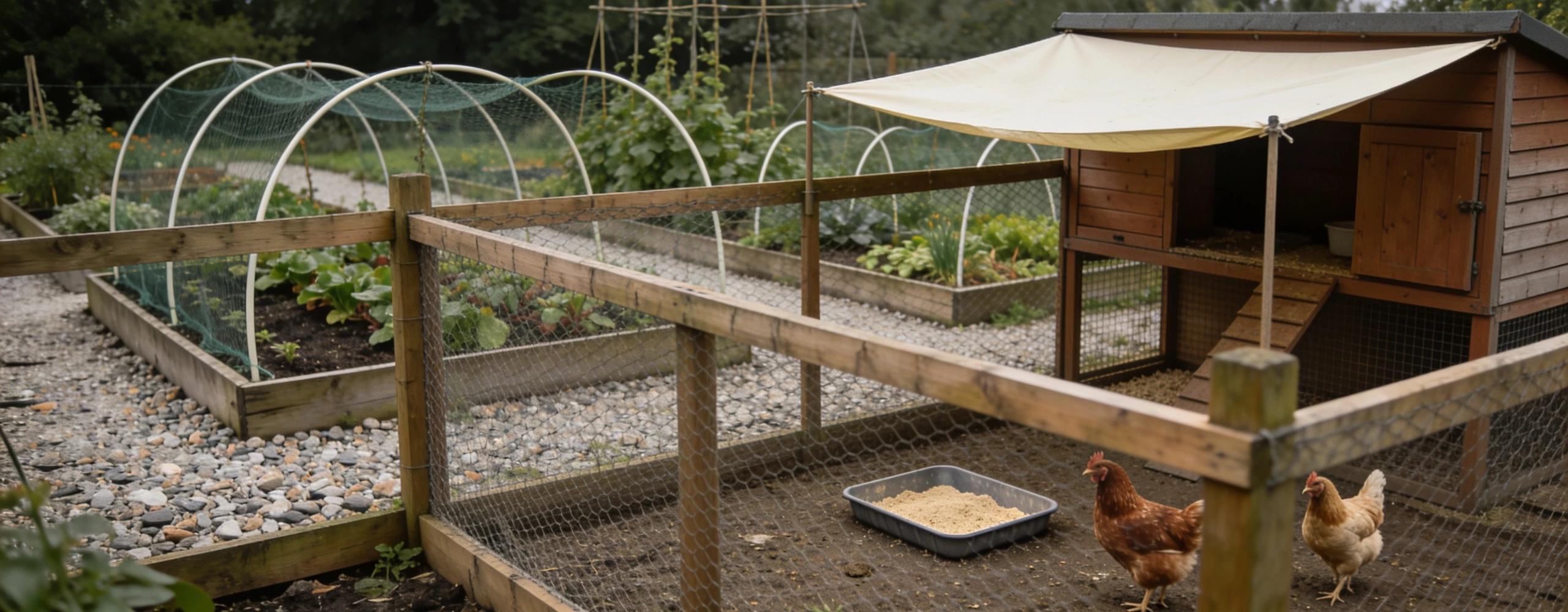
Chickens and gardens are sold together far more often than they work together. Given free access to a planted garden, four chickens will scratch the mulch off every bed, dust bathe in the driest border, and eat the salad first. I keep both, and the only system that has worked is a proper run they live in and supervised access to beds where their instincts are useful rather than destructive.
The short answer
Keep them in a fenced run and let them into the garden on purpose rather than by default: after harvest, on ground you are about to replant, and in autumn on a bed you are clearing. An hour before dusk is the easiest window. Give them shade and a dust bathing tray or they will make one in your border. Compost the manure for six months before it goes anywhere near a plant.
What they actually do to a garden#
Worth being specific, because the damage is not random. It follows four instincts.
- Dust bathing
- They dig a shallow bowl in the driest loosest soil available and work it into their feathers. Your best border is the most attractive site in the garden.
- Scratching
- Constant, backwards, and it throws mulch and compost a metre in every direction. A freshly mulched bed lasts minutes.
- Selective eating
- They go for soft leafy growth first. Salad, spinach, chard, young brassicas, hostas. Not indiscriminate: they eat the expensive things.
- Seedling removal
- Anything just germinated is both food and loose soil at once, so a seedbed is the worst possible combination.
None of that is misbehaviour. It is what a chicken is for. The mistake is expecting a planted garden to survive it.

The system that works#
A permanent run plus deliberate access. That is the whole thing.
The run is where they live: fenced, roofed if you have hawks or foxes climbing, with shade, a dust bath and their house. It takes the daily pressure off the garden entirely.
Then you let them out where and when they help.
Key points
- After harvest, onto a bed you have just cleared. They eat the pests, the slug eggs and the weed seed, and turn the surface while they are at it.
- Before planting, on ground you are about to sow. A week of chickens leaves a bed weed free and worked over.
- In autumn, on beds being put to bed. They deal with overwintering pests better than anything else available.
- An hour before dusk, when they are winding down and stay closer to the coop rather than exploring.
- Never onto a freshly mulched, freshly sown, or soft-leafy-planted bed. That is the whole restriction and it is not complicated.
The failure mode is unrestricted free ranging in a planted garden, and no amount of design makes that work.
What they are genuinely good for#
I do not want to undersell this, because the benefits are real.
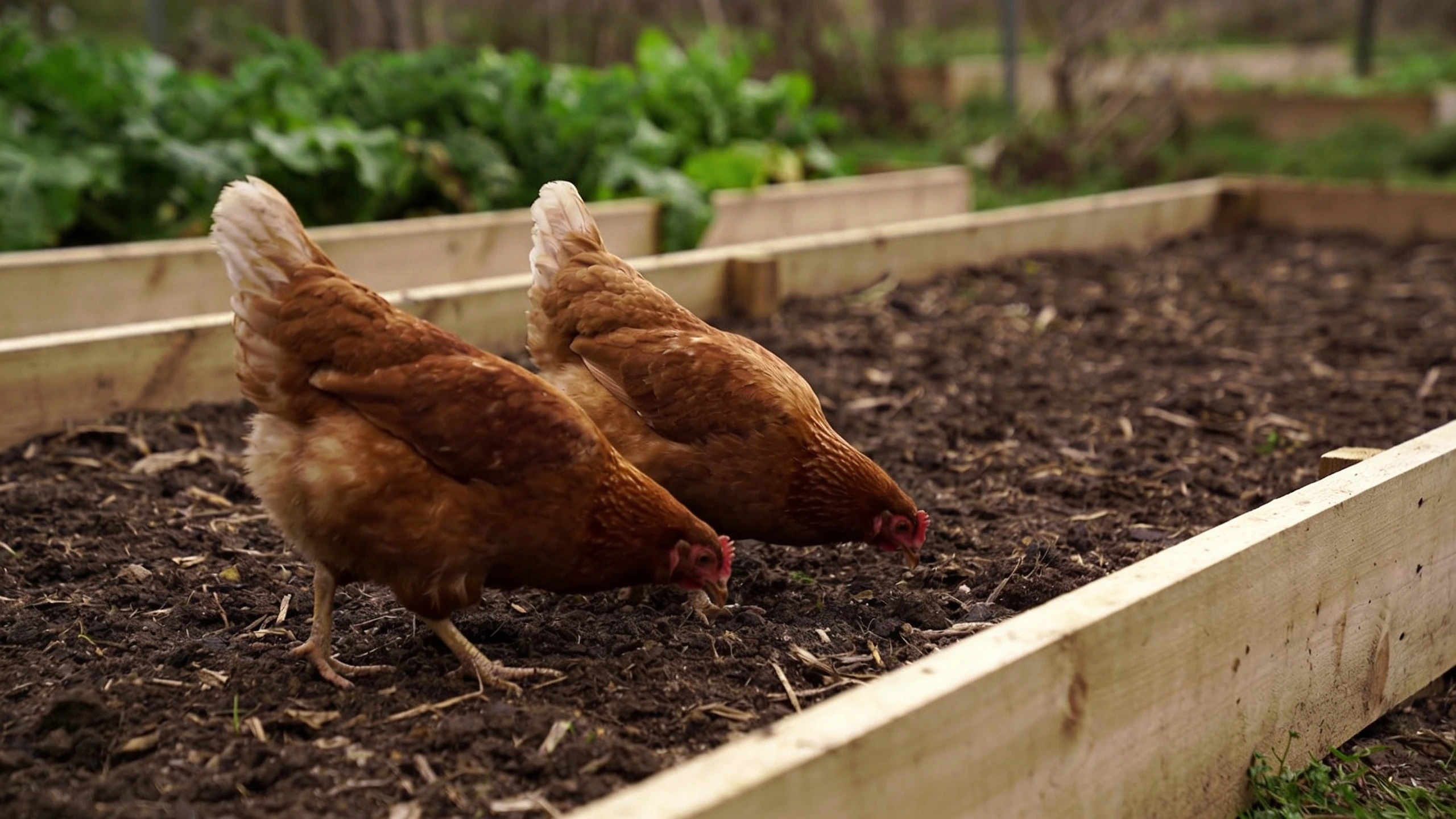
Pest control. Slugs, snails, cabbage white caterpillars, vine weevil grubs, wireworm. Chickens are effective in a way no product is, and they work on the overwintering stages that matter most.
Clearing ground. A bed that would take an hour to weed and fork over gets done in a week of chicken access, and they remove weed seed as they go.
Manure, once composted. Chicken manure is a strong nitrogen source and a genuinely valuable soil improver after six months in a heap with plenty of carbon material.
The trick is not to choose between the benefits and the damage. It is to apply the same behaviour to the right bed at the right moment.
Manure: compost it, do not spread it#
This one matters because it kills plants.
Fresh chicken manure is high in nitrogen and ammonia. Spread straight onto a bed it scorches roots and foliage, and the smell is considerable.
Composted for at least six months with plenty of carbon, bedding, straw, cardboard, shredded paper, it becomes one of the better soil improvers available and it is free.
So: coop cleanings go on the heap, layered with carbon, not onto the garden. Given the nitrogen content it also gets a slow heap moving faster than almost anything else you can add.
Designing a garden that tolerates them#
If they will inevitably get out sometimes, and they will, some choices soften the blow.
- Lean on shrubs and woody herbs
- Rosemary, lavender, sage, bay, established shrubs and ornamental grasses are all left alone. A garden built on these survives an escape.
- Keep soft leafy crops behind a barrier
- Salad, spinach, chard, brassicas and hostas are the targets. Netting over hoops, or a low fence, not hope.
- Low barriers work better than tall ones
- Chickens scratch rather than jump. About 45 cm around a bed deters them far more effectively than you would expect.
- Gravel or hard paths
- Nothing to scratch. Paths are where they will do least harm, so make the paths generous.
- Give them a better dust bath than your border
- A tray or corner of dry soil and sand in the run. This single provision prevents a lot of digging.
Shade, water and summer#
Chickens overheat more easily than people expect and a hot garden is a real risk to them, not just an inconvenience.
Deep shade for the hottest part of the day, and more water than you think, refreshed daily and kept in the shade. In a heatwave they will seek the coolest ground available and dig into it, which is another reason a shaded run with loose dry soil in it protects the garden.
What it costs#
- Fenced run, materials
- $150 to $600 depending on size and whether it is roofed. This is the item that makes the whole system work.
- Hoops and netting for beds
- $40 to $110. Also solves butterflies, birds and late frosts, so it is not a single purpose spend.
- Low bed edging at 45 cm
- $60 to $200 for several beds. Surprisingly effective for the height.
- Dust bathing tray and sand
- $15 to $40. The cheapest damage prevention on this list.
- Compost bay for the manure
- $0 to $80. Three pallets works. Needs to be big enough for six months of accumulation.
Where this needs adjusting#
In a small garden, a run plus occasional access to one or two beds is realistic, and free ranging is not. Be honest about that before getting the chickens rather than after.
If you keep them mainly for eggs and do not need the pest control, a permanent run with no garden access at all is a perfectly reasonable answer and much simpler.
And check local rules before you start. Many areas have restrictions on poultry numbers, on cockerels specifically, and some tenancy or deed conditions prohibit them entirely. That is a call to make before building anything.
Where the guidance here comes from#
The system here is what I settled on after trying free ranging in a planted garden, which went exactly as this page describes. The manure composting interval is the conservative end of published guidance and I would not shorten it, particularly for crops eaten raw. For soil and composting practice the RHS pages on soil, composts and mulches and Garden Organic are the references I use, and Garden Organic is good on manure handling specifically. Poultry welfare and local regulation are outside what a gardening page should be advising on.
The short version#
Give them a proper fenced run to live in, then let them into the garden deliberately: after harvest, before planting, and in autumn. Provide shade and a dust bath or your border becomes both. Compost the manure for six months. Build the ornamental garden from shrubs and woody herbs, and keep everything soft and leafy behind netting.
Related reading#
- Composting for beginners: how to handle the manure so it becomes an asset.
- Mulching a garden: and why a freshly mulched bed is the one thing to keep them off.
- Victory garden ideas: the older tradition of keeping poultry and a productive plot together.
- Gardening tools for raised beds: hoops and covers, which do several jobs at once here.
Frequently asked questions
Will chickens ruin my garden?
Given free access, yes, and quickly. Chickens dust bathe in loose soil, scratch mulch off beds in every direction, eat seedlings and salad preferentially, and strip the lower leaves off anything soft. A flock of four can flatten a border in a weekend. That is not a reason to avoid keeping them, it is a reason to control where they go and when.
What is the best way to keep chickens and a garden?
A permanent fenced run where they live, plus supervised access to the garden at times when they help rather than harm: after harvest, before you plant, and in autumn on a bed you are clearing. An hour before dusk works well because they are less inclined to range far. The system that fails is unrestricted access to a planted garden.
Are chickens good for the garden at all?
Genuinely, in three ways. They eat slugs, snails, cabbage white caterpillars and a lot of other pests. They clear and turn a bed faster than you can, which is useful on ground you are about to replant. And their manure is a strong nitrogen source once composted. The value is real; it just has to be applied to the right bed at the right time.
Can I put chicken manure straight on the garden?
No. Fresh chicken manure is high in nitrogen and ammonia and will scorch roots and foliage. Compost it for at least six months, ideally with plenty of carbon material like bedding, straw or cardboard, and it becomes one of the best soil improvers you can get. Straight from the coop it does more harm than good.
How do I chicken proof a vegetable bed?
Height is not the answer, because they scratch rather than jump. A low barrier of about 45 cm around a bed keeps them off it surprisingly well, and hoops with netting or mesh over a bed keeps them off entirely. Mulch is the vulnerable part: they will scratch bark and compost off a bed in minutes, so anything freshly mulched needs covering.
Which plants do chickens leave alone?
Tough, aromatic and woody things: rosemary, lavender, sage, thyme, bay, most established shrubs and ornamental grasses. What they go for is anything soft, leafy and low: salad, spinach, chard, young brassicas, hostas and any seedling. A garden designed around chickens leans on shrubs and herbs and keeps the soft stuff behind a barrier.
Do chickens need shade and dust in summer?
Both, and they will make their own if you do not provide them. Chickens overheat easily and need deep shade in summer, plus a dry dust bathing area. If neither is available they will dig a dust bath in the driest, loosest soil they can find, which is your border. Providing a tray of dry soil and sand in the run prevents a lot of damage.
About the author
Jeff has gardened professionally for over twenty years, mostly on heavy clay, and writes everything here from beds he still works himself. More from Jeff Tanun →
Keep reading
Lasagna Gardening
Lasagna gardening is sheet mulching: cardboard and layers of organic matter straight onto grass. What to layer, how deep, how long to wait, and what it cannot fix.
Updated
How to Grow Carrots
How to grow carrots that are not forked or stumpy. Why manure ruins them, how to sow so you barely thin, and the mesh height that stops carrot fly.
Updated
Zones & Growing Conditions
Gardening zones tell you what survives winter, not what grows well. Here is how to read your zone, and the five garden conditions that matter more.
Updated