Square Foot Gardening: What It Gets Right and Wrong
Square foot gardening explained honestly: the grid and the spacing chart are genuinely useful, the compulsory soil mix and the shallow bed depth are not.
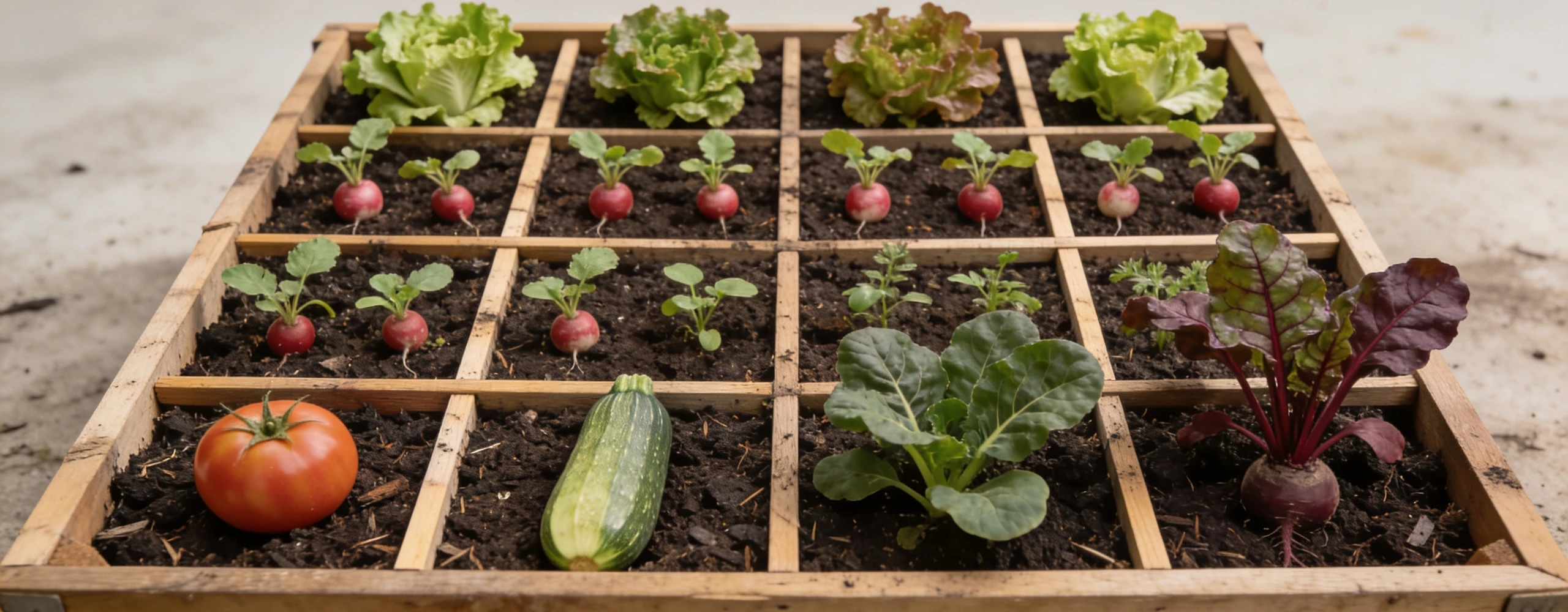
Square foot gardening is the most useful method I know for a first vegetable bed, and about a third of it is worth ignoring. The good part is that it turns plant spacing from a judgement you do not yet have into a number you can act on today. The parts I would drop are the compulsory soil recipe and the very shallow bed, and both are easy to fix.
The short answer
Keep the grid and the spacing chart: one large plant per square, four medium, nine small, sixteen tiny. Physically mark the grid, because that is what makes it work. Then depart from the original method twice: build the bed 30 to 40 cm deep rather than 15, and fill it with compost, topsoil and grit rather than the prescribed peat and vermiculite mix. Use grids for intensive crops and ordinary rows for bulk staples.
What the method actually is#
A raised bed, usually four feet by four feet, divided into sixteen one foot squares with a physical grid laid on top. Each square gets a set number of plants according to how big that plant gets, and each square is replanted individually as it empties.
The four foot width is not arbitrary and it is one of the good decisions: you can reach the middle from either side without stepping on the soil.
The physical grid matters more than it sounds. A grid drawn on paper gets ignored the moment you are kneeling in the dirt with a tray of seedlings. Battens or string across the bed do not.
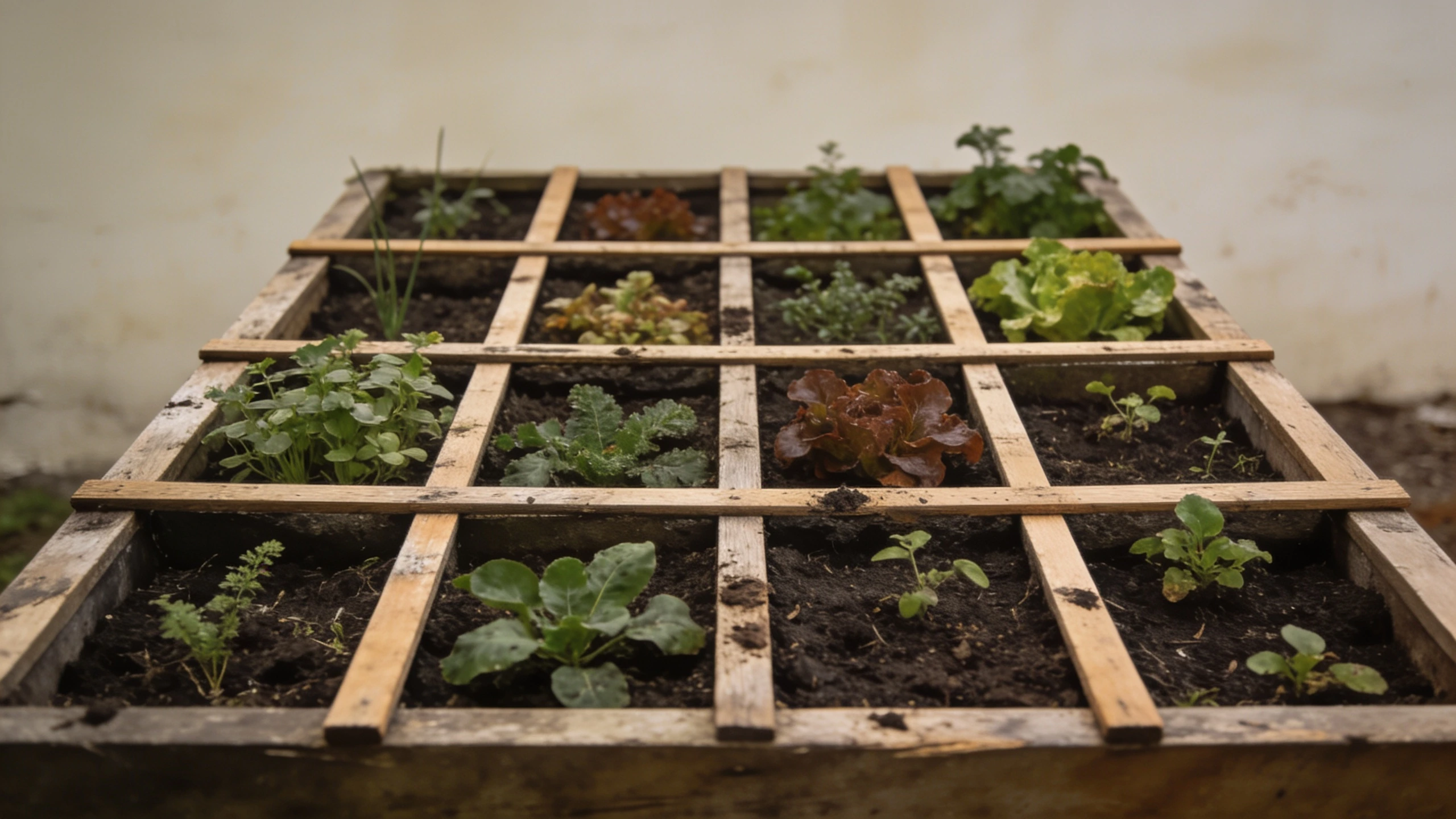
The spacing chart, which is the genuinely valuable part#
This is the bit worth taking away even if you build a conventional bed.
- One per square
- Tomato, cabbage, broccoli, cauliflower, courgette, pepper, aubergine. Anything that gets big and needs the whole square.
- Four per square
- Lettuce, chard, kale, garlic, leaf celery, marigold. The most useful category, and where a lot of salad happens.
- Nine per square
- Spinach, bush beans, beetroot, turnip. Slightly closer than a packet suggests, and it works because you harvest as you go.
- Sixteen per square
- Radish, carrot, onion, spring onion. This is the density that surprises people and it is broadly right.
- Two squares or more
- Squash, melon, sweetcorn, potatoes. The chart does not really cover these and the honest answer is a conventional bed.
Is it precise? No. Spacing depends on variety, soil and light, and a good gardener adjusts by eye. But for someone who has never sown a row, having a number is worth far more than having a nuance.
Where I depart from the original method#
Two changes, and both address the commonest complaints about square foot gardening.
Build it deeper than six inches#
The classic design is a six inch bed, about 15 cm, on the theory that most roots do not go deeper. In practice 15 cm of compost over ground or over a weed barrier has two problems: it will not grow a decent carrot, parsnip or potato, and it dries out extremely fast in summer because there is so little volume.
Thirty centimetres is my minimum, forty if you want roots. That is more timber and more filling material, and it is the difference between a bed that works and a bed you fight all summer.
Skip the prescribed soil mix#
The method specifies equal parts compost, peat moss and coarse vermiculite. I would not use it.
Peat extraction destroys carbon-storing habitat and there is no good reason to buy it for a vegetable bed. Vermiculite is expensive, and its water holding role is done well enough by compost and by having a deeper bed in the first place.
What I use instead: roughly half good garden compost or well rotted manure, half topsoil, and a couple of buckets of grit per bed if the drainage needs it. It costs less, it performs at least as well, and unlike the prescribed mix it improves every year as you top it up.
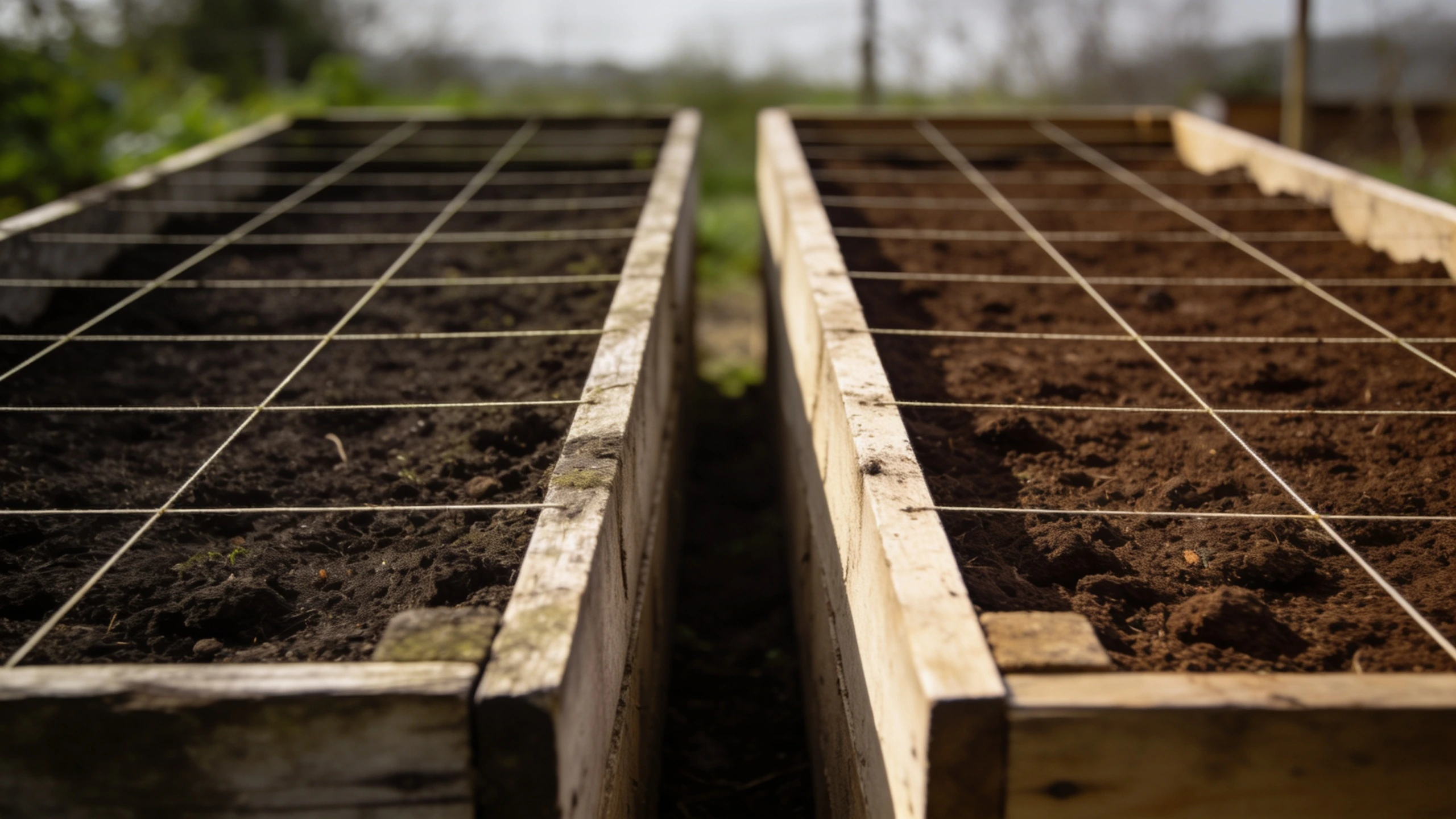
A first year plan for one four by four bed#
Sixteen squares, planted for a supply rather than a single harvest.
- Four squares of salad
- Four lettuce per square, replanted as each square empties. This is where most of the value is.
- Two squares of radish
- Sixteen per square, ready in about 25 days, then the square is free for something else.
- Two squares of beetroot
- Nine per square. Harvest young, and the leaves are worth eating too.
- Two squares of chard
- Four per square. Crops for months and stands through winter, which is unusual value for two squares.
- Two squares of bush beans
- Nine per square. Or one square given to a climbing bean up a cane, which yields far more.
- One square of a tomato
- One plant, staked. Needs feeding once it flowers, more than anything else in the bed.
- One square of courgette
- One plant, and it will spill over its neighbours regardless. Accept that.
- Two squares of herbs
- Parsley, coriander, chives. Put these on the side nearest the path, because you will pick them most.
That plan produces something to eat almost every week from May onwards, and every square that empties gets replanted rather than left.
What the method is bad at#
Bulk and sprawl. Squash and courgettes ignore the grid entirely. Sweetcorn needs to be in a block for pollination. Maincrop potatoes need depth and space. Thirty onions is two squares of very slow growth.
Anything you want in quantity, in other words. A grid gives you variety and variety is not the same thing as a supply.
And there is a subtler trap. The grid encourages one square of everything, which is satisfying to plan and produces a lot of single portions. If you want to eat properly from a bed, give four squares to the thing you actually eat most, and be boring about it.
Is it more productive than rows?#
Yes for intensive crops, and the reason is not magic. A conventional row layout gives up a lot of ground to paths between rows. A grid, worked from the edges, converts that path space into growing space.
Where it stops being true is anywhere the plant, not the layout, is the limiting factor. A courgette produces what a courgette produces, whether you drew a square around it or not.
What it costs#
- Timber for one four by four bed at 40 cm
- $60 to $140 depending on timber. Scaffold boards are the cheap and durable option.
- Filling material, roughly 600 litres
- $80 to $200 delivered in bulk, far less than in bags. This is the largest cost and the one worth buying loose.
- Grid battens or string
- $5 to $20. Do not skip it. The grid is the method.
- Seed for a whole bed
- $15 to $35, and you will have most of it left over.
- Annual compost top up
- $15 to $30 a year, or free if you make your own.
Where this needs adjusting#
On a balcony or patio the same grid logic works in large containers: mark the surface into quarters and use the same per-square counts scaled down.
In a hot dry climate the shallow original design is even worse, and 40 cm plus a mulch is close to essential.
And if you have decent soil already, you do not need a raised bed at all to use this method. Mark a grid on the ground with string and the spacing chart works exactly the same.
Where the guidance here comes from#
The grid and the per-square counts are from the published method, which I think deserves its popularity for that alone. The depth and soil mix departures are mine, from building both versions and finding the shallow one hard work. For crop spacing and timing checked independently of the method, the RHS advice on growing your own is the reference, and Garden Organic covers the peat question and the alternatives properly.
The short version#
Take the grid and the spacing chart, which are the genuinely useful parts, and mark the grid physically. Build 30 to 40 cm deep rather than 15. Fill it with compost, topsoil and grit rather than peat and vermiculite. Give four squares to the thing you actually eat, and grow the bulk staples in ordinary rows.
Related reading#
- Raised bed garden layout ideas: bed sizes, reach and path widths this method depends on.
- Garden planner: the sowing list and successions that keep the squares full.
- How to start a vegetable garden: the wider first year picture.
- Gardening tools for raised beds: what to use when you never stand on the soil.
Frequently asked questions
What is square foot gardening?
A method that divides a raised bed into a grid of one foot squares and assigns each square a fixed number of plants: one tomato, four lettuces, nine spinach, sixteen radishes. The grid is physically marked on the bed. It was popularised in the 1980s and its real contribution is turning spacing from a judgement call into a number a beginner can act on.
How many plants per square foot?
The standard chart works from plant size. One per square for large plants like tomato, cabbage, broccoli and courgette. Four per square for lettuce, chard, garlic and marigold. Nine for spinach, bush beans and beetroot. Sixteen for radish, carrot and onion. It is approximate rather than precise, and it is close enough to be genuinely useful.
How deep should a square foot garden bed be?
Deeper than the original method specifies. The classic design is a six inch bed, about 15 cm, which is too shallow for carrots, parsnips, potatoes or a well fed tomato, and it dries out very fast in summer. I would build 30 cm as a minimum and 40 cm if you are going to grow roots. That single change fixes most complaints about the method.
Do I have to use the special soil mix?
No, and this is the part I would ignore. The method specifies a third each of compost, peat moss and coarse vermiculite. Peat extraction is environmentally indefensible and vermiculite is expensive and largely unnecessary. A mix of good garden compost, topsoil and a little grit performs at least as well, costs far less and improves each year as you top it up.
Is square foot gardening good for beginners?
Very, and that is its real strength. It removes the two things beginners find hardest: how far apart to plant, and how much to sow at once. A grid makes both concrete. Even if you drop the rest of the method, marking a grid on a bed and using the spacing chart is a genuinely useful way to start.
What are the downsides?
Three. The shallow bed depth in the original design, which is easily fixed by building deeper. The prescribed soil mix, which is expensive and includes peat. And the grid can encourage single plants of many things rather than enough of anything, so you end up with one cabbage and four meals' worth of nothing in particular.
Can I use it for a whole vegetable garden?
For salad, roots and anything intensive, yes, and it works well. For sprawling crops and staples it fights you: squash, sweetcorn, maincrop potatoes and a serious quantity of onions all want either a lot of squares or a conventional bed. Most people who stay with the method end up using grids for the intensive beds and rows for the bulk crops.
Topics in this article
About the author
Jeff has gardened professionally for over twenty years, mostly on heavy clay, and writes everything here from beds he still works himself. More from Jeff Tanun →
Keep reading
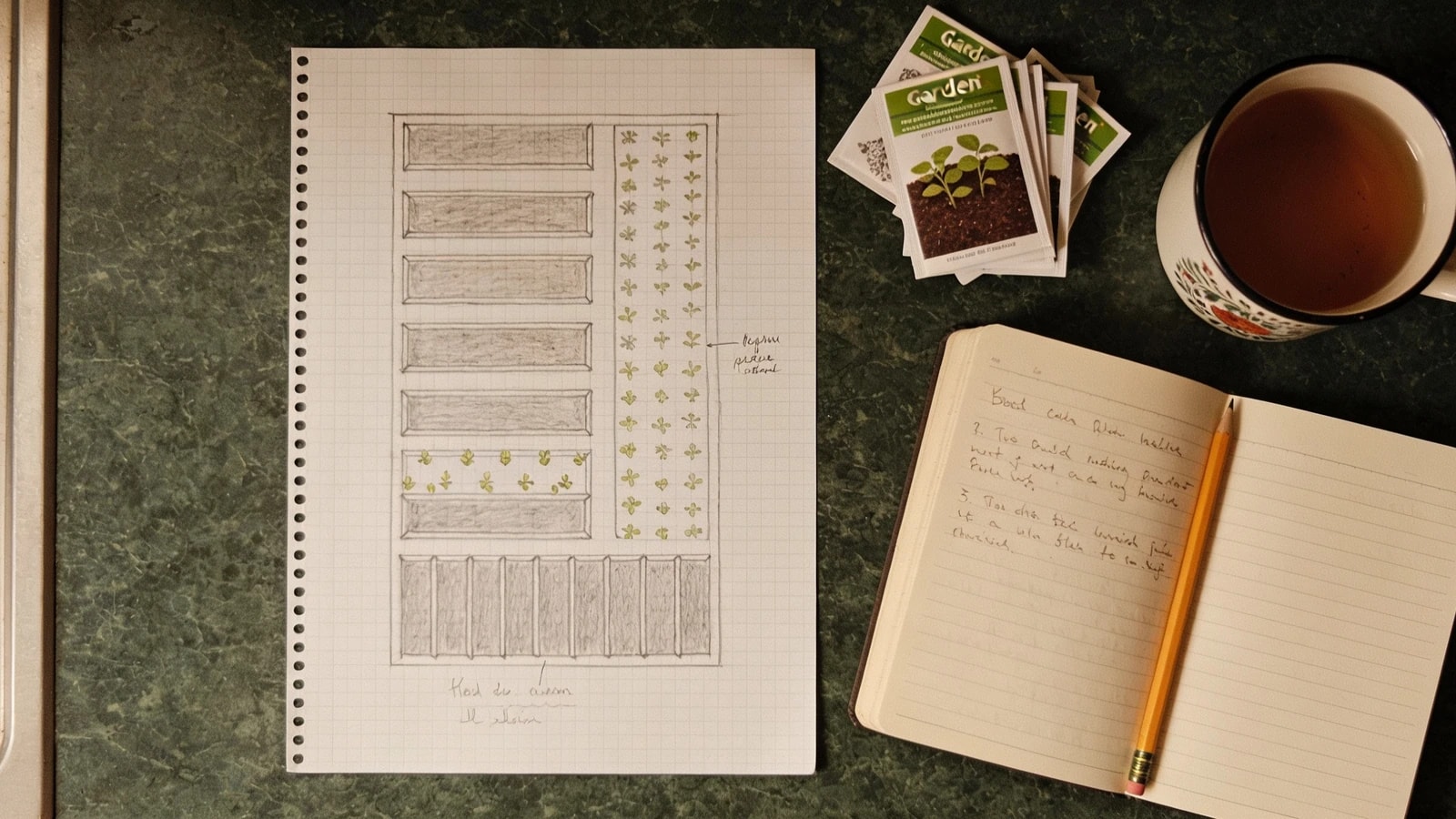
Garden Planner
A garden planner you will still be using in August: one bed map, one sowing list and one page of notes. What to record, what to skip, and free templates.
Updated
Zones & Growing Conditions
Gardening zones tell you what survives winter, not what grows well. Here is how to read your zone, and the five garden conditions that matter more.
Updated
How to Start a Garden
How to start a garden in one season: check your light first, build one small bed without digging, plant six easy crops. Costs from $60, step by step.
Updated