October Gardening Jobs, Ranked by What Matters
October gardening jobs that actually pay off: plant garlic and bulbs, mulch bare soil, lift and store, and the tidying you should deliberately skip.
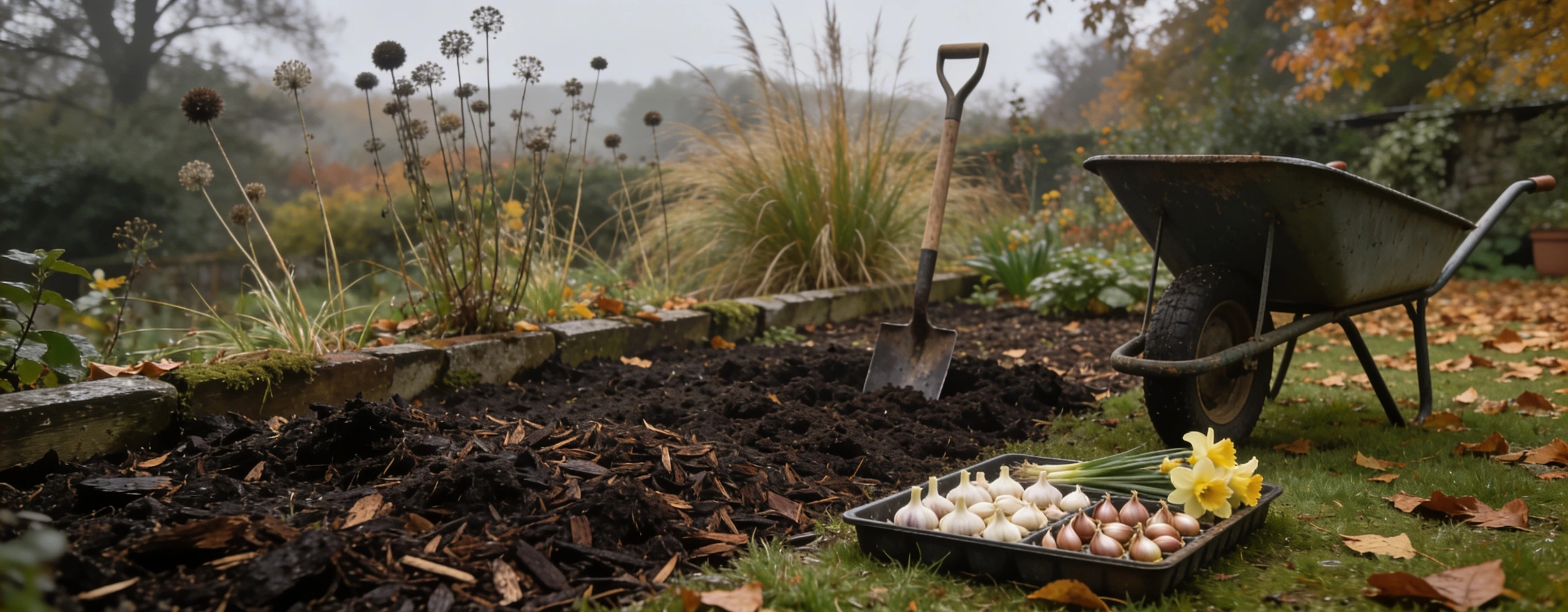
October gardening jobs get presented as an enormous list of tidying, and most of that list is optional. The three that genuinely change next year take an afternoon between them. The rest is a matter of taste, and one popular October job is actively worth not doing.
The short answer
Do three things: plant garlic and spring bulbs while the soil is still warm, mulch every patch of bare soil, and plant anything woody now so it gets six months of root growth. Skip the big autumn cut back, because hollow stems and seed heads are overwintering habitat and bird food. Do not dig the vegetable beds; compost on the surface and let the worms do it.
The three jobs that actually pay off#
If you do nothing else in October, do these. Each one buys you something you cannot get later.
- Plant garlic and spring bulbs
- Soil still holds summer warmth, so roots establish before the cold. Garlic in particular needs that root growth plus a cold period to form decent bulbs.
- Mulch all bare soil
- Five to ten centimetres of compost. It stops winter rain leaching nutrients and washing structure out, feeds the worms all winter, and leaves the bed ready in spring.
- Plant anything woody
- Trees, shrubs, hedging, fruit bushes, roses. Autumn planting gives six months of root growth before the plant has to support a canopy, which is why bare root season starts now.
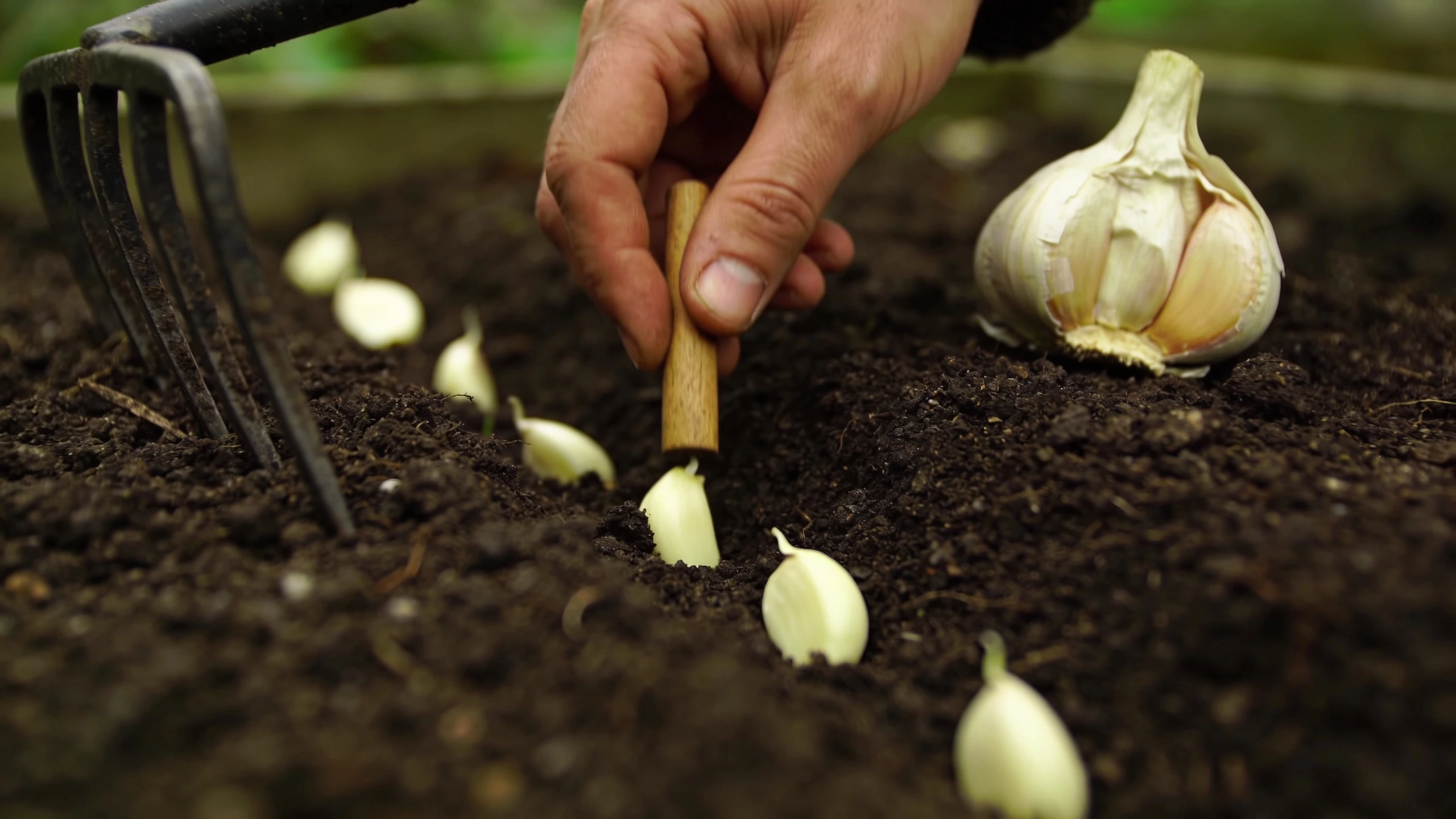
Bulbs, and getting the timing right#
Not all bulbs want the same date, and this is one of the few places where a few weeks genuinely matters.
- Daffodils and narcissus
- Prefer September, still fine through October. Plant at three times their own depth, which is deeper than most people go.
- Tulips
- Deliberately late. End of October or November is better, because cold soil reduces the risk of tulip fire. This is the one bulb where waiting helps.
- Crocus, muscari, scilla
- Any time now. Plant these in far larger quantities than feels sensible: they are cheap and they are the first food for early bees.
- Alliums
- October is ideal. Deep planting, and they do not mind poor dry soil at all.
- Garlic
- Not decorative, but the same window and the most time critical. Sooner is better.
Plant in groups rather than rows, and in bigger groups than you intend. Fifty crocus reads as a scattering; two hundred reads as spring.
The job to skip: the big autumn cut back#
This is the part of every October list I would argue with.
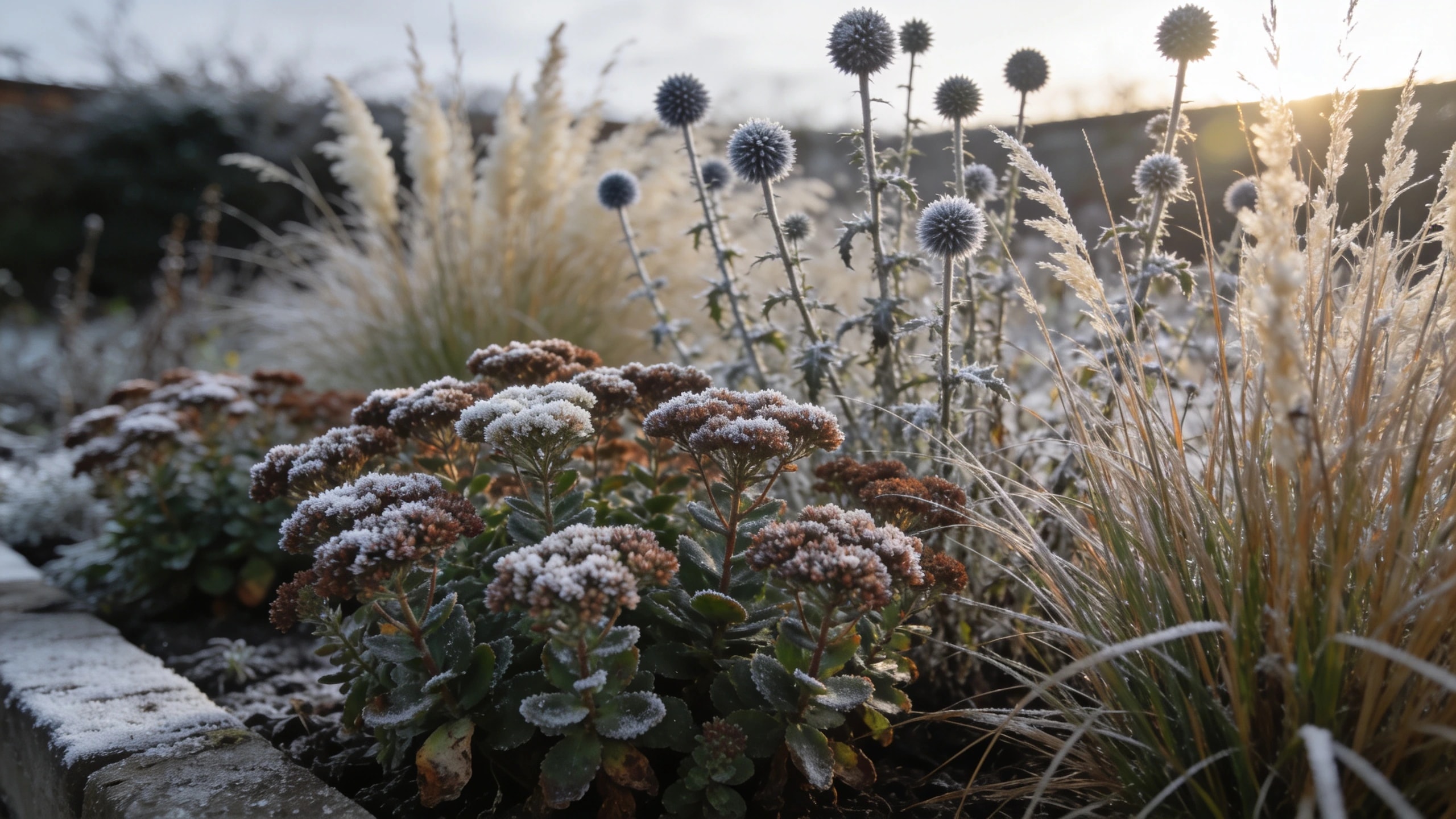
Cutting everything to the ground in autumn removes two things at once. Hollow stems are where a lot of insects overwinter, and seed heads on grasses, sedum, echinops and teasel feed birds through the hardest weeks of the year.
It also removes the best thing your garden does in winter. Frost on standing seed heads looks far better than bare soil, and it costs nothing to leave.
So cut back only what genuinely needs it: anything diseased, anything collapsed across a path, and anything that has gone to mush. Leave the rest until March.
Soil: mulch, and do not dig#
The old advice was to dig the vegetable beds over in autumn and leave them rough for frost to break down. I do not do that any more and would not recommend it.
Digging breaks up fungal networks and soil structure, brings buried weed seed up to where it can germinate, and leaves bare soil exposed to five months of rain.
The alternative is less work. Clear the spent crops, spread five to ten centimetres of compost on the surface, and stop. Worms take it down over winter, and the bed is workable in spring without you having touched a spade.
Bare soil is the thing to avoid. If you have run out of compost, a covering of cardboard, leaves or even a green manure sown early enough is better than leaving it open.
Lifting, storing and the last of the harvest#
October is when the year's storage gets decided.
Key points
- Lift maincrop potatoes on a dry day, leave them on the surface for a couple of hours to dry, then store in the dark in paper sacks.
- Dry onions and garlic thoroughly before storing. A wet neck is what makes a stored onion rot.
- Leave parsnips and leeks in the ground. Both stand through winter and parsnips genuinely improve after frost.
- Lift dahlia tubers after the first frost blackens the foliage, or mulch them heavily and leave them if your winters are mild.
- Pick the last tomatoes green and ripen them indoors. Outdoor tomatoes will not ripen further once nights turn cold.
Leaves, and the free resource most people bag up#
Collect leaves off lawns and paths, because a thick layer will kill grass and make paving dangerous. Leave them everywhere else, where they are free mulch and overwintering habitat.
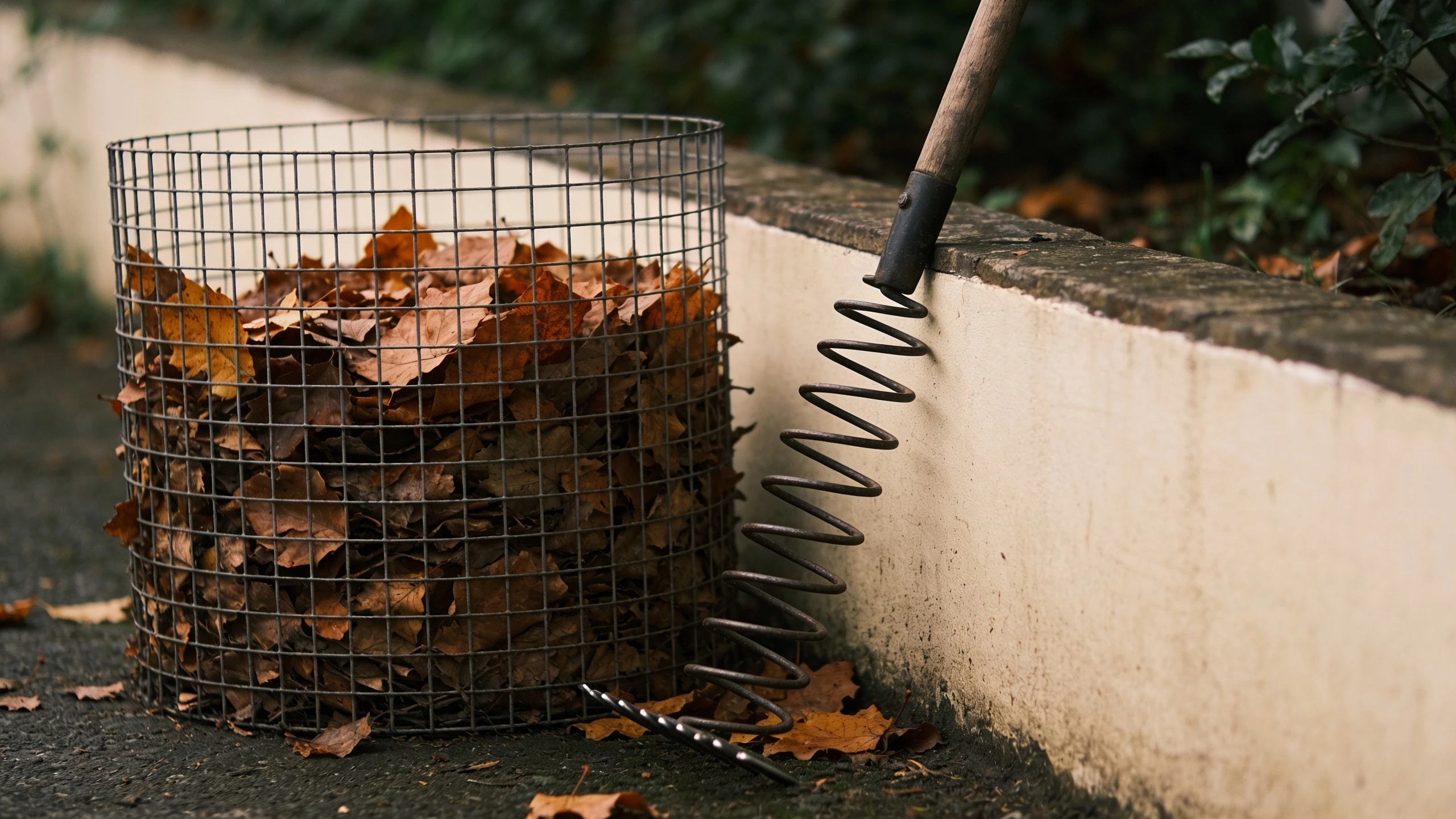
What you do collect is worth keeping. Leaves in a bin bag with a few holes punched in it, or in a simple wire cage, become leaf mould in about a year. It is the best soil conditioner there is and it costs nothing but stacking them somewhere.
Do not put large volumes of leaves in the compost heap all at once; they are almost all carbon and will stall it. Leaf mould separately is the better answer.
Sowing and planting in October#
More is possible now than people assume.
Garlic and autumn onion sets. Broad beans for a crop weeks earlier than a spring sowing. Winter salad and oriental leaves under cover or in a cold frame.
Hardy annuals sown now, cornflower, calendula, larkspur, nigella, will overwinter as small plants and flower considerably earlier and bigger than the same seed sown in spring. This is one of the best value things you can do in October and it is rarely mentioned.
And all bare root woody stock: hedging, fruit bushes, roses, trees. The RHS pages on hedges cover the planting detail, and the price difference against potted stock is substantial.
Adjusting all of this for where you are#
Every date on this page assumes a temperate northern garden with first frosts somewhere between late October and November. Yours will differ, possibly by a lot.
The useful move is to work from your own first frost date rather than from the month. Bulb planting wants soil that is still warm; woody planting wants soil that is workable and not frozen; garlic wants roots before hard cold. Those conditions arrive at different times in different places, and they may arrive twice in a mild autumn.
The USDA plant hardiness map will place you if you are in the US, and any local extension service or horticultural society publishes frost dates worth more than any national gardening calendar.
Where the guidance here comes from#
The priorities and the argument against the autumn cut back are mine, from changing how I garden over several seasons and being clearly better off for it. On overwintering habitat the RHS wildlife pages are the reference, for soil and mulching the RHS pages on soil, composts and mulches, and Garden Organic is good on green manures if you have bare beds and no compost.
The short version#
Garlic and bulbs in while the soil is warm. Compost on every bare bed, no digging. Plant anything woody now. Collect leaves off grass and paths only, and stack them for leaf mould. Sow hardy annuals for an early start. Then leave the cutting back until March, and go inside.
Related reading#
- Mulching a garden: what to use, how deep, and when.
- Composting for beginners: where the autumn mulch comes from.
- Garden planner: why the useful planning happens now rather than in January.
- Pollinator garden: the overwintering habitat this page is arguing you should leave alone.
Frequently asked questions
What are the most important jobs in October?
Three, in order. Plant spring bulbs and garlic while the soil still holds warmth, because both root far better now than in the cold of November. Get mulch onto any bare soil so the winter rain does not leach it and the worms can work all winter. And plant anything woody, since autumn planting gives a tree or shrub six months of root growth before it has to support leaves.
Should I cut everything back in October?
No, and this is the job most worth skipping. Hollow stems and seed heads are where a lot of insects overwinter, and seed heads feed birds through the hardest months. Cut back only what is diseased, collapsed across a path or genuinely unsightly, and leave the rest until March. Your garden looks better in frost too.
Is October too late to plant bulbs?
For most spring bulbs it is close to ideal. Daffodils prefer September and are still fine in October, tulips actually do better planted late in October or even November because it reduces the risk of tulip fire, and crocus, allium and muscari are all happy now. The one you should not delay is garlic, which wants to be in the ground while there is still warmth.
Should I dig the vegetable beds over in autumn?
I would not. Digging breaks up fungal networks and soil structure, brings weed seed to the surface and leaves bare soil exposed to winter rain. Clear the spent crops, spread five to ten centimetres of compost on the surface, and let the worms take it down. By spring the bed is workable and you have done a fraction of the work.
What can I still sow or plant in October?
Garlic, autumn onion sets, broad beans for an early crop, and winter salad under cover. All hardy trees, shrubs, hedging and fruit bushes go in from now, and bare root stock becomes available. Hardy annuals like cornflower and calendula sown now will overwinter as small plants and flower weeks earlier than a spring sowing.
What should I do with fallen leaves?
Collect them off lawns and paths and leave them everywhere else. On a lawn a thick layer will kill the grass, and on a path it is a slip hazard. In borders leaf litter is free mulch and overwintering habitat. Anything you collect goes in a bag or wire bin for a year and becomes leaf mould, which is the best soil conditioner there is and costs nothing.
When should I do the last mow?
Whenever growth genuinely stops, which is often late October or into November rather than a fixed date. Raise the blades for the last couple of cuts and leave the grass slightly longer going into winter, because longer grass copes better with cold and wet. Do not cut when the lawn is frosted or soaking.
About the author
Jeff has gardened professionally for over twenty years, mostly on heavy clay, and writes everything here from beds he still works himself. More from Jeff Tanun →
Keep reading
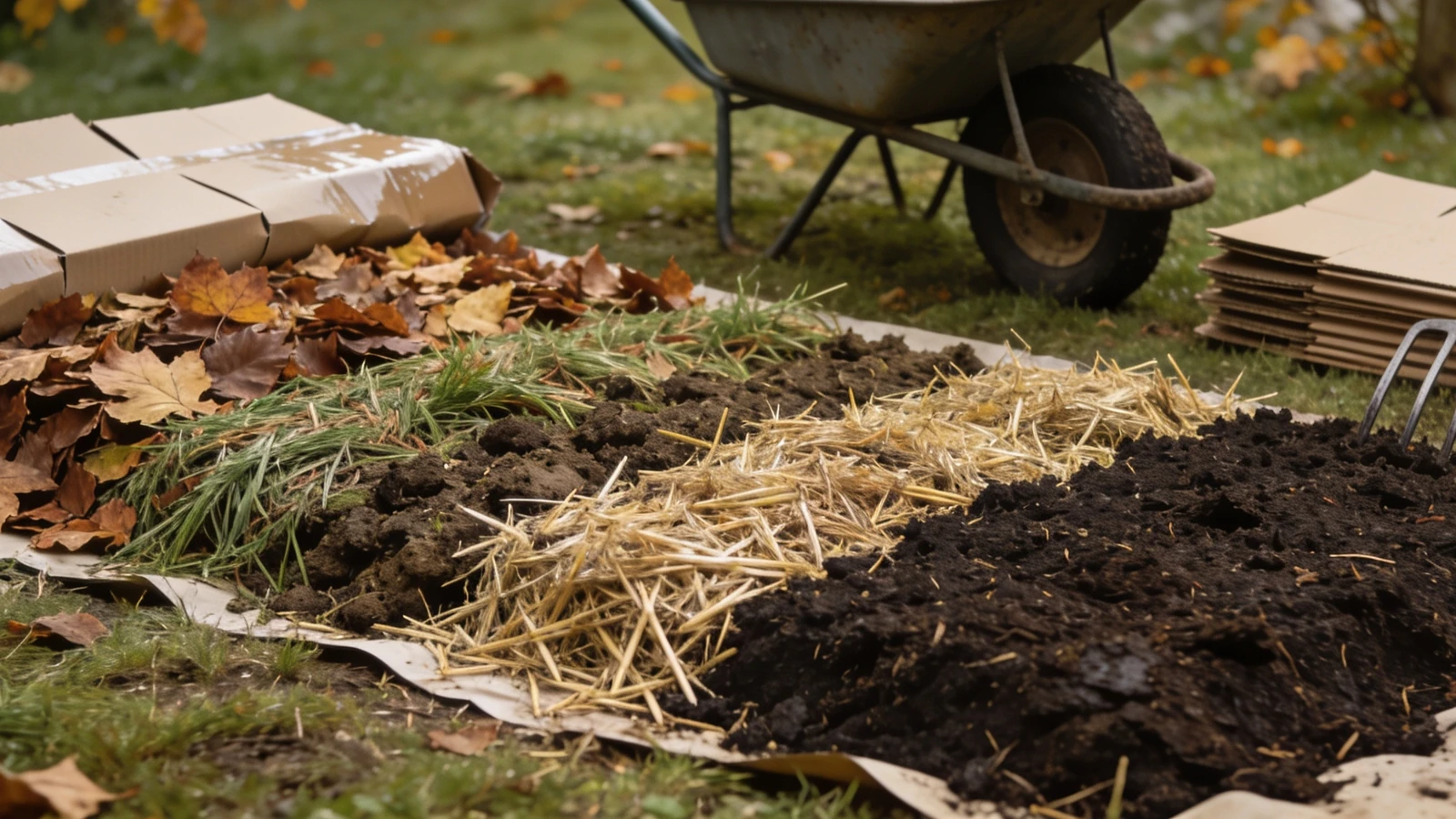
Lasagna Gardening
Lasagna gardening is sheet mulching: cardboard and layers of organic matter straight onto grass. What to layer, how deep, how long to wait, and what it cannot fix.
Updated
Lawn Care Basics
Lawn care that works with less effort. Why cutting height matters more than feed, how to fix moss and bare patches, and when to stop fighting the grass entirely.
Updated
Chickens in the Garden
Chickens in the garden, honestly. What they wreck, what they are genuinely good for, and the fenced-run-plus-supervised-access system that keeps both alive.
Updated