Lawn Care Basics: Mow Higher, Feed Less, Water Rarely
Lawn care that works with less effort. Why cutting height matters more than feed, how to fix moss and bare patches, and when to stop fighting the grass entirely.
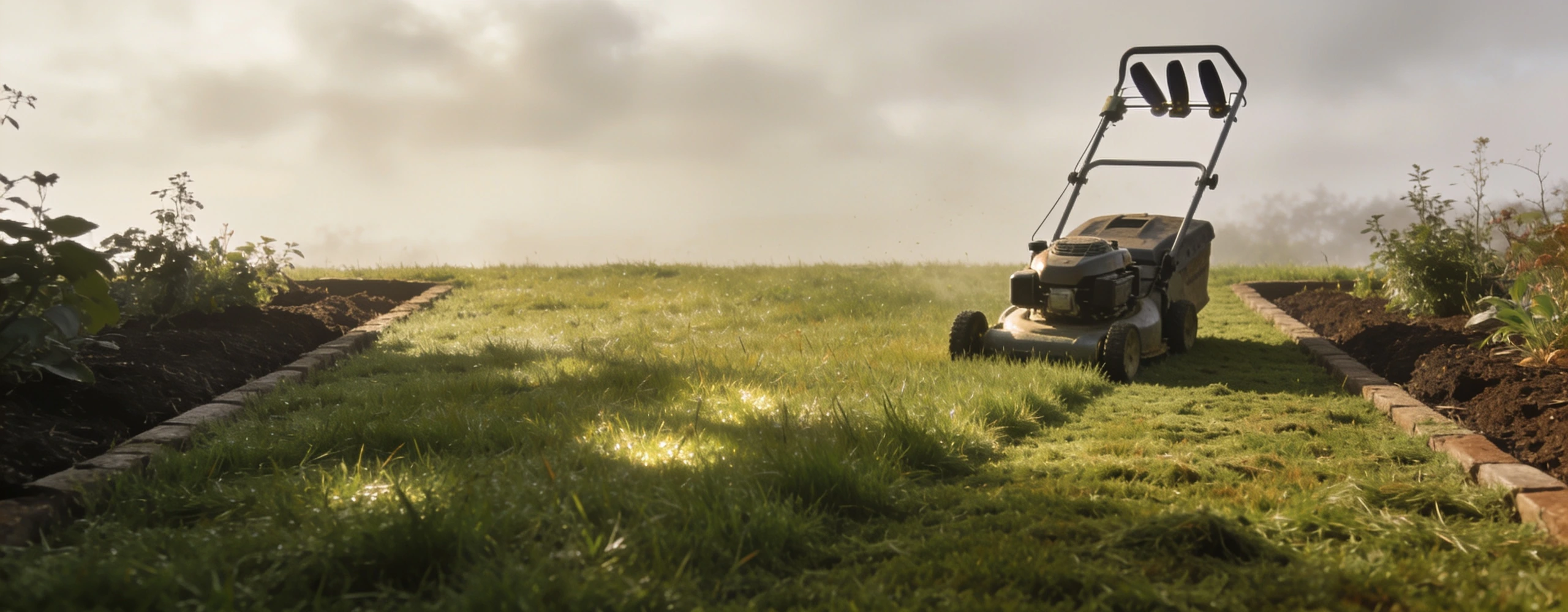
Most lawn advice sells you products. The three changes that actually improve a lawn are free: cut it higher, feed it less often, and water it hardly at all. I did all three the wrong way round for years, and the lawn improved more from raising the mower blades than from anything I ever bought.
The short answer
Cut at 4 to 5 cm, higher in heat or shade, and never take more than a third of the height in one go. Feed twice a year at most, nitrogen-led in spring and low nitrogen in autumn. Water deeply and rarely or not at all, because a brown summer lawn is dormant rather than dead. Treat moss as a symptom of shade, compaction or short mowing rather than something to kill. And stop trying to grow grass where it cannot win.
Cutting height is the whole game#
If you change one thing, change this.
Longer grass has proportionally deeper roots. Deeper roots reach more water, survive drought, and recover faster from wear. Longer grass also shades the soil surface, which stops weed and moss seed germinating and keeps moisture in.
Short grass does the opposite: shallow roots, exposed soil, and an open invitation to every weed seed in the neighbourhood.
- Ordinary family lawn
- 4 to 5 cm. High enough to take wear, short enough to look mown.
- Summer heat or drought
- 6 cm or more. Raise the blades before a dry spell, not during it.
- Shaded lawn
- 6 cm minimum. Grass in shade needs every bit of leaf area it has.
- The one-third rule
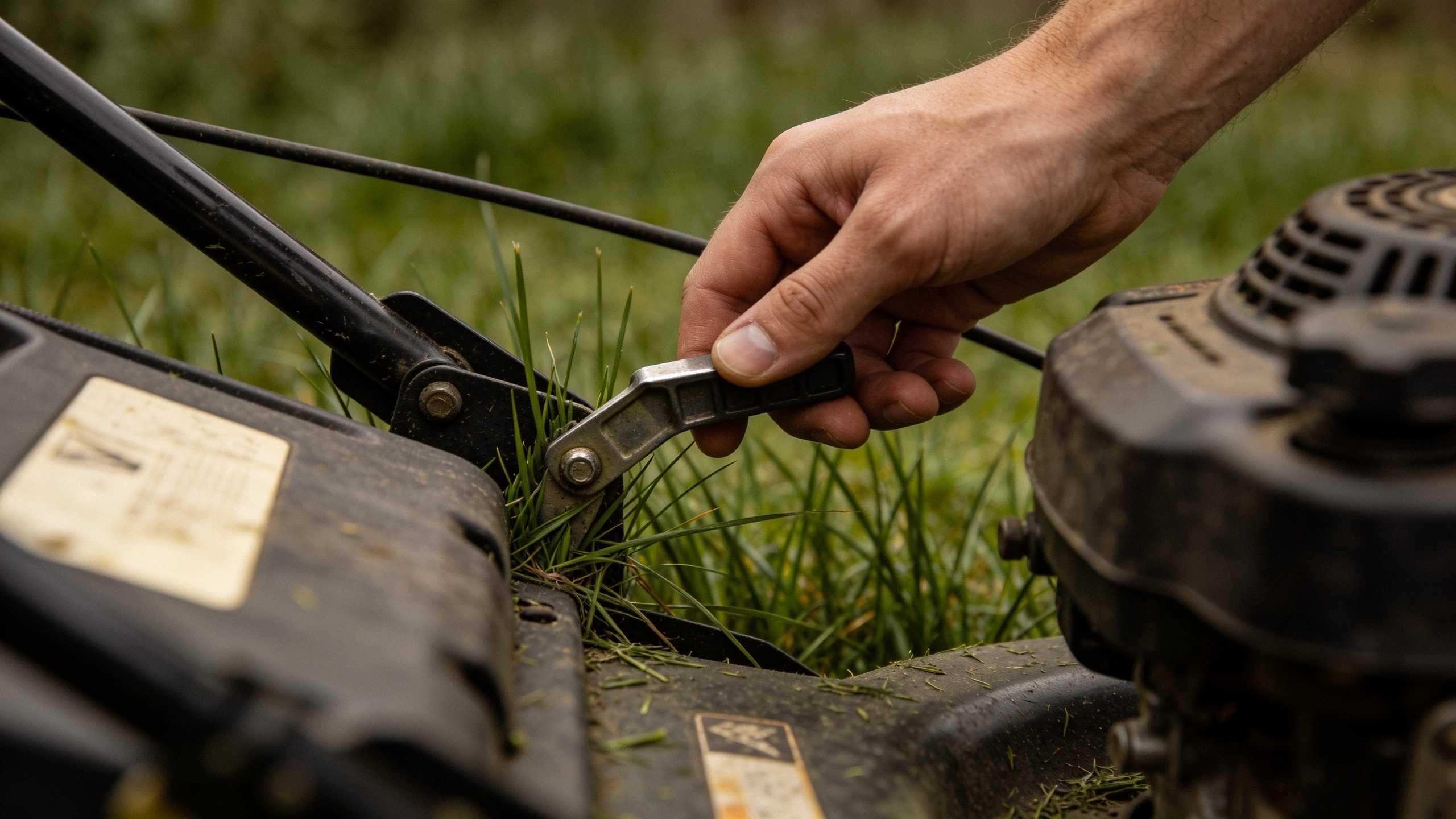
- Never remove more than a third of the height in a single cut. Scalping stresses the plant badly and it is how a lawn goes yellow after mowing.
- Fine ornamental lawn
- 2 to 3 cm, and it is a different hobby: more feeding, more watering, more mowing, and no children on it.
Mow often enough that you are only taking a third. In spring that means weekly or more; in high summer it may mean fortnightly. Frequency follows growth, not the calendar.
Moss is a symptom#
People try to kill moss and are surprised when it returns. Moss is not competing with healthy grass; it is colonising space where grass has already failed.
So the question is not how to kill moss. It is why the grass is weak there.
- Shade
- The most common cause. Under four hours of sun, grass thins and moss fills the gap. No treatment fixes this; only more light or different planting does.
- Compaction
- Second most common. Spike with a fork or hollow-tine it, and top dress with sharp sand and compost.
- Mowing too short
- Scalped grass leaves bare soil and moss takes it. Raise the height.
- Poor drainage
- Standing water in winter. Aeration helps; serious cases need drainage work.
- Acidic soil
- Sometimes a factor, less often than lawn treatment marketing suggests. Test before liming anything.
Scarifying does pull the moss out and it is worth doing in autumn, and if you have not addressed the cause it will be back within a year. That is not a failure of the scarifying.
Watering, and letting it go brown#
An established lawn in a temperate climate does not need watering. It goes brown in a dry summer, which is dormancy, and it greens up within a fortnight of proper rain.
I stopped watering mine entirely and it looks the same in September as it did when I watered it, which is to say fine.
If you do water: deeply and rarely. One good soak a week, enough to wet the soil several centimetres down. Light daily sprinkling is worse than nothing, because it keeps the roots shallow and dependent.
New seed and new turf are the exception. Both need consistent moisture for their first several weeks, and that is not optional.
Feeding, less than you think#
Two feeds a year is plenty for an ordinary lawn, and many do well on one.
Spring: a nitrogen-led feed to push growth as the soil warms. Early autumn: a low nitrogen, higher potassium feed for root development and winter hardiness.
The mistake that matters is using a spring feed in autumn. High nitrogen late in the season pushes soft growth straight into cold and wet, which invites disease.
And if you leave the clippings on through summer, you are already returning a meaningful amount of nitrogen and can feed less again.
Bare patches, and which ones to give up on#
Repair is easy and the timing decides whether it works.
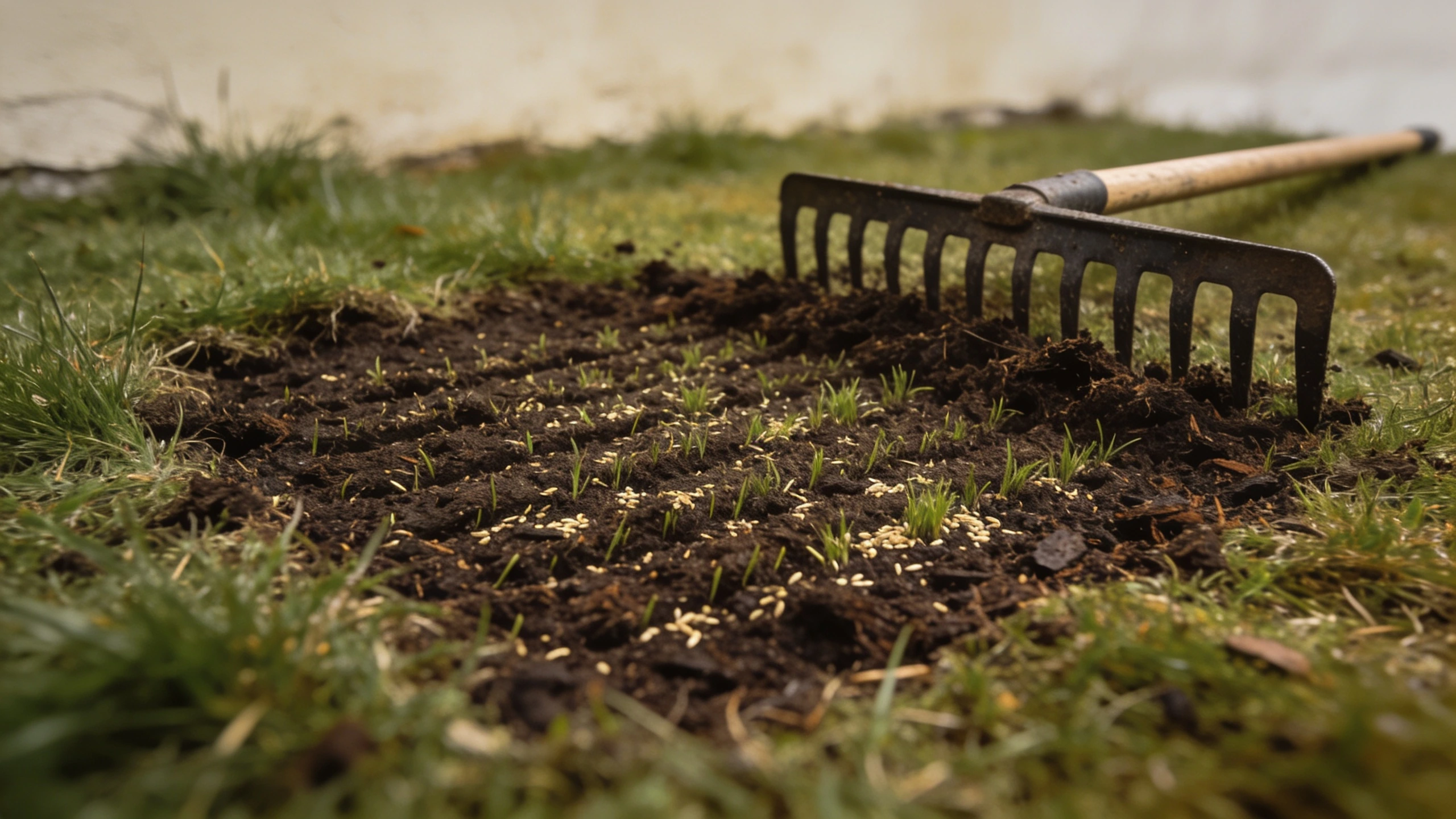
Scratch the surface with a rake to break the crust. Sprinkle seed. Cover with a thin layer of compost, a centimetre is plenty. Firm it down with your foot. Keep it damp for two to three weeks.
Spring or early autumn only. Midsummer sowing fails because the soil dries faster than a seedling can root.
Key points
- Worn patches from play: reseed, and accept it is an annual job if the play continues.
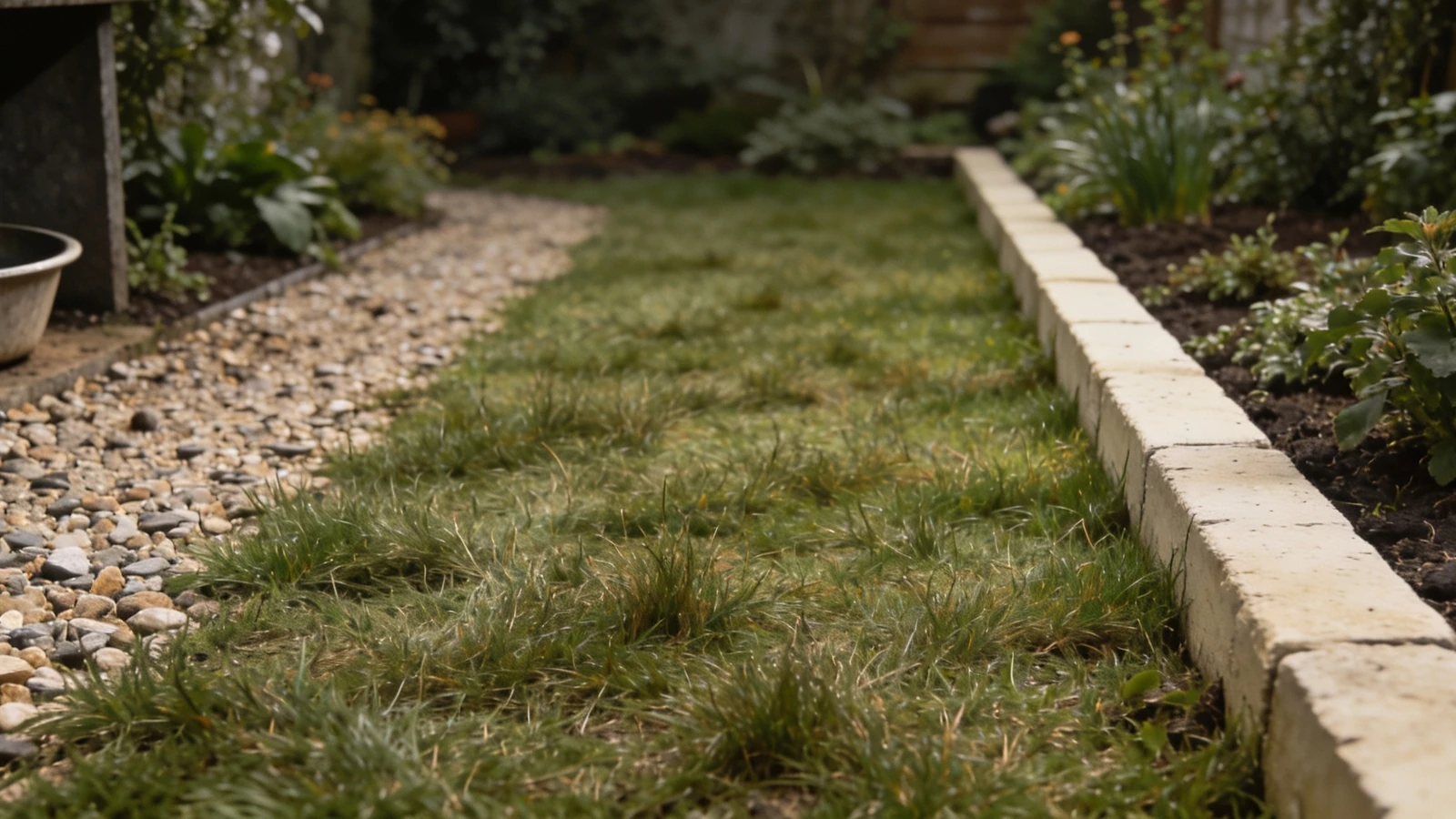
- A worn line across the lawn: that is a path. Reseeding it will fail forever. Surface it.
- Patches under trees: dry shade. Grass will not win. Plant something else.
- Yellow round patches from a dog: dilute with water immediately in future, and reseed.
- Bare soil in deep shade: woodland planting, not seed.
The annual rhythm, briefly#
- Early spring
- First cut with blades high, collecting clippings. Rake out winter debris. Feed if you are going to.
- Late spring
- Mow weekly, taking a third each time. Reseed any bare patches now.
- Summer
- Raise the blades, leave the clippings, stop watering, keep off it if it browns.
- Early autumn
- The best month of the year for lawn work: scarify, aerate, reseed, top dress, autumn feed.
- Late autumn
- Last cut with blades high, leaving the grass slightly longer for winter. Clear leaves off it.
- Winter
- Stay off it when frosted or waterlogged. Otherwise nothing.
Early autumn is the month that matters most and the one people skip. Warm soil and reliable moisture make it far better than spring for every repair job.
What it costs#
- Raising the mower blades
- Free, and the highest impact change available.
- Grass seed for repairs, 1 kg
- $10 to $25, and it covers a lot of patches.
- Compost for top dressing
- $15 to $40, or free if you make your own.
- Spring and autumn feed
- $25 to $60 a year for both. Buy the right one for the season.
- Hire a scarifier for a day
- $40 to $80, and much less work than a spring tine rake on anything over a small lawn.
- Sharp sand for top dressing compacted areas
- $8 to $20 a bag.
When to stop#
This is a real part of lawn care and it saves money and disappointment.
Under about four hours of sun a day, grass loses. Under trees it loses to shade and root competition at once. On a route people walk daily it loses to traffic.
In all three cases you will reseed every spring, forever, and it will look thin every year in between. The alternatives are cheaper, permanent and better looking: woodland planting of ferns and epimedium under trees, gravel or paving on the route, and shade planting where the sun does not reach.
Deciding that a patch is not going to be lawn is not giving up. It is the same decision as not planting a sun-loving shrub in a shady corner.
Where the guidance here comes from#
The cutting height and one-third rule are standard turf practice and the reason I lead with them is that raising the blades made more difference to my own lawn than anything I ever bought. For moss diagnosis, feeding and seasonal timing the RHS advice pages are the reference I check, and on watering the EPA WaterSense guidance makes the deep-and-infrequent case better than I can in a paragraph.
The short version#
Cut at 4 to 5 cm, higher in heat and shade, never taking more than a third. Feed twice a year with the right product for the season, or once. Water deeply and rarely, or not at all, and keep off it while it is brown. Treat moss as a symptom of shade, compaction or short mowing. Do the repair work in early autumn. And stop growing grass where it cannot win.
Related reading#
- Shade garden plants: what to plant where the lawn keeps failing.
- Dog friendly garden: worn routes and urine patches, in more detail.
- Low-maintenance garden ideas: whether you want this much lawn at all.
- Garden design basics: making the lawn a deliberate shape, which also makes it easier to mow.
Frequently asked questions
How short should I cut my lawn?
Higher than most people do. Around 4 to 5 cm for an ordinary family lawn, and 6 cm or more in summer heat or in shade. Longer grass has deeper roots, shades out weed seedlings, holds moisture and recovers faster from wear. Cutting short is the single most common cause of a thin, weedy, drought-prone lawn, and raising the blades costs nothing.
How do I get rid of moss?
Moss is a symptom, not the problem. It moves in where grass is weak, and the usual causes are shade, compaction, acidic soil, poor drainage or mowing too short. Scarifying pulls the moss out and it comes back within a year unless you fix the cause. Raise the cutting height, spike or hollow-tine the compaction, and in genuine shade accept that grass is the wrong plant.
How often should I water a lawn?
Rarely, and deeply, or not at all. An established lawn going brown in summer is dormant rather than dying, and it greens up within two weeks of rain. If you do water, give it a proper soak once a week rather than a light sprinkle daily, because frequent shallow watering trains roots to stay near the surface where they are most vulnerable.
When should I feed a lawn?
Spring and early autumn, with different products: a nitrogen-led feed in spring for growth, and a low nitrogen, higher potassium autumn feed for root strength and winter hardiness. Do not use a spring feed in autumn, which pushes soft growth into the cold. Most lawns are fed more often than they need and mowed too short, which is exactly the wrong way round.
How do I fix bare patches?
Scratch the surface with a rake, sprinkle seed, cover with a thin layer of compost, firm it down and keep it damp for two to three weeks. Do it in spring or early autumn, when soil is warm and moisture is reliable. Seed in midsummer usually fails, and if the patch is a route people walk, seed will fail there repeatedly until you accept it is a path.
Should I leave the clippings on the lawn?
In summer, yes, most of the time. Short clippings from regular mowing break down quickly and return nitrogen, which reduces how much feed you need. Collect them when the grass is very long, wet, or full of weed seed heads, and after the first cut of spring. Leaving clippings does not cause thatch, which is a common misconception.
When should I stop trying to grow grass?
Under about four hours of sun a day, on a route people walk daily, or in deep shade under trees. In all three cases grass will thin, moss will move in, and you will reseed every spring forever. Woodland planting, gravel or a path is cheaper, better looking and permanent. Knowing when to stop is a real part of lawn care.
Topics in this article
About the author
Jeff has gardened professionally for over twenty years, mostly on heavy clay, and writes everything here from beds he still works himself. More from Jeff Tanun →
Keep reading
Dog Friendly Garden
A dog friendly garden that survives an actual dog. Which plants are toxic, how to fix urine burn and digging, and why giving the dog a route works better than fencing.
Updated
October Gardening Jobs
October gardening jobs that actually pay off: plant garlic and bulbs, mulch bare soil, lift and store, and the tidying you should deliberately skip.
Updated
How to Grow Rhubarb
How to grow rhubarb from a crown: where to plant it, why you pick nothing in year one, how to force it for early stems, and when to divide the crown.
Updated