Hummingbird Garden: Tubular Flowers Beat Any Feeder
A hummingbird garden built on planting rather than sugar water. Which flower shapes they can actually use, feeder rules that avoid harm, and how to plan for territoriality.
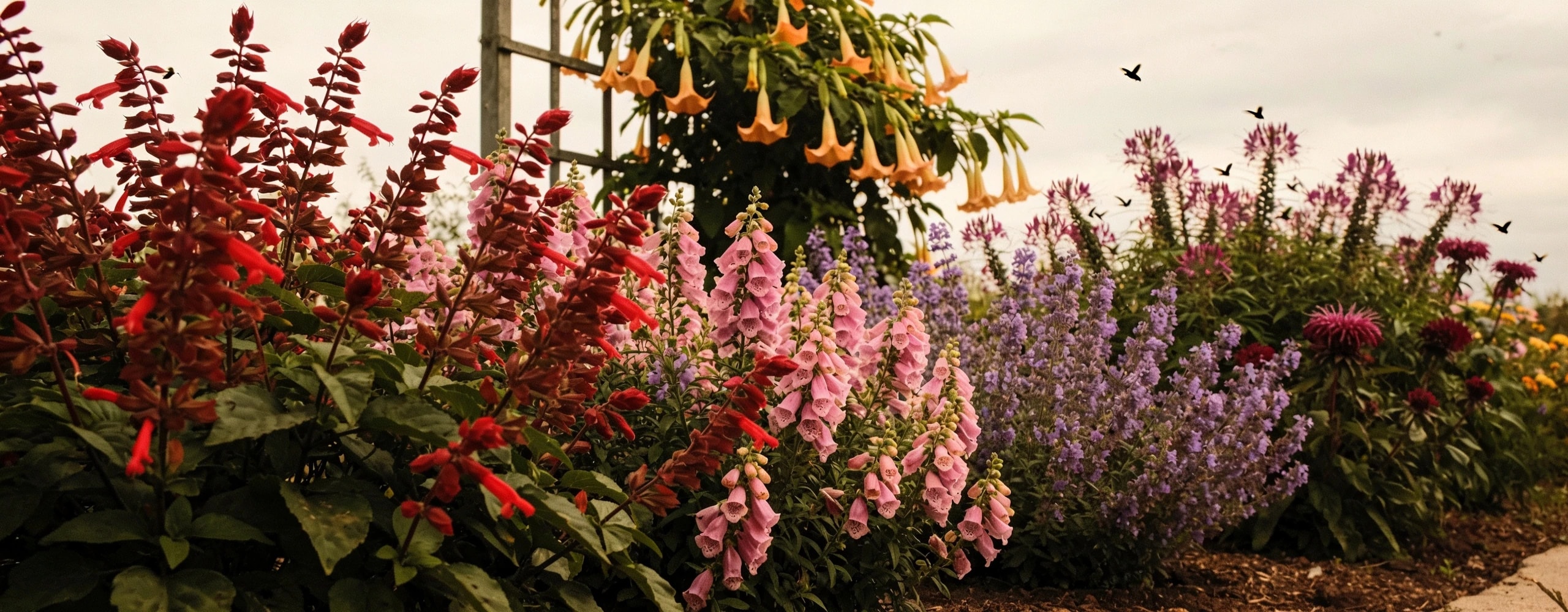
A hummingbird garden works far better on flowers than on sugar water, and the reason is not sentimental. A feeder needs cleaning every two days in heat or it becomes a hazard, while a well planted border feeds birds all season with no maintenance and also supplies the insects they need for protein. I would plant first and treat a feeder as an optional extra rather than the centrepiece.
The short answer
Plant tubular flowers in several separate drifts rather than one patch: salvia, penstemon, monarda, agastache, trumpet honeysuckle, cardinal flower and columbine. Shape matters more than colour. Spread the nectar around the garden because they are strongly territorial and one clump gets defended by one bird. Do not spray insecticide, since a fifth of their diet is insects. If you use a feeder: 1 part sugar to 4 parts water, nothing added, cleaned every two days in heat.
Flower shape, not flower colour#
A hummingbird bill and tongue are built for a long tube. That shape is the qualification, and colour is only advertising.
Red is genuinely effective at drawing attention from a distance, which is why so many hummingbird plants are red. It is not a requirement. Once a bird knows a patch, it works orange, pink and purple tubular flowers just as happily.
What they cannot use is a flat open flower with no tube, or a double flower where the nectar is unreachable. That is the same trap as with bees: a double variety often has the reproductive parts bred out and replaced with petals.
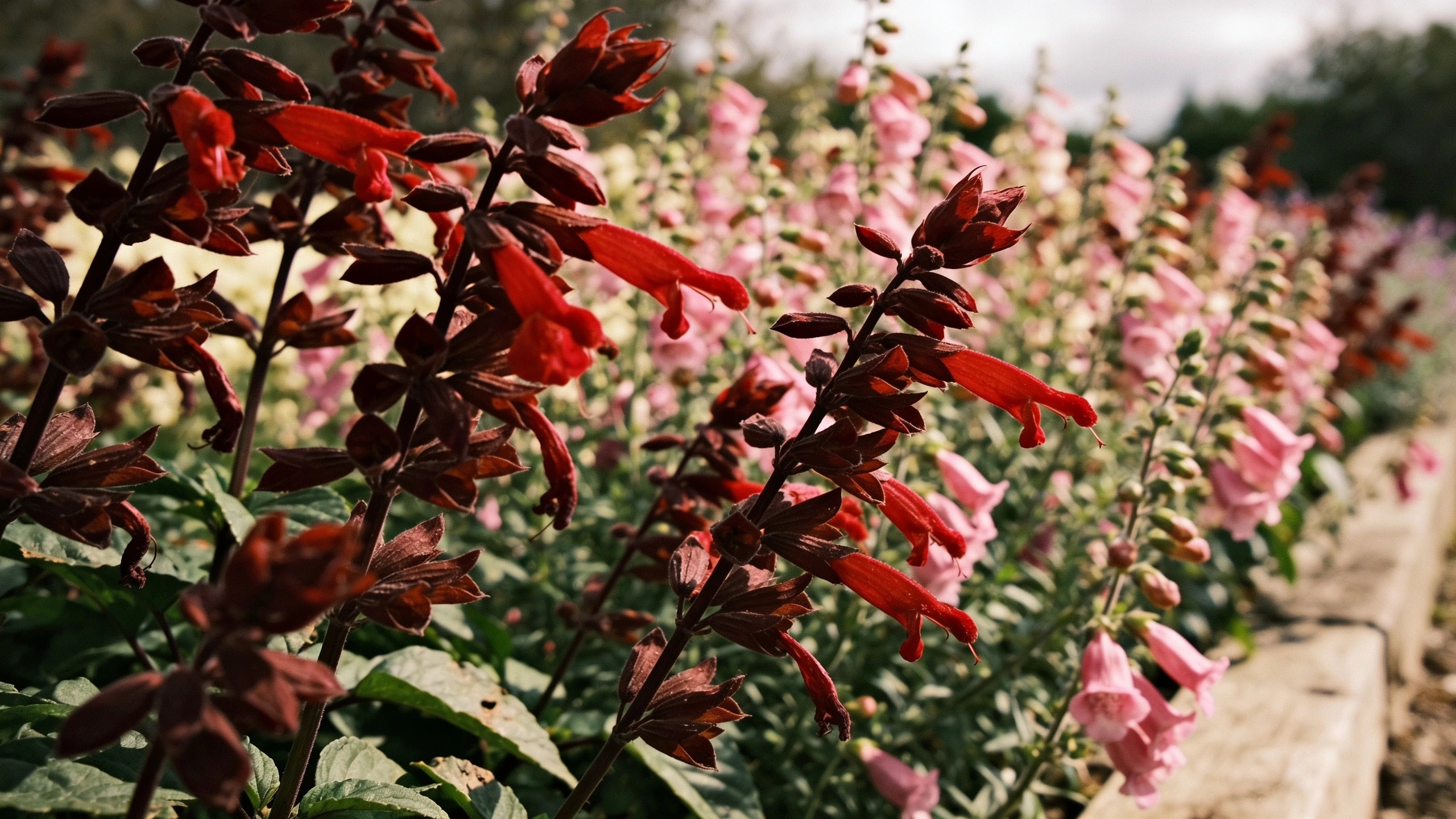
- Salvia
- The best value group on the list. Long flowering, many species, tubular, and they keep going into autumn when little else does.
- Penstemon
- Tubular, long flowering, and tolerant of poor dry soil. Cut back in spring rather than autumn.
- Monarda, bee balm
- Whorls of tubular flowers, excellent for hummingbirds and bumblebees alike. Wants moisture and good air movement to avoid mildew.
- Agastache
- Long spikes, months of flower, drought tolerant. One of the strongest performers in a hot dry border.
- Trumpet honeysuckle
- Native honeysuckle rather than the invasive Asian species. A climber, so it uses vertical space.
- Cardinal flower, Lobelia cardinalis
- Intense red, likes damp ground, and it is exactly the shape they are built for. Good at a pond edge.
- Columbine
- Early season, which matters because it covers the gap when migrants arrive and little else is out.
- Fuchsia
- Pendant tubular flowers, long season, and excellent in containers where you can put it near a window.
Spread the nectar, because they fight over it#
This is the practical insight that changes how many birds you see.
Hummingbirds are strongly territorial. One concentrated resource, a single feeder or one clump of salvia, becomes worth defending, and a dominant bird will spend its day chasing everything else away. You end up with one hummingbird and a lot of aggression.
Several separate drifts around the garden, out of sight of each other where possible, makes defending them unprofitable. More birds feed, and they spend less energy fighting.
The same applies to feeders: two or three, placed so a bird at one cannot see the others, works far better than one large one.
Feeders, and the honest rules#
If you want a feeder, these are the rules, and the cleaning one is not optional.
- The ratio
- One part ordinary white sugar to four parts water. Dissolved. That is the whole recipe.
- Nothing added
- No red dye, no honey, no brown sugar, no molasses, no sweetener. Honey ferments and can grow harmful fungus. Dye is unnecessary; the feeder itself provides the colour.
- Cleaning
- Every two days in hot weather, three to four in mild. Full rinse, no soap residue. This is where a feeder becomes harmful if neglected.
- Position
- Shade if possible, because syrup in full sun ferments fastest. Away from windows, or within a metre of them, since those are the two zones where collisions are least likely.
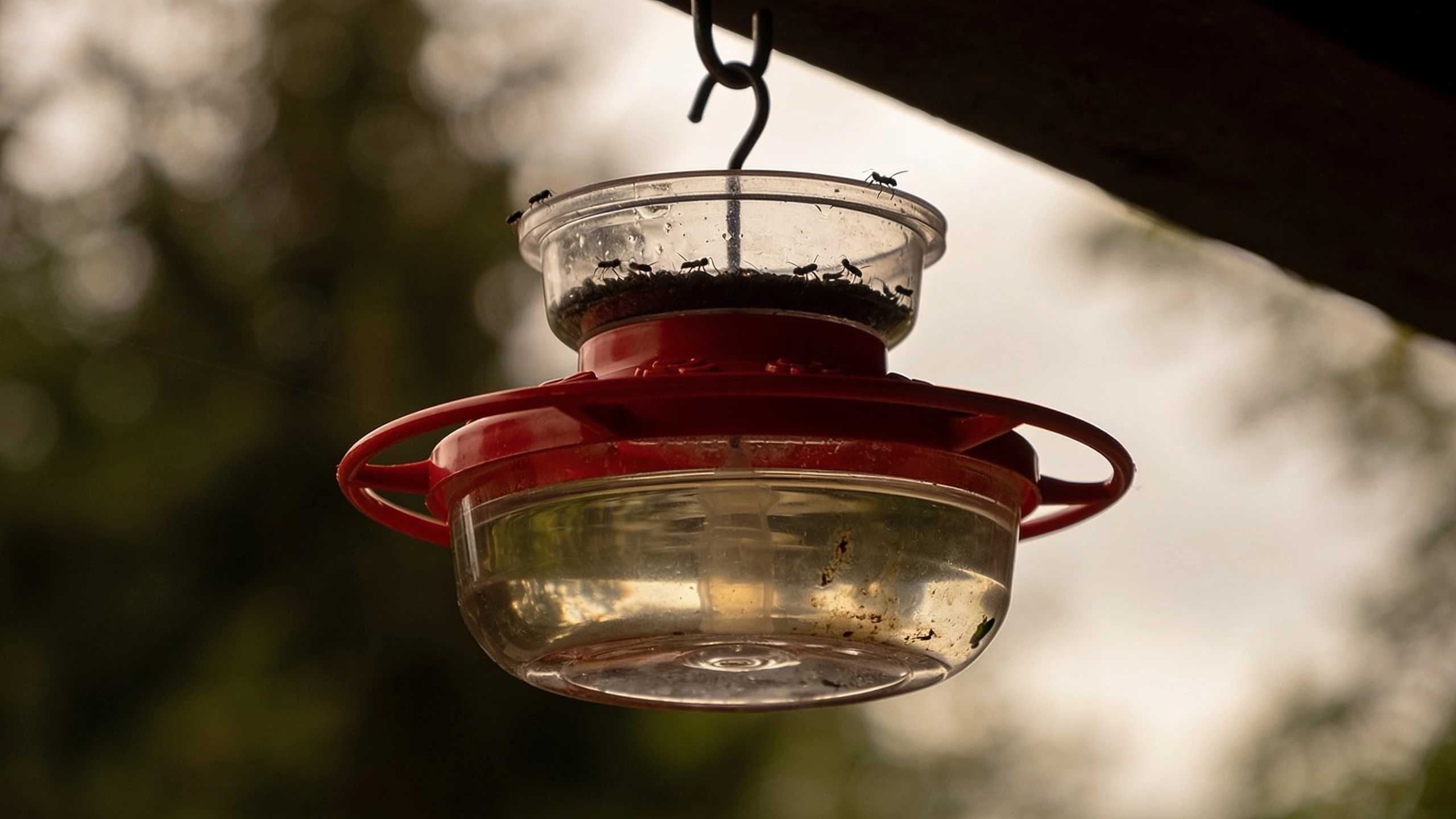
- Ants and wasps
- A water moat above the feeder for ants. Avoid yellow parts, which attract wasps. Do not use oil or grease on the wire, because it gets on feathers.
The migration myth is worth correcting: leaving a feeder up does not stop a bird migrating, because migration is triggered by day length rather than food. A late feeder can help a straggler. A fermented feeder can kill one.
The insects, which are half the story#
Roughly a fifth of a hummingbird's diet is small insects and spiders, and nestlings are fed almost entirely on them. Nectar supplies energy; insects supply protein.
That has one blunt consequence. Do not spray insecticide in a garden you are trying to fill with hummingbirds, because you are removing half the food supply while advertising the other half.
It also means the garden that supports them is a garden with plenty of ordinary invertebrate life: mixed planting, no bare ground, some untidiness, standing stems left over winter. The same conditions that suit bees and moths.
They also use spider silk and plant down to build nests, so leaving spiders alone and growing something with downy seed heads both help.
Water, and how they use it#
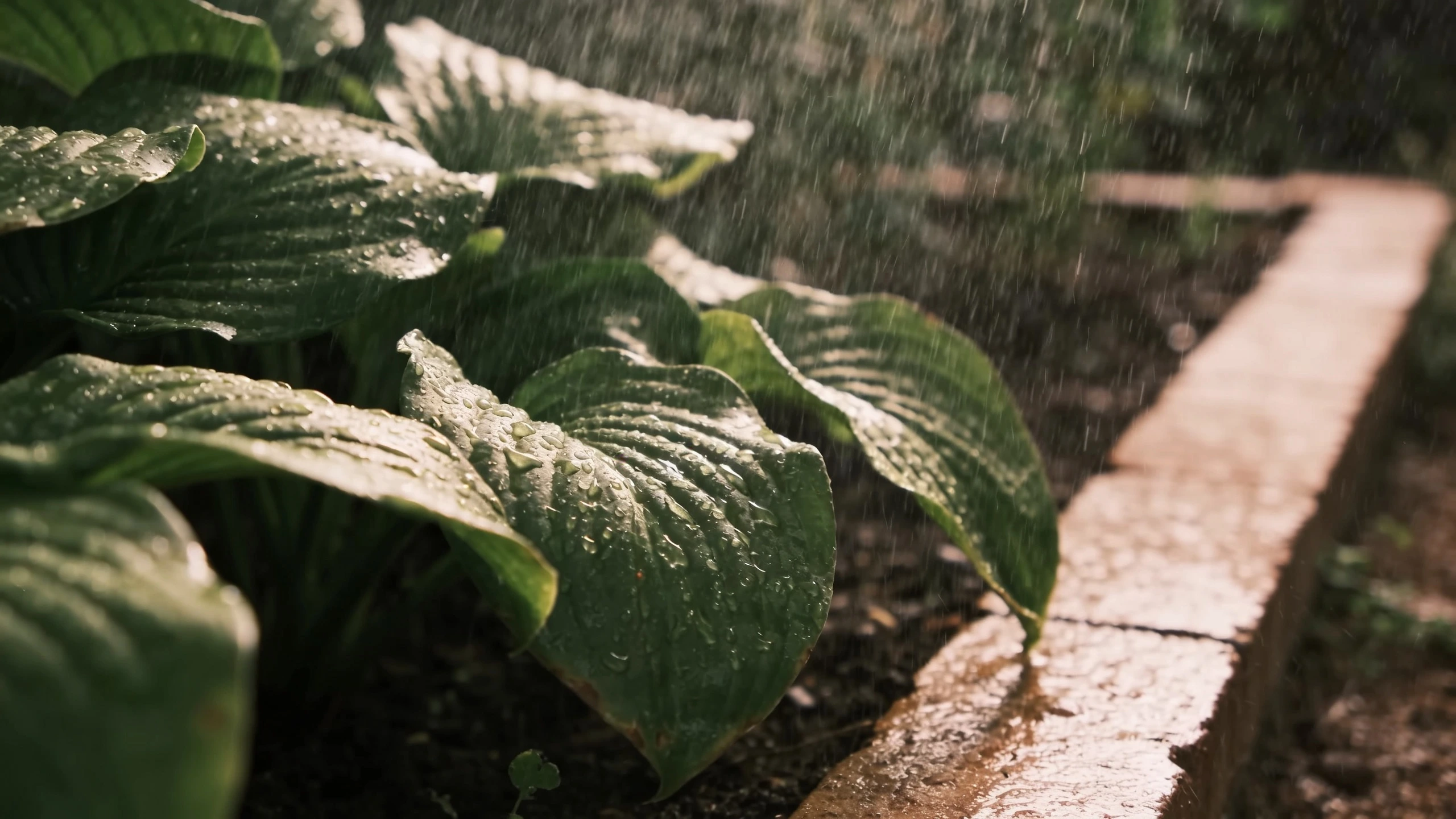
Not a birdbath. Hummingbirds bathe in shallow moving water, in mist, or by brushing against wet leaves.
A very shallow dish with a dripper, a mister on a hose, or a fine spray aimed at foliage will all get used, often enthusiastically. A conventional deep bath is the wrong shape entirely.
A first year plan#
Three drifts, separated, plus a climber. That is enough to bring them in.
- Drift one, hot and sunny
- Three salvia and three agastache. The longest flowering combination on the list and it wants poor dry soil.
- Drift two, opposite corner
- Three penstemon and three monarda. Keeps a second territory viable and covers midsummer.
- Drift three, damp or shaded end
- Cardinal flower and columbine. Columbine covers the early gap when migrants arrive.
- One climber
- Trumpet honeysuckle on a fence or trellis. Vertical nectar, and it flowers for a long season.
- Containers near a window
- Fuchsia and a salvia in pots. This is how you actually get to watch them.
- Optional feeders
- Two, out of sight of each other, in shade, cleaned every second day.
Where this needs adjusting#
Hummingbirds occur only in the Americas, so if you are elsewhere the birds will not come. The planting still works: the same tubular flowers feed long tongued bumblebees and hawkmoths, and sunbirds or honeyeaters in other regions.
In a cold zone, lean on the hardy perennials, penstemon, monarda, columbine, and treat salvia and agastache as annuals or lift them.
In deep shade, this is not the garden for it. Almost every plant here wants sun, and the honest answer is a shade planting scheme instead.
And check which species are native where you are before planting. Native trumpet honeysuckle is excellent; some ornamental honeysuckles are invasive in parts of the US, and the same is true of a few of the other names on lists like this.
Where the guidance here comes from#
The planting principles and the spread-the-nectar advice reflect standard practice from pollinator conservation sources. For regional plant lists, which matter here more than in most subjects, Pollinator Partnership publishes free planting guides by ecoregion for North America, and the RHS wildlife pages cover the nectar and insect relationship well even though the birds are not theirs. The feeder ratio and cleaning frequency are the conservative published consensus and I would not relax either.
The short version#
Plant tubular flowers in several separated drifts, chosen for shape rather than colour, with something early and something late. Do not spray, because insects are a fifth of the diet. Add a mister rather than a birdbath. If you use feeders, four parts water to one of plain sugar, nothing added, two or more feeders out of sight of each other, cleaned every second day.
Related reading#
- Pollinator garden: the wider version, and why flower shape decides everything.
- Moon garden: the night shift, where hawkmoths use the same tubular flowers.
- Flower gardening for beginners: border structure and planting in drifts.
- Water garden ideas: where cardinal flower belongs, and how to add water properly.
Frequently asked questions
What flowers attract hummingbirds?
Tubular flowers, and shape matters more than colour. Salvia, penstemon, monarda, trumpet honeysuckle, cardinal flower, columbine, agastache, fuchsia and native trumpet vine are all built for a long bill and tongue. Red does draw the eye from a distance, and it is not required: they work orange, pink and purple tubular flowers just as readily once they have found them.
What is the correct sugar water ratio for a feeder?
One part ordinary white sugar to four parts water, dissolved, with nothing else added. No red dye, no honey, no brown sugar, no artificial sweetener. Honey ferments and can grow harmful fungus, dye is unnecessary and unstudied, and stronger syrup is not better. Boiling is not required if the sugar dissolves, though it slows spoilage slightly.
How often do I need to clean a hummingbird feeder?
More often than most people expect, and this is the part where a feeder does harm rather than good. Every two days in hot weather, every three to four in mild, with a full rinse and no soap residue. Sugar water ferments and grows mould quickly in heat, and a dirty feeder can spread disease. If you cannot commit to that schedule, plant flowers instead and skip the feeder.
Do hummingbird feeders stop them migrating?
No. Migration is driven by day length and internal cues rather than food supply, so leaving a feeder up does not trap a bird. Leaving one up late in the season can actually help a straggler. What does harm is a fermented or mouldy feeder, which is a genuine risk rather than a theoretical one.
Why is one hummingbird chasing all the others away?
Because they are strongly territorial, and a single feeder or one clump of flowers creates something worth defending. The fix is to spread the resource: several feeders out of sight of each other, and flowers in separate drifts around the garden rather than one concentrated patch. More scattered nectar means less profitable defence and more birds feeding.
Do hummingbirds need anything besides nectar?
Yes, and this gets missed. Roughly a fifth of their diet is small insects and spiders, which supply the protein nectar cannot, and nestlings are fed almost entirely on them. So do not spray insecticide in a hummingbird garden, because you are removing half the food. They also use spider silk and plant down for nests, and they bathe in shallow moving water or wet leaves.
Does any of this apply outside the Americas?
Hummingbirds occur only in the Americas, so the birds themselves do not. The planting does though: the same tubular flowers feed long tongued bumblebees, hawkmoths and, in other parts of the world, sunbirds and honeyeaters. If you are elsewhere, the plant list still works, and the pollinators are simply different.
About the author
Jeff has gardened professionally for over twenty years, mostly on heavy clay, and writes everything here from beds he still works himself. More from Jeff Tanun →
Keep reading
Pollinator Garden
A pollinator garden that actually works: flower shapes bees can use, a plan that covers March to October, and why water and bare soil matter as much as flowers.
Updated
Cat Friendly Garden
A cat friendly garden covers two problems: keeping your own cat safe, and keeping other people's cats out of your seedbeds. Both have practical answers.
Updated
How to Grow Irises
How to grow irises: bearded irises want their rhizomes baking on the surface, not buried. Which type suits your soil, when to divide, and why yours stopped flowering.
Updated