How to Grow Irises: Plant the Rhizome Too Shallow
How to grow irises: bearded irises want their rhizomes baking on the surface, not buried. Which type suits your soil, when to divide, and why yours stopped flowering.
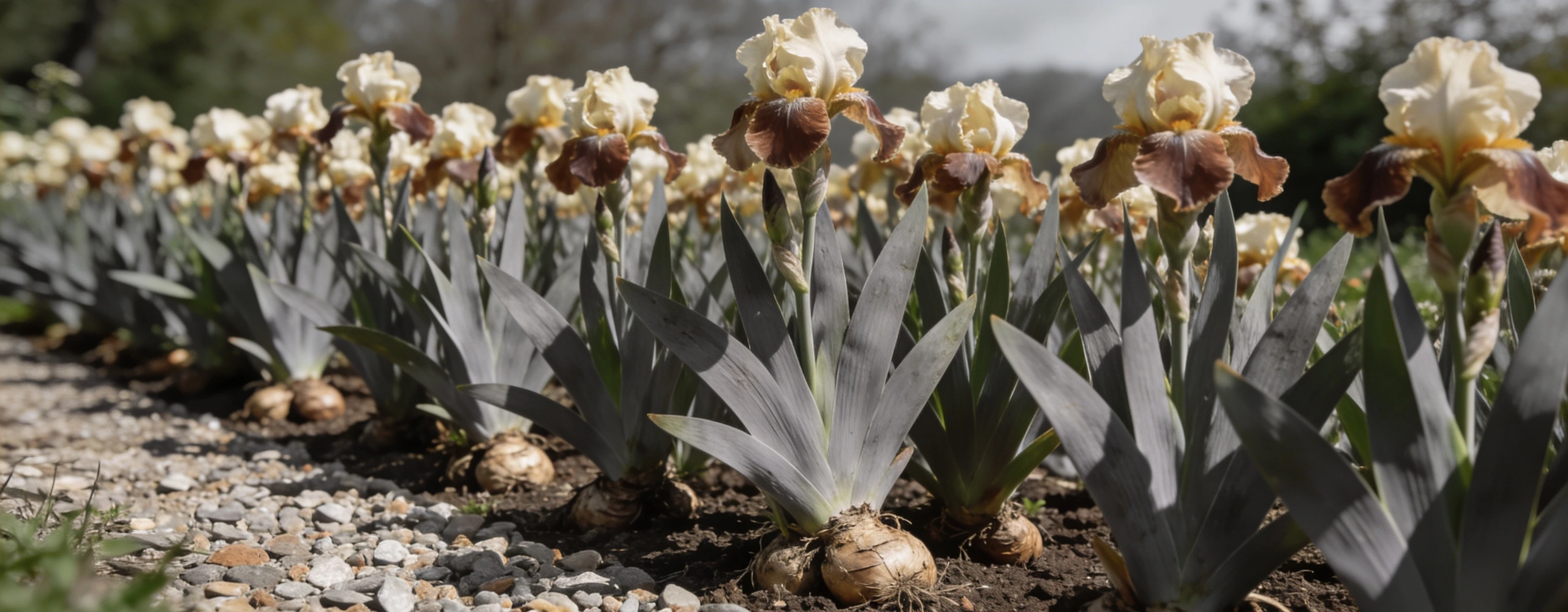
Irises are among the easiest perennials to grow and the easiest to get wrong, and the reason is a single instruction that feels like a mistake while you are doing it: you plant the rhizome on top of the soil, not in it. Almost every iris I have been asked about that produces leaves and no flowers has been planted at a sensible-looking depth, which is to say too deep.
The short answer
Bearded irises: set the rhizome so its top is at or just above the surface, roots buried, in full sun and sharp drainage. Do not mulch over it. Divide six weeks after flowering, every three or four years. If yours is not flowering, check depth, congestion, shade and too much nitrogen in that order. Siberian and Japanese irises are the opposite: they want damp soil and covering by 3 to 5 cm.
Which iris you have decides everything#
The advice splits sharply by type and mixing them up is how people go wrong.
- Bearded iris
- The big flamboyant ones with a fuzzy beard on the falls. Rhizomes on the surface, full sun, sharp drainage. Rots in wet soil.
- Siberian iris
- Slimmer, grassier, more elegant. Tolerates and prefers damp soil, planted 3 to 5 cm deep. Far easier on clay.
- Japanese iris
- Large flat flowers, wants genuinely wet soil through the growing season. Excellent at a pond margin.
- Iris pseudacorus, yellow flag
- Will grow in standing water. Vigorous to the point of being a nuisance in a small pond.
- Bulbous irises, reticulata and Dutch
- Grown from bulbs, not rhizomes. Planted in autumn at three times their depth like any bulb.
If your soil is heavy and wet, do not fight it with bearded irises. Grow Siberians and enjoy them instead.
The shallow planting rule, and why it feels wrong#
A bearded iris rhizome is a modified stem, not a root, and it needs sun on its back. In the wild these plants sit on thin stony soil with the rhizome exposed and baking.
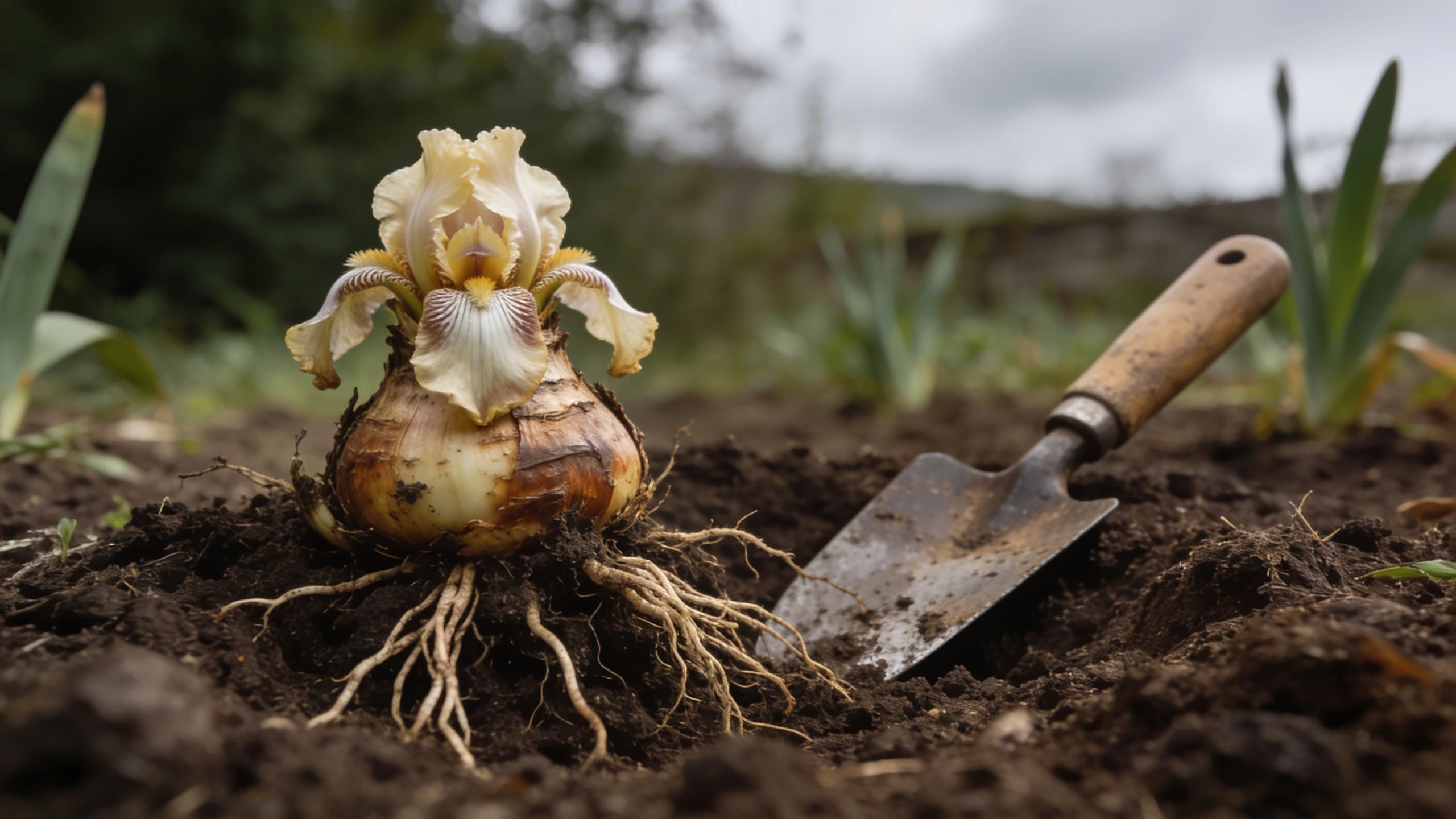
So the planting method is: dig a shallow depression, make a small ridge in the middle, sit the rhizome on the ridge with roots spread down either side, and backfill so the roots are covered and the top of the rhizome is still visible. It should look under-planted. It is not.
Bury it and two things happen. It will not initiate flower buds, and it is far more likely to rot.
Where to plant them#
Full sun. At least six hours, and more is better. In light shade a bearded iris will survive and flower poorly, which people then blame on the variety.
Sharp drainage. On clay, plant on a raised ridge or in a raised bed and work grit into the planting area. Winter wet is what kills them.
Not crowded by neighbours. Irises resent being smothered by a floppy geranium in June, partly because it shades the rhizome and partly because it holds moisture against it. Give them the front of a border or their own strip.
And plan for July. Bearded irises flower for perhaps three weeks and then contribute foliage only. Plant something nearby that carries the second half of summer, because a whole bed of them is dull from June onwards.
Dividing, which is not optional#
Irises grow outwards from the rhizome and the old centre gradually dies out. Left alone, a clump becomes a congested ring of woody rhizome with a bare middle, and flowering falls away.
Every three or four years, six weeks or so after flowering:
Key points
- Lift the whole clump with a fork and shake the soil off so you can see what you have.
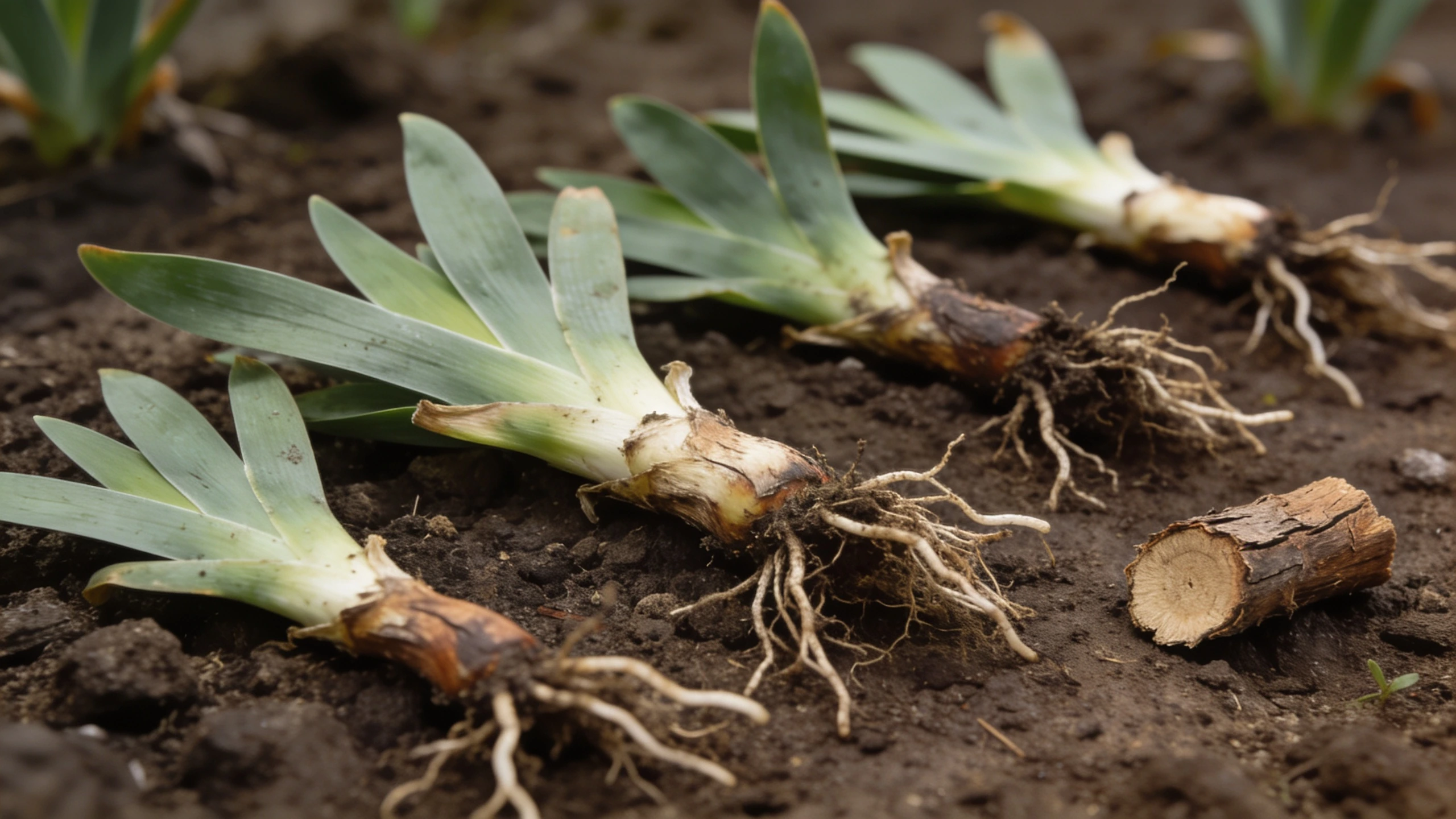
- Snap or cut the rhizome into pieces, each with one fan of leaves and a good set of roots.
- Throw away the old woody sections with no growth. They will not come back.
- Trim the leaves back to about 15 cm in a fan shape, so wind cannot rock the new division loose.
- Replant shallow, in improved soil, and water in once. Then leave them alone.
Expect the divisions to skip a flowering season. That is normal and it is the price of a clump that flowers well for the next four years.
Why yours stopped flowering#
This is the question I get most, so here it is as a checklist in order of likelihood.
- Planted too deep
- The most common by a wide margin. Lift it, replant with the rhizome proud of the surface, and wait a season.
- Congested
- Second most common. If it has been in place four years or more and the middle has gone bare, divide it.
- Not enough sun
- Six hours minimum. Shrubs and trees grow, and a spot that was sunny five years ago may not be now.
- Too much nitrogen
- Lush leaves and no flowers is the signature. Stop general feeding, use low nitrogen or bonemeal in spring only.
- Buried under mulch
- The same as planted too deep, arrived at differently. Pull the mulch back off the rhizomes.
Soft rot, and how much you can cut away#
If the base goes soft, sludgy and smells, that is bacterial soft rot. It follows wet conditions, slug damage or deep planting.
The treatment is more aggressive than people expect and it works. Cut all the soft tissue away with a clean knife, right back to firm white rhizome. Do not dress or cover the wound: leave it open to air and sunlight, which is exactly what the bacteria cannot tolerate. Then improve the drainage so it does not recur.
Iris rhizomes tolerate remarkable amounts of surgery provided they can dry out afterwards.
What it costs#
- One bearded iris rhizome
- $8 to $18 from a specialist. Buy a big single rhizome rather than three small ones; it will flower a year sooner.
- Siberian iris, potted
- $10 to $20. Easier than bearded on any soil that holds water.
- Divisions from a friend
- Free, and July is when everyone has spares. This is how most irises change hands.
- Grit for drainage
- $8 to $18 a bag, and on clay it is the difference between thriving and rotting.
- Bonemeal or low nitrogen feed
- $8 to $15, used once a year in spring. Do not buy anything richer.
Where this needs adjusting#
On heavy clay, either build a raised bed and work in grit, or switch to Siberian irises, which will be happier and less work. I would not fight clay for bearded irises.
In a hot dry climate they are excellent, and the shallow planting that feels risky in a wet country is straightforwardly correct there.
At a pond margin, Japanese iris and yellow flag both belong, and the shallow-planting rule does not apply to either. Be careful with yellow flag in a small pond, because it is vigorous.
Where the guidance here comes from#
The shallow planting rule and the division timing are standard horticultural practice rather than anything I invented, and I can vouch for the consequences of ignoring the first one. For variety choice, soil requirements and rot management the RHS advice pages are the reference, and the USDA plant hardiness map is worth a check before buying, since bearded irises are hardier in dry cold than in mild wet.
The short version#
Bearded irises sit on the soil, not in it, in full sun with sharp drainage, and never under mulch. Divide six weeks after flowering every three or four years, trimming leaves to a fan. If yours will not flower, check depth first. On wet soil grow Siberians instead and stop fighting.
Related reading#
- Flower gardening for beginners: border planning, and what to plant to carry July when the irises finish.
- Garden design basics: layering, so a short flowering season is not a problem.
- Water garden ideas: where Japanese iris and yellow flag actually belong.
- Mulching a garden: how to mulch a border without burying these.
Frequently asked questions
How deep should you plant an iris?
For bearded irises, barely at all. The top of the rhizome should sit at or just above the soil surface so it bakes in the sun, with only the roots buried. This feels wrong and it is the single most important thing about growing them. Bury a bearded iris rhizome and it will produce leaves for years and never flower. Beardless types, Siberian and Japanese, are different and do want covering by 3 to 5 cm.
Why is my iris not flowering?
Four causes, in order of likelihood. It is planted too deep, which is the classic. It is congested and needs dividing, which is due every three to four years. It is shaded, and bearded irises want at least six hours of direct sun. Or it is being fed too much nitrogen, which pushes leaf at the expense of flower. Work through those four in that order and you will usually find it.
When should you divide irises?
Six weeks or so after flowering, which is usually July or August for bearded types. That gives the divisions time to root before winter. Lift the clump, cut the rhizome into pieces each with a fan of leaves and healthy roots, discard the old woody centre, trim the leaves back to about 15 cm to stop wind rocking them, and replant shallow.
Which iris suits wet soil?
Siberian iris for damp ground and Japanese iris for genuinely wet, and both are much easier than bearded types in a heavy garden. Iris pseudacorus will grow in standing water at a pond margin, though it is vigorous enough to take over a small pond. Bearded irises are the opposite: they want sharp drainage and will rot in winter wet.
Do irises need feeding?
Sparingly, and not with a general nitrogen feed. A light dressing of a low nitrogen fertiliser or bonemeal in early spring is plenty. Too much nitrogen gives you lush leaves, no flowers and rhizomes that are more prone to rot. Do not mulch over the rhizomes either, however tempting, because that buries them by another route.
How long do irises take to flower after planting?
Often not in the first year. A rhizome planted in summer usually settles in and flowers the following spring or the one after, and a division may skip a season entirely. This is normal rather than a failure, and it is why buying a decent sized rhizome from a specialist is worth more than buying three small ones.
What is the sludgy rot at the base of my iris?
Almost certainly bacterial soft rot, which follows wet conditions, damage or planting too deep. Cut away all the soft tissue with a clean knife back to firm rhizome, leave the wound open to the air and the sun rather than covering it, and improve the drainage. Iris rhizomes recover from surprisingly aggressive surgery if they can then dry out.
Topics in this article
About the author
Jeff has gardened professionally for over twenty years, mostly on heavy clay, and writes everything here from beds he still works himself. More from Jeff Tanun →
Keep reading
Hummingbird Garden
A hummingbird garden built on planting rather than sugar water. Which flower shapes they can actually use, feeder rules that avoid harm, and how to plan for territoriality.
Updated
Pollinator Garden
A pollinator garden that actually works: flower shapes bees can use, a plan that covers March to October, and why water and bare soil matter as much as flowers.
Updated
How to Grow Rhubarb
How to grow rhubarb from a crown: where to plant it, why you pick nothing in year one, how to force it for early stems, and when to divide the crown.
Updated