Cat Friendly Garden: Yours, and the Neighbours' Cats
A cat friendly garden covers two problems: keeping your own cat safe, and keeping other people's cats out of your seedbeds. Both have practical answers.
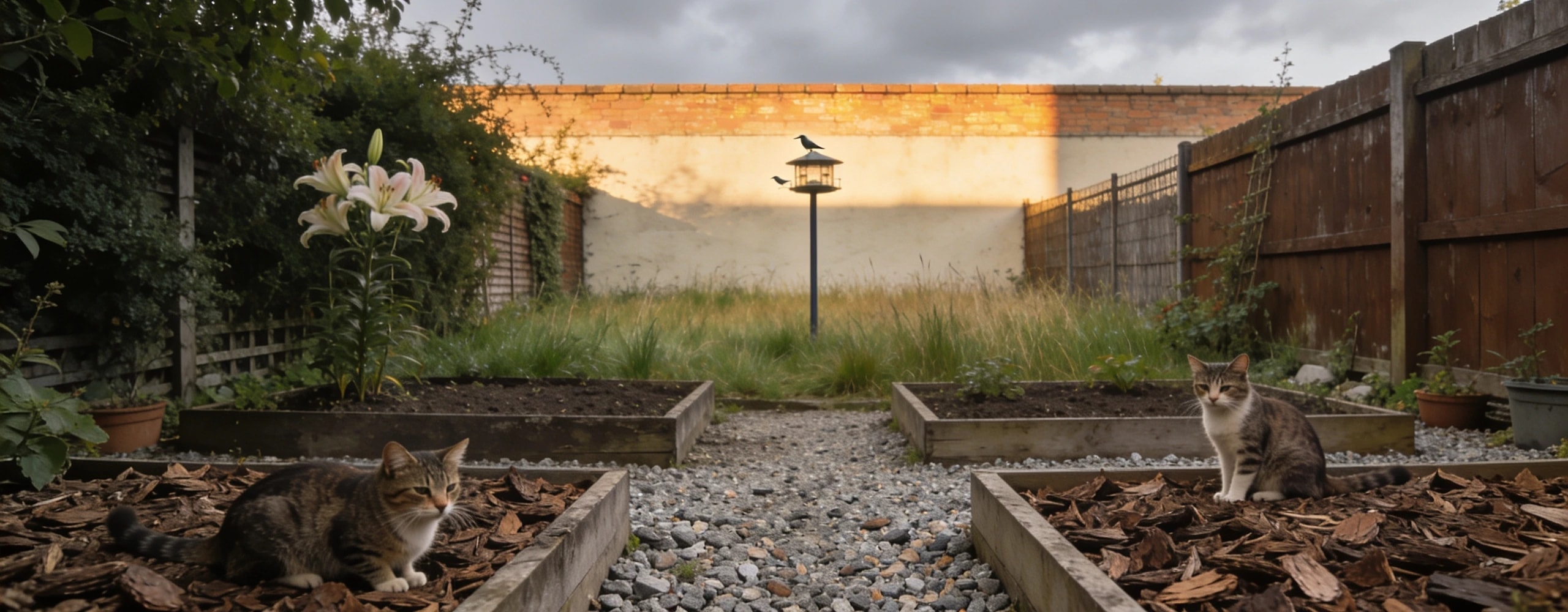
Cat questions in a garden come in two directions and they need different answers. Either you have a cat and want it not to be poisoned, or you do not have a cat and other people's are using your seedbed. I have been on both sides of that, and in each case the reliable fixes are physical rather than clever.
The short answer
If you have a cat, the single most important thing is to stop growing lilies, which cause kidney failure in cats from tiny amounts including pollen on fur. If you are keeping cats out, change the surface rather than buying a deterrent: coarse bark, sharp gravel, twiggy prunings or dense planting all remove the loose dry soil a cat is looking for. Cover new sowings with mesh for two or three weeks.
Keeping your own cat safe#
The plant list that matters is shorter than most and one entry dominates it.
- Lilies, and day lilies
- The serious one. True lilies and Hemerocallis can cause acute kidney failure in cats from a very small quantity, including pollen groomed off fur. I would not grow them at all with a cat, and I would say so to anyone bringing cut flowers.
- Autumn crocus
- Highly toxic, and it flowers in autumn when little else does, so it gets planted for that reason.
- Sago palm
- Severely toxic, especially the seeds. Common as a houseplant and a patio pot in warm climates.
- Oleander
- Every part is toxic. Frequently grown in containers where a cat sits.
- Azalea and rhododendron
- Toxic if eaten in quantity. Less likely to be chewed, but worth knowing.
- Cyclamen, foxglove, yew
- All toxic. Cyclamen tubers and yew in particular.
- Spring bulbs
- Daffodil, tulip and hyacinth. Less of a digging risk from cats than dogs, but still toxic if chewed.
Honestly though, most garden harm to cats is not botanical. Slug pellets, antifreeze, rodent bait and concentrated garden chemicals are the things that hurt cats, along with traffic. Locking the shed and choosing non-chemical slug control does more for a cat than any plant substitution.
Cats and wildlife, said honestly#
If you are also gardening for birds, this needs a straight answer rather than a comfortable one.
Cats predate birds and small mammals, and no planting scheme changes that. What can be reduced is opportunity.
Key points
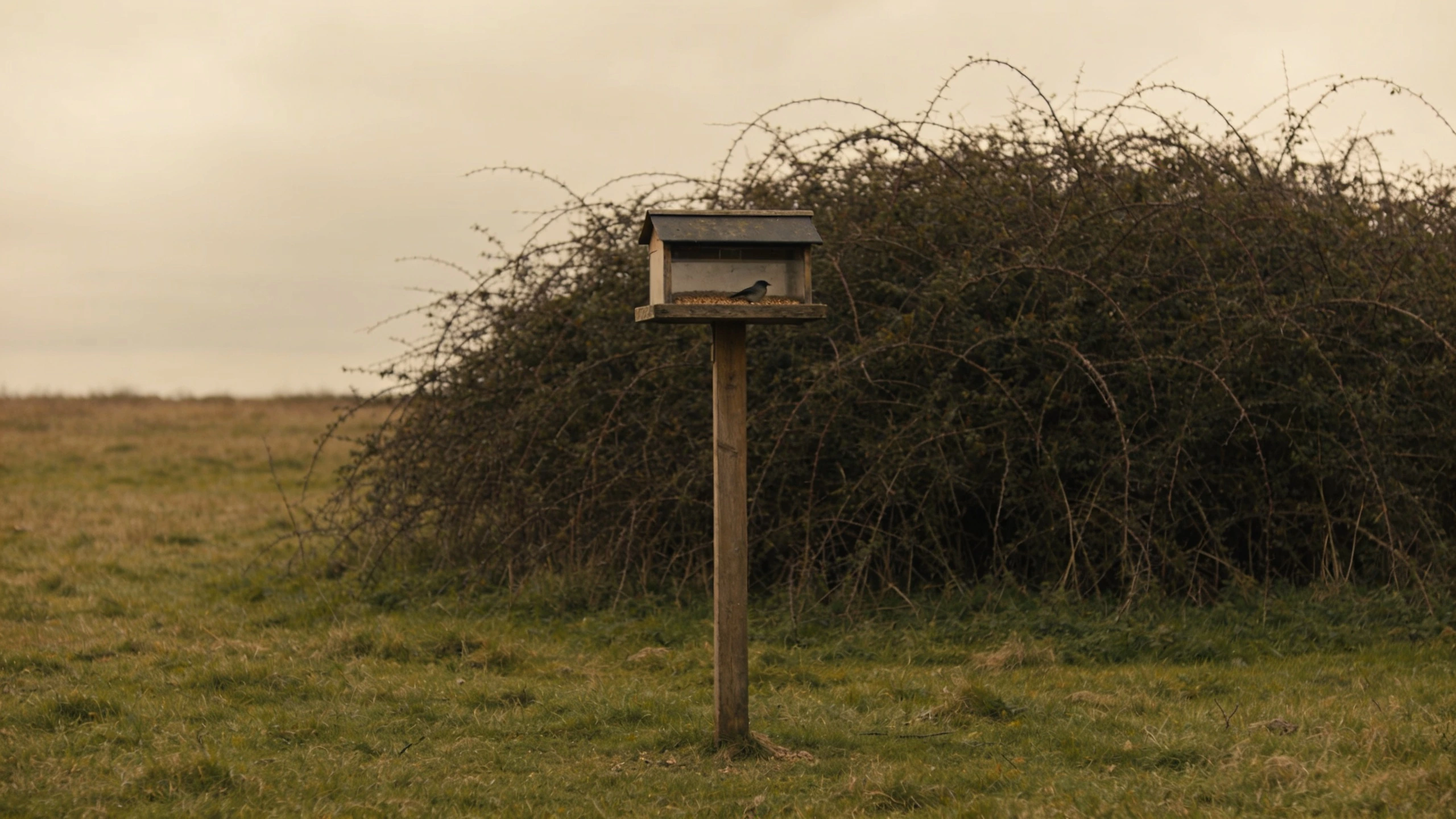
- Site feeders and nest boxes high, and away from launch points: fence tops, shed roofs, low branches, anything within a leap.
- Put dense thorny shrubs near feeders so small birds have cover a cat cannot follow them into.
- A bell, or better a bright collar cover, gives birds warning. Both are shown to reduce catches.
- Keep the cat in at dawn and dusk, which is when both hunting and bird feeding peak.
- Do not put a feeder on the ground in a garden a cat uses. That is the worst possible combination.
Doing all of that reduces the problem considerably. It does not eliminate it, and pretending otherwise would be dishonest.
Keeping other people's cats out#
Now the other direction, and the important insight is what a cat is actually looking for: loose, dry, diggable soil. Remove that and the appeal goes.
- Coarse bark or sharp gravel mulch
- The most reliable fix. Uncomfortable to dig, and it also does everything else a mulch does. This is where I would start.
- Twiggy prunings pushed in
- Free, and excellent around new sowings. A cat needs room to scratch and turn; a grid of twigs denies it.
- Dense planting
- No bare soil, no appeal. The same principle as with dogs, and it is the permanent version of the fix.
- Mesh or netting over seedbeds
- For the two or three weeks between sowing and emergence, which is when the risk is highest.
- Motion activated sprinkler
- The one device I have found genuinely effective. Cats learn the area and avoid it. Needs a hose connection.
- Scent deterrents
- Citrus peel, coffee grounds, proprietary sprays. All need reapplying after rain, which is why they quietly stop working.
- Ultrasonic deterrents
- Inconsistent. Some cats ignore them completely. I would try the surface changes first.

Catnip and catmint, which are not the same plant#
Worth clearing up because it changes what you plant.
Catnip, Nepeta cataria, is the plant with the strong effect on cats. If you want to attract them, that is the one.
Ornamental catmint, usually Nepeta racemosa or Nepeta faassenii, is the excellent long flowering border plant that bees work all summer. Cats show varying interest in it, some considerable, and it is not the same species.
So if you love the border plant and would rather not run a cat attraction, plant the ornamental forms and see how the local cats respond. If you want to please your own cat, plant catnip somewhere it can be flattened without you minding, because it will be.
Making a garden a cat enjoys#
If it is your cat, a few things genuinely improve the garden from its point of view, and most of them also reduce the digging.
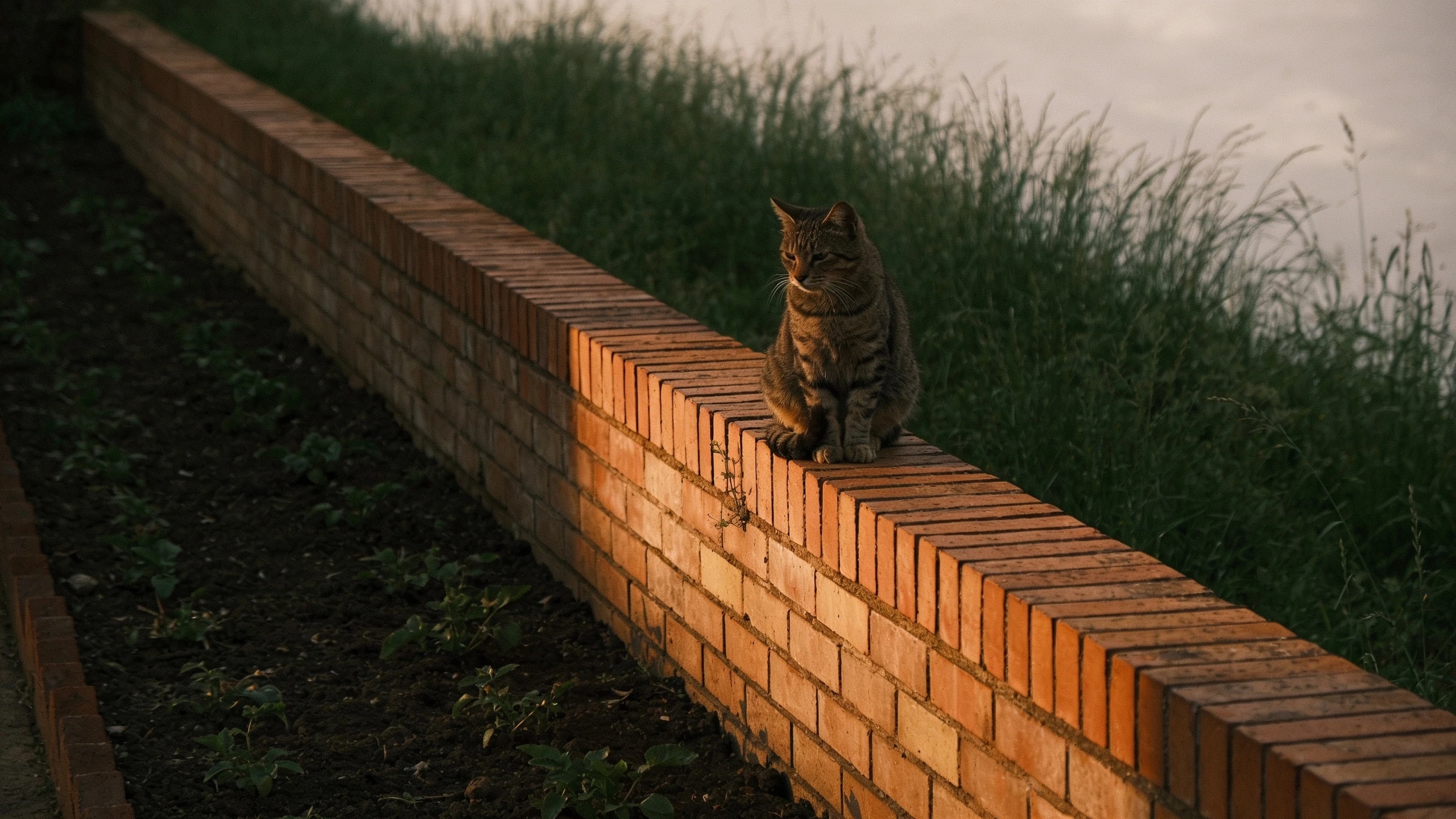
A high vantage point in the sun. A wall top, a shed roof, a sturdy shelf. Cats want to be above things.
Shelter from rain that is not your seedbed. A gap under a shed, a covered corner, a dry spot behind a shrub.
Something to scratch that is not the tree you planted last year. A log or a post takes the pressure off.
Long grass. A patch left unmown is used constantly, for hunting, sitting and eating grass, and it is also good for insects.
And a sunny patch of bare gravel somewhere you do not mind, which will be preferred over a bed if it is warmer and easier.
What it costs#
- Coarse bark mulch for the beds
- $40 to $110. Doubles as weed suppression and moisture retention, so it is not a single purpose purchase.
- Sharp gravel mulch
- $50 to $130. More effective than bark for this and it suits Mediterranean planting.
- Twiggy prunings
- Free. You already produce them and they work as well as anything.
- Mesh or fleece for seedbeds
- $15 to $40, reused for years.
- Motion activated sprinkler
- $40 to $110. The device worth buying if surface changes are not enough.
- Removing the lilies
- Free, and the highest priority if you have a cat.
Where this needs adjusting#
In a small garden with a cat that is out constantly, dense planting and gravel mulch across the whole space is more realistic than trying to protect individual beds.
If neighbouring cats are the problem and you have no hose, the sprinkler is out and the surface changes carry the whole load. Do them properly rather than partially, because a cat only needs one diggable patch.
And if you are feeding birds while a cat visits daily, be honest about the trade. Either move the feeders high and add cover, or accept that a feeder in that garden is doing more harm than good.
Where the guidance here comes from#
The deterrent hierarchy is from trying most of them, and the surface-change conclusion is the one that held up. On plant toxicity, the lily risk to cats is well documented veterinary consensus rather than my opinion, and anything you are unsure about is worth checking against the RHS advice pages, which flag harmful species. The RHS wildlife pages cover feeder siting properly. Anything already eaten is a vet question rather than a gardening one.
The short version#
If you have a cat, remove the lilies and lock up the chemicals. If you are keeping cats out, change the surface: coarse bark, sharp gravel, twigs, dense planting, and mesh over new sowings. Buy a motion sprinkler before any other gadget. And if you feed birds, site the feeders high with cover nearby and be realistic about the rest.
Related reading#
- Dog friendly garden: the other half of the pets question, with a different plant list.
- Pollinator garden: planting for wildlife, and the honest tension with a cat.
- Mulching a garden: which mulch to use, since that is the main fix here.
- Low-maintenance garden ideas: dense planting, which solves this and several other problems at once.
Frequently asked questions
Which plants are toxic to cats?
Lilies are the one that matters most, and the risk is much higher than people realise: true lilies and day lilies can cause kidney failure in cats from a very small amount, including pollen groomed off fur. Beyond that: autumn crocus, foxglove, yew, oleander, cyclamen, azalea, sago palm and spring bulbs. If you have a cat, I would simply not grow lilies, and I would tell anyone giving you cut flowers the same.
How do I stop cats using my beds as a toilet?
Make the surface unpleasant to dig. Cats want loose dry soil, so a mulch of coarse bark, sharp gravel, pine cones or twiggy prunings laid over the bed removes the appeal. Dense planting with no bare soil does the same. Twigs pushed in around seedlings work well because a cat needs room to scratch. Water and scent deterrents are far less reliable.
Do cat repellent devices work?
Motion activated sprinklers are the most effective thing I have used, and cats generally learn to avoid the area after a few encounters. Ultrasonic deterrents are inconsistent, and some cats ignore them entirely. Scent based deterrents need reapplying after every rain, which in practice means they stop being applied. Change the surface before you buy a gadget.
Is catmint the same as catnip?
Related but not the same. Catnip, Nepeta cataria, is the one with the strong effect on cats. Ornamental catmint, usually Nepeta racemosa or faassenii, is the excellent long flowering border plant that bees love, and cats are interested in it to varying degrees. If you want to attract cats plant catnip; if you want the border plant and less feline attention, plant the ornamental ones.
How do I keep my own cat safe outdoors?
Remove the lilies, keep any garden chemicals locked away, cover water butts and ponds are worth a thought, and be aware that slug pellets and antifreeze are both serious hazards. A cat will find the warmest and highest spot available, so check greenhouses on hot days and check under car bonnets in winter. Most cat garden injuries are chemical or traffic rather than botanical.
Can I have a cat and a wildlife garden?
Partly, and it needs honesty. Cats predate birds and small mammals, and no planting scheme changes that. What helps: site feeders and nest boxes high and away from launch points like fence tops and shed roofs, put a bell or a bright collar cover on the cat, and keep it in at dawn and dusk when hunting peaks. Dense thorny shrubs give small birds somewhere a cat cannot follow.
Will my cat ruin newly sown seedbeds?
Very likely, because fine raked soil is exactly what a cat is looking for. Cover new sowings with mesh, fleece or a grid of twigs until the plants are up and the surface is no longer bare. This is a two or three week problem per sowing rather than a permanent one, and it is much easier than negotiating with a cat.
Topics in this article
About the author
Jeff has gardened professionally for over twenty years, mostly on heavy clay, and writes everything here from beds he still works himself. More from Jeff Tanun →
Keep reading
Dog Friendly Garden
A dog friendly garden that survives an actual dog. Which plants are toxic, how to fix urine burn and digging, and why giving the dog a route works better than fencing.
Updated
Hummingbird Garden
A hummingbird garden built on planting rather than sugar water. Which flower shapes they can actually use, feeder rules that avoid harm, and how to plan for territoriality.
Updated
Keeping Deer Out
Keeping deer out of a garden honestly. Only a tall fence reliably works, deterrents fade, and no plant is truly deer proof. What to do at each budget.
Updated