Low-Maintenance Garden Ideas That Are Not Just Gravel
How to cut garden work by two-thirds without paving it over, the design decisions, planting choices and three jobs that actually save you time.
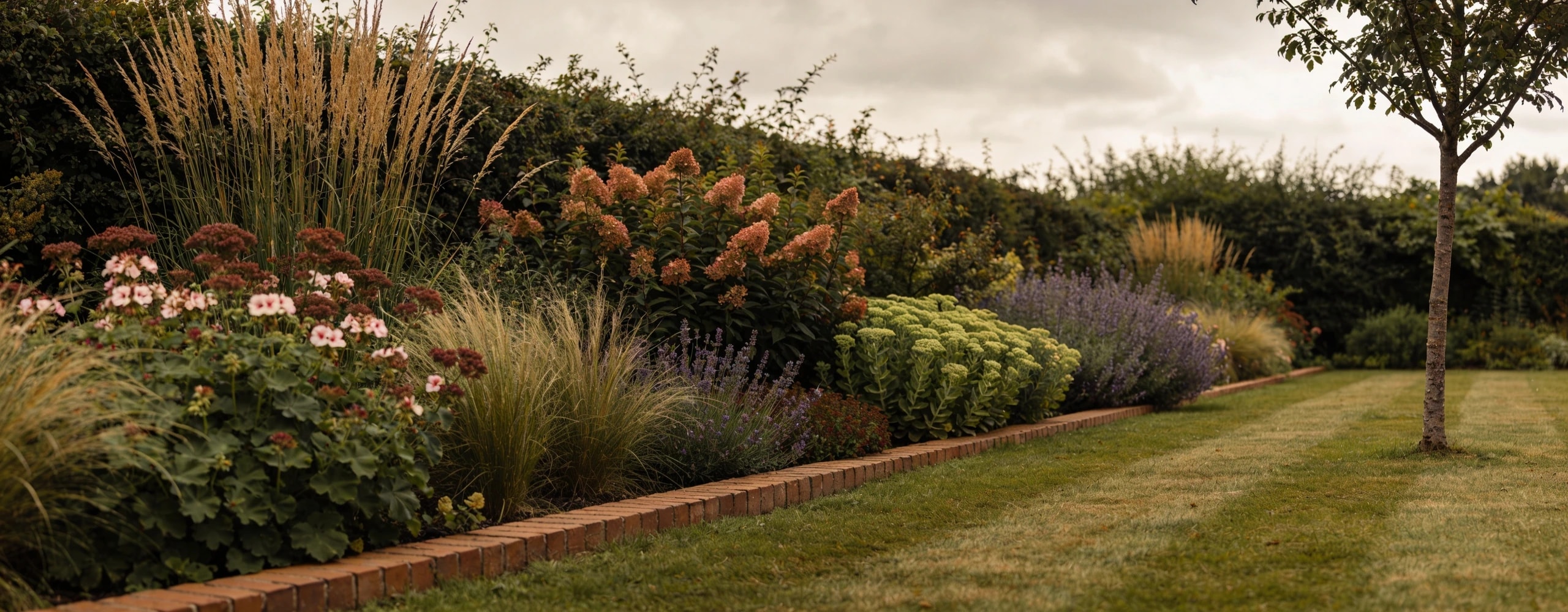
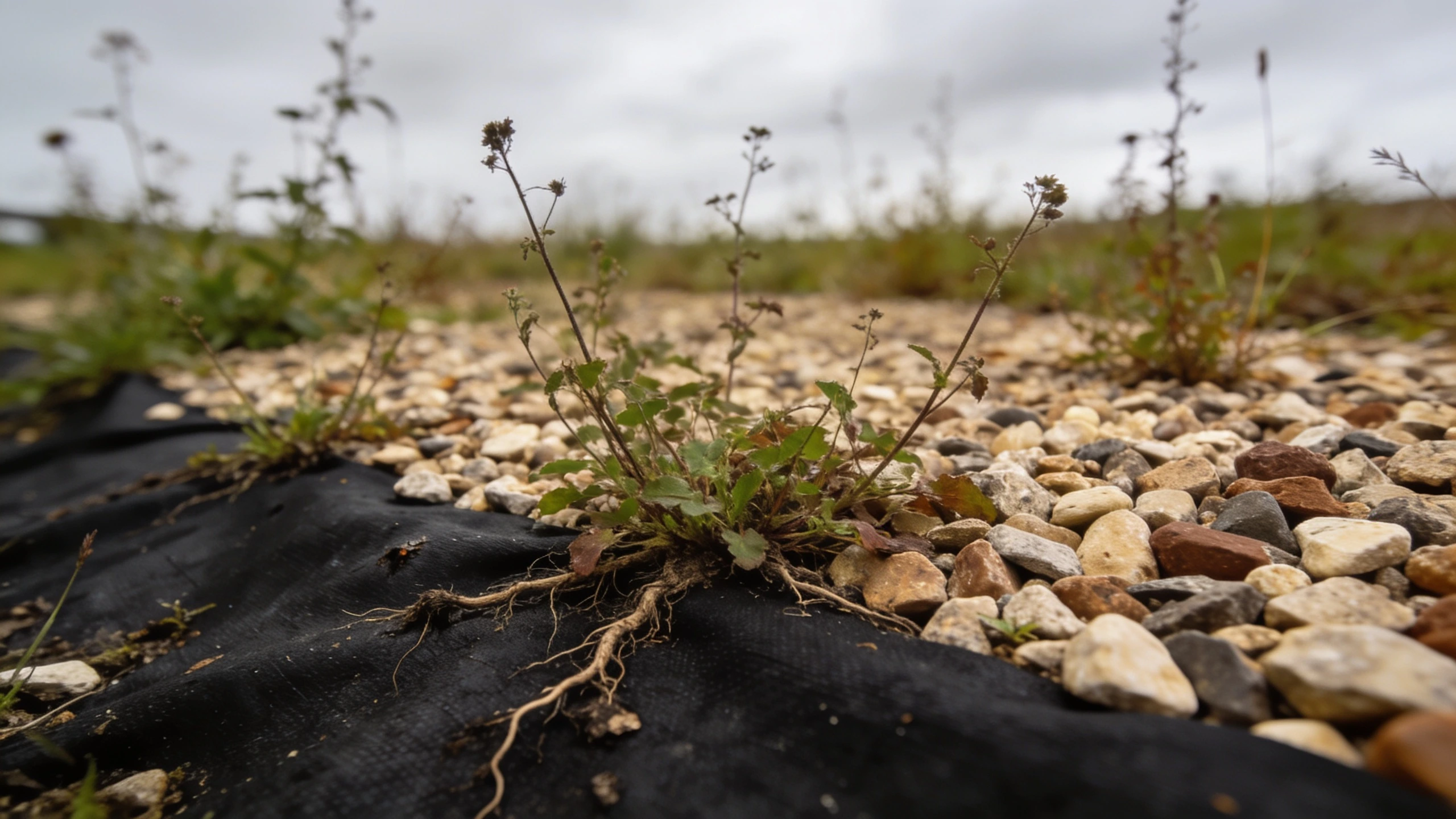
Most low maintenance garden ideas are really one idea, and it is not gravel. Low-maintenance gardening has an image problem: gravel, membrane, four shrubs and a sense of defeat. That version is not even particularly low-maintenance, because gravel over membrane becomes a weed nursery within three years.
The genuinely low-work garden is dense, green and full. It just makes different decisions.
The short answer
Three changes remove most garden work: mulch 5–7 cm deep over every bed, plant densely so foliage touches and shades out weeds, and choose plants that suit your actual soil and light instead of ones you have to nurse. Then remove the maintenance-heavy details, grass edges, clipped topiary, annual bedding, thirsty containers, rather than the plants.
Low maintenance garden ideas start with where the work comes from#
Before cutting anything, it is worth knowing what costs the time. In most gardens it is not the plants:
Key points
- Weeding bare soil. Any uncovered soil is a seedbed, and it will be colonised. This is the single largest time sink in most gardens.
- Watering containers. Pots in summer need daily attention; beds rarely do. Containers are the most labour-intensive way to grow anything.
- Edges. Trimming where lawn meets bed, path or wall takes as long as mowing and is far more tedious.
- Annual bedding. Planted, watered, deadheaded, pulled out, repeated every year.
- Plants fighting their conditions. A shrub in the wrong soil needs feeding, watering and staking indefinitely.
- Hedges and topiary needing more than one cut a year.
Notice that lawn mowing is not top of that list. A plain lawn cut fortnightly is one of the lower-maintenance surfaces available. It is the perfect lawn, with its edging, feeding, scarifying and watering, that eats weekends.
The three changes that do most of the work#
1. Mulch everything, thickly#
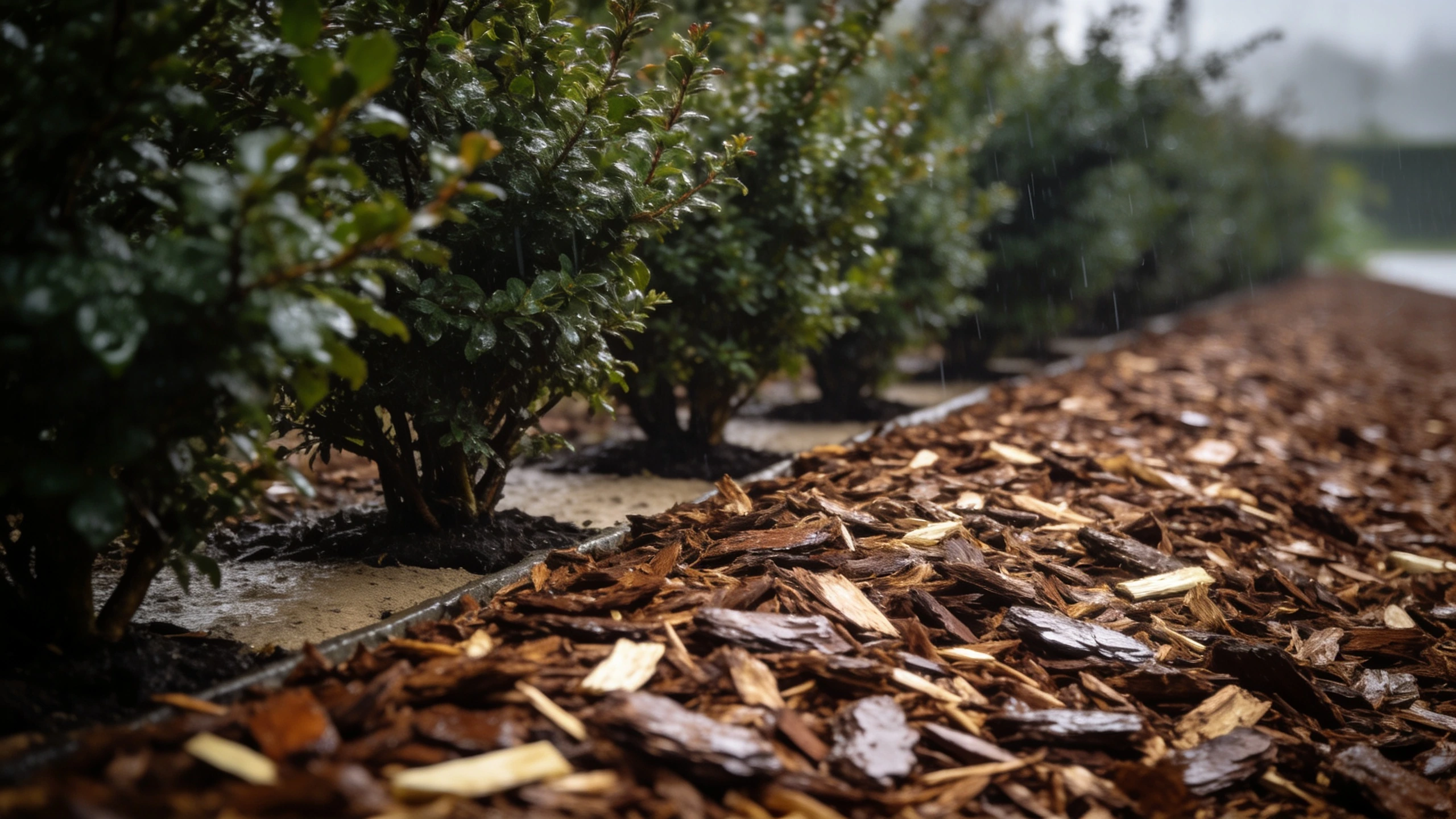
The highest-return job in the low-maintenance garden. A 5–7 cm layer over bare soil:
- stops most annual weed seeds germinating, because they need light
- substantially reduces evaporation, so you water far less
- moderates soil temperature
- breaks down to feed the soil, if you use an organic mulch
Bark and woodchip last longest around shrubs and perennials. Compost feeds as it breaks down and suits vegetable beds. Leaf mould is free if you have trees and has excellent structure. Gravel works well as a mulch in dry, sunny gravel-garden planting, genuinely useful in that specific context, as opposed to as a substitute for plants.
Apply it to damp soil, never dry, and top it up annually. This one job, done properly, cuts weeding and watering more than anything else on this page.
2. Plant densely enough that soil disappears#
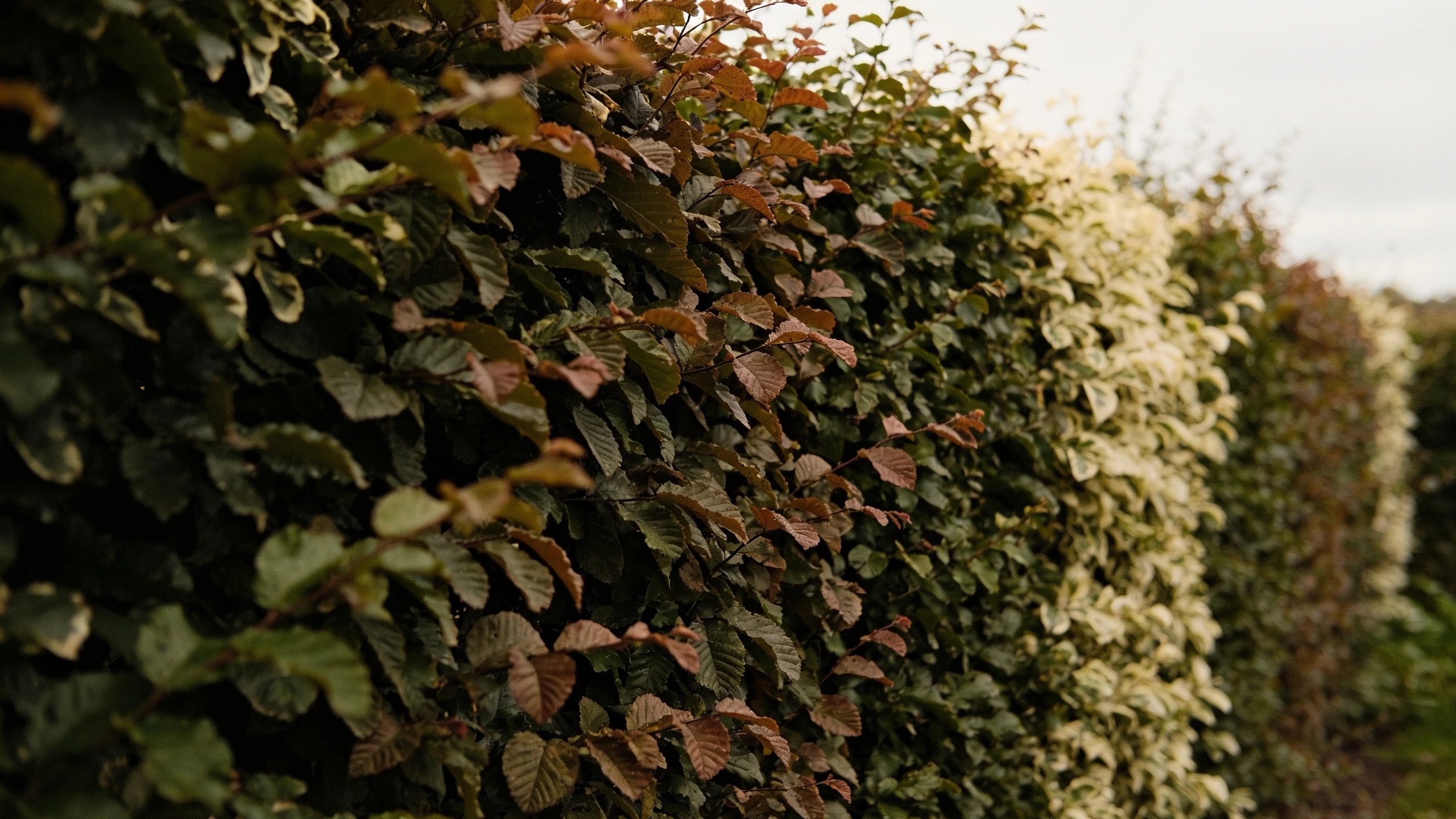
Bare soil is the enemy. Plants placed at their nursery-recommended spacing leave gaps for two or three years, and every one of those gaps is a weeding job.
Plant closer than feels right, with foliage intended to touch at maturity. Then use ground-cover plants to fill the remaining spaces:
- Sun: hardy geranium, Alchemilla mollis, thyme, sedum, nepeta, low ornamental grasses
- Shade: epimedium, Geranium macrorrhizum, pachysandra, ferns, Tiarella, ivy where you can control it
- Dry shade (the hardest): Euphorbia amygdaloides var. robbiae, epimedium, Vinca minor, hellebore
This is a design decision rather than a maintenance one, and it is why a mature cottage-style border is far less work than a new minimalist one.
3. Match plants to conditions, not to preferences#
A plant suited to your soil, light and rainfall gets on with it. A plant fighting its conditions needs watering, feeding, staking and replacing.
Be honest about what you have, wet clay, free-draining sand, deep shade, a windy corner, and choose from what thrives there. There is a good tough plant for every condition; there is not a plant that will thrive anywhere.
The other half of this: give up on the one plant you cannot grow. Every gardener has one, and the annual attempt is disproportionately expensive in effort and disappointment.
Layouts and features that cut work#
Replace grass edges with hard edges#
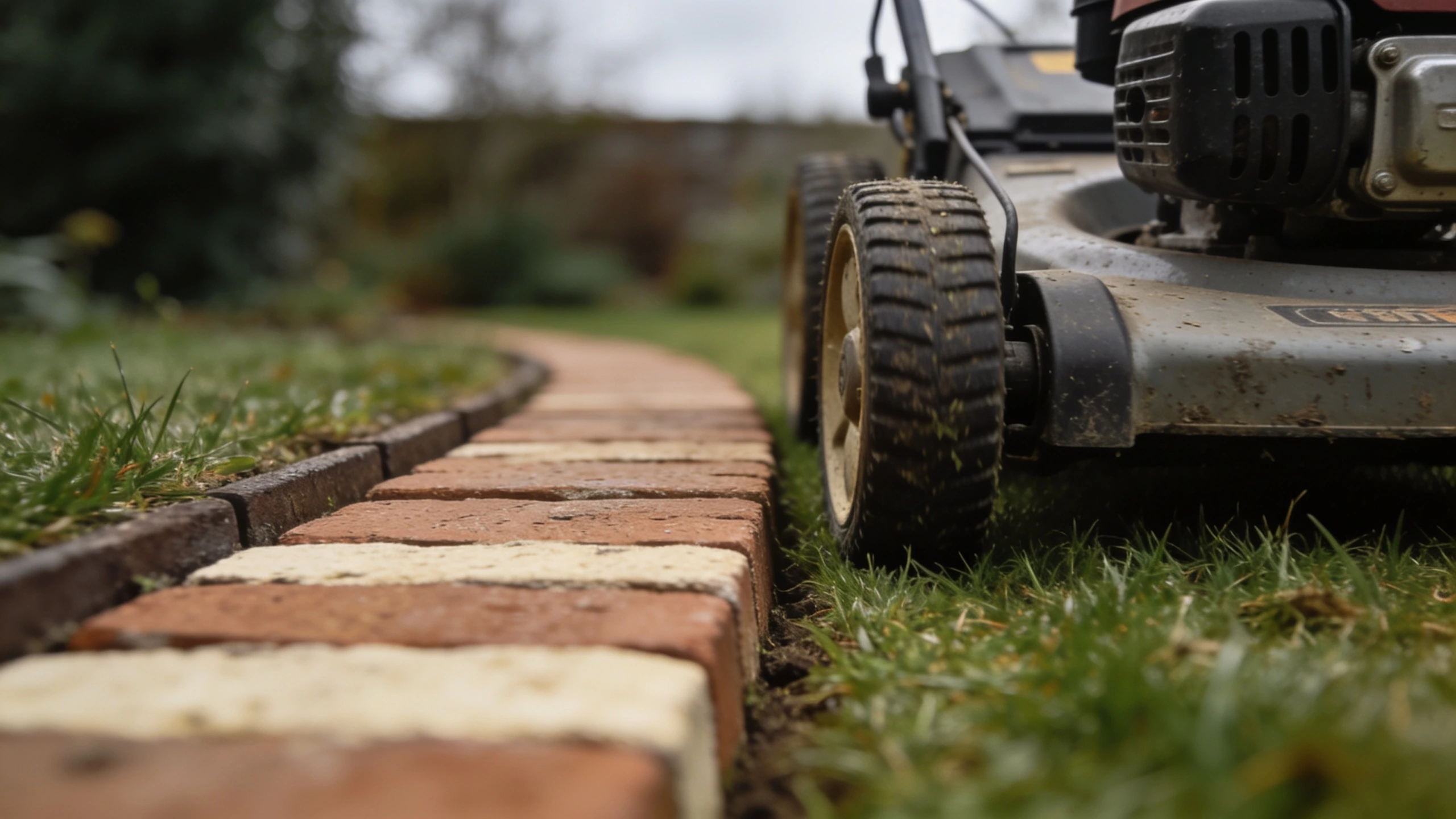
Where lawn meets a bed, install a flush edging strip or a brick-on-edge course you can mow over. Edging is roughly as time-consuming as mowing and considerably more annoying; removing the need for it entirely is a half-day job with a permanent payoff.
Also remove awkward mowing geometry: narrow grass strips, tight circles round trees, steep banks. These take disproportionate time. Widen, straighten or plant them.
Shrubs over perennials over annuals#
A rough hierarchy of ongoing work, lowest first:
- Trees and shrubs: prune once a year at most, otherwise nothing
- Ornamental grasses: one cut back in late winter
- Tough perennials: cut back annually, divide every three or four years
- Bulbs: plant once, come back yearly, no work at all
- Fussy perennials: staking, deadheading, dividing frequently
- Annual bedding: replanted every single year
- Containers: watered daily in summer
Shift the balance up that list and the garden gets easier. A border of shrubs, grasses and bulbs is close to self-running once established.
Fewer, larger containers#
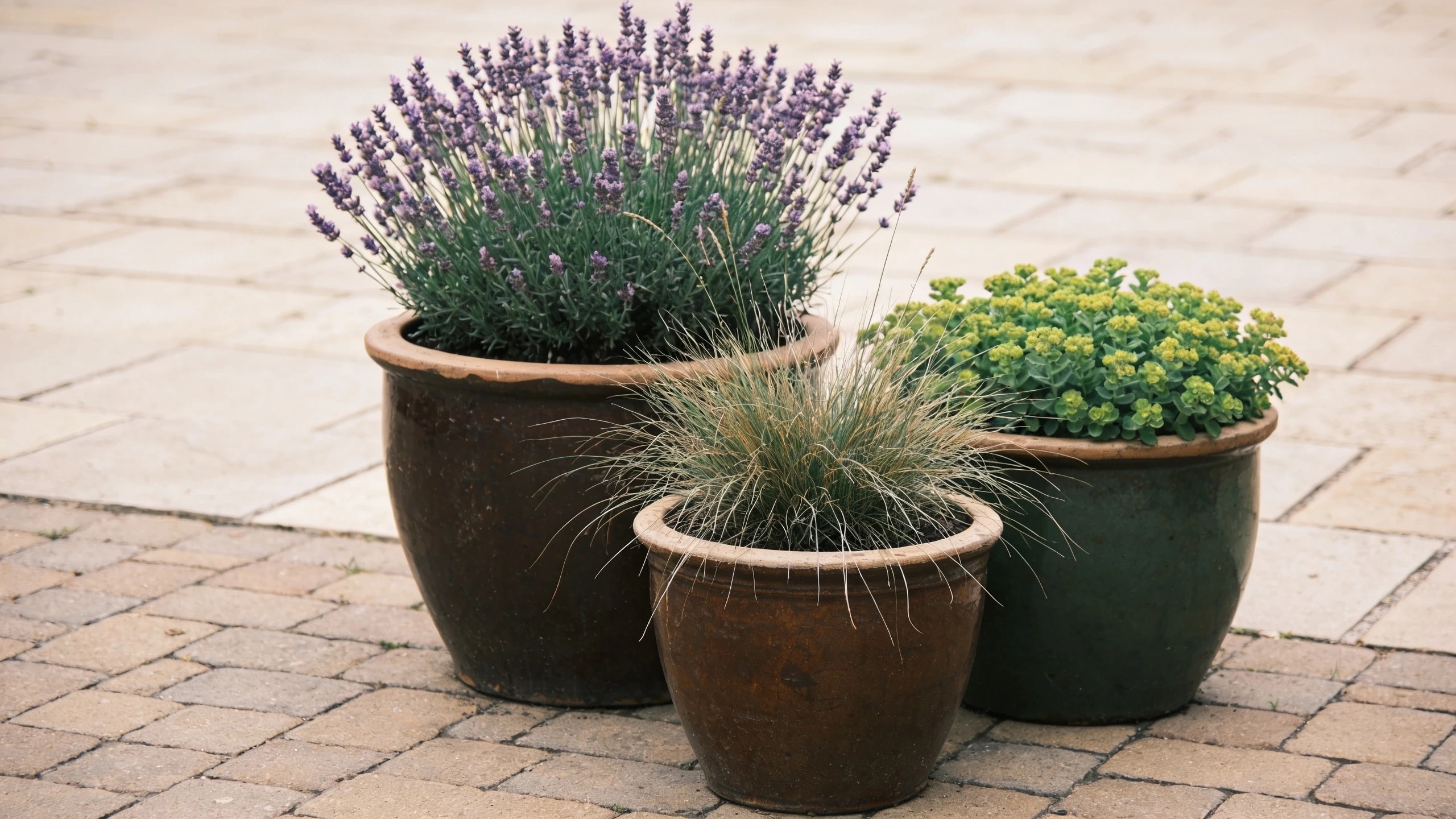
If you want containers, have three big ones rather than fifteen small ones. Large containers hold more water, dry out far more slowly, swing less in temperature and take less total time than the same volume split up. Small pots in full sun are the highest-maintenance thing in any garden.
Better still, plant them with drought-tolerant perennials, lavender, sedum, grasses, rosemary, rather than summer bedding, so they are not replanted annually.
Automate the watering#
A soaker hose on a tap timer costs $30–$80 and removes the most repetitive job there is. It also waters better than hand-watering, because it delivers slowly at soil level and it does it consistently, including on the evenings you are busy. See our watering guide.
Let some of it go wild, deliberately#
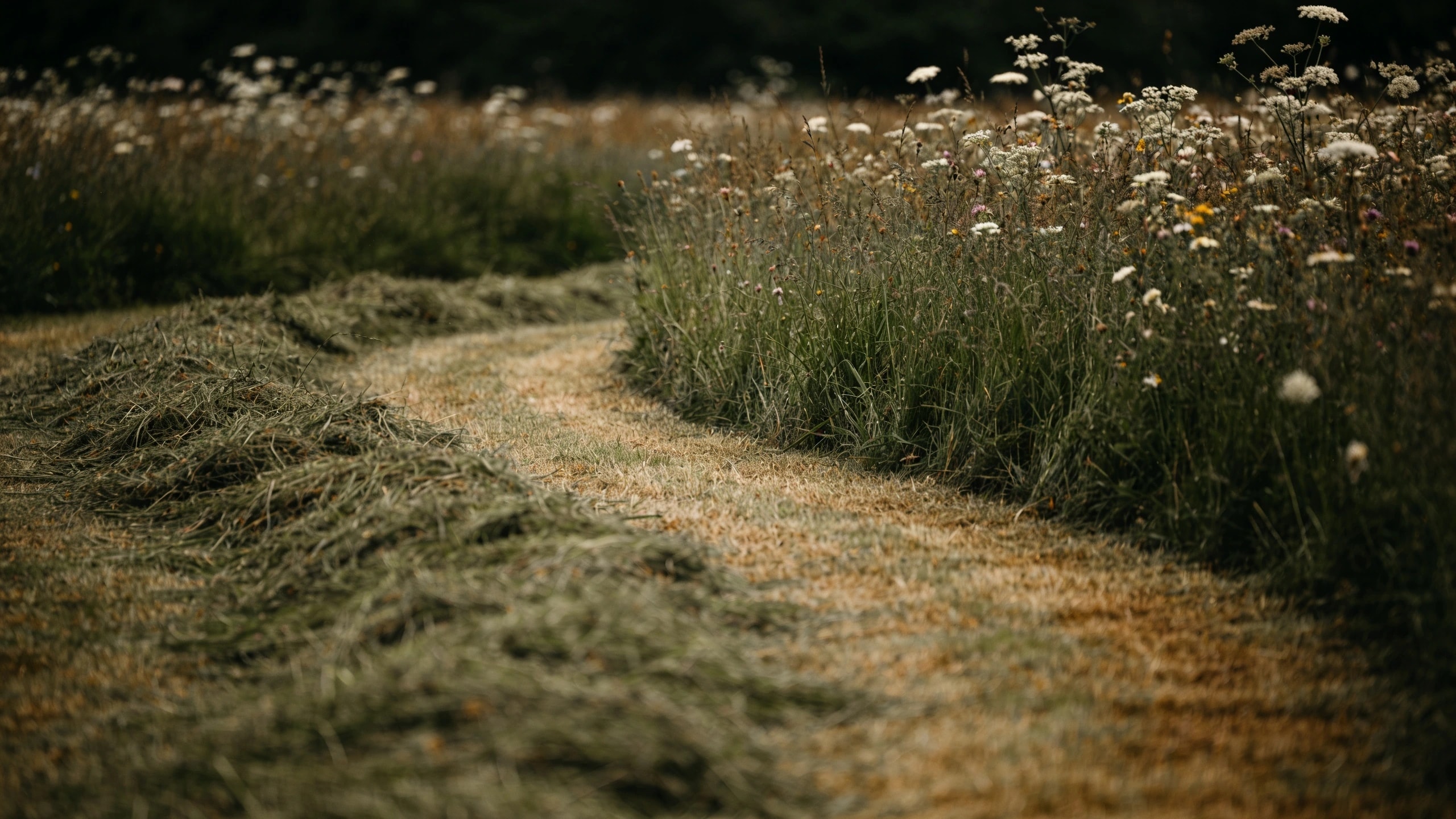
A patch of long grass mown once or twice a year is less work than a mown lawn, and considerably better for insects. The trick is to make it look intentional: a mown path through it, or a clean edge round it, reads as design. The same area with no edge reads as neglect, the difference is about twenty minutes of work.
A realistic low-maintenance planting palette#
| Conditions | Reliable, tough choices |
|---|---|
| Full sun, dry | Lavender, rosemary, sedum, euphorbia, nepeta, stipa, cistus, achillea |
| Full sun, ordinary | Hardy geranium, salvia, echinacea, alchemilla, hemerocallis |
| Part shade | Hellebore, epimedium, brunnera, astrantia, hakonechloa, hydrangea |
| Dry shade | Euphorbia robbiae, epimedium, Geranium macrorrhizum, vinca, dryopteris |
| Wet or clay | Astilbe, hosta, ligularia, cornus, viburnum, iris sibirica |
| Windy and exposed | Escallonia, elaeagnus, hippophae, ornamental grasses, thyme |
Check what actually grows well locally before committing, a walk round your neighbourhood in July is better evidence than any plant label.
What to be sceptical about#
Worth it because
- Thick mulch, renewed annually, the single biggest saving
- Dense planting, so foliage touches and soil is invisible
- Right plant, right place, non-negotiable
- Hard mow-over edges instead of trimmed grass edges
- Automated watering on a timer
- Shrubs, grasses and bulbs over annuals and containers
Bear in mind
- Gravel over membrane as a substitute for planting, becomes a weed bed in 2–3 years
- Artificial grass, no maintenance, no wildlife, degrades in UV, and gets unpleasantly hot
- Weed membrane under planted beds, fails badly and cannot be removed later
- Clipped topiary and formal hedges needing multiple cuts a year
- Bedding plants, unless you actively enjoy the ritual
- Anything described as 'vigorous' unless you have space for it to win
How I know this#
The mulch depths and the reasons membrane fails are standard published guidance rather than trials I have run. I have cross-checked against the Royal Horticultural Society advice pages and the USDA soil health pages.
Plant choices are climate-dependent, so treat the palette as a starting point rather than a list. Our editorial policy explains how corrections work.
Related reading#
- How to water a garden properly: mulching and deep watering are the core of low-maintenance growing.
- Small balcony garden ideas: the container-heavy end of the spectrum, and how to make it manageable.
- Gardening accessories every gardener needs: the timer, the soaker hose and the rest of the labour-saving kit.
Frequently asked questions
What is the lowest-maintenance type of garden?
Densely planted perennials and shrubs over a thick mulch, with hard paths and no lawn edges to trim. Dense planting shades out weeds better than any membrane, mulch cuts watering and weeding, and perennials do not need replanting each year. It looks nothing like a gravel car park and takes a fraction of the upkeep.
Is gravel really low maintenance?
Less than people expect. Gravel over membrane collects windblown soil and organic debris, which becomes a perfect seedbed within two or three years, and weeding gravel is harder than weeding soil because roots grip the membrane. Gravel is a good path and mulch material; it is a poor substitute for planting.
Which plants need the least care?
Established shrubs and tough perennials matched to your conditions: lavender, rosemary, sedum, hardy geranium, euphorbia, ornamental grasses, hellebore, epimedium, Japanese anemone. The controlling factor is right-plant-right-place, a drought-tolerant plant in wet clay is high-maintenance, and so is a moisture-lover in dry sand, however tough either is on paper.
How do I stop weeds without chemicals?
Mulch and dense planting. A 5–7 cm layer of bark, compost or leaf mould stops most annual weed seeds germinating, and plants grown close enough to touch shade out what does get through. Hoe the survivors weekly while they are still seedlings, which takes a couple of minutes rather than an hour.
Should I remove my lawn to reduce work?
Only partly. A plain lawn mown fortnightly is genuinely low-maintenance; what costs time is edging, feeding, scarifying and watering to keep it perfect. Cutting the fussy maintenance rather than the lawn itself removes most of the work. Where a lawn is awkward to mow, narrow strips, steep banks, deep shade, replacing it with planting or hard surface does save real time.
Topics in this article
About the author
Jeff has gardened professionally for over twenty years, mostly on heavy clay, and writes everything here from beds he still works himself. More from Jeff Tanun →
Keep reading
Native Plant Garden
A native plant garden without the purism. Why native means local rather than national, how to find your own list, and where non-natives still earn a place.
Updated
Permaculture Garden
A permaculture garden without the ideology. Zones, stacking and catching water are genuinely useful; some of the rest is untested. What to take and what to leave.
Updated
Memorial Garden Ideas
Memorial garden ideas that hold up over decades: choosing a spot, planting with meaning and low upkeep, and what to know before scattering ashes.
Updated