Small Balcony Garden Ideas That Survive Real Conditions
Balcony garden ideas built around the three things that actually limit you, light, wind and weight, with pot sizes, planting plans and what to grow where.
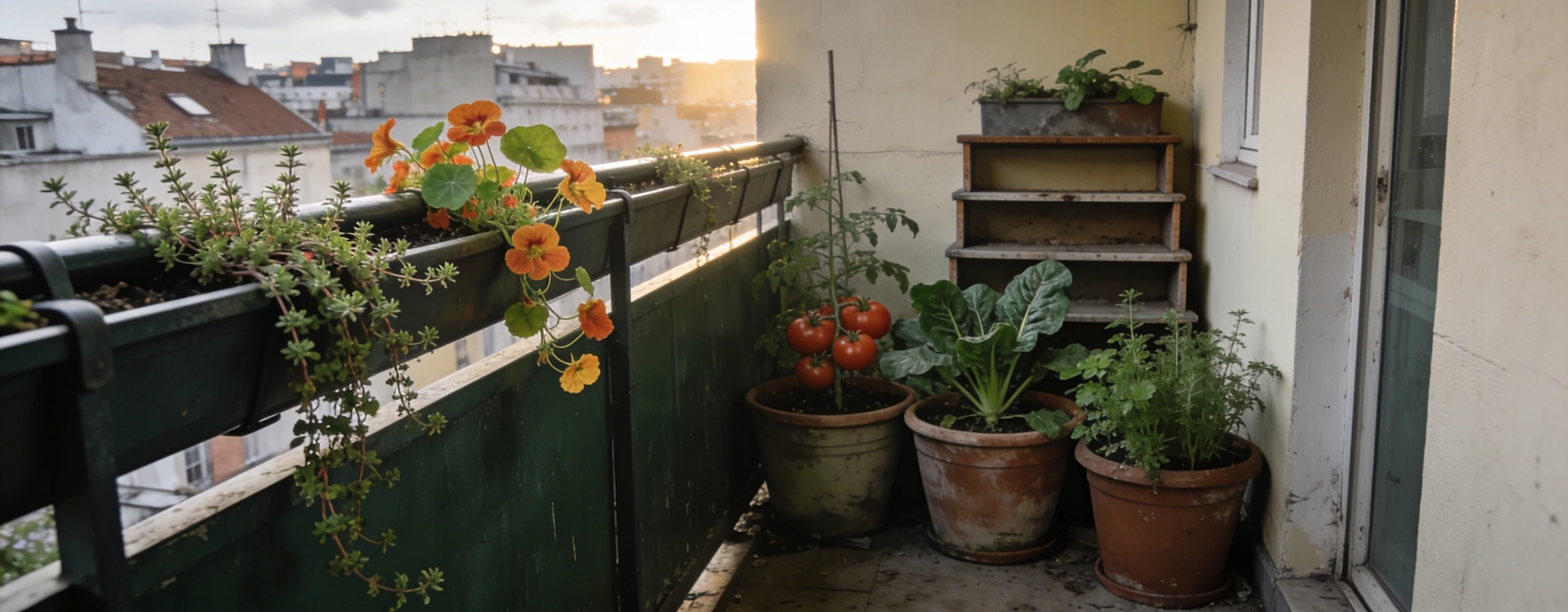
Small balcony garden ideas are worth nothing until you know your limits, and balcony gardening is not scaled-down garden gardening. The constraints are completely different, and they are physical rather than horticultural: how many hours of light you get, how hard the wind hits, and how much weight the structure will take.
Get those three right and the planting is simple. Get them wrong and no amount of good compost helps.
The short answer
Count your actual hours of direct summer sun first, six or more and you can grow tomatoes, chillies and courgettes; three to four and you are growing salad, chard and herbs. Use pots of 30–40 litres for anything fruiting, group them for mutual shelter, fit a permeable windbreak rather than a solid one, and keep the heavy containers against the building wall.
Small balcony garden ideas start with three limits#
Light#
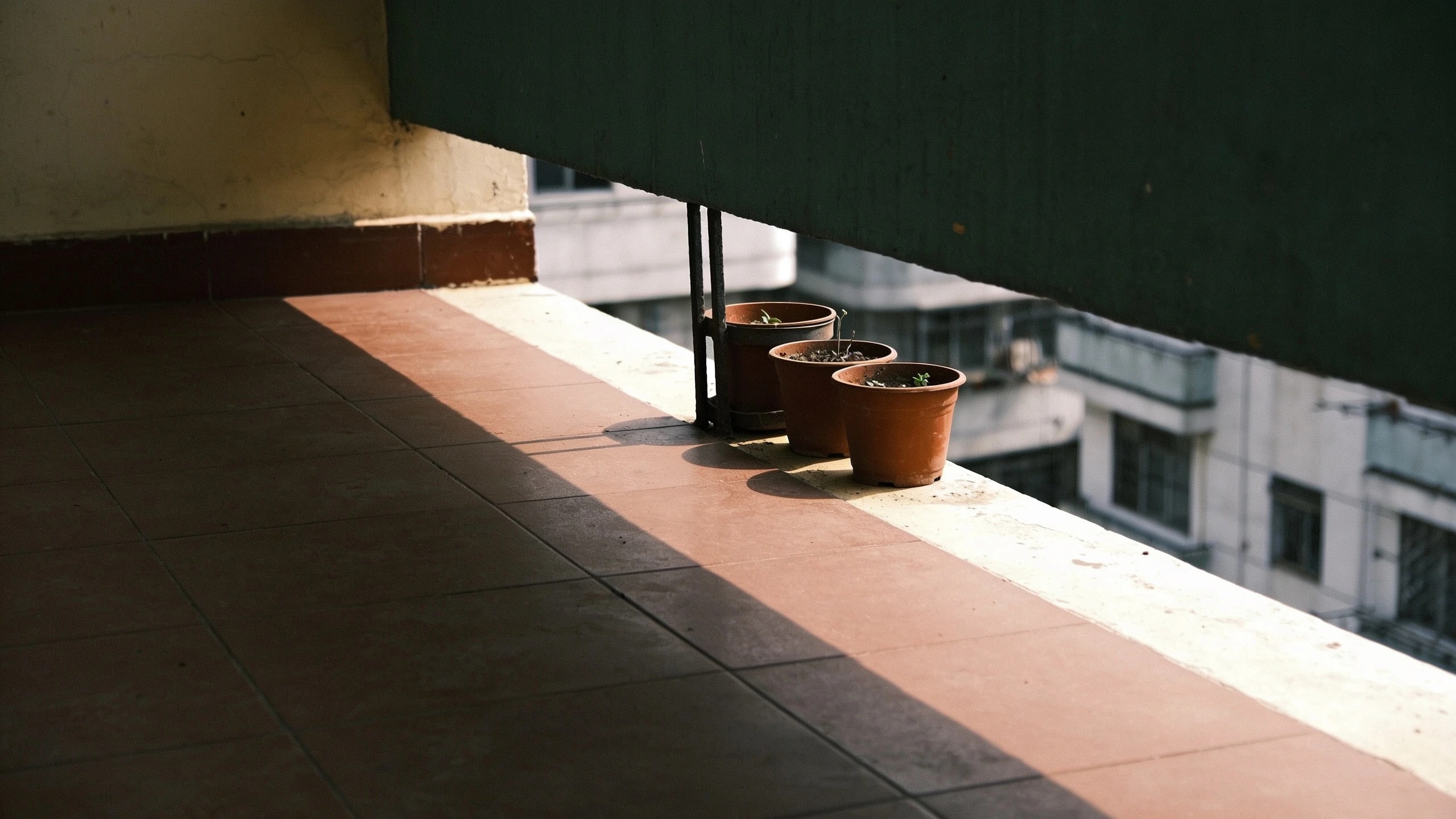
Go out on a clear day in June and note when the sun reaches the balcony and when it leaves. Do it properly, balconies are shaded by the floor above in ways that are not obvious until you watch, and a south-facing balcony with a deep overhang can get less direct light than an east-facing one with none.
| Hours of direct summer sun | What will genuinely work |
|---|---|
| 6+ | Tomatoes, chillies, courgettes, dwarf beans, strawberries, most herbs, salad |
| 4–6 | Salad, chard, kale, spinach, beetroot, bush beans, most herbs |
| 3–4 | Salad leaves, chard, spinach, mint, parsley, chives, sorrel |
| Under 3 | Mint, parsley, chervil, ferns, hostas, shade foliage |
The most common balcony disappointment is buying tomato plants for a space with four hours of sun. They will grow, flower, set a few fruit and never ripen properly. Growing brilliant salad in that space instead is a much better afternoon.
Wind#
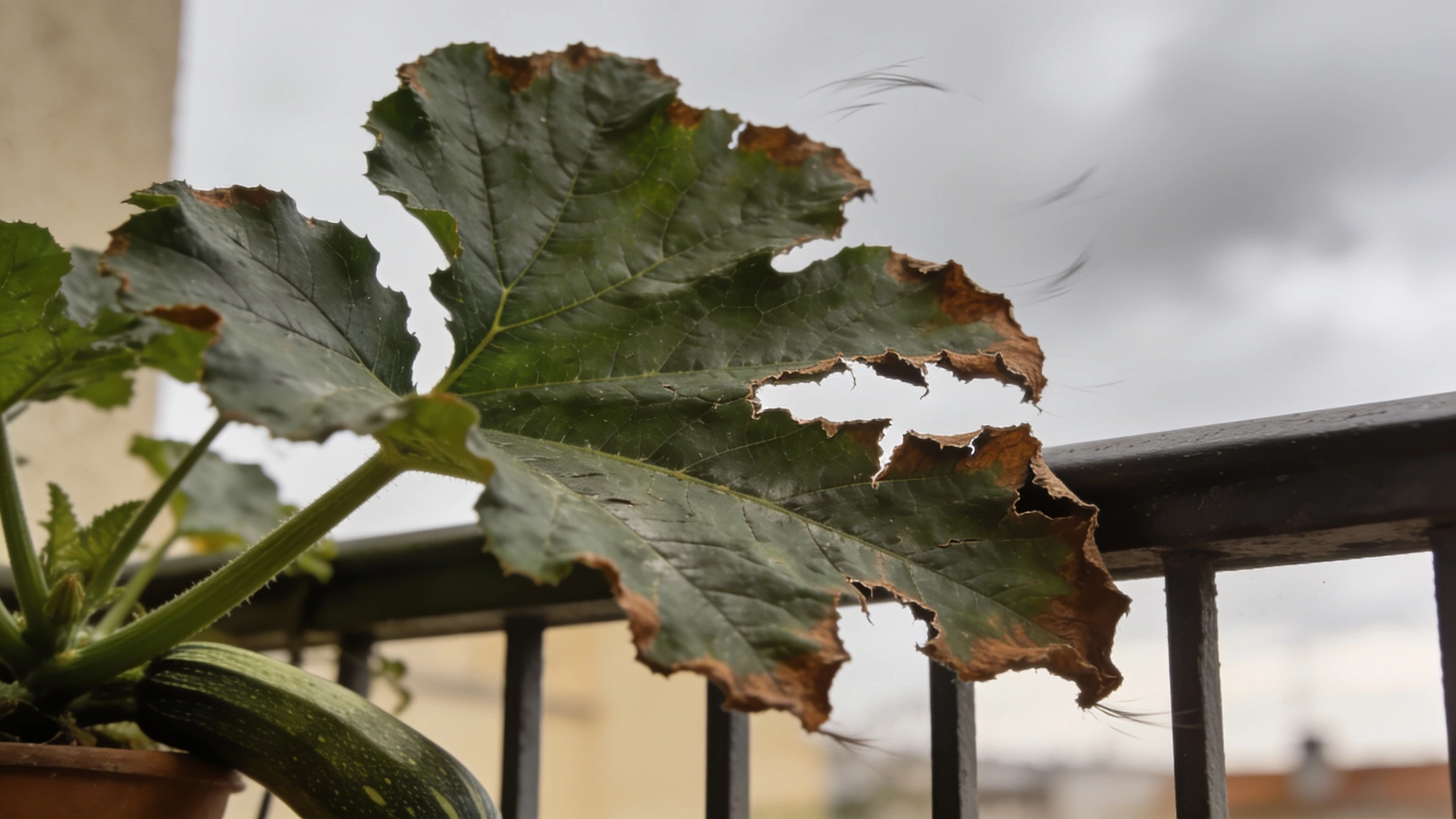
Above the second or third floor, wind becomes the dominant factor. It dries plants faster than sun does, shreds large leaves, and knocks over anything tall.
- Permeable windbreaks work; solid ones often do not. Mesh, reed screen or trellis slows air and dissipates it. A solid panel creates turbulence and eddies on the leeward side that can be worse than no screen at all.
- Group containers. Pots in a cluster shelter each other, shade each other's sides and raise local humidity. This is free and genuinely effective.
- Put tall things against the wall, short things at the outer edge.
- Choose tough plants for the exposed positions: rosemary, thyme, sage, chives, alpine strawberries all tolerate wind. Basil, lettuce and courgette do not.
- Stake to the wall, not the railing. Railings flex, and a fixing that works loose is a hazard to whoever is below.
Weight#
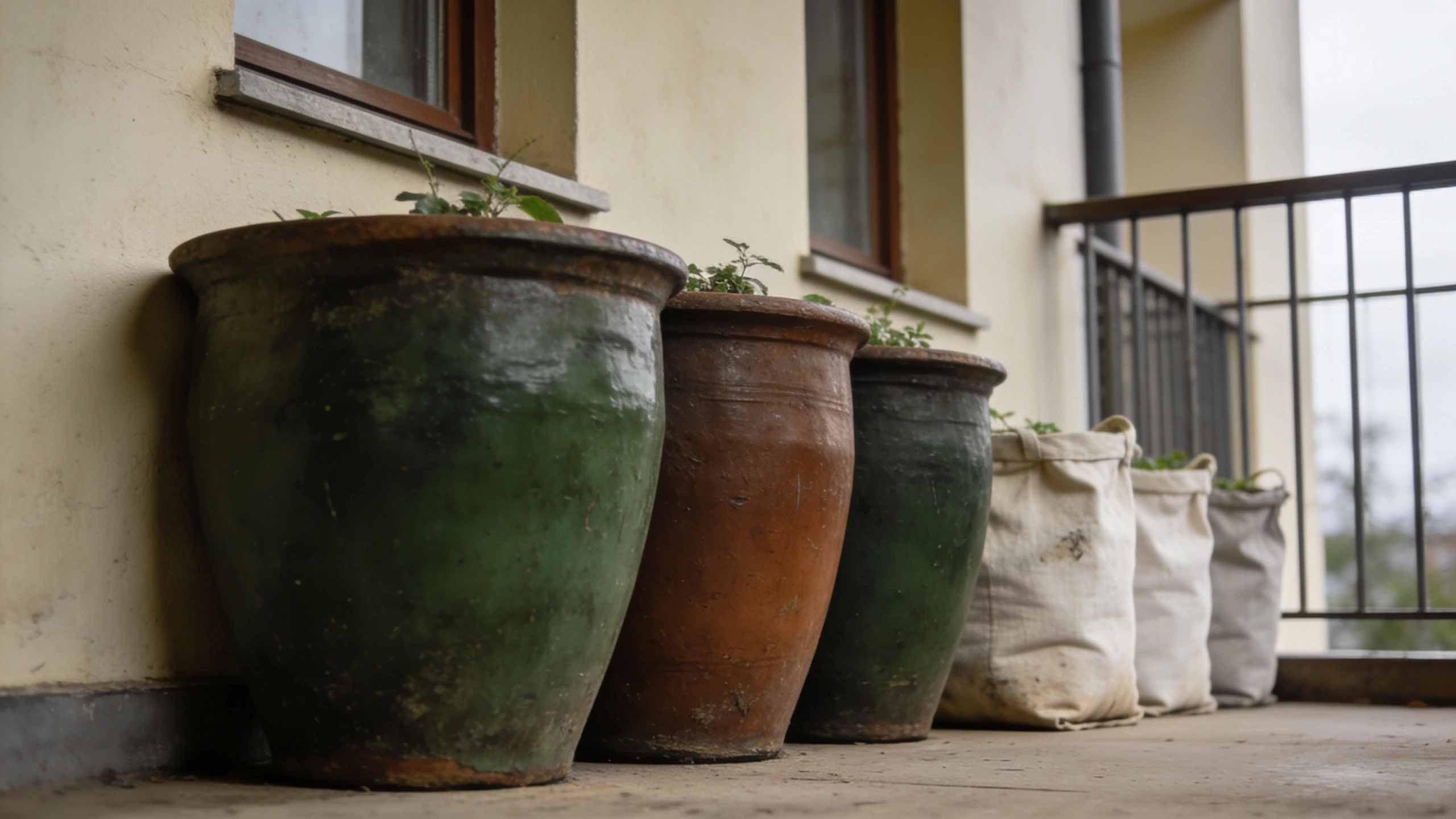
Practical mitigations: lightweight compost blends (peat-free multipurpose with added perlite), plastic or fibreglass planters rather than terracotta or concrete, and self-watering reservoir pots so you are not saturating everything daily.
Ideas that work in a small footprint#
The vertical wall of salad#
A wall-mounted rail of troughs, or a pocket planter, at chest height. Salad leaves need only 15 cm of depth, so vertical growing suits them perfectly, and picking at chest height rather than ground level makes it a thing you do casually rather than a task.
Works in as little as three hours of sun. Sow a new trough every two weeks and you have continuous cut-and-come-again leaves from spring to first frost.
The three-pot dinner#
Three 40-litre containers, one crop each, positioned in the sunniest spot:
- A cherry tomato: trained up a wall-fixed cane or string. Cherry varieties crop far more reliably in containers than large-fruited ones.
- A courgette: one plant is genuinely enough for two people. It will take up a lot of horizontal room, so give it the outer corner.
- Dwarf French beans: no staking, and they crop heavily for a month.
Add a fourth pot of basil next to the tomato if you have room, and a fifth of strawberries anywhere that gets sun.
The herb ladder#
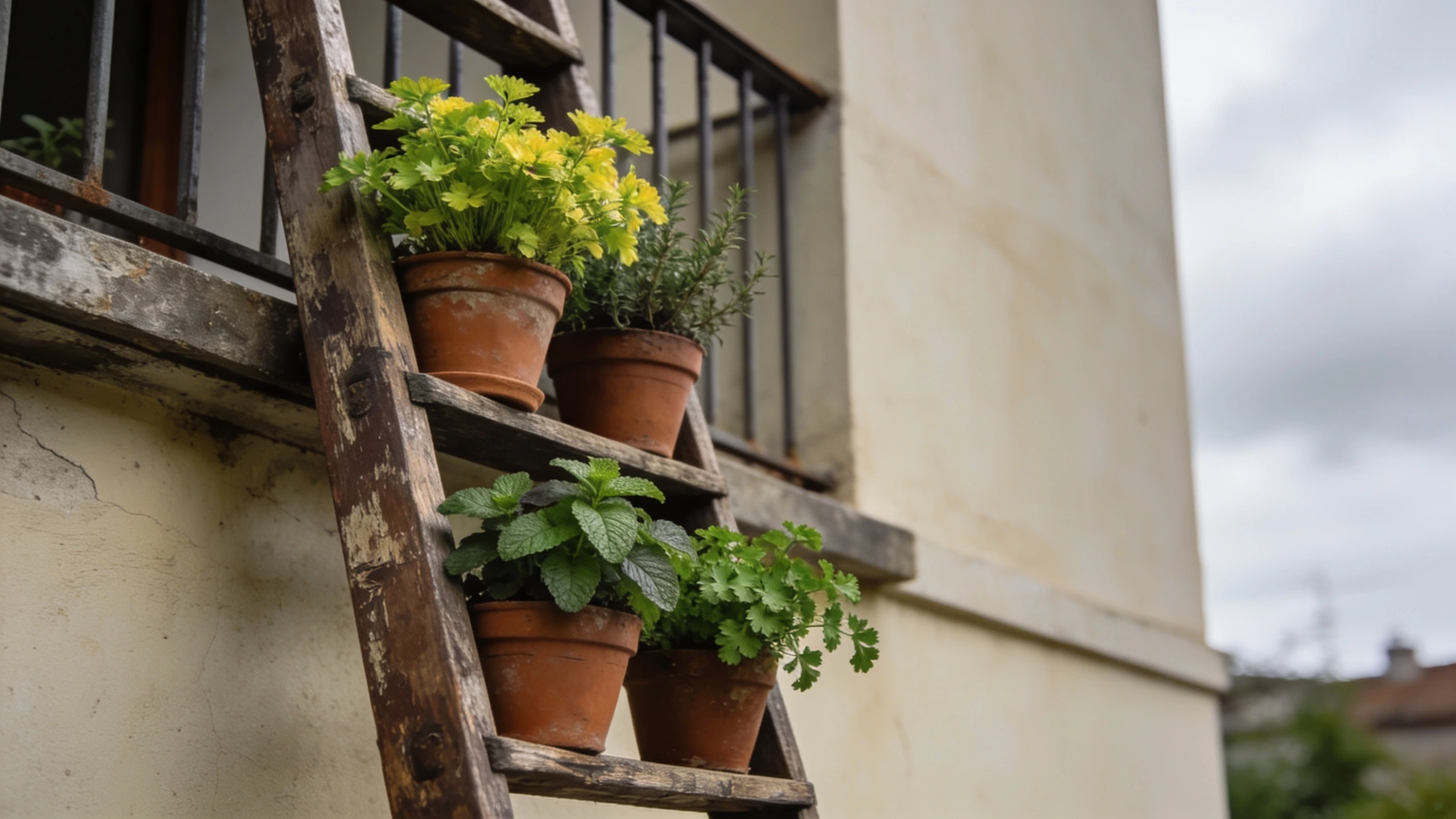
A stepped plant stand or an old wooden ladder against the wall, with pots on each rung. Herbs at the top where it is brightest, salad below, shade-tolerant mint and parsley at the bottom.
Ladders are excellent balcony furniture because they put a lot of pots into almost no floor area, and the tiering means the top plants do not shade the bottom ones as much as a flat arrangement would.
The railing trough line#
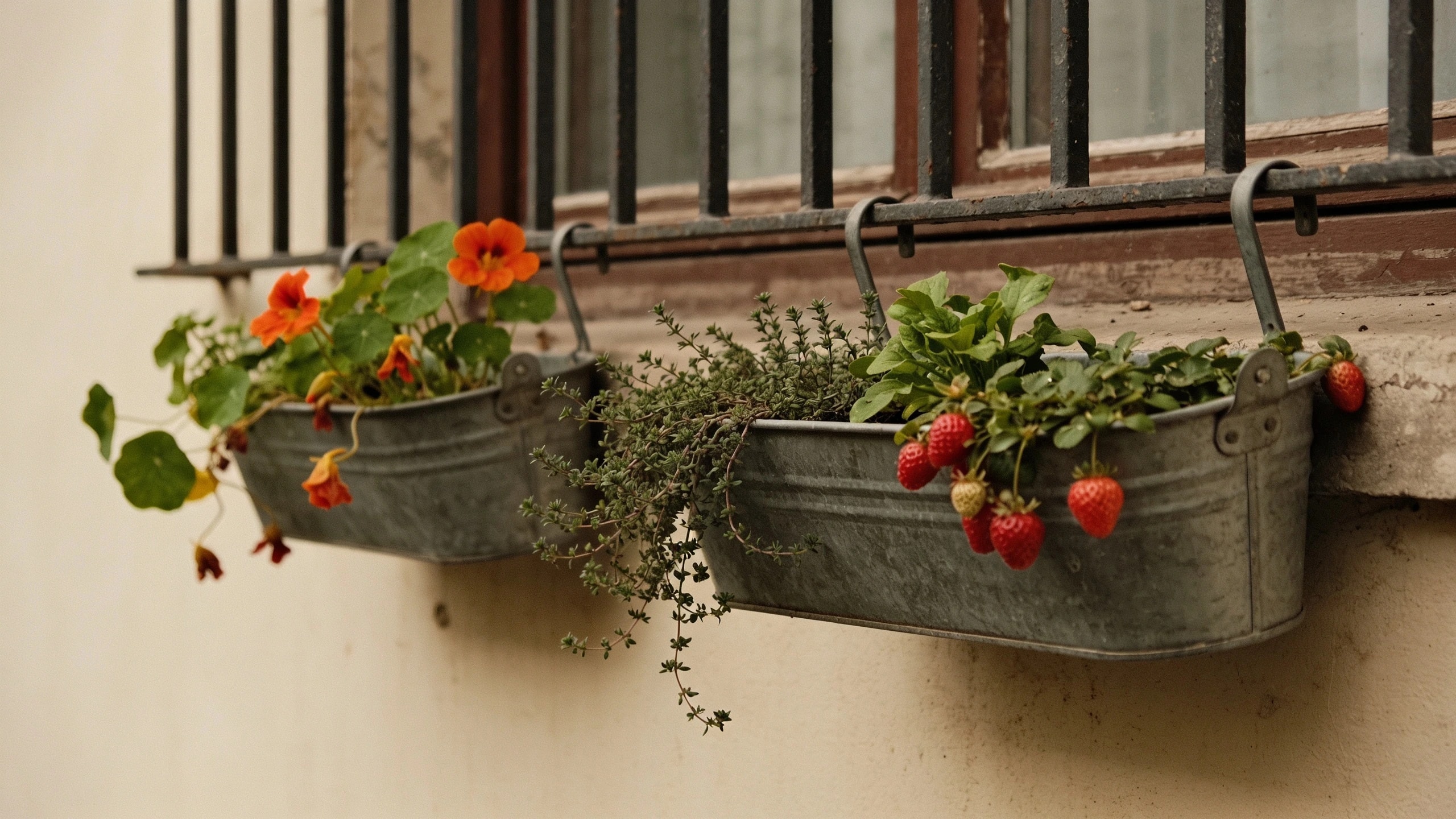
Purpose-made railing planters that hook over the rail, check your building rules first, and always hang them inside the balcony rather than over the drop. Good for trailing plants: thyme, oregano, nasturtiums, trailing strawberries, tumbling cherry tomatoes.
This is the single best use of otherwise dead space, and it also softens the view without blocking your light.
The evening balcony#
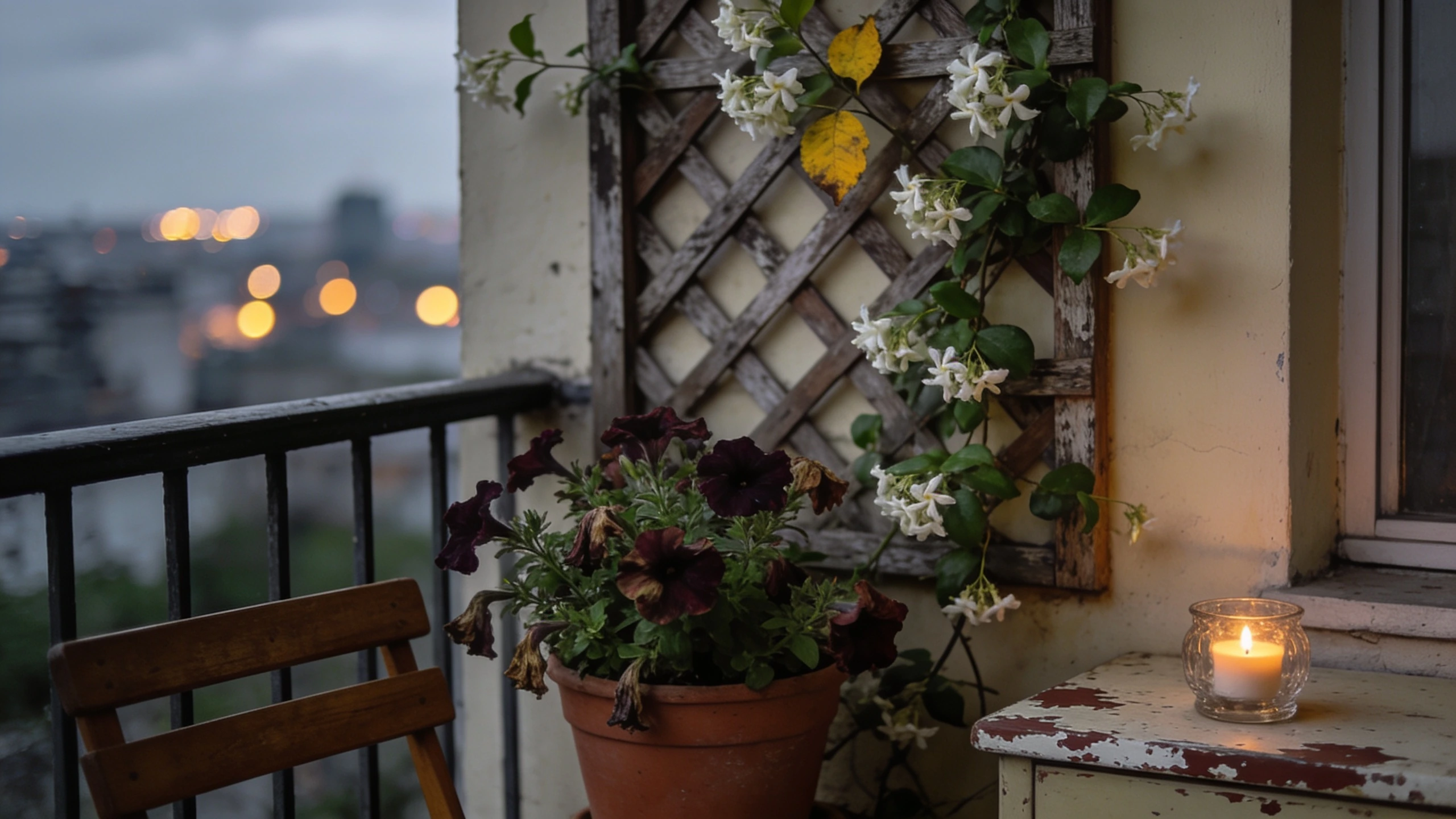
Not all balcony gardening is about food. If your balcony gets used at dusk, plant for that: night-scented stock, jasmine, tobacco plant (Nicotiana), and lavender for the daytime. Scent is more noticeable in a confined balcony space than in an open garden, which is a genuine advantage for once.
The wildlife balcony#
Even four floors up, pollinators find flowers. A container of lavender, verbena, marjoram in flower and a single-flowered dahlia will bring bees within days. Add a shallow dish of water with a stone in it, insects need somewhere to land, and it becomes a functioning small habitat.
Pot sizes, which people consistently get wrong#
| Crop | Minimum container | Comfortable |
|---|---|---|
| Salad leaves, cress | 15 cm deep trough | 20 cm |
| Herbs (thyme, chives, parsley) | 15 cm pot | 20 cm |
| Basil, coriander | 20 cm pot | 25 cm |
| Chard, spinach, spring onion | 25 cm deep | 30 cm |
| Dwarf French beans | 25 litres | 30 litres |
| Strawberries | 20 cm per plant | Trough or hanging basket |
| Cherry tomato | 30 litres | 40 litres |
| Chilli, sweet pepper | 20 litres | 30 litres |
| Courgette | 40 litres | 50 litres |
| Potatoes | 40 litres | Grow sack, 50 litres |
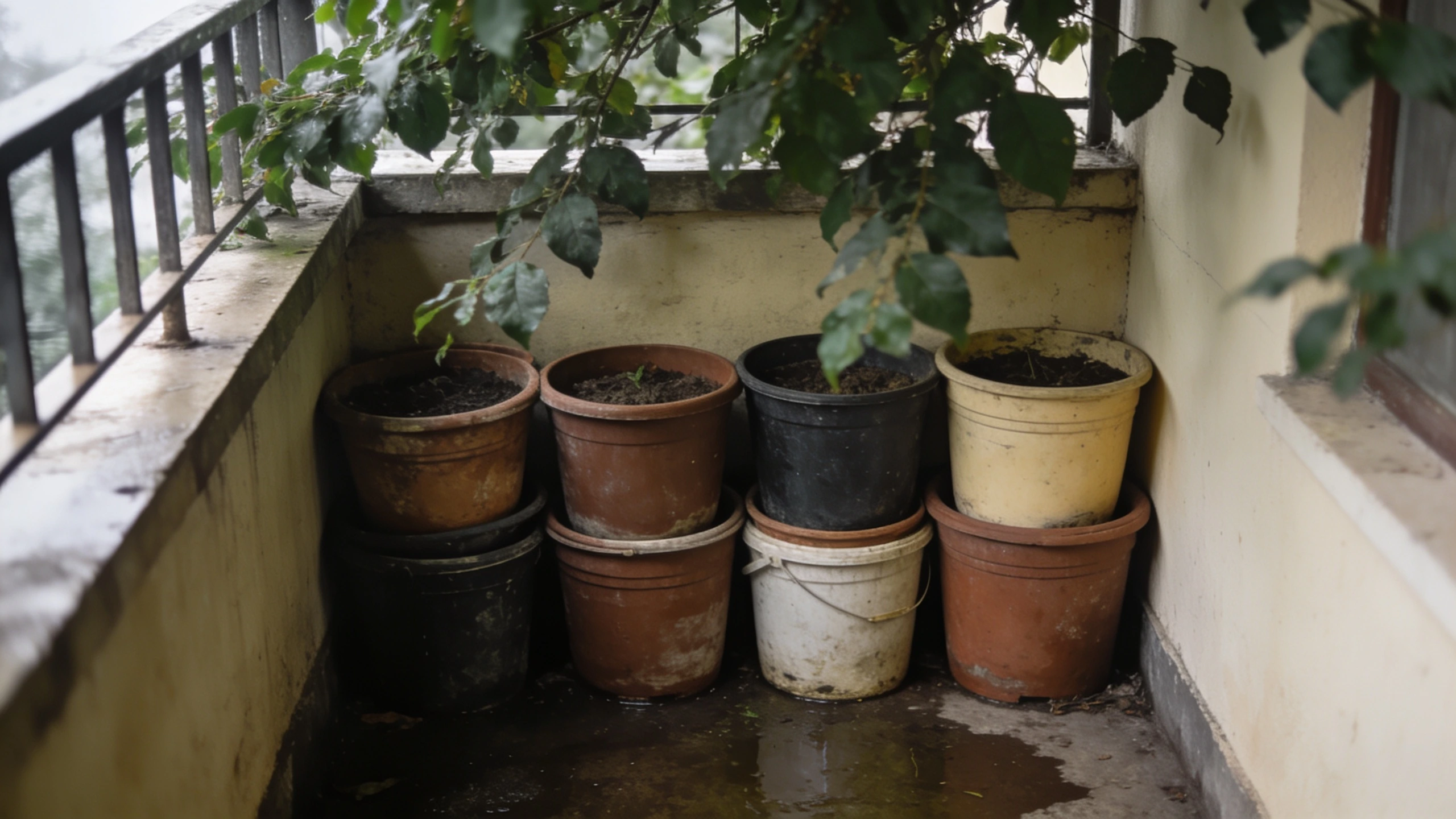
Larger is easier in every respect. A bigger container holds more water, dries out more slowly, swings less in temperature and gives roots room to actually work. The tempting small decorative pot is the most common cause of a stalled balcony crop.
Keeping it alive in July#
Containers in full sun can need water every single day in high summer, and hanging baskets twice a day. This is the reality of balcony gardening and it is worth planning for rather than discovering in August.
- Group pots so they shade each other's sides.
- Mulch containers too: 2 cm of compost, gravel or bark on the surface of a pot cuts evaporation noticeably.
- Self-watering reservoir pots buy you two to four days, which covers a weekend away.
- Water until it runs from the bottom, every time. Half-watering wets the top inch and leaves the root ball dry.
- Rehydrate a bone-dry pot by standing it in water for twenty minutes. Once compost shrinks from the sides, water poured on top runs straight down the gap and out.
Full detail in our watering guide.
How I know this#
The pot volumes, sun-hour bands and the compost weight figure here are the working numbers used in general growing advice rather than readings I have taken. I have cross-checked them against the Royal Horticultural Society advice pages and Minnesota Extension yard and garden.
Structural loading on a balcony is a question for your building, not for me. Our editorial policy explains how corrections work.
Related reading#
- Gardening tools for small spaces: the four-tool kit that covers a balcony.
- Low-maintenance garden ideas: if daily watering is not going to happen.
- How to start a vegetable garden: the crop choices translate directly to containers.
Frequently asked questions
What can I grow on a small balcony?
With six or more hours of sun: tomatoes, chillies, dwarf beans, courgette, strawberries, salad, herbs. With three to five hours: salad leaves, chard, kale, spinach, mint, parsley, chives. With less than three: mint, parsley, chervil and shade-tolerant foliage plants. Light is the constraint, not floor space, a small sunny balcony beats a large shaded one.
How much sun does a balcony need for vegetables?
Six hours of direct summer sun for anything that fruits, tomatoes, peppers, courgettes, beans, strawberries. Three to four hours is enough for leafy crops and most herbs. Count the actual hours on a clear day in June rather than estimating; balconies are often shaded by the building above in ways that are not obvious until you watch.
What size pots do I need for a balcony vegetable garden?
Herbs and salad leaves are fine in 15–20 cm depth. Chard, spring onions and bush beans want 25–30 cm. Tomatoes, chillies, courgettes and potatoes need 30–40 litres of compost each, which is much larger than most people expect. Bigger containers also dry out far more slowly and swing less in temperature.
How do I stop my balcony plants blowing over?
Use heavy or wide-based containers low down, group pots together so they shelter each other, and fit a permeable windbreak, mesh or trellis, rather than a solid panel, which creates turbulence and can be worse. Anything tall needs staking or a trellis fixed to the wall, not to the railing.
Is a balcony garden heavy enough to be a problem?
It can be. Wet compost weighs roughly 700 kg per cubic metre, so a row of large planters is a genuine structural load. Keep heavy containers close to the building wall rather than at the outer edge, use lightweight compost blends and plastic or fibreglass rather than terracotta, and check your lease or building rules, many restrict what can be attached to or placed on a balcony.
Topics in this article
About the author
Jeff has gardened professionally for over twenty years, mostly on heavy clay, and writes everything here from beds he still works himself. More from Jeff Tanun →
Keep reading
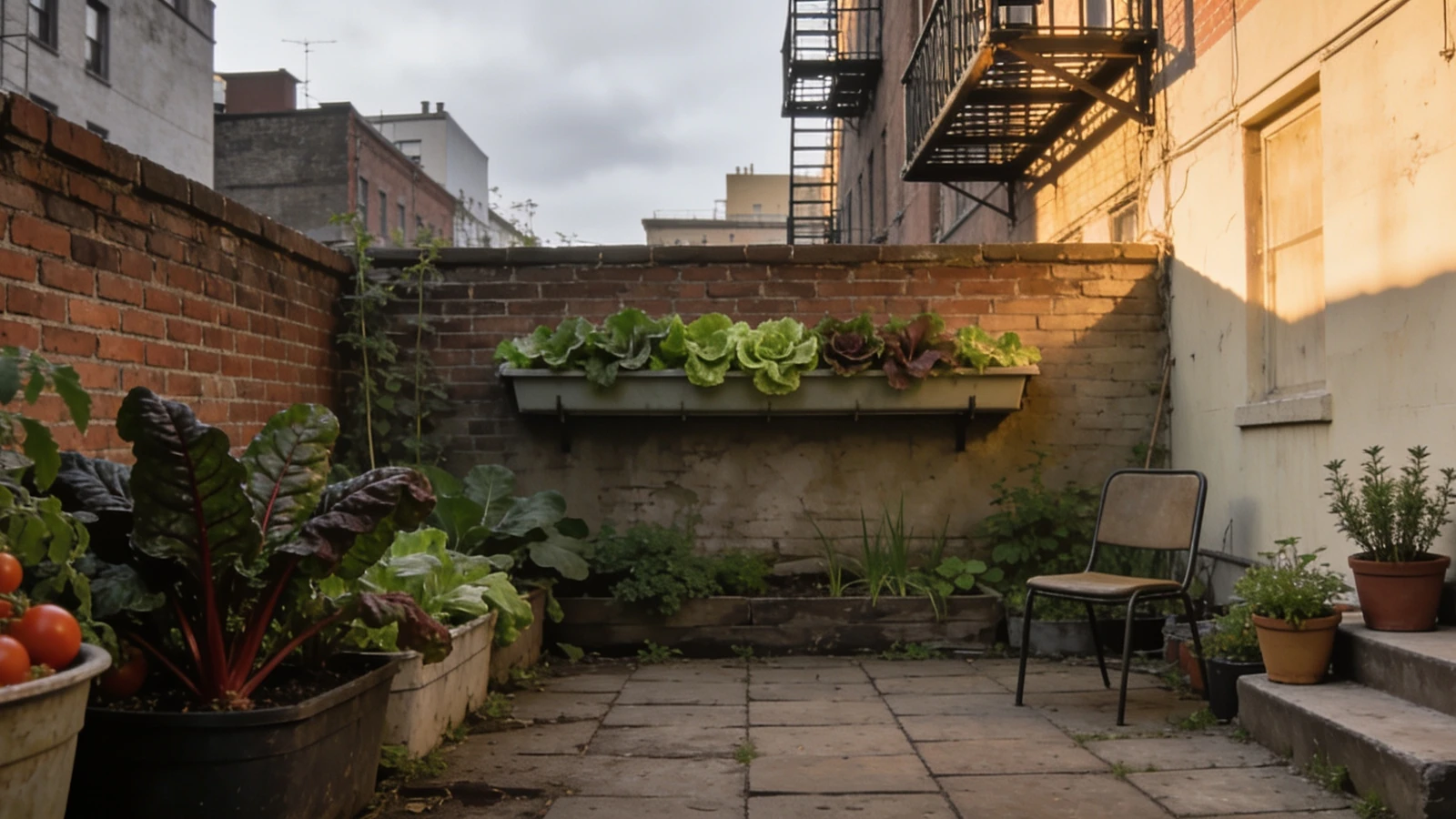
Small Space & Urban Gardening
Urban gardening comes down to light, pot size and wind. Get those three right and a courtyard or balcony feeds you. Here is how I work out what will grow.
Updated
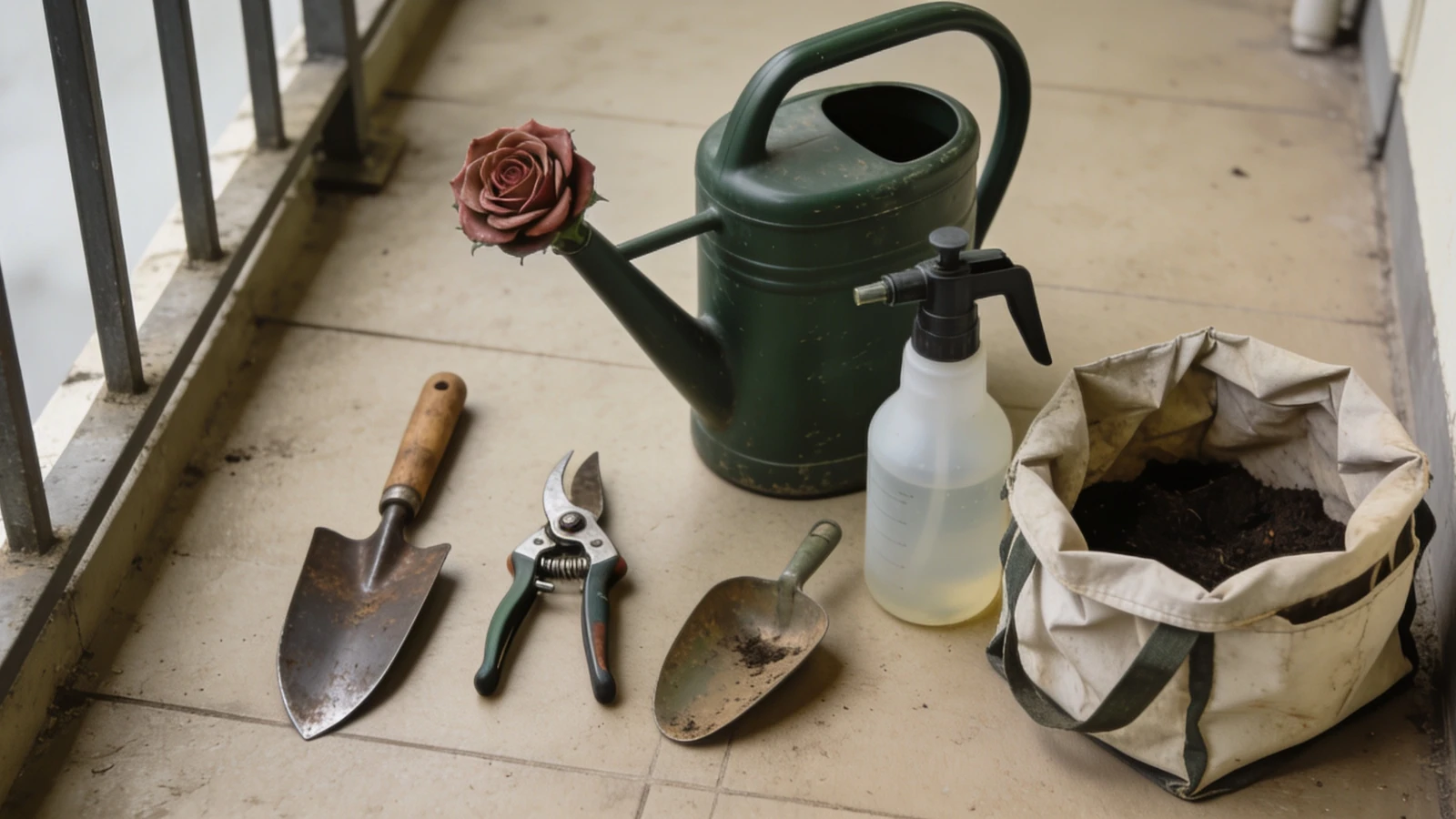
Gardening Tools for Small Spaces
A short, cheap tool kit for container gardening: what you need on a balcony or patio, what to leave out, and how to store it in a metre of space.
Updated
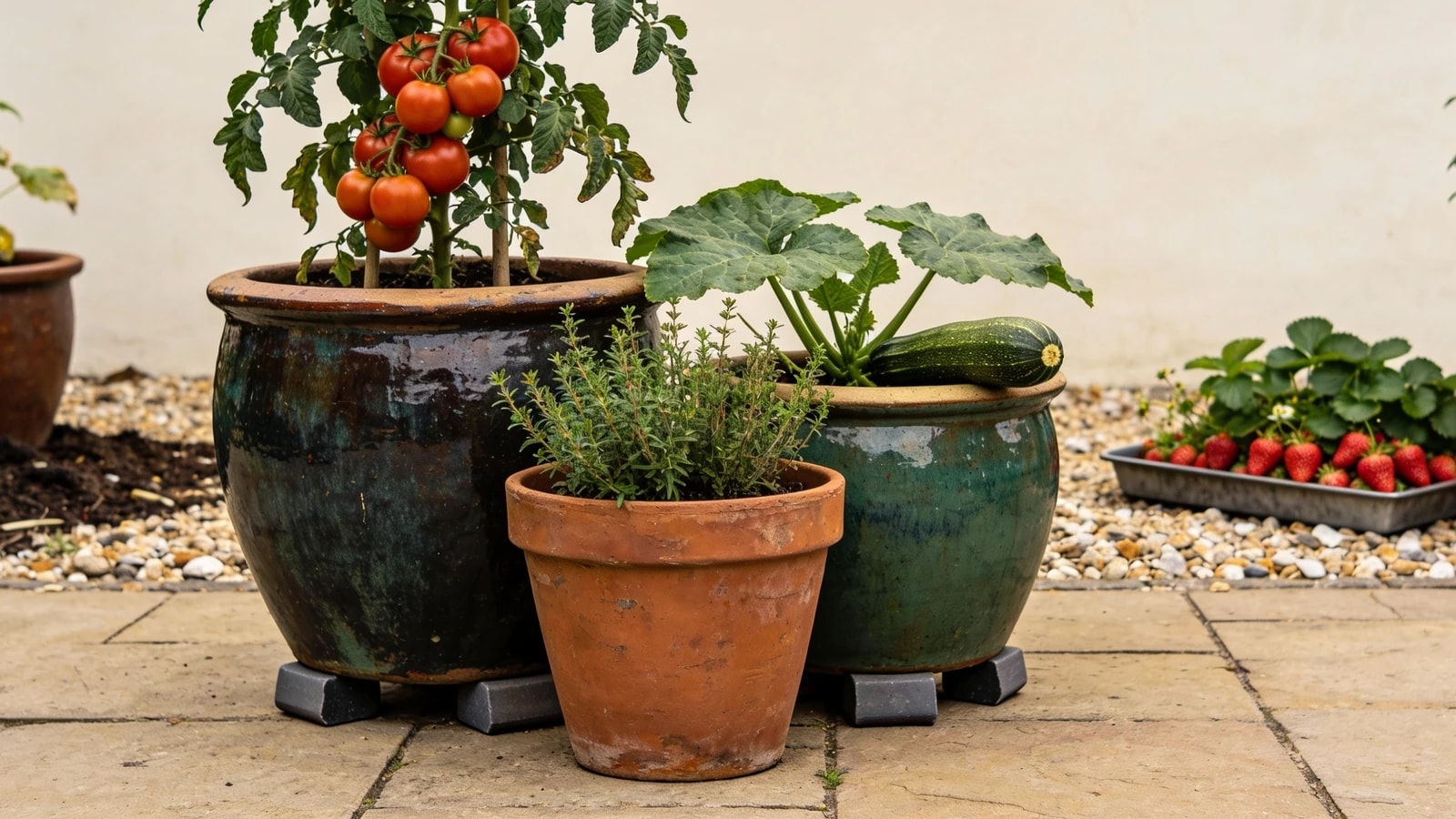
Container Gardening
Container gardening done properly. Why pot volume matters more than compost or feed, what to plant in what size, and how to water so nothing stalls in July.
Updated