Gardening Tools for Small Spaces and Balconies
A short, cheap tool kit for container gardening: what you need on a balcony or patio, what to leave out, and how to store it in a metre of space.
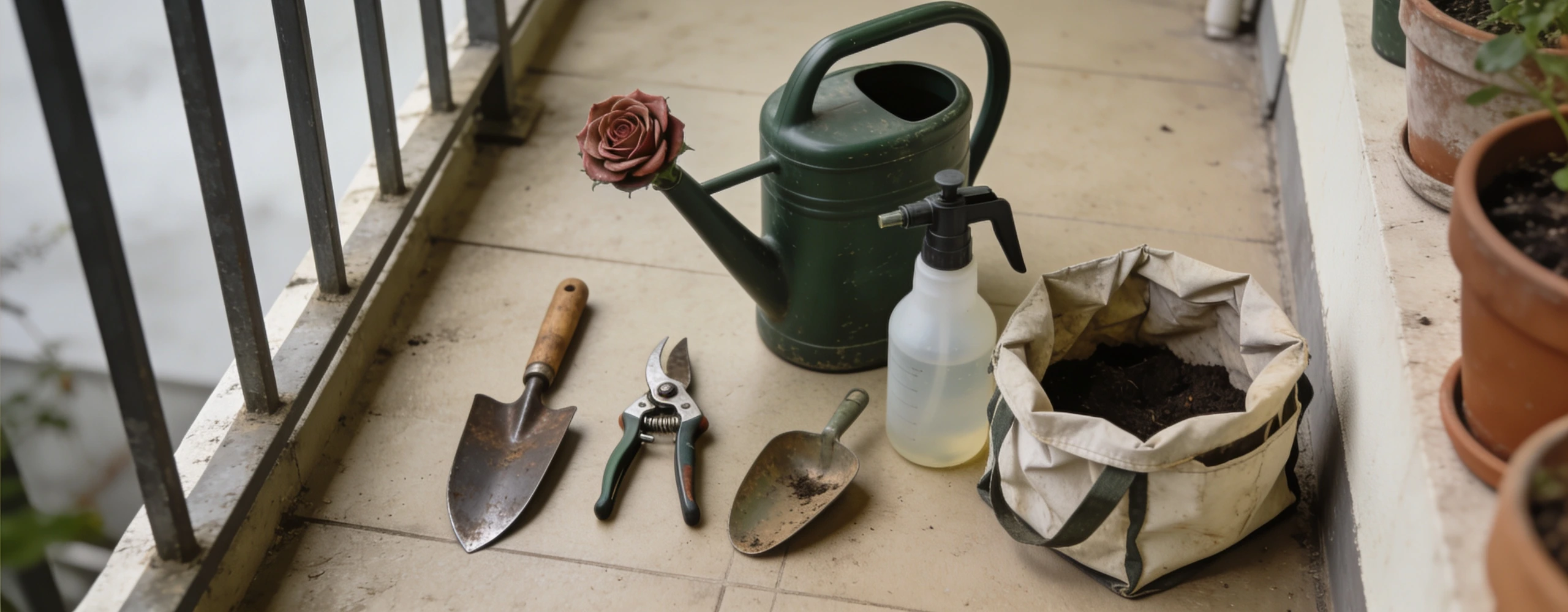
At a glance
| What | Best for | Typical price |
|---|---|---|
| Narrow forged trowel | Best for working inside pots | $12–$28 |
| Compact bypass secateurs | Best all-round cutter | $22–$45 |
| Two-litre watering can with a long spout | Best for indoor and balcony use | $10–$25 |
| Hand mister or pump sprayer | Best for seedlings and humidity | $6–$18 |
| Folding hand saw | Best for occasional woody stems | $18–$35 |
| Potting scoop | Best for filling pots without mess | $8–$18 |
| Collapsible bucket or trug | Best for storage-limited spaces | $12–$25 |
| Wall-mounted tool rail or hanging organiser | Best storage solution | $15–$35 |
| Self-watering pot inserts or reservoir planters | Best for going away | $15–$40 each |
Sometimes Gardening may earn a small commission if you buy through links on this page, at no extra cost to you. It never changes what we recommend, here's how that works.
Gardening tools for small spaces come down to a short, cheap list of mostly hand tools. The mistake people make is scaling down a full-garden list, buying a small spade, a small rake, a small hoe, when the correct move is to leave those categories out altogether and spend the money on containers and compost instead.
The short answer
Four tools cover a balcony or patio: a narrow forged trowel, compact bypass secateurs, a two-litre long-spouted watering can, and a hand mister. Around $50 total. Add a potting scoop, a collapsible trug and a wall rail for storage. Skip spades, forks, rakes, hoes and loppers entirely. There is no ground to work, and a folding hand saw covers the rare woody stem.
Four gardening tools for small spaces that do everything#
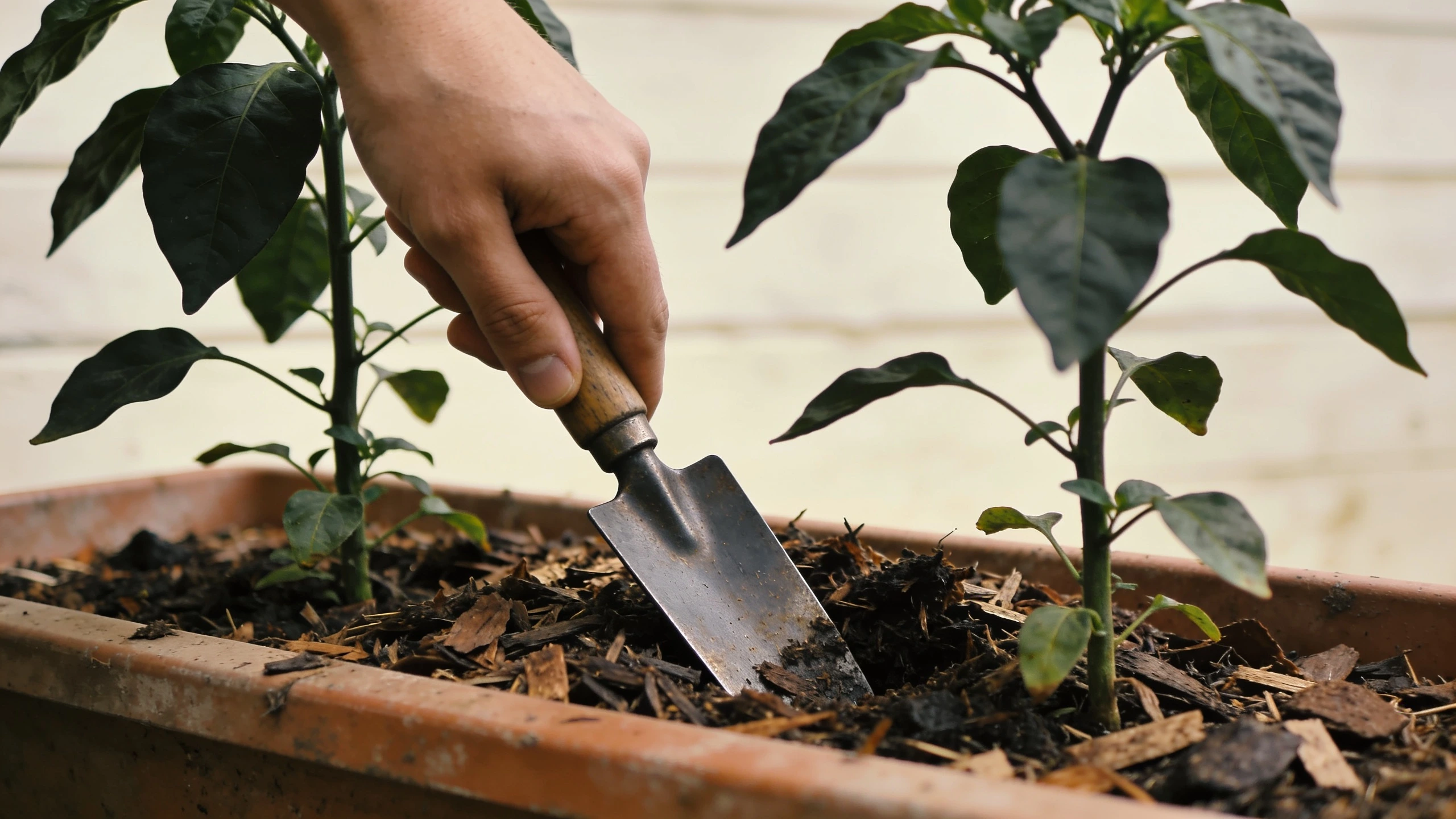
Narrow forged trowel
$12–$28Best for working inside pots
Width is the deciding factor. A standard 6 cm trowel is awkward inside an established container where you are trying to plant between existing root balls. A 4–5 cm blade gets in.
Still buy forged, one-piece. Container work involves less levering than open ground, but you will still use it to prise a root-bound plant out of a pot, and that is exactly the moment a stamped trowel folds at the neck.
Compact bypass secateurs
$22–$45Best all-round cutter
A small-frame pair will handle everything a container garden asks, deadheading, pinching out tomato side shoots, cutting herbs, taking a small woody stem off a patio shrub. Bypass, not anvil, and check the blade is replaceable.
Small frames are also more comfortable for most hands, which is worth knowing regardless of garden size.
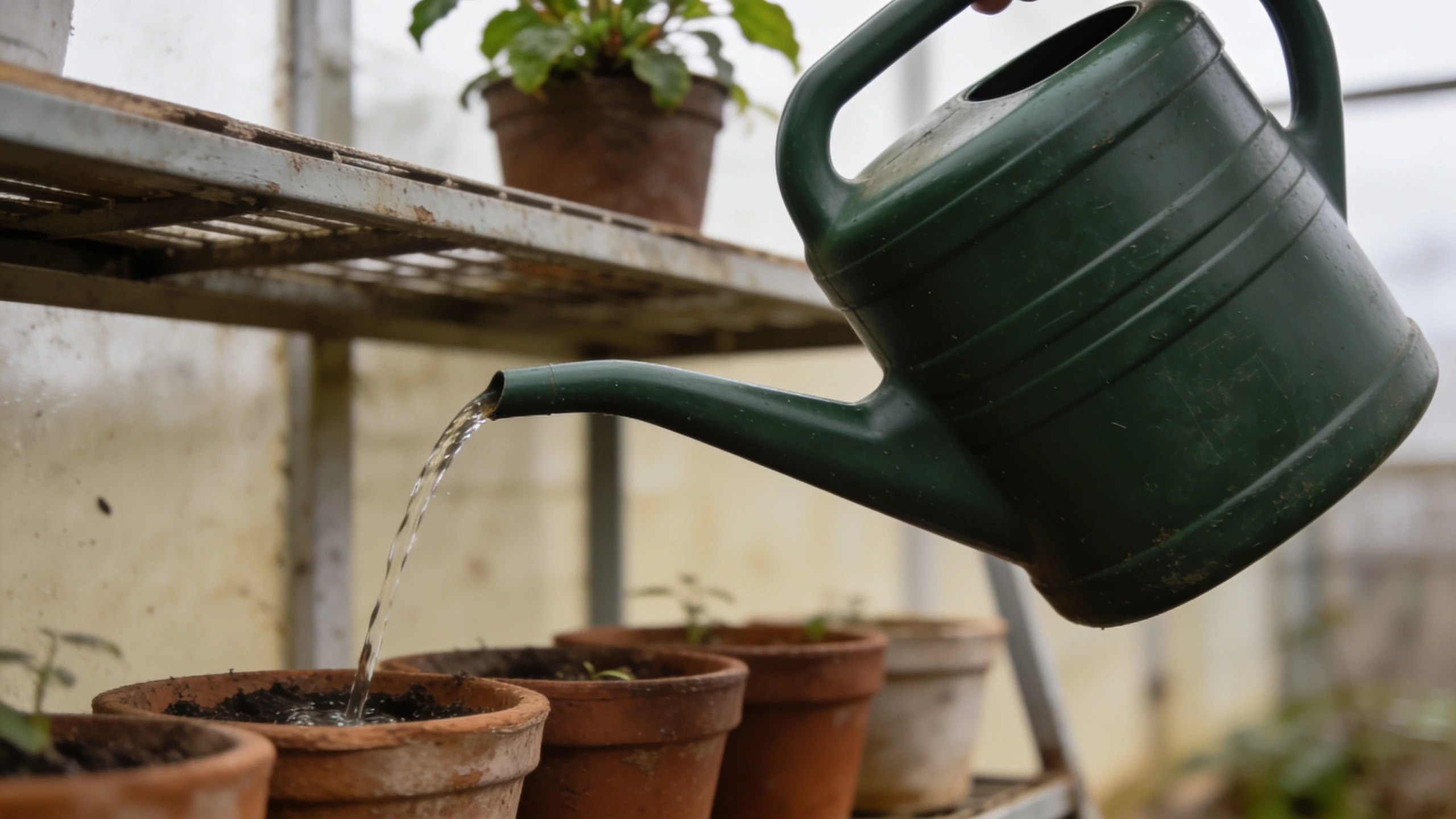
Two-litre watering can with a long spout
$10–$25Best for indoor and balcony use
Small capacity is a feature here, not a compromise. Two litres is light enough to hold at arm's length and to refill from a kitchen tap, and a long narrow spout reaches the back of a shelf or a railing planter without you having to move anything.
Get one with a removable rose head if you plan to sow seed. Direct pour is fine for established plants and much faster.
Hand mister or small pump sprayer
$6–$18Best for seedlings and humidity
Two jobs. It keeps seed compost damp without dislodging seeds, and it is the least damaging way to deal with aphids, a firm spray of plain water knocks them off soft growth, and repeating it every couple of days usually breaks the infestation without anything else.
A pump-action sprayer that holds pressure saves your hand if you are covering more than a few plants.
Worth adding early#
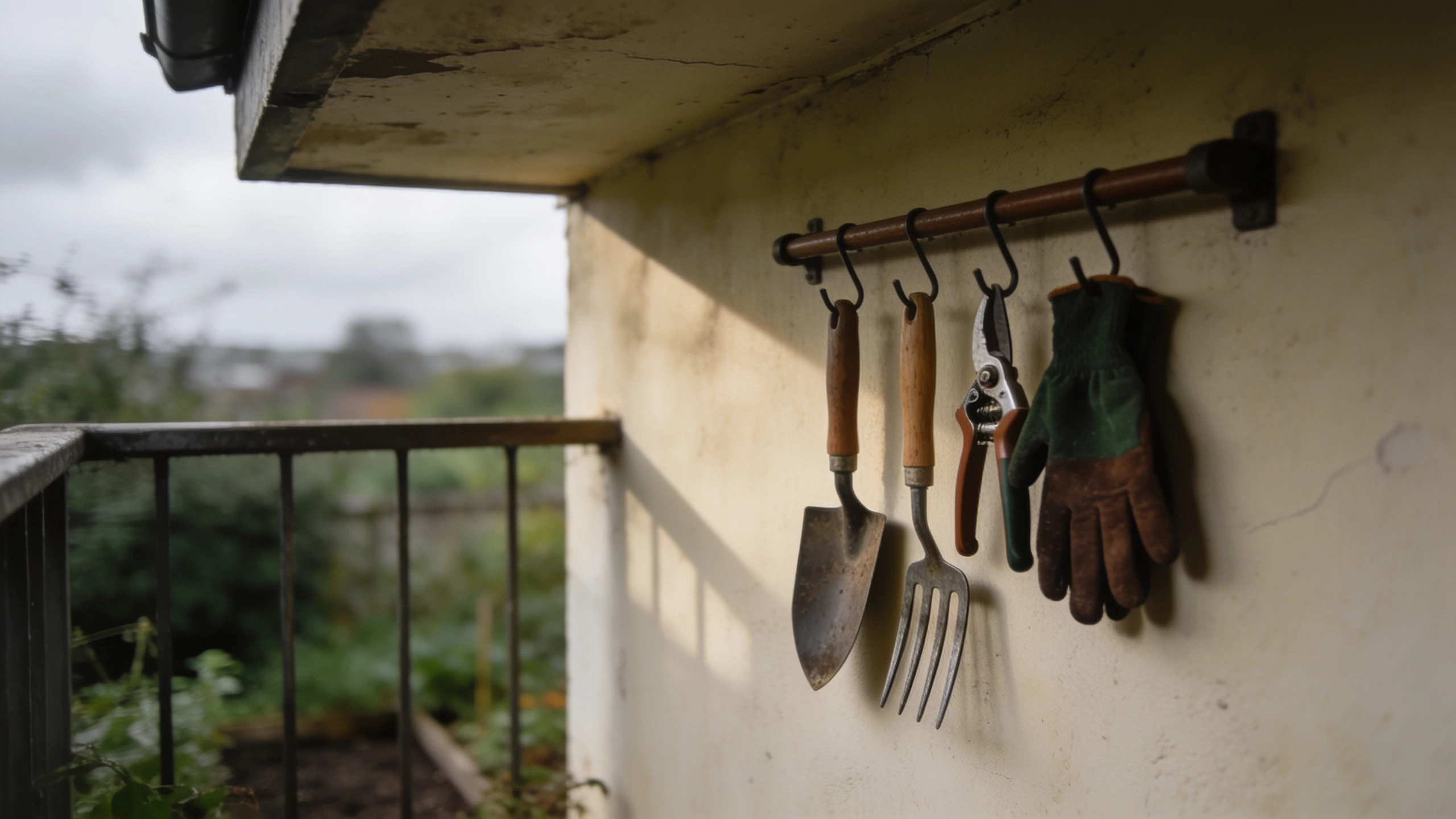
Potting scoop
$8–$18Best for filling pots without mess
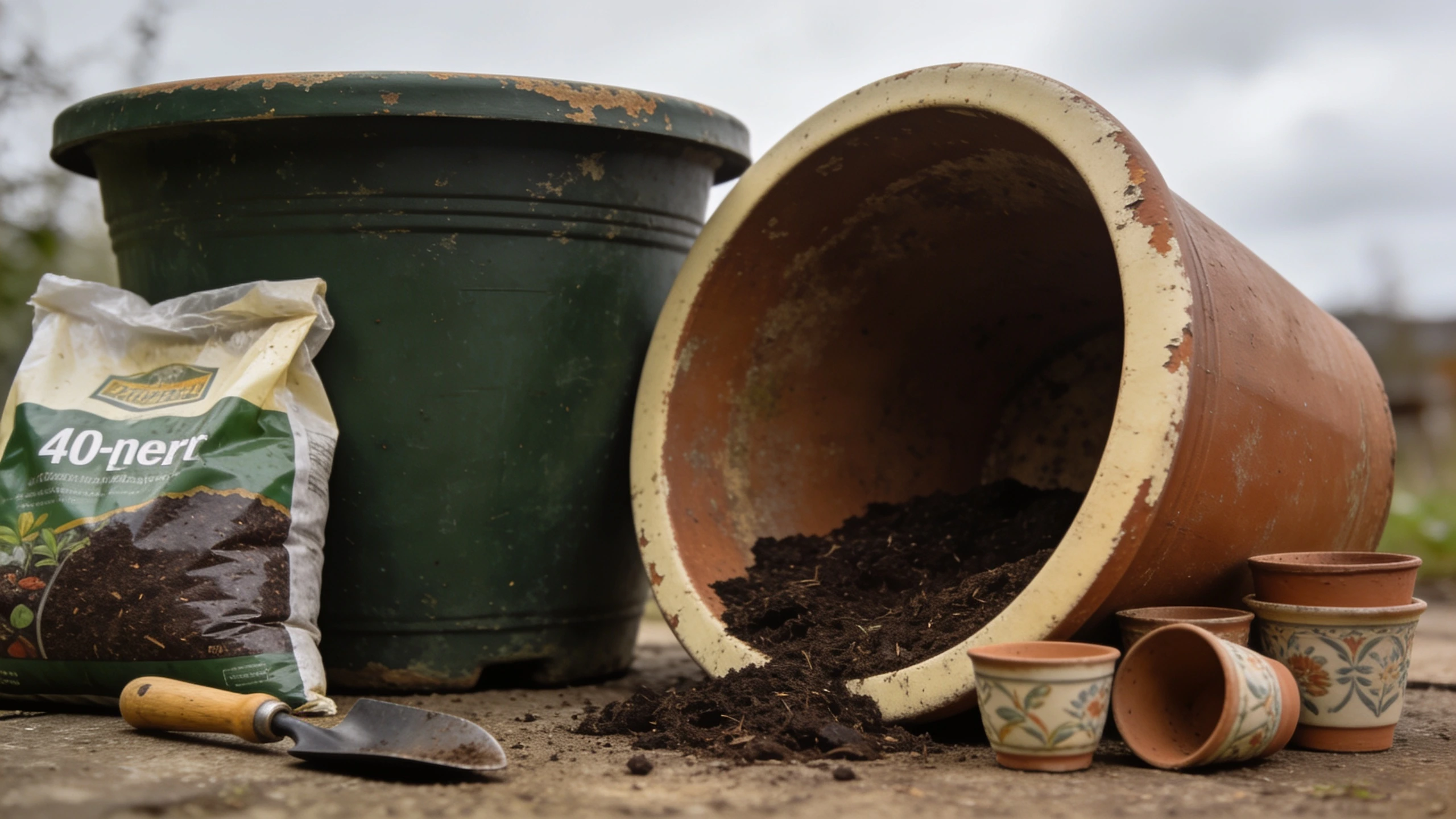
Underrated. A deep scoop moves compost from bag to pot in three motions instead of fifteen, without the spillage that makes potting on a balcony a genuine problem. If you have nowhere to sweep soil to, this matters more than it would in a garden.
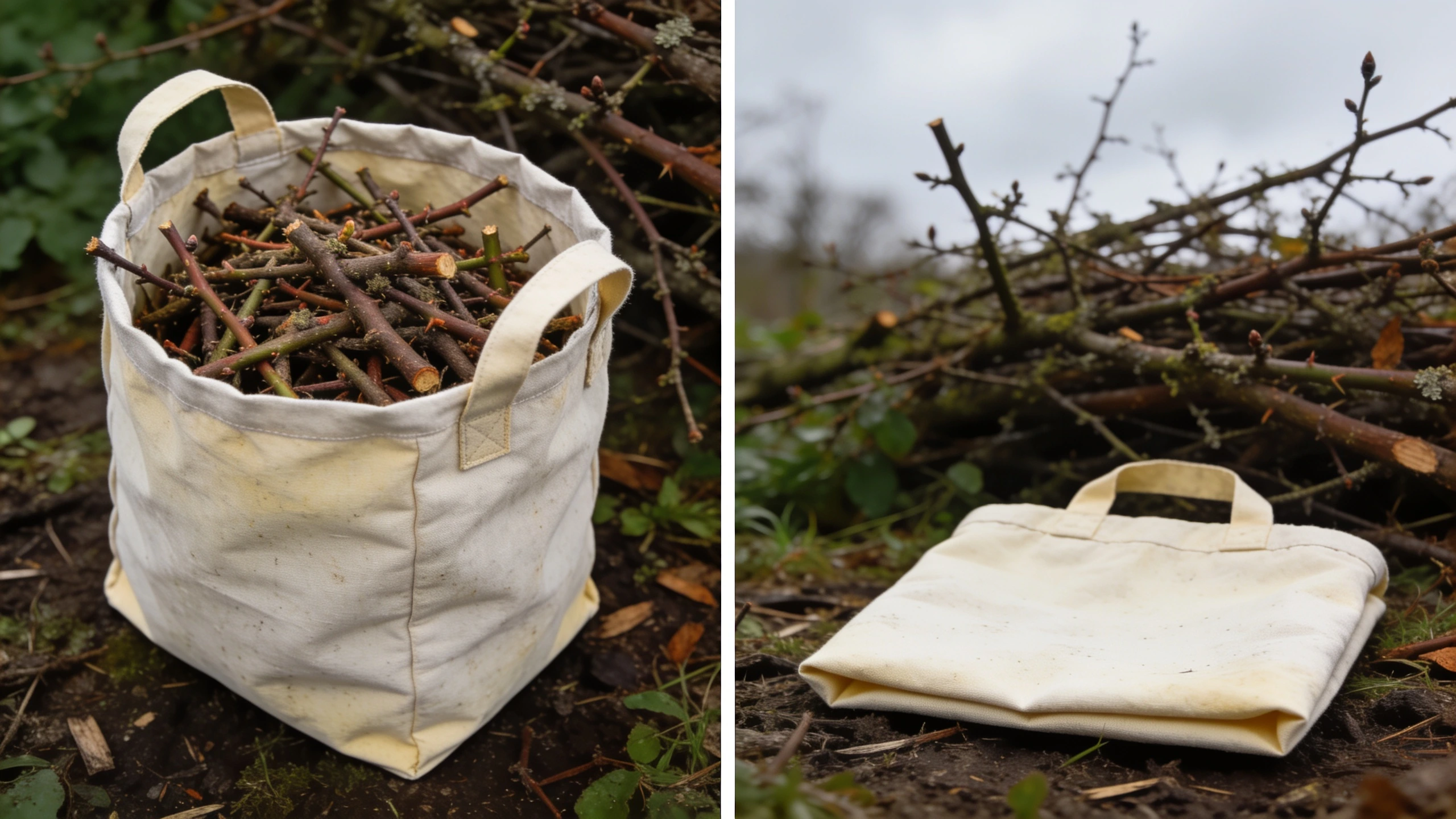
Collapsible bucket or trug
$12–$25Best for storage-limited spaces
Mixing compost, carrying prunings, hauling water, holding weeds, then flattening to five centimetres and hanging on a hook. Storage is the binding constraint in a small space and this respects it.
Folding hand saw
$18–$35Best for occasional woody stems
Replaces loppers and a pruning saw entirely. A pull-stroke folding saw cuts a surprisingly thick branch, weighs almost nothing, and closes into a drawer. For the two or three times a year a container garden needs something more than secateurs, it is exactly enough.
Wall-mounted tool rail or hanging organiser
$15–$35Best storage solution
The only storage a balcony has is vertical. A rail with hooks on a wall, or a fabric shoe-organiser hung over the railing, holds the entire kit above ground and keeps blades off damp surfaces. This is the closest thing to a shed you are going to get, and it also stops tools rusting.
Self-watering inserts or reservoir planters
$15–$40 eachBest for going away
Not strictly a tool, but the biggest single reduction in daily workload. Containers in full sun can need water every day in July, and a reservoir buys you two to four days depending on size and weather.
They are not a substitute for attention, and they can keep compost too wet in cool weather, check before topping up rather than filling on a schedule.
What to deliberately leave out#
Worth it because
- Spend on containers and compost instead, pot volume determines what you can grow far more than tools do
- Buy one good pair of secateurs rather than three cheap cutting tools
- Choose light, storable versions of everything; you carry it all through a doorway
- Buy a bigger pot than you think you need, 30–40 litres for anything fruiting
Bear in mind
- Spades and digging forks, no ground to dig
- Rakes and hoes. Nothing to rake, and you weed a pot with your fingers
- Loppers, a folding saw is smaller and does more
- Wheelbarrows, a collapsible trug is the small-space equivalent
- Long-handled anything, cannot be stored and cannot be used in a confined space
- Boxed tool sets, even worse value here than in a full garden
The real constraints in a small space#
Tools are the easy part. Three things actually govern what you can grow:
- Light. Count the hours of direct sun your space gets in midsummer. Six or more for fruiting crops, three or four for leaves. A north-facing balcony will grow excellent salad and mint and will never ripen a tomato.
- Wind. Balconies above the second floor can be brutal, and wind dries plants faster than sun does. A permeable windbreak, mesh, trellis, a row of tough shrubs in pots, makes a large difference. Solid panels create turbulence and can be worse.
- Weight. Wet compost is roughly 700 kg per cubic metre. A row of large planters on a balcony is a real structural load, and if you are in a flat it is worth knowing your building's limits before you commit. Lightweight compost blends and fibreglass or plastic planters instead of terracotta help substantially.
Our small balcony garden ideas piece goes into planting plans, pot sizes and wind in much more depth.
Where the guidance here comes from#
The tool list is mine, worked out by running out of storage space. The growing side of it, how much root volume a crop wants in a container and how often that needs watering, is standard published guidance, and I check it against the RHS advice pages and their grow your own section rather than trusting my memory of it.
Related reading#
- Gardening tools for beginners: the full-garden version of this list.
- How to water a garden properly: container watering is genuinely different, and the guide covers why.
- Gardening accessories every gardener needs: storage, labels and the small things that make a tight space workable.
Frequently asked questions
What tools do I need for balcony gardening?
Four things: a narrow forged trowel, compact bypass secateurs, a small long-spouted watering can, and a hand mister. That is a complete kit for around $50 and it fits in a single storage box. Add a potting scoop and a collapsible trug once you are repotting regularly.
Do I need a spade or fork for container gardening?
No. There is no ground to dig and a full-size spade will not fit inside a pot. A hand trowel and hand fork do everything, and a potting scoop is better than either for filling containers. Skip long-handled tools entirely unless you also have a bed.
How do I store garden tools on a balcony?
Vertically and under cover. A wall rail with hooks, a hanging fabric organiser on the railing, or a slim weatherproof box that doubles as a seat. Anything left out in the rain rusts fast on a balcony because there is no shelter, bring blades in or oil them after every session.
Are cheap garden tools fine for containers?
More so than for open ground, because you are never levering against rock or heavy clay. But the same construction rules still apply to cutting tools, a bad pair of secateurs crushes stems whatever size your garden is. Spend on the secateurs, save on the plastic.
What size pots do I need for vegetables on a balcony?
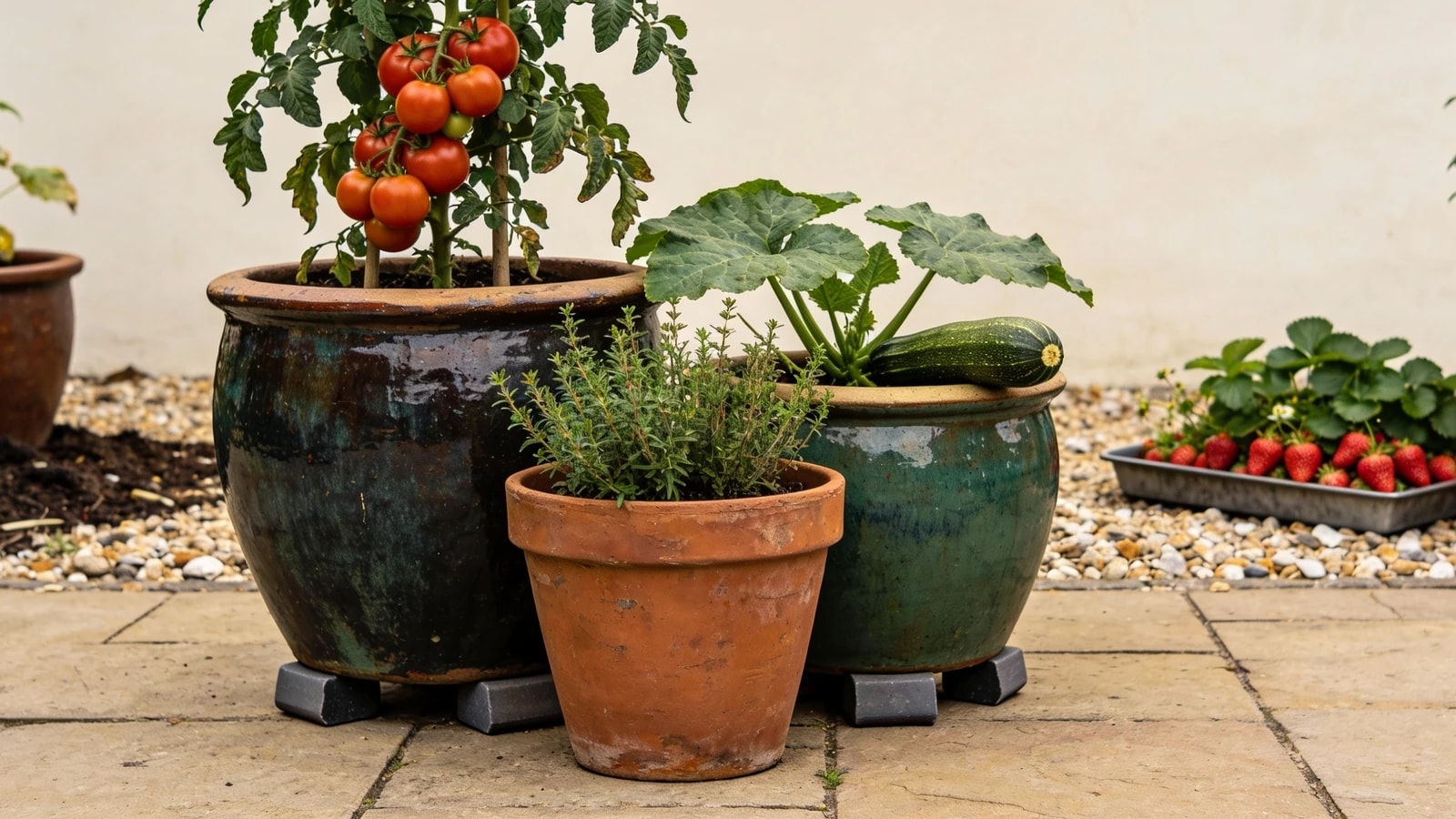
Salad leaves and herbs are happy in 15–20 cm depth. Bush beans, chard and spring onions want 25–30 cm. Tomatoes, chillies, courgettes and potatoes need 30–40 litres each, considerably more than most people expect. Bigger containers also swing less in temperature and dry out far more slowly.
Topics in this article
About the author
Jeff has gardened professionally for over twenty years, mostly on heavy clay, and writes everything here from beds he still works himself. More from Jeff Tanun →
Keep reading
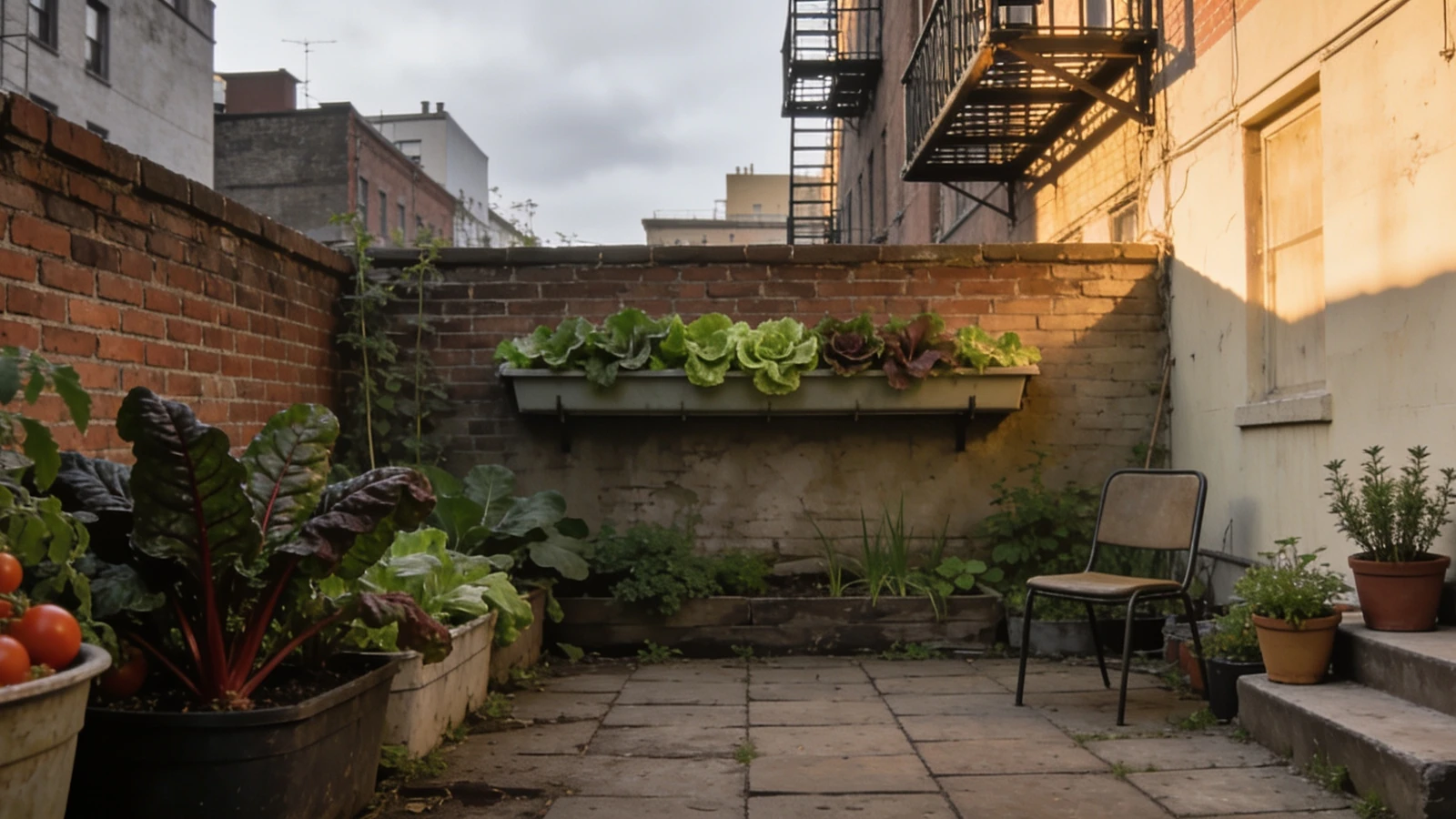
Small Space & Urban Gardening
Urban gardening comes down to light, pot size and wind. Get those three right and a courtyard or balcony feeds you. Here is how I work out what will grow.
Updated
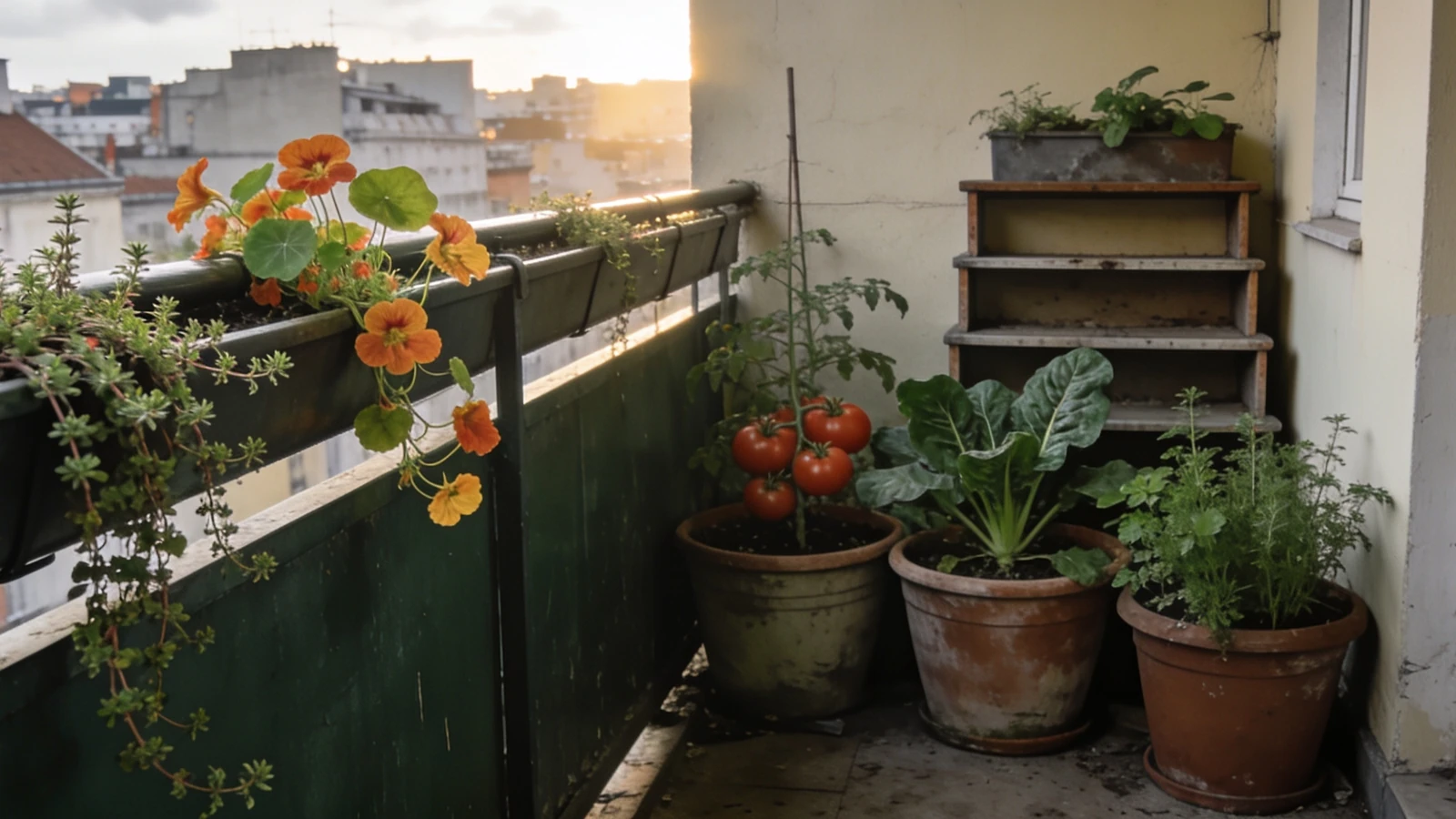
Small Balcony Garden Ideas
Balcony garden ideas built around the three things that actually limit you, light, wind and weight, with pot sizes, planting plans and what to grow where.
Updated
Container Gardening
Container gardening done properly. Why pot volume matters more than compost or feed, what to plant in what size, and how to water so nothing stalls in July.
Updated