Gardening Accessories That Are Worth the Shelf Space
The small kit that removes friction from every session: watering gear, labels, supports and storage, plus the accessories that just take up room.
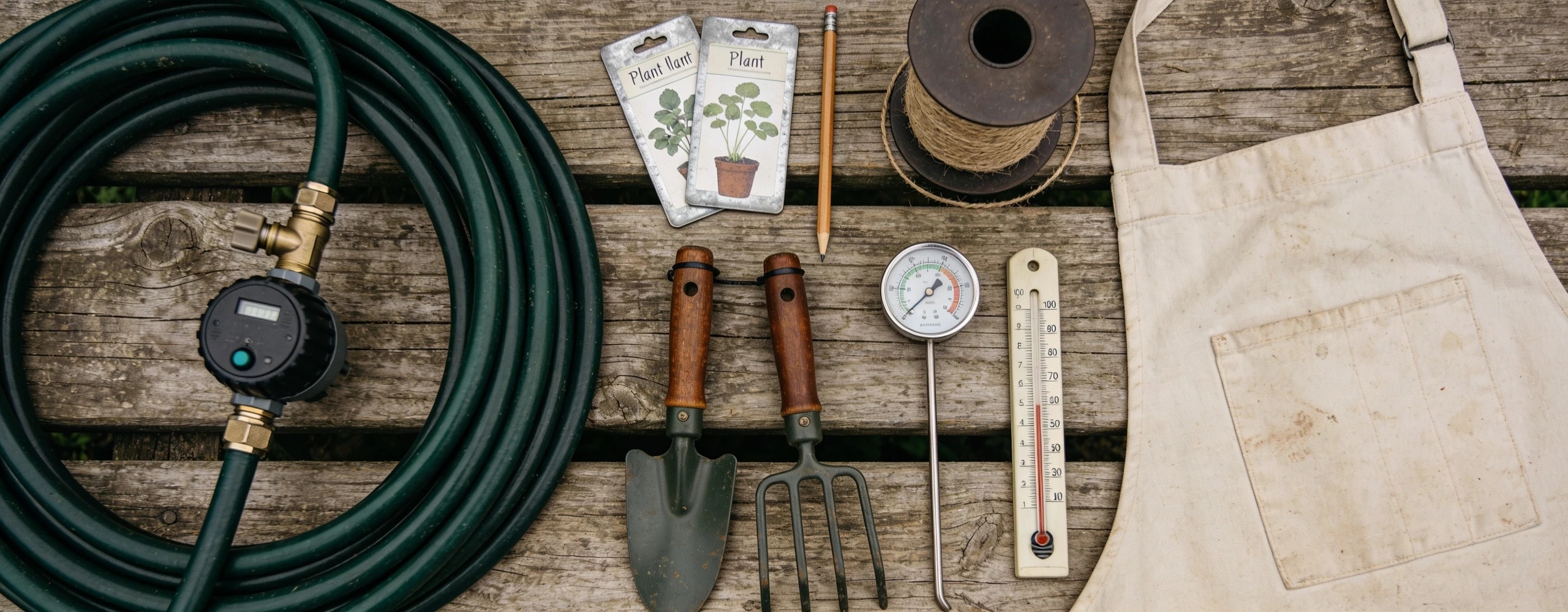
At a glance
| What | Best for | Typical price |
|---|---|---|
| Soaker hose or drip line on a tap timer | Best time-saver overall | $30–$80 |
| Zinc or slate plant labels with a garden pencil | Best cheap fix | $8–$18 |
| Two collapsible trugs | Best carrying solution | $20–$40 the pair |
| Wall-mounted tool rail | Best storage upgrade | $15–$35 |
| Adjustable plant supports and soft ties | Best for anything tall | $15–$40 |
| Fine insect mesh and hoops | Best pest control that always works | $25–$60 |
| Soil thermometer | Best decision-making tool | $10–$20 |
| Horticultural fleece | Best season extender | $12–$30 |
| Watering can with a removable brass rose | Best for seedlings | $18–$40 |
| Garden apron or tool belt with deep pockets | Best small convenience | $20–$45 |
| Compost caddy for the kitchen | Best habit-former | $15–$30 |
| Rain gauge | Best cheap instrument | $8–$18 |
Sometimes Gardening may earn a small commission if you buy through links on this page, at no extra cost to you. It never changes what we recommend, here's how that works.
Gardening accessories are where garden budgets quietly disappear, mostly into things used once. The filter that works: does this remove friction I feel in every single session? A soaker hose passes. A bulb planter does not.
The short answer
The four that earn their space in almost any garden: a soaker hose on a tap timer ($30–$80, removes the most repetitive job there is), proper metal or slate plant labels ($8–$18, because marker pen fades in six weeks), two collapsible trugs ($20–$40), and a wall rail to hang tools on ($15–$35). Skip ultrasonic pest repellers, cheap pH meters and self-watering globes.
Watering kit, where the time actually goes#
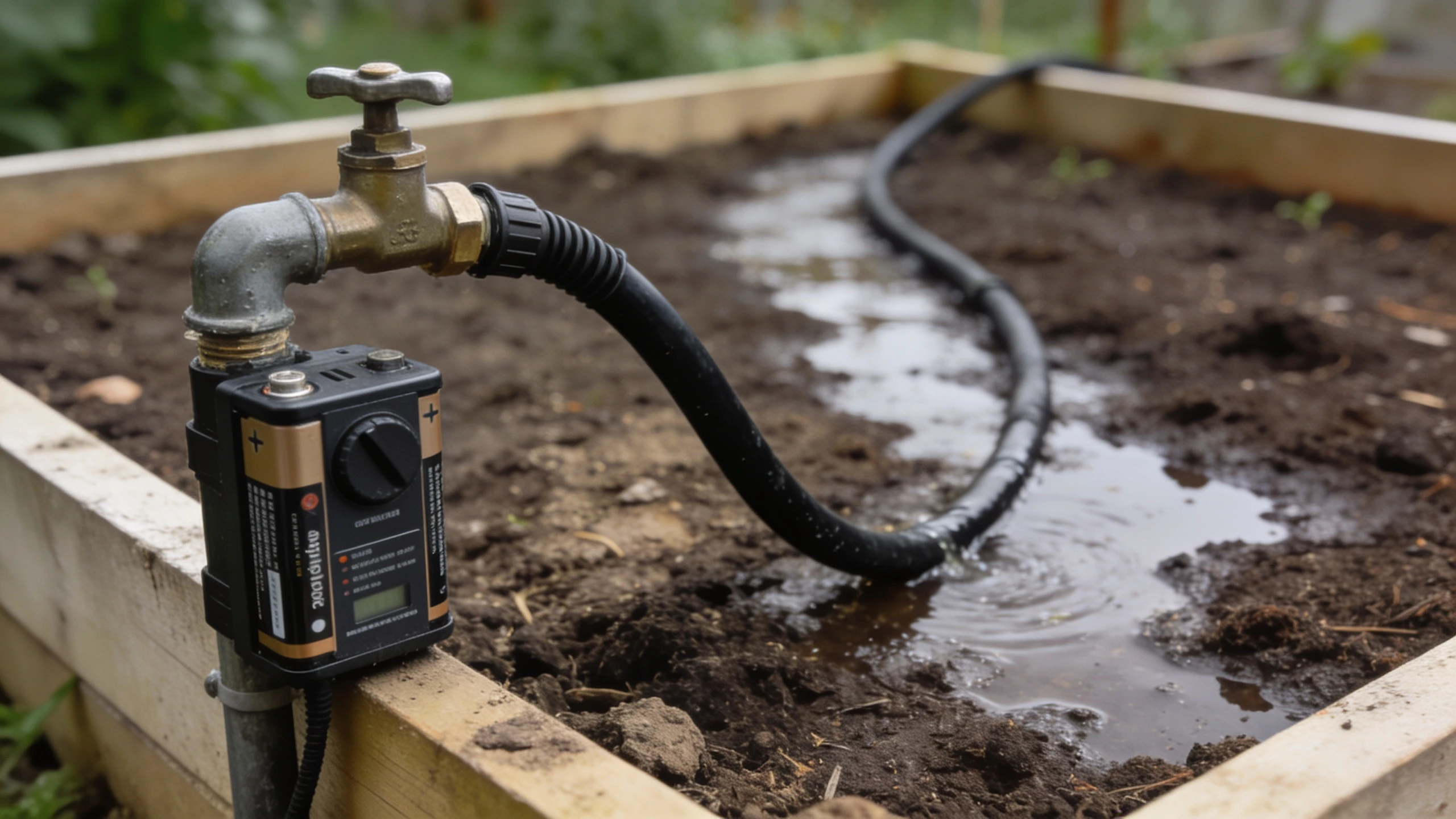
Soaker hose or drip line on a tap timer
$30–$80Best time-saver overall
The highest-value accessory in this list. A soaker hose weeps along its length; a drip line delivers to specific points. Either way water goes in slowly at soil level, which is exactly what plants want, deep penetration, no wet foliage, no runoff.
Add a mechanical or battery tap timer for around $20 and the whole thing runs itself. Set it to come on early morning.
The time saved is the smaller half of it. Hand-watering is inconsistent by nature, some plants get more attention than others, and you skip evenings when you are busy, and consistency matters more to most crops than absolute volume. See our watering guide for how much to actually deliver.
Watering can with a removable brass rose
$18–$40Best for seedlings
Still needed even with a hose, for seed trays, indoor sowing and anything too delicate for a nozzle. The rose head is the functional part, a bare spout excavates the compost and washes seed sideways.
Nine litres is the practical carry limit at 9 kg. Brass roses last indefinitely; moulded plastic ones crack at the collar in a couple of seasons.
Rain gauge
$8–$18Best cheap instrument
"It rained yesterday" is not information. A five-minute shower might deliver 2 mm, which does not reach the root zone at all, while a steady evening of rain delivers 20 mm and means you can skip two waterings. A gauge turns it into a number.
Organisation, which is most of the friction#
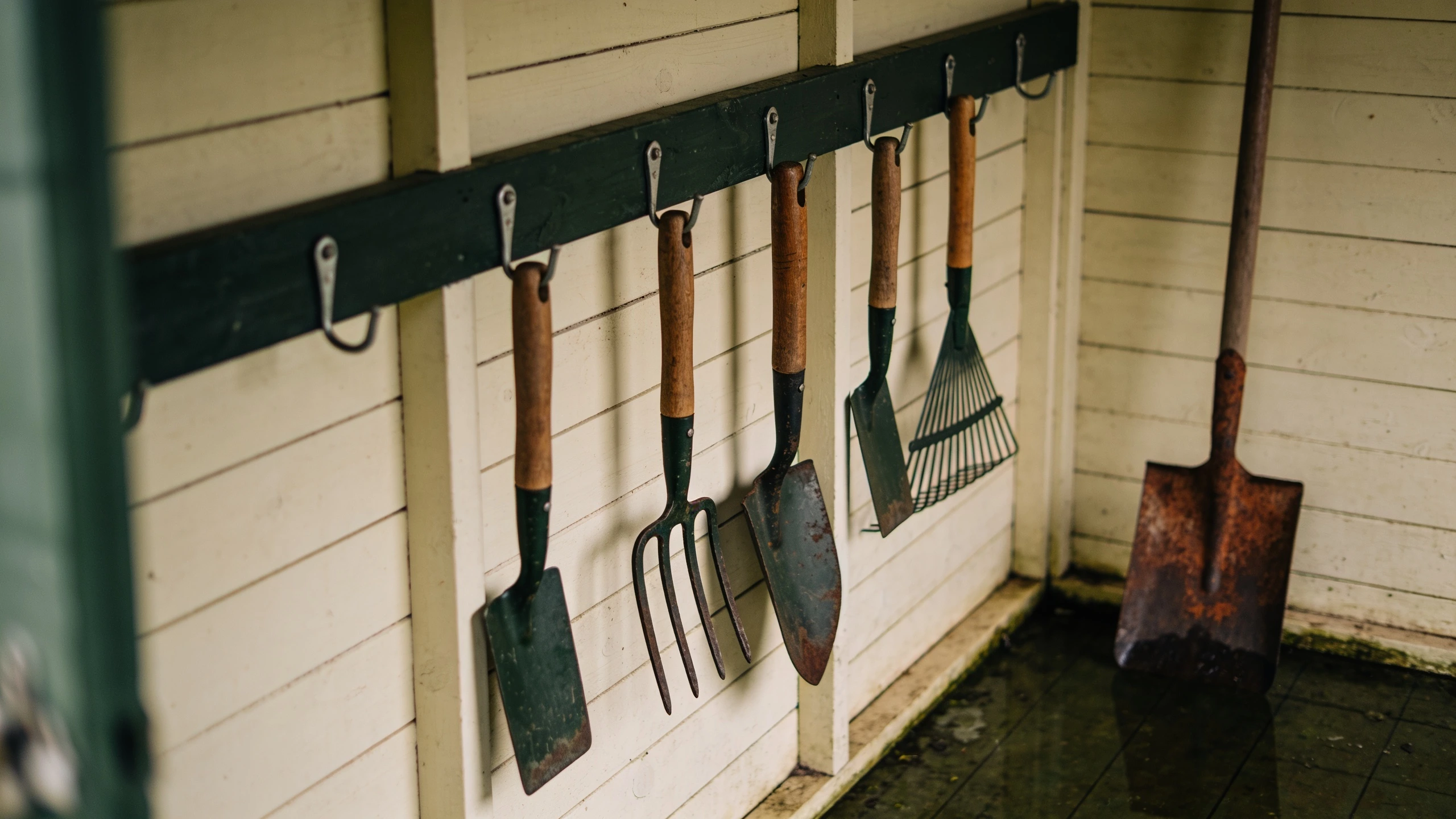
Zinc or slate plant labels with a garden pencil
$8–$18Best cheap fix
Everyone learns this once. Ordinary marker fades to blank in about six weeks of sunlight, and you spend the rest of the season guessing which row is which variety.
Zinc labels written with a graphite garden pencil stay legible for years and can be rubbed clean and reused. Slate labels with a chalk pen look better and are slightly less durable.
Two collapsible trugs
$20–$40 the pairBest carrying solution
Two, deliberately: weeds and prunings in one, harvest in the other, so you are not putting tomatoes in the bucket the bindweed was in. Flexible tub trugs also work as mixing vessels for compost and as temporary water containers.
Collapsible ones flatten to a few centimetres, which is the difference between owning two and having room for two.
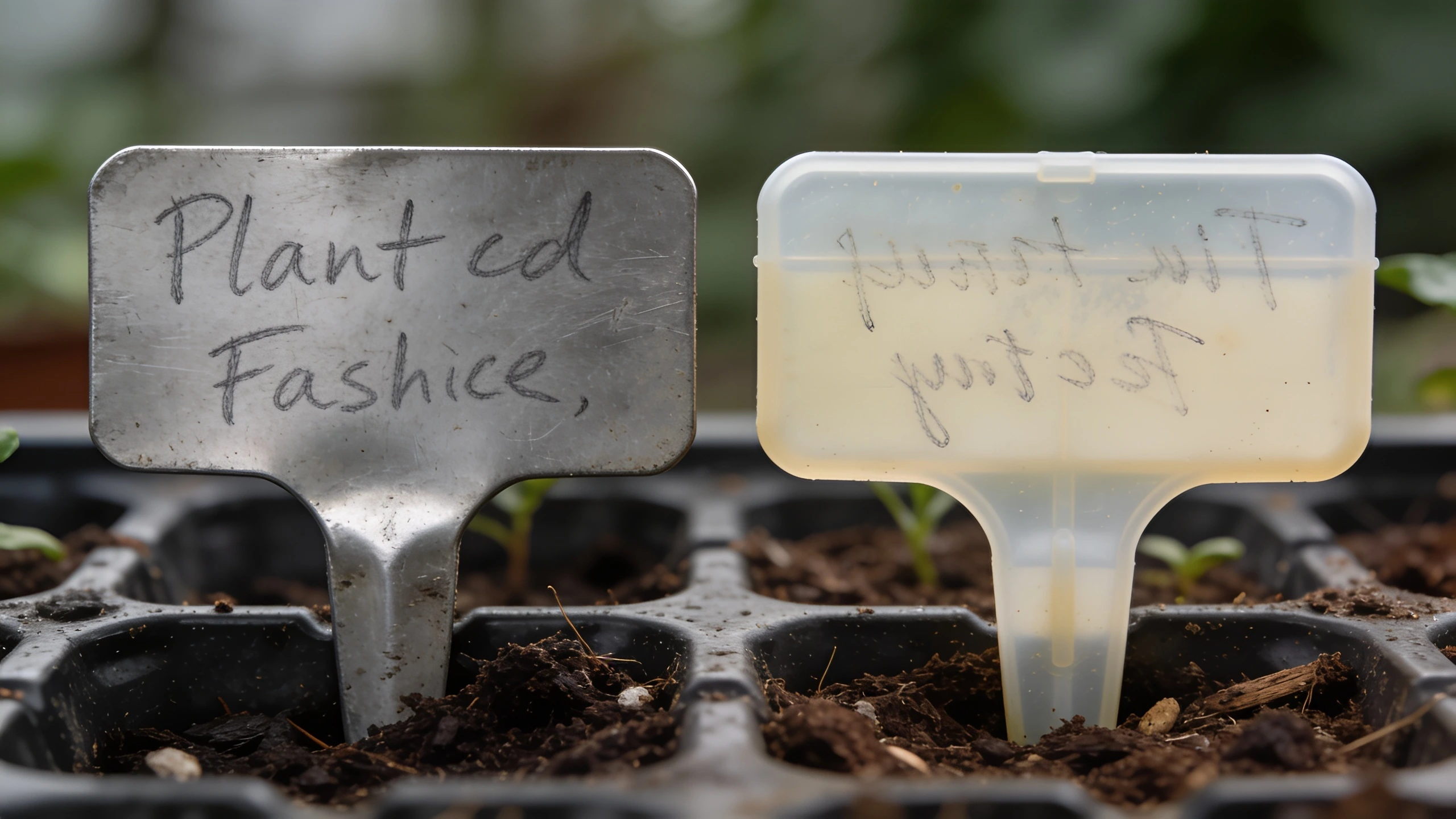
Wall-mounted tool rail
$15–$35Best storage upgrade
Tools standing on a shed floor rust at the business end, fall over, and get lost behind other tools. A rail with hooks fixes all three for very little money.
Wipe metal with oil before hanging, and once a year rub boiled linseed oil into wooden handles, see our tool care guide.
Garden apron or tool belt with deep pockets
$20–$45Best small convenience
Secateurs, twine, labels, a pencil and a phone on your body means you stop walking back to the shed. It sounds trivial and it is the difference between an afternoon of gardening and an afternoon of fetching.
Deep pockets and a waist strap that actually holds weight are what matter. Thin canvas aprons with shallow pockets drop secateurs into the bed, which is how secateurs get lost.
Compost caddy for the kitchen
$15–$30Best habit-former
Whether kitchen scraps get composted is decided almost entirely by whether there is a bin within arm's reach of where you chop vegetables. A caddy with a carbon filter lid keeps smell down and means you empty it every few days rather than every day.
The rest of the process is in composting for beginners.
Protection and season extension#
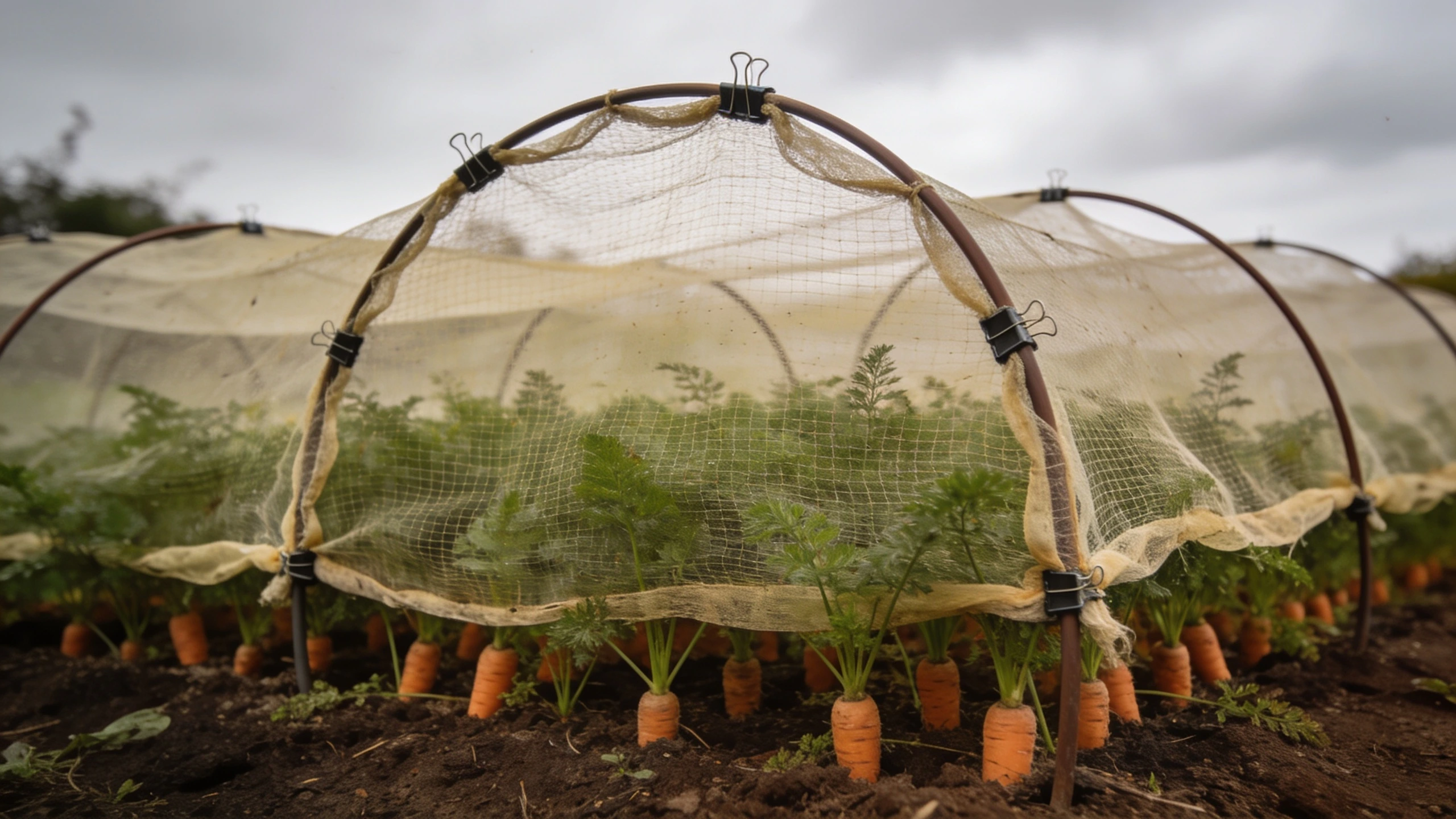
Fine insect mesh and hoops
$25–$60Best pest control that always works
The only genuinely reliable, zero-chemical defence against carrot fly, cabbage white butterfly and allium leaf miner. A physical barrier cannot fail the way a spray or a companion planting theory can.
Get mesh fine enough for the pest you are targeting, around 0.8 mm for carrot fly, 1.35 mm is enough for cabbage white, and clips, because covers that blow off in the first gale are worse than nothing.
Horticultural fleece
$12–$30Best season extender
Cheap, light, reusable for several seasons. Gets you two to three weeks earlier in spring, protects against a late frost, and can be thrown over anything at short notice when the forecast turns.
Buy a roll rather than pre-cut sheets; you will want odd sizes.
Adjustable plant supports and soft ties
$15–$40Best for anything tall
The rule is support before it flops. Once a peony, dahlia or tall perennial has gone over in the rain, tying it up afterwards never looks right and often breaks stems.
Link stakes, L-shaped or hooped stakes that clip together, are far more versatile than single canes because you can build a cage of any shape around a clump. Soft velcro or rubber ties do not cut into stems the way wire or string does.
Soil thermometer
$10–$20Best decision-making tool
Most wasted seed goes into soil that was too cold to germinate it, and rots instead. A $12 thermometer answers a question you cannot answer by feel.
Peas and broad beans from 5°C, carrots and beetroot 7–10°C, beans and courgettes 15°C, tomatoes and squash 18°C. Particularly useful with raised beds, which warm two to four weeks ahead of open ground by an amount you cannot guess.
Gardening accessories that are not worth it#
Worth it because
- Anything that removes a job you do every session, watering, carrying, fetching
- Physical pest barriers, which cannot fail the way sprays and theories can
- Cheap instruments that replace guesswork: soil thermometer, rain gauge
- Storage that gets tools off the floor
- Labels. Always labels
Bear in mind
- Ultrasonic pest repellers, no reliable evidence of effect on moles, cats or insects
- pH and moisture meters under $30, inconsistent enough to be actively misleading
- Self-watering glass globes, they empty within hours and do nothing for a real pot
- Decorative solar lights. Most degrade badly within two seasons
- Multi-tools and three-in-one implements, three jobs, done badly
- Seed-starting kits with tiny cells, root volume too small, plants stall
- Anything you would use twice a year and store for twelve months
Where the guidance here comes from#
Which of these earns its shelf space is my opinion, formed by owning the ones that did not. On watering, which is the section where being wrong wastes the most, the EPA WaterSense watering tips are the clearest short summary of why deep and infrequent beats little and often, and the RHS advice pages cover the plant side of the same question.
Related reading#
- Garden kneelers and seats: the comfort side of the same question.
- How to water a garden properly: how much water to actually deliver, and when.
- Gardening gifts under $25: most of the cheap items here make good presents.
Frequently asked questions
What are the most useful gardening accessories?
A soaker hose on a tap timer, proper plant labels, two collapsible trugs, and a wall rail to hang tools on. Those four remove more friction from a week of gardening than any tool upgrade. The test worth applying: does it remove effort you feel every single session, or only twice a year?
Are drip irrigation systems worth it for a home garden?
For anything beyond a few pots, yes. A soaker hose or drip line on a $20 tap timer delivers water slowly at soil level, which is exactly what plants want, and removes the most repetitive job in the garden. It also waters more consistently than hand-watering, and consistency matters more than volume for most crops.
How should I store garden tools?
Hanging, off the floor, under cover. A wall rail or a few sturdy hooks keeps blades out of damp, stops tools falling over, and means you can see what you own. Wipe metal with oil before storing, and once a year rub linseed oil into wooden handles.
What garden accessories are a waste of money?
Ultrasonic pest repellers (no reliable evidence they work), cheap pH and moisture meters under $30 (unreliable enough to mislead), decorative solar lights (they degrade within two seasons), self-watering globes (they empty in hours), and multi-tools that do three jobs badly. Also most single-purpose gadgets that only get used once a year.
Do I need a greenhouse or is a cold frame enough?
A cold frame handles most of what a home gardener wants, hardening off, early sowing, overwintering tender plants, for a fraction of the cost and space. A greenhouse becomes worth it when you want to grow heat-loving crops through a whole season, or you propagate at volume. Start with a cold frame, or even just fleece and hoops.
About the author
Jeff has gardened professionally for over twenty years, mostly on heavy clay, and writes everything here from beds he still works himself. More from Jeff Tanun →
Keep reading
How to Grow Courgettes
How to grow courgettes and zucchini: how many to plant, why the first fruits rot, hand pollination, and picking small enough to keep the plant producing.
Updated
How to Water a Garden
How to water a garden properly: how much plants need, how to tell when they need it, and why a daily splash does more harm than none at all.
Updated
Garden Lighting & Decor
Garden lighting is nearly always overdone. Here is where I put light, how much is enough, and why one floodlight ruins a garden after dark.
Updated