Garden Lighting Ideas: Use Less Light, Placed Better
Garden lighting is nearly always overdone. Here is where I put light, how much is enough, and why one floodlight ruins a garden after dark.
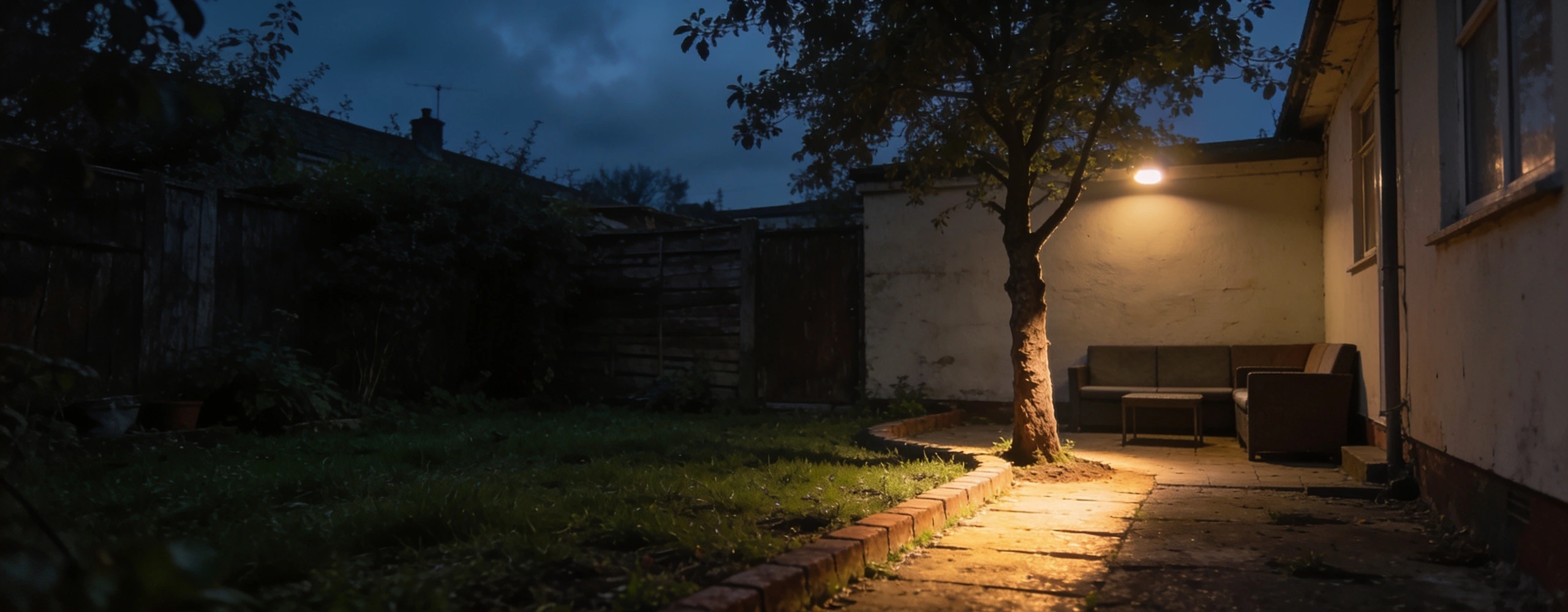
Garden lighting is the one part of a garden where spending more money reliably makes the result worse. Almost every lit garden I see has too many fittings, too bright, aimed at the wrong things.
The short answer
Use three or four lights in a normal back garden, not fifteen. Light the route you walk at ankle height and aimed down, wash one thing with structure such as a tree or a wall, and put one soft light where you sit. Warm white, around 2700K. Leave everything else dark, because the dark is what makes the lit parts read.
The instinct is to make the garden visible after dark. That is the wrong goal. What you want is a few things worth looking at and enough light to walk safely, which needs surprisingly little kit.
Start by seeing what over-lighting does#
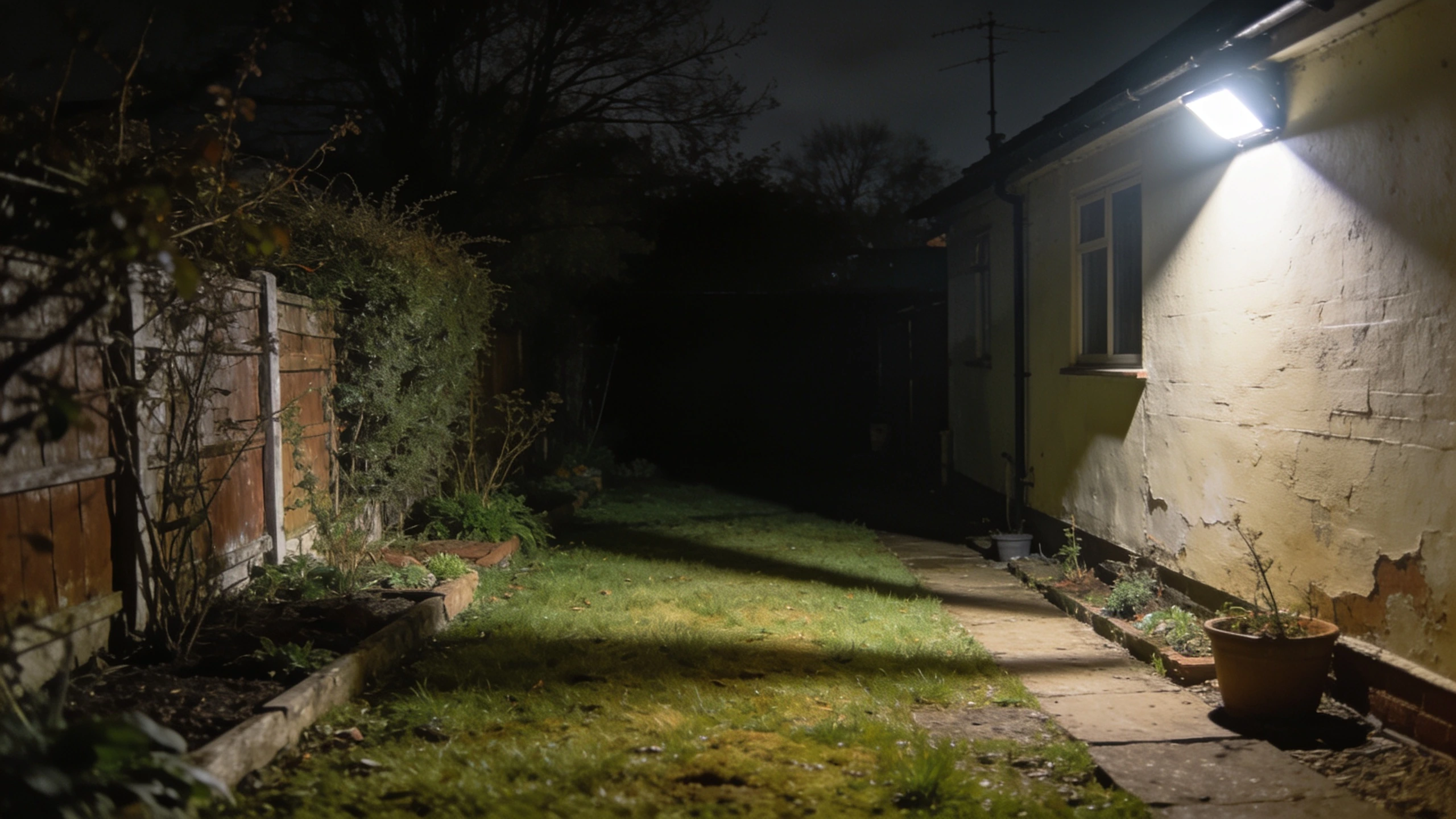
That is a single bright floodlight on a house wall, and it is what most gardens have. Three things go wrong at once.
Glare. You can see the source, so your eyes adjust to the brightest thing in view and everything else goes black.
Flatness. Light coming from one point at one angle removes all the shape from the planting. Foliage that looks textured by day looks like a wall by night.
No depth. The far end of the garden disappears entirely, so the space feels smaller after dark than it does in daylight, which is the opposite of what you paid for.
Take the floodlight off a switch you use casually and put it on a motion sensor for security only. Then light the garden separately.
The three jobs worth lighting#
1. The route#
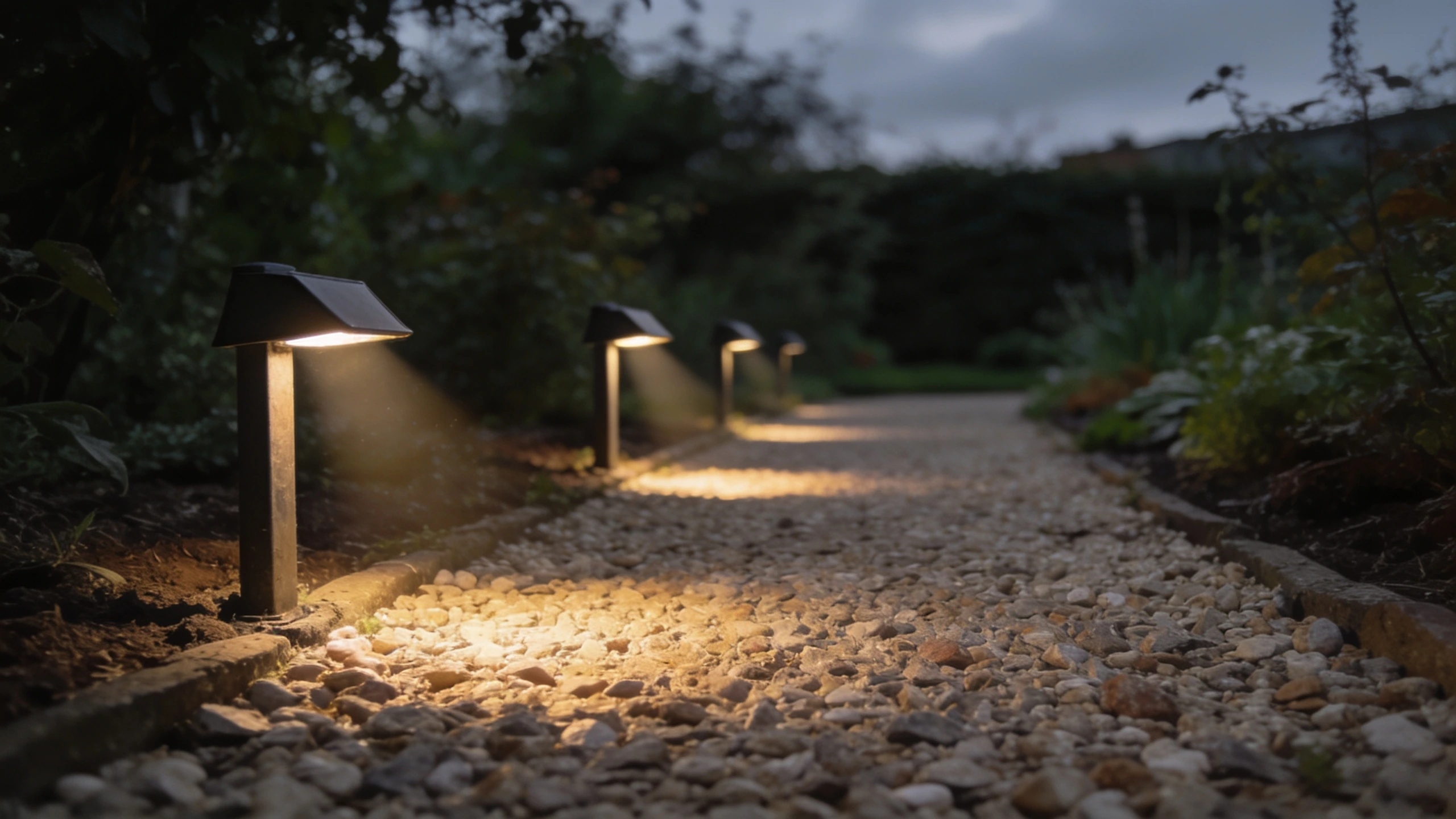
Whatever route people walk from the door, that gets light first. Shielded fittings at ankle or knee height, aimed down at the surface, spaced so the pools of light almost touch.
The mistake is spacing them evenly like runway markers. Put them where the route changes: at a step, a corner, a narrowing. Between those, you can leave gaps.
2. One thing with structure#
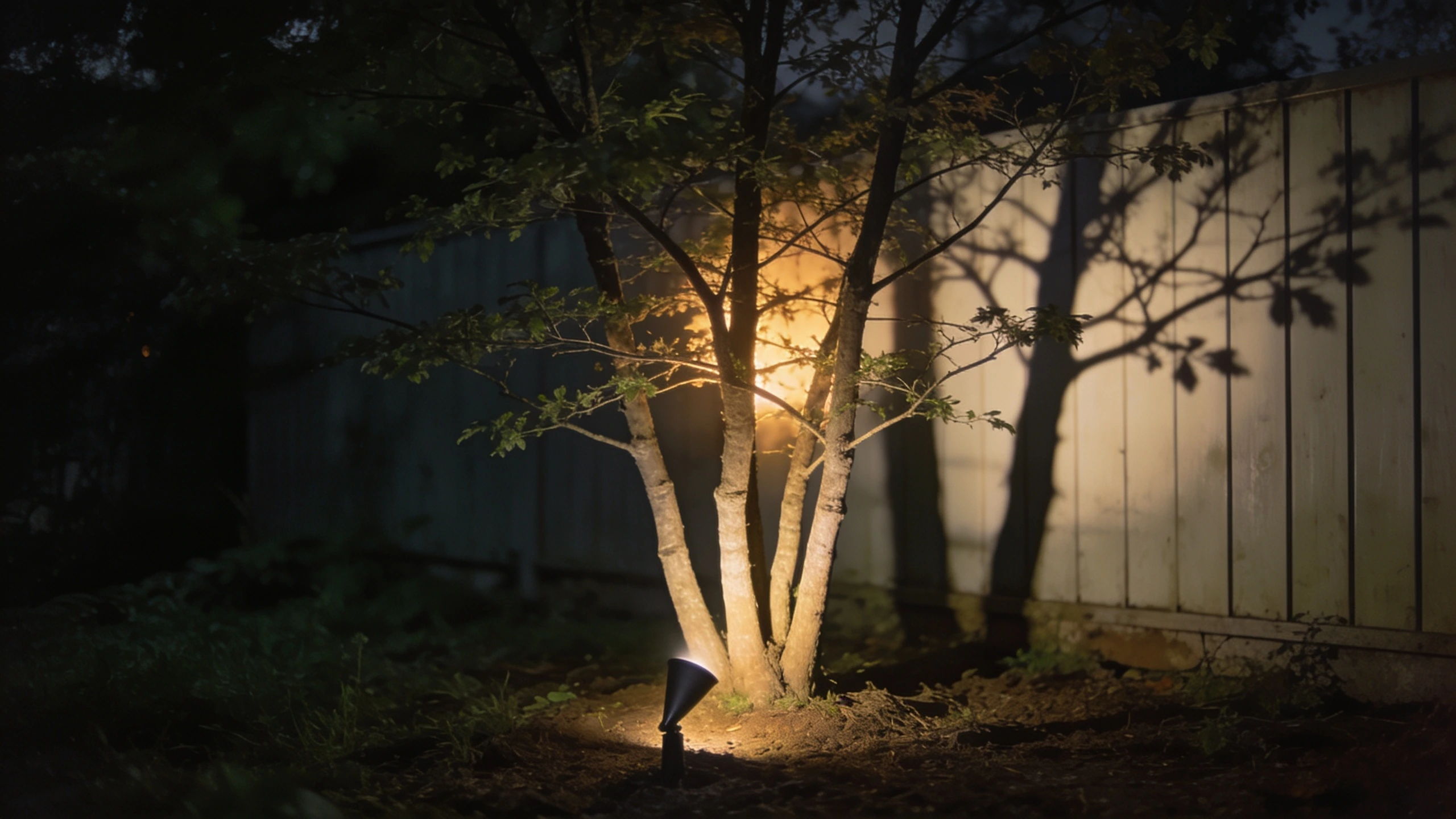
Pick one thing in the garden with shape and wash light up it. A tree with a decent trunk, a textured wall, a large pot, a piece of topiary.
This is where the depth comes from. A lit object at the far end of a dark garden makes the space read as long, because your eye travels to it. Lighting the fence does the opposite: it draws a bright line around the boundary and tells you exactly how small the plot is.
One is enough. Two if the garden is genuinely large. Uplighting everything is how you get a garden that looks like a mini-golf course.
3. Where you sit#
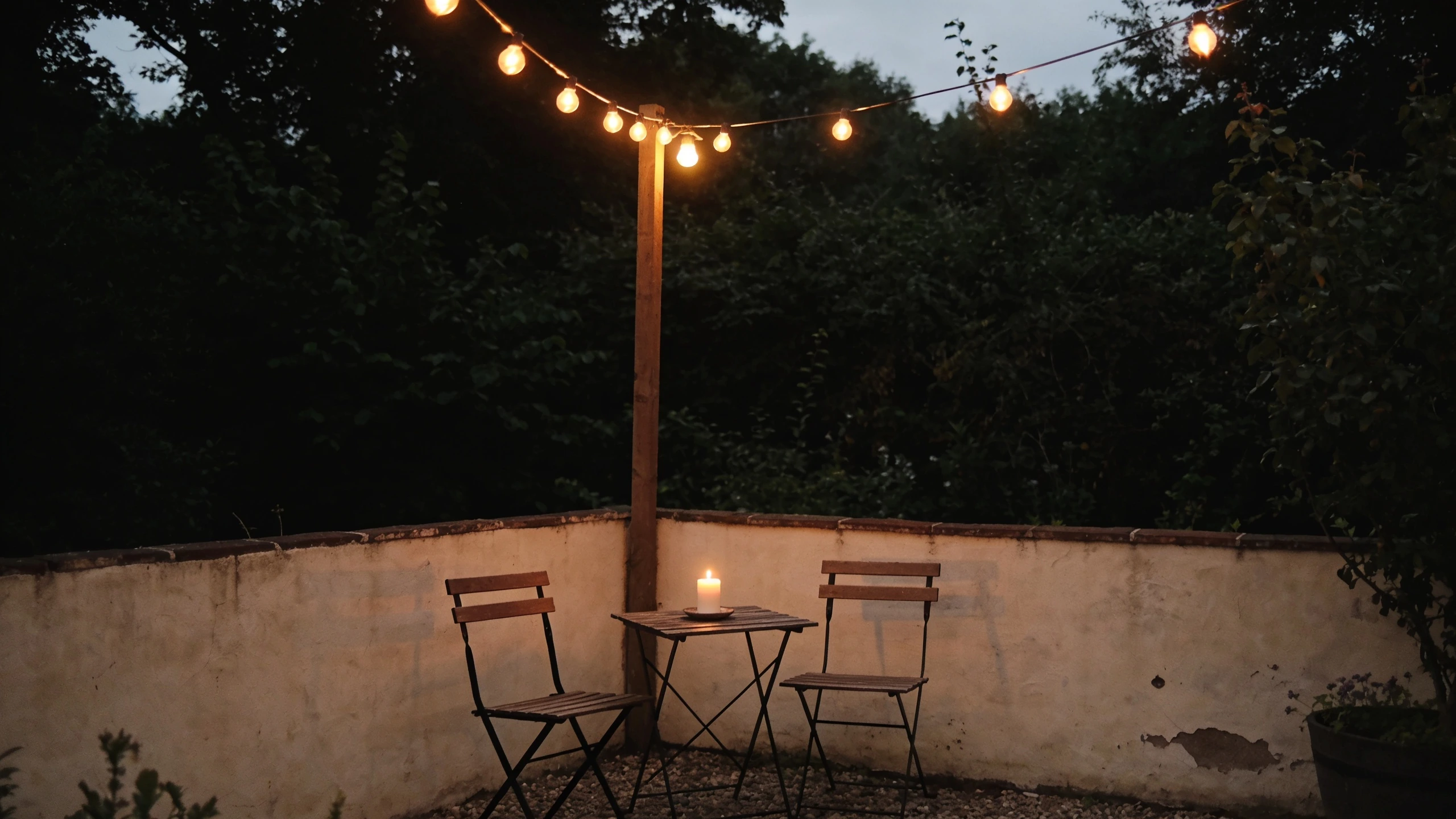
Soft, low, and dimmer than you think. You are lighting faces and a table, not reading by it. A single festoon bulb overhead, or a couple of candles, does more for an evening outside than a bank of spots.
The test: from the seat, can you still see the lit tree at the other end? If not, the seating light is too bright and it has eaten your garden.
Garden lighting specifications that matter#
Colour temperature: 2700K, warm white. This is the single easiest thing to get right and most people never look at it. Warm white suits foliage, brick and timber. Cool white above 4000K turns green leaves grey and makes a garden look municipal. Some designers go warmer still, to 2200K, which is close to candlelight.
Aim downward, always, and shield the lamp. If you can see the lamp from a seat or a window, the fitting is wrong or the aim is. Shielded fittings with a recessed lamp cost slightly more and are the difference between atmosphere and glare.
Use 12V low voltage for a domestic garden. Cheap fittings, cable you can reposition when the planting changes, and in most places you may install it yourself. Mains outdoor wiring is an electrician's job with proper protection, and the rules differ by country, so check yours before you dig a cable in.
Fit a timer rather than leaving them dusk to dawn. Nobody looks at the garden at three in the morning. A timer that goes off at eleven halves the running cost and most of the wildlife impact.
Solar, honestly#
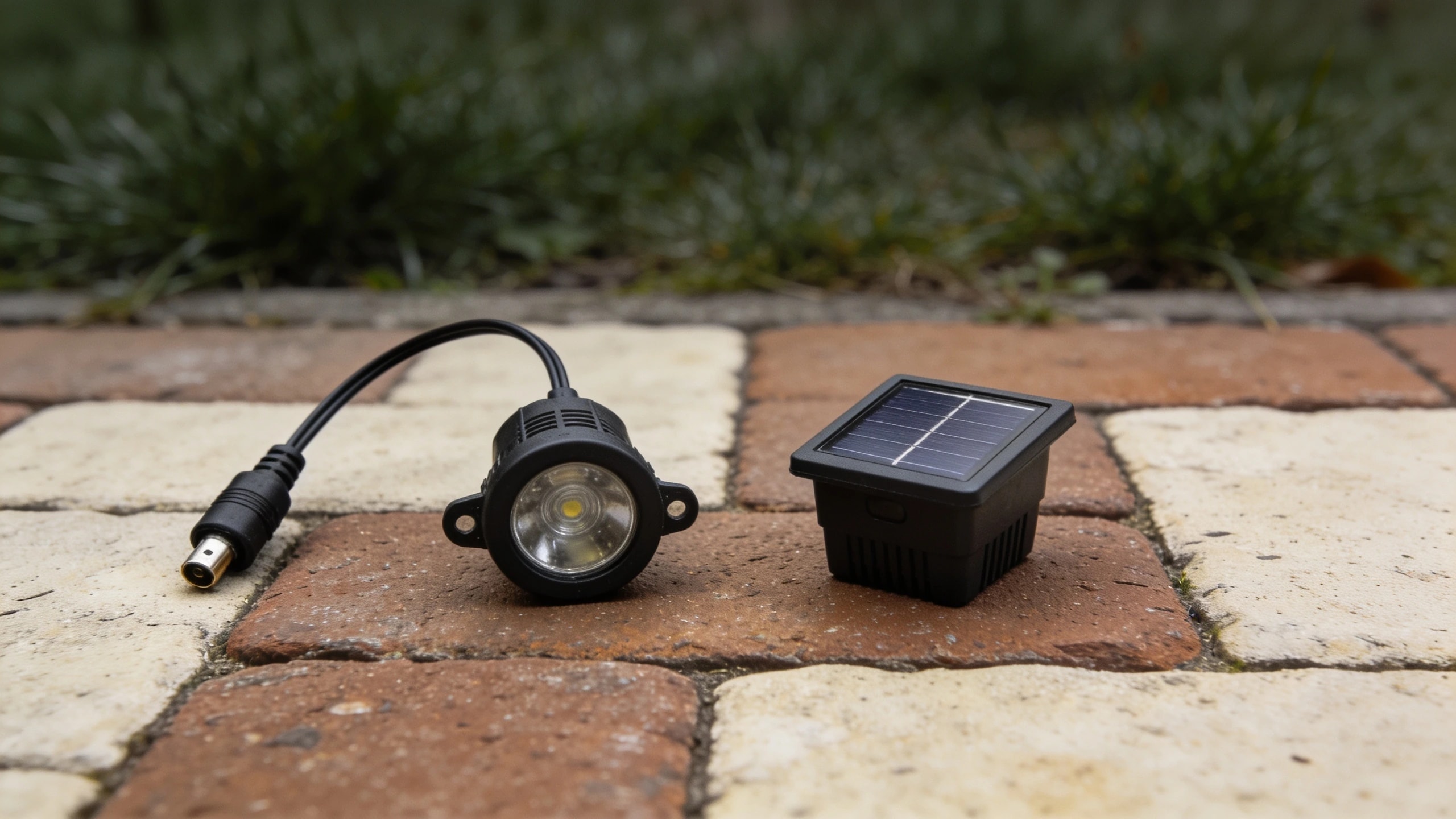
I am not against solar, but it is oversold. What it is genuinely good at is marking something: an edge, a step, the line of a path. What it is not good at is lighting an object.
Three limits worth knowing before you buy. Output is low, so it cannot wash a tree. It fades through the night as the battery drains, so the light you set up at nine has gone by midnight. And it collapses in winter, exactly when the evenings are long and you wanted it.
The batteries also tend to give up within two or three seasons, at which point the fitting is usually not worth repairing.
If a light has a job, run a cable. If it is decorative and you would not miss it, solar is fine and much easier to install.
The wildlife cost, which is real#
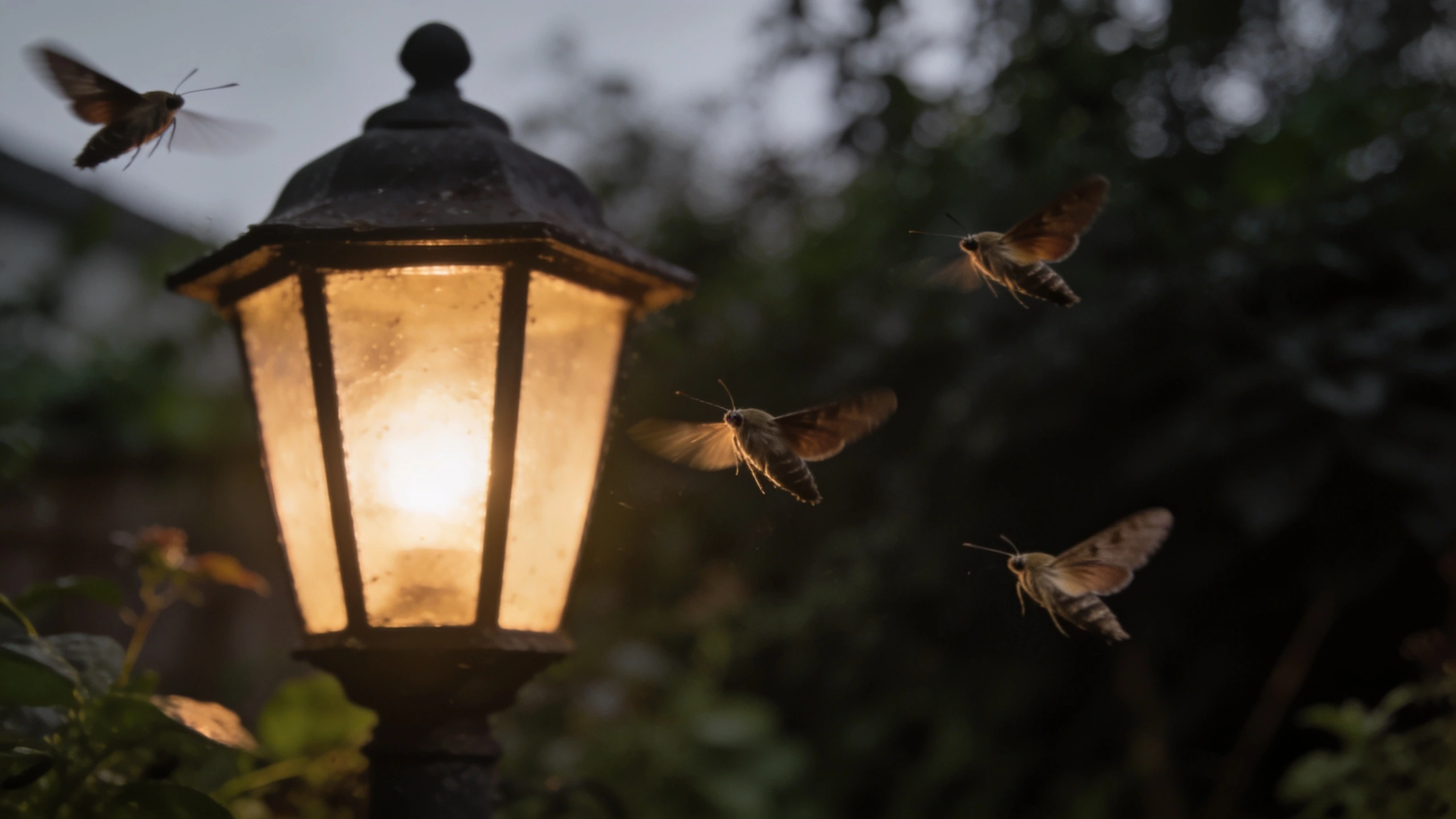
Light at night is not harmless. Moths, which do a lot of the pollinating that bees get credit for, are drawn to lights and held there instead of feeding and breeding. Bats change their flight routes to avoid lit areas. Hedgehogs and nesting birds are both affected.
I am not suggesting you sit in the dark. The practical version is the same as the design advice, which is handy:
Fewer fittings. Warm colour, because cold blue light bothers insects most. Aimed down and shielded so nothing spills upward. On a timer that switches off later in the evening.
Restraint gives you a better-looking garden and a smaller impact at the same time. That is unusual and worth taking.
Decoration: plant it rather than buy it#
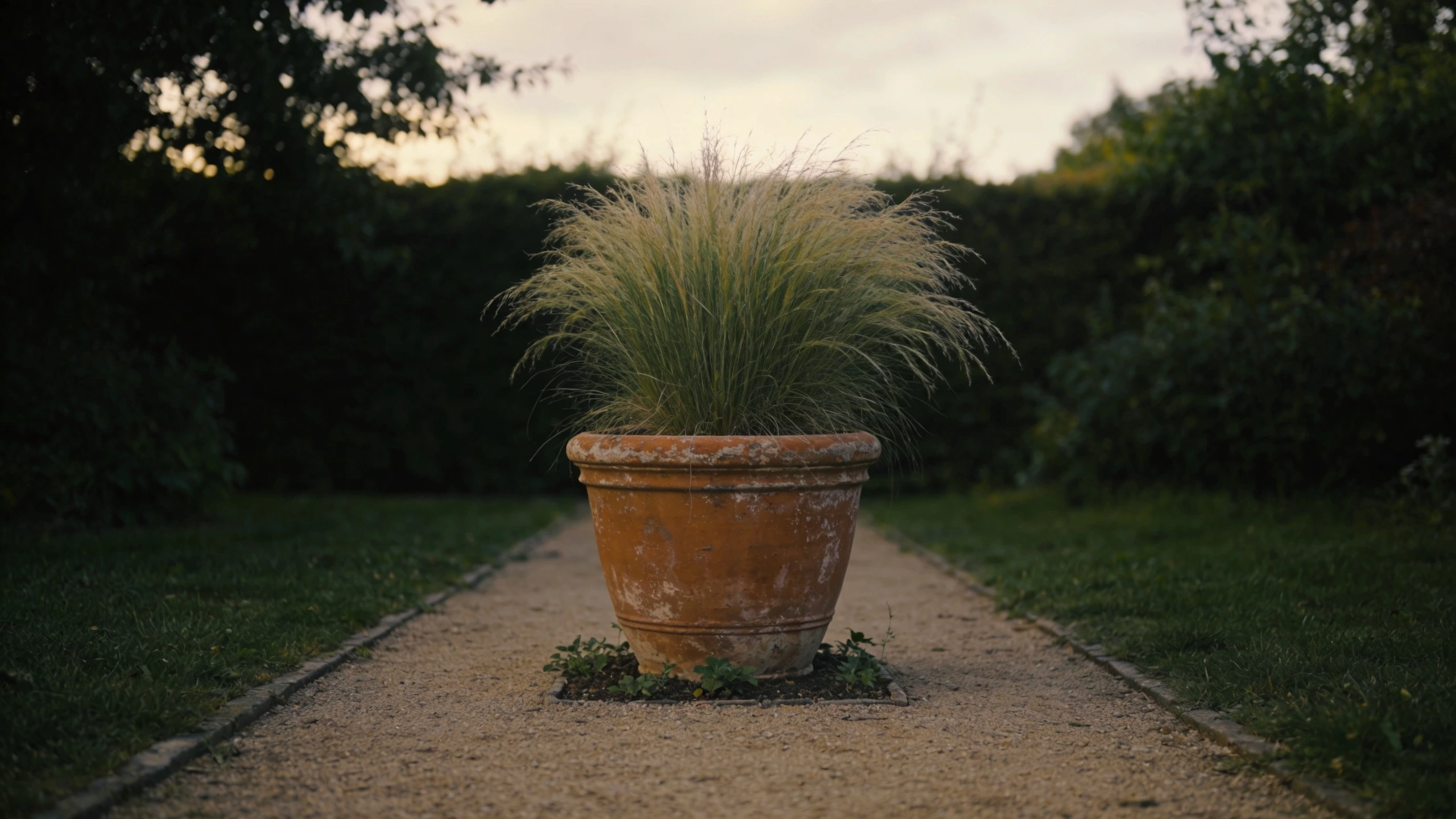
The same thinking applies to garden ornaments, so I will put it here rather than give it a page of its own.
One good object beats six. A single large pot at the end of a path, a decent bench, one piece of sculpture if you like sculpture. Placed where the eye already travels, which is usually the end of a sightline.
Things dotted evenly around a garden read as clutter, and each one competes with the planting instead of framing it. If you are unsure whether an ornament is helping, take it out for a fortnight and see if you miss it.
The cheapest real decoration is a large well-planted container. It changes through the year, which no ornament does. If you want more on that, gardening accessories worth the shelf space covers the rest of the kit, and low-maintenance garden ideas covers planting that carries a garden without much help.
What it costs#
| Item | Cheapest that works | What I would spend |
|---|---|---|
| 12V transformer and cable | $40 | $70 |
| Path lights, three shielded | $45 | $90 |
| Spike spotlight for uplighting | $20 | $45 |
| Festoon or seating light | $25 | $50 |
| Mechanical timer | $12 | $25 |
| Total for a small garden | about $142 | about $280 |
Rough prices as of August 2026 based on what garden and electrical suppliers normally charge, not quotes from named shops. Check before you buy.
Worth knowing: a set of ten cheap solar spikes costs about $30 and will do less for the garden than one $45 spotlight aimed at a tree.
Mistakes I see most#
Lighting the boundary. Draws a bright outline round the plot and makes it feel smaller.
Too many fittings. Three or four is a lit garden. Twelve is a lit car park.
Cool white bulbs. The single most common reason a lit garden looks unpleasant.
Visible lamps. If you can see the bulb, you have glare and no night vision.
Lighting evenly. Contrast is the whole effect. Even light removes it.
Leaving lights on all night. Costs money, disturbs wildlife, and nobody is looking.
When this does not apply#
If the lighting is for security rather than atmosphere, the rules invert: you do want bright, wide and motion-triggered. Keep those fittings on a separate circuit from the garden lighting and accept that they are ugly when they are on.
If you have steps, a change of level or an uneven surface, safety beats atmosphere. Light those properly even if it costs you some of the effect.
If you are in a flat or a shared courtyard, check what you are allowed to fix to walls and whether light will spill into a neighbour's window. Urban gardening covers the rest of the small-space constraints. Light trespass is a genuine cause of neighbour disputes, and in some places you can be made to fix it.
And if you are wiring anything to mains, get an electrician. That is not a job to learn on.
How I know this#
The colour figures, voltage advice and wildlife notes here come from published guidance rather than readings I took myself. I have cross-checked against the Royal Horticultural Society advice pages and the International Dark-Sky Association guidance on outdoor lighting.
Prices are rough bands and labelled as such. Wiring rules differ by country, so treat anything here about fitting as a nudge to check your local rules rather than as a green light. Our editorial policy covers how corrections work.
Bottom line#
Buy three or four lights, not fifteen. Warm white at 2700K. Aim everything downward and shield it so the lamp is never visible from a seat.
Light the route, light one thing with structure, and put something soft where you sit. Then stop, and leave the rest of the garden dark, because contrast is the entire effect and the dark half is doing as much work as the lit half.
Put it on a timer that goes off at eleven. It will look better, cost less and do less damage than the alternative.
Frequently asked questions
How many lights does a garden need?
Far fewer than most people fit. For a typical back garden, three or four well-aimed lights is plenty: one for the route from the door, one washing up something with structure like a tree or a wall, and one soft light where you sit. Lighting everything flattens the garden and leaves you nothing to look at.
What is the best colour temperature for garden lighting?
Warm white, around 2700K, sometimes down to 2200K. It suits foliage, brick and timber, and it reads as inviting rather than institutional. Cool white above about 4000K makes green leaves look grey and makes a garden look like a car park. Avoid coloured lighting unless it is for one evening.
Is solar garden lighting any good?
For marking a path edge, yes. For actually lighting something, mostly not. Output is low, it fades through the night, and performance collapses in winter when you want it most. The batteries usually give up within two or three seasons. If a light has a job to do rather than a decorative one, run a cable.
Should I use mains or low voltage garden lighting?
Low voltage, 12V, for almost every domestic garden. The cable is safe to lay yourself in most jurisdictions, fittings are cheap, and you can move things when the planting changes. Mains outdoor wiring needs a qualified electrician and appropriate protection. Check your local electrical rules before you dig anything in.
Does garden lighting harm wildlife?
Yes, and it is worth taking seriously. Artificial light at night disrupts moths, which are major pollinators, and affects bats, hedgehogs and nesting birds. The practical answer is not darkness but restraint: fewer lights, warm colour, aimed downward, shielded so no light spills upward, and on a timer that switches them off later in the evening rather than leaving them on until dawn.
Where should I put lights in a garden?
Start with the route people walk, at ankle height and aimed down. Then pick one thing with structure and wash light up it, so a tree, a wall or a large pot. Then one soft light where you actually sit. Leave the rest dark. Lighting the boundary fence is the most common mistake because it draws the eye to the edge and makes the garden feel smaller.
How do I stop garden lights glaring?
Aim them away from where people stand and use shielded fittings with a recessed lamp. If you can see the bulb from a seat or a window, the fitting is wrong or pointed wrong. Glare also destroys night vision, which is why a garden lit by one bright floodlight feels darker beyond the lit patch than a garden with no lights at all.
Topics in this article
About the author
Jeff has gardened professionally for over twenty years, mostly on heavy clay, and writes everything here from beds he still works himself. More from Jeff Tanun →
Keep reading
Native Plant Garden
A native plant garden without the purism. Why native means local rather than national, how to find your own list, and where non-natives still earn a place.
Updated
Water Garden Ideas
Water garden ideas from a washing up bowl upwards. What size actually works, why most small ponds go green, and the one feature that matters most for wildlife.
Updated
Gardening Accessories Worth It
The small kit that removes friction from every session: watering gear, labels, supports and storage, plus the accessories that just take up room.
Updated