Water Garden Ideas: Start Smaller Than You Think
Water garden ideas from a washing up bowl upwards. What size actually works, why most small ponds go green, and the one feature that matters most for wildlife.
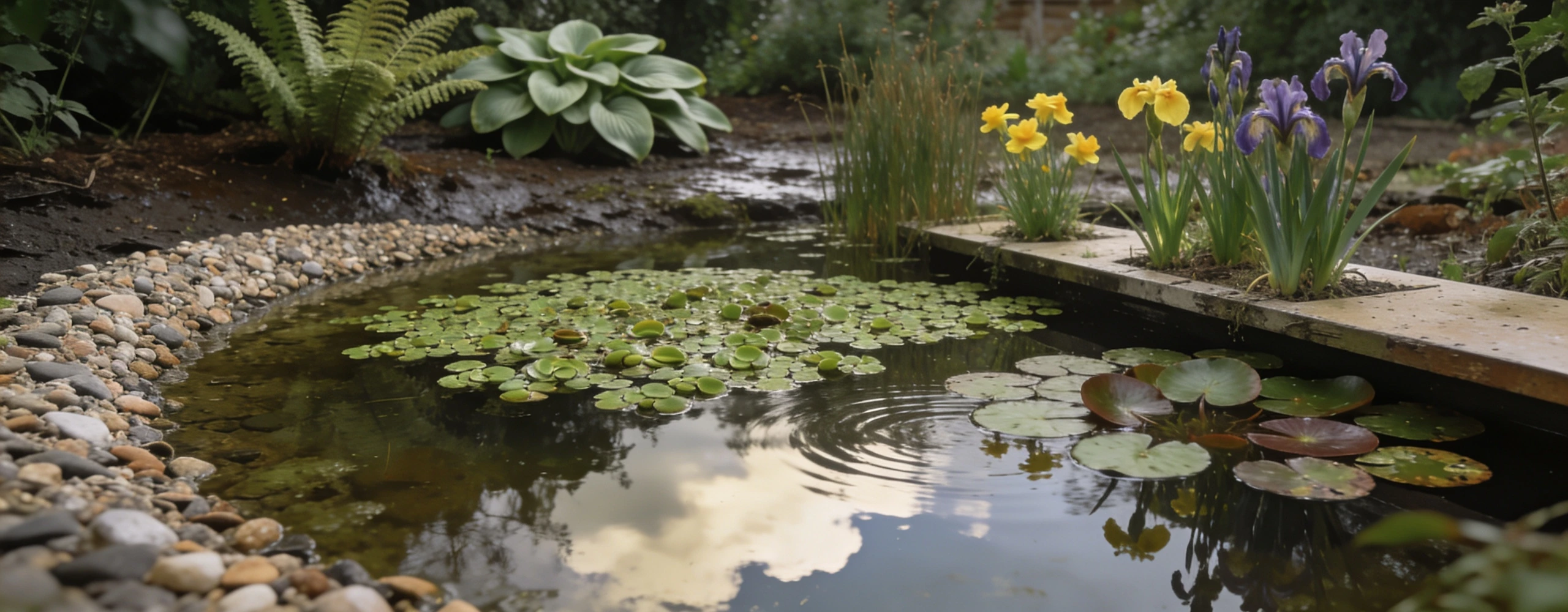
Water is the thing that changes a garden most and gets started least, mostly because people imagine a project involving a digger. My first pond was a washing up bowl and it had damselflies in it inside a month, which taught me that the scale everyone imagines is not the scale that matters.
The short answer
Start smaller than you think. A sunk washing up bowl or a half barrel will bring insects in weeks. If you want a self balancing pond, aim for a square metre of surface and 60 cm deep somewhere. Give it a shallow sloping beach on at least one side, which is the single most important feature for wildlife. Cover a third to a half of the surface with plants. Skip the pump and skip the fish.
The scale question, answered honestly#
There is a real hierarchy here and every step up is worth having.
- A bowl or bucket, sunk
- 20 to 40 litres. Attracts insects within weeks, needs topping up in summer, freezes solid in winter. Genuinely worth doing today.
- A half barrel or trough
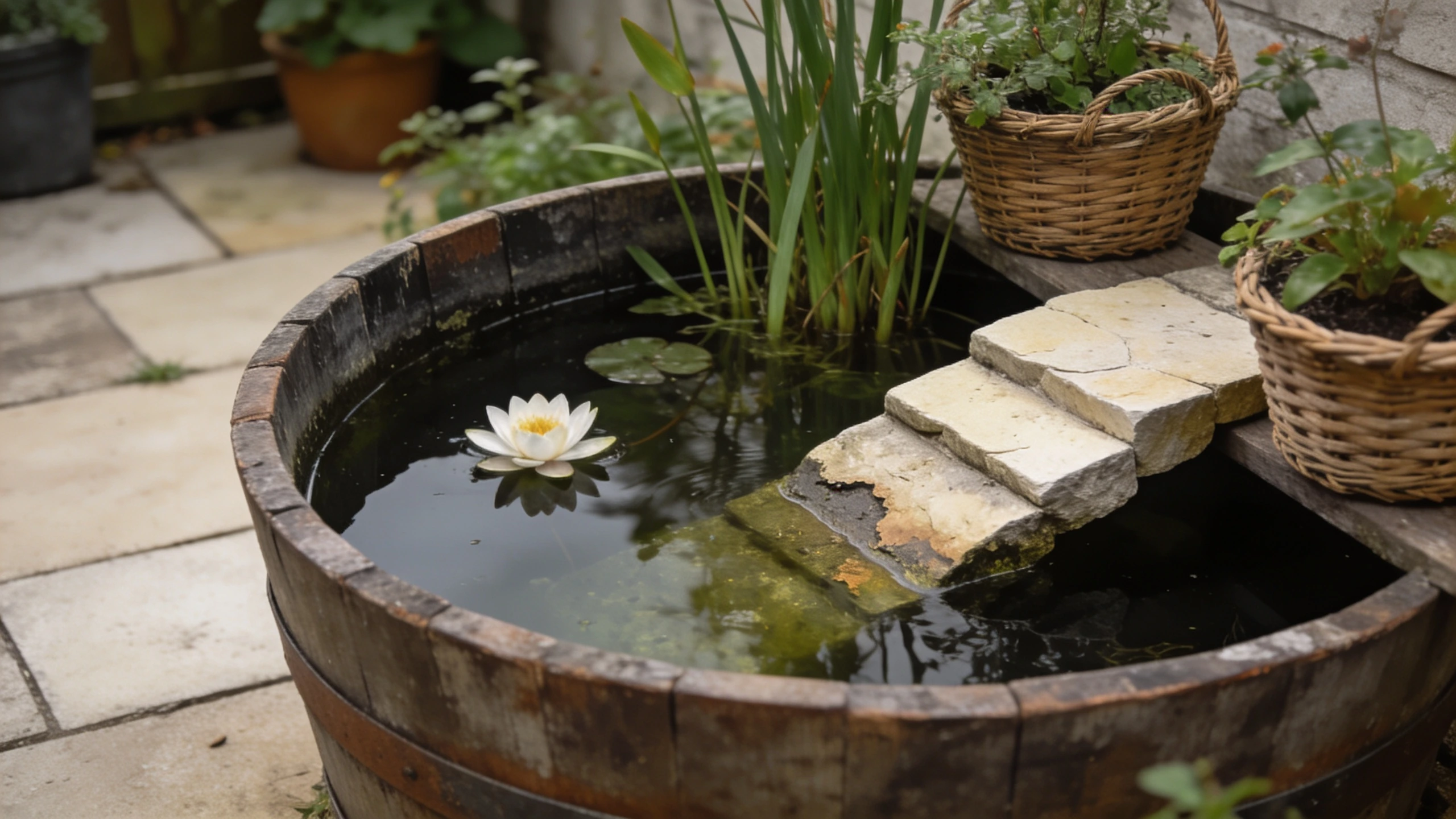
- 60 to 150 litres. Will hold a small waterlily and marginal plants. Still swings in temperature but far more stable.
- A small pond
- One to three square metres, 60 cm deep at one point. The threshold where it starts to look after itself and where frogs will breed.
- A proper pond
- Four square metres or more, 80 cm deep somewhere. Stable, self balancing, and the point at which you stop intervening at all.
Depth matters more than area for stability. Sixty centimetres somewhere in the pond gives a layer that stays cooler in summer and does not freeze through in winter, which is what lets things survive both.
The shallow beach, which matters more than anything else#
If you take one thing from this page, take this.
Most small ponds are built with steep sides all the way round, because that is what a preformed liner looks like and it feels like it maximises water. It also means anything that falls in cannot get out, and marginal plants have nowhere to root.
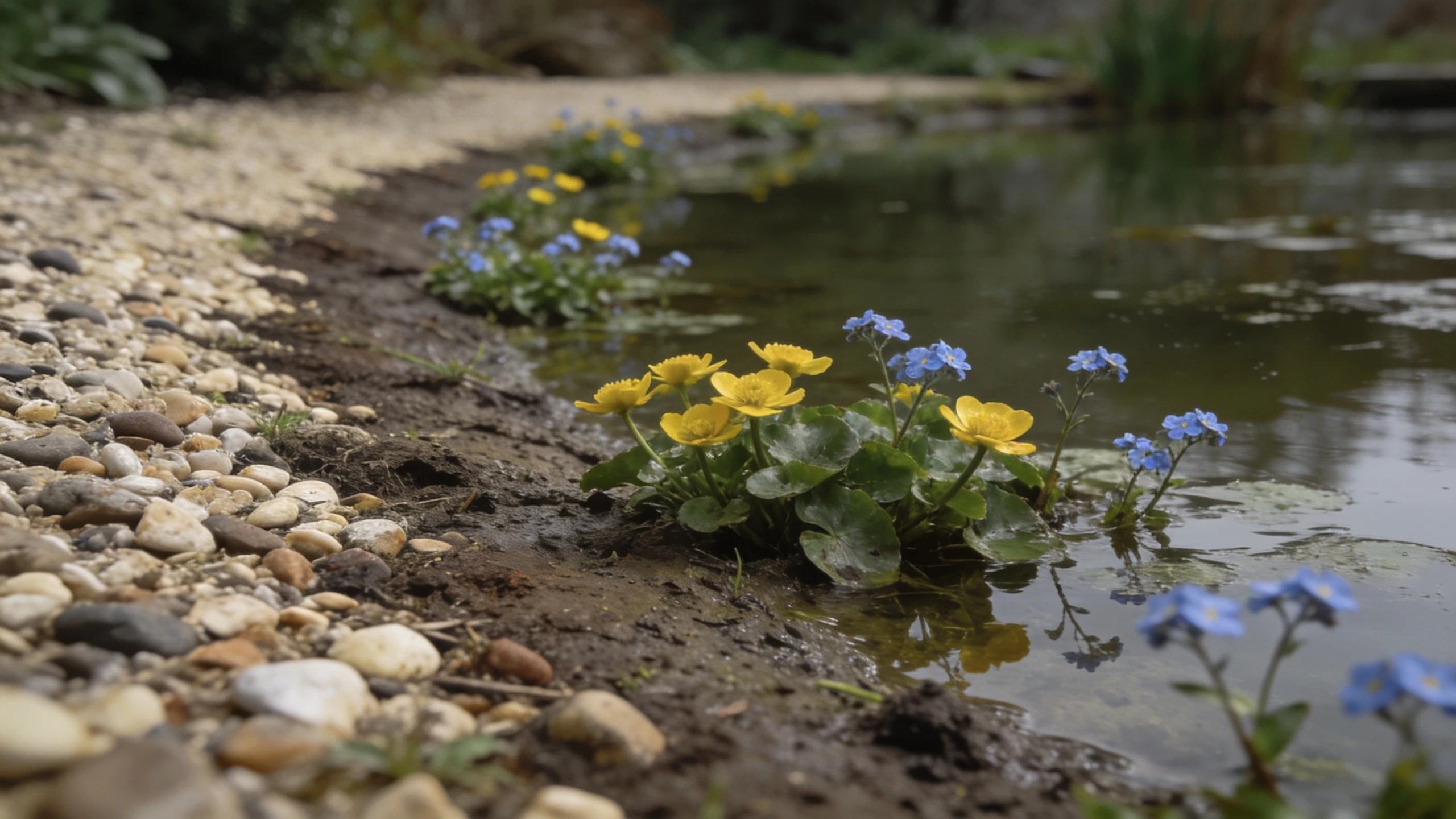
A shallow sloping edge, going from dry ground through damp mud to a few centimetres of water and then deeper, does four things at once. Frogs and newts get in and out. Hedgehogs that fall in survive. Birds bathe and drink at the shallow end. And marginal plants, which are most of what makes a pond look established, have a shelf to grow on.
In a container pond, the same job is done by a stone ramp or a few stacked bricks reaching from the bottom to above the water line.
Planting, which is the whole filtration system#
A planted pond does not need a filter, because the plants are the filter. There are four jobs and you want something doing each.
- Oxygenators, submerged
- Hornwort, water crowfoot, spiked water milfoil. These do the invisible work of keeping the water clear. Buy more than you think.
- Floating leaf cover
- Waterlily, water hawthorn, frogbit. Shade the surface, which starves algae of light. Aim to cover a third to a half.
- Marginals, on the shelf
- Marsh marigold, water forget me not, flowering rush, iris. These make it look like a pond rather than a hole with water in it.
- Damp ground planting
- Astilbe, ligularia, hosta, ferns around the edge. Blurs the boundary so the pond sits in the garden rather than on it.
The surface cover figure is the one to hold onto. Under a third and algae has too much light; over a half and the water below gets too little for the oxygenators.
Avoid the notorious invasives entirely. Several floating and submerged plants sold in the past spread aggressively into waterways, and some are now banned from sale in various countries. Buy from a reputable nursery, ask, and never tip pond plants or water into a stream or drain.
Why new ponds go green, and what to do about it#
Almost every new pond goes green in its first spring. It is not a failure and it is not a reason to buy chemicals.
Green water is single celled algae taking advantage of light and nutrients in water that has no competition yet. As the planting establishes and takes up those nutrients, and as the surface cover shades the water, the algae loses.
What actually helps:
Key points
- More plants, especially submerged oxygenators. This is the answer nine times out of ten.
- Surface cover to a third or a half, so light stops reaching the whole water column.
- Keeping leaves out in autumn with a net, because rotting leaves are a large nutrient input.
- Not feeding fish, and ideally not having fish, because both add nutrients directly.
- Patience through a first season. A new pond takes a year or two to find its balance.
Blanketweed, the stringy green sort, responds to the same treatment plus twisting it out on a stick. Removing it by hand and leaving it by the pond edge overnight lets anything living in it crawl back.
Fish or wildlife: you are choosing#
This is worth being blunt about because the two aims genuinely conflict.
Fish eat tadpoles, newt larvae and a great deal of the invertebrate life you would otherwise get. They also need feeding, which adds nutrients, which drives algae, which is why fish ponds usually need pumps and filters.
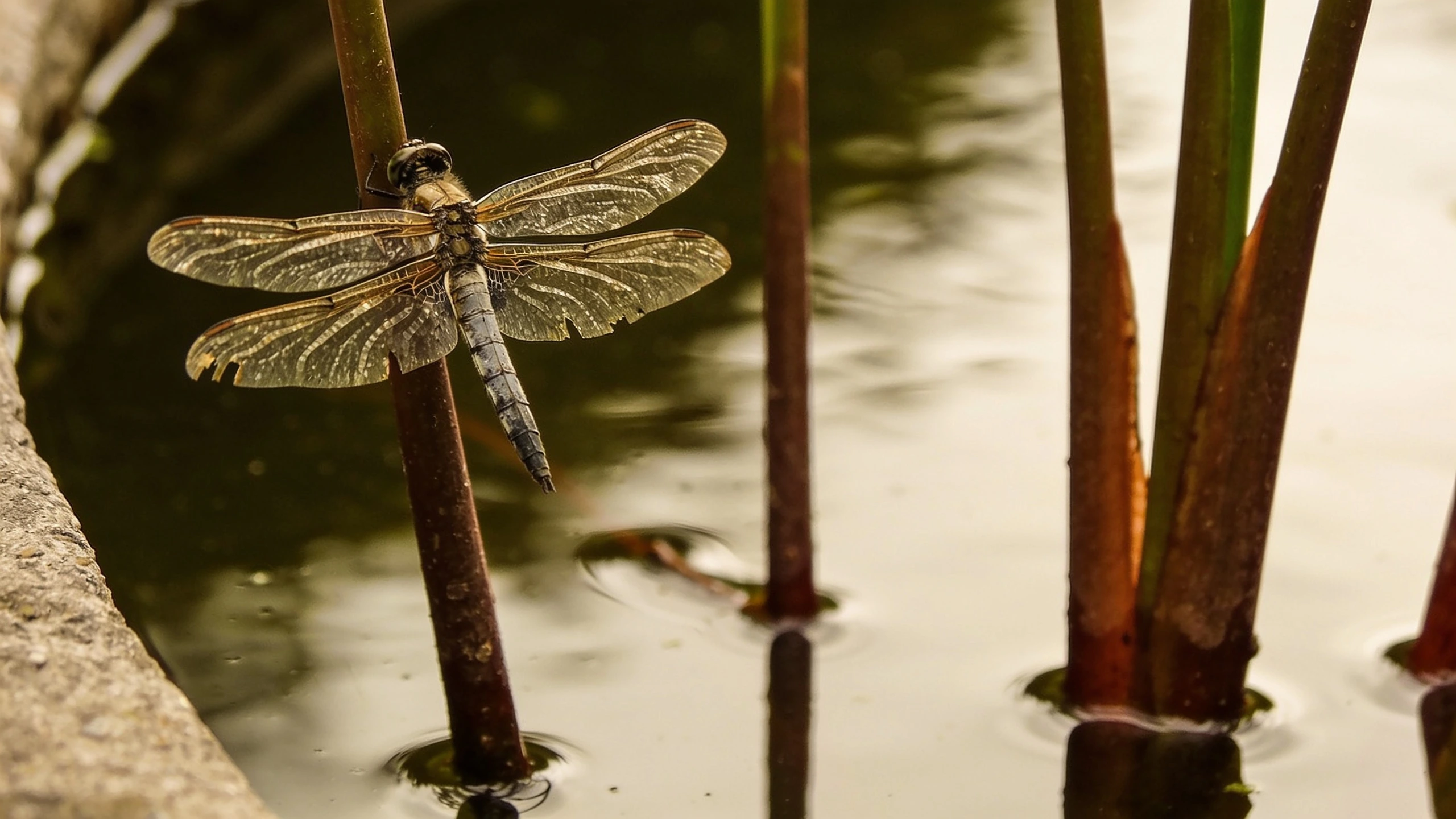
A pond without fish fills up with frogs, newts, dragonflies, water beetles and pond skaters, needs no equipment, no electricity and almost no intervention, and is far more interesting to watch.
Both are legitimate choices. What does not work is expecting one pond to do both.
Safety with young children, said properly#
Standing water and toddlers need a real answer rather than reassurance, so here are the actual options.
A rigid steel mesh grille fitted just below the water surface, strong enough to stand on. It works, it is largely invisible once planted around, and it can come out later.
A raised pond with a substantial wall, so a child has to climb rather than trip.
A pebble pool, where the water sits in a hidden reservoir and bubbles up through stones with no open surface at all. All the sound, none of the risk.
Or postpone it. A pond is a couple of days of work at any point in the next decade, and a sandpit now is a better trade.
What it costs#
- Sunk washing up bowl
- Under $10 and an hour. The highest return per pound in gardening, and I am not joking.
- Half barrel or trough
- $40 to $120, plus $25 to $60 of plants. A complete water garden on a patio.
- Small pond, flexible liner
- $120 to $350 for liner, underlay and edging, for one to three square metres. Plus a weekend of digging.
- Pond plants
- $50 to $140 for a proper mix of oxygenators, a lily and marginals. Do not economise on the oxygenators.
- Safety grille, if needed
- $80 to $250 depending on span. Cheaper than any of the alternatives to having water.
- Pump and filter
- $80 to $300, and only if you want moving water or fish. A planted wildlife pond needs neither.
Where to put it#
Sun for at least half the day, because most water plants and waterlilies in particular want it. Full shade gives you a dark pond with poor planting.
Not directly under a deciduous tree, because autumn leaves are the biggest single nutrient input a pond gets and netting one every October is a chore.
Somewhere you pass or sit, because a pond you cannot see is a wasted one and most of the pleasure is noticing what has arrived.
And check what is underground before digging. Services, drains and cables are all more common in gardens than people expect.
Where the guidance here comes from#
The scale hierarchy and the beach edge argument are what I have concluded from building three, starting with the washing up bowl. On planting and on which species to avoid, the RHS wildlife pages and the RHS advice pages are the references I use, and it is worth checking current invasive species rules where you live, because the list of banned aquatic plants has changed several times and varies by country.
The short version#
Start with a container if that is what you will actually do. Give any pond a shallow sloping edge on at least one side. Plant oxygenators generously, cover a third to a half of the surface, and skip the pump. Choose wildlife over fish. Keep autumn leaves out, and be patient through the first green spring.
Related reading#
- Pollinator garden: the planting that pairs with water to bring wildlife in.
- Garden design basics: where a pond sits in the order of work, and why it comes early.
- Japanese garden ideas: the stone basin and dry water alternatives if a pond is too much.
- Moon garden: water and evening scent are a better combination than either alone.
Frequently asked questions
How small can a pond be and still work?
A washing up bowl sunk into the ground will attract insects within weeks and is a genuinely worthwhile thing to do. For a pond that holds a stable balance without much intervention, aim for at least a square metre of surface and 60 cm deep at some point. Below that, water temperature swings fast and algae is harder to keep on top of, though it is still better than no water at all.
Why does my pond water go green?
Sunlight plus nutrients plus not enough plants. Green water is single celled algae doing exactly what it should. The fix is not a chemical: cover between a third and a half of the surface with floating leaves, add plenty of submerged oxygenating plants, keep leaves and fish food out, and be patient, because a new pond takes a season or two to balance.
What is the most important feature of a wildlife pond?
A shallow sloping edge, and it is not close. A beach that goes from dry ground to deep water gradually lets frogs, newts, hedgehogs and birds get in and out safely and gives marginal plants somewhere to root. A pond with steep sides all round is a trap rather than a habitat, and it is the single most common design failure.
Do I need a pump or a filter?
For a planted wildlife pond, no. Plants and natural balance do the work, and a pump actually disturbs the still water many species want. You need a pump if you want moving water, a fountain or a stream, or if you keep fish, which add a nutrient load the plants alone cannot handle. Fish and a good wildlife pond are largely incompatible aims.
Will a pond attract mosquitoes?
A healthy pond reduces them. Mosquito larvae are eaten by dragonfly larvae, water beetles, newts and boatmen, and those arrive quickly. What breeds mosquitoes is small volumes of stagnant water with nothing living in them, which is your water butt, an untreated bucket or a blocked gutter rather than a planted pond.
Is a pond safe with small children?
Any standing water is a risk with very young children and this needs a real answer rather than reassurance. Options are a rigid mesh grille just below the surface, a raised pond with a wall to climb rather than a lip to trip over, or a pebble pool where the water sits in a reservoir under stones with no open surface. Or wait a few years and build a sandpit now.
When is the best time to build a pond?
Autumn or early spring. Autumn lets it fill with winter rain and settle before the growing season, so it is well established when frogs are looking for somewhere to spawn. Planting is best done in late spring once the water has warmed. Building in high summer means algae in a bare new pond and evaporation while you work.
Topics in this article
About the author
Jeff has gardened professionally for over twenty years, mostly on heavy clay, and writes everything here from beds he still works himself. More from Jeff Tanun →
Keep reading
Native Plant Garden
A native plant garden without the purism. Why native means local rather than national, how to find your own list, and where non-natives still earn a place.
Updated
Permaculture Garden
A permaculture garden without the ideology. Zones, stacking and catching water are genuinely useful; some of the rest is untested. What to take and what to leave.
Updated
Garden Lighting & Decor
Garden lighting is nearly always overdone. Here is where I put light, how much is enough, and why one floodlight ruins a garden after dark.
Updated