Permaculture Garden: The Parts Worth Borrowing
A permaculture garden without the ideology. Zones, stacking and catching water are genuinely useful; some of the rest is untested. What to take and what to leave.
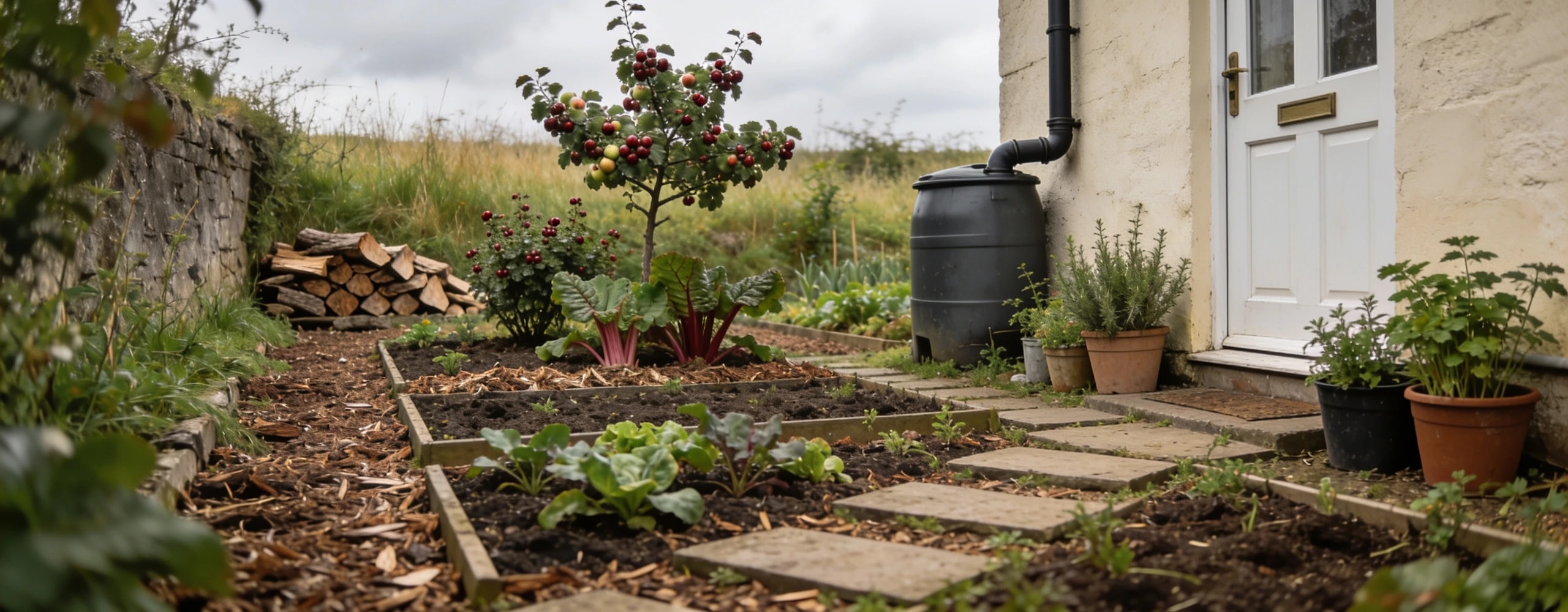
Permaculture arrives bundled: some genuinely excellent design thinking, some sound soil practice, and a layer of confident claims that have never been tested anywhere near carefully enough. I have taken the first two and left most of the third, and the parts I kept have changed how my garden works more than any individual technique.
The short answer
Take three things and you have most of the value. Place plants by how often you visit them, so herbs are at the door and the compost heap is not. Catch water where it falls, which means a butt on every downpipe. Build soil by mulching rather than digging. Then stack plants at different heights to get more from the same ground. Be sceptical of anything stated as a rule without reference to your climate and soil.
Zones: the best idea in permaculture#
If you take one thing, take this. It is not horticultural, it costs nothing, and it changes whether a garden gets used.
Place things according to how often they need you.
- Zone 1, at the door
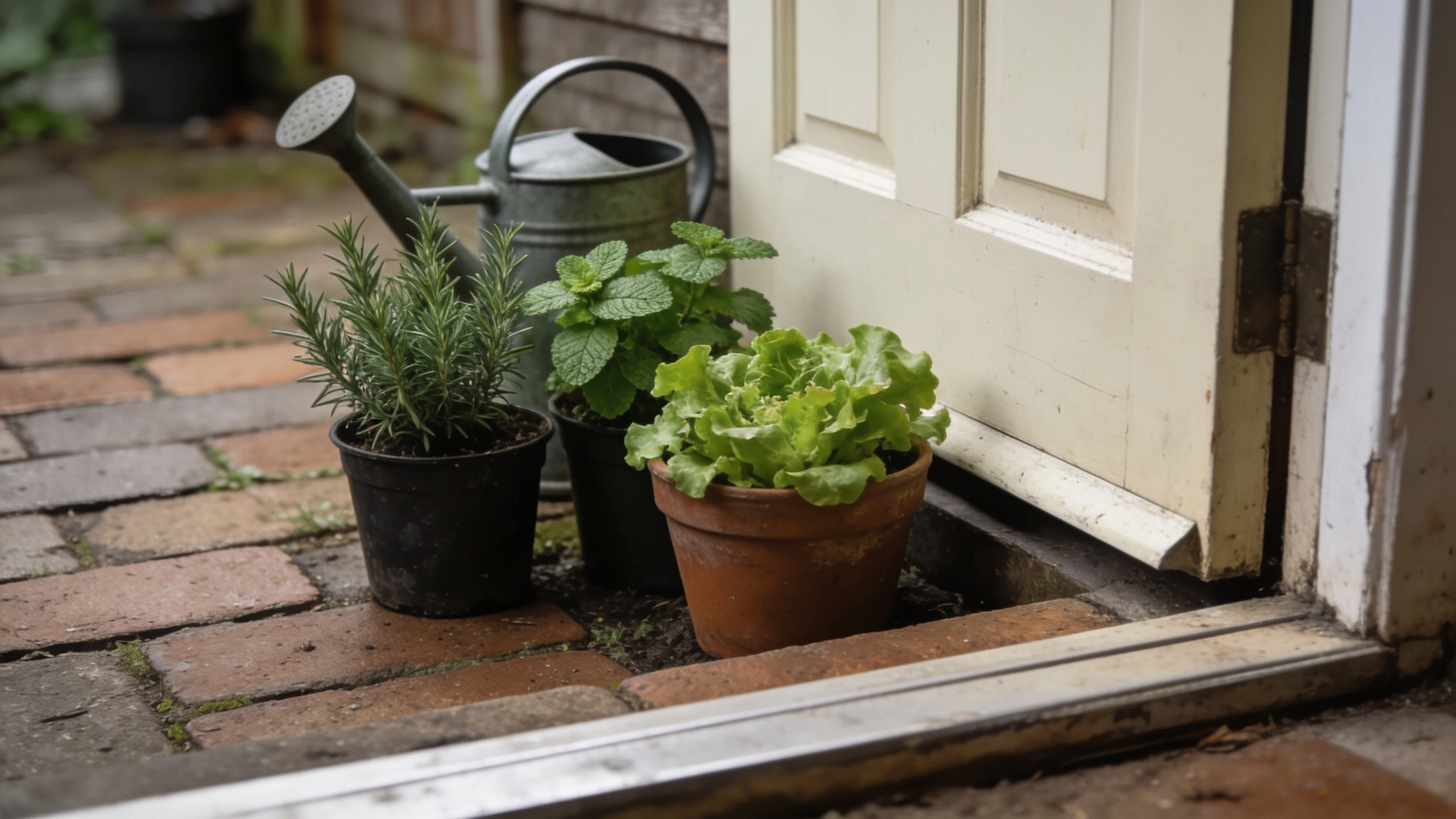
- Herbs, salad, anything picked daily, and the watering can. If you walk past it every day it gets looked after. If you do not, it does not.
- Zone 2, a few steps further
- Main vegetable beds, soft fruit, the things you visit several times a week in season.
- Zone 3, the back of the garden
- Fruit trees, rhubarb, the compost heap, anything checked weekly or monthly.
- Zone 4 and 5, barely touched
- Rough grass, a log pile, a hedge left alone, the bit behind the shed. Wildlife lives here and you do almost nothing.
I moved my herbs from the far end of the garden to three pots by the back door and they went from occasionally used to picked most days. Nothing about the plants changed.
The corollary is just as useful: put the low attention things furthest away and stop feeling guilty about them. A rough corner that you never tend is not a failure of tidiness, it is zone five doing its job.
Water: catch it where it falls#
The second idea worth taking wholesale, and the cheapest.
A roof sheds an enormous volume of water and most gardens send all of it into a drain. A water butt on a downpipe intercepts it for the price of the butt.
Beyond that, the principle is to slow water down rather than move it away. Mulch holds it in the soil. Planting on the level rather than on a slope keeps it where the roots are. Permeable surfaces let it soak instead of running off.
Two techniques get pushed hard here and both are site specific. Swales, shallow ditches on contour, are excellent on a dry slope and a way to create a bog on flat clay. Hugelkultur, mounds built over buried wood, works in some conditions and produces a mound that dries out fast and slumps for years in others. Neither is a rule.
The EPA WaterSense guidance is the sober version of the watering side of this, and it agrees with the underlying principle: deep and infrequent, held in the soil.
Soil: mulch, do not dig#
This one I am confident about because the evidence and my own beds agree.
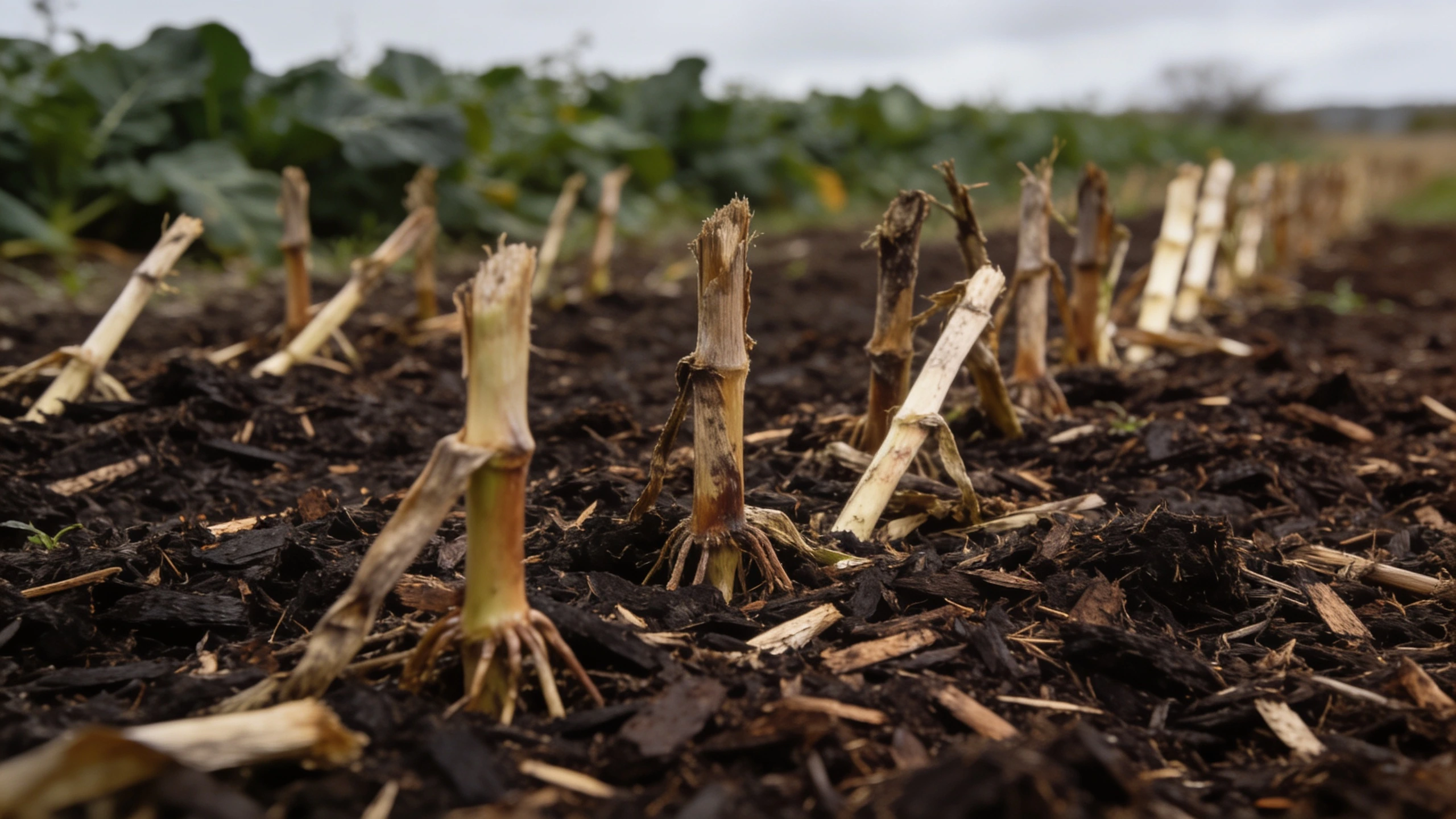
Digging inverts soil structure, breaks up fungal networks and brings buried weed seed to the surface where it germinates. Mulching, which means laying compost on top and letting worms take it down, preserves all of that and is markedly less work.
The practical version is a fortnight of effort a year. Clear spent crops, spread five to ten centimetres of compost on the surface, and leave it. No bare soil over winter.
Where I part company with the strongest claims is on feeding. A mature perennial system genuinely needs very little. A small garden growing hungry annuals in quantity, in my experience, still benefits from compost in volume and sometimes from a liquid feed for fruiting crops. Saying so is not a failure of principle, it is what happened.
Stacking: more from the same ground#
The idea behind a food forest, at a scale that fits a real garden.
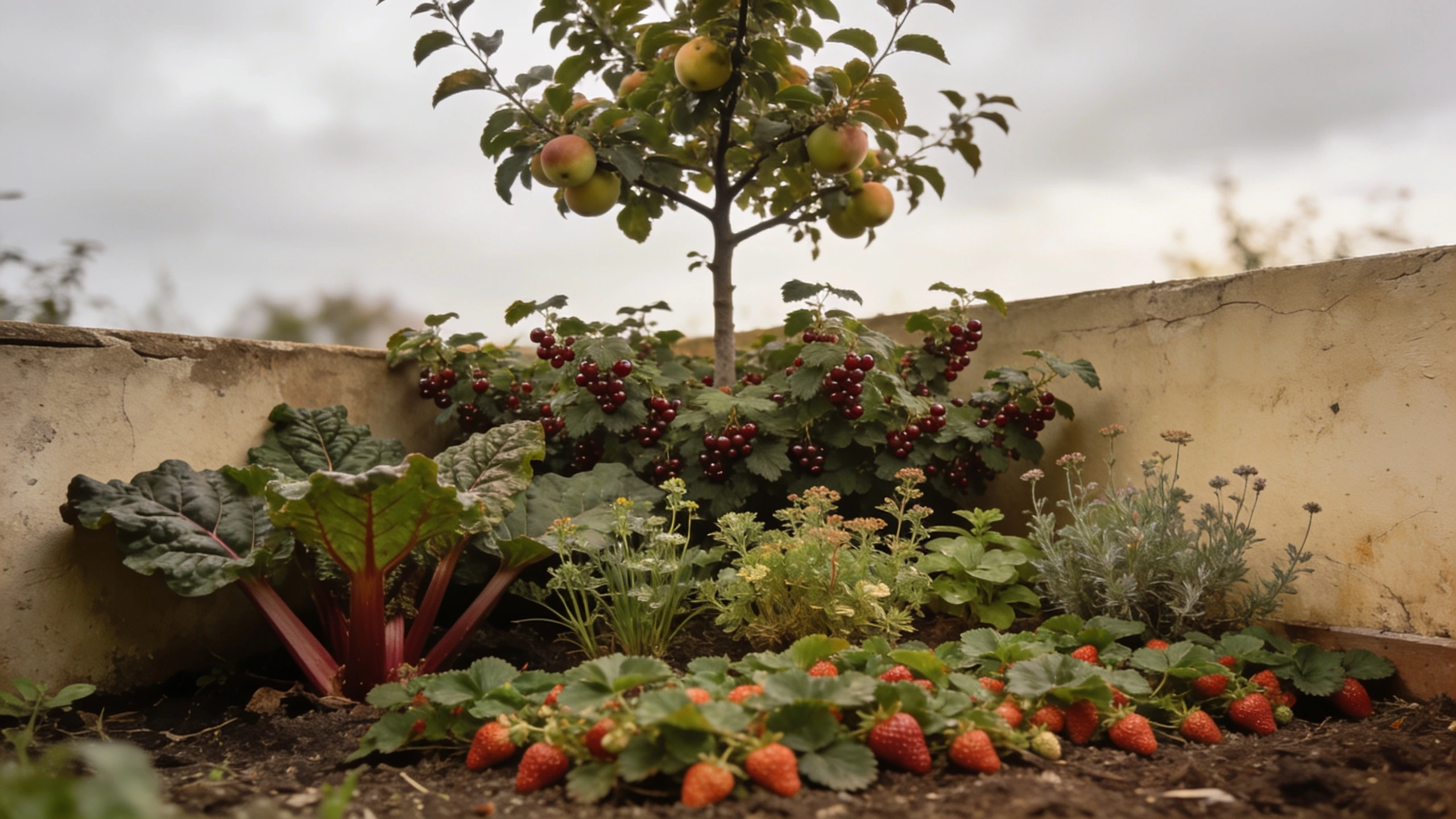
Plants occupy different heights and root depths, so the same square metre can support several if you choose them to suit each other rather than compete. In a woodland that happens naturally. In a garden you arrange it.
- Canopy
- One small fruit tree on a dwarfing rootstock. Apple, plum, or a trained form against a fence if space is tight.
- Shrub layer
- Currants, gooseberry, or a blueberry in a pot if your soil is alkaline. Happy in the dappled shade under the tree.
- Herbaceous layer
- Rhubarb, perennial herbs, comfrey. Comfrey earns its place: cut it three times a year and it becomes mulch or liquid feed.
- Ground cover
- Strawberries, creeping thyme, wild garlic in shade. Covers soil, suppresses weeds, produces something.
- Climbers
- A trained climbing bean or a grape up the tree or the fence behind, using the vertical space nothing else is in.
Four layers in a few square metres is realistic and productive. The full seven layer model needs land and a decade, and presenting it as achievable in a suburban garden is where a lot of permaculture writing loses me.
What I am sceptical about, and why saying so matters#
I want to be specific rather than vaguely hedging, because this is the part most permaculture writing skips.
Companion planting is a mixture. Some of it is well supported: strong smelling plants can disrupt pest host-finding, flowers do bring in predatory insects, and mixed planting genuinely makes a crop harder for a specialist pest to locate. Some of it is folklore repeated with great confidence and no evidence, and the two arrive in the same lists looking identical.
Guild planting, the idea that particular plant combinations support each other in specific measurable ways, is mostly untested in home garden conditions. It may well be right. It is not established.
And any advice that does not mention your rainfall, soil type and climate should be treated carefully, because those three decide more than any technique. A method that transformed a garden in Oregon may do nothing in Kent and actively harm one in Arizona.
Three changes for an ordinary garden#
Nothing here requires a redesign or a philosophy.
Move the herbs to the door. Ten minutes, three pots, and it will change how much you use them.
Fit a water butt to every downpipe. Fifty dollars each, and it removes most of your summer watering problem.
Stop digging. Clear, mulch with compost, leave it. Less work and better soil, which is a rare combination.
If those three go well, add a fourth: plant one small fruit tree and stack under it. That is a permaculture garden in the only sense that matters practically.
What it costs#
- Three pots of herbs at the door
- $20 to $45. The highest return of anything on this page.
- Water butt and diverter
- $40 to $90 each. Pays for itself in one dry summer and removes a chore.
- Compost for mulching
- $60 to $160 a year bought in bulk, or nothing if you make your own. This is the main running cost.
- One small fruit tree
- $40 to $120 on a dwarfing rootstock. Ask the nursery which rootstock before you buy.
- Currants and strawberries for the layers
- $40 to $90, and both propagate free from cuttings and runners after that.
- Comfrey, three plants
- $15 to $30. Cut three times a year for mulch or liquid feed. Site it carefully, because it does not move once established.
Where this needs adjusting#
On a small or shaded plot, drop the canopy layer entirely and stack in three: shrub, herbaceous, ground cover. A fruit tree that shades the only sunny bed is a net loss.
On flat heavy clay, do not dig swales. You will make a pond. Raised beds and surface mulching are the better answer on that soil.
In a dry climate, water catching moves from useful to central, and the plant palette changes completely towards drought tolerant perennials.
And if you rent, focus on the movable parts: containers at the door, a butt if allowed, mulch on the beds. Do not plant a tree you will leave behind in a year.
Where the guidance here comes from#
Zones, stacking and water catching are standard permaculture design ideas and I have found all three genuinely useful. The no-dig soil case is well supported and matches my own beds. My reservations about companion planting and guilds are exactly that, reservations, and I would rather say so than pass on claims I cannot back. For the horticulture underneath, the RHS advice pages and Garden Organic are where I check, and Garden Organic in particular is careful about separating what is demonstrated from what is believed.
The short version#
Place things by how often you visit them. Catch water where it falls. Mulch instead of digging. Stack plants in layers to get more from the same ground. Then treat every confident rule you read as a hypothesis about someone else's soil until you have tried it in yours.
Related reading#
- Food garden ideas: stacking edibles into an ornamental garden rather than a plot.
- Mulching a garden: the no dig practice, in detail.
- Composting for beginners: where the annual mulch comes from, for nothing.
- Pollinator garden: the part of companion planting that is genuinely well supported.
Frequently asked questions
What is permaculture in a garden?
A design approach that arranges a garden so its parts support each other and so less input is needed over time: catching and using water on site, building soil rather than feeding plants, growing perennials alongside annuals, and placing things according to how often you visit them. The useful core is design thinking rather than a fixed set of techniques.
What are permaculture zones?
A way of placing things by how often they need you. Zone one is next to the door for herbs, salad and anything picked daily. Zone two is the main vegetable beds and soft fruit, visited a few times a week. Zone three is fruit trees and the compost heap. Zone four and five are rough or wild ground you barely touch. It is the single most useful idea in permaculture and it applies to a garden of any size.
Is a food forest realistic in a small garden?
A scaled down version is. The full seven layer food forest wants space and years, but the underlying idea, stacking plants at different heights so the same ground grows more, works in a corner: one small fruit tree, currants beneath it, rhubarb or perennial herbs below that, and strawberries as ground cover. That is four layers in a few square metres.
Does permaculture mean no digging and no feeding?
It usually means no routine digging and no synthetic feed, and I think the first is well supported. Mulching rather than digging preserves soil structure and fungal networks and it is less work. The claim that a mature system needs no feeding at all is more optimistic than my experience, particularly for hungry annual crops in a small garden.
What should I be sceptical about?
Anything presented as a rule rather than an observation. Some companion planting claims are well supported, several are folklore repeated confidently. Hugelkultur and swales suit particular sites and are unnecessary or harmful on others. Be especially wary of advice that never mentions your climate, soil or rainfall, because those decide almost everything.
Where do I start with permaculture in an ordinary garden?
Three things, none of which need a redesign. Move the herbs to the back door. Get a water butt on every downpipe. Stop digging and start mulching with compost. Those three deliver most of the practical benefit and none of them commits you to anything.
Is permaculture the same as organic gardening?
No, though they overlap. Organic is mainly about inputs: what you will and will not use. Permaculture is about design: how the parts are arranged so fewer inputs are needed at all. Most permaculture gardens are organic in practice, but you can garden organically with no interest in design and design a permaculture garden while still reaching for a fertiliser bottle.
Topics in this article
About the author
Jeff has gardened professionally for over twenty years, mostly on heavy clay, and writes everything here from beds he still works himself. More from Jeff Tanun →
Keep reading
Water Garden Ideas
Water garden ideas from a washing up bowl upwards. What size actually works, why most small ponds go green, and the one feature that matters most for wildlife.
Updated
Low-Maintenance Garden Ideas
How to cut garden work by two-thirds without paving it over, the design decisions, planting choices and three jobs that actually save you time.
Updated
Flower Gardening
Flower gardening made simple: pick plants that suit your light, plant them closer than feels right, and get colour from spring to frost. With costs.
Updated