Food Garden Ideas: Grow Food Without a Vegetable Plot
Food garden ideas for people who want a garden, not an allotment. Edible plants that hold their own in a border, and where to put them so they get used.
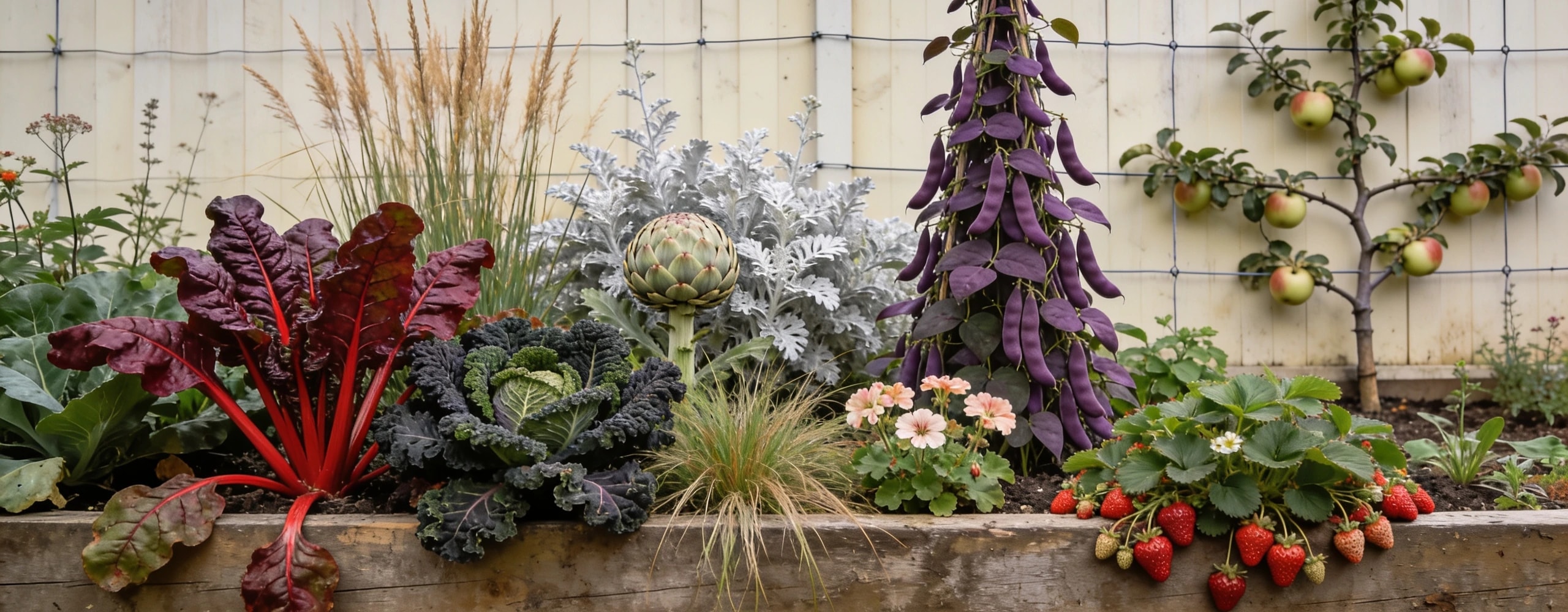
Most advice about growing food assumes you want an allotment, and the result is that a lot of people who would happily grow food never start. This is the other approach: edible plants used as plants, in the garden you already have, chosen because they look good and happen to be dinner. It is also how I get most of what I actually eat.
The short answer
Choose edibles that earn their place visually: ruby chard, cavolo nero, globe artichoke, bronze fennel, purple podded beans, herbs, and strawberries as edging. Train fruit flat against a fence, which needs 40 cm of depth and gives blossom, crop and structure. Put everything on the route you already walk, because herbs at the far end of the garden do not get picked. Keep rows of maincrop roots and brassicas in a dedicated bed if you have one.
The idea: edibles as plants, not as crops in rows#
A vegetable bed is a production system. Rows, spacing, succession, bare soil between plants. It works and it looks like what it is.
A border containing food is a different proposition. The plants are chosen for how they look as well as what they yield, they sit among ornamentals, and there is no bare soil.
Both are good. The second one is what fits into an ordinary garden without redesigning it, and it is much easier to start.
Key points
- Choose edibles for form, colour and texture first. If it also happens to be productive, that is the deal.
- Avoid anything that leaves a hole. Crops harvested all at once are poor border plants.
- Put it where you walk. Proximity to the back door is the single biggest predictor of whether food gets used.
- Mix rather than block. A pest hunting brassicas finds a row of forty faster than three among geraniums.
- Train fruit flat. Vertical surfaces are the most under-used growing space in most gardens.
The edibles that hold their own in a border#
Tested by whether I would plant them if they were inedible. Everything here passes.
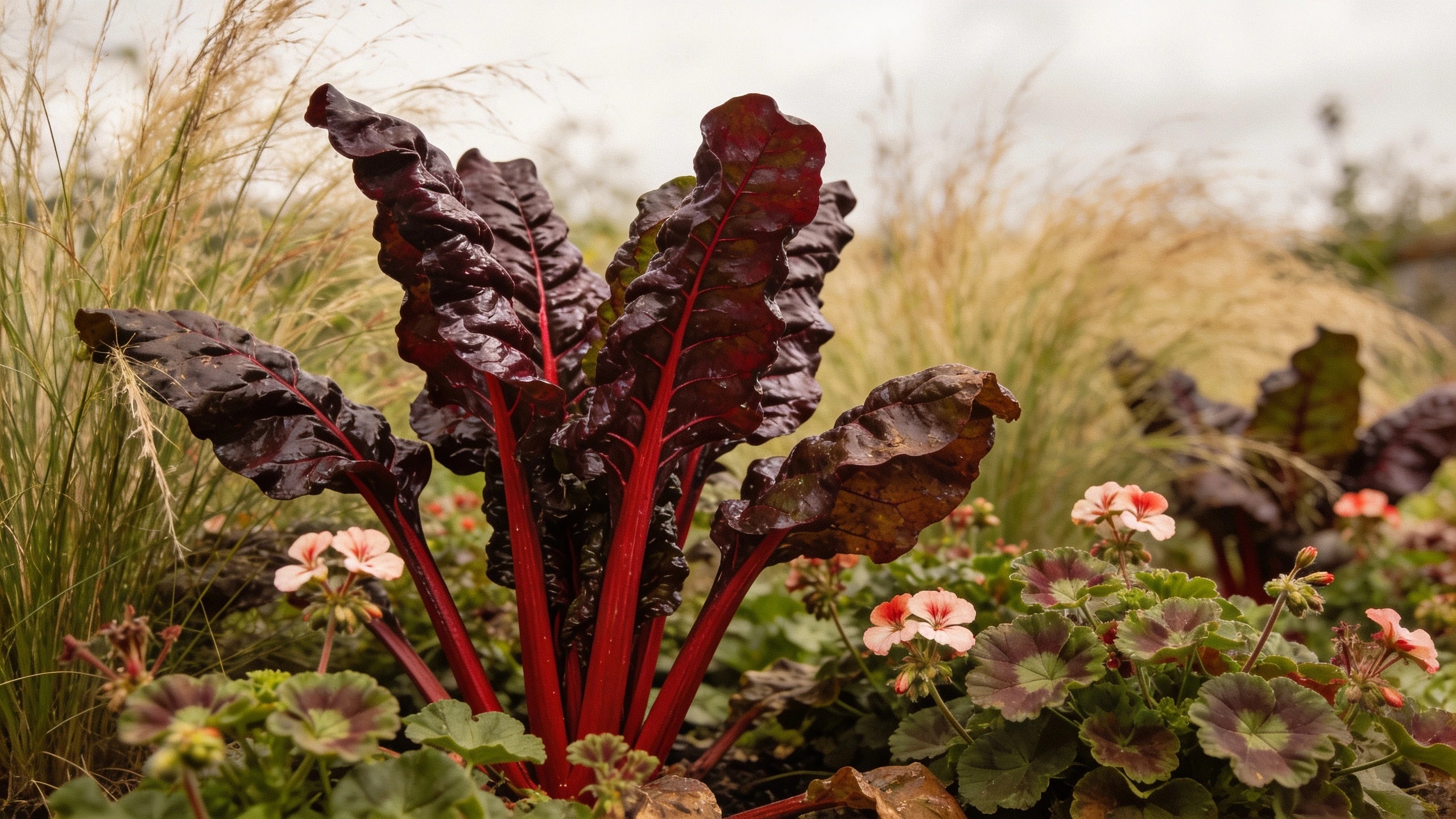
- Ruby or rainbow chard
- Vivid stems, big glossy leaves, crops for eight months from one sowing and survives light frost. The best edible border plant there is.
- Cavolo nero kale
- Upright, architectural, near black leaves. Structure through winter, when a border most needs it.
- Globe artichoke
- Enormous silver foliage, and if you let one flower the bees are on it for weeks. Worth growing purely as a foliage plant.
- Bronze fennel
- A haze of dark feathery foliage, umbels the hoverflies love, and edible seed. Self seeds enthusiastically, which is either free plants or a nuisance.
- Purple podded climbing beans
- Up a wigwam or an obelisk in the middle of a border. Flowers, then purple pods, and it earns the height.
- Herbs, all of them
- Rosemary, sage, thyme, chives, oregano. Evergreen or nearly so, drought proof, scented when brushed, and the most expensive things in the shop.
- Strawberries as edging
- Spreads along a front edge, flowers, fruits, and the runners give you free plants every year.
Trained fruit, which is the best use of space in any garden#
If there is one idea here worth acting on, it is this.
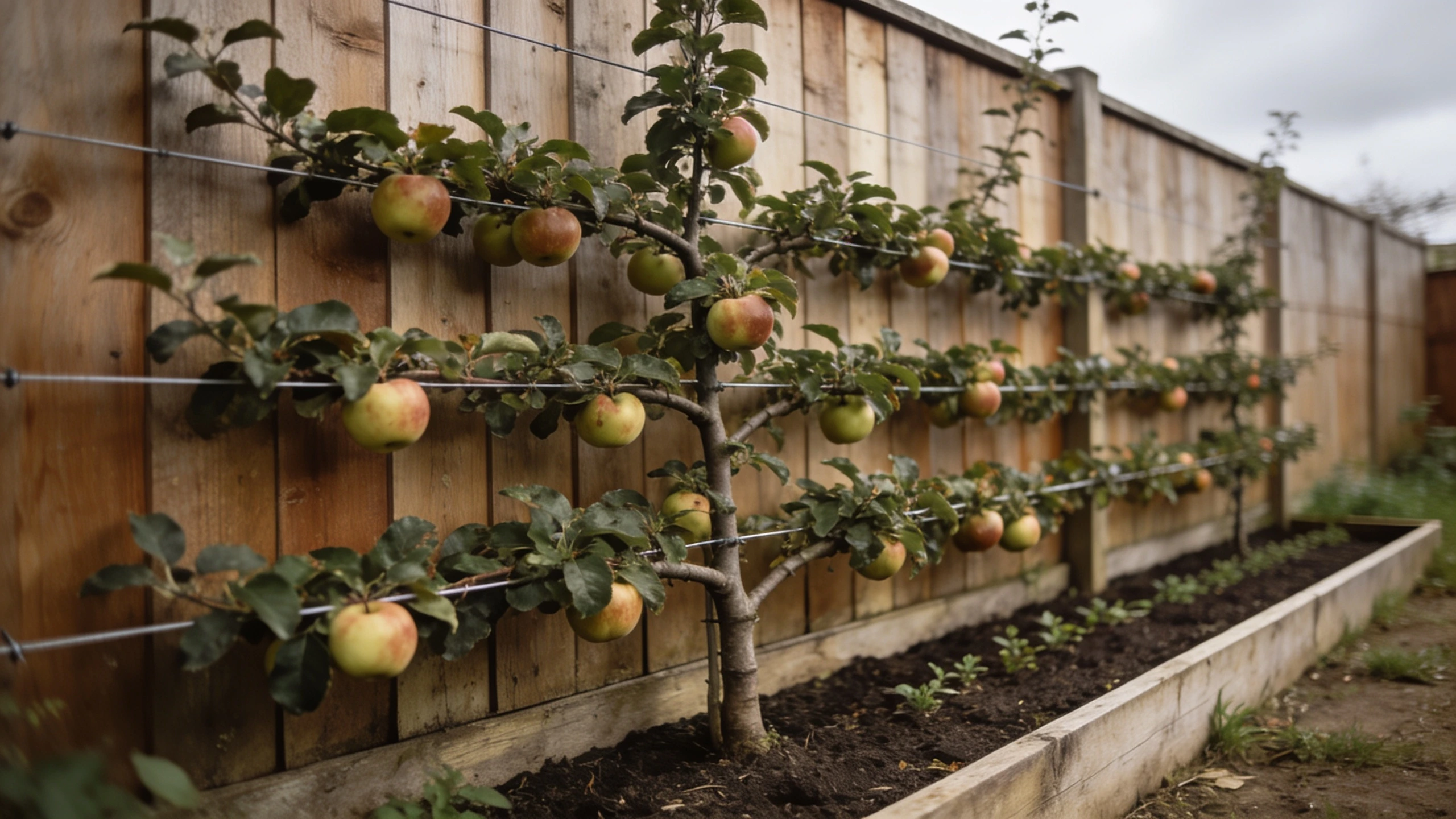
A fence, a wall or a boundary is growing space you are not using. An apple or pear trained flat as a cordon, espalier or fan occupies about 40 cm of depth, gives you blossom in spring, fruit in autumn and a structure that looks deliberate all year.
Buy on a dwarfing rootstock and say what you want it for; a good nursery will steer you. Trained forms are pruned in summer rather than winter, which is the opposite of a free standing tree and the thing people get wrong.
Soft fruit does the same job on a smaller scale. Redcurrants and gooseberries train flat against a wall beautifully, and a blackcurrant is a perfectly reasonable shrub in a mixed border.
Put it where you walk#
This is not a horticultural point and it matters more than any of them.
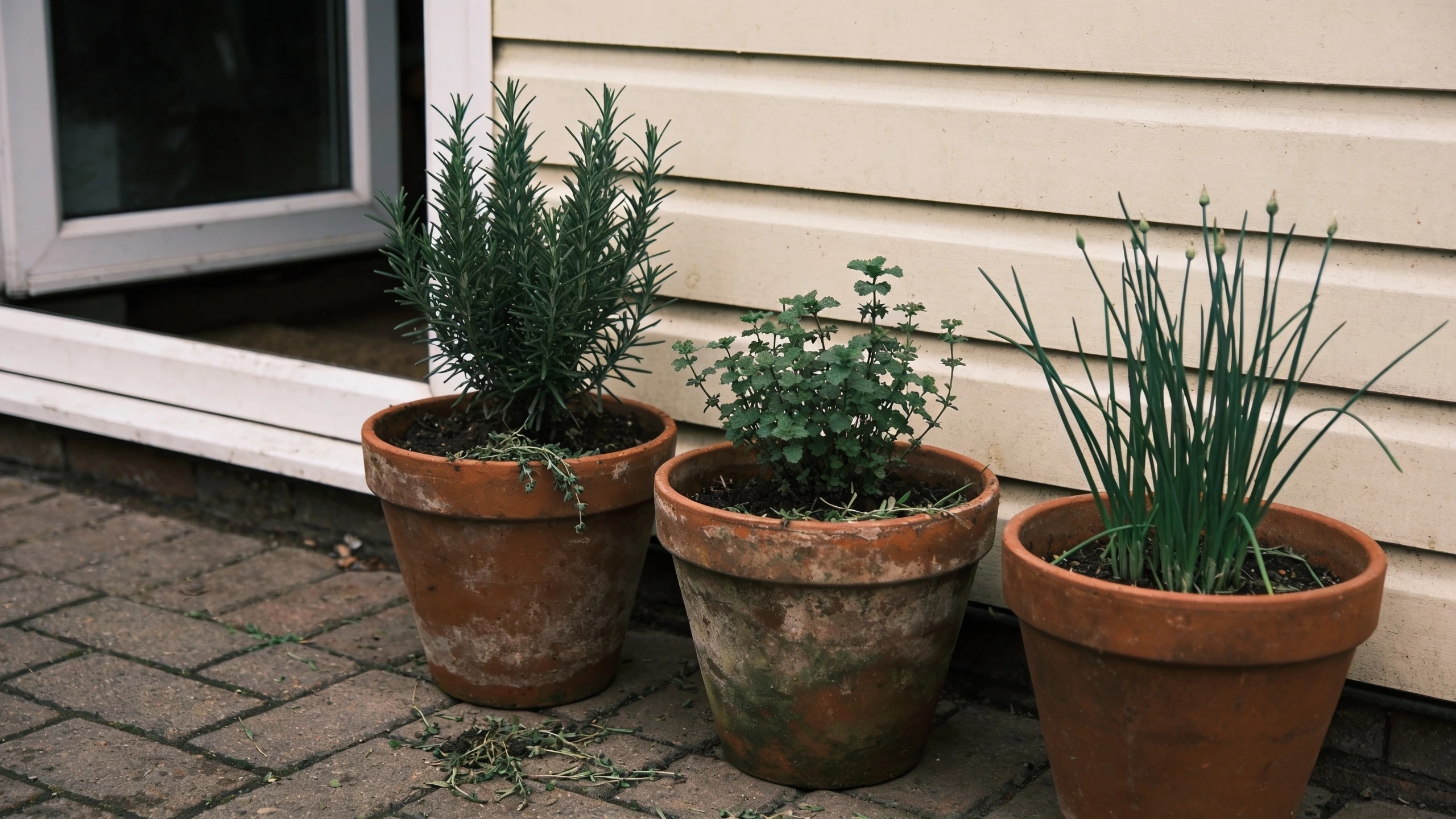
Herbs at the bottom of the garden do not get picked, because on a wet Tuesday in October you will not go out there for two sprigs of thyme. Herbs beside the back door get used almost daily.
So the layout rule is simple: the more often you pick something, the closer it goes to the door. Herbs and salad nearest. Chard, beans and courgettes next. Anything harvested once, potatoes, squash, onions, can be as far away as you like.
What to keep out of the border#
Being honest about the limits keeps this from becoming a gimmick.
Maincrop potatoes. They occupy ground for months and then leave a large hole and disturbed soil.
Onions and garlic. Slow, unremarkable to look at, and they need to be lifted and dried.
Rows of brassicas. Cabbage and sprouts want netting against butterflies, and netting over a mixed border looks terrible.
Anything you want in quantity. Twenty leeks is a row, not a border planting, and pretending otherwise makes for a bad border and a poor crop.
If you have a dedicated bed, that is what it is for. If you do not, buy those four things and grow the rest.
A plan for one existing border#
Nothing here requires digging anything up. This is what I would add to a border three metres by one and a half.
- Back layer
- One globe artichoke for silver foliage, and an obelisk of purple podded beans for summer height.
- Middle
- A group of three ruby chard, three cavolo nero, and bronze fennel for the haze between them.
- Front edge
- Strawberries running along it, with thyme and chives filling the gaps at the corners.
- The fence behind
- One cordon apple or a fan trained redcurrant. This is the piece that changes the border most.
- Gaps, in April
- Salad and radish sown into any bare patch. They are gone before anything else needs the room.
That is perhaps forty dollars of plants and a packet of seed, and it will produce ingredients from May to the following spring without looking like an allotment.
The honest yield question#
Worth stating plainly, because edible landscaping writing tends to imply more than it delivers.
A border planted like this changes meals. It gives you the herb, the handful of leaves, the beans, the courgettes, the fruit. That is genuinely valuable and it is also where the money is, because those are the expensive things to buy.
What it will not do is replace a shop. Calories come from potatoes, grains and roots grown in quantity, and quantity needs dedicated ground and a plan. Anyone suggesting a mixed border will feed a household is not counting.
I find that framing makes the whole thing more satisfying rather than less. The aim is not self sufficiency. It is that dinner has something in it that was outside twenty minutes ago.
Where this needs adjusting#
In shade, drop the fruiting crops entirely and lean on leaves: chard, kale, salad, and mint, parsley and chervil among the herbs. Trained fruit needs sun to ripen and a north facing fence will not do it.
In containers only, the same principles hold with smaller plants: chard, herbs, salad, one courgette in a very large pot, strawberries in anything.
And if you have livestock, a dog or very young children, check what you are adding. A few common garden plants are toxic and edible planting mixed with ornamental means less obvious boundaries about what is safe to pick.
Where the guidance here comes from#
The plant choices and the put it where you walk rule are what has survived several seasons in my own garden, and the second one came from moving herbs twice before admitting the problem was distance. For growing detail, spacing and trained fruit pruning the RHS advice on growing your own is the reference, and Garden Organic is better than most on mixed planting and on managing pests without spraying, which matters more when the crop is among the flowers.
The short version#
Pick edibles you would grow anyway: chard, kale, artichoke, fennel, purple beans, herbs, strawberries. Train fruit flat against a fence for the best return on space in the garden. Put the things you pick often nearest the door. Keep potatoes, onions and brassica rows out of the border. Then sow salad into every gap in April.
Related reading#
- How to start a vegetable garden: the dedicated bed version, for when you want quantity.
- Garden design basics: border depth and layering, which this planting relies on.
- Vertical gardening: beans and trained fruit, and how much more they yield per square metre.
- Victory garden ideas: the opposite approach, and what it gets right.
Frequently asked questions
Can you grow food in a flower border?
Yes, and some edibles look better there than most bedding. Chard with red stems, kale, globe artichoke, fennel, runner beans on a wigwam and any of the herbs all hold their own visually. What does not work well is anything that leaves a hole for half the year, so keep maincrop potatoes, onions and brassica rows in a dedicated bed if you have one.
Which edible plants actually look good?
Ruby chard, cavolo nero kale, globe artichoke, bronze fennel, purple podded beans, rosemary, sage, thyme, chives and strawberries as edging. Espalier or cordon fruit trees along a fence are the strongest of all, because they give structure, blossom, fruit and autumn colour from a strip 40 cm deep.
Where should I put edible plants so I actually use them?
On the route between the back door and wherever you sit, or beside a path you take every day. Herbs in particular are wasted at the far end of a garden, because you will not walk out in the rain for them. Everything I have moved closer to the door has been used more, and that is the whole design principle here.
How much food can you get from a border?
Enough to change meals rather than replace shopping. A metre of chard, a wigwam of beans, three courgette plants and a run of herbs will genuinely feed you through the summer as ingredients. If you want to grow calories, that needs a dedicated bed and a plan. The two aims are compatible but they are not the same.
Do fruit trees work in a small garden?
Trained forms do, and they are the best value thing on this page. A cordon or espalier apple against a fence needs about 40 cm of depth, gives blossom, fruit and structure, and produces a serious crop for the space it takes. Buy on a dwarfing rootstock, ask the nursery which one, and expect to prune twice a year in summer rather than winter.
What is the easiest food to grow for a first attempt?
Salad leaves, radish, chard and herbs, all sown or planted straight into a border. All four are quick, forgiving and expensive to buy, which makes them the best return on a first attempt. Add one courgette plant, which will produce more than you expect from a single position in a bed.
Will growing food attract pests to my garden?
It changes which ones you have rather than adding more. Mixing edibles through ornamental planting genuinely helps, because a pest that specialises in cabbages finds a row of forty of them far more easily than three tucked among geraniums. The one you will notice is slugs on anything young and leafy, wherever you plant it.
About the author
Jeff has gardened professionally for over twenty years, mostly on heavy clay, and writes everything here from beds he still works himself. More from Jeff Tanun →
Keep reading
Garden Design Basics
Garden design without a designer: work out how you will use the space, get the proportions right, then plant. The order matters more than the plant list.
Updated
Native Plant Garden
A native plant garden without the purism. Why native means local rather than national, how to find your own list, and where non-natives still earn a place.
Updated
Permaculture Garden
A permaculture garden without the ideology. Zones, stacking and catching water are genuinely useful; some of the rest is untested. What to take and what to leave.
Updated