Garden Design Basics: How to Plan a Garden You Use
Garden design without a designer: work out how you will use the space, get the proportions right, then plant. The order matters more than the plant list.
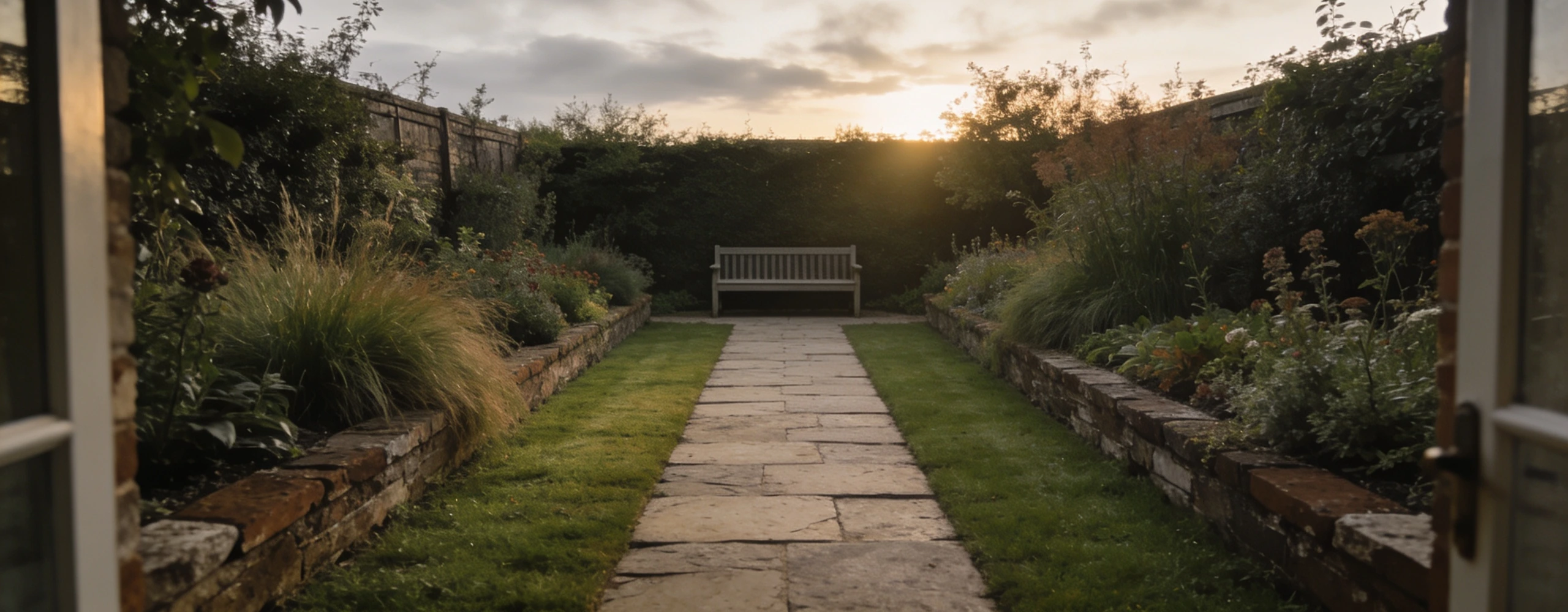
Good garden design is mostly a question of order. Get the order wrong and you end up with a nice plant collection and nowhere to sit. I have made every mistake on this page in my own garden, and the one that cost me the most was starting at the nursery instead of starting with a tape measure and an honest list of what I wanted to do outside.
The short answer
Work in this order: how you will use the space, then the hard shapes, then the soil, then the plants. Paths at 60 cm minimum and 1.2 m where two people pass. Borders at least 1.2 m deep so you can layer planting. Make the lawn a deliberate shape rather than the leftover in the middle. Spend money on the things you cannot move later, and buy small plants in good soil rather than large plants in bad.
Start with use, not with plants#
Before anything else, write down the three things you want to do in the garden. Not aspirations, actual activities. Sit with a coffee in the morning. Grow enough salad to matter. Let a dog out at eleven at night without going through a bog.
Then find where each one has to happen, because that is mostly decided for you by the sun and the back door.
Key points
- Morning coffee needs east light, so it goes near the house on the side that catches early sun.
- Evening sitting needs west light, which is often the furthest corner from the house, and that is fine.
- Vegetables need six hours of direct sun and a short walk from a tap, or they quietly stop being watered.
- Anything you use in the dark or the wet needs a hard, level route to it. This decides where paths go.
- Storage, bins and a compost heap are not design features but they will happen somewhere, so choose where.
That list is your brief. Everything after this is just arranging it.
Measure the things that constrain you#
You do not need a drawing you would be proud of. You need real numbers and the position of the things you cannot move.
Pace out the boundaries and write the lengths down. Mark the drains, the manhole covers, the outside tap, the washing line, the point where the fence is failing, and any tree you intend to keep. Then note where the sun actually is at nine in the morning, one in the afternoon and six in the evening, on a day you are at home.
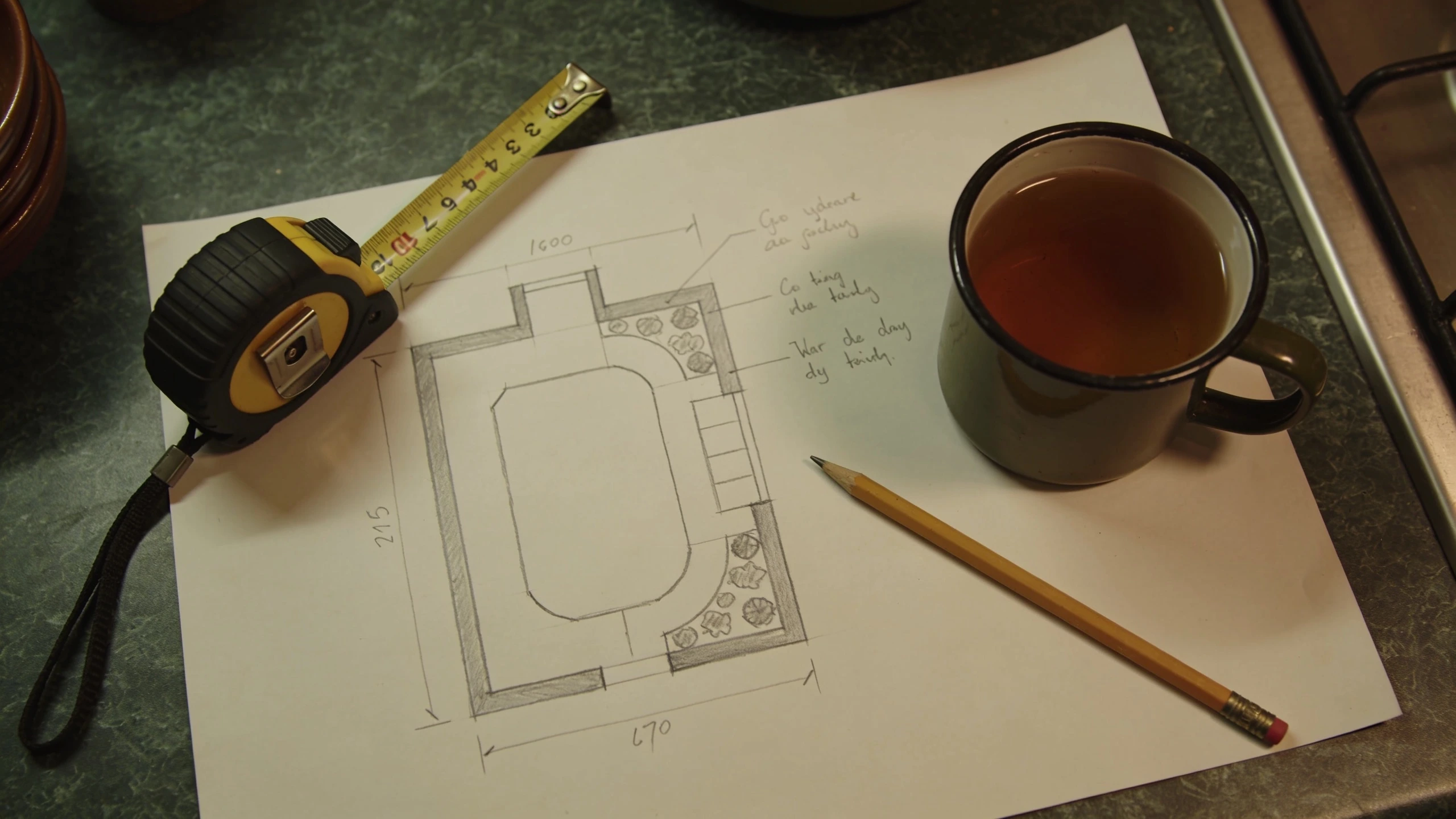
Sun mapping is the step people skip and then regret. A wall that looks sunny at midday can be in shade from three onwards, which is exactly when you would want to sit against it.
Garden design starts with the hard shapes#
The structure is what makes a garden feel finished, and it is what looks right on day one while the planting is still small. Three decisions carry most of the weight.
Paths, and being generous with width#
A path under about 45 cm stops getting used, because you brush wet foliage on both sides. Sixty centimetres works for one person. If two people walk together, or you push a barrow, you want 1.2 m.
The route matters as much as the width. Paths should go where people already walk. If there is a worn line across the grass, that is your path, and fighting it never works.
Borders, and depth over length#
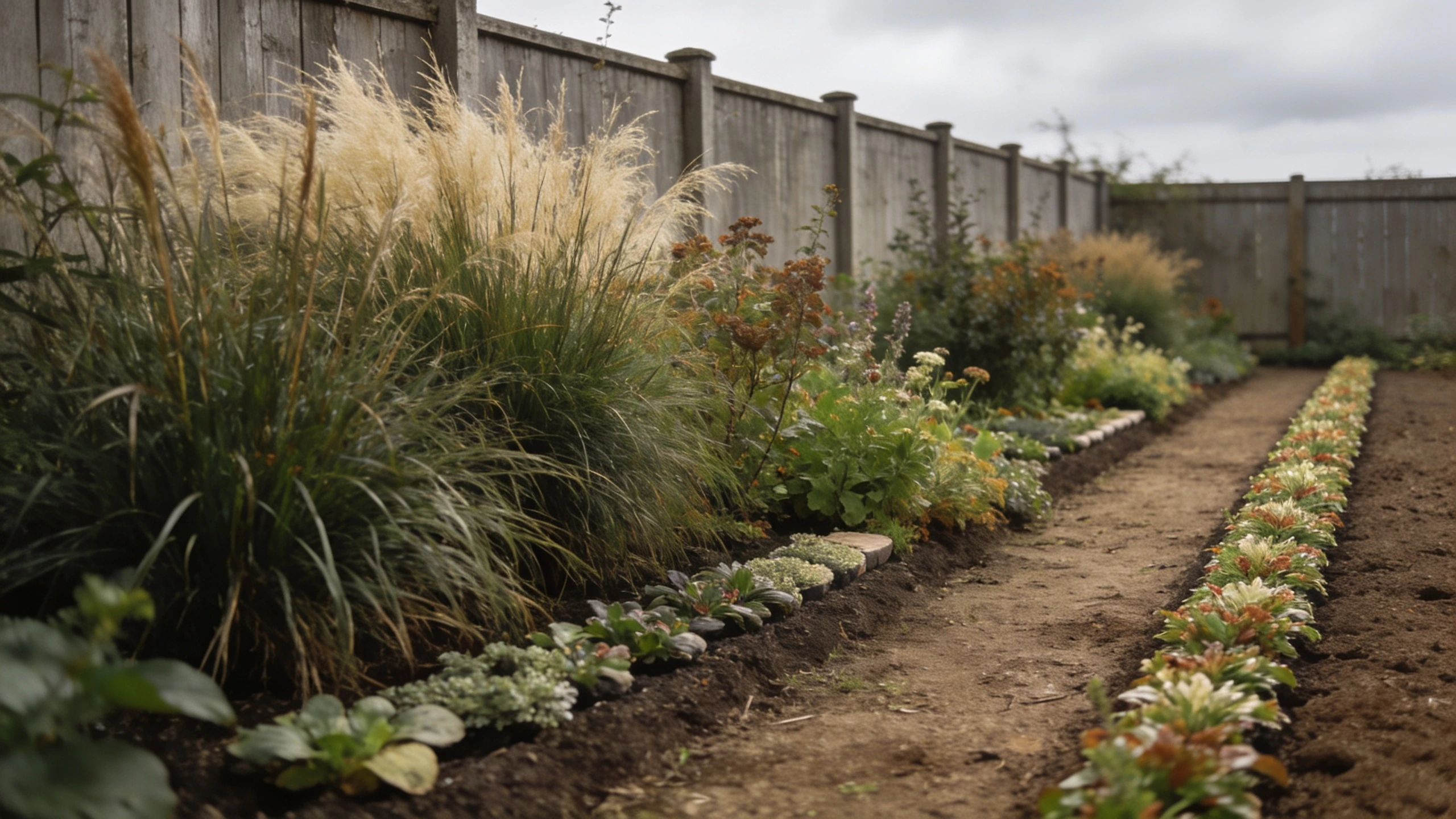
This is the change that transforms most ordinary gardens. A 45 cm strip along a fence can hold one row of plants and will always look thin and fussy. At 1.2 m or more you can put something tall at the back, something substantial in the middle and something low at the front, and it starts to look like a border.
If you only have so much space, make one deep border rather than two shallow ones. Depth reads as generosity. Length reads as edging.
Lawn as a shape, not as the leftover#
Most gardens end up with a lawn that is simply whatever was not planted. Turn that around: draw the lawn as a deliberate shape, a rectangle, a circle, a soft oval, and let the beds take up the rest.
A simple lawn shape is also far quicker to mow, because a mower hates fiddly curves and narrow necks.
Proportion, layers and the rule I actually use#
Two ideas do more for a garden than any plant list.
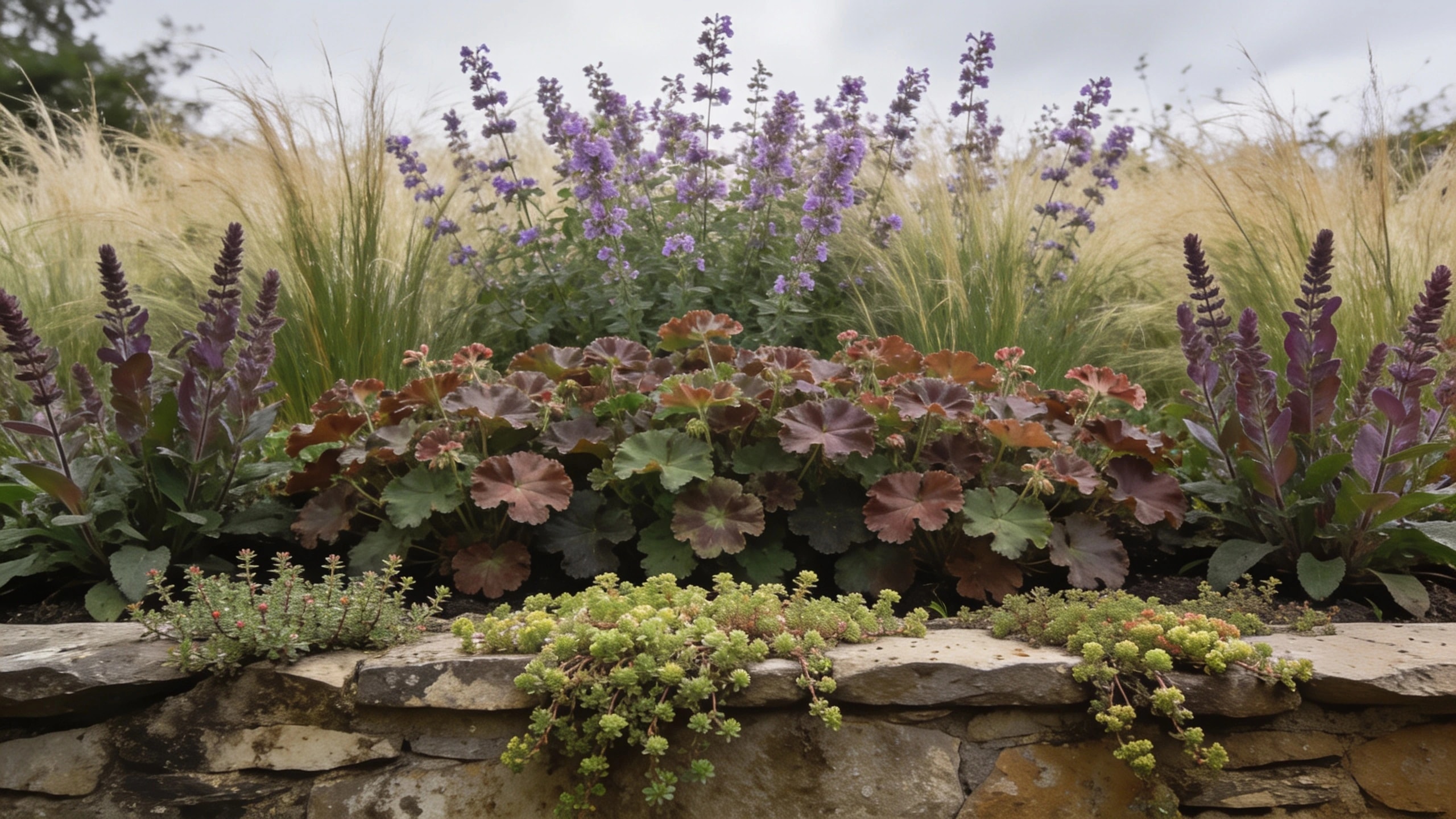
The first is planting in layers. Something structural and tall at the back, a mass of medium perennials and grasses in the middle, then low planting spilling over the front edge. Three layers is enough to feel full.
The second is planting in odd-numbered groups of the same thing. Threes and fives of one plant read as deliberate. One of everything reads as a collection, which is a perfectly good thing to want, but it will not look designed.
For proportion, I work to roughly a third and two thirds rather than halves. A path down the exact middle of a garden splits it into two thin strips. Set off centre, it makes one generous space and one useful one.
Soil before plants, always#
This is where money is best spent and least visible. A cheap plant in good soil will overtake an expensive plant in poor soil inside two years.
Before planting a new border, get compost on it. Ten centimetres over the surface, left for the worms to take down, does more than any feed. The RHS pages on soil, composts and mulches cover what to use where, and the RHS garden design section is a sane free starting point if you want more on structure than I have room for here.
Where the money should go#
Spend in order of permanence. Anything you cannot move later goes first.
- Levels and drainage
- The least glamorous and the most important. A garden that floods in November is a garden you will not use for five months a year.
- Paths and hard surfaces
- In the wrong place forever. Worth doing properly and worth doing wide.
- Boundaries
- Fence, hedge or wall. Structural, and it frames everything else. A hedge is cheaper and better but takes years.
- Soil improvement
- Compost by the barrow. The highest return per pound of anything in this list.
- Structural planting
- Trees, shrubs, hedging. Buy these at a decent size because they take longest to catch up.
- Perennials and grasses
- Buy small and buy in threes. They fill out in two or three seasons and small plants establish better.
Mistakes worth avoiding#
A thin border all the way round a lawn. It is the default and it is the single biggest reason ordinary gardens look unresolved.
Seating in the wrong light. A bench in the shade at six in the evening will never be sat on, however good it looks at noon.
Designing for the garden centre rather than the site. Every plant looks good in a pot in April. The question is what it does in your soil in August.
Forgetting the boring infrastructure. Bins, hose, compost and drying need somewhere. If you do not choose, they end up on the patio.
Planting the whole garden in one weekend. You will overplant, because bare soil is uncomfortable to look at. Leave gaps and fill them next year.
When to get someone in#
If you are moving levels, building retaining walls, dealing with standing water or touching anything near a drain, that is a job for someone qualified. The same goes for taking down a mature tree.
For everything else, the plan is genuinely doable yourself, and the parts that go wrong are almost always the parts people rushed rather than the parts they lacked training for.
Where the guidance here comes from#
The order of work and the dimensions here are what I have settled on in my own garden and by watching which bits of other people's gardens actually get used. For the horticulture rather than the layout, I cross-check against the RHS advice pages, and for what will survive where you are, the USDA plant hardiness map is the first thing to check before buying anything structural.
The short version#
Decide how you will use it. Measure what you cannot move. Get the paths wide, the borders deep and the lawn a shape you chose. Put compost on before plants go in. Then plant in threes, in three layers, and accept that it will take three years to look like the photograph.
Related reading#
- Raised bed garden layout ideas: bed dimensions and spacing that follow from the path widths here.
- Low-maintenance garden ideas: the same structure, chosen to need less of you.
- Small balcony garden ideas: the version of all this for two square metres.
- How to start a vegetable garden: where the growing area fits in the plan.
Frequently asked questions
Where do I start with designing a garden?
With how you will use it, not with plants. Write down the three things you actually want to do out there, sitting in the evening, growing vegetables, letting children run about, and where each of those needs to happen. Then work out the hard shapes: paths, seating, beds. Plants come last, because they are the easiest thing to change and the least structural.
How wide should a garden path be?
At least 60 cm for one person, and 1.2 m if two people need to walk side by side or you push a wheelbarrow. Most home-made paths end up around 45 cm, which is where you start brushing against wet plants and stop using the path. If it is a route you will take every day, err wide.
How deep should a border be?
Deeper than you think. A border under about 60 cm can only hold one row of plants, so it always looks thin. From 1.2 m you can layer three depths of planting and it starts to read as a border rather than a strip. If space is tight, one deep border beats two shallow ones on opposite fences.
What is the biggest mistake in garden design?
A thin strip of border round the edge of a lawn, with the lawn left as whatever shape is in the middle. It gives you a garden with no depth, nowhere private to sit and a fiddly edge to mow. Making the beds deeper and the lawn a deliberate simple shape fixes more than any plant choice.
Do I need a scale drawing?
You need measurements, not draughtsmanship. Pace out the boundaries, note where the sun is at nine, one and six, and mark the drains, manholes and the washing line. A rough sketch with real numbers on it beats a beautiful drawing built on guesses, and it will stop you designing a patio over an inspection cover.
How long does a new garden take to look established?
Three seasons for perennials and grasses, five or more for shrubs and hedges, and a decade for trees. That gap is why the hard shapes matter so much: paths, levels and seating look finished on day one, so if those are right the garden is usable while the planting catches up.
How much should I spend, and on what?
Spend on the things you cannot change later. Levels, drainage, paths and boundaries first, soil improvement second, plants third. A cheap plant in good soil overtakes an expensive plant in bad soil within two years, but a path in the wrong place is in the wrong place forever.
About the author
Jeff has gardened professionally for over twenty years, mostly on heavy clay, and writes everything here from beds he still works himself. More from Jeff Tanun →
Keep reading
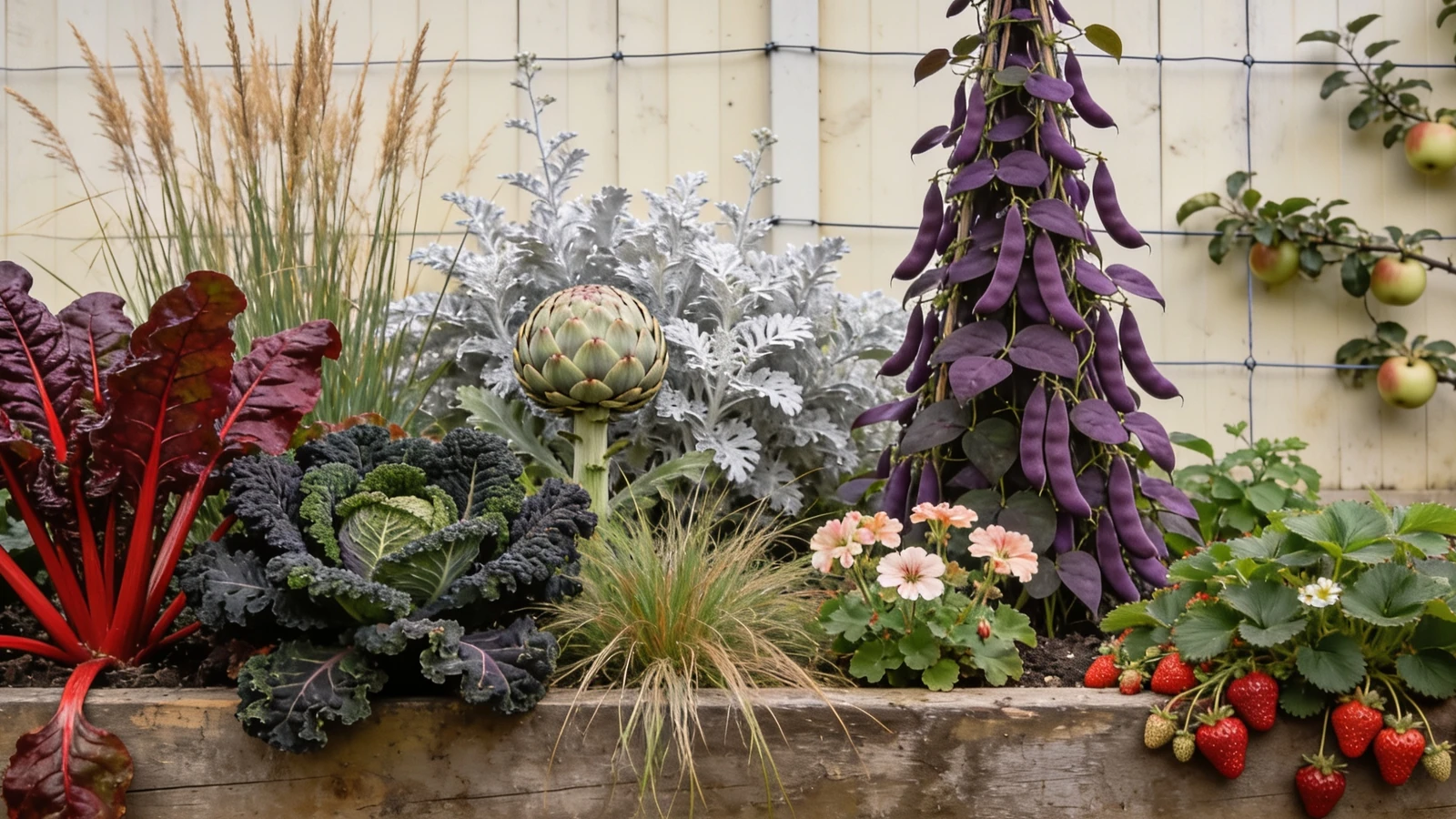
Food Garden Ideas
Food garden ideas for people who want a garden, not an allotment. Edible plants that hold their own in a border, and where to put them so they get used.
Updated
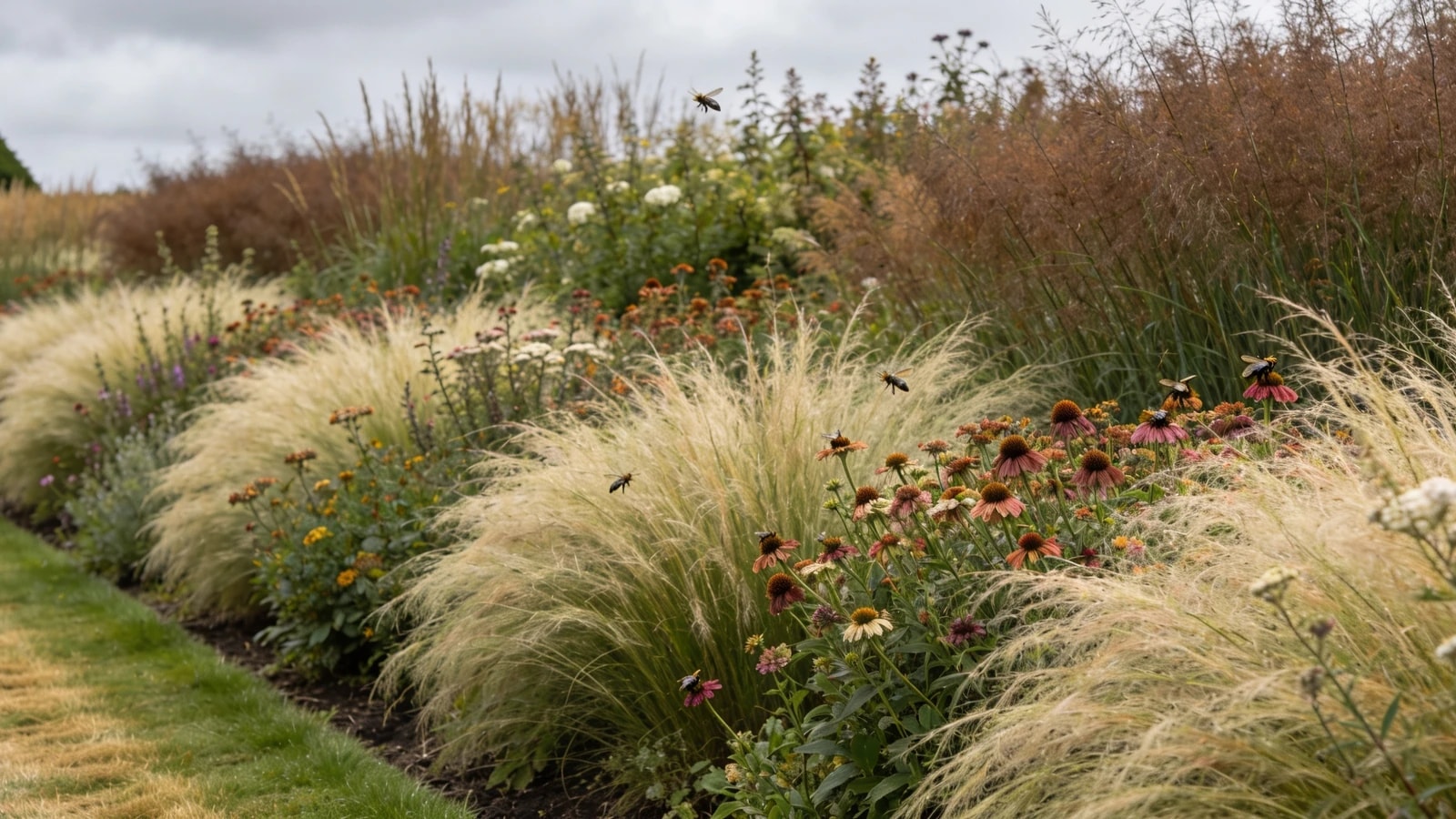
Native Plant Garden
A native plant garden without the purism. Why native means local rather than national, how to find your own list, and where non-natives still earn a place.
Updated
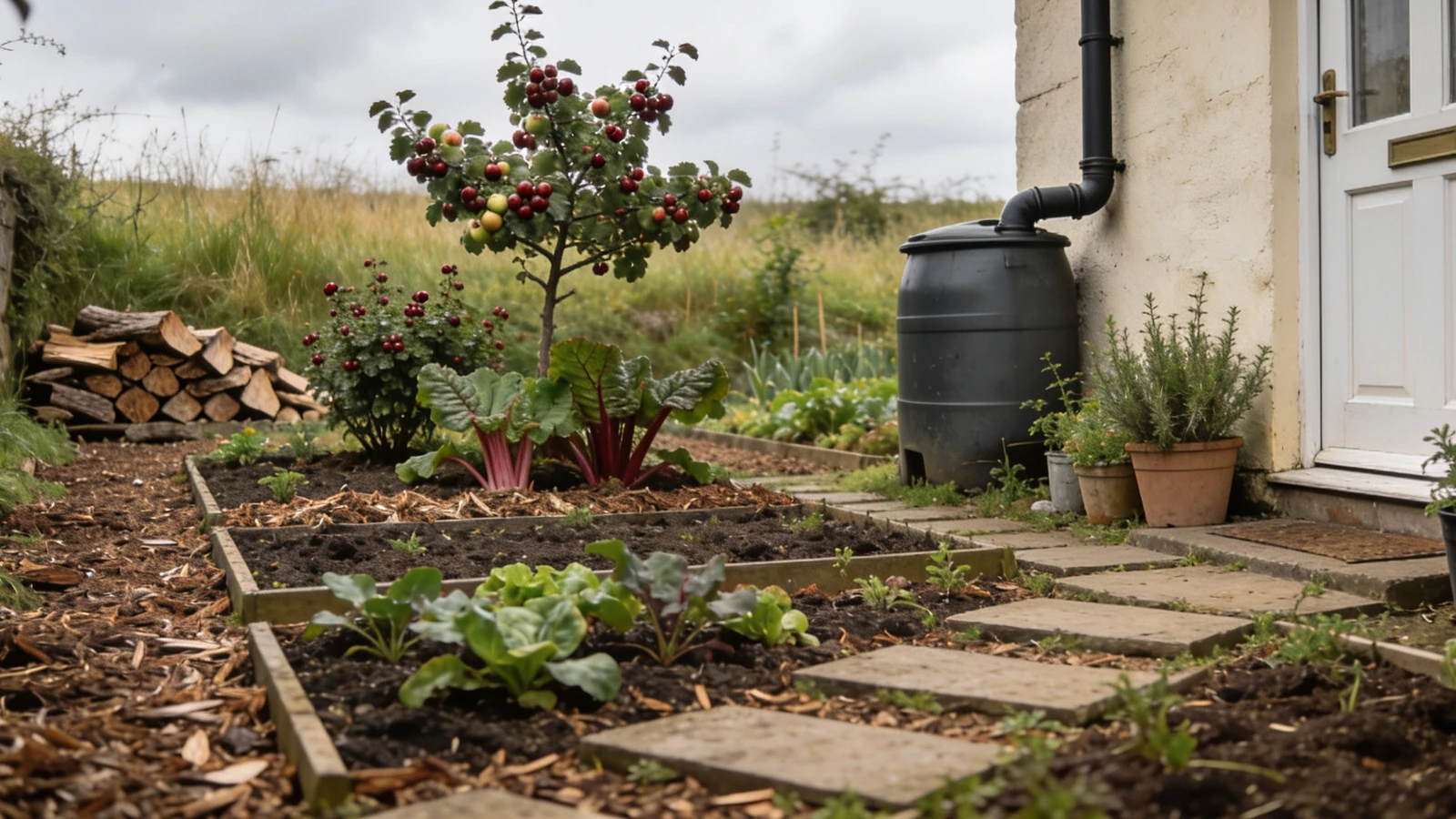
Permaculture Garden
A permaculture garden without the ideology. Zones, stacking and catching water are genuinely useful; some of the rest is untested. What to take and what to leave.
Updated