Horticultural Therapy: How Gardening Helps, and Why
Horticultural therapy explained: what it is, what the evidence supports, and how to set up a garden that helps rather than becomes another thing you owe.
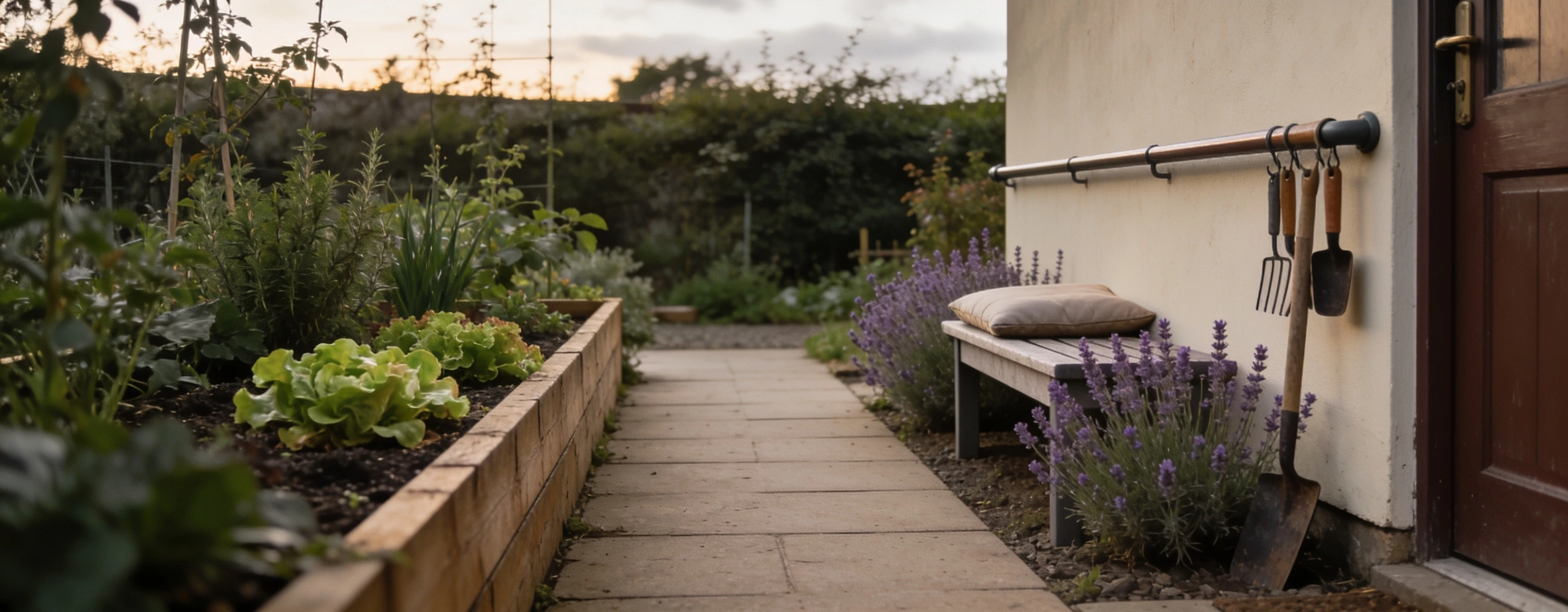
Horticultural therapy is a real, structured discipline, and it is not the same thing as gardening being good for you. Both are worth taking seriously, and they are worth keeping apart, because if you are looking for actual support then the difference decides where you should be looking. I want to be careful in this piece: I garden and I know it helps me, and I am not a clinician.
The short answer
Horticultural therapy is plant-based activity used within a care or treatment plan by a trained practitioner. Gardening for wellbeing is what the rest of us do, and the evidence for green space, light activity and purpose is broadly positive. To get the benefit, design for forgiveness rather than ambition: one pot before one bed, fast and fragrant plants, big containers, mulch, and fewer plants than you have space for. A garden that can fail while you are unwell is not helping.
Two different things with similar names#
Worth separating, because the words get used interchangeably and they should not be.
- Horticultural therapy
- A clinical or care intervention. A trained practitioner sets goals for a named person and uses plant activity to work towards them. Found in hospitals, hospices, rehabilitation and care settings.
- Social and therapeutic horticulture
- Group gardening run for wellbeing and social outcomes rather than individual clinical goals. Community gardens, day services, charity programmes.
- Gardening for wellbeing
- What you do in your own garden because it makes you feel better. No practitioner, no goals, no programme. This is what most of this page is about.
- Green prescribing
- A clinician referring someone to a nature-based activity as part of care. The route by which the first two often become available.
If you are asking on behalf of someone with a specific condition, the first two are what you want and they involve a professional. If you are asking for yourself because the last year has been hard, the third is available this afternoon.
What the evidence supports, stated carefully#
I am going to be more cautious here than most pages on this topic.
The broad picture across a lot of research is consistent: time spent in green space is associated with better mood and lower stress, light regular physical activity helps both physical and mental health, and having something that depends on you and responds to your attention appears to matter. Gardening happens to deliver all three simultaneously, which is probably why it keeps showing up.
What I would not do is quote you a percentage. Much of the research in this area involves small samples, self-reported outcomes and designs that cannot separate gardening from being outside, or from being with other people. The direction of the finding is more trustworthy than the size of it.
For the general wellbeing framing, the NHS five steps to mental wellbeing is a sensible plain-language starting point, and gardening happens to tick several of its boxes at once. For the discipline itself, Thrive in the UK and the American Horticultural Therapy Association in the US are the organisations that actually train practitioners.
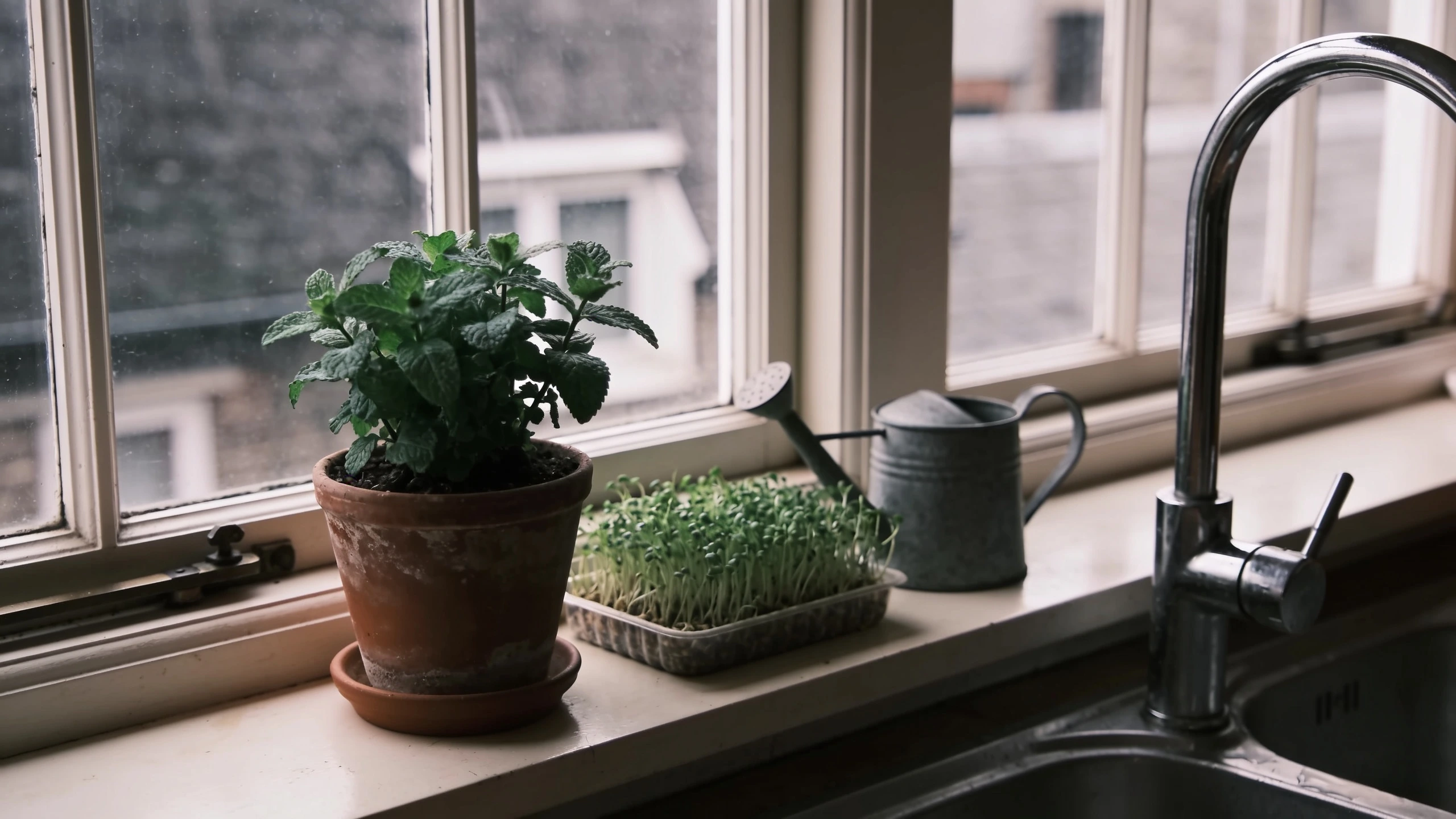
Design for forgiveness, not for ambition#
This is the practical heart of it, and it is the opposite of how gardening is usually sold.
A garden meant to help you has to survive a bad fortnight. If it needs daily attention, then the weeks when you most need it are exactly the weeks it will die, and a dead garden becomes one more piece of evidence that you are not coping. I have watched this happen to people and it is worse than not starting.
Key points
- Big containers over small ones. A 40 litre pot can be forgotten for three days in July. A 5 litre pot cannot.
- Mulch everything you plant. It halves watering and suppresses the weeds that would otherwise accumulate as guilt.
- Choose drought-tolerant planting: lavender, sedum, thyme, rosemary, grasses. They are designed to be neglected.
- Plant fewer things than the space allows. Empty ground is fine. An overfull garden is a to-do list.
- Put it where you already walk. A garden round the side of the house is a garden you will visit twice a year.
What to plant when the point is how it feels#
Different criteria from an ordinary planting plan. Speed and scent beat rarity and interest.
- Fast results
- Cress in 5 days, radish edible in 25, salad leaves cutting in 4 weeks. Visible progress is what generates the next visit.
- Scent you release by touch
- Mint, lemon balm, rosemary, thyme, lavender. Brushing past is the whole reward and it needs no maintenance.
- Almost impossible to kill
- Mint, chives, sedum, hardy geranium. Mint in particular will survive anything, which is why it wants its own pot.
- Something that flowers for months
- Catmint, marjoram, cosmos. Long flowering means a long stretch of the garden looking like it is working.
- One thing that brings insects
- Marjoram or a single-flowered dahlia. Watching something arrive is a different kind of reward from growing.
Accessibility is most of the design#
If the garden is hard to reach or hard to work in, none of the rest applies. This is where horticultural therapy practice has the most to teach ordinary gardeners.
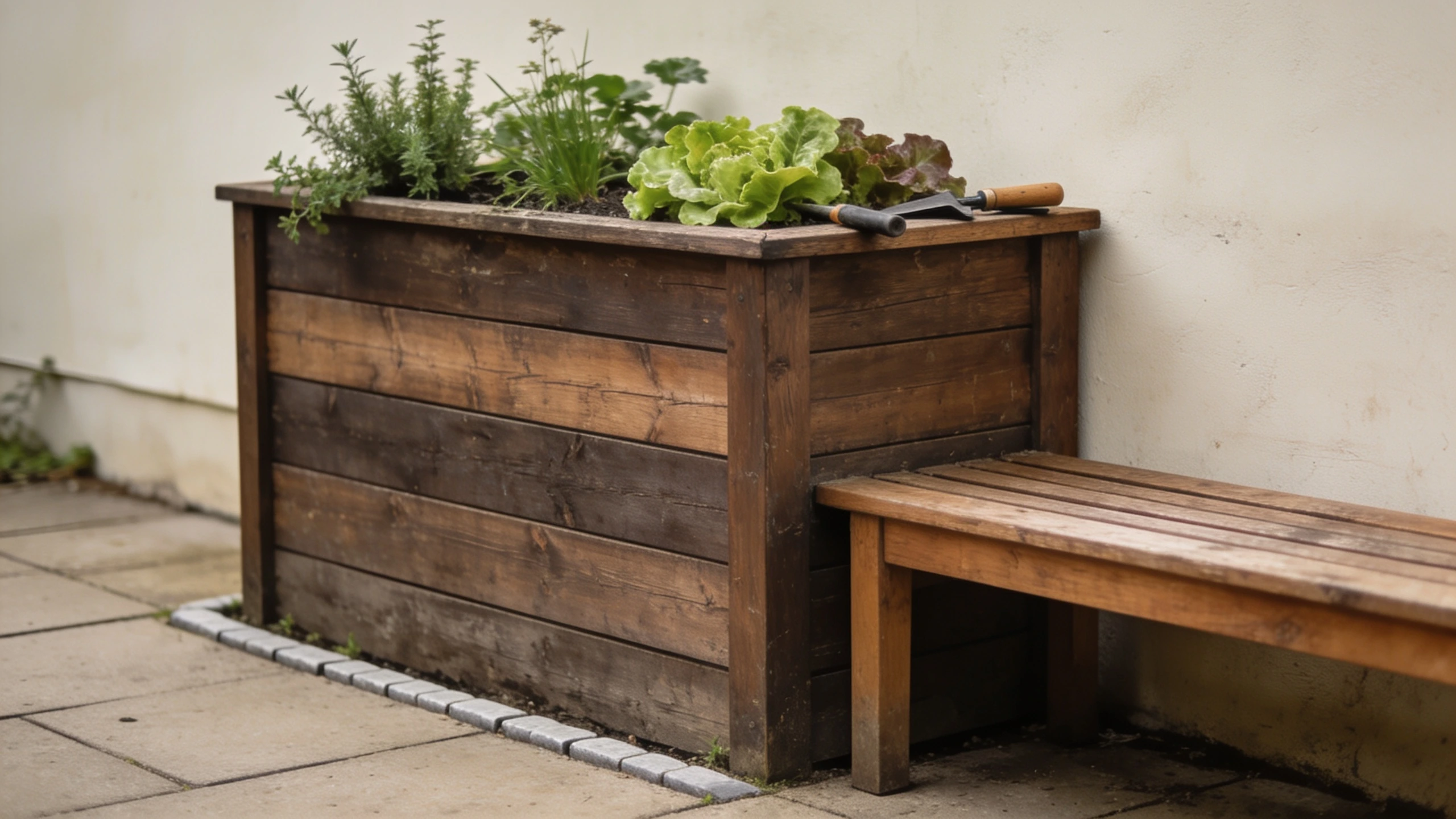
Raise the work to you. Beds at 75 to 90 cm let someone garden standing or seated. A potting bench at the same height does the same job for anything in pots.
Make the routes firm, level and wide. A path you can take with a stick, a frame or a wheelchair, at 1.2 m where you need to turn. Gravel looks lovely and is difficult on wheels.
Put a seat in the garden, not just at the edge. Somewhere to stop halfway means being out there for longer, and being out there is the active ingredient.
And keep tools where you will find them. A rail by the door, not a shed you have to open up first. The HSE guidance on musculoskeletal load is written for workplaces but the principles on reach, repetition and posture apply directly to a border.
The small routine that seems to matter most#
From what I have seen, the reliable version is not a project. It is a short repeatable task at a predictable time.
Watering the pots before coffee. Cutting something for the kitchen on the way in. Ten minutes of deadheading. Small, finishable, and it happens again tomorrow.
Projects are the enemy here, because a project has a deadline and a state of incompleteness. A routine has neither.
Where this needs a professional rather than a page#
Some situations genuinely call for someone trained, and I would rather say so than pretend otherwise.
Dementia care, where garden design decisions around wayfinding, familiar planting and safety are specialised.
Rehabilitation after injury or stroke, where activity needs matching to capability by someone who can assess it.
Any setting where a garden is part of someone's care plan rather than their hobby.
And bereavement, which overlaps with this topic and has its own support. Cruse is the UK charity for that, and a memorial planting is often better made slowly than quickly.
Nothing on this page is medical advice, and if you are struggling with your mental health, a garden is a good addition to support rather than a replacement for it.
Where the guidance here comes from#
The design principles are drawn from published horticultural therapy practice, principally Thrive and the American Horticultural Therapy Association, plus what has worked in my own garden and what readers have told me. I have deliberately not quoted effect sizes, because the research base does not support that level of precision even though the general direction is well supported. Where a page like this cites a striking statistic, it is usually worth checking the sample size.
The short version#
Horticultural therapy is a profession, and gardening for wellbeing is available to anyone this afternoon. Make it forgiving: one pot before one bed, fast and fragrant plants, big containers, mulch, raised beds and a firm path, and fewer plants than you have room for. Then build a two minute routine rather than a project.
Related reading#
- Gardening tools for seniors and arthritic hands: the tools that reduce force and bending.
- Garden kneelers and seats: how to work at ground level and get back up.
- Low-maintenance garden ideas: the forgiving planting this page keeps recommending.
- Small balcony garden ideas: the version of all this without a garden.
Frequently asked questions
What is horticultural therapy?
It is the use of plants and gardening activity as part of a treatment or care plan, run by a trained practitioner with defined goals for a specific person. That is different from gardening being good for you, which is true but is not therapy. The distinction matters if you are looking for support: a therapeutic horticulture programme is delivered by someone qualified, often through a charity, a hospital or a care setting.
Does gardening actually help mental health?
The general picture is consistent and positive across a lot of research: time in green space, light physical activity and a sense of purpose all appear to help mood, and gardening delivers all three at once. I would be careful about specific numbers, because study quality varies and many are small. What I can say from my own experience and from what readers tell me is that the reliable ingredient is a short repeatable task, not a big project.
How do I start gardening for wellbeing if I have no energy?
Start absurdly small, smaller than feels worth doing. One pot of something fast, on a windowsill you already pass. Cress or radish germinates within a week, and visible progress in days is what makes the next step happen. The failure mode is starting with a whole bed, feeling behind by week three, and adding one more thing you are letting down.
What should I plant for a therapeutic garden?
Things that grow fast, smell strong and survive neglect. Mint, lemon balm, marjoram, rosemary and lavender all give you scent when you brush past, which is a reward that needs no waiting. Radish, cress and salad leaves give visible results in days. Avoid anything demanding or fussy, because a plant that dies when you have a bad fortnight becomes evidence against you.
Is horticultural therapy suitable for dementia?
It is used widely in dementia care and there are practitioners who specialise in it. The design principles differ from an ordinary garden: circular paths that always return, strongly scented and familiar plants, raised beds at working height, no trip hazards and no toxic species. This is an area where getting proper guidance is worth it rather than improvising, and a specialist charity is the place to start.
Can gardening make anxiety worse?
It can, if the garden becomes a list of obligations. A garden that needs daily watering to survive is a garden that can fail while you are unwell, and that is the opposite of helpful. Design for forgiveness: drought-tolerant planting, mulch, big containers rather than small ones, and deliberately fewer plants than you have room for.
Where can I find a horticultural therapy programme?
In the UK, Thrive is the main charity working in this field and runs programmes and training. In the US, the American Horticultural Therapy Association keeps a register of practitioners and accredited programmes. Local hospices, community gardens and allotment associations often run something informal that is worth asking about.
Topics in this article
About the author
Jeff has gardened professionally for over twenty years, mostly on heavy clay, and writes everything here from beds he still works himself. More from Jeff Tanun →
Keep reading
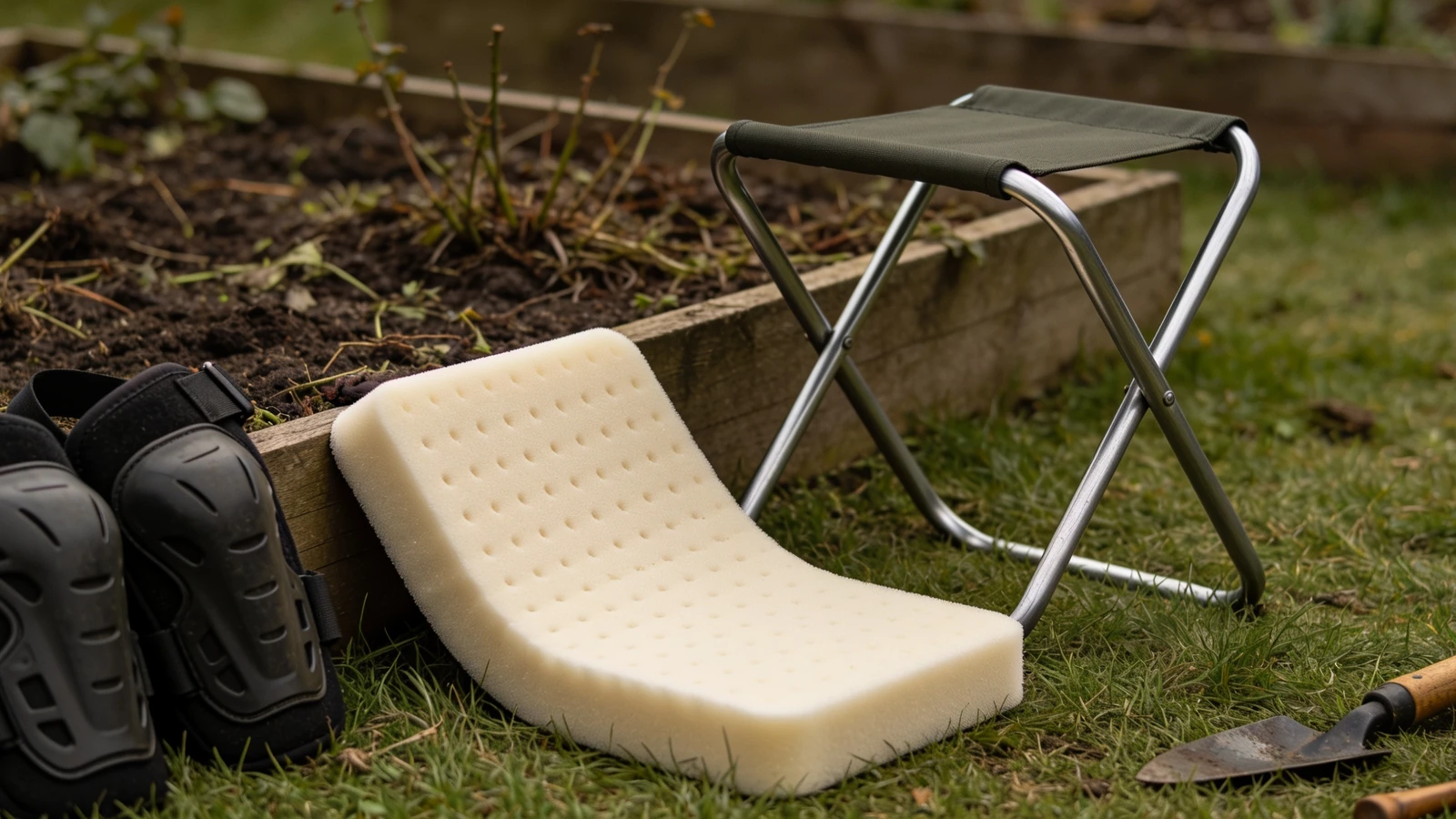
Garden Kneelers & Seats
Kneeling pads, kneeler-seats, rolling stools and garden trolleys compared, what each is genuinely good for, and what to check before you buy.
Updated
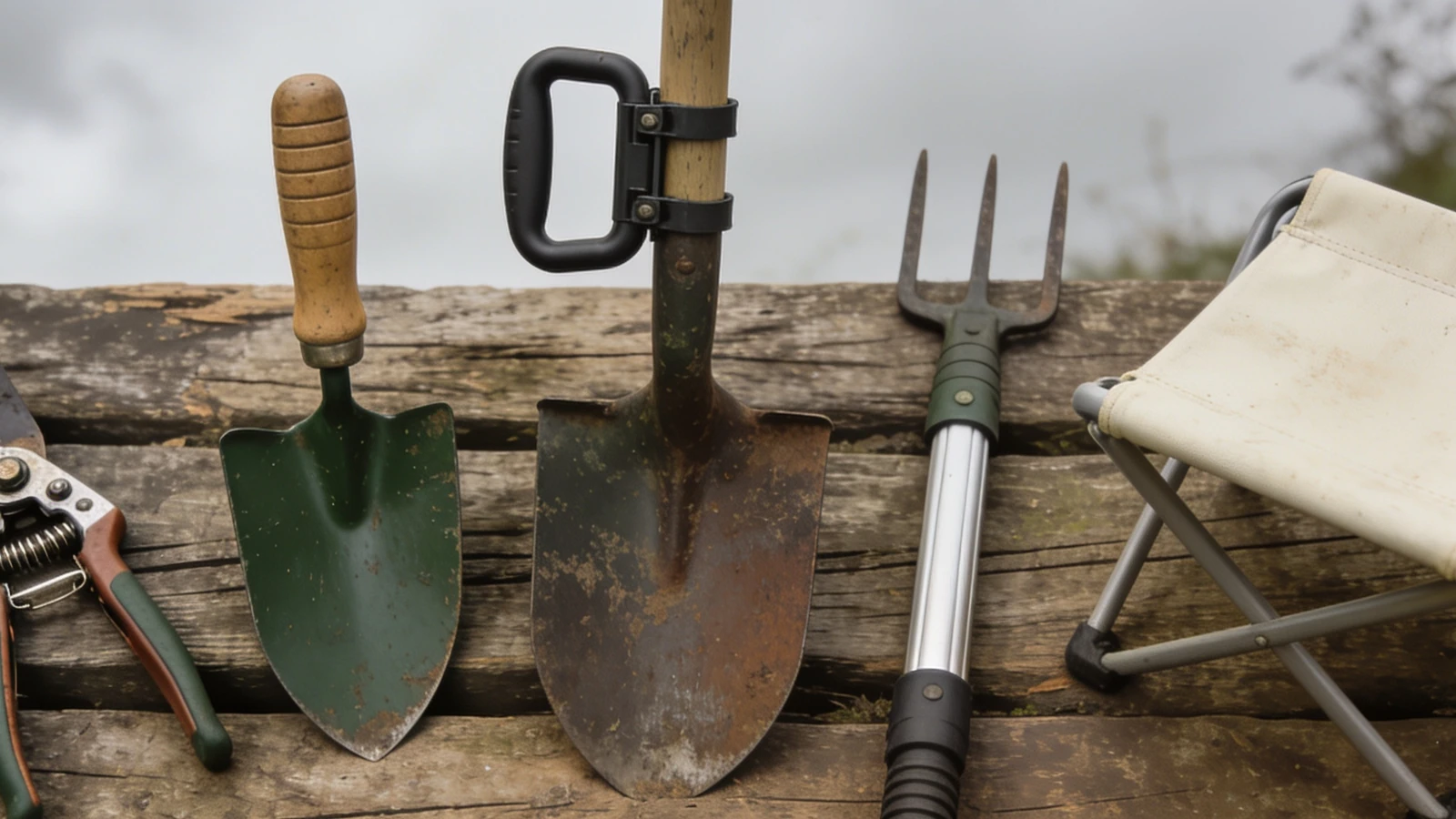
Gardening Tools for Seniors
Ergonomic garden tools that reduce grip force, wrist strain and bending, plus the design details that matter more than the word “ergonomic” on the packaging.
Updated
Victory Garden Ideas
A victory garden was a wartime plan to feed a household from a small plot. What they grew, what actually worked, and how the same approach holds up now.
Updated