Kitchen Gardening: Grow What You Actually Cook With
Kitchen gardening works when you plant what you cook with and put it near the door. Here is how I lay one out, and how to avoid the August glut.
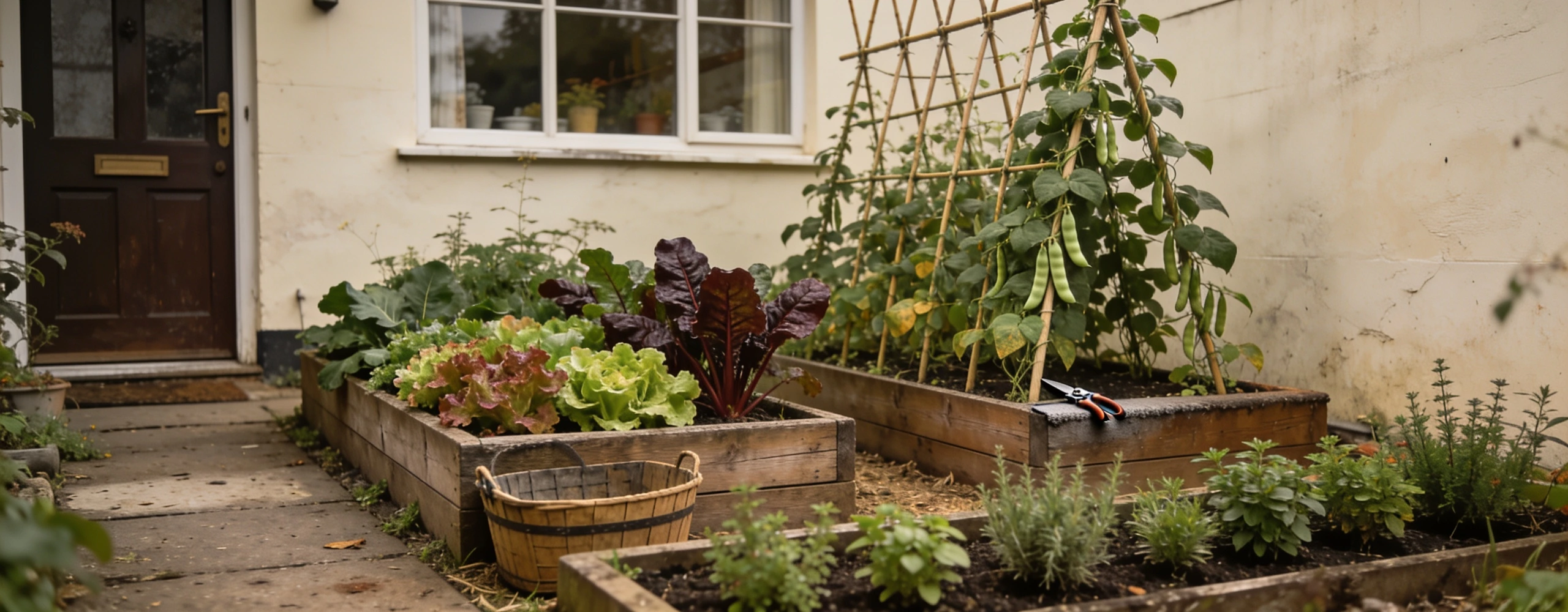
A kitchen garden is not a small farm. The point is not volume, it is being able to walk out with scissors in the middle of cooking something and come back with what you needed.
The short answer
Kitchen gardening works on two rules. Plant what you actually cook with and would otherwise buy, and put the things you pick most often nearest the door. Then sow small amounts every two or three weeks instead of whole packets at once. Two beds of about 1.2 by 2.4 metres is plenty for a household.
That is the whole method. The rest of this is layout, what I would plant, and the one problem every productive garden runs into in August. If you are starting from bare ground, how to start a garden covers building the bed first.
Kitchen gardening starts in the kitchen, not the garden#
Almost everyone gets this backwards at the start, myself included. You read about a crop, it sounds satisfying to grow, you plant it, and then it sits there because it is not what you eat.
So work from the kitchen instead. Two questions:
What do I buy most often? Herbs, salad and spring onions for most households.
What is genuinely worse from a shop? Tomatoes, obviously. Also basil, which arrives half dead. Also anything picked and eaten inside ten minutes, which is a category no shop can compete in.
And the reverse, which saves more space than anything else: skip things that are cheap and perfectly good in shops. Onions, maincrop potatoes, carrots and cabbage all take up months of bed for something you can buy for very little. Grow them if you enjoy growing them, not because a kitchen garden is supposed to have them.
Lay it out by how often you pick#
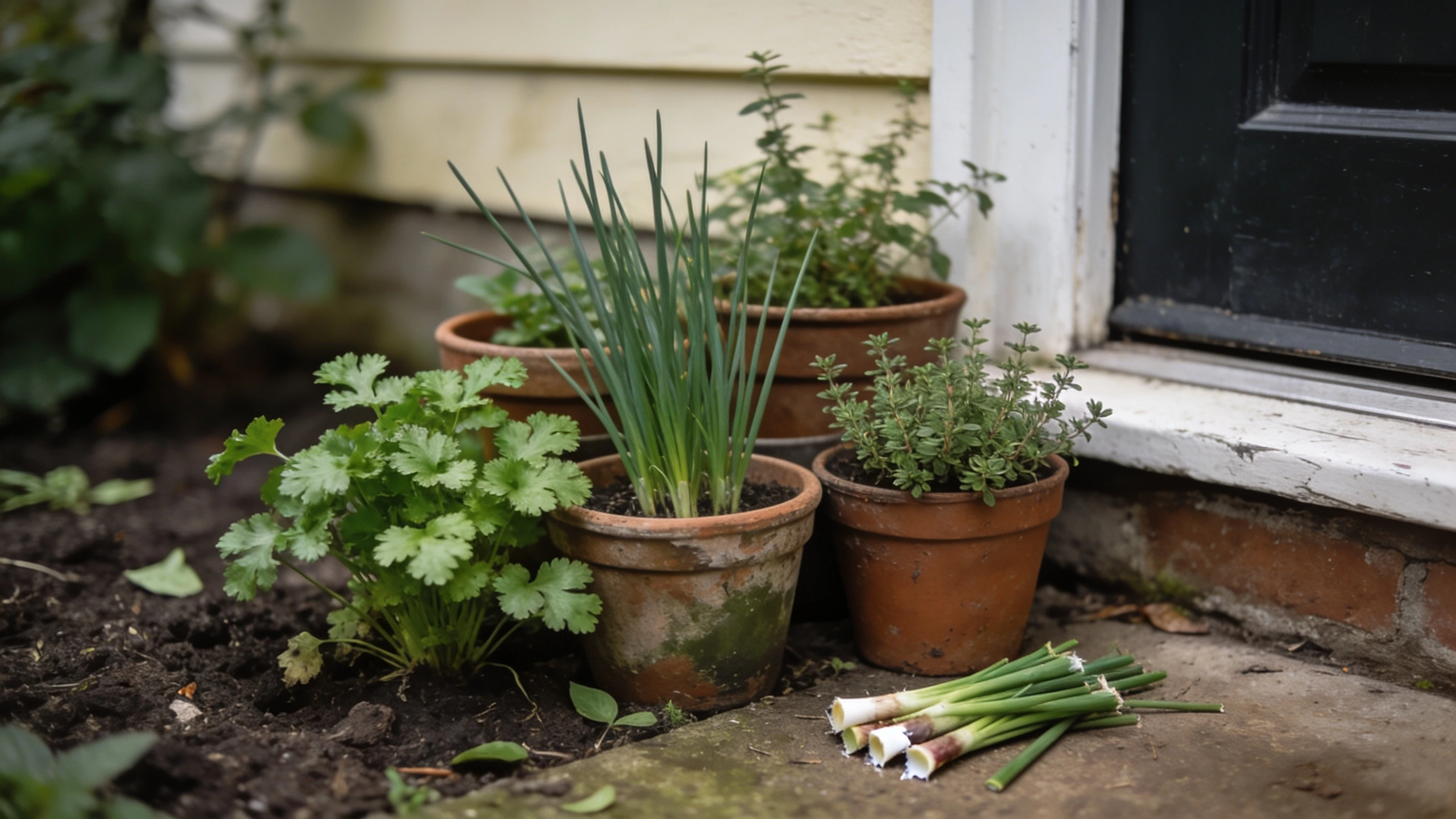
This is the design principle and it is the one people find surprising. Not aesthetics, not crop rotation, not height. Picking frequency.
Herbs first, right by the door. You cut them in tiny amounts, often, usually mid-cooking, and often in the rain or the dark. If they are thirty seconds away you use them. If they are at the end of the garden you buy a packet instead.
Salad and cut-and-come-again leaves next. Picked two or three times a week.
Then beans, courgettes, chard. Picked once or twice a week.
Then anything harvested once, like potatoes or garlic. Those can go anywhere, including the worst bed.
The whole layout falls out of that list, and it is why a kitchen garden looks different from a vegetable plot.
Cut-and-come-again is the best value in the garden#
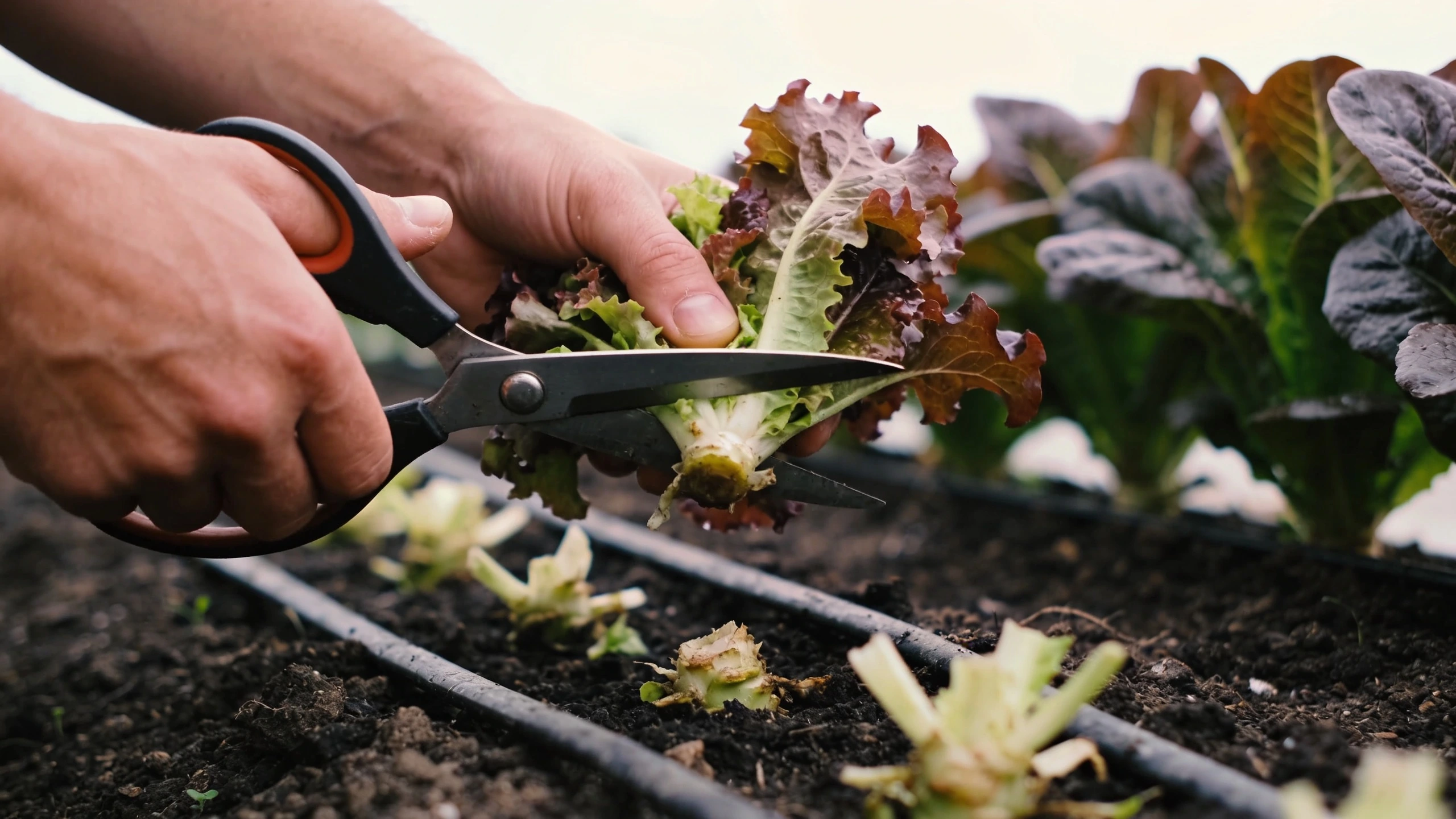
If you grow one thing, grow loose-leaf salad and pick it this way. Take the outer leaves, or cut the whole plant about an inch above the crown, and it grows back.
Rocket, loose-leaf lettuce, chard, spinach, mustard and kale all do it. You get four or five pickings from one sowing over roughly two months, which is a completely different proposition from hearted lettuces where you cut once and it is over.
A packet of mixed leaf seed costs a couple of pounds and replaces a supermarket bag every week through summer. Nothing else in a garden has that ratio.
Sowing little and often, which fixes the glut#
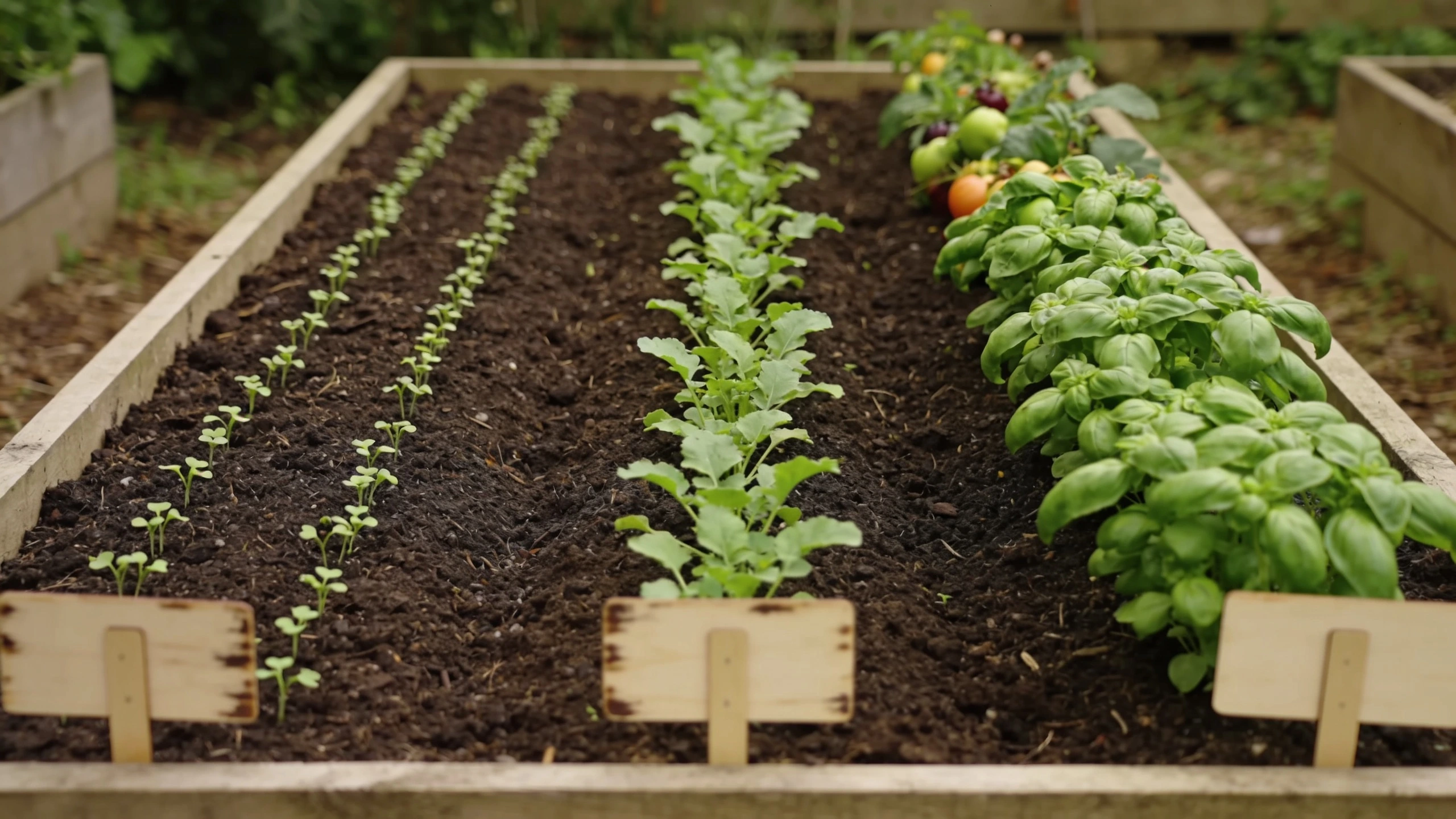
The instinct with a seed packet is to sow the lot. Then everything is ready in the same fortnight, you cannot eat it, and the rest bolts.

So sow a short row every two or three weeks instead. Radish, salad, spring onions, spinach, carrots and beetroot all suit it. It takes the same total effort, spread out, and you get a supply rather than a flood.
For crops you cannot stagger, plant fewer. This is the harder discipline.
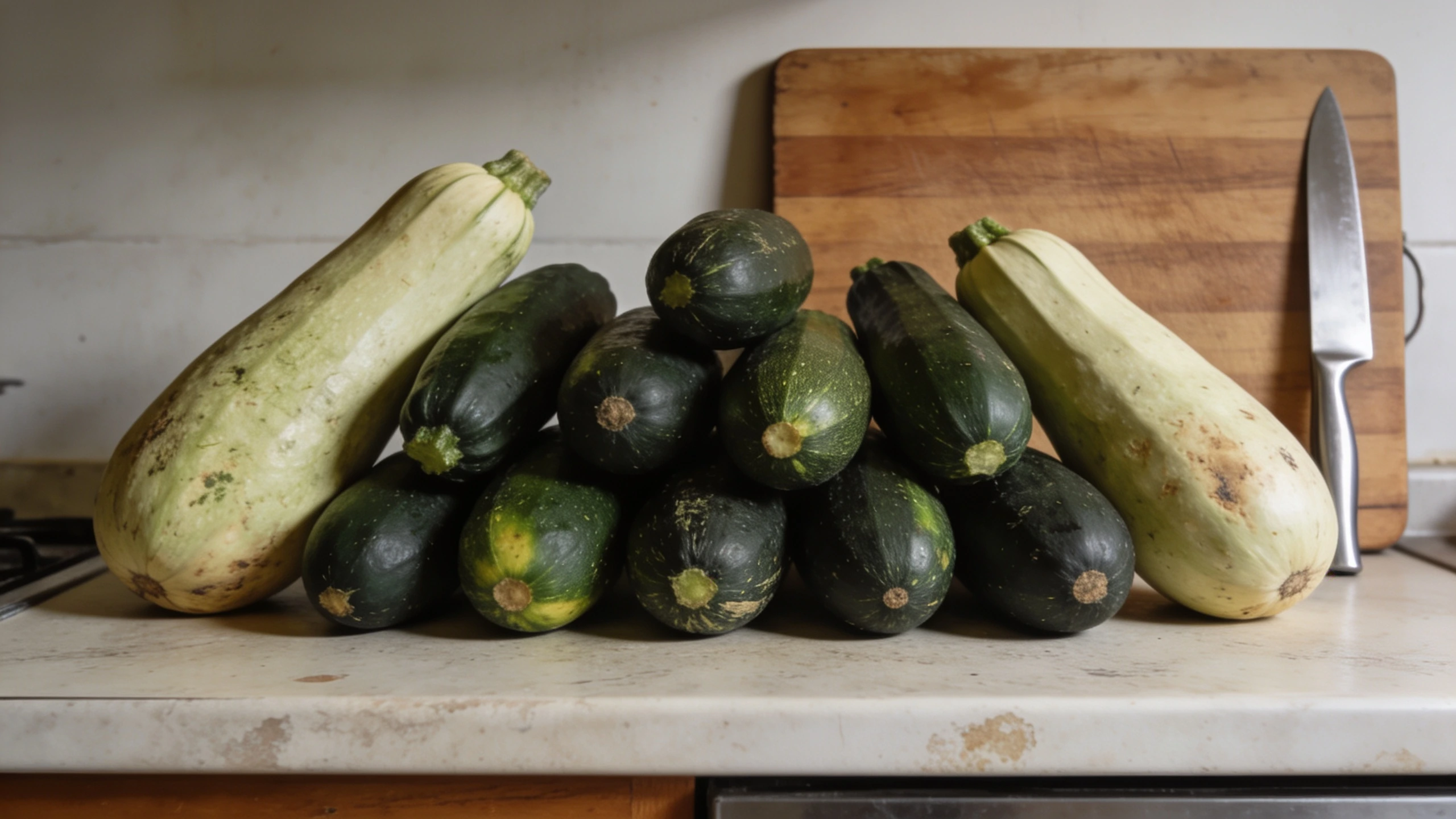
One courgette plant per two people. One or two cherry tomatoes. Nobody has ever regretted planting fewer courgettes.
Grow upwards to get more from the same bed#
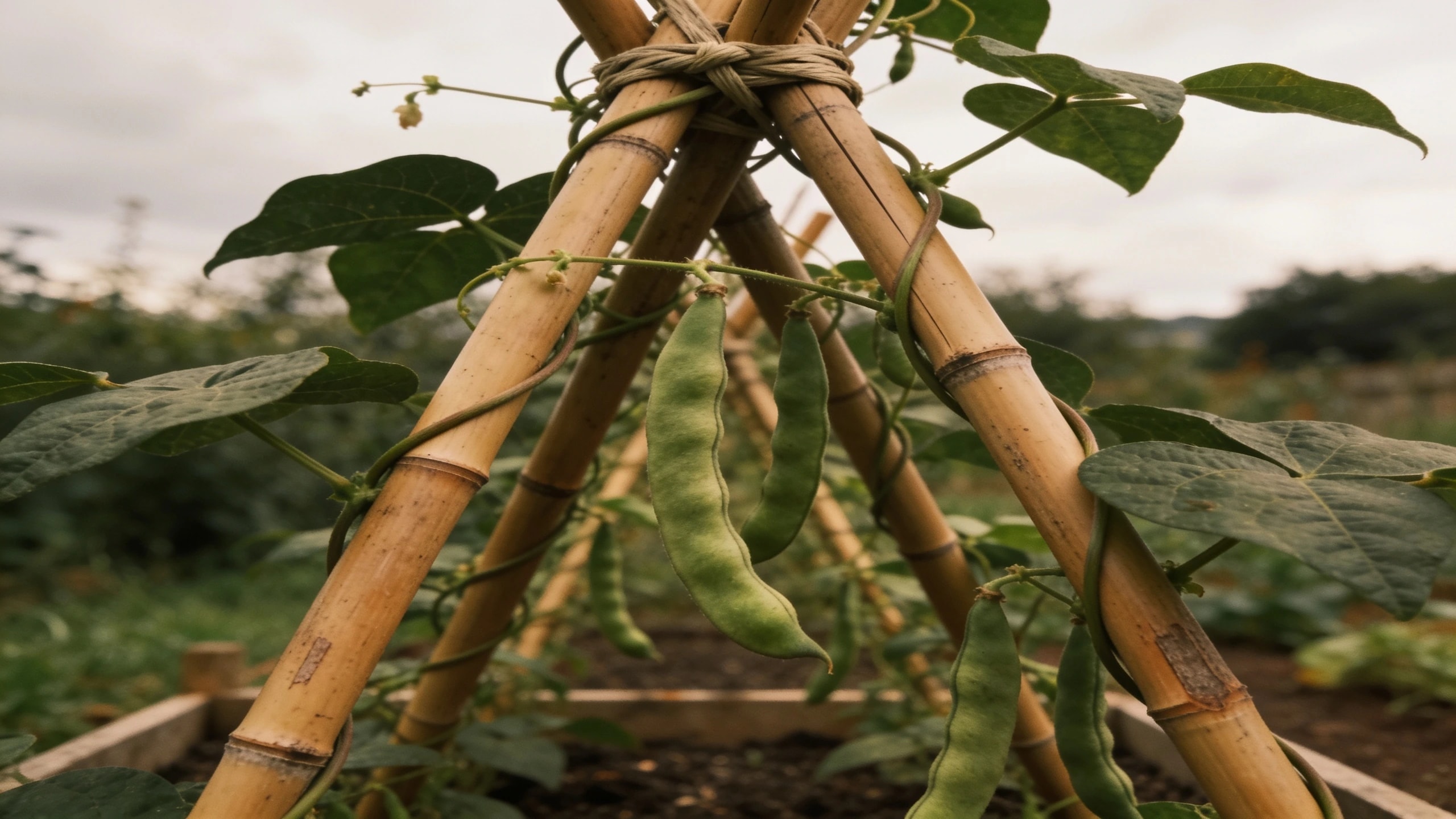
A wigwam of five or six canes takes about a square foot of bed and gives you a column of beans. Climbing varieties also crop for considerably longer than dwarf ones, which suits a kitchen garden where you want a trickle rather than a fortnight.
The same applies to peas on netting, cucumbers up a string, and tomatoes trained to a single stem against a wall. In a small productive garden, anything that goes vertical is buying you floor space.
What I would plant in two small beds#
Bed one, nearest the door. A block of soft herbs at the front: parsley, chives, coriander, basil in summer. Then two rows of cut-and-come-again salad, sown in succession. Then spring onions.
Bed two. A cane wigwam of climbing beans at the back. Chard, which will still be going after the first frosts. One courgette in the corner where it can sprawl. One or two cherry tomatoes if you have six hours of sun.
In pots by the wall. Mint, which will take over a bed if you let it. Rosemary and thyme, which prefer the drainage. A bay if you use it.
That is a kitchen garden. It fits in about six square metres, takes half an hour a week once planted, and you will pick from it several times a week rather than making an expedition.
Mistakes I see most#
Growing what sounds impressive. Asparagus takes three years before you cut a spear. Fine if you want it, wrong as a first crop.
Sowing the whole packet. The single most common cause of waste.
Putting the herbs at the far end. They get picked in proportion to how close they are.
Too many courgette plants. See above.
Growing onions and maincrop potatoes in a small plot. Months of bed for something that costs almost nothing.
Forgetting to leave a path. If you cannot reach the middle of a bed without stepping on it, you will step on it, and you will compact the soil you just built.
When this does not apply#
If you want to grow a serious proportion of your own food, this is not the right model. That needs an allotment or a large plot, proper rotation and storage crops, and a different set of decisions.
If your only space gets under four hours of sun, run it as a herb and leaf garden and be happy with it. Tomatoes will not ripen and no amount of feed changes that. Urban gardening covers working within that.
If you travel a lot in summer, containers are risky and beds are more forgiving, because a mulched bed will survive a week and a pot will not. Watering deeply rather than daily covers the technique that buys you the most slack.
And if you have a slug problem, salad is their favourite thing in the garden. Grow it in raised troughs or containers rather than at ground level, and check under the mulch every few days.
How I know this#
The layout logic and the succession intervals here are standard practice rather than anything I have measured, and the timings are the usual ranges on seed packets. I have cross-checked crop choices and sowing intervals against the Royal Horticultural Society advice pages and Oregon State Extension gardening.
Where a figure is a working band, the text says so. Our editorial policy explains how corrections work.
Bottom line#
Write down what you actually buy and cook with. Plant that, and skip the crops that are cheap and good in shops.
Put the herbs within arm's reach of the door, salad next, and everything harvested once at the far end. Sow short rows every two or three weeks rather than whole packets. Plant one courgette, not three.
Two beds of about 1.2 by 2.4 metres will do it, and you will pick from them several times a week, which is the only measure of a kitchen garden that matters.
For the beds themselves, raised bed garden layout ideas covers dimensions and path widths.
Frequently asked questions
What is a kitchen garden?
A small plot grown for the kitchen rather than for show, usually close to the house, planted with the things you cook with most. It is different from an allotment in scale and intent: you are not aiming for self-sufficiency, you are aiming to walk out mid-recipe and pick something. That changes what you plant and where you put it.
What should I grow in a kitchen garden?
Start with what you buy most and what tastes worst from a shop. Soft herbs, salad leaves, chard, spring onions, climbing beans and cherry tomatoes all qualify. Skip anything cheap and good in the shops, such as onions, maincrop potatoes and carrots, unless you particularly enjoy growing them.
How do I stop everything being ready at once?
Sow small amounts often rather than a whole packet at a time. A short row of salad or radish every two or three weeks gives you a steady supply instead of forty radishes in one week. For crops you cannot stagger, like courgettes, plant fewer than you think: one plant genuinely feeds two people.
How big does a kitchen garden need to be?
Two beds of about 1.2 by 2.4 metres will keep a household in salad, herbs, beans and chard through a season, plus enough tomatoes to notice. If that sounds small, that is the point. A kitchen garden you pick from four times a week beats a larger one you visit at weekends.
What is cut-and-come-again?
Picking a few outer leaves rather than pulling the whole plant, so it keeps growing. Loose-leaf lettuce, rocket, chard, spinach and kale all work this way. Cut about an inch above the crown with scissors and you get four or five pickings from one sowing over roughly two months, which is far better value than hearted lettuces.
Where should a kitchen garden go?
As close to the kitchen door as the light allows, and light wins if the two conflict. Six hours of sun grows everything. Four grows leaves and herbs well. What matters after that is the walk: things planted more than about thirty seconds from the door get picked less, and things that get picked less get eaten less.
Can I have a kitchen garden in pots?
Yes, and it suits herbs and salad particularly well because both need little root depth. Use 30 to 40 litre containers for anything that fruits, and group them together so they dry out more slowly. The limit is not floor space, it is how much watering you are willing to do in July.
Topics in this article
About the author
Jeff has gardened professionally for over twenty years, mostly on heavy clay, and writes everything here from beds he still works himself. More from Jeff Tanun →
Keep reading
Gardening for Wellbeing
Horticultural therapy explained: what it is, what the evidence supports, and how to set up a garden that helps rather than becomes another thing you owe.
Updated
Witches Garden
A witches garden is a historical herb garden. What was actually grown and why, which plants are genuinely dangerous, and a safe planting plan that still looks the part.
Updated
Victory Garden Ideas
A victory garden was a wartime plan to feed a household from a small plot. What they grew, what actually worked, and how the same approach holds up now.
Updated