Victory Garden Ideas: The Original Grow Your Own
A victory garden was a wartime plan to feed a household from a small plot. What they grew, what actually worked, and how the same approach holds up now.
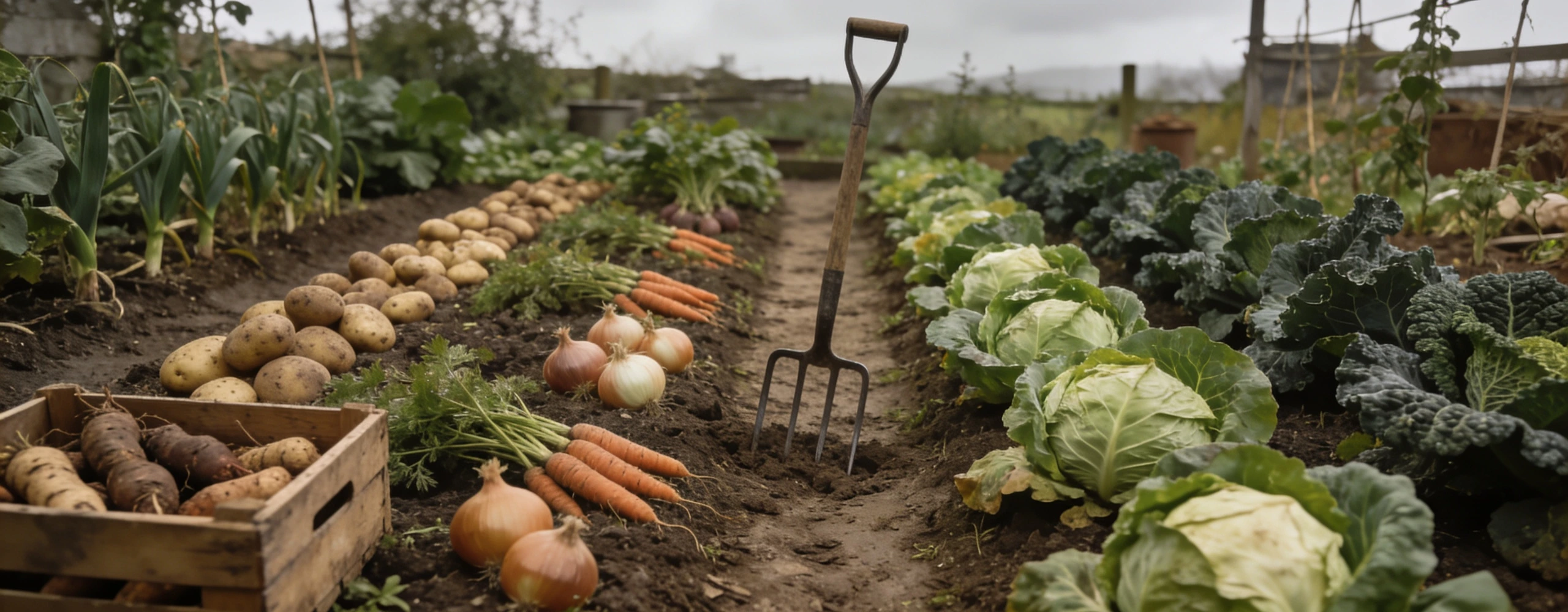
A victory garden was the original grow your own: a wartime plan to get real food out of a small piece of ground, written for people who had never gardened and could not afford to fail. I came to the old plans out of curiosity and stayed because they are better briefed than most modern gardening advice. They had to work.
The short answer
The wartime approach was calories and storage first: potatoes, onions, carrots, parsnips, beetroot, cabbage, kale, leeks, broad beans and peas, on roughly 50 to 90 square metres. The modern version keeps the discipline and changes the crop list, because the constraint now is value per square metre rather than shipping. That means more salad, herbs, chard and climbing beans, and fewer maincrop potatoes.
What a victory garden actually was#
Worth getting the history right, because the phrase has drifted into meaning any vegetable patch.
During both world wars, governments in Britain, the US, Canada and Australia pushed home food growing hard. Britain's Dig for Victory campaign came with printed plans, radio programmes and a national push to turn lawns, parks and railway embankments into vegetable ground. The US ran a parallel campaign that reached millions of households.
The scale was real. By the mid 1940s these gardens were supplying a substantial share of the fresh vegetables eaten in several countries, which is a genuinely remarkable thing for amateur growers on small plots to have achieved.
What interests me is not the nostalgia. It is that the plans were written under constraints that make them unusually honest: no fridge, no plastic tunnel, limited seed, limited time, and a household that needed the food.
Key points
- Crops were chosen for how many people a row would feed, and whether they would keep without refrigeration.
- Storage was half the plan. A crop that fed you in February was worth more than one that fed you in July.
- Plots were small and worked intensively, typically 50 to 90 square metres per household.
- Successions were built in from the start, because a glut you cannot store is a waste of ground.
- Nothing decorative. Every square metre had to justify itself, which is a useful discipline to borrow.
The original crop list, and why each one earned its place#
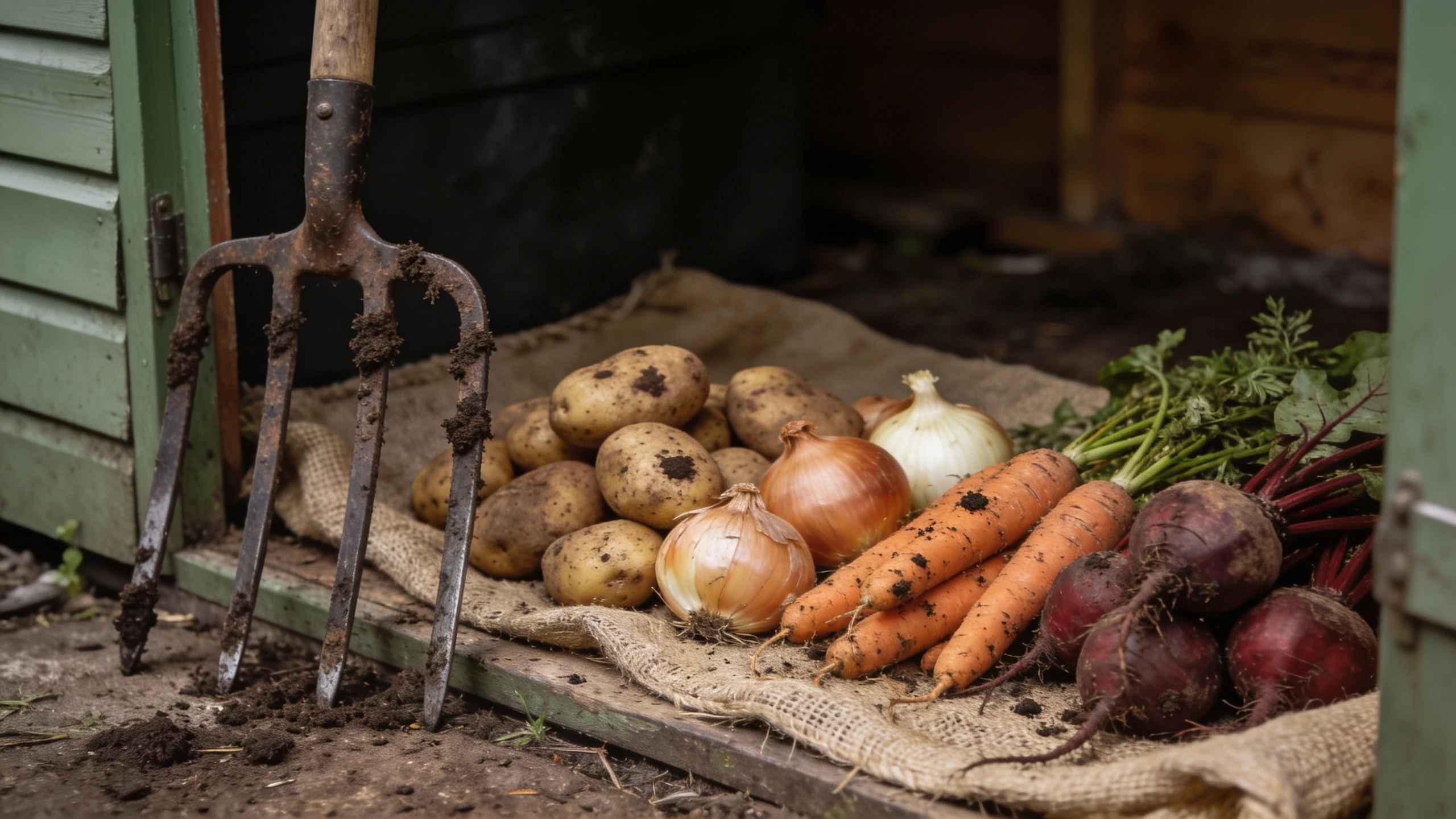
- Potatoes
- The backbone. Highest calories per square metre of anything they could grow, and they store for months in the dark.
- Onions and leeks
- Flavour for everything else, and onions keep until spring if dried properly. Leeks stand in the ground through winter, which is even better than storing.
- Carrots and parsnips
- Store in sand or leave in the ground. Parsnips actually improve after frost, which made them a February crop.
- Beetroot
- Stores well, and the leaves are edible, which mattered when nothing was wasted.
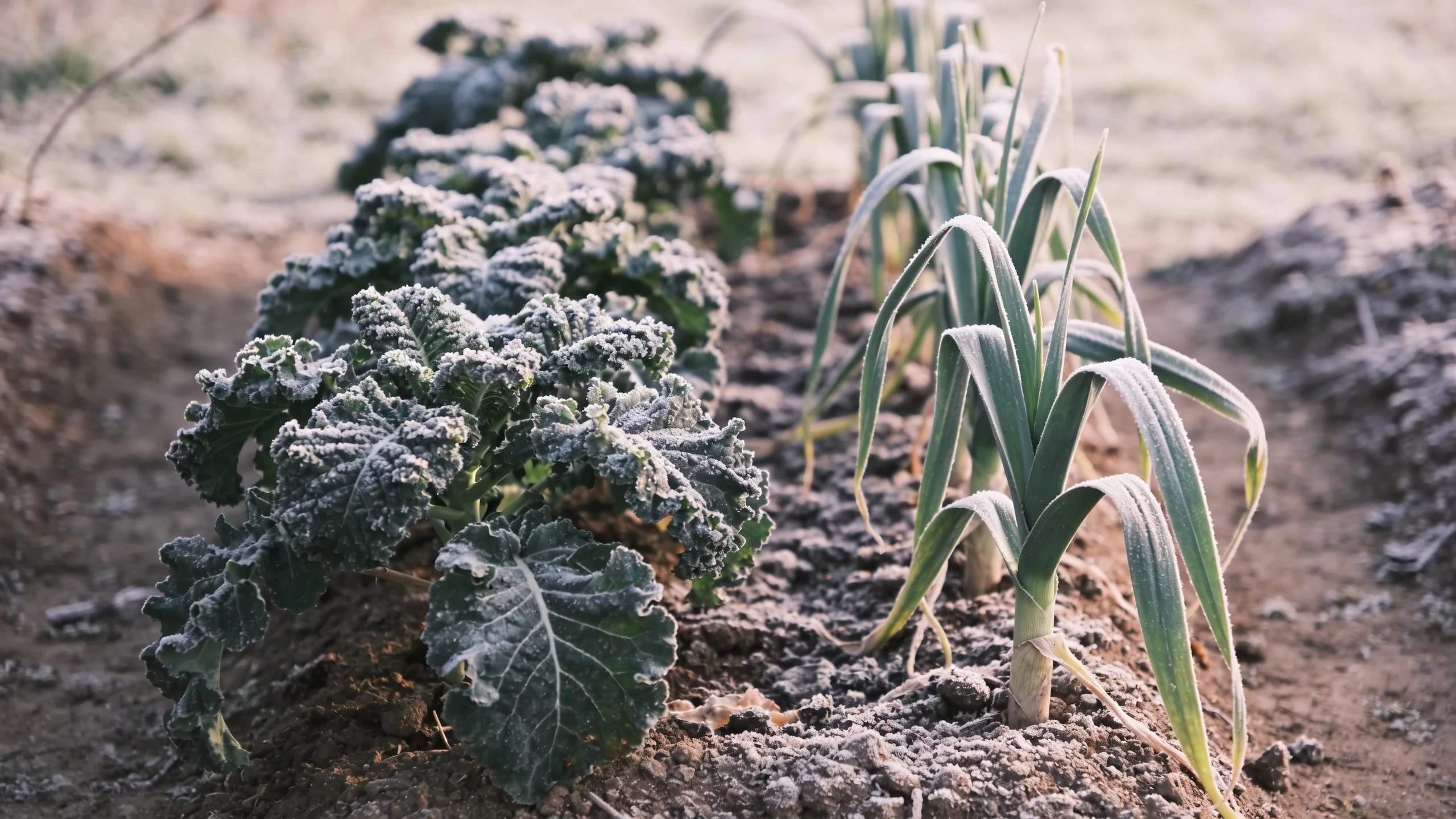
- Cabbage and kale
- Standing crops through winter. Kale in particular survives almost anything and keeps cropping.
- Broad beans and peas
- Protein, an early crop, and they fix nitrogen for whatever follows them. Dried peas stored indefinitely.
- Turnips and swede
- Bulk, storage and animal feed. Grown widely then, and grown far less now, which I think is fair enough.
What I would change for a modern plot#
Here is where I would depart from the old plans, and the reasoning matters more than the list.
The wartime constraint was supply. Getting food to a household was hard, so growing bulk calories at home was rational even though potatoes are cheap to produce commercially.
Your constraint is different. Potatoes, onions and carrots are among the cheapest things in any shop, and they take a lot of ground for a long season. Salad, herbs and soft fruit are expensive, perishable and often poor quality by the time you buy them.
So the modern version inverts part of the list:
- Grow more of
- Salad leaves, herbs, chard, climbing beans, courgettes, raspberries, blackcurrants, tomatoes. Expensive to buy, better fresh, high value per square metre.
- Grow some of
- Beetroot, kale, leeks, peas, early potatoes. Genuinely better home grown, and earlies are worth the ground in a way maincrop is not.
- Grow for interest only
- Maincrop potatoes, onions, carrots, swede. Cheap to buy, long season, a lot of ground. Grow them because you want to, not to save money.
- Keep the wartime habits
- Successions, storage, using the whole plant, and planning the winter in July. These are the parts that have not aged at all.
A plan for a small modern plot#
Scaled to about 15 square metres, which is a realistic back garden bed rather than an allotment.
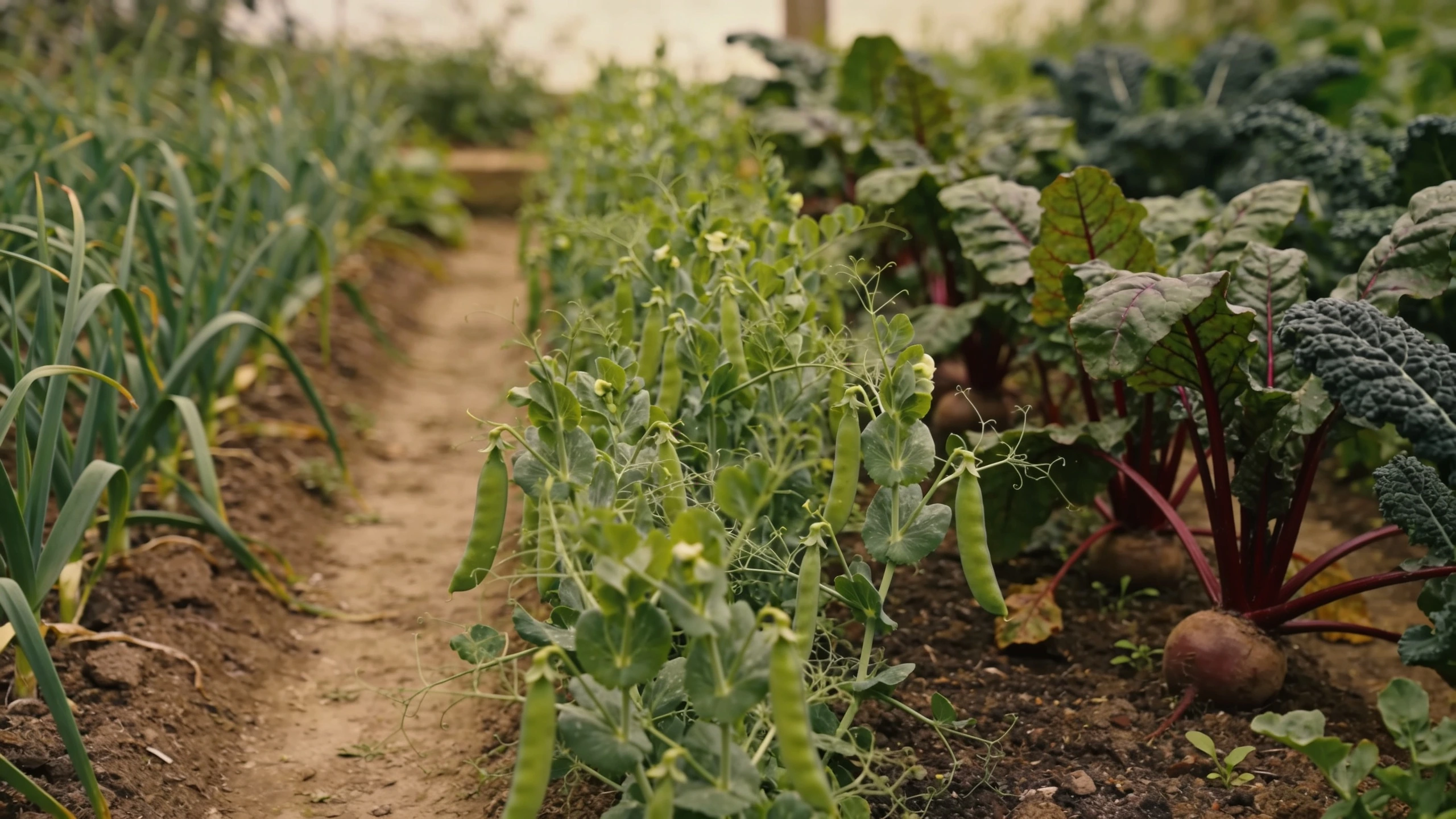
- Bed 1, roughly 4 sq m
- Salad and quick crops, sown in short rows every fortnight from April. Highest value per square metre of anything here.
- Bed 2, roughly 4 sq m
- Climbing beans on a net, with chard underneath. Beans crop for two months, chard from summer through to spring.
- Bed 3, roughly 4 sq m
- Beetroot and carrots in blocks, followed by kale and leeks in August for the winter.
- Bed 4, roughly 3 sq m
- Courgette and a couple of tomatoes, or first early potatoes in a bag if you want the wartime feel.
- Edges and gaps
- Herbs along every path edge. They cost nothing in space and are the most expensive thing in the shop.
That plan will not feed a household, and I would not pretend otherwise. It will supply the vegetable side of a lot of meals from May to October and something through the winter, which is a real result.
The honest arithmetic on saving money#
I want to be careful here, because this is where grow your own writing tends to overclaim.
Some crops beat shop prices clearly. A packet of salad seed costs a few dollars and produces repeatedly over months; supermarket bagged salad is expensive and short lived. Herbs are the same story only more so. Climbing beans and raspberries are both expensive to buy and heavy croppers at home.
Other crops do not. A sack of maincrop potatoes or a bag of onions costs very little, and growing them takes a bed for most of the year.
And there is a cost side people leave out: compost, seed, water, and the first year of tools and beds. My own view is that a productive garden pays for itself in food eventually and pays for itself in other ways immediately, and that anyone quoting you a precise return per square metre is guessing.
What the old plans got right that we forget#
Three things, and I have adopted all three.
Storage as part of the plan rather than an afterthought. Deciding in March what you intend to be eating in January changes what you sow.
Using the whole plant. Beetroot leaves, pea shoots, radish pods, chard stems. All perfectly good food, all routinely composted now.
Narrow paths. The wartime plans were ruthless about giving up walking space to get another row in. Modern advice, mine included, is much more generous about paths, and for a small plot the old approach is worth considering.
Where this needs adjusting#
If you have containers rather than ground, drop the root and storage crops entirely and go all in on salad, herbs, chard and a climbing bean. The wartime list assumes soil.
In a short season or a cold zone, the winter standing crops matter more and the maincrop potatoes matter less. Check your own frost dates before copying any sowing calendar, including mine.
And if the plot is shaded, be realistic: leaves and roots will manage, fruiting crops will not. That is a light problem and no plan solves it.
Where the guidance here comes from#
The history is well documented in national archive and library collections, and many of the original leaflets are digitised and free to read. I would encourage looking at one, because they are unusually clear documents. For the growing itself, the RHS advice on growing your own covers spacing, timing and storage properly, and Garden Organic is the better source on rotation and soil fertility over several seasons, which is what an intensively worked small plot depends on.
The short version#
Borrow the discipline, not the crop list. Plan for storage and for winter, sow successions rather than long rows, use the whole plant, and choose crops by value per square metre rather than by tradition. That means more salad, herbs and beans than 1943 would have advised, and it is the same idea applied to a different shortage.
Related reading#
- How to start a vegetable garden: the step by step version for a first year.
- Garden planner: the sowing list and rotation this plan depends on.
- Raised bed garden layout ideas: bed sizes and spacing for a small intensive plot.
- Vertical gardening: how the climbing beans in this plan get four times the crop per square metre.
Frequently asked questions
What was a victory garden?
A home vegetable plot grown during the First and Second World Wars to reduce pressure on food supply and shipping. Governments in Britain, the US, Canada and Australia promoted them heavily, with printed plans, radio programmes and seed distribution. They were grown in back gardens, on allotments, in parks and on any spare ground, and by the mid 1940s they supplied a substantial share of fresh vegetables in several countries.
What did people grow in a victory garden?
Calorie and storage crops first, not salad. Potatoes, onions, carrots, parsnips, beetroot, cabbage, kale, leeks, broad beans and peas. The choices were driven by two things: how many people a row would feed, and whether the crop would keep through winter without a fridge. Tomatoes and lettuce were grown, but they were treated as a bonus rather than the point.
Can a victory garden really feed a family?
It can supply a meaningful share of a household's vegetables, and it will not supply calories, protein or fat at any realistic scale. The wartime plans typically assumed around 50 to 90 square metres per household and produced a real contribution to the vegetable side of the diet. Anyone promising self sufficiency from a back garden is selling something.
How big does the plot need to be?
The classic wartime plans worked to roughly 50 to 90 square metres, which is about the size of a modest back lawn or a standard allotment strip. At around 15 square metres you can grow a genuinely useful supply of a few crops. At 3 square metres or in containers, focus on the highest value things per square metre: salad, herbs, chard and climbing beans.
Is growing your own actually cheaper?
For some crops clearly yes, for others clearly no. Salad leaves, herbs, chard, climbing beans and raspberries beat shop prices by a wide margin. Potatoes, onions and carrots are so cheap to buy that you grow them for flavour, variety or satisfaction rather than savings. The wartime logic was different again: the constraint was supply and shipping, not price.
What is the modern version of a victory garden?
Same principle, different pressure. Choose crops by value per square metre rather than by tradition, grow what you cannot buy well, and lean on successions so the supply is steady rather than a glut. In practice that means a lot more salad, herbs and beans, and fewer maincrop potatoes than a 1943 plan would have specified.
Where can I see the original plans?
Many wartime leaflets and posters are held in national archives and library digital collections, and several are free to view. They are genuinely useful documents, because they were written for people with no experience, limited tools and a real need to succeed, which is a sharper brief than most modern gardening books work to.
Topics in this article
About the author
Jeff has gardened professionally for over twenty years, mostly on heavy clay, and writes everything here from beds he still works himself. More from Jeff Tanun →
Keep reading
How to Grow Courgettes
How to grow courgettes and zucchini: how many to plant, why the first fruits rot, hand pollination, and picking small enough to keep the plant producing.
Updated
Square Foot Gardening
Square foot gardening explained honestly: the grid and the spacing chart are genuinely useful, the compulsory soil mix and the shallow bed depth are not.
Updated
Garden Planner
A garden planner you will still be using in August: one bed map, one sowing list and one page of notes. What to record, what to skip, and free templates.
Updated