Urban Gardening: Growing Food in a Very Small Space
Urban gardening comes down to light, pot size and wind. Get those three right and a courtyard or balcony feeds you. Here is how I work out what will grow.
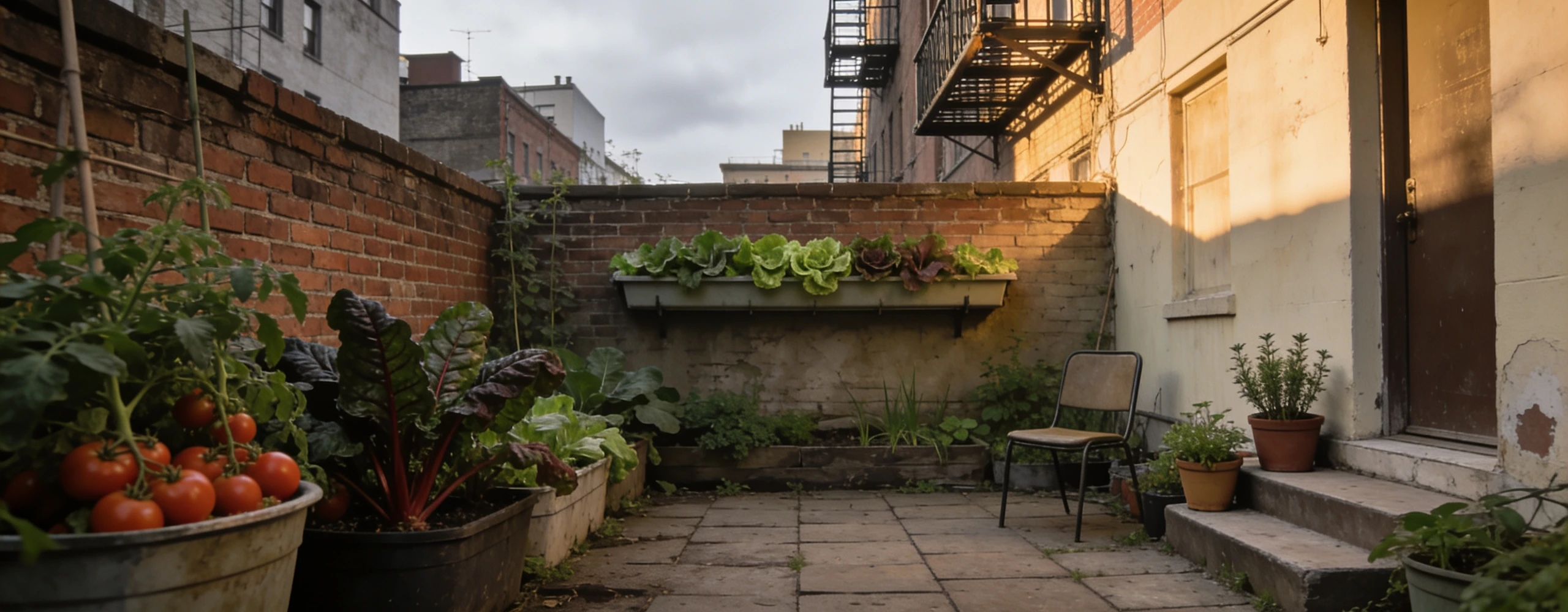
Small-space gardening is not scaled-down gardening. The plants behave the same. What changes is that three physical limits decide everything before you plant a thing, and none of them is soil.
The short answer
Urban gardening comes down to light, pot size and wind. Count the hours of direct sun your space actually gets, because buildings ration it more than you expect. Use containers of 30 to 40 litres for anything that fruits and 15 to 20 cm depth for leaves. Then put up a permeable windbreak and group the pots together, which cuts your watering more than anything else you can do.
I have grown in a courtyard, on a balcony and in the ground, and the city version is the one where getting the basics wrong costs you most. There is no margin. A bed in a garden forgives a small pot; a balcony does not. If you want the general first-year version, how to start a garden covers open ground.
Urban gardening starts with counting the sun#
This is the whole game and most people skip it.
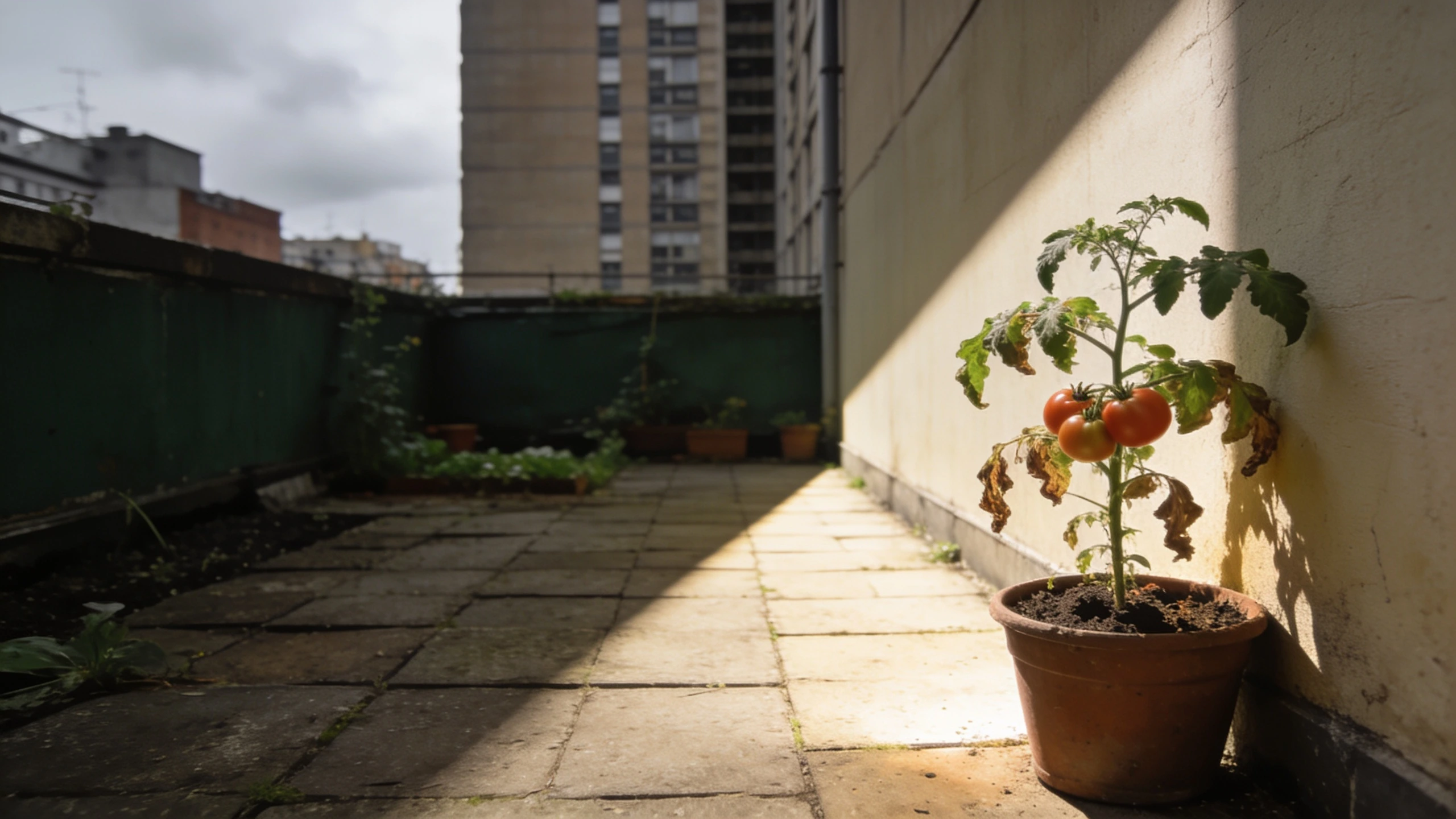
In a garden, the sun moves across open sky and you get a fairly even day. In a city you get slots. A building throws a hard edge across the space and takes three hours off it at a stroke, and the neighbour's extension takes another two.
So pick a clear day and look at the space every couple of hours. Write down when it is in direct sun. It takes no effort and it decides what you spend your money on.
| Hours of direct summer sun | What will actually crop | What to stop buying |
|---|---|---|
| 6 or more | Tomatoes, chillies, peppers, courgette, beans, strawberries | Nothing much |
| 4 to 6 | Salad, chard, kale, spinach, beetroot, spring onions, most herbs | Peppers, aubergine |
| 3 to 4 | Salad leaves, chard, spinach, mint, parsley, chives, sorrel | Anything that fruits |
| Under 3 | Mint, parsley, chervil, ferns | Vegetables generally |
Here is the part I would want someone to tell me. Which way the space faces is close to useless as a guide in a city. A south-facing balcony with a building opposite can get less light than an east-facing one with open sky above it. Only the hours count, and you have to watch to know them.
If your best spot gets four hours, grow leaves and enjoy them. Salad you cut yourself for two months beats a tomato plant that flowers in July and then just sits there going slowly yellow.
Buy bigger pots than you want to#
The second most common mistake, and it is expensive because it kills the plant slowly rather than obviously.
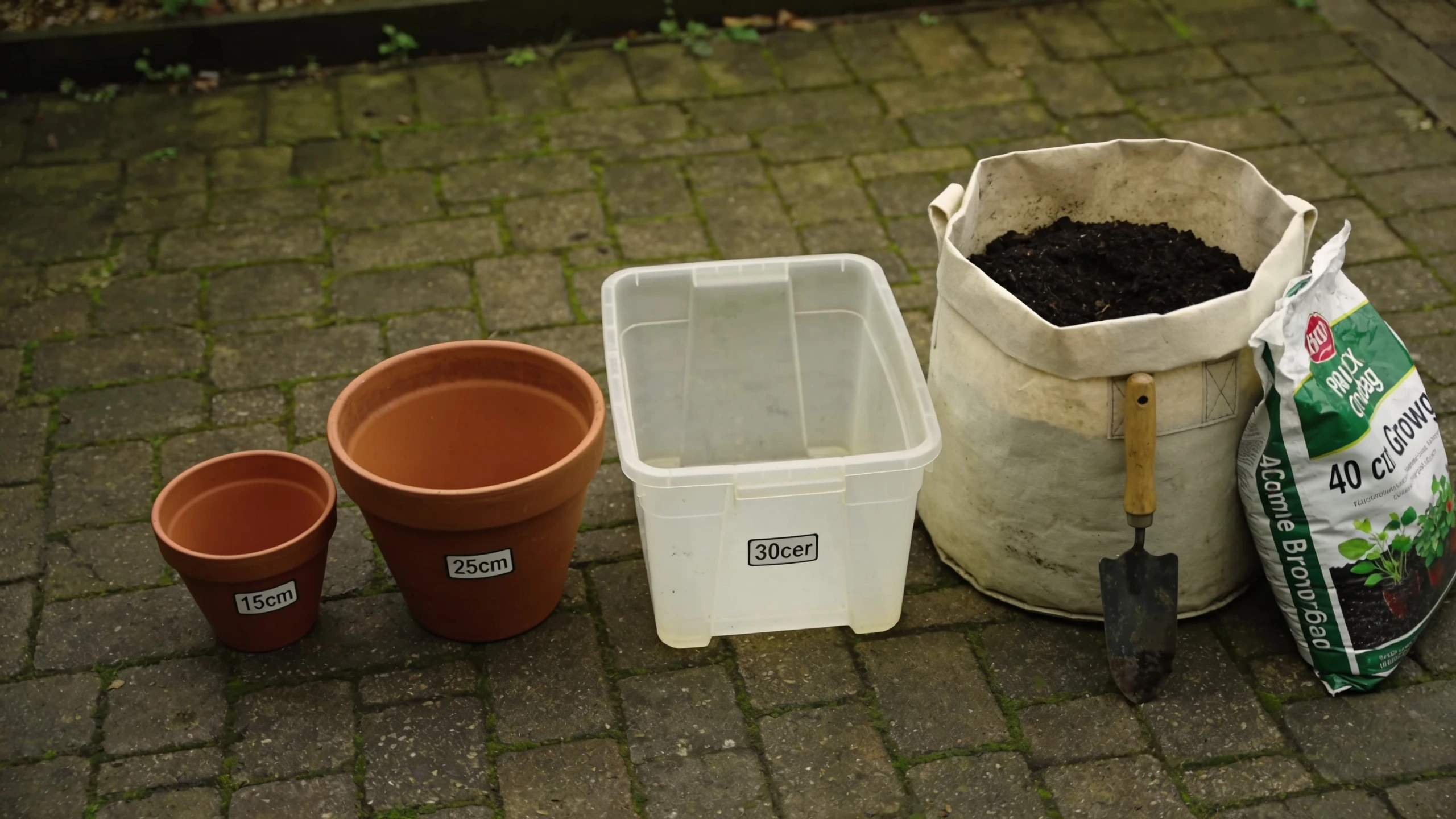
A container holds no water except what is in it. Small pot, small reservoir, and on a hot day it runs dry by lunchtime whatever you did in the morning. The plant stops, sulks, and never really restarts.
| What you are growing | Minimum | What I would actually use |
|---|---|---|
| Salad leaves, cress | 15 cm deep trough | 20 cm |
| Herbs: thyme, chives, parsley | 15 cm pot | 20 cm |
| Basil, coriander | 20 cm pot | 25 cm |
| Chard, spinach, spring onions | 25 cm deep | 30 cm |
| Bush beans | 25 litres | 30 litres |
| Strawberries | 20 cm per plant | Trough or basket |
| Cherry tomato | 30 litres | 40 litres |
| Chilli, sweet pepper | 20 litres | 30 litres |
| Courgette | 40 litres | 50 litres |
| Potatoes | 40 litres | Grow sack |
Bigger is easier in every single respect. More water held, slower to dry, steadier root temperature, more room for roots to work. The pretty small pot is the one that disappoints you in August.
If the budget is tight, spend it on pots and compost rather than tools. Four tools cover a container garden and I have listed them in gardening tools for small spaces.
Grow up the wall, because you have one#
Floor space is what you are short of. Wall is what you have.
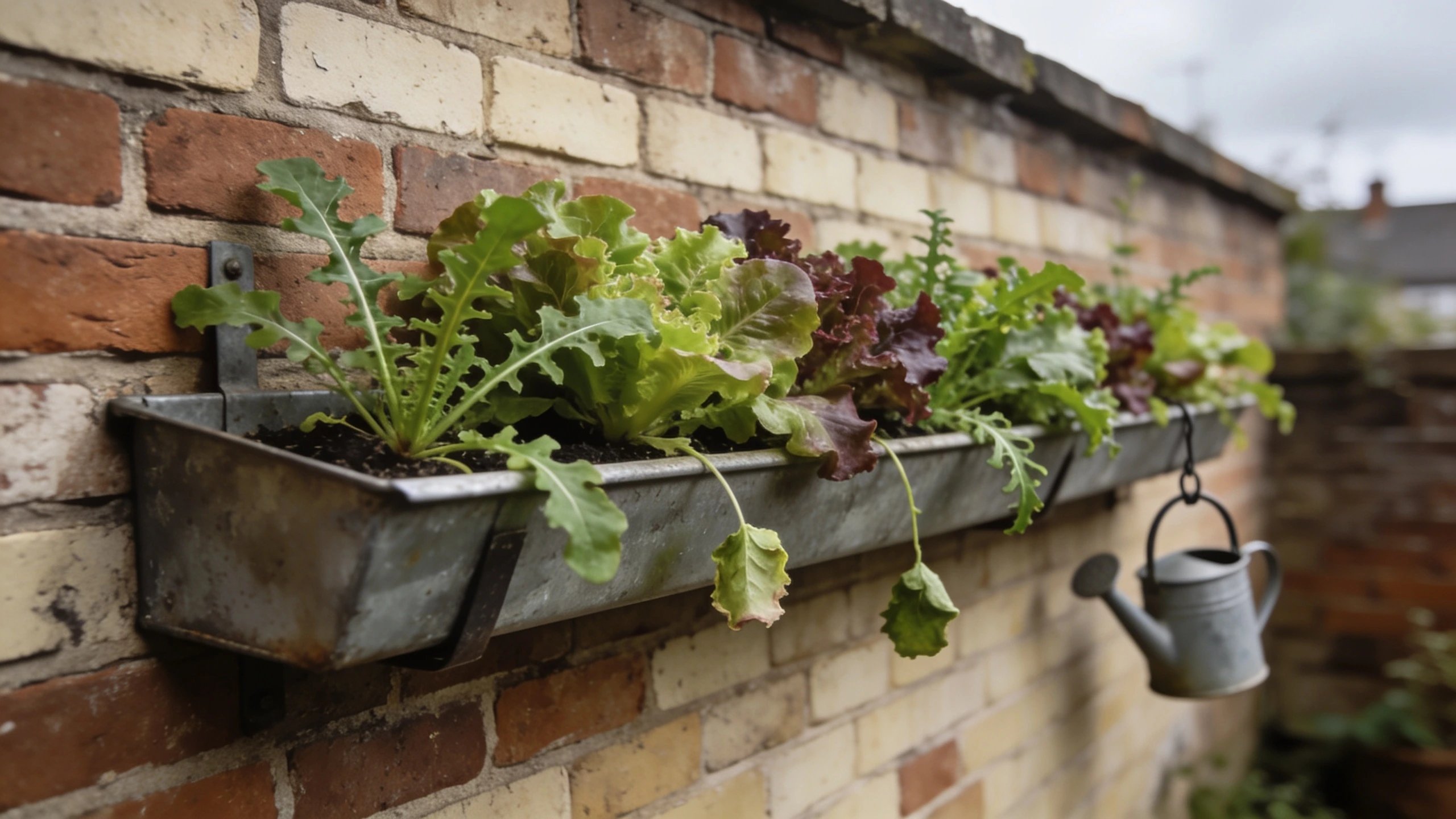
A trough at chest height is my favourite thing in a small space. Salad needs almost no root depth, so it grows as well on a wall as in the ground. And because it is at hand height you actually pick from it, which sounds trivial and is the difference between eating your salad and watching it bolt.
Other things that get plants off the floor:
Climbing beans up a cane wigwam or strings fixed to the wall. They take a square foot of floor and give you a vertical wall of crop.
A stepped plant stand, or an old wooden ladder leaned against the wall with pots on the rungs. Herbs at the top where it is brightest, shade-tolerant things at the bottom.
Railing troughs that hook over a balcony rail. Hang them inside the balcony, never over the drop, and check your building rules first.
Wind does more damage than you think#
Above the second floor, wind stops being weather and becomes the main constraint.
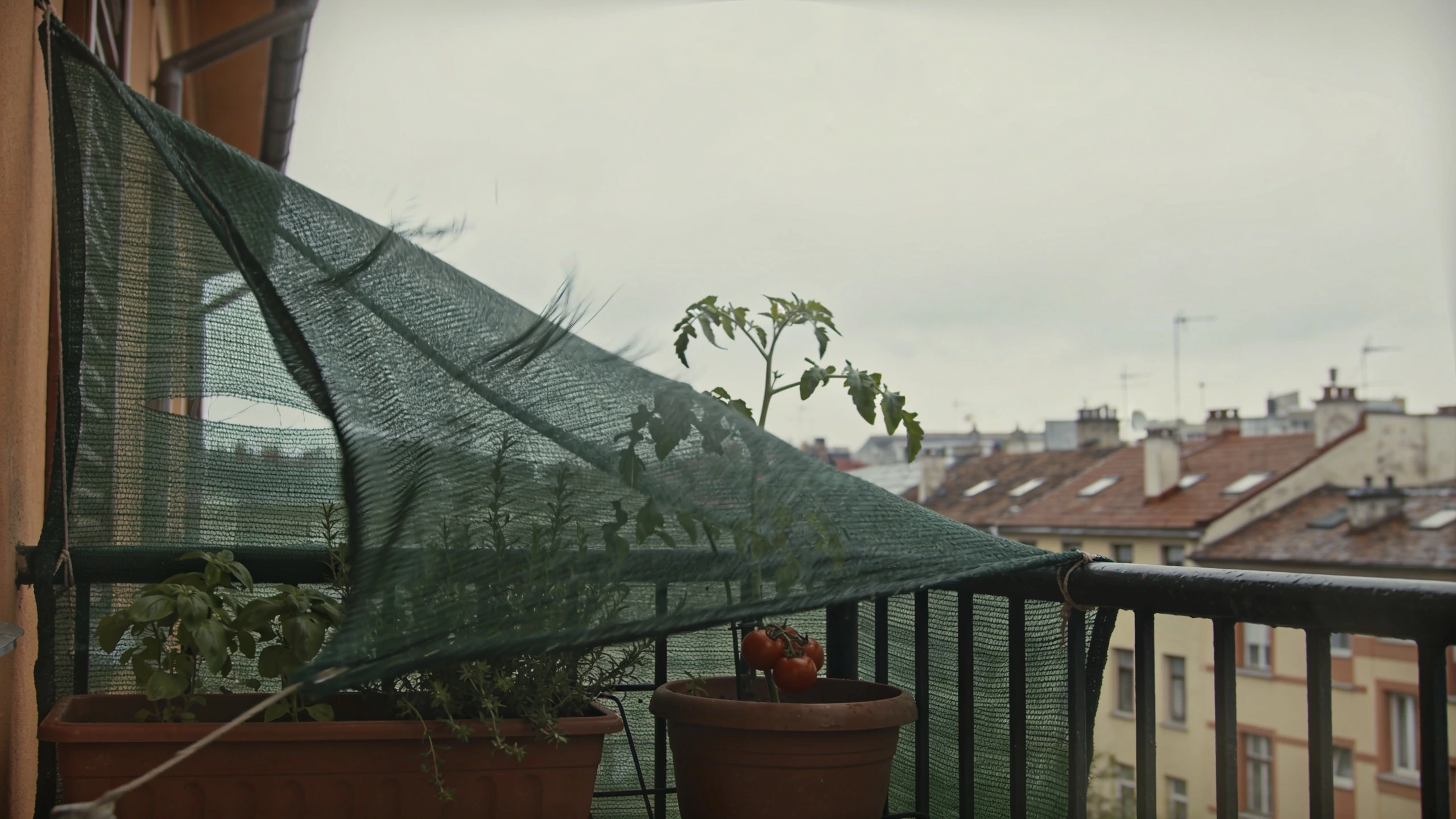
Wind dries plants faster than sun does, shreds big leaves like courgette and chard, and rocks new plants until the roots break.
The fix is a permeable screen. Mesh, reed, trellis, or a row of tough shrubs. Something that slows air and spreads it out. A solid panel does not work: the air goes over the top and tumbles down behind it, and you can end up with more turbulence than you started with.
Then put tall things against the wall and short things at the outer edge, and choose tough plants for the exposed positions. Rosemary, thyme, sage, chives and alpine strawberries all shrug it off. Basil, lettuce and courgette do not.
Grouping your pots is the cheapest trick here#
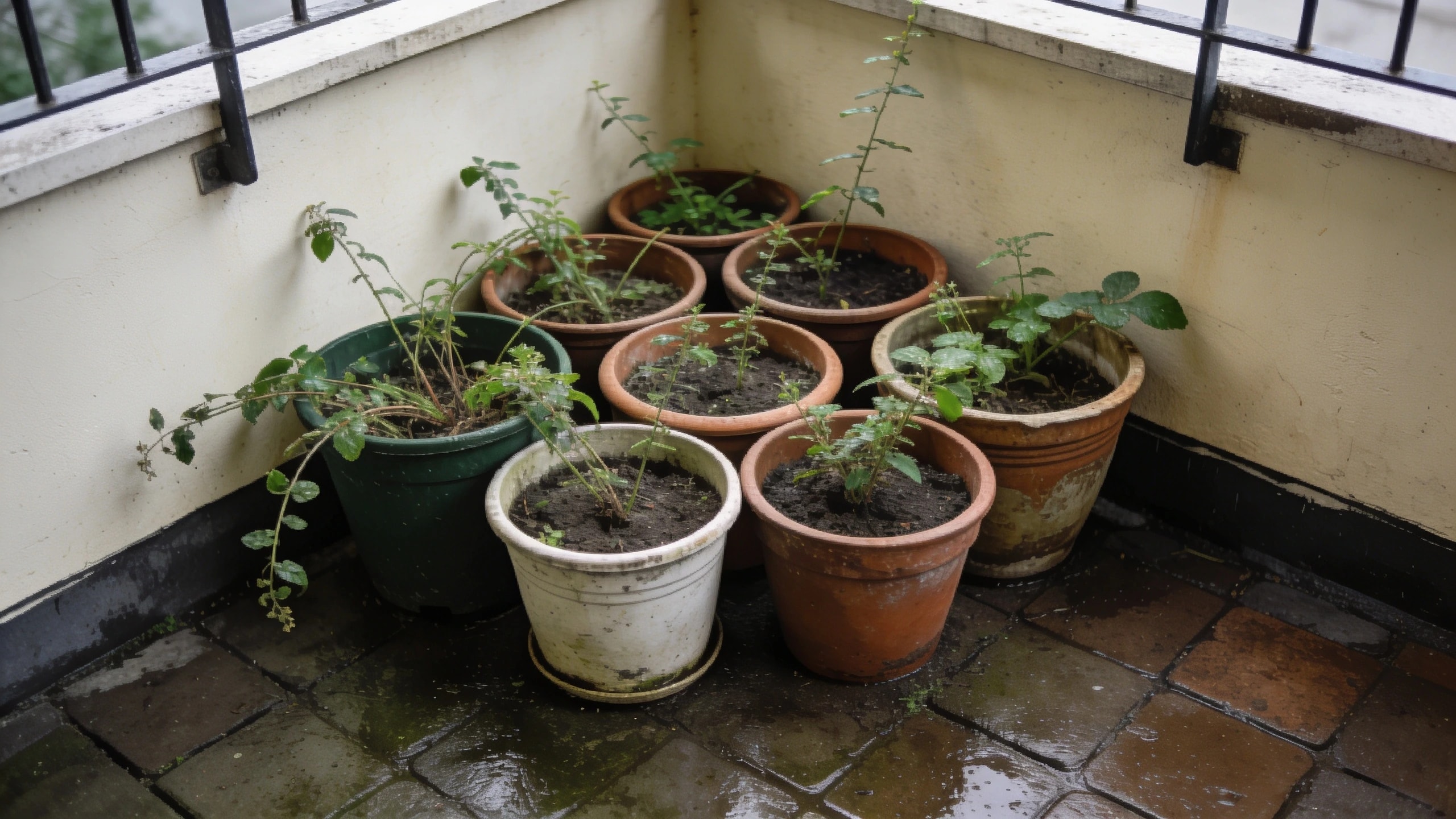
Push your containers together into a block rather than spacing them out prettily along a wall. They shade each other's sides, they hold a pocket of more humid air between them, and the whole group dries out noticeably slower.
It costs nothing and it is the single most effective thing you can do about watering in a small space.
Watering, which is the actual work#
This is where container growing is genuinely harder than growing in the ground, and there is no way round it.
The rules I go by:
Water until it runs freely out of the bottom, every time. Half-watering wets the top inch and leaves the root ball dry, and the roots then all crowd into that wet upper layer.
Check with a finger two inches down before you water. The surface tells you almost nothing.
A pot in full summer sun often needs it daily. A hanging basket can need it twice. That is normal, not a sign you have done something wrong.
If a pot has gone bone dry, stand it in a bucket of water for twenty minutes. Once compost shrinks away from the sides, water poured on top runs straight down the gap and out of the bottom without wetting anything.
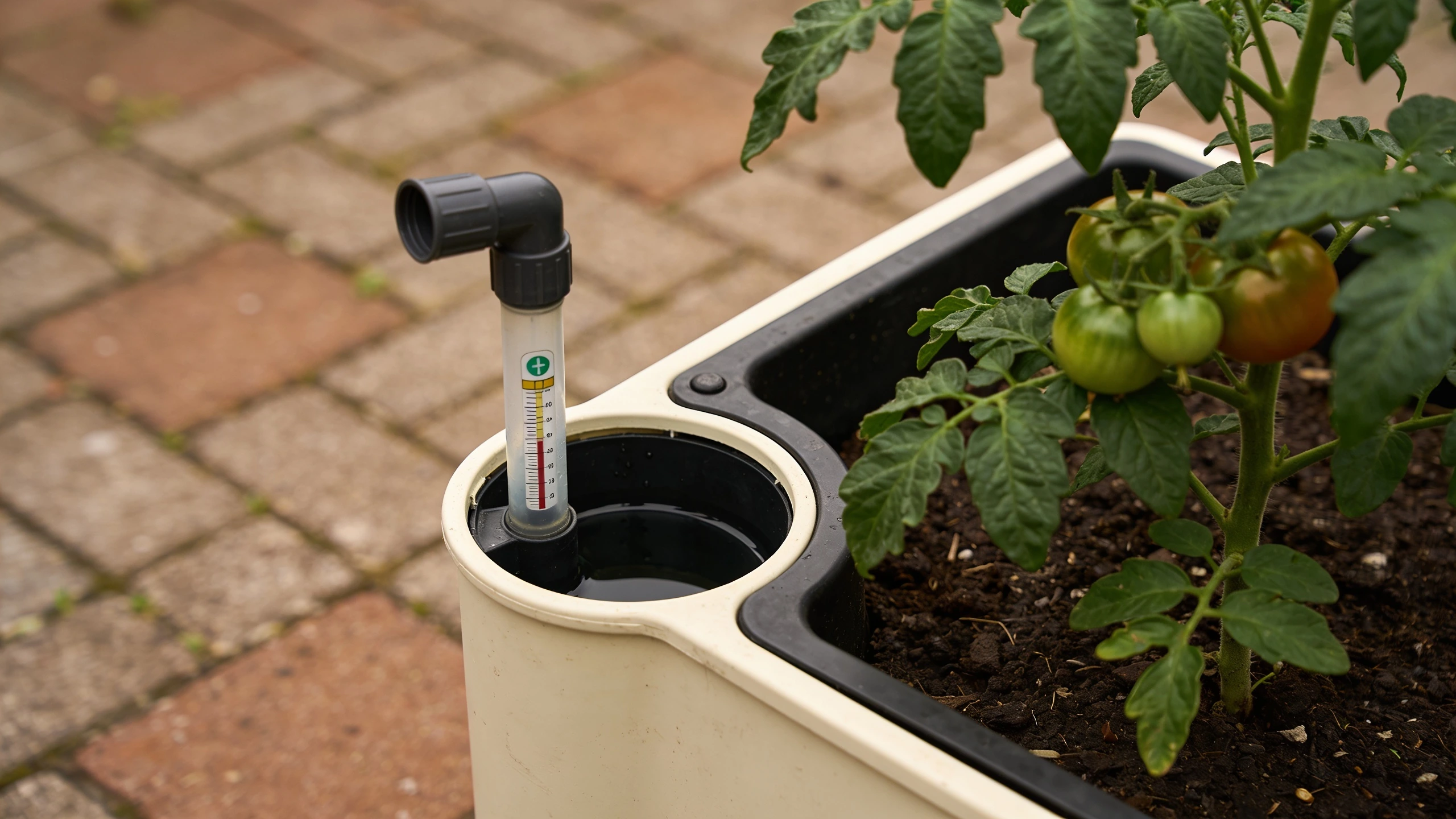
Self-watering pots with a reservoir buy you two to four days, which covers a weekend away. They are not a licence to stop looking, and in cool weather they can hold the compost too wet.
Full detail is in watering deeply rather than daily.
Weight, if you are on a balcony or roof#
What I would plant in a small space#
If the space gets six hours or more, three big pots and you are eating properly:
One cherry tomato in 40 litres, trained up a string or cane fixed to the wall. Cherry varieties crop far more reliably in containers than big beefsteak types.
One courgette in 50 litres, given the outer corner because it will sprawl. One plant is enough for two people, genuinely.
Dwarf French beans in 30 litres. No canes, heavy crops for a month.
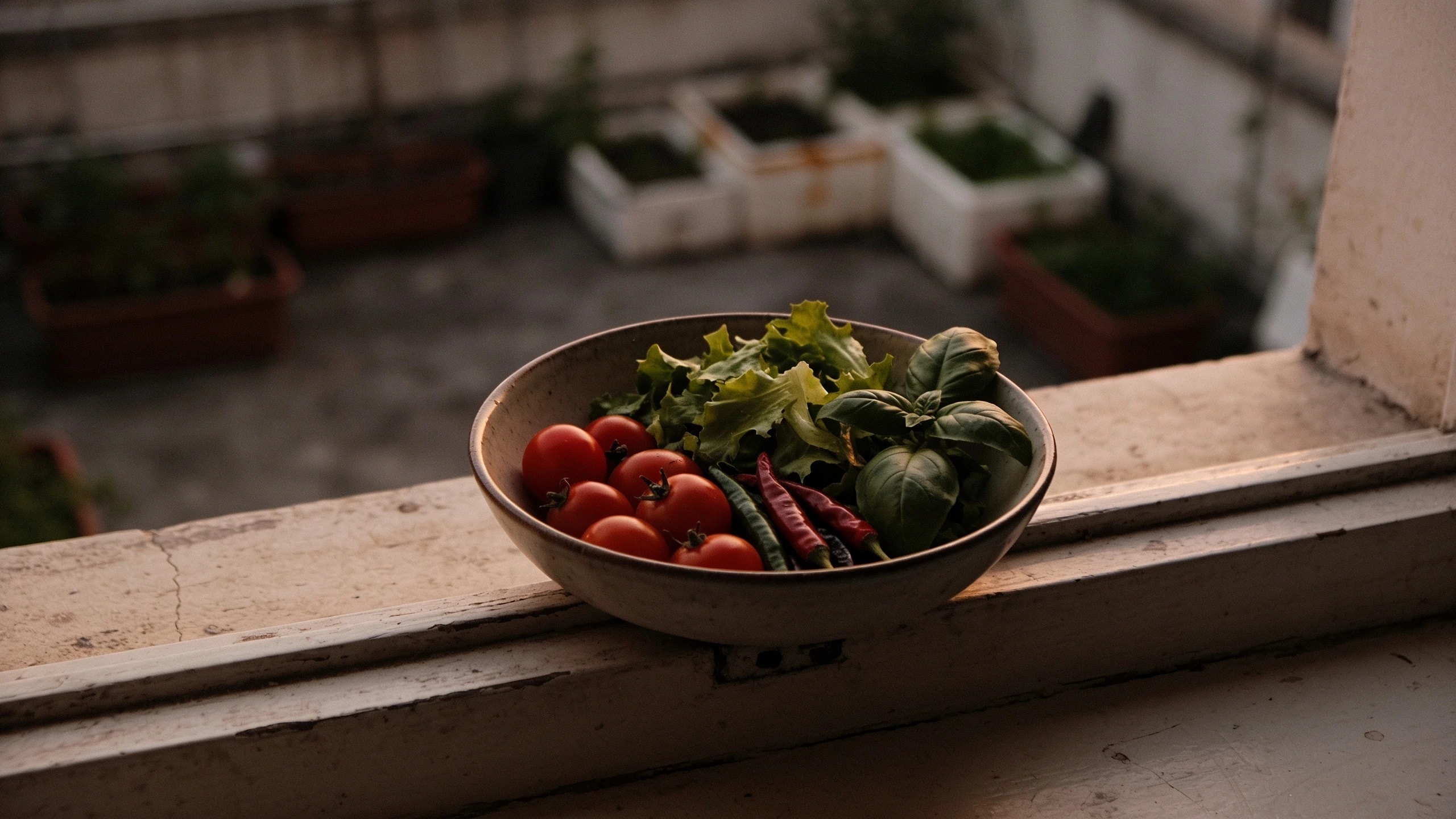
Then a wall trough of salad, a pot of basil next to the tomato, and herbs on the step by the door.
If the space gets four hours, drop the tomato and the courgette and put the money into more salad, chard and herbs. You will eat better and enjoy it more.
Mistakes I see most in small spaces#
Guessing the light from the compass. Buildings decide it. Watch the space.
Pots that are too small. The plant does not die, it just stops, which is harder to diagnose.
Spacing pots out for looks. Grouped pots need less water and less attention.
A solid windbreak. Makes turbulence. Use mesh or trellis.
Buying plants before compost. Compost volume is what limits you, not the number of plants.
Filling the space in one go. Start with four pots, learn where the light falls, then add.
When this does not apply#
If you have no direct sun at all, this is a foliage and herb project rather than a food one. Mint, parsley and chervil will manage. Do not spend money on vegetable plants.
If you are renting and may move, keep everything in containers and skip anything fixed to a wall. Wall troughs and trellis mean holes, and holes mean a conversation with a landlord.
If your space is a shared or communal one, check before you occupy it. This sounds obvious and it is the most common way a balcony garden ends.
And if the only spot is a windowsill, that still works. Cress, pea shoots, herbs and a chilli in a 20-litre pot will all live on a bright sill indoors.
How I know this#
Everything above is either practice or standard growing advice checked against published sources. The pot volumes and sun-hour bands are the figures used widely in horticultural guidance, and I have cross-checked them against the Royal Horticultural Society advice pages and Minnesota Extension yard and garden.
I have not measured light levels or water use in a lab, and where a number here is a working band rather than a reading I have said so. If something does not match your space, tell me. Our editorial policy explains how corrections work.
Bottom line#
Count the hours of sun first, before you buy a single pot. Then buy fewer, bigger containers than you were planning to, put a mesh screen up if you are exposed, and push the pots together into a block.
Grow up the wall, because that is the space a city actually gives you. And be honest about the light: four hours is a salad garden, and a very good one, but it is not a tomato garden and no amount of feeding changes that.
For the small tool kit that suits this, see gardening tools for small spaces. For balcony specifics on wind and weight, small balcony garden ideas goes further.
Frequently asked questions
What is urban gardening?
Growing food or plants in a city space that was not designed for it: a courtyard, balcony, roof, doorstep, windowsill or a strip of ground beside a wall. The techniques are the same as any garden. What changes is that light is rationed by buildings, soil is usually replaced by pots, and wind and weight become real limits.
How much space do I need to grow food?
Less than you would think. Four containers of 30 to 40 litres will keep two people in salad, herbs, chillies and a decent number of tomatoes through a summer. A single wall trough of cut-and-come-again leaves feeds a household in salad for two months. Floor area matters far less than how many hours of sun the space gets.
What can I grow with only four hours of sun?
Salad leaves, chard, spinach, kale, beetroot, spring onions and most soft herbs, all of which do well on four hours. What you cannot get is ripe fruit. Tomatoes, chillies, peppers and courgettes need six hours or more, and below that they grow, flower and then sit there. Grow leaves and stop fighting it.
How big should containers be for vegetables?
Salad and herbs are happy in 15 to 20 cm of depth. Chard, spring onions and bush beans want 25 to 30 cm. Anything that makes fruit, so tomatoes, chillies, courgettes and potatoes, needs 30 to 40 litres each. Undersized pots are the most common reason a city crop stalls, because the compost dries out faster than the plant can drink.
How often do I water containers?
In high summer a pot in full sun usually needs water every day, and a hanging basket twice. Water until it runs freely from the drainage holes each time. Check by pushing a finger two inches in rather than watering to a timetable, and group your pots together so they shade each other, which cuts the loss noticeably.
Is a balcony strong enough for a garden?
Usually, but check rather than assume. Wet compost weighs roughly 700 kg per cubic metre, so four 40-litre planters watered come to around 110 kg plus the containers, concentrated on a small area. Keep the heavy things close to the building wall rather than at the outer edge, and read your lease, because many buildings restrict what can sit on or hang from a balcony.
What is the easiest thing to grow in a city?
Cut-and-come-again salad leaves. They need only 15 cm of depth, tolerate four hours of sun, crop for two months from one sowing, and cost almost nothing in seed. Herbs are a close second, and mint in particular will grow almost anywhere, including a spot that gets no direct sun at all.
Topics in this article
About the author
Jeff has gardened professionally for over twenty years, mostly on heavy clay, and writes everything here from beds he still works himself. More from Jeff Tanun →
Keep reading
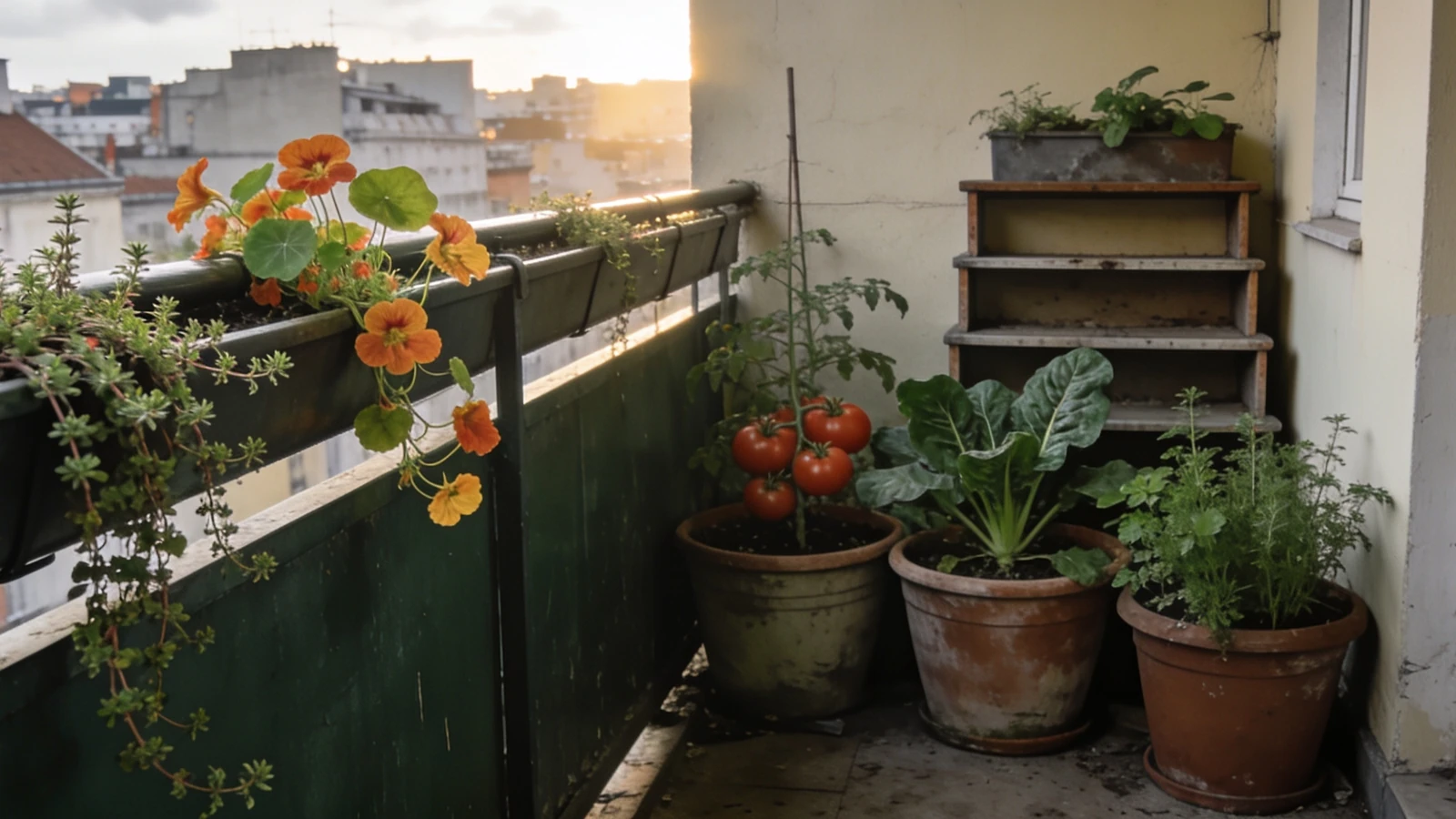
Small Balcony Garden Ideas
Balcony garden ideas built around the three things that actually limit you, light, wind and weight, with pot sizes, planting plans and what to grow where.
Updated
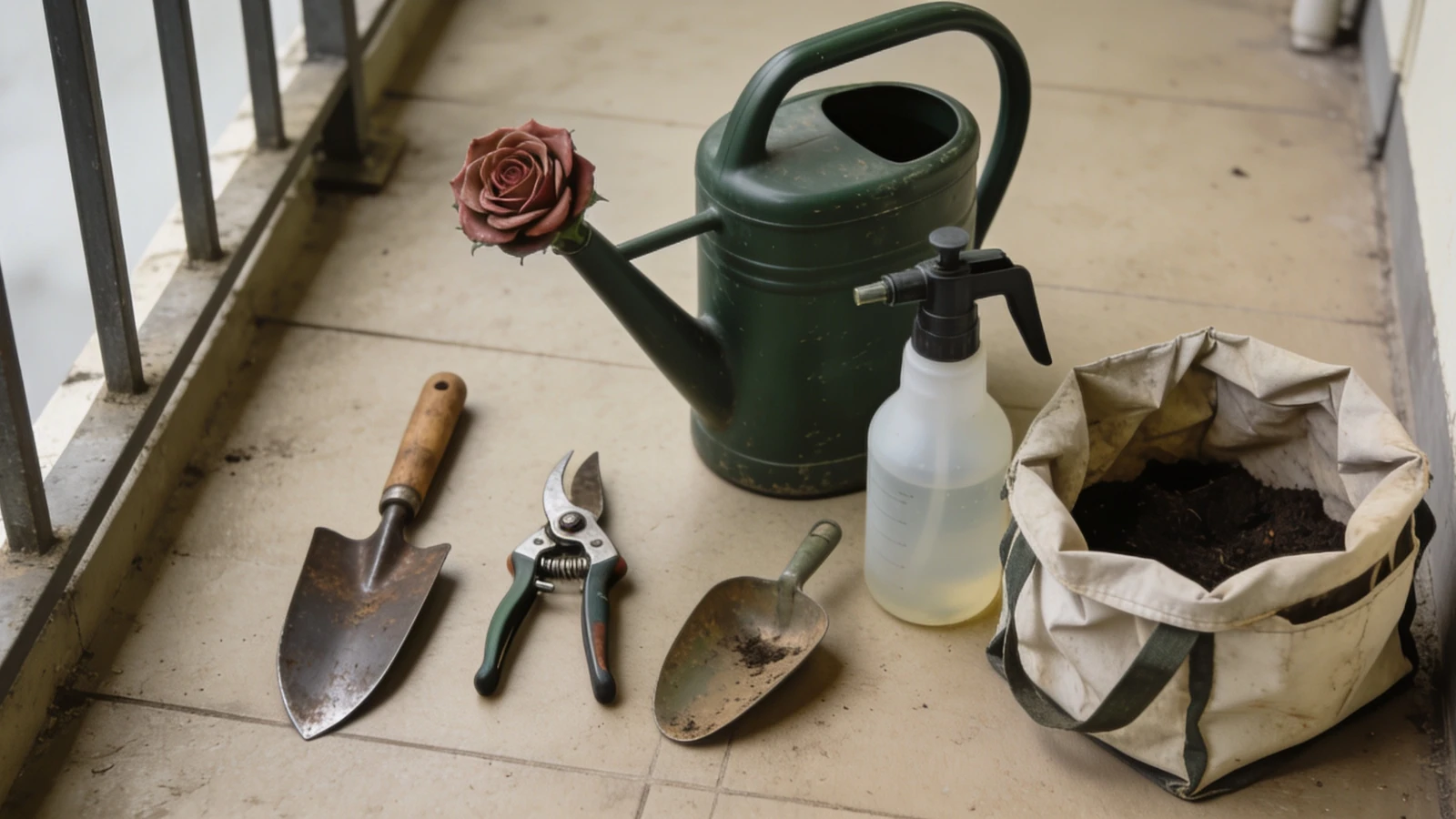
Gardening Tools for Small Spaces
A short, cheap tool kit for container gardening: what you need on a balcony or patio, what to leave out, and how to store it in a metre of space.
Updated
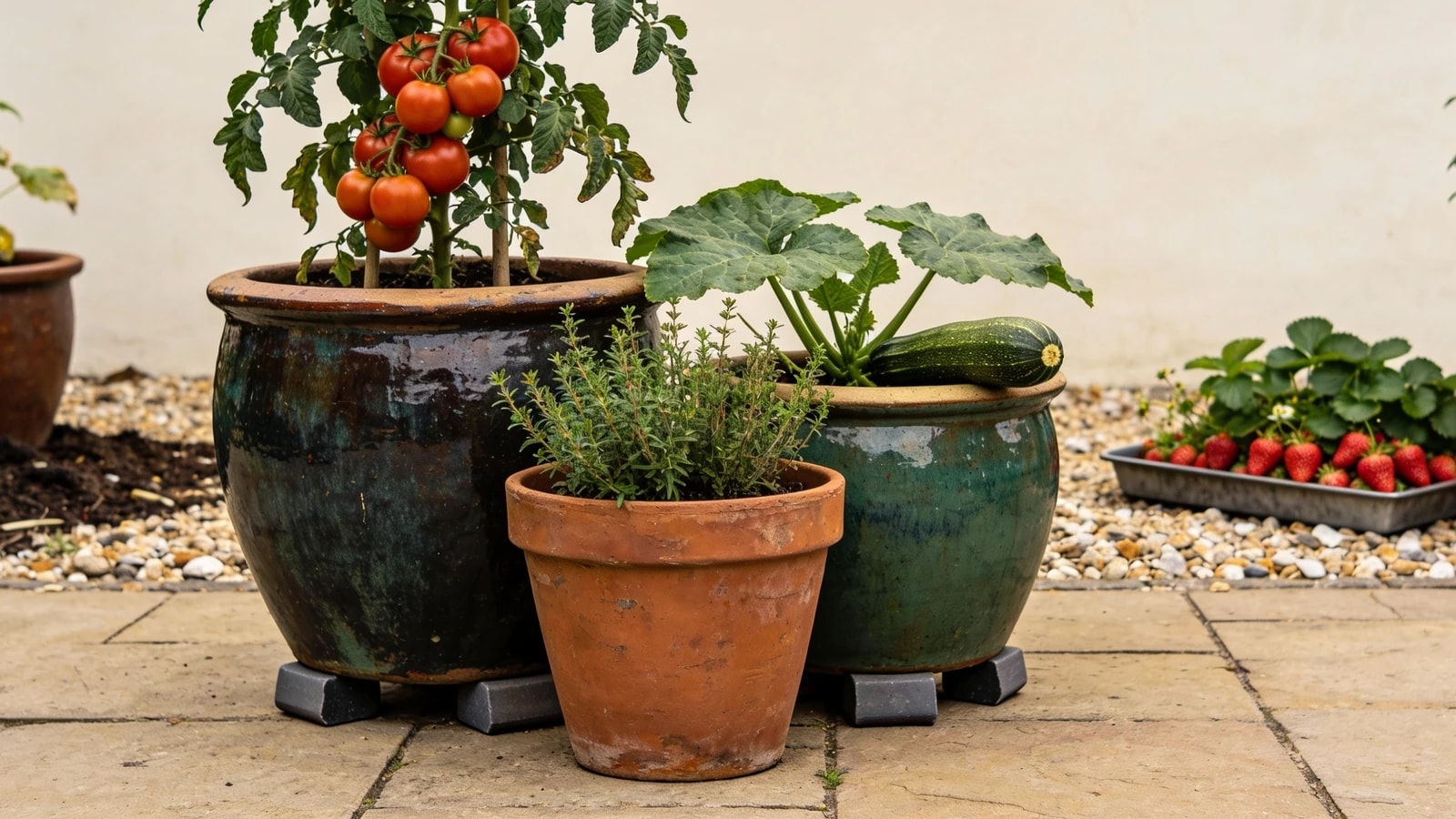
Container Gardening
Container gardening done properly. Why pot volume matters more than compost or feed, what to plant in what size, and how to water so nothing stalls in July.
Updated