Container Gardening: Pot Size Decides Almost Everything
Container gardening done properly. Why pot volume matters more than compost or feed, what to plant in what size, and how to water so nothing stalls in July.
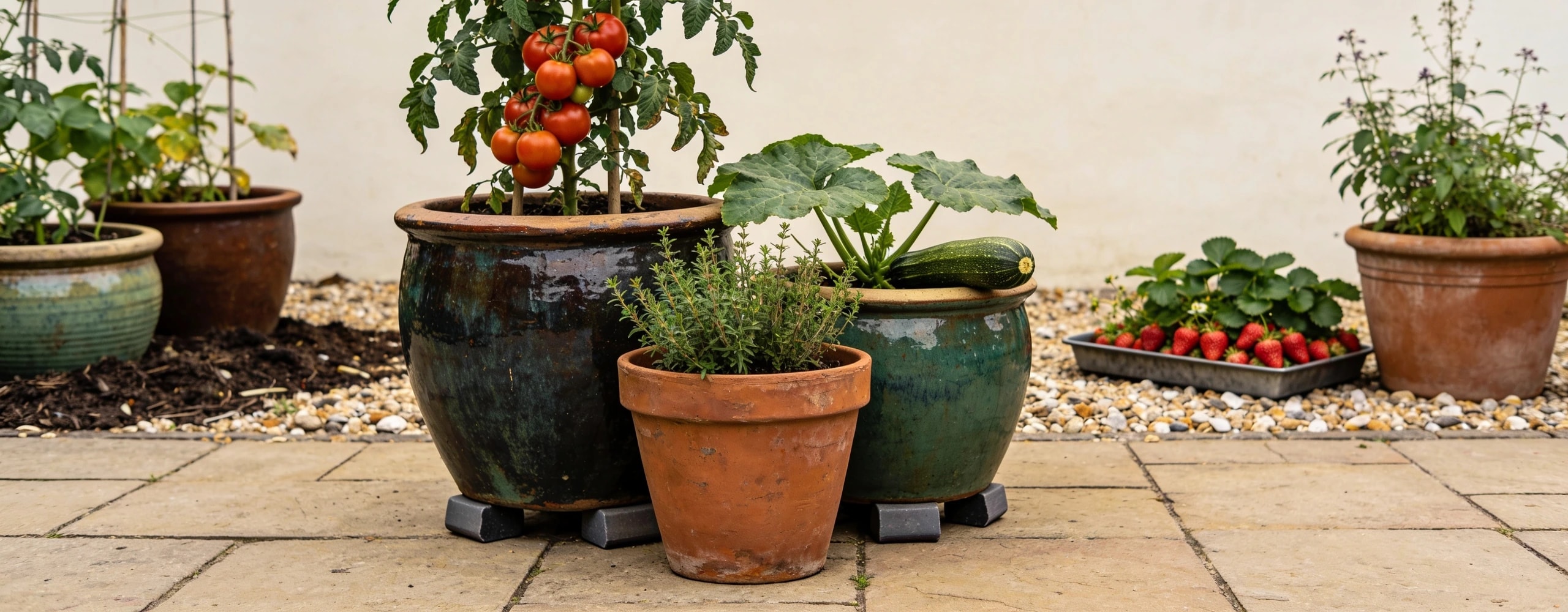
Almost everything that goes wrong in container gardening comes down to one number: how many litres of compost the plant has. Not the compost brand, not the feed, not the variety. I spent two seasons blaming everything else before I accepted that my pots were simply too small, and the difference when I doubled the volume was more than everything else I had tried put together.
The short answer
Volume decides it. Herbs and salad in 5 to 10 litres, a courgette or bush tomato in 30 to 40, a cordon tomato or small tree in 40 to 50 plus. Use loam-based compost for anything perennial and multipurpose for annuals. Drainage holes yes, crocks no. Check with a finger rather than watering to a schedule, and water until it runs out of the bottom. Feed weekly after about six weeks, because compost runs out.
Why volume beats everything#
A plant in the ground can send roots sideways and down to find water and nutrients. A plant in a pot has exactly what you gave it, and when that runs out it stops.
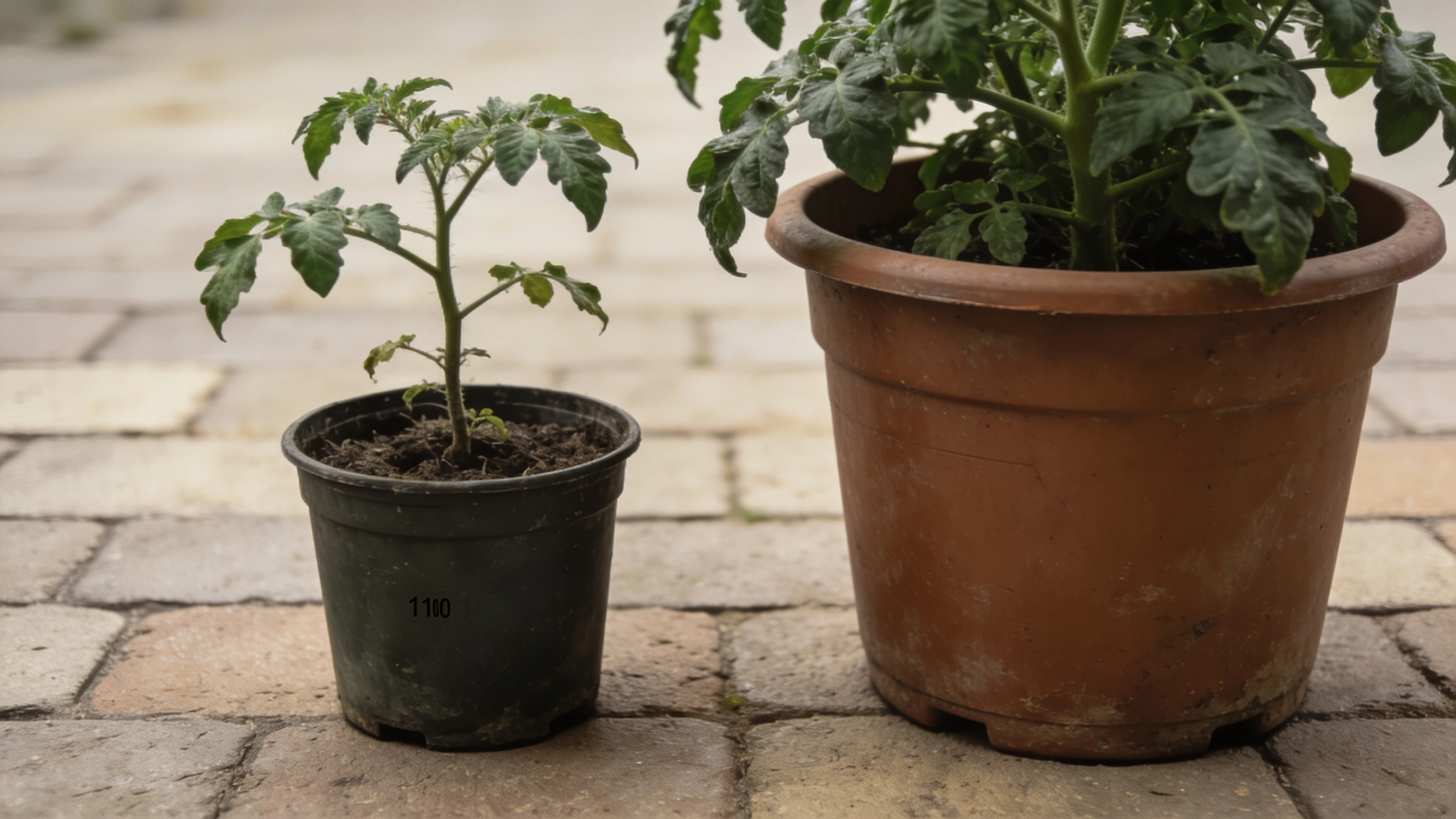
Two things follow. Water: a small volume of compost dries out fast, so a 10 litre pot in July may need watering twice a day while a 40 litre pot copes for two. Nutrients: a small volume holds less, and every watering leaches some out of the bottom.
So the single most effective change available in container growing is not a technique. It is buying fewer, bigger pots.
- 5 to 10 litres
- Herbs, salad leaves, radish, a single lettuce. Shallow rooted and quick. Expect daily watering in summer.
- 10 to 20 litres
- Chard, kale, bush beans, strawberries, a compact chilli. Workable, still thirsty.
- 30 to 40 litres
- Courgette, bush tomato, aubergine, potatoes, a decent chilli. This is where fruiting crops start performing properly.
- 40 to 50 litres
- Cordon tomato, a substantial shrub, rhubarb if you must grow it in a pot. Watering drops to every other day.
- 50 litres and up
- Small fruit tree on a dwarfing rootstock, a specimen shrub, a small ornamental tree. Below this a tree will always struggle.
Compost: loam for anything that stays#
This is the second decision and it matters more than the brand on the bag.
For anything living in the pot beyond one season, use a soil-based or loam-based compost. It holds water and nutrients far better, it has weight and structure, and it does not collapse and go water-repellent the way a light peat-free multipurpose does after a few months.
For annuals, salad and anything you replant every year, multipurpose is fine and cheaper.
For big containers, mix roughly a third garden compost or well rotted manure through whatever you use. It holds moisture and feeds slowly, and it is free if you make your own.
Watering, which is where most of it is won or lost#
Do not water to a schedule. Water to the soil.
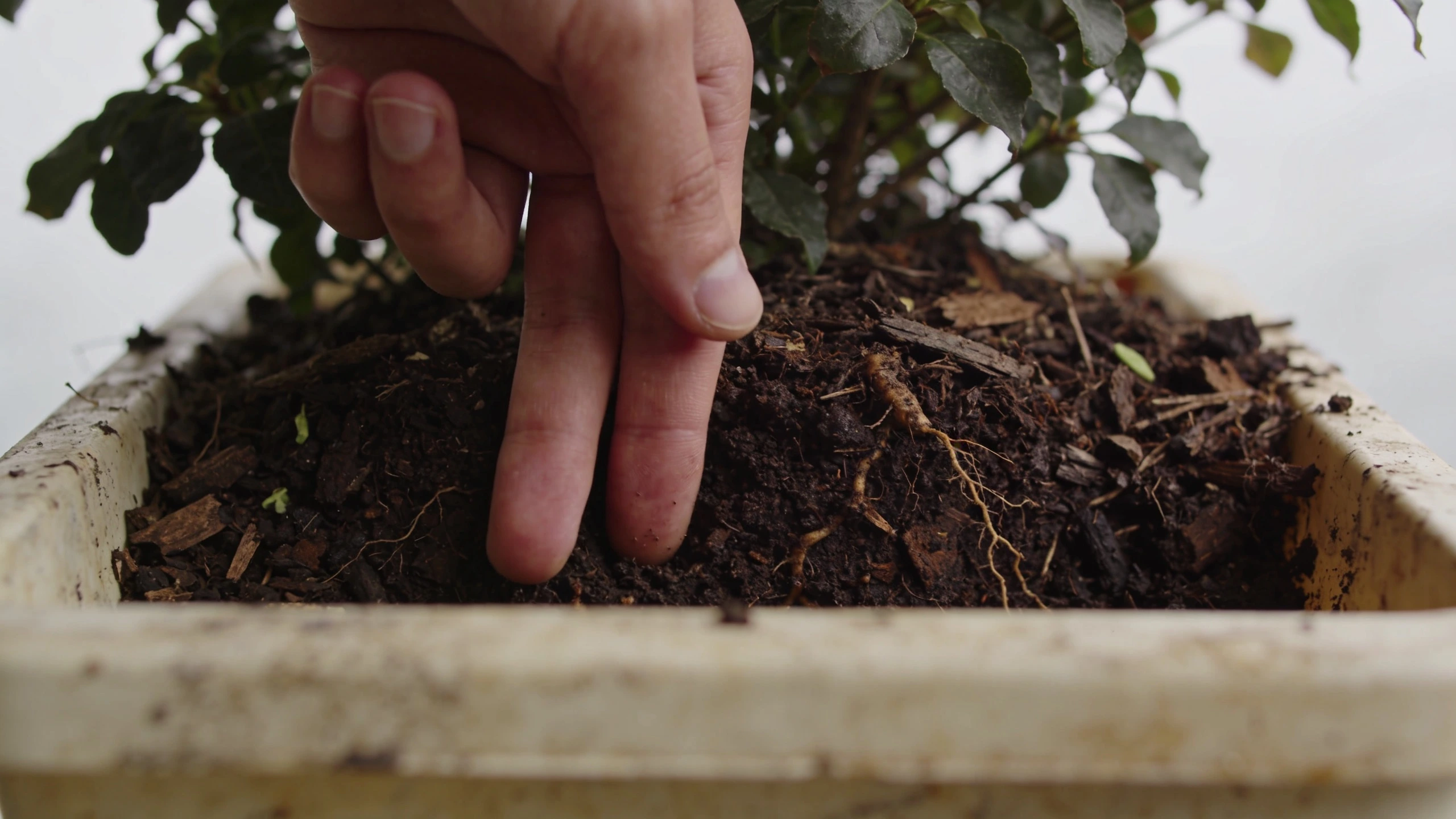
Push a finger 3 to 4 cm into the compost. Dry at that depth means water now. Damp means leave it. That test takes two seconds and it is more reliable than any rule of thumb, because pots vary enormously with size, material, exposure and what is growing in them.
When you do water, water properly: until it runs out of the drainage holes. A light splash wets the top two centimetres and encourages roots to stay up there, which makes the plant more vulnerable, not less.
And if compost has dried out completely and gone water-repellent, water will run down the gap between compost and pot and straight out, leaving the root ball bone dry. The fix is to stand the whole pot in a bucket of water for twenty minutes.
Four ways to stop pots drying out#
In order of how much difference they make.
Key points
- Use a bigger pot. Nothing else on this list comes close.
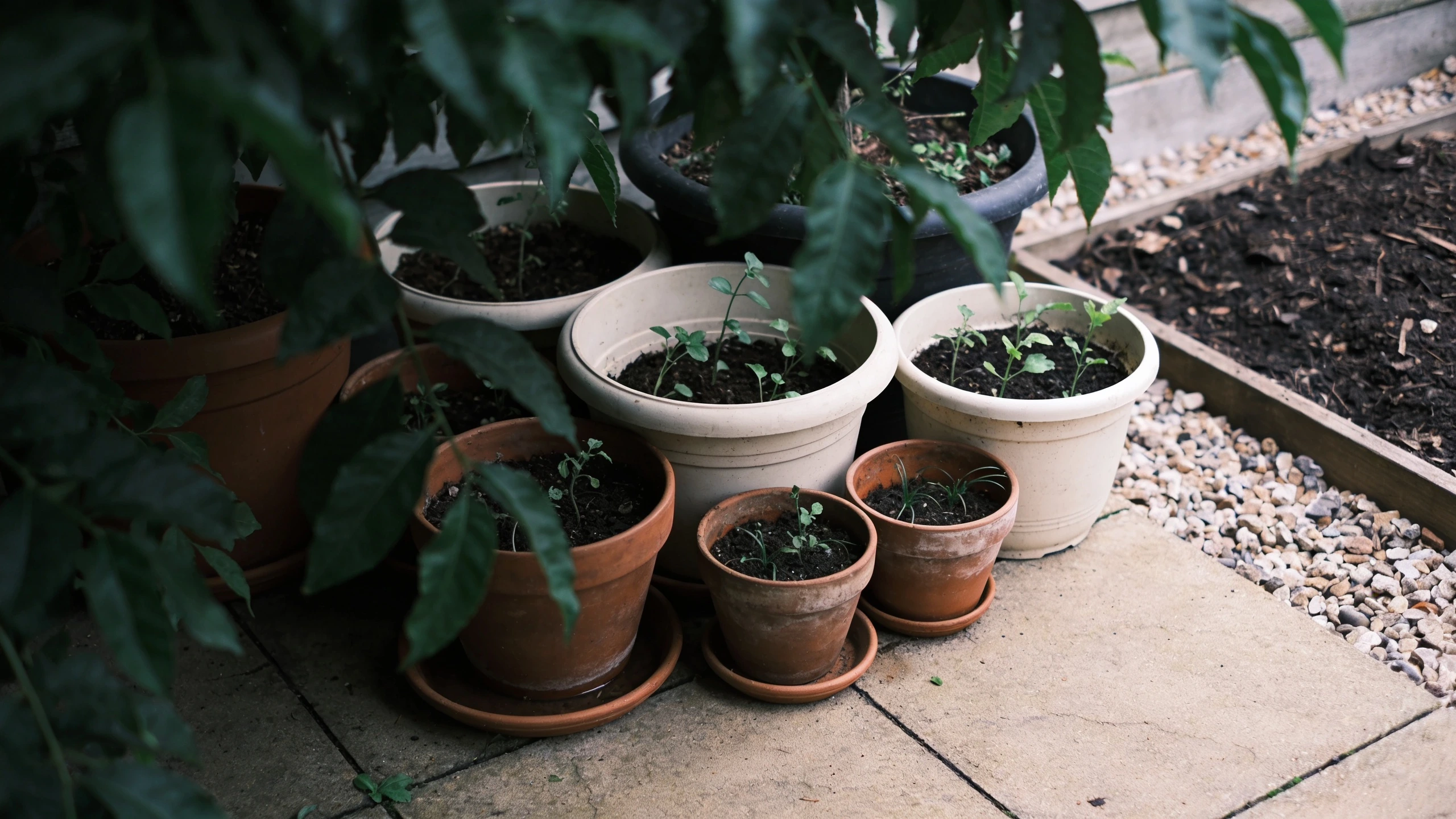
- Group pots together. They shade each other, raise the humidity between them and dry out noticeably slower than the same pots spread out.
- Mulch the surface with gravel, bark or a flat stone. It cuts evaporation from the exposed compost, which is a surprising share of the loss.
- Move what you can out of afternoon sun. Morning sun is the useful half; the afternoon is what does the drying.
- Water retaining crystals are the fifth thing, and mostly unnecessary if you have done the first two.
Material matters too. Terracotta is porous and dries fastest, which is why Mediterranean herbs like it and why tomatoes do not. Glazed and plastic hold moisture longer. Metal cooks in direct sun and can scorch roots against the side.
Feeding, because compost runs out#
The other big difference from growing in the ground. In a border, soil life and organic matter keep topping nutrients up. In a pot there is nothing doing that, and every watering carries some of what is there out of the bottom.
Most bagged compost has roughly six weeks of feed in it. After that you are on your own.
Either mix a slow release granular feed in at planting, which is the low effort option, or liquid feed every one to two weeks through the growing season. A high potash feed once flowering starts for anything fruiting: tomatoes, chillies, courgettes, strawberries.
Signs you left it too long: pale lower leaves, stalled growth, small fruit, flowers dropping without setting.
What to plant, from easiest up#
- Herbs
- Rosemary, thyme, sage and oregano in terracotta and full sun. Mint in its own pot, always, because it will smother anything it shares with.
- Salad and leaves
- Cut and come again lettuce, rocket, chard, spinach. Sow a short row every fortnight rather than one big pot at once.
- Fruiting vegetables
- Courgette, chilli, tomato, aubergine. All need 30 litres minimum, full sun, and feeding once they flower.
- Strawberries
- Ideal in containers. Fruit stays clean, slugs find it harder, and runners give you free plants every year.
- Potatoes
- One seed potato per 20 to 30 litres. Earlies are worth it; maincrop takes the pot all season for something cheap to buy.
- A small tree
- Apple on a dwarfing rootstock, bay, olive, Japanese maple. 50 litres minimum, loam compost, and repot or root prune every few years.
Winter, and the two things that kill container plants#
Cold is rarely what does it. Two other things are.
Waterlogging. A pot standing in a saucer of water through a wet winter rots the roots. Take saucers away in autumn, and raise pots onto feet or bricks so water runs out freely.
Freezing solid. A pot in the ground is insulated by soil on all sides. A pot above ground freezes from every direction, and the root ball can freeze through in a way it never would in a border. Move pots against a house wall, group them together, or wrap them in bubble wrap or hessian if you have a hard winter.
Terracotta has a third failure mode: water in the clay expands as it freezes and the pot spalls or cracks. Frost-proof is a specification worth paying for, not a marketing word.
What it costs#
- One 40 litre container
- $25 to $70. Better value than three 15 litre pots for the same money, for every reason on this page.
- Loam-based compost, 35 litres
- $12 to $22. Heavier and more expensive than multipurpose, and worth it for anything permanent.
- Multipurpose compost, 50 litres
- $8 to $15. Fine for salad, herbs and annuals.
- Slow release granular feed
- $10 to $18, and one tub does a lot of pots for a season.
- Pot feet
- $8 to $20 a set. Cheap insurance against the commonest winter killer.
- Gravel for surface mulch
- $8 to $15 a bag, and it also stops compost splashing up the plant.
Where this needs adjusting#
On a balcony, weight is the constraint rather than space. Wet compost is roughly a kilogram a litre, so a 40 litre pot is 40 kg plus the container. Check what the structure is rated for and keep the heavy things near the wall rather than the edge.
In a very hot climate, terracotta and metal become liabilities and afternoon shade stops being optional. Glazed pots, light colours and grouping matter much more.
And in deep shade, drop the fruiting crops entirely: leaves, herbs like mint and parsley, ferns and hostas will all do well, and no pot size compensates for missing light.
Where the guidance here comes from#
The litre bands and the argument that volume beats everything are what I arrived at by killing plants in pots that were too small, then repeating the same plant in a bigger one. The crocks point is well established horticulturally and still widely repeated wrongly. For compost choice, feeding and crop specifics the RHS advice pages are the reference I check, and Garden Organic is good on feeding containers from homemade compost rather than a bottle.
The short version#
Buy fewer, bigger pots. Loam compost for anything staying, multipurpose for annuals. Drainage holes, no crocks. Test with a finger, then water until it runs out of the bottom. Group pots and mulch the surface. Start feeding at six weeks. Raise pots off the ground for winter.
Related reading#
- Small balcony garden ideas: the same principles where weight and floor space are the limits.
- Vertical gardening: why a 30 litre pot under a net beats a wall of small pockets.
- Gardening tools for small spaces: the four tools that suit container growing.
- Food garden ideas: edibles worth growing where they can be seen as well as picked.
Frequently asked questions
What size pot do I need?
Bigger than the label suggests, and volume matters more than width. Herbs and salad manage in 5 to 10 litres. A courgette, chilli or bush tomato wants 30 to 40 litres. A cordon tomato, potato or small shrub wants 40 litres or more. A small fruit tree needs 50 litres minimum. Almost every container disappointment I have seen is a plant in a pot a third of the size it needed.
What compost should I use in containers?
A soil-based or loam-based compost for anything staying more than one season, and multipurpose for annuals and salad. Loam holds nutrients and water far better and does not shrink and go water-repellent the way peat-free multipurpose does after a few months. For big pots, mix in roughly a third garden compost or well rotted manure to hold moisture.
How often should I water pots?
Check rather than schedule. Push a finger 3 to 4 cm in: if it is dry at that depth, water. In high summer a 10 litre pot in sun may need it twice a day and a 40 litre pot every other day, which is the whole argument for bigger containers. Water until it runs out of the bottom, because a light splash wets only the top few centimetres.
Do containers need drainage holes and crocks?
Holes yes, always, and more than one. Crocks in the bottom, no: the old advice about a layer of broken pot or gravel is wrong and actually reduces the drainage by raising the saturated zone up into the root ball. Fill the pot with compost, all the way down, and cover the hole with a piece of mesh if you are worried about it blocking.
How do I stop containers drying out in summer?
Four things, in order of effect. Use a bigger pot. Group pots together so they shade each other and raise the humidity between them. Mulch the surface with gravel, bark or even a slate. And move anything you can into afternoon shade, because that is the hour that does the drying. Water retaining crystals are a distant fifth and mostly unnecessary if you do the first two.
Do I need to feed plants in pots?
Yes, and this is the second big difference from growing in the ground. There is no soil life topping up nutrients, and watering leaches what is there straight out of the bottom. Most compost carries about six weeks of feed. After that, a liquid feed every one to two weeks in the growing season, or a slow release granule mixed in at planting.
What is the easiest thing to grow in a pot?
Herbs, then salad leaves, then chard. All three are shallow rooted, quick, forgiving and expensive to buy. Mint is the toughest plant on the list and should have a pot to itself, because in a shared container or in open ground it will take over completely.
Topics in this article
About the author
Jeff has gardened professionally for over twenty years, mostly on heavy clay, and writes everything here from beds he still works himself. More from Jeff Tanun →
Keep reading
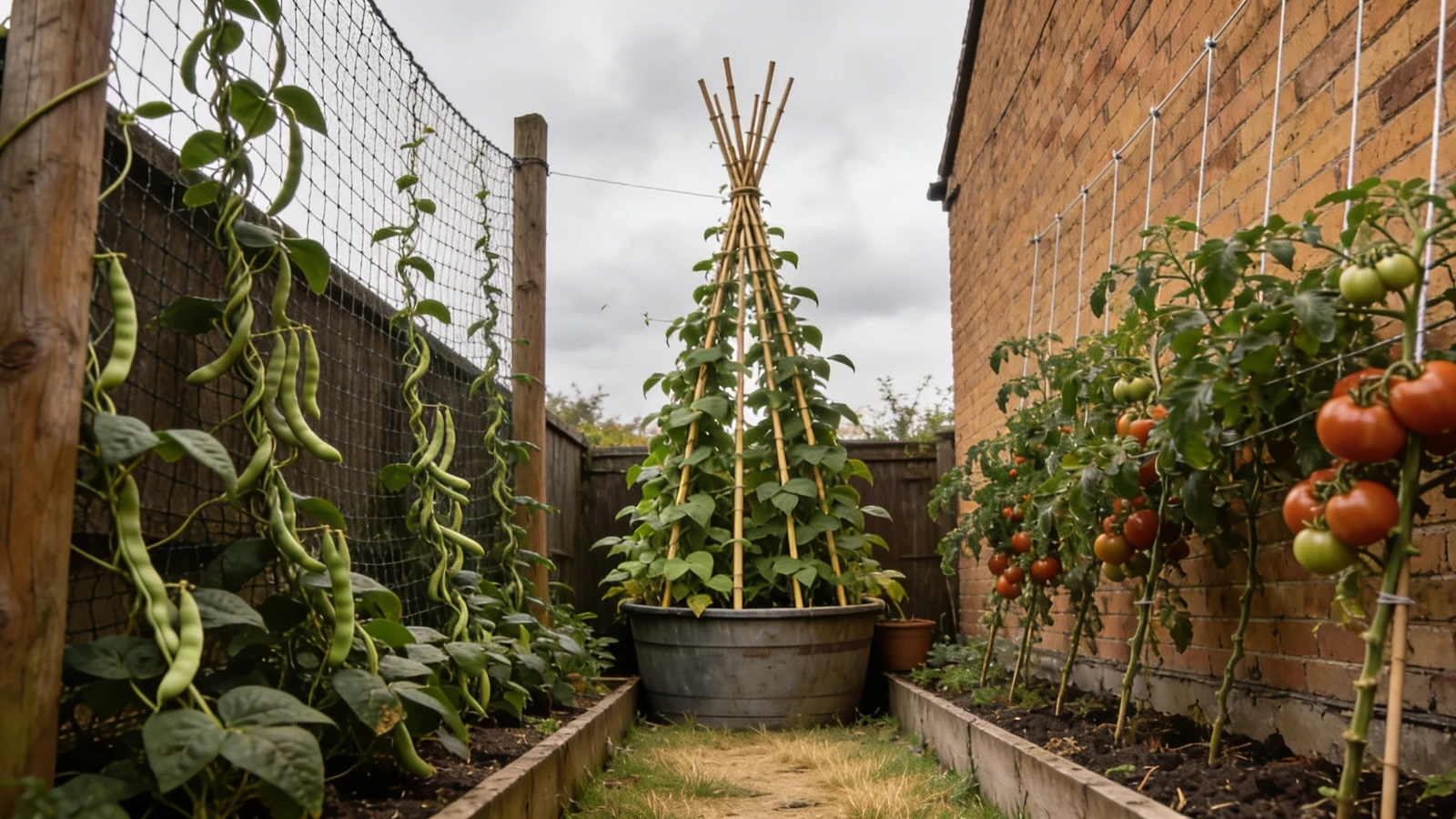
Vertical Gardening
Vertical gardening done properly: which crops climb, what a wall can carry, how to water it, and why most living wall kits fail in their first summer.
Updated
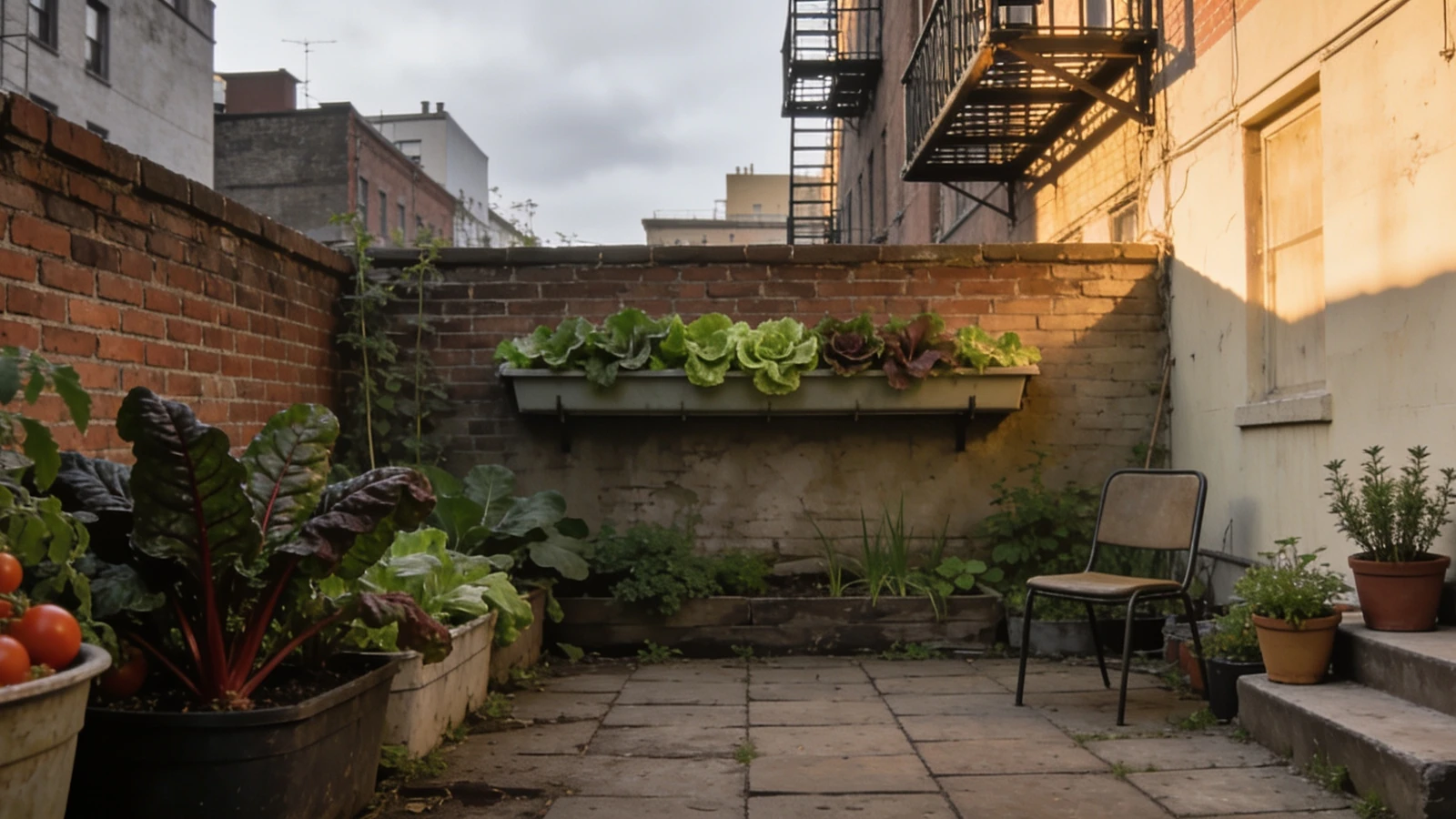
Small Space & Urban Gardening
Urban gardening comes down to light, pot size and wind. Get those three right and a courtyard or balcony feeds you. Here is how I work out what will grow.
Updated
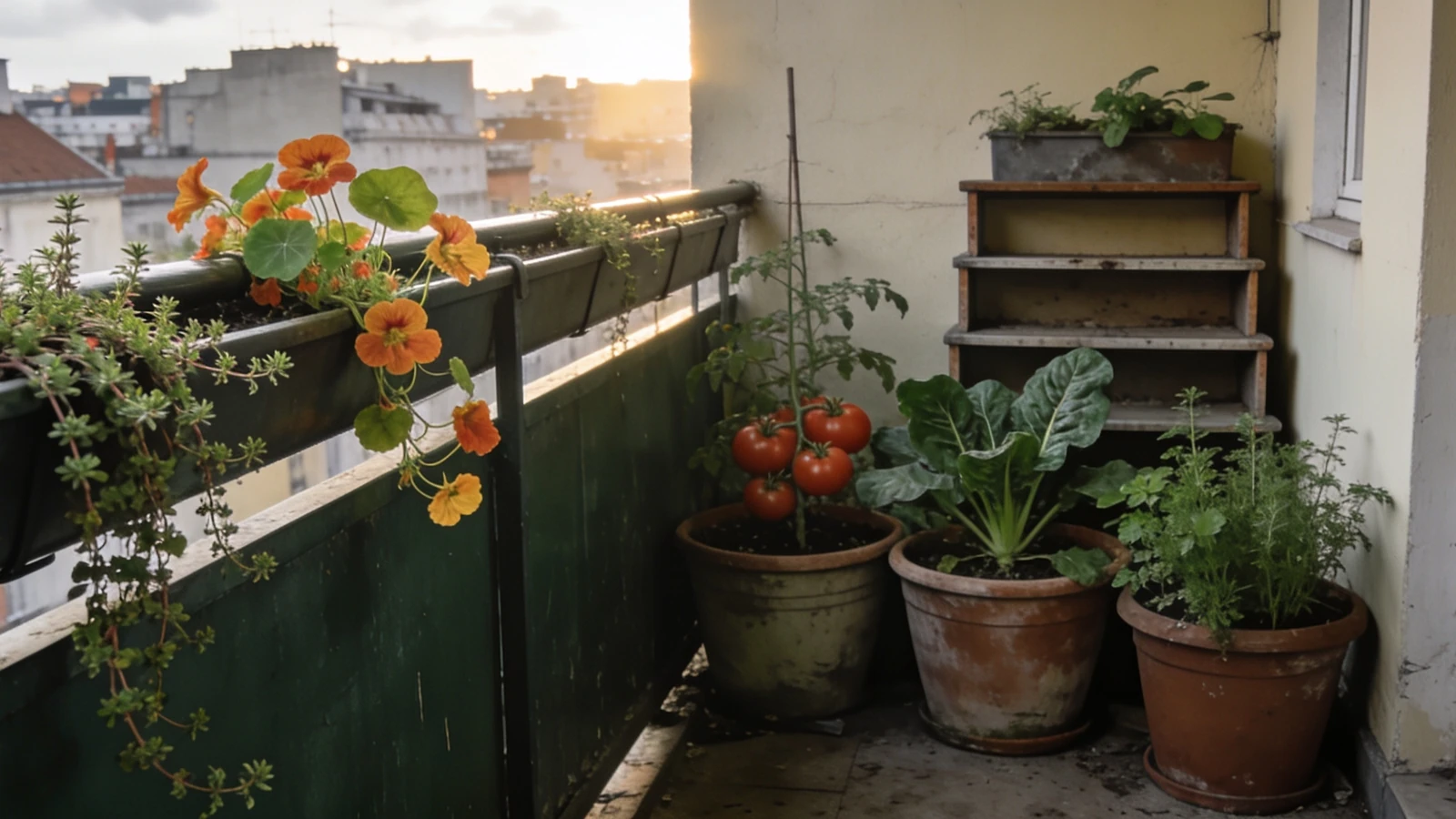
Small Balcony Garden Ideas
Balcony garden ideas built around the three things that actually limit you, light, wind and weight, with pot sizes, planting plans and what to grow where.
Updated