Native Plant Garden: Start With Where You Are
A native plant garden without the purism. Why native means local rather than national, how to find your own list, and where non-natives still earn a place.
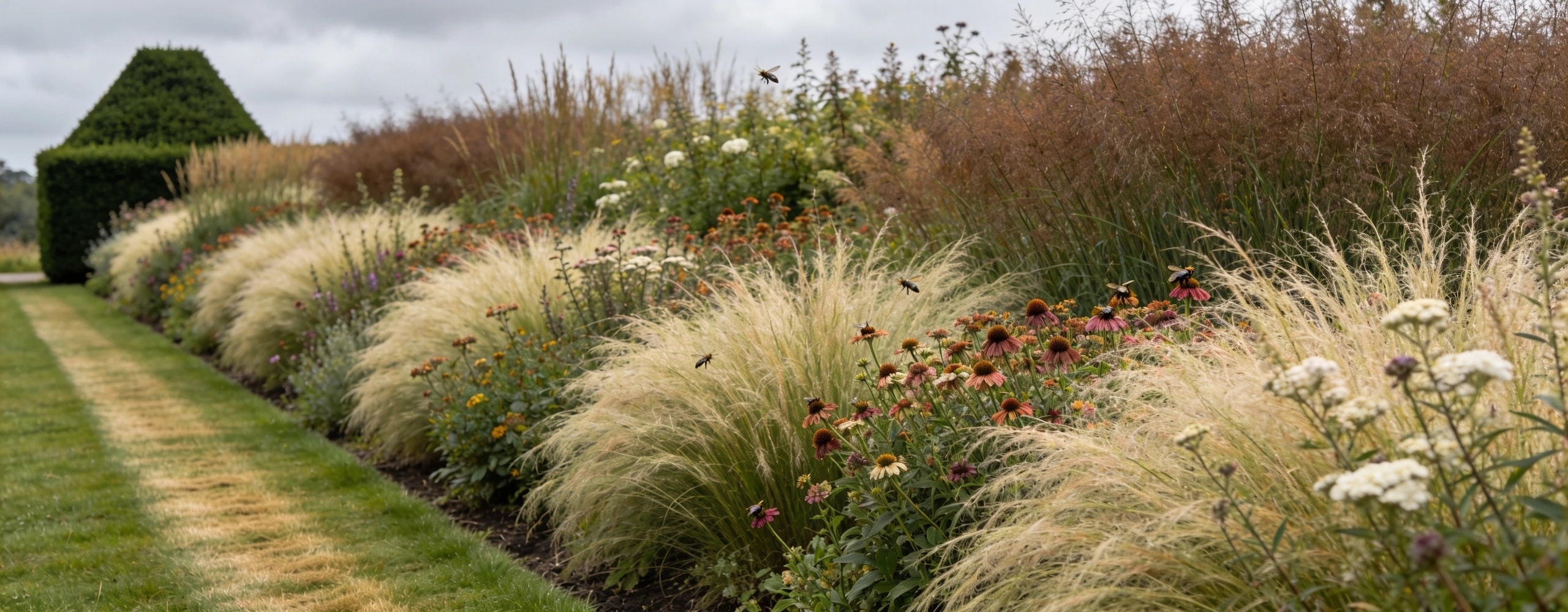
Native planting is one of the few gardening ideas where the ecological case and the low-effort case point the same way. A plant that evolved in your rainfall and your soil needs less from you, and it supports insect life that cannot use anything else. Where I part company with some of the writing on this is the purism: a native-only rule tends to leave the flowering calendar with holes in it, and those holes matter more to pollinators than the provenance of an individual plant.
The short answer
Find a list for your region, not your country, from a local native plant society, botanic garden or extension service. Make natives the backbone, in bold repeated groups rather than one of everything. Give the planting a tidy frame, a clipped edge or a clear path line, because that is what makes it read as deliberate. Then allow a few non-natives to cover early spring and late autumn, which is where native-only schemes usually leave gaps.
Native means local, not national#
This is the distinction that decides whether a native garden works.
A country-level list is close to useless in a large country. Plants native to a wet upland region and plants native to a dry coastal one are both native, and each will struggle badly in the other's conditions. Buying from a national list is how people end up with dead natives and conclude the idea does not work.
So the sequence is: find out what region you are in ecologically, then get a list for that region.
- Local native plant society
- The best source, almost everywhere. They know what actually grows locally and they usually run plant sales.
- Botanic garden or arboretum
- Often publishes regional lists and will tell you what performs rather than only what occurs.
- Extension or agricultural service
- Free, reliable and regionally specific. The obvious first call in the US.
- Ecoregion planting guides
- Pollinator Partnership publishes free guides by ecoregion for North America, which is the right resolution for this decision.
- A local wild place
- Underrated. Walk a nearby verge, wood or meadow in three different months and note what thrives. That is your list, verified.
The three arguments that hold up#
I want to be specific rather than enthusiastic, because native planting attracts some overclaiming.
They suit the conditions. A plant adapted to your rainfall and soil needs less watering, less feeding and less intervention once established. That is not romantic, it is just fit.
They support more insect life. This is the strongest argument and it rests on host specificity: many insects, particularly moth and butterfly larvae, can only feed on particular plants or plant families they evolved alongside. A garden of ornamental exotics can be full of flowers and support very little larval life, which is what birds feed their young on.
They are not going to become invasive. A plant already native to your region is not going to escape into it.
What I would not claim is that every native is automatically better than every non-native for every purpose. That is not true, and pretending it is makes the honest case weaker.
Where non-natives still earn a place#
The gap in most native-only schemes is seasonal, and it is a real cost to the wildlife the scheme is for.
In many regions native flowering is concentrated from late spring to early autumn. Early spring and late autumn, which are exactly when emerging queens and late foragers most need fuel, can be thin.
Well chosen non-natives fill that: crocus and pulmonaria early, sedum and single dahlias late, marjoram and catmint for a very long mid-season. None of them is invasive in most places and all of them are worked hard by insects.
Making it look deliberate#
The commonest objection to native planting is that it looks untidy, and that is a design problem rather than a plant problem.
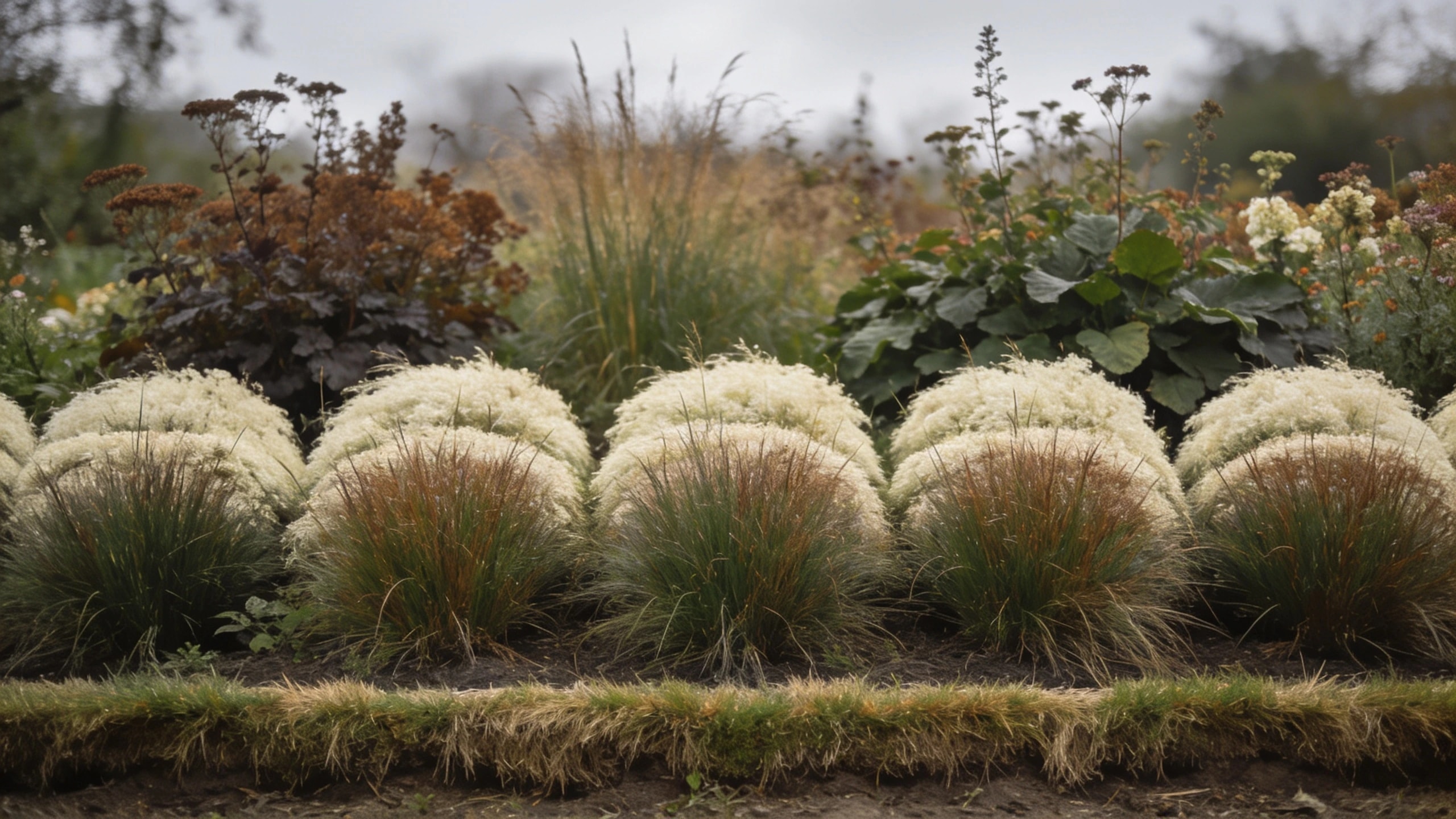
Wild-looking planting reads as intentional when it sits inside a frame. Take that away and the same planting reads as neglect.
Key points
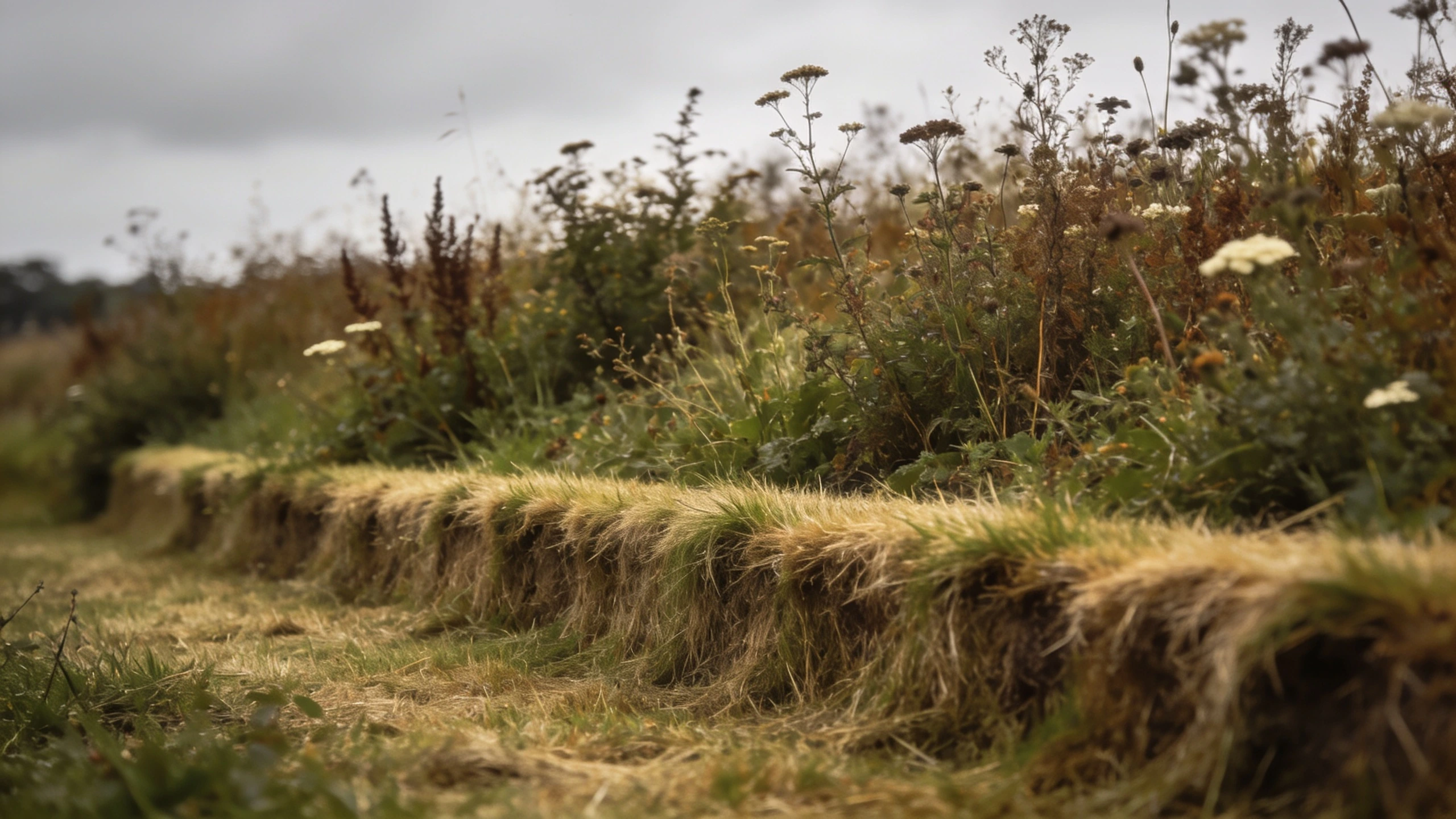
- A mown edge, a clipped low hedge or a hard path line around loose planting does most of the work.
- Repetition: five or seven of one species, repeated down the border, rather than one of twenty things.
- One or two clipped evergreen shapes as anchors, even in an otherwise wild scheme.
- Restrict the palette. Six species used well look designed; twenty look accidental.
- Keep the front edge low and deliberate, because that is the line people read as tidy or not.
Establishing it, which is the work#
Native planting is low maintenance eventually and not at the start. Two years of attention buys twenty of ease.
Plant in autumn where you can, so roots establish before the first dry summer. Water through the first two summers regardless of how drought tolerant the plant is meant to be, because drought tolerance is a property of an established root system.
Mulch, and keep grass and weeds off the planting for those two years. Competition at establishment is what kills more new plants than drought does.
And plant densely enough to close the ground. Bare soil between native plants fills with whatever arrives, and that is where the untidy reputation comes from.
Seed against plants#
Both work and they suit different situations.
Plants give you structure in year one, they establish more reliably, and they cost considerably more. For a border you look at, buy plants.
Seed is a fraction of the cost and right for larger areas and meadow style planting. It needs bare ground, patience and two or three years to look like anything. Buy from a supplier who states the region their seed was collected in, and be sceptical of cheap unnamed wildflower mixes, which are often mostly quick annual filler and occasionally contain something aggressive.
What it costs#
- A regional plant list
- Free, from a native plant society, botanic garden or extension service. Do this before spending anything.
- Twenty native perennials
- $120 to $300, and cheaper again at a native plant society sale. Buy small and plant in groups.
- Regional native seed for 20 sq m
- $30 to $90. Far cheaper than plants and two years slower.
- Mulch for establishment
- $40 to $100. Not optional in the first two years.
- Edging or a mown strip
- $0 to $150. The cheapest thing that makes the whole scheme read as designed.
Where this needs adjusting#
In a very small garden, a full native scheme may be less useful than a few high-value native plants plus season-extending non-natives. Impact per square metre matters more than proportion.
If your soil has been heavily altered, imported topsoil, builders' rubble, decades of feeding, it may no longer resemble the local soil your natives are adapted to. Test before assuming.
And for food, accept the exception. Almost no crop is native anywhere, and keeping a productive area alongside a native ornamental scheme is what nearly everyone who gardens this way actually does.
Where the guidance here comes from#
The local-not-national point and the establishment advice are the two things I would most want someone to take from this, and both come from watching native plantings fail for those reasons. For regional lists, Pollinator Partnership publishes free ecoregion guides for North America, the RHS wildlife pages cover the insect relationship well, and Garden Organic is sound on establishment without chemicals. Your local native plant society will beat all three for a specific list.
The short version#
Get a list for your region rather than your country. Plant natives as the backbone in bold repeated groups, frame the whole thing with a mown or clipped edge so it reads as deliberate, and allow a few non-natives purely to cover early spring and late autumn. Water and mulch for two summers. Then largely stop.
Related reading#
- Pollinator garden: the insect side, and why flower shape matters as much as origin.
- Permaculture garden: the overlapping design thinking, and which claims to be sceptical of.
- Garden design basics: the frame and repetition that make loose planting look intentional.
- Low-maintenance garden ideas: where the real effort savings come from.
Frequently asked questions
What counts as a native plant?
A species that occurs naturally in your region without human introduction, and the useful word is region rather than country. A plant native to a wet western valley may be entirely wrong for a dry eastern one in the same country. Lists published at national level are a starting point; the ones worth using come from a local native plant society, botanic garden or extension service.
Why plant natives at all?
Three reasons that hold up. They suit your conditions, so they need less water, feeding and fussing once established. They support more insect life, because local insects and local plants evolved alongside each other and many insects can only use specific host plants. And they are unlikely to become invasive where they already belong.
Do I have to be strict about it?
No, and a strict rule usually produces a worse garden. Natives should be the backbone, because that is where the ecological value is. Well chosen non-natives extend the flowering season at both ends, which matters to pollinators in early spring and late autumn when natives are often absent. Season-long coverage from a mixed planting beats a short native-only window.
Are native gardens messy?
They can be, and that is a design choice rather than a property of the plants. Native planting reads as intentional if it has the same structure as any other good border: a clipped or evergreen edge, repetition of a few species, and a clear boundary between planting and path. Wild planting inside a tidy frame looks deliberate; wild planting with no frame looks neglected.
Where do I find a list for my area?
Your local native plant society, botanic garden, or agricultural extension service, in that order. In North America, Pollinator Partnership publishes free planting guides by ecoregion, which is the right level of resolution. Avoid generic lists and be sceptical of any nursery selling native seed mixes without saying which region they were collected for.
Is a native plant garden lower maintenance?
After the first two years, usually yes, because a plant suited to your rainfall and soil needs less from you. The first two years are not low maintenance: a new planting needs watering through its first summers regardless of origin. The savings come later and they are real, particularly on water and feeding.
Can I grow food in a native planting scheme?
Almost no food crop is native anywhere, since domestication moved them all around the world long ago. That is not a contradiction to resolve. Keep a productive area for food and use native planting for the ornamental and wildlife parts of the garden, which is what most people who garden this way end up doing.
Topics in this article
About the author
Jeff has gardened professionally for over twenty years, mostly on heavy clay, and writes everything here from beds he still works himself. More from Jeff Tanun →
Keep reading
Memorial Garden Ideas
Memorial garden ideas that hold up over decades: choosing a spot, planting with meaning and low upkeep, and what to know before scattering ashes.
Updated
Water Garden Ideas
Water garden ideas from a washing up bowl upwards. What size actually works, why most small ponds go green, and the one feature that matters most for wildlife.
Updated
Front Yard Garden Ideas
Front yard garden ideas for a space you barely visit: planting that looks intentional all year, keeps the bins out of sight and does not need watering.
Updated