Memorial Garden Ideas: Planning a Place That Lasts
Memorial garden ideas that hold up over decades: choosing a spot, planting with meaning and low upkeep, and what to know before scattering ashes.
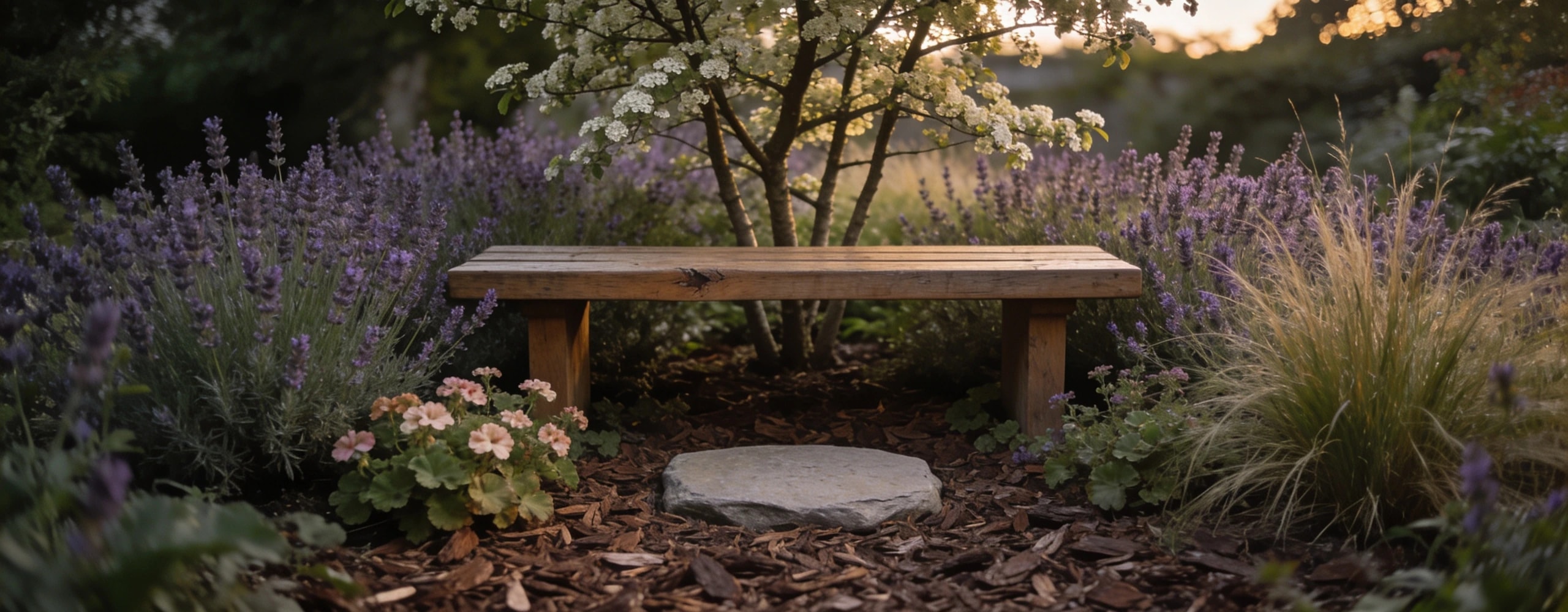
A memorial garden is one of the few pieces of garden design where the brief is not really about plants. It is about making somewhere that still works in twenty years, that does not become a burden in the months when nobody can face it, and that gives you a reason to sit down. I have helped make two, and the thing I got wrong the first time was designing for the first year rather than the tenth.
The short answer
Choose a spot you already pass and that gets afternoon sun. Put a seat in it, because sitting is what people actually do there. Plant for length of life and scent rather than display: one small tree or a rose, something fragrant to brush past, and something that flowers on a date that matters. Mulch deeply and plant densely so it looks cared for when it is not. If you are scattering ashes, spread them thinly over a wide area rather than into a planting hole.
Start with where, and with sitting down#
The first decision is not what to plant. It is where the place is, and whether you will end up in it.
Somewhere you already walk past beats a special corner at the bottom of the garden. Afternoon and evening sun beats morning, because that is when people sit. Shelter from wind matters more than the view.
And put something to sit on in it, not beside it. Nearly everyone I have spoken to about a memorial garden describes sitting there. Very few describe looking at it.
Key points
- Choose a spot on a route you take anyway, or it becomes somewhere you visit on anniversaries only.
- Afternoon and evening light. A bench in shade at six o'clock will not get used.
- Shelter first. A windy corner is unpleasant to sit in whatever is planted there.
- One seat, properly placed, is worth more than any ornament or marker.
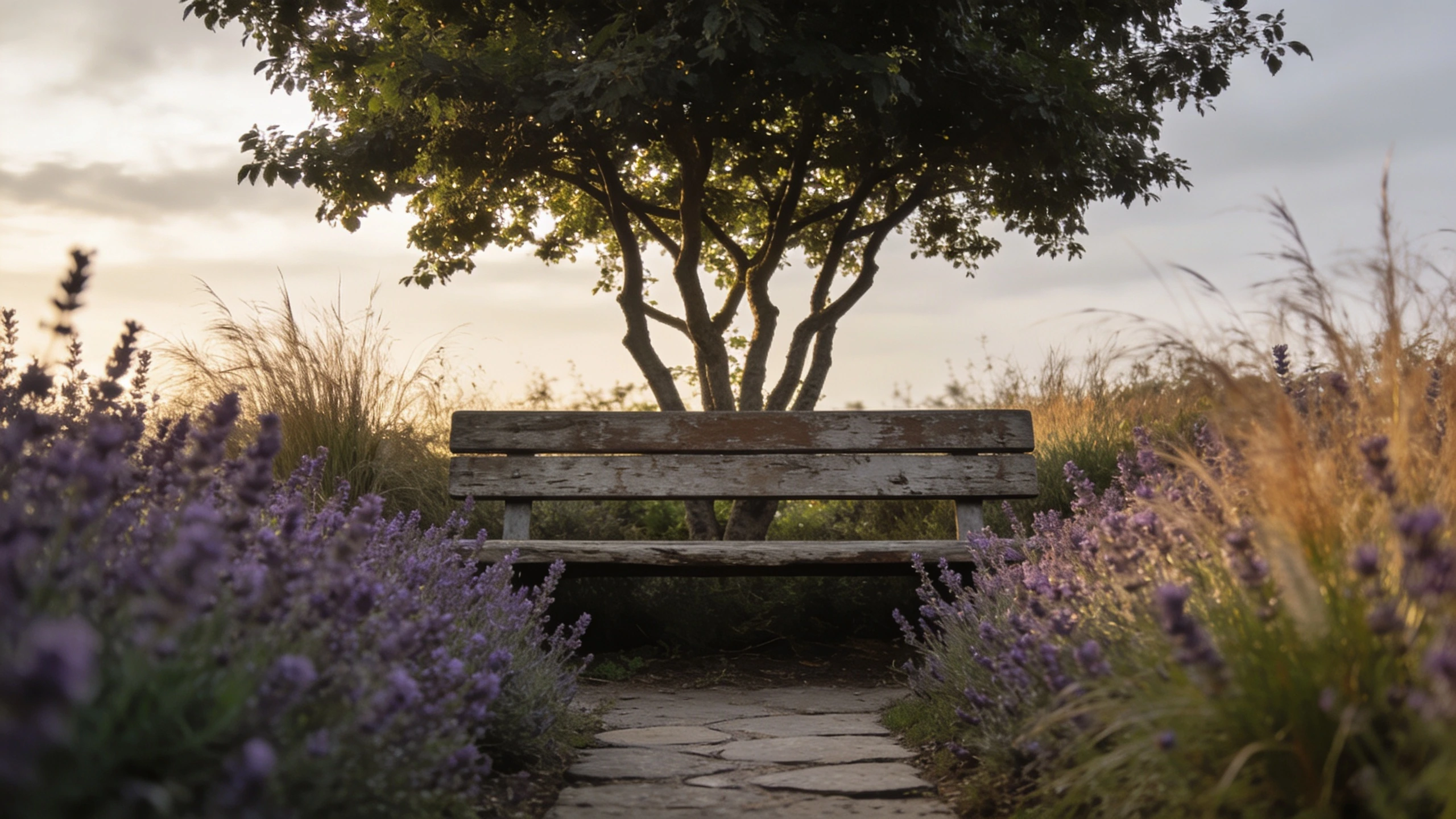
- Leave room to add to it. These places tend to grow over years, and a full design has nowhere to put the next thing.
Planting for decades, not for the first summer#
The brief here is unusual: this planting has to survive periods of complete neglect and still look intentional. Grief does not arrive on a maintenance schedule.
That points firmly at shrubs, long lived perennials and structure, rather than bedding and anything needing constant attention.
- One small tree
- Amelanchier, crab apple, rowan or Japanese maple. Under six metres, more than one season of interest, no threat to walls or drains.
- A scented rose
- A shrub or old-fashioned rose rather than a hybrid tea. Fewer sprays needed, better shape when unpruned, and the scent is the point.
- Something you brush past
- Lavender, rosemary, thyme along a path edge. Scent released by touch is a reward that needs nothing from you.
- Evergreen structure
- Box, yew, hebe, a low clipped shape. This is what makes the space read as cared for in February.
- Long-flowering perennials
- Catmint, hardy geranium, salvia, sedum. Months of flower rather than weeks, and they cope with being ignored.
- Bulbs for one particular week
- Snowdrops, narcissus, nerine. Choose the one that flowers near the date that matters and plant a lot of it.
That last idea is the one people tell me they value most. Picking a plant that comes into flower around a birthday or an anniversary means the garden marks the date without anyone having to.
Ashes: the part nobody explains properly#
If ashes are part of this, there are two practical facts worth knowing before you decide anything, and neither is usually mentioned.
The first is chemical. Cremated remains are largely calcium phosphate, with a high pH and a significant salt content. Poured into a planting hole they will raise the pH sharply and can scorch roots. The plant you chose as the memorial is then the plant most at risk.
So: spread thinly over a wide area and rake in, rather than concentrating them. If you want a plant in that exact spot, dig over a generous area, mix the ashes through a large volume of soil and compost, and choose something tolerant. Do not choose an acid-loving plant, because a rhododendron, camellia or blueberry is the worst possible match for alkaline ashes.
The second is not chemical at all. If you ever move, the memorial stays with the house. That is worth thinking about before it is decided for you, and it is a strong argument for having something portable as well: a rose in a large container, a tree dedicated in a managed wood, a bench.
Making it forgiving#
The design goal is a place that looks cared for when nobody has cared for it in three months.
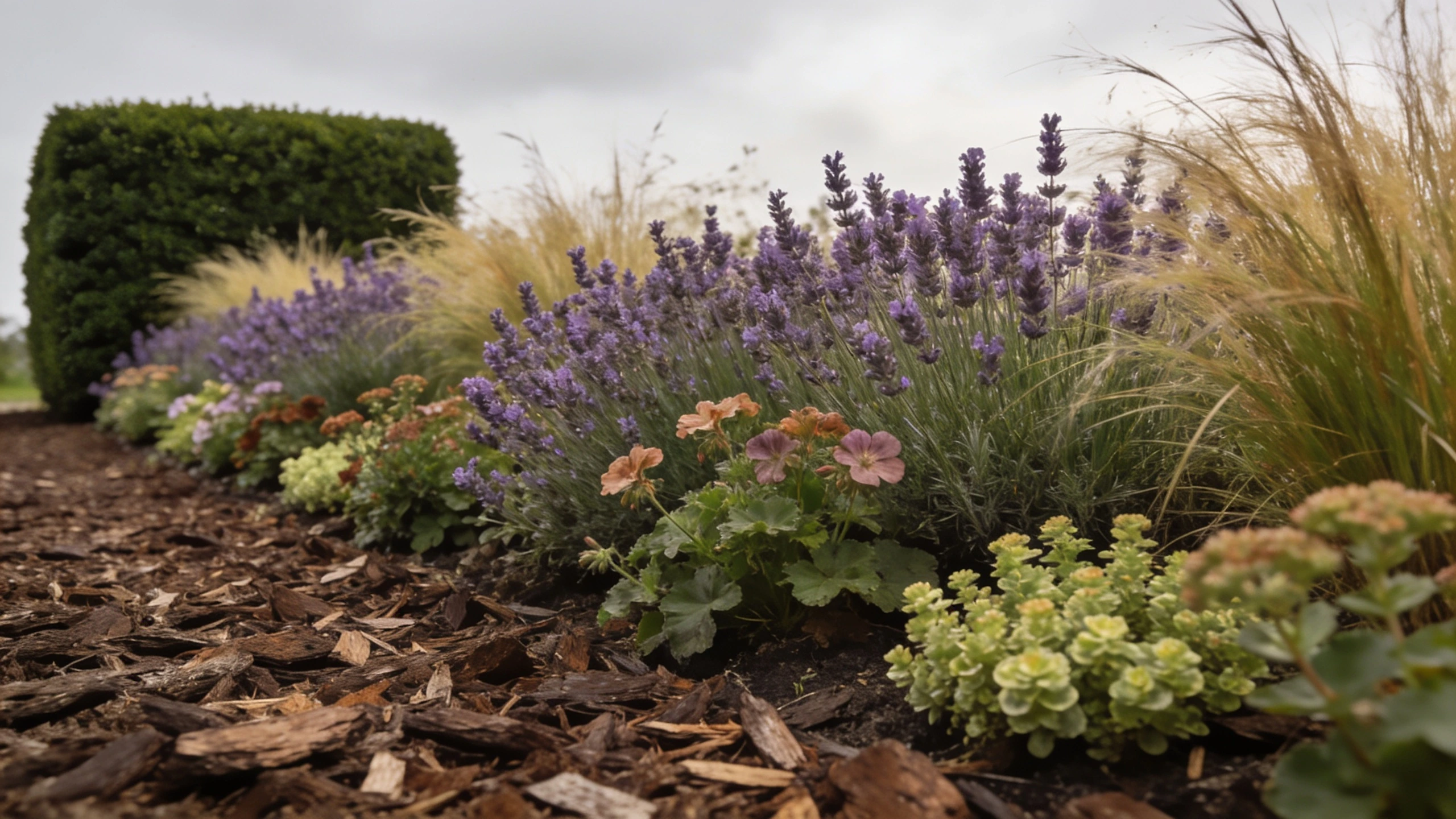
Mulch is the main tool. Five to ten centimetres of compost or bark every spring suppresses most weeds, holds water and makes the whole thing read as deliberate. Bare soil between plants reads as neglect faster than anything else.
Plant closer than a nursery label suggests, so the plants themselves close the gaps. A full border needs less weeding than a sparse one, which is the opposite of what most people expect.
Avoid anything that must be staked, deadheaded weekly, lifted for winter or divided every other year. This is not the place for dahlias in pots.
Markers, and keeping them quiet#
The memorials that hold up are the understated ones. A stone with a name cut into it, set flush into planting. A slate or bronze plaque on the bench. A single specimen plant that everyone knows is theirs.
What dates badly is anything decorative or seasonal. Ornaments weather, plastic fades, and something bought in the first raw month often does not feel right five years later.
There is a good case for waiting. Make the space, plant it, sit in it for a year, and then decide whether it needs a marker at all. Quite often it does not.
If you have no garden#
This is worth saying plainly, because the standard advice assumes a plot.
A large container with a scented rose or a small maple is a real memorial garden, and it has the advantage of moving with you.
Community gardens, churchyards and many public parks run dedication schemes for benches and trees. Some woodland charities will plant and record a tree in a managed wood, which gives permanence that does not depend on you keeping the same address.
Where the guidance here comes from#
The design thinking is mine, from making two of these and getting the first one wrong by over-planning it. On plant selection and pruning I check against the RHS advice pages, and the USDA plant hardiness map is the first thing to look at before choosing a tree that has to live for fifty years. On the harder part of this, Cruse is the UK bereavement charity and worth knowing about; a garden helps, and it is not a substitute for people.
The short version#
Pick a spot with afternoon sun on a route you already take, and put a seat in it. Plant one small tree or a scented rose, something fragrant along the path, evergreen structure and a bulb that flowers on the date that matters. Mulch deeply, plant densely, and leave room to add. If ashes are involved, spread them thin and wide rather than into the planting hole. Then wait a year before deciding on a marker.
Related reading#
- Garden design basics: how to place a seat, a path and a border so the space works.
- Horticultural therapy and gardening for wellbeing: the wider question of a garden that helps rather than demands.
- Low-maintenance garden ideas: the planting approach this page relies on.
- Composting for beginners: where the annual mulch comes from.
Frequently asked questions
What should I plant in a memorial garden?
Something long lived, something scented and something that flowers on a date that matters. A tree or a rose gives you the long life, lavender or a philadelphus gives you scent you meet by accident, and choosing a plant that flowers around a birthday or an anniversary turns the calendar into part of the memorial. Avoid anything short lived or fussy, because a plant that dies is a second loss.
Can I scatter ashes in my own garden?
In most of the UK and the US you can scatter ashes on your own land without permission, but there are two practical problems people are not warned about. Ashes are highly alkaline and salty, so a concentrated pile will damage or kill plants. And if you ever move house, the memorial stays behind. Mix ashes thinly through a wide area of soil rather than pouring them into a planting hole, and think hard about a portable memorial as well.
Will ashes harm plants?
Concentrated, yes. Cremated remains are mostly calcium phosphate with a high pH and a high salt content, so poured into one spot they raise the pH sharply and can scorch roots. Scattered thinly over a large area and raked in, the effect is negligible. If you want a plant in the exact spot, dig a wide area, mix the ashes through a good volume of soil and compost, and plant a tolerant shrub rather than something acid-loving.
What is the best memorial tree for a small garden?
Amelanchier, crab apple, rowan or a small Japanese maple. All stay under about six metres, all give more than one season of interest, and none will undermine a wall or outgrow a suburban plot. Avoid willow, poplar and birch near buildings and drains. If the garden is very small, a tree in a large container or a standard rose is a better answer than a tree you will have to remove.
How do I keep a memorial garden low maintenance?
Choose shrubs and long lived perennials over bedding, mulch deeply every spring, and plant densely enough that the plants suppress weeds themselves. Grief comes in waves and there will be months when nobody tends it, so design it to look intentional when neglected. Evergreen structure with three or four flowering moments across the year does that better than a border needing constant deadheading.
What if I do not have a garden?
A large container with a scented rose or a Japanese maple works, and it moves with you, which is often the better answer anyway. Community memorial gardens, church grounds and many parks have dedication schemes. Some woodland trusts will plant a tree in a managed wood with a record of who it was for, which gives permanence without depending on you keeping the same address.
Should there be a bench or a marker?
A place to sit is more used than a thing to look at. Almost everyone who describes visiting a memorial garden describes sitting in it, so if you choose one, choose the bench. Markers work best when they are quiet: a stone with a name cut into it, set flush in planting, weathers better than anything decorative and does not date.
Topics in this article
About the author
Jeff has gardened professionally for over twenty years, mostly on heavy clay, and writes everything here from beds he still works himself. More from Jeff Tanun →
Keep reading
Native Plant Garden
A native plant garden without the purism. Why native means local rather than national, how to find your own list, and where non-natives still earn a place.
Updated
Front Yard Garden Ideas
Front yard garden ideas for a space you barely visit: planting that looks intentional all year, keeps the bins out of sight and does not need watering.
Updated
Zen Garden
A zen garden is karesansui: gravel, rock and almost nothing else. What depth of gravel to use, how to set the stones, how to rake it, and what it costs.
Updated