Pollinator Garden: What to Plant and Where to Put It
A pollinator garden that actually works: flower shapes bees can use, a plan that covers March to October, and why water and bare soil matter as much as flowers.
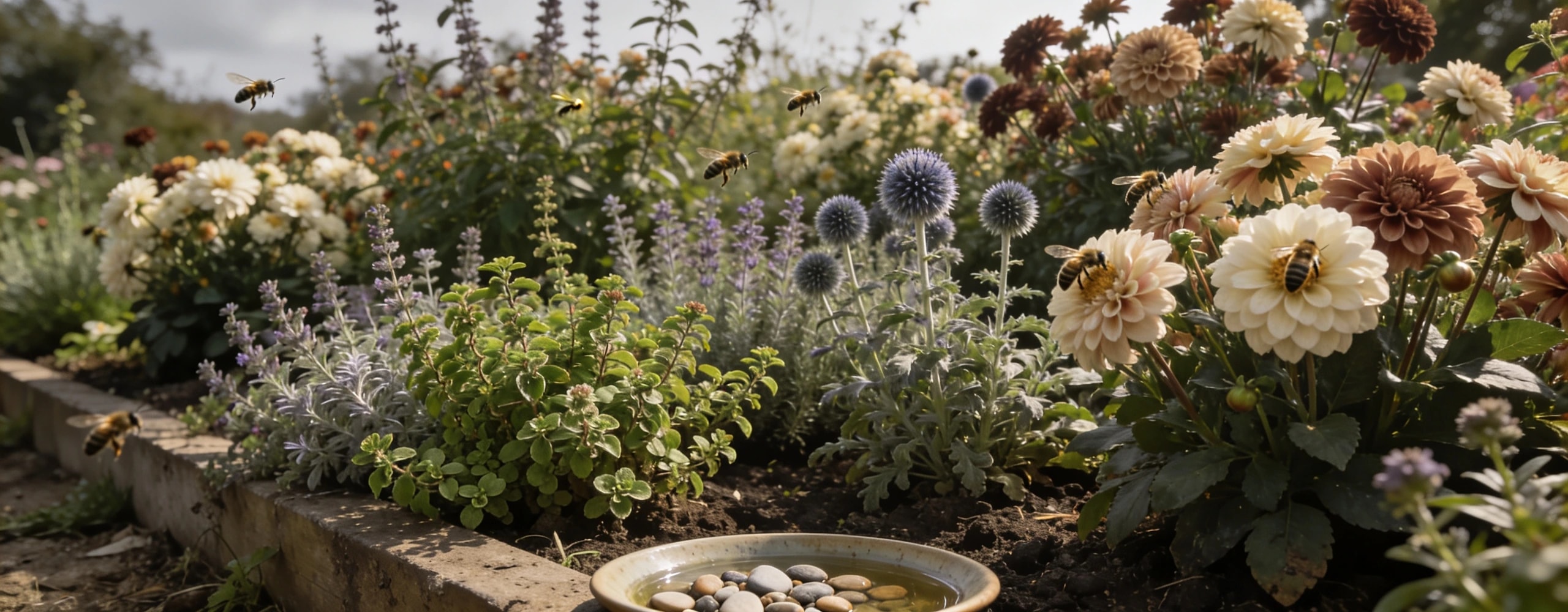
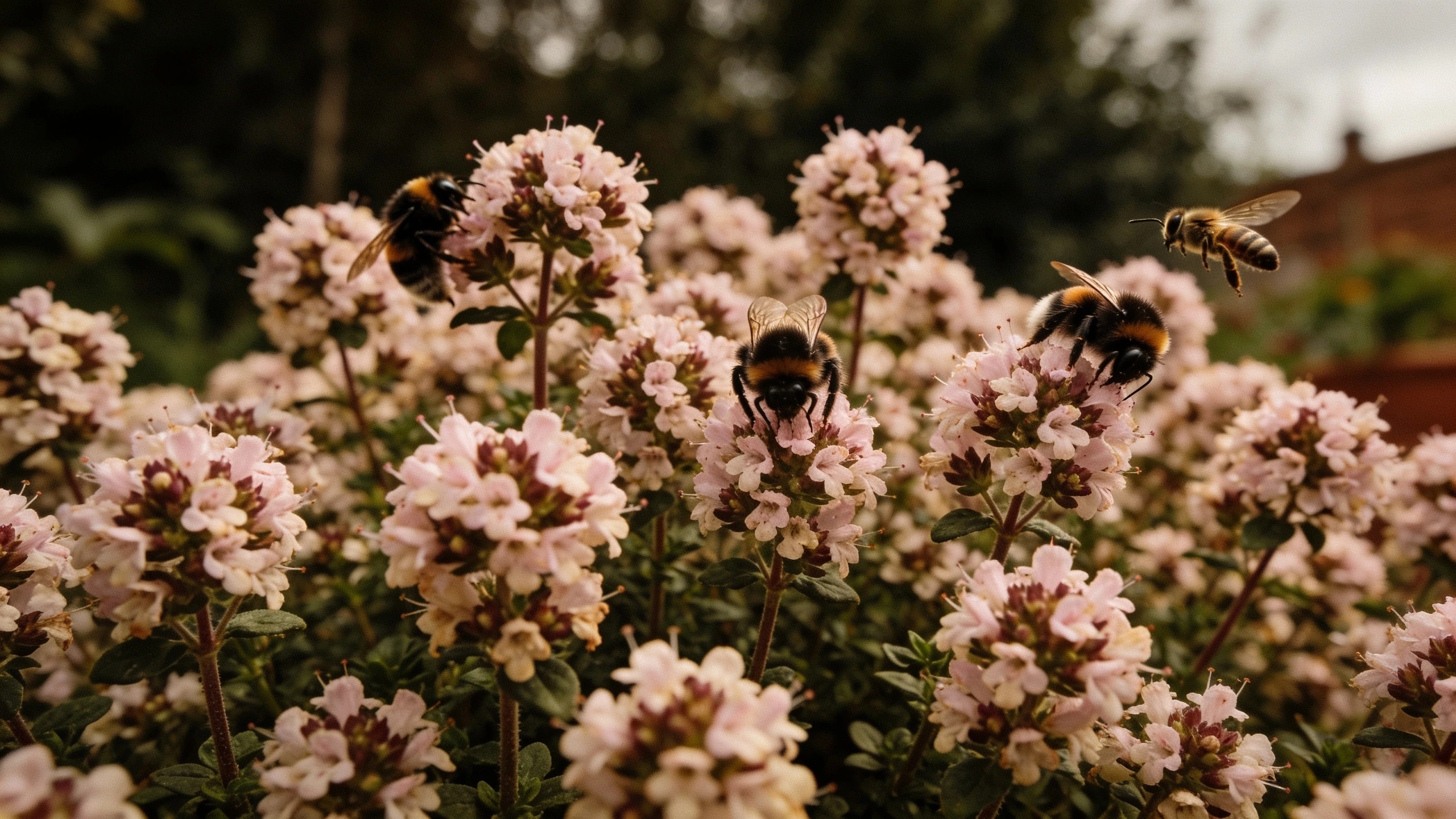
A pollinator garden is one of the few gardening projects where the cheap version works as well as the expensive one. I started mine by accident, by leaving a patch of marjoram to flower instead of cutting it for the kitchen, and the difference in insect traffic within a fortnight was more obvious than anything I have deliberately planted since. What follows is what I have learned since about doing it on purpose.
The short answer
Plant single, open flowers rather than doubles, in groups of three or five of the same thing so they are worth a detour. Cover the season from March to October, and if you only add two plants, make them an early one and a late one. Add a shallow water source with a stone in it. Leave a sunny patch of bare soil and leave stems standing until spring. Do not spray anything while flowers are open.
Flower shape decides whether a plant counts#
This is the part that gets missed, and it is the difference between a garden that looks pollinator friendly and one that is.
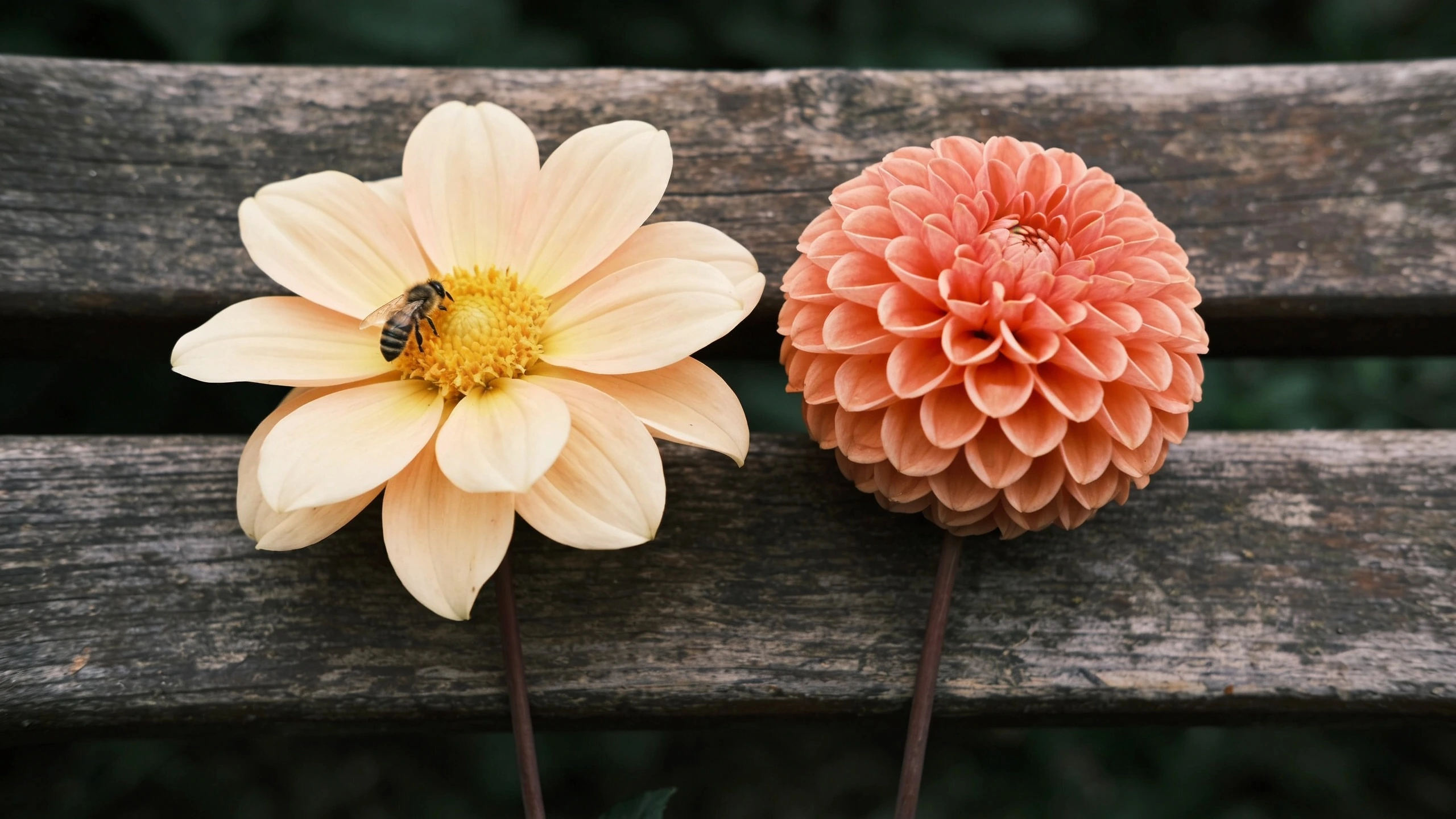
An insect needs to physically reach the nectar and pollen. Breeders producing double flowers replace reproductive parts with extra petals, so the showiest bedding is often the least use. A double begonia is a decoration. A single dahlia with a visible yellow centre is a canteen.
Key points
- Look for an open centre you can see into. If you cannot see the middle of the flower, an insect probably cannot get to it either.
- Single flowers over doubles, every time. The word to look for on a label is single, and the word to avoid is pompom.
- Plant in groups of three or five of the same thing. A single plant of twenty species is far less use than five plants of four species.
- Different insects need different shapes. Flat umbels for hoverflies, tubes for long-tongued bumblebees, open daisies for everything.
- Flowering season beats flower quantity. Two months of spectacle is worth less than seven months of something.
A planting plan that covers March to October#
The useful way to think about this is as a calendar with gaps in it, not as a list of good plants. Almost every garden is well covered in June and July and empty in March and October.
- March and April
- Crocus, pulmonaria, hellebore, flowering currant, willow catkins. This is the hungriest gap in most gardens and the highest value thing to fix.
- May
- Aquilegia, geum, comfrey, apple and pear blossom, hawthorn. Easy month, usually already covered.
- June and July
- Catmint, marjoram, lavender, foxglove, geranium, thyme, salvia. Everyone has this covered. Plant it anyway, in threes.
- August
- Echinops, verbena bonariensis, single dahlias, scabious, oregano left to flower. The point where bedding starts to fade and perennials carry it.
- September and October
- Sedum, aster, ivy flowers, verbena still going. The second big gap. Ivy in particular is one of the most valuable late nectar sources there is.
If you take one thing from this page, plant something from the first band and something from the last. Those two additions do more than doubling your mid-summer flowers.
Water, bare soil and mess: the three unglamorous ones#
Flowers get all the attention. These three do more than most people expect and all of them are free.
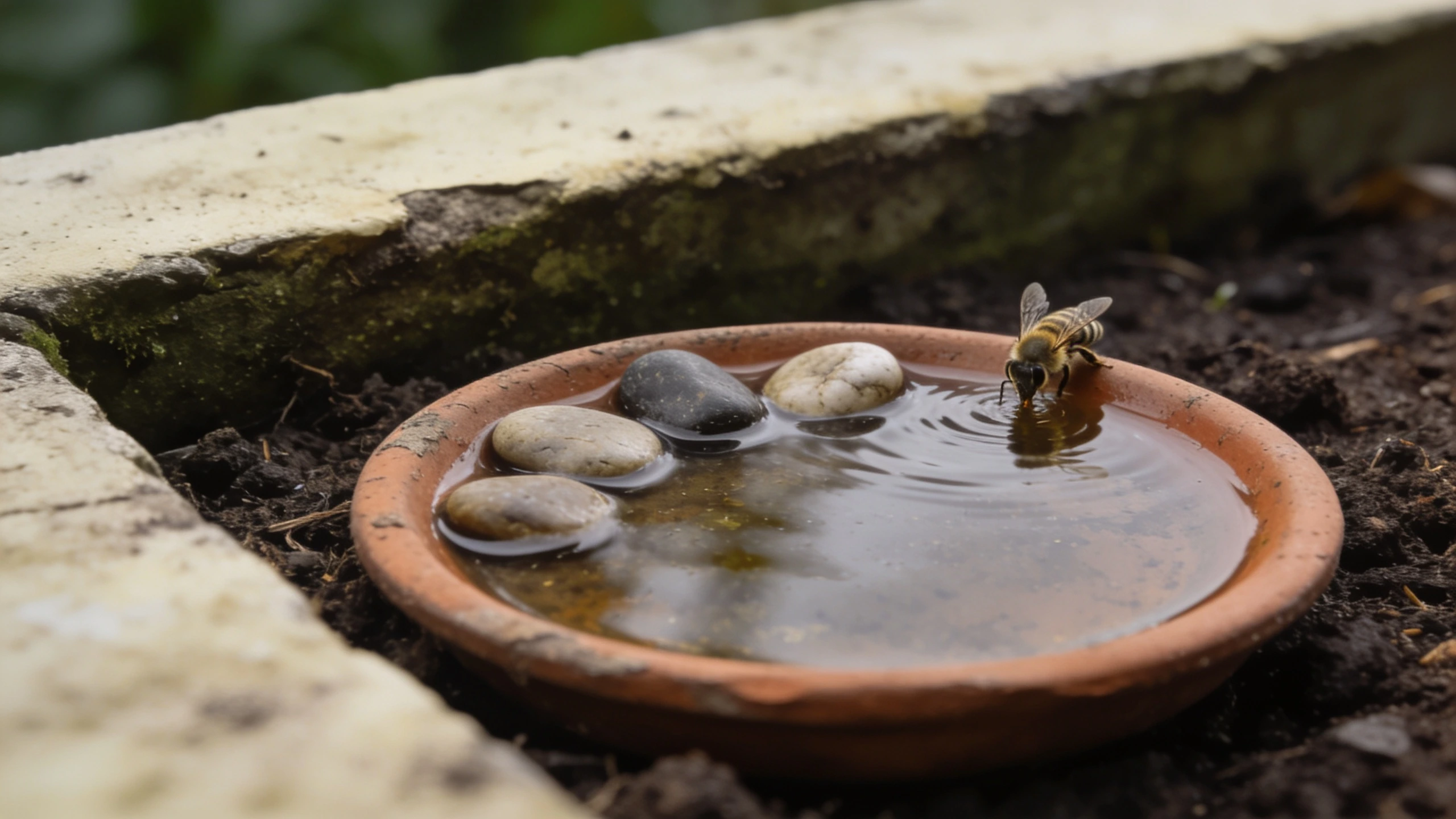
Water. A shallow dish with a stone or two standing above the surface, so insects can land and drink without drowning. Topped up in dry weather. That is the whole intervention.
Around two thirds of bee species nest in the ground rather than in hives or boxes, which is why the second item matters. A patch of bare, sunny, undisturbed soil, even a square metre at the back of a border, gives them somewhere to do it. Mulching every last inch of the garden is well meant and it removes that habitat.
And the third: leave stems standing over winter. Hollow stems are where a lot of insects overwinter, and leaf litter is where others do. Cut back in March rather than October and you lose nothing except a tidy November.
The things that undo all of it#
Spraying is the obvious one. Any insecticide applied to open flowers reaches the insects you are trying to feed, and "bee friendly" on a pesticide label refers to timing and application rather than to the chemistry being harmless. If you must treat something, do it after dusk when flowers have closed and foraging has stopped, and target the plant rather than the border.
The subtler one is buying plants treated with systemic insecticide. A plant grown with a neonicotinoid drench carries it in the nectar and pollen for months. If a nursery cannot tell you, buy from one that can, or grow from seed, which is cheaper anyway.
What it costs to make a real difference#
Almost nothing, which is the appeal.
- One marjoram or catmint plant
- $6 to $12. Split it in two years and you have three. The best value on this page.
- Fifty crocus bulbs
- $8 to $15, planted in autumn. Covers the March gap for a decade.
- Three single-flowered dahlia tubers
- $15 to $30. Flowers August to first frost, which is the second gap.
- One sedum
- $8 to $14. Late nectar, and it looks good dead all winter.
- A shallow dish and some pebbles
- Free. You already own both.
- Seed of annuals: phacelia, borage, calendula
- $4 to $10 for the lot. Fastest possible start in a first year.
Where to put it#
Sun. Most nectar plants want six hours, and insects forage more in warm sheltered spots than in cold exposed ones. A south or west facing border against a wall is ideal.
Shelter matters more than people think. A windy border gets far less traffic than a sheltered one with the same planting, because flying in wind is expensive.
And keep it near a path if you can. The reason is not horticultural: you will look after it more if you walk past it, and you will notice what turns up.
Mistakes worth avoiding#
Buying one of everything. It looks generous and it is the least efficient possible layout. Threes and fives.
Choosing doubles because they were prettier in the pot. I did this with dahlias for two seasons before I understood why nothing visited them.
Cutting everything down in October. Tidy garden, no overwintering habitat, and it made no difference to how it looked in April.
Mulching the entire garden, including the one sunny bare patch that ground-nesting bees were using.
When this needs adjusting#
In deep shade you will not build a nectar border. Plant for other wildlife instead: ivy for late flowers and shelter, ferns, a log pile, and accept it is a different job.
In a very small space, prioritise the two seasonal gaps over variety. Two pots, one early and one late, beat six pots that all flower in July.
And if you keep livestock or have very young children, check what you are planting. A few good pollinator plants, foxglove and monkshood among them, are toxic.
Where the guidance here comes from#
The plant list is what performs in my garden and the calendar approach is how I now plan any border. For the underlying science and for plant lists checked against actual insect visits, the RHS wildlife pages are the best free source, and Pollinator Partnership publishes regional planting guides for North America, which matters because the right plant genuinely differs by region. If you want to garden without pesticides at all, Garden Organic covers the alternatives properly.
The short version#
Single flowers, in threes, covering March to October with particular attention to the two ends. A shallow dish of water with stones in it. A sunny patch of bare soil left alone. Stems left standing until spring. No spraying while anything is in flower. That list is cheap, and it works.
Related reading#
- Flower gardening for beginners: the border plan this planting slots into.
- Garden design basics: border depth and layering, which is what lets you plant in threes.
- Low-maintenance garden ideas: most pollinator planting is also the least work.
- Composting for beginners: where the mulch comes from, and where to leave a gap in it.
Frequently asked questions
What is the best plant for pollinators?
There is no single best plant, because the point is coverage across the season. If I had to pick one thing to add, it would be a single-flowered catmint or a marjoram, because both flower for months, both are covered in bees from the day they open, and neither needs anything from you. A garden with one brilliant plant and a six week flowering season is worse than a garden with five ordinary ones flowering March to October.
Do double flowers help pollinators?
Mostly no, and this is the most useful thing on this page. Breeding a flower double replaces the reproductive parts with extra petals, so many double varieties carry little or no accessible pollen and nectar, and some are physically impossible for an insect to get into. Look for open, single flowers with a visible centre. It is a better filter than any label.
How big does a pollinator garden need to be?
A window box works. Insects forage over distance and will find a good patch, so what matters is what you plant rather than how much room you have. Three pots of marjoram, lavender and a single-flowered dahlia on a balcony will be busier than a large garden planted entirely with bedding.
When do pollinators most need flowers?
Early spring and late autumn, which are exactly when most gardens have nothing. Queens emerging in March need fuel before anything much is out, and late foragers in October are building reserves. Mid-summer is easy and almost every garden already covers it, so if you only add two things, add one early and one late.
Should I put out a bee hotel?
It can help solitary bees, but it is far down the list and often done instead of the things that matter more. Flowers across the season, a shallow water source, some undisturbed bare soil and not spraying will do more than any box. If you do buy one, choose sealed tubes you can replace, keep it dry and facing the morning sun, and clean it annually or it becomes a disease trap.
Is it bad to be tidy?
For pollinators, yes, a bit. Around two thirds of bee species nest in the ground, in bare or sparsely vegetated soil, and many overwinter in hollow stems and leaf litter. Cutting everything back in autumn and mulching every square inch removes both. Leaving stems standing until March and keeping a patch of bare soil in the sun costs nothing and does a lot.
Do I need native plants only?
No, and a strict native-only rule can leave gaps in your flowering calendar. Natives support the widest range of specialist insects and should be the backbone, but well chosen non-natives, marjoram, catmint, sedum, single dahlias, extend the season at both ends. Season-long coverage from a mixed planting beats a short native-only window.
Topics in this article
About the author
Jeff has gardened professionally for over twenty years, mostly on heavy clay, and writes everything here from beds he still works himself. More from Jeff Tanun →
Keep reading
Hummingbird Garden
A hummingbird garden built on planting rather than sugar water. Which flower shapes they can actually use, feeder rules that avoid harm, and how to plan for territoriality.
Updated
Cat Friendly Garden
A cat friendly garden covers two problems: keeping your own cat safe, and keeping other people's cats out of your seedbeds. Both have practical answers.
Updated
How to Grow Irises
How to grow irises: bearded irises want their rhizomes baking on the surface, not buried. Which type suits your soil, when to divide, and why yours stopped flowering.
Updated