How to Grow Hydrangeas: Which Type Decides the Pruning
How to grow hydrangeas without cutting off next year's flowers. Identify your type first, then prune, feed and water accordingly. Plus the soil pH colour question.
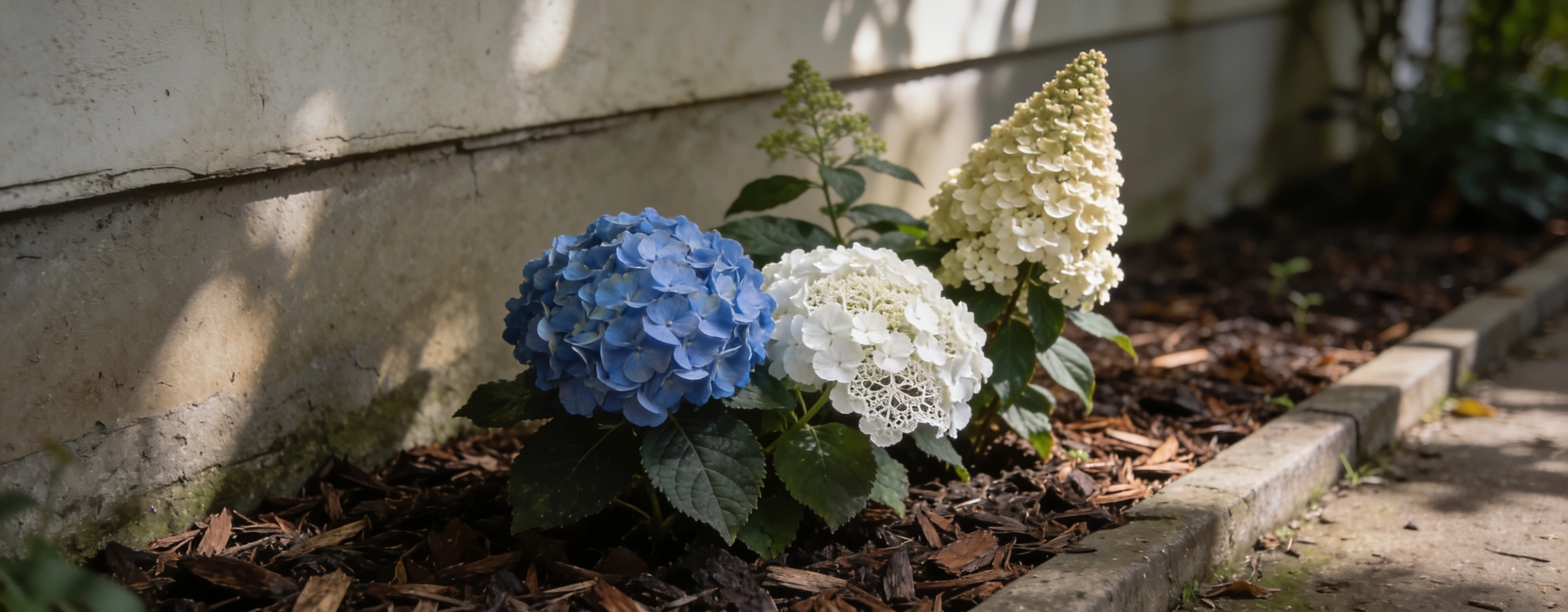
Hydrangeas have a reputation for being difficult and they are not. What they are is a group of shrubs that get treated as one plant, and since half of them flower on old wood and half on new, one set of pruning instructions will always be wrong for somebody. Identify which you have and almost every other question answers itself.
The short answer
Identify the type first. Mophead and lacecap flower on last year's wood: prune in spring only, back to the first fat pair of buds below the old head, and leave the dead heads on all winter. Paniculata and arborescens flower on new wood: cut them back hard in late winter. Plant in dappled shade or morning sun, never a baking south wall. Water deeply and mulch. Only mopheads change colour, and only with soil pH.
Work out which one you have#
This takes one look at the flower and it determines everything else.
- Mophead, Hydrangea macrophylla
- The classic round ball of flower. Flowers on last year's wood. Colour changes with soil pH. Prune in spring only.
- Lacecap, also macrophylla
- Flat head with tiny fertile flowers in the middle and larger showy ones round the edge. Same rules as mophead, and better for pollinators.
- Paniculata
- Cone shaped flower heads, often opening white and ageing pink. Flowers on new wood. Takes sun and hard pruning. The toughest of the group.
- Arborescens
- Big rounded white heads, the well known variety being Annabelle. Flowers on new wood, cut back hard, may need support because the heads are heavy.
- Climbing hydrangea, petiolaris
- Self clinging climber, white lacecap flowers, and it will flower on a north wall where nothing else does. Slow for three years then unstoppable.
- Quercifolia, oakleaf
- Oak shaped leaves, good autumn colour, flowers on old wood. Treat like a mophead for pruning.
Pruning, which is where it goes wrong#
Here is the whole thing in two rules.
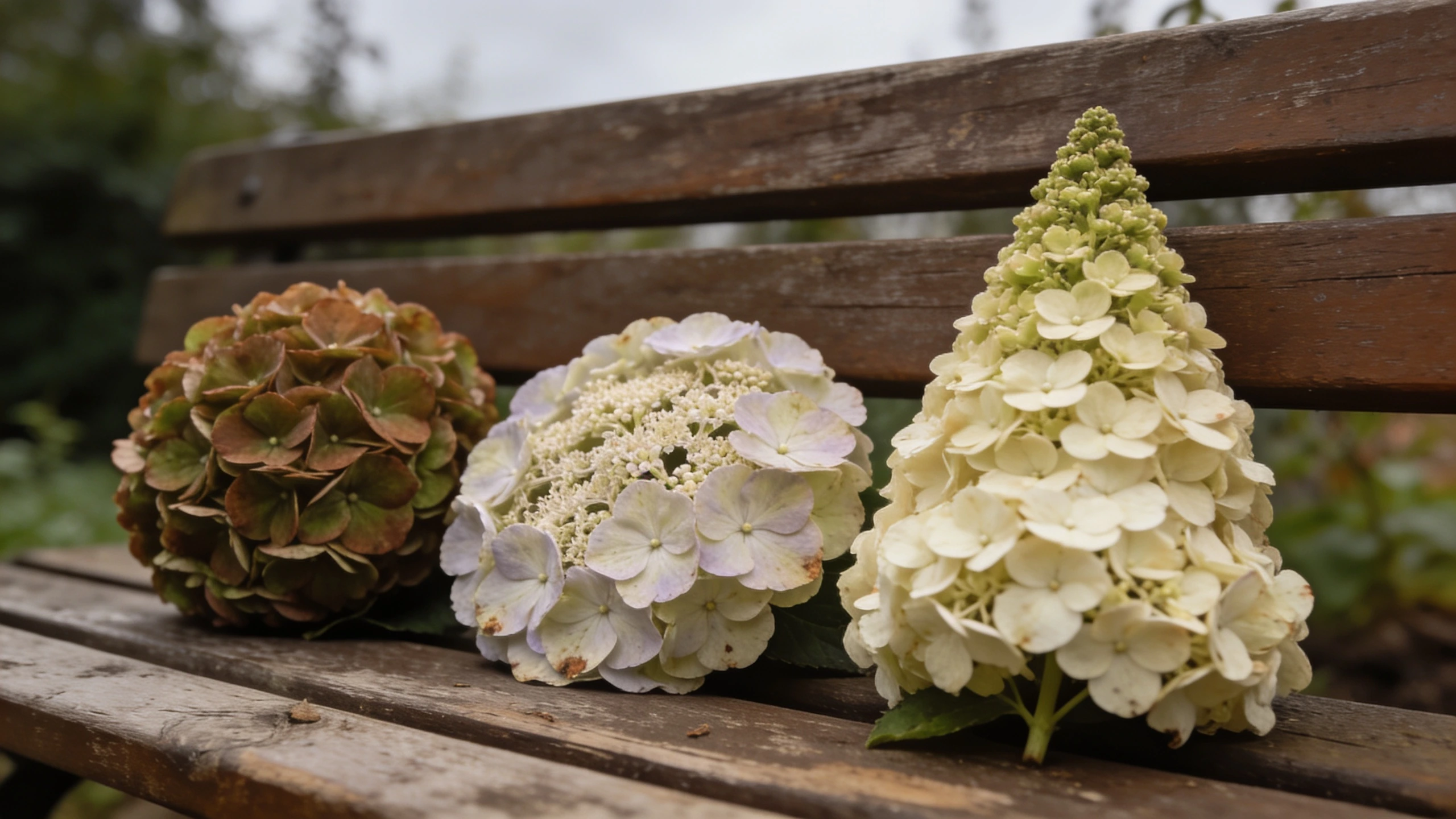
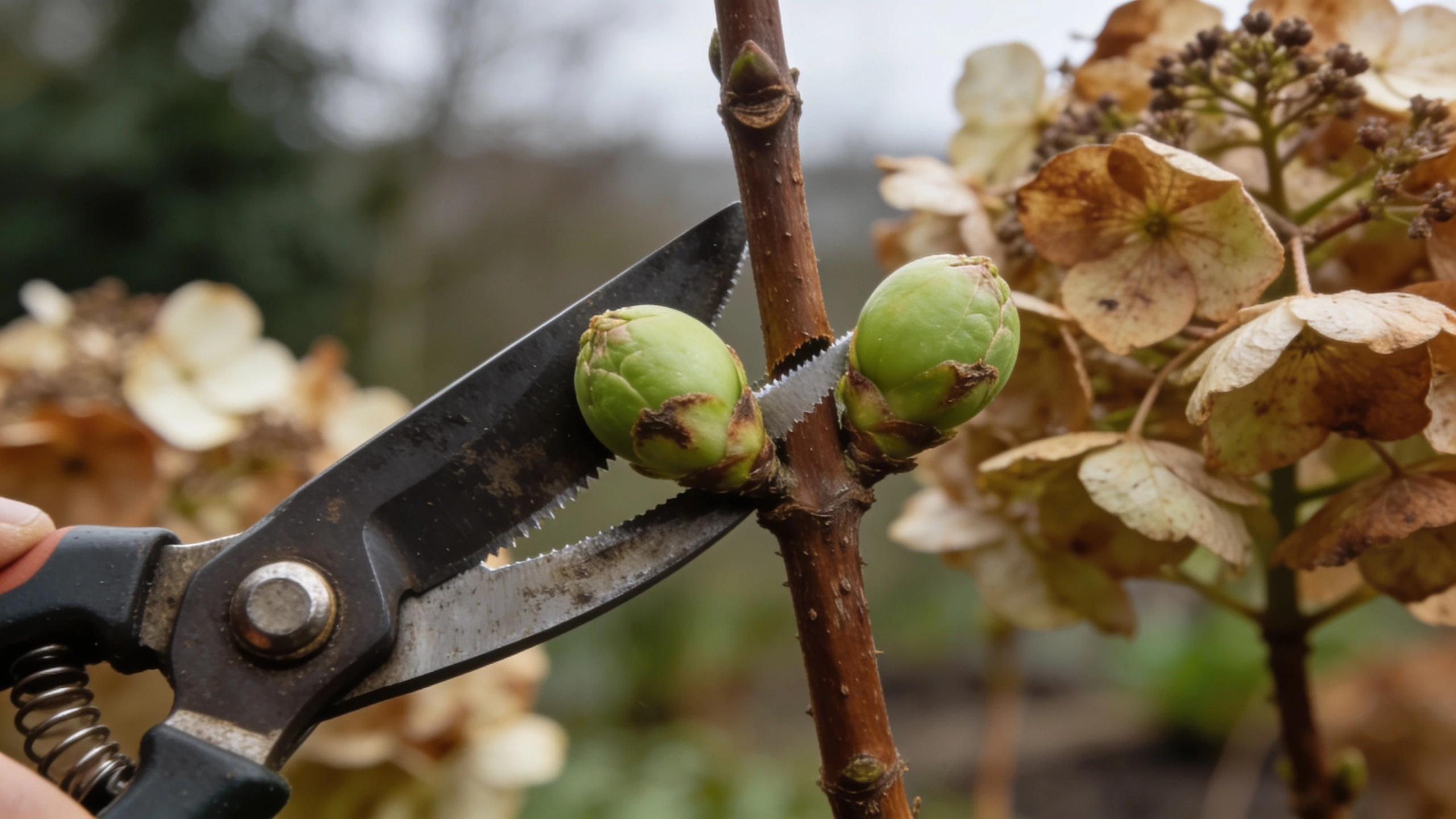
Old wood types: mophead, lacecap, oakleaf. The flower buds for next summer form on this year's stems, over autumn and winter. So cut those stems back and you have removed next year's flowers.
In spring, once you can see which buds are alive, cut each old flower head off just above the first fat healthy pair of buds beneath it. That is all. Every three or four years take one or two of the oldest stems right out at the base to keep the shrub open.
New wood types: paniculata, arborescens. These flower on stems produced this season, so in late winter you can cut the whole shrub back to a low framework, and it will flower that summer. This is why paniculata is the forgiving one: a late frost cannot cost you the display.
Where to plant, and the south wall mistake#
Dappled shade, or morning sun with afternoon shade. North and east aspects suit most hydrangeas well, which makes them one of the most useful shrubs for a difficult shady garden.
What does not work is a hot south facing wall. The leaves wilt every afternoon through summer no matter how much you water, because the plant is losing water faster than the roots can supply it. People respond by watering more, which does not fix a heat problem.
Paniculata is the exception and will take a good deal more sun than the rest.
Soil: moisture retentive but not waterlogged, and improved with compost before planting. They are hungry and thirsty, and both are easier to satisfy in soil with organic matter in it.
Water, because the name means water vessel#
Hydrangeas tell you when they are thirsty, which is useful, and repeated wilting still costs you flowers.
Water deeply rather than frequently, so the moisture goes down rather than encouraging shallow roots. Mulch generously every spring, which does more for water retention than any watering routine.
Expect to water through dry spells for the first two years while the roots establish. In a container, expect to water almost daily in summer, and expect a pot smaller than about 40 litres to be a constant fight.
The colour question, answered honestly#
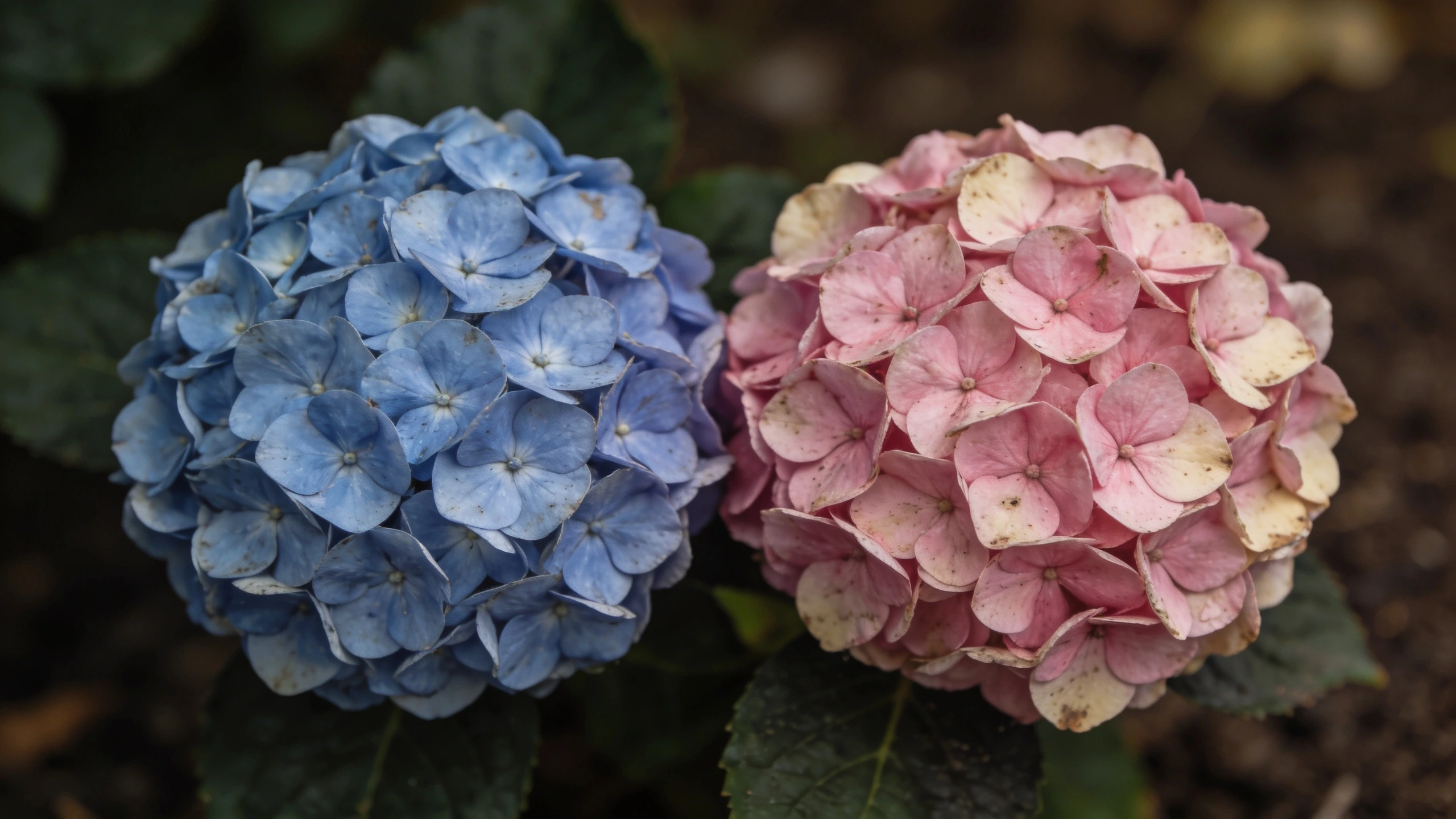
Only mophead and lacecap types change colour, and it is not a matter of adding something to make them blue.
Blue flowers require acid soil, roughly below pH 5.5, and available aluminium in that soil. Alkaline soil locks the aluminium up and you get pink. It is the pH that controls availability, not a dye.
So on chalky soil you can push a hydrangea towards blue with a proprietary colourant containing aluminium sulphate, applied repeatedly through the season, and it will drift back to pink whenever you stop. Far easier: grow it in a large pot of ericaceous compost, where you control the whole root environment.
White varieties stay white regardless. Nothing you add will change that, and any product promising otherwise is selling you something.
Feeding, sparingly#
A generous compost mulch in spring is most of what a hydrangea needs.
If you feed, use a general purpose or rose feed in spring, and stop by midsummer. Too much nitrogen produces a large leafy shrub with few flowers, which is the second most common cause of disappointment after bad pruning.
Do not feed anything in a pot after about August, because you are encouraging soft growth going into winter.
What can go wrong#
No flowers. Pruning at the wrong time, then frost damage, then shade, then too much nitrogen. In that order.
Leaves wilting daily in summer. Usually too much sun rather than too little water. Move it in autumn.
Brown crisp flower edges. Sun scorch or drought. Both point at the position.
Yellowing leaves with green veins on chalky soil. Iron deficiency locked up by high pH. Sequestered iron helps in the short term; a pot of ericaceous compost is the real answer.
What it costs#
- One hydrangea, 3 litre pot
- $18 to $40. Buy in flower if you care about the exact colour, because labels are optimistic.
- A paniculata
- $25 to $50, and the most forgiving of the group for a first attempt.
- Climbing hydrangea
- $25 to $60. Slow for three years, then it solves a north wall permanently.
- Compost for planting and mulching
- $15 to $35 a year. This does more than feed ever will.
- 50 litre pot and ericaceous compost
- $45 to $110. The reliable way to get and keep blue flowers on alkaline soil.
- Hydrangea colourant
- $10 to $20, and it needs repeating every year, forever. The pot is better value.
Where this needs adjusting#
On chalk, grow paniculata and arborescens, which do not care about colour, or grow macrophylla in pots. Fighting high pH in open ground is a permanent job.
In a cold garden with late spring frosts, paniculata and arborescens are the safer choice, because their flower buds have not formed yet when the frost arrives.
In deep shade, climbing hydrangea is the one that will still flower. The shrub types need some light.
Where the guidance here comes from#
The pruning rules are standard and the reason I state them so firmly is that getting them wrong is the single commonest hydrangea problem I am asked about. For variety selection, pH management and the iron deficiency question the RHS advice pages are the reference I check, and the USDA plant hardiness map is worth a look before choosing between types, since their frost tolerance differs more than the labels suggest.
The short version#
Identify the type. Old wood types, prune in spring only, back to the first fat buds, and leave the dead heads on all winter. New wood types, cut hard in late winter. Dappled shade or morning sun, never a hot south wall. Water deeply, mulch generously, feed lightly. Blue needs acid soil, and a pot is the easy way to get it.
Related reading#
- Shade garden plants: where hydrangeas fit, and what to plant with them.
- Mulching a garden: the spring mulch that does most of the work here.
- Container gardening: pot size and compost if you are growing for blue flowers.
- Garden design basics: using a long flowering shrub as border structure.
Frequently asked questions
When should I prune a hydrangea?
It depends entirely on the type, and getting it wrong is the main reason hydrangeas do not flower. Mophead and lacecap types flower on last year's wood, so prune only in spring and only back to the first fat pair of buds below the old flower head. Paniculata and arborescens types flower on new wood, so they can be cut back hard in late winter and will flower the same year.
Why is my hydrangea not flowering?
Four causes. Pruned at the wrong time, which removes the flower buds on the mophead and lacecap types. Frost damage to those buds in a late spring. Too much shade, since even shade tolerant hydrangeas want a few hours of light. Or too much nitrogen feed, which pushes leaf at the expense of flower. Check the pruning first, because it is by far the commonest.
How do I change a hydrangea from pink to blue?
Only mophead and lacecap types change colour, and only in response to soil pH and available aluminium. Acid soil below about pH 5.5 gives blue, alkaline gives pink. You can push it blue with a proprietary hydrangea colourant containing aluminium sulphate, applied repeatedly, and it is far easier in a pot with ericaceous compost than in the ground. White varieties stay white whatever you do.
Do hydrangeas need shade?
They want dappled shade or a few hours of morning sun, not deep shade and not baking afternoon sun. The classic mistake is a south facing wall, where the leaves wilt every afternoon in summer regardless of watering. A north or east aspect suits most types. Paniculata is the exception and takes considerably more sun than the others.
How much water do hydrangeas need?
A lot, and the name is a clue. They wilt visibly when short of water and recover if you catch it, though repeated wilting costs you flowers. Water deeply rather than often, mulch generously in spring, and expect to water through any dry spell in the first two years. A hydrangea in a pot will need watering almost daily in summer.
Should I cut off the dead flower heads in autumn?
Not on mophead and lacecap types. Leave them on over winter, because they give the fat buds beneath a degree of frost protection, and they look good in frost. Take them off in spring when you can see which buds have survived. On paniculata and arborescens it does not matter, since you are cutting those back hard anyway.
What is the toughest hydrangea for a difficult spot?
Hydrangea paniculata for sun, poor soil and hard pruning, and it flowers on new wood so late frosts cannot cost you a season. Climbing hydrangea for a north wall, where almost nothing else will flower. Both are more forgiving than the mopheads that most people buy first.
About the author
Jeff has gardened professionally for over twenty years, mostly on heavy clay, and writes everything here from beds he still works himself. More from Jeff Tanun →
Keep reading
Lasagna Gardening
Lasagna gardening is sheet mulching: cardboard and layers of organic matter straight onto grass. What to layer, how deep, how long to wait, and what it cannot fix.
Updated
Garden Soil vs Potting Soil
Garden soil vs potting soil, explained by what each one is for. Why garden soil fails in a pot, why potting compost is wasted in a bed, and what to buy for what.
Updated
Hummingbird Garden
A hummingbird garden built on planting rather than sugar water. Which flower shapes they can actually use, feeder rules that avoid harm, and how to plan for territoriality.
Updated