Garden Soil vs Potting Soil: Why the Bags Differ
Garden soil vs potting soil, explained by what each one is for. Why garden soil fails in a pot, why potting compost is wasted in a bed, and what to buy for what.
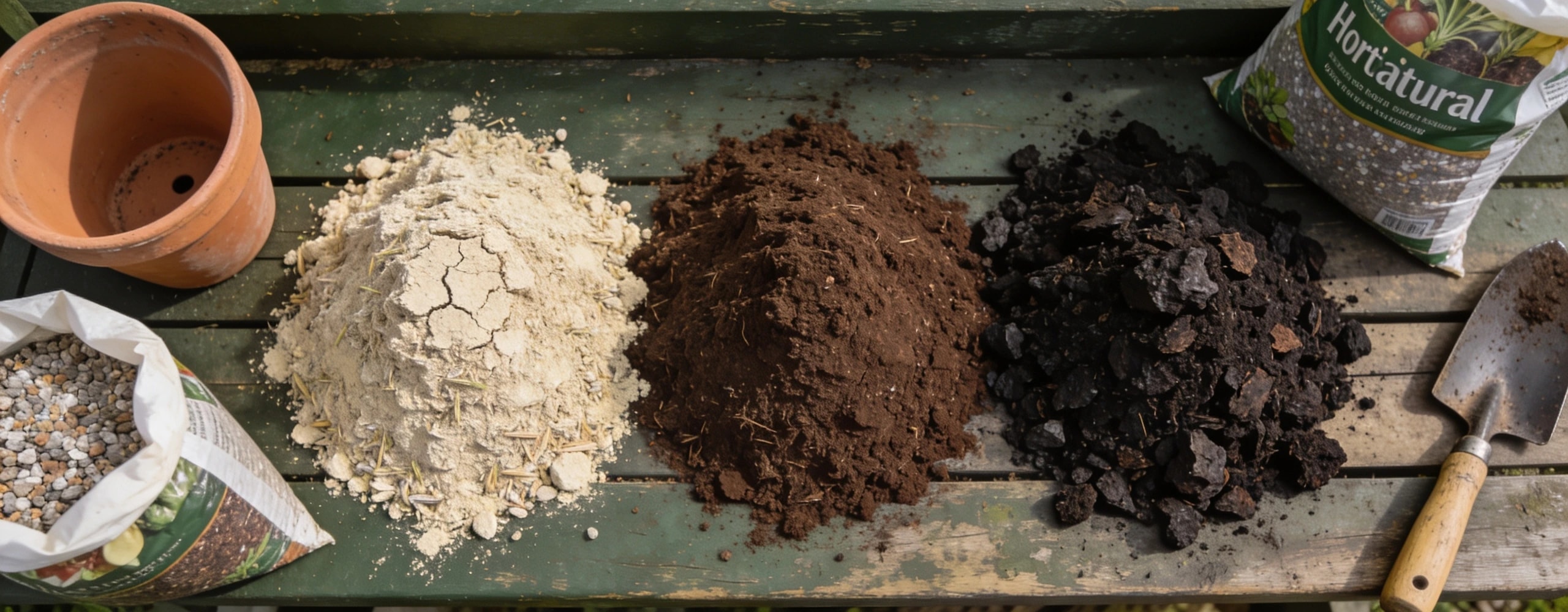
The garden soil against potting soil question sounds like marketing and it is not. They are different products for different physics, and the mistake in each direction costs money: garden soil in a pot kills the plant, and bagged potting compost in a raised bed empties your wallet. Here is what each one actually is.
The short answer
Potting compost is engineered to hold air and water at once in a small volume, with a few weeks of feed. Garden soil and topsoil are soil, which needs the ground beneath it to drain properly. So: potting compost in containers, never garden soil alone. For a raised bed, half topsoil and half compost bought loose, not bags. To improve an existing bed, compost rather than topsoil. Loam-based compost for anything staying more than a season.
What each bag actually is#
- Multipurpose or potting compost
- A blend of organic matter, usually coir, bark, wood fibre or peat, plus a few weeks of nutrients. Light, open, drains freely. Made for containers.
- Loam or soil-based compost
- The same plus sterilised loam, which adds weight, structure and nutrient holding. Better for anything staying in a pot more than one season.
- Topsoil
- Soil. Sand, silt, clay, some organic matter, no added feed. For filling holes, building levels and bulking out a raised bed.
- Garden compost or well rotted manure
- Decomposed organic matter. The best soil improver there is, and it feeds soil biology rather than the plant directly.
- Ericaceous compost
- Acidic, for blueberries, azaleas, camellias and rhododendrons. Only useful for those and their relatives.
- Seed compost
- Fine textured and low in nutrients, so seedlings are not burned. Worth buying if you sow a lot; multipurpose sieved is a fair substitute.
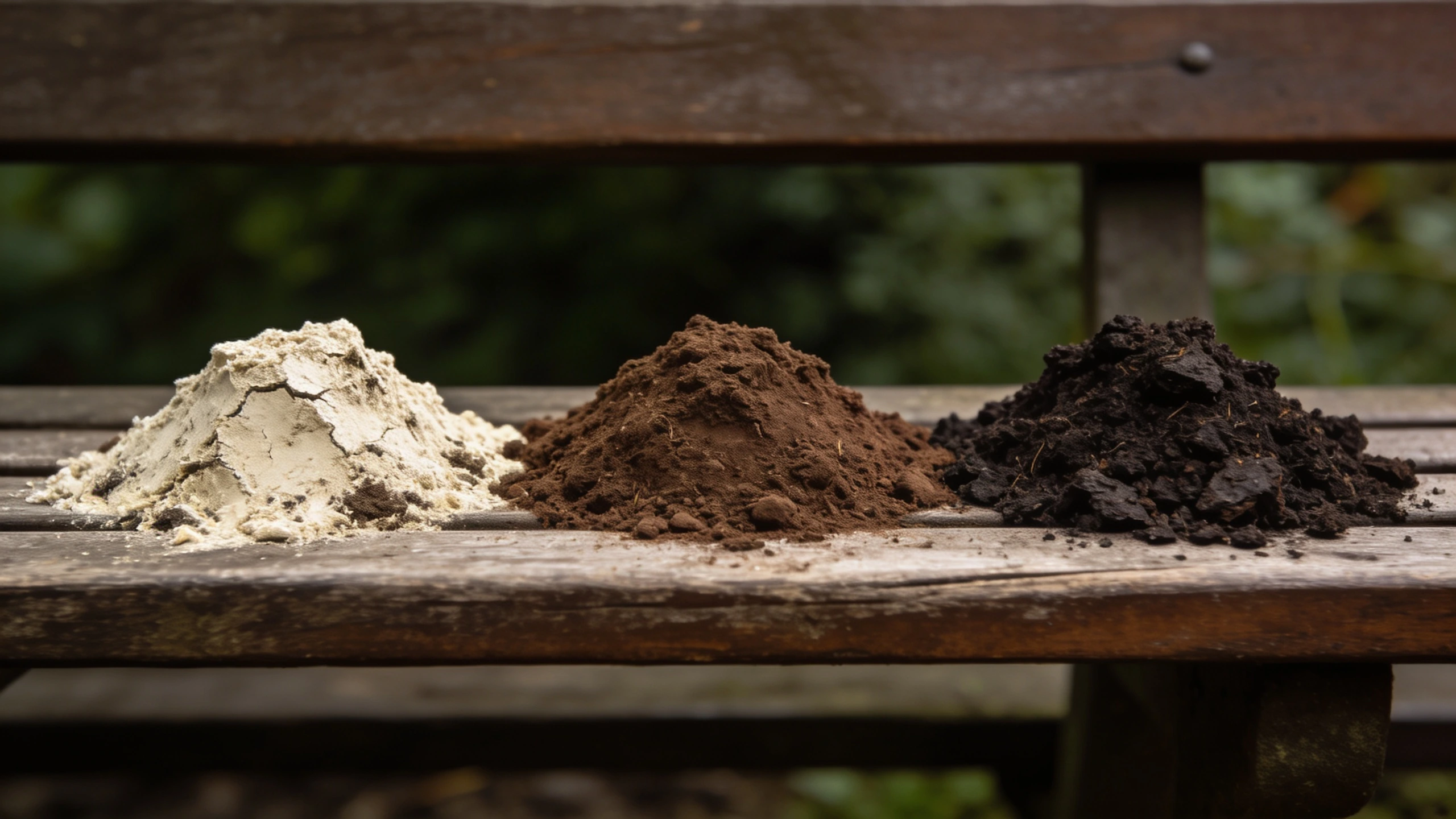
Why garden soil fails in a pot#
This is the bit that explains the whole distinction, and it is about drainage rather than nutrition.
In a bed, garden soil sits on more soil. Water moves down through it and keeps going, and air follows into the spaces left behind.
In a pot, there is nothing below except a hole. The fine particles in garden soil settle and pack, water collects in the lower part of the pot because it has nowhere to go, and the roots in that zone sit in saturated compost and suffocate. The plant looks like it is short of water when it is drowning.
Potting compost is built from coarser, more open material precisely so it holds both water and air in a small volume with a hard bottom.
Garden soil in a pot also brings you weed seed, slug eggs, vine weevil larvae and whatever fungal problems were in that bit of the garden.
Why potting compost is the wrong thing for a raised bed#
The other direction, and it is a money mistake rather than a plant one.
A raised bed 2 m by 1 m and 40 cm deep needs about 800 litres. In 50 litre bags of multipurpose that is sixteen bags, which is a startling amount of money for something that will sink by a fifth in the first year as the organic matter decomposes.
The standard answer is roughly half topsoil and half garden compost or well rotted manure, bought loose by the cubic metre from a soil supplier. It costs a fraction of bagged compost, it does not collapse the same way, and it improves every year as you top it up.
- Filling a new raised bed
- Half topsoil, half compost or manure, bought loose. Add grit if drainage is poor. Never all bagged potting compost.
- Topping up a bed each year
- Two or three centimetres of compost on the surface. The worms take it down. No digging.
- Improving a poor existing bed
- Compost, generously, on the surface. Adding topsoil adds volume without adding life.
- Filling a hole or raising a level
- Topsoil, which is what it is for.
- Filling containers
- Potting compost, and loam-based if the plant is staying more than a year.
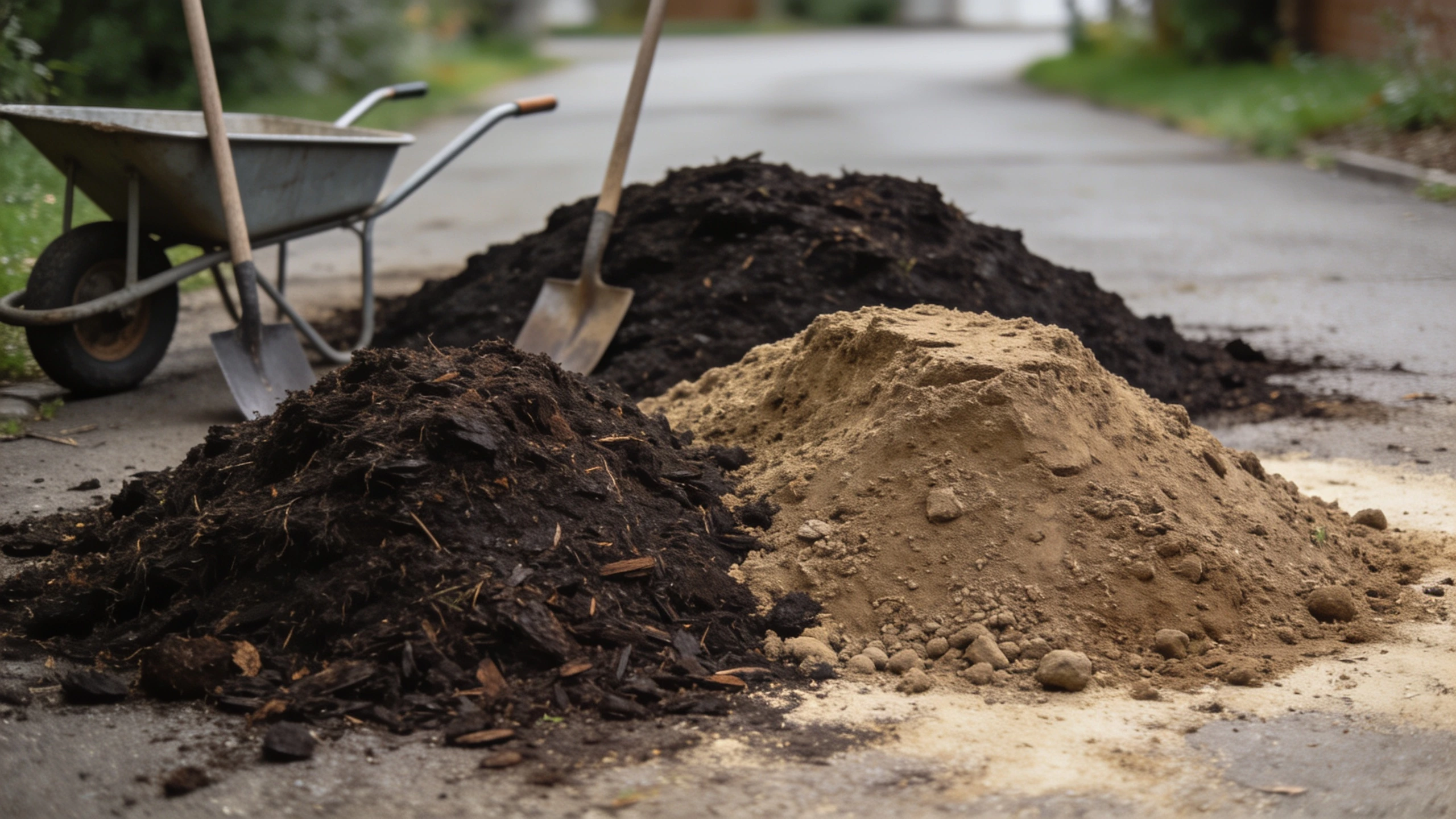
Perlite, vermiculite and grit: when they earn their place#
These get bought far more often than they are needed.
- Perlite
- Adds air and drainage. Genuinely useful for cuttings, seed sowing and plants that resent wet feet. Not needed in general container growing.
- Vermiculite
- Holds water. Useful as a light covering on sown seed. Expensive and largely unnecessary elsewhere.
- Horticultural grit
- Adds weight and sharp drainage. The one I use most: for Mediterranean herbs, alpines, and anything on heavy soil.
- Sand
- Only sharp or horticultural sand. Builders' sand is too fine and will make drainage worse, not better.
For ordinary container growing, a decent compost in a big enough pot does what people buy perlite to achieve. The bigger pot is a better investment than the additive.
The peat question, stated plainly#
Peat based composts perform well and their extraction destroys carbon-storing bog habitat that took thousands of years to form. That is not a close call environmentally, and peat-free is now the default in many markets and legislated in some.
Peat-free composts vary considerably in quality, and the honest complaint about them is real: many are lighter, dry out faster, and go water-repellent sooner. Two practical adjustments deal with most of it.
Use a bigger container, because the failure mode of a light peat-free mix is drying out and volume fixes that. And mix in a third loam or garden compost, which restores the weight and water holding the mix lacks.
Reusing compost#
Container compost from last year is spent rather than useless.
Break it up, because it will have compacted. Mix in a third fresh compost or a slow release feed to replace the nutrients. Add a little grit if it feels dense.
Two exceptions. Do not reuse compost from a plant that had root disease or vine weevil grubs, and do not reuse it for seed sowing, where you want something clean and low in nutrients.
What it costs#
- Multipurpose compost, 50 litres
- $8 to $15. Fine for annuals and salad.
- Loam-based compost, 35 litres
- $12 to $22. Heavier, more expensive, and the right choice for anything permanent in a pot.
- Topsoil, loose, one cubic metre
- $50 to $110 delivered. That is a thousand litres, against roughly $200 for the same volume in bags.
- Garden compost, loose, one cubic metre
- $60 to $130 delivered, or free if you make your own.
- Horticultural grit, 20 kg
- $8 to $18. The additive most worth having.
- Perlite, 10 litres
- $8 to $16. Buy it when you are taking cuttings or sowing, not as a habit.
The one line version of each decision#
Key points
- Container: potting compost. Loam-based if the plant is staying more than a season.
- New raised bed: half topsoil, half compost, bought loose. Not bags.
- Improving an existing bed: compost on the surface, not topsoil, and no digging.
- Filling a hole or raising a level: topsoil.
- Seed sowing: seed compost, or multipurpose sieved.
- Blueberries, azaleas, camellias: ericaceous, and only those.
Where the guidance here comes from#
The drainage explanation is standard soil physics rather than my opinion, and it is the part that most product labelling leaves out. For compost choice, peat-free performance and bed filling ratios the RHS pages on soil, composts and mulches are the reference I check, and Garden Organic is the better source on peat-free alternatives and on making your own, which sidesteps most of this.
The short version#
Potting compost holds air and water in a small volume with a hard bottom; garden soil needs the ground under it. So compost in pots, never garden soil alone, and up to a third garden soil in a mix if you want the weight. Fill raised beds with loose topsoil and compost, not bags. Improve beds with compost, not topsoil. Buy grit, and mostly skip the perlite.
Related reading#
- Container gardening: pot volume, which matters more than which compost you chose.
- Mulching a garden: how compost improves a bed from the surface down.
- Composting for beginners: making the most useful of these products for nothing.
- Square foot gardening: why I reject the prescribed peat and vermiculite bed mix.
Frequently asked questions
Can I use garden soil in pots?
Not on its own, and the reason is physics rather than nutrition. In a bed, garden soil drains into the soil below it. In a pot there is nothing below it, so the fine particles pack down, water sits in the lower half and roots suffocate. Garden soil also brings weed seed and soil pests into a container. Use it as up to a third of a mix with compost and grit, never as the whole thing.
What is the difference between potting compost and topsoil?
Potting compost is a growing medium engineered to hold water and air at the same time in a small volume, with a few weeks of nutrients added. Topsoil is soil: mineral particles, clay, sand, silt, some organic matter, and no added feed. Compost is for filling containers and improving beds; topsoil is for filling a hole or building up a level.
What should I fill a raised bed with?
Not bagged potting compost, which would be very expensive and would sink dramatically. A mix of roughly half topsoil and half garden compost or well rotted manure, bought loose by the cubic metre rather than in bags, is the standard answer and it improves each year as you top it up. Add grit if drainage is poor.
Is multipurpose compost the same as potting compost?
Broadly, and it is the general purpose end of the range. It is fine for annuals, salad and anything replanted every year. For plants staying more than one season, a loam-based or soil-based compost holds water and nutrients far better and does not collapse into a water-repellent block after a few months, which lightweight peat-free mixes tend to do.
Do I need to add perlite or vermiculite?
Usually not, and both are often bought unnecessarily. Perlite adds air and drainage, which matters for cuttings, seed sowing and plants that hate wet feet. Vermiculite holds water, which matters for seed germination. For general container growing, a decent compost and a big enough pot do the same job for less money.
Should I improve a bed with topsoil or compost?
Compost, almost always. Adding topsoil to a bed adds volume but not much life or structure. Compost adds organic matter, feeds soil biology and improves both drainage on clay and water holding on sand. Buy topsoil when you need to fill a hole or raise a level, and compost when you want the soil to work better.
Can I reuse last year's container compost?
Yes, with two adjustments. It is spent, so mix in a third fresh compost or a slow release feed. And it has usually compacted, so break it up and add a little grit or perlite to get the air back. Do not reuse compost from a plant that had root disease or vine weevil, and do not reuse it for seed sowing, where you want a sterile start.
Topics in this article
About the author
Jeff has gardened professionally for over twenty years, mostly on heavy clay, and writes everything here from beds he still works himself. More from Jeff Tanun →
Keep reading
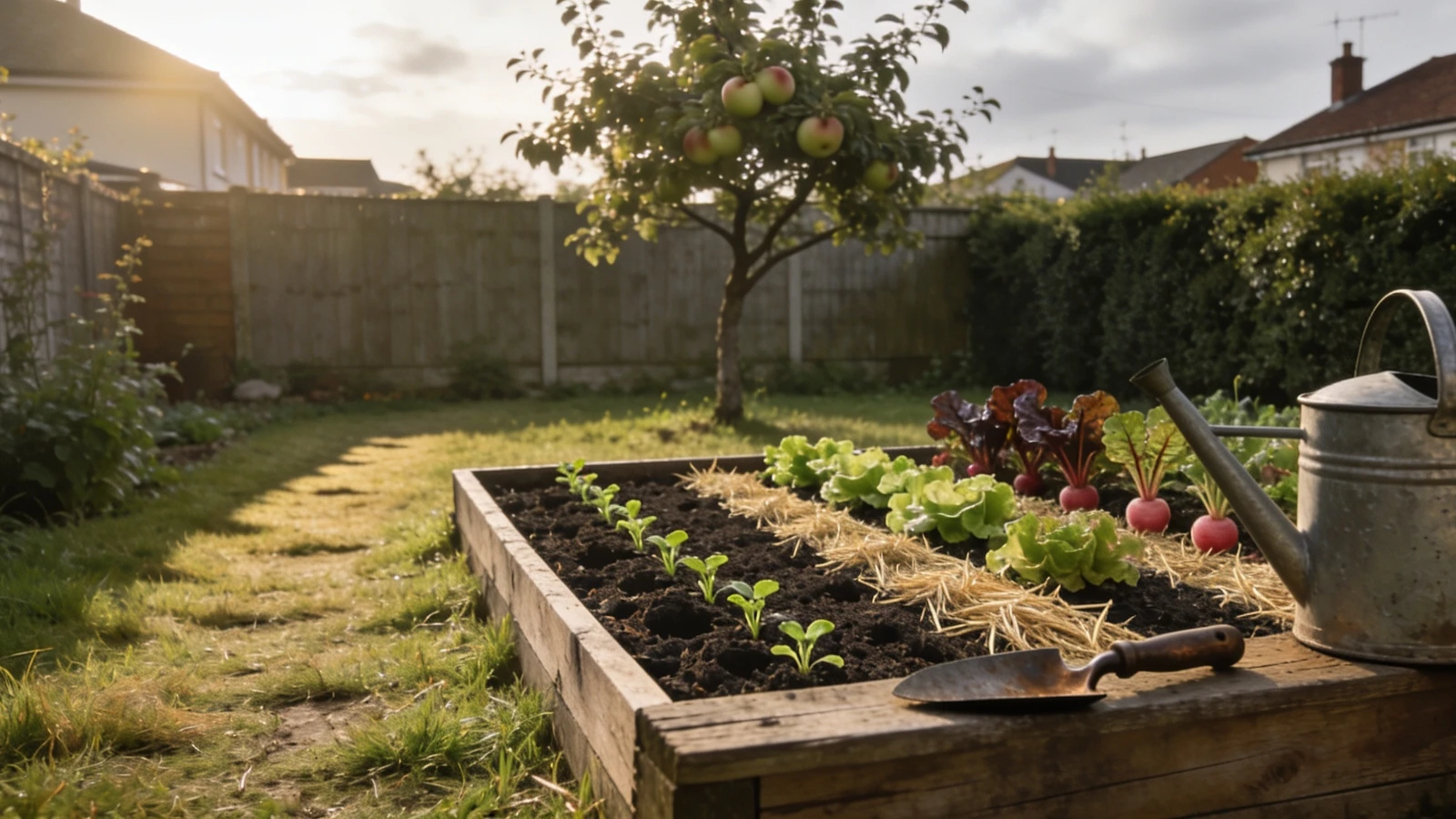
How to Start a Garden
How to start a garden in one season: check your light first, build one small bed without digging, plant six easy crops. Costs from $60, step by step.
Updated
How to Grow Courgettes
How to grow courgettes and zucchini: how many to plant, why the first fruits rot, hand pollination, and picking small enough to keep the plant producing.
Updated
Zones & Growing Conditions
Gardening zones tell you what survives winter, not what grows well. Here is how to read your zone, and the five garden conditions that matter more.
Updated