How to Grow Salad Leaves: Sow a Little, Every Fortnight
How to grow salad leaves that keep coming. Cut and come again rather than whole hearts, why lettuce bolts, and the fortnightly sowing that beats a glut.
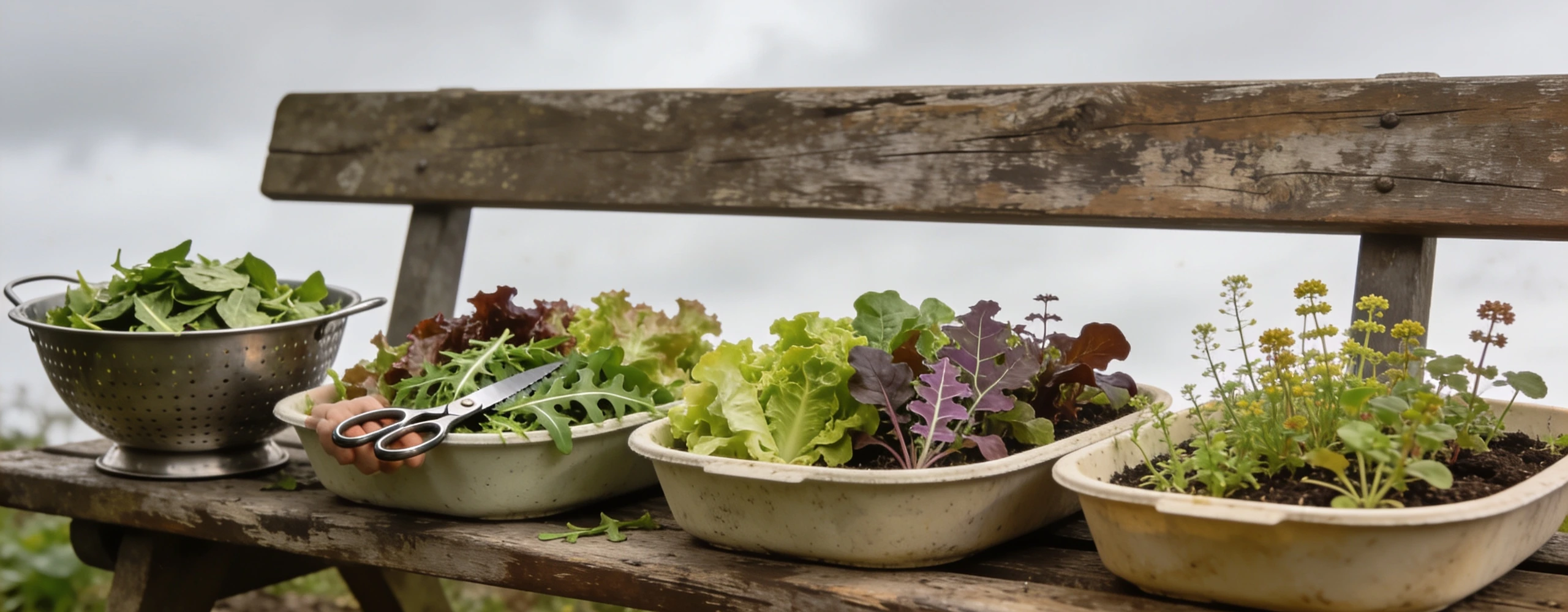
Salad leaves are the highest value crop in the garden per square metre, and they are the one I most often see grown the wrong way. Whole hearted lettuces take ten weeks, occupy a lot of ground and all mature at once. Sown thickly and cut young they start producing in four weeks, regrow twice, and cost a fraction of a bag from a shop.
The short answer
Sow thickly and cut young rather than growing whole hearts. A short row or one small container every two weeks from early spring to early autumn is the whole method, and it is what turns salad into a weekly supply rather than a glut. Choose bolt resistant varieties for summer and give them afternoon shade. Each sowing gives two or three cuts over six weeks, then clear it and resow.
Cut and come again, not hearts#
The difference is worth being specific about, because it changes everything else.
- Cut and come again
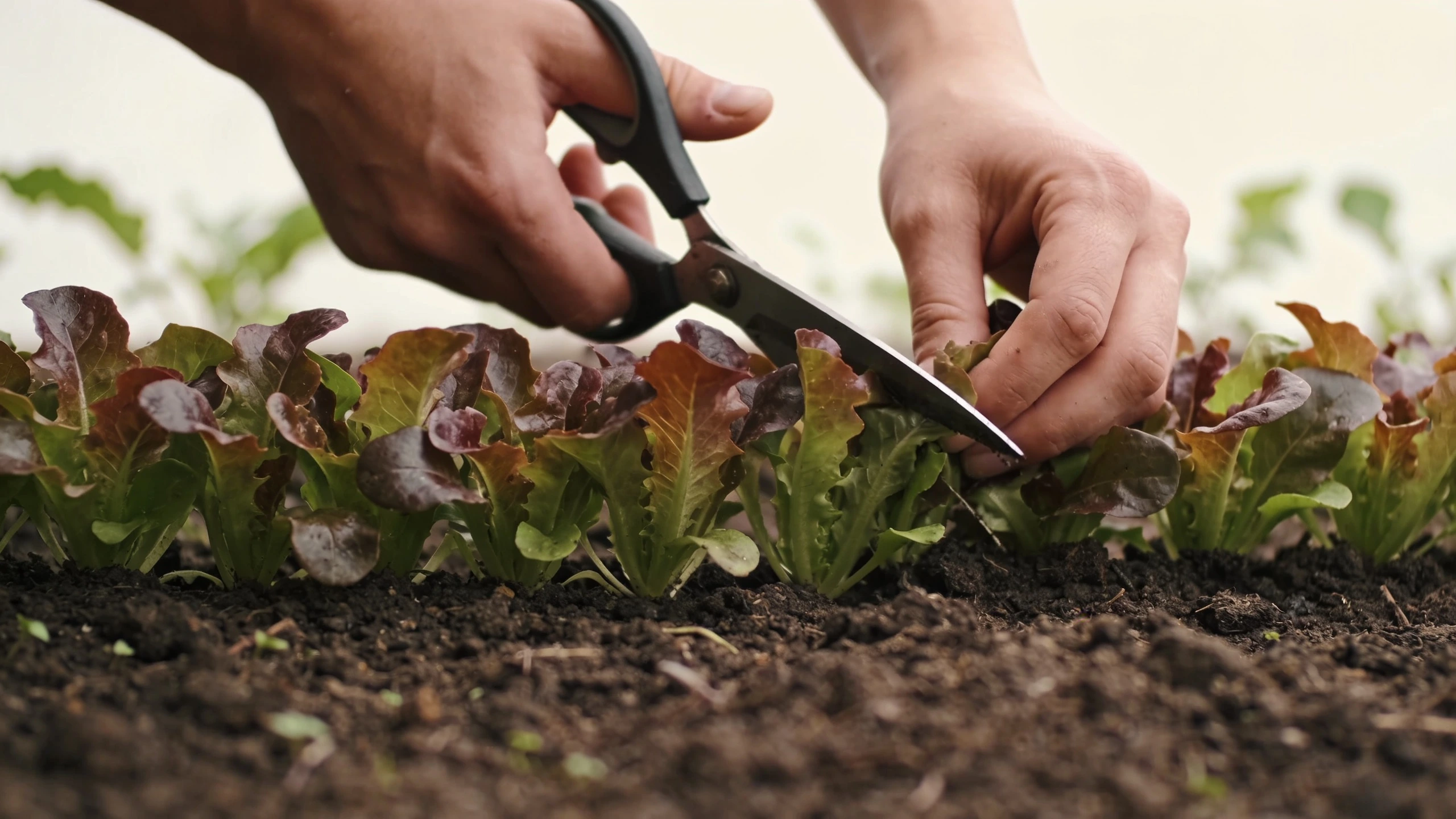
- Sown thickly, cut with scissors about 3 cm above the crown at four to five weeks, regrows for two or three cuts. Fast, dense, and suits containers.
- Hearted lettuce
- Sown thinly, thinned to 25 to 30 cm, grown for ten weeks to a whole head, harvested once. More ground, longer wait, one harvest.
- The practical difference
- The same square metre gives you salad for most of the summer under cut and come again, or about a dozen lettuces on one weekend under the other.
Hearts have their place if you want a crisp whole lettuce. For a household that wants a bowl of leaves several times a week, cutting young wins on every measure.
Sow a little, every fortnight#
If you take one thing, take this. It is not about technique, it is about the calendar.
One long row sown in April gives you more salad than you can eat in May and nothing in July. A short row every two weeks gives you salad every week from May to October.
Write the repeat dates into the plan in winter, as separate lines, because deciding in June to sow more is exactly when you will forget.
Key points
- Sow every two weeks from early spring to early September. Ten or twelve small sowings a year, not two big ones.
- A sowing can be a 30 cm row or one seed tray or a single container. Small is the point.
- Sow 1 cm deep, thickly, in a band rather than a thin line, because you are harvesting leaves not spacing plants.
- Keep the surface damp until germination, which takes only five to ten days.
- Clear and resow after the third cut rather than nursing tired plants.
What to grow, and when each one suits#
Different leaves suit different parts of the season, and mixing them is what gives a decent bowl.
- Loose leaf lettuce
- The bulk of the bowl. Many colours and textures. Bolts in heat, so choose bolt resistant types for summer.
- Rocket
- Fast, peppery, and it bolts quickly in heat, which makes it a spring and autumn crop. Flea beetle puts holes in it; mesh prevents that.
- Mizuna and mustards
- The most reliable leaves I grow. Fast, tolerant of cold and heat, and they regrow strongly. Best value on this list.
- Spinach
- Excellent in spring and autumn, bolts readily in summer heat. Chard is the summer substitute.
- Chard
- Semi permanent. One sowing crops for eight months and stands through light frost. Not cut and come again exactly, but the same idea over a longer arc.
- Pak choi and oriental leaves
- Fast, productive, and best sown from midsummer onwards for autumn. Spring sowings bolt.
- Lamb's lettuce and winter purslane
- Genuinely hardy. Sown in early autumn they crop through winter under a cloche when nothing else does.
Bolting, and why summer lettuce wants shade#
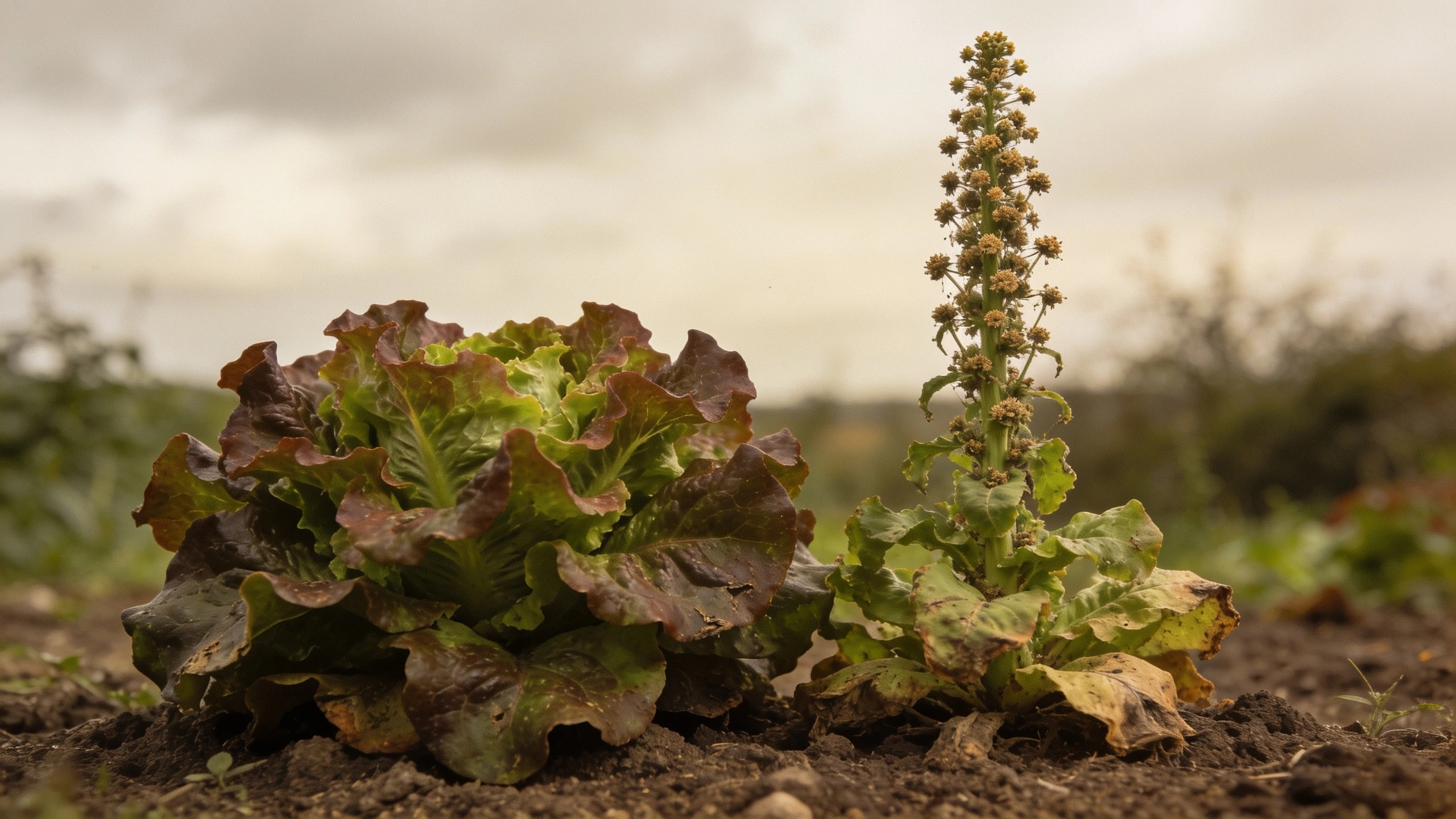
Bolting is the plant switching from leaf to seed. It is triggered by heat and long days, and once it starts the leaves turn bitter and there is no way back.
You cannot cure it, so the whole game is prevention.
Sow the bulk of your lettuce in spring and again from late summer. For the height of summer, use bolt resistant varieties and put them somewhere with afternoon shade. Keep the moisture consistent, because water stress brings bolting forward.
This is why salad is the most useful crop for a shaded garden. A bed that gets three or four hours of morning sun will grow better July lettuce than a bed in full sun.
Watering and feeding#
Salad is shallow rooted and mostly water, so consistency matters more than volume.
Water little and often in warm weather, at the base if you can, and mulch beds to even out the moisture. Containers may need water twice a day in high summer.
Feeding is rarely needed for a four to six week crop in decent compost. If you are taking a third cut from a container, a dilute general feed after the second cut helps the regrowth.
Containers, which suit this crop particularly well#
Salad is the best argument for container growing there is.
A shallow wide container works, because the roots are shallow. Fifteen centimetres of depth is enough, and width matters more than depth. Multipurpose compost is fine, since the crop is over in weeks.
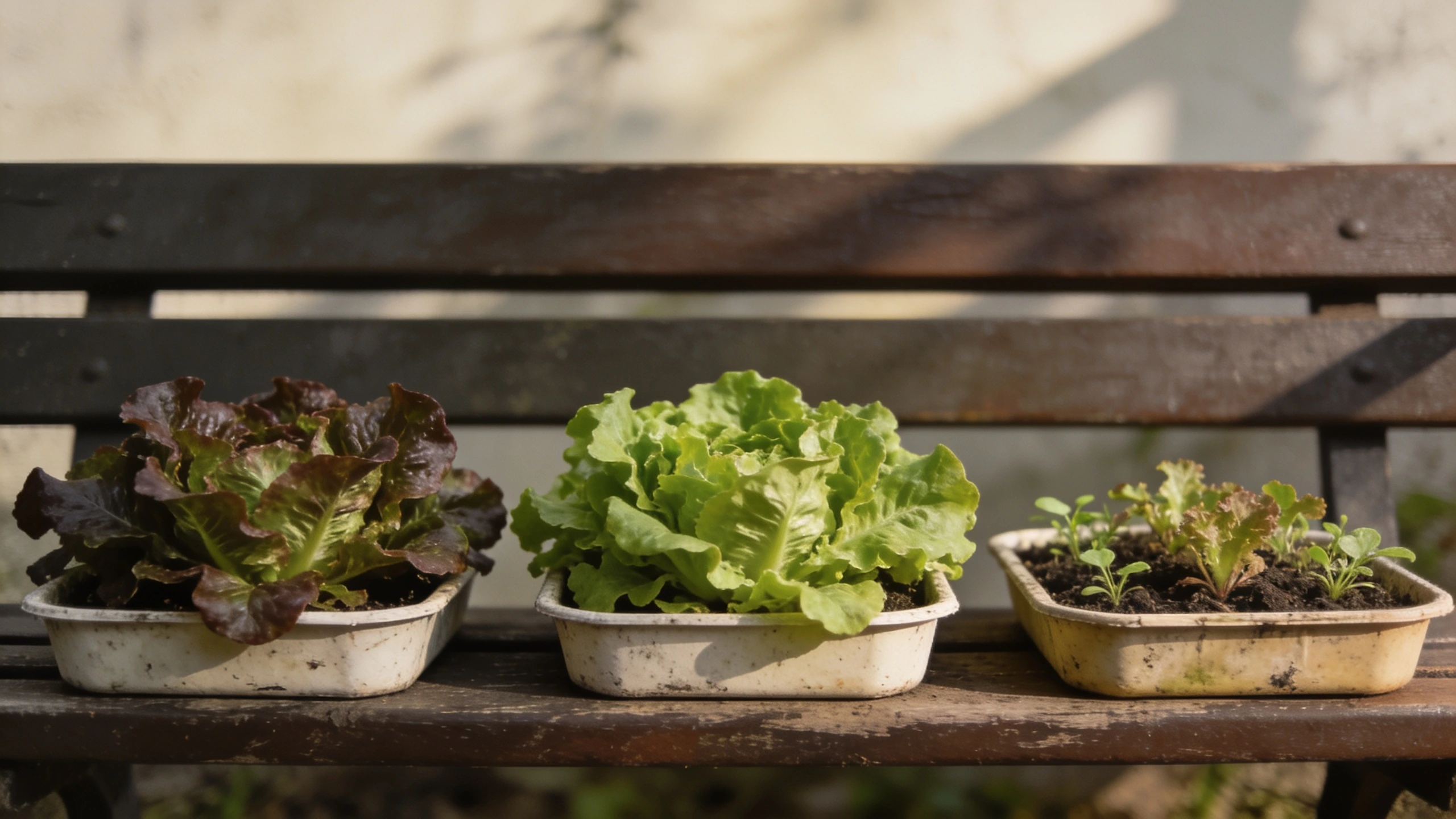
The advantages are real: no slugs if it is raised, easy to move into shade in July, easy to cut at waist height, and you can keep three containers at different ages to guarantee a supply.
What can go wrong#
Slugs, above everything else. Salad seedlings are the most attractive thing in the garden to a slug. Containers raised off the ground solve most of it.
Flea beetle, small round holes in rocket and mustards. Cosmetic mostly, and fine mesh over the crop prevents it.
Bitter leaves, which is bolting or a plant pushed to a fourth cut. Clear and resow.
Damping off in seed trays, where seedlings collapse at soil level. Sow less thickly, water less, improve air movement, and use fresh compost.
What it costs#
- A packet of mixed salad seed
- $2 to $5, and it contains enough for a whole season of fortnightly sowings.
- Separate packets of four types
- $8 to $18, and worth it because you can match the leaf to the month.
- Three shallow containers
- $20 to $50, reused every year, and they remove the slug problem.
- Compost for a season of sowings
- $8 to $15, and a bag goes a long way at this scale.
- Compared with buying it
- A supermarket bag of leaves costs more than a packet of seed and lasts three days. This is the clearest saving in the garden.
Where this needs adjusting#
In a hot climate, shift the sowing calendar to autumn, winter and early spring, and skip midsummer entirely for lettuce. Mustards and chard cope better with heat.
In a cold garden, a cloche or cold frame extends both ends of the season substantially, and lamb's lettuce sown in September will crop through winter.
Indoors, salad on a bright windowsill works in winter and will be slower and paler. Choose mustards and rocket, which tolerate lower light than lettuce.
Where the guidance here comes from#
The fortnightly sowing habit and the cut and come again approach are conventional, and they are the two things that turned salad from an occasional crop into a weekly one in my own garden. For variety choice, bolt resistance and sowing depth the RHS advice on growing your own is the reference I check, and Garden Organic is good on slug management without pellets, which matters most for exactly this crop.
The short version#
Sow thickly and cut young, 3 cm above the crown, for two or three harvests per sowing. Sow a small amount every two weeks from early spring to early September. Choose bolt resistant varieties for summer and give them afternoon shade. Grow in raised containers if slugs are a problem. Clear and resow after the third cut.
Related reading#
- Garden planner: writing the fortnightly repeats in as separate lines, which is what makes them happen.
- Container gardening: shallow wide containers, which suit this crop better than depth.
- Shade garden plants: why salad is the crop for a shaded garden.
- How to start a vegetable garden: the highest value crop to begin with.
Frequently asked questions
What is cut and come again?
Sowing leaves thickly and harvesting them young with scissors, about 3 cm above the crown, so the plant regrows for another two or three cuts. It gives you far more from a small area than growing whole lettuce hearts, it starts producing in about four weeks rather than ten, and it suits containers. For most households it is a better approach than growing hearted lettuces.
Why is my lettuce bolting?
Heat and day length, and often water stress on top. Once a lettuce decides to run to seed the leaves turn bitter and it will not come back. Prevention is the only cure: sow in spring and autumn rather than midsummer, choose bolt resistant varieties for summer sowings, give some afternoon shade in hot weather, and keep the soil consistently moist. Lettuce in July is genuinely happier in shade.
How often should I sow salad?
A short row or one small container every two weeks from early spring to early autumn. That single habit is the difference between salad most weeks and one enormous glut followed by nothing. Each sowing gives two or three cuts over about six weeks, so overlapping sowings keep a continuous supply.
Which leaves should I grow?
A mix, because they behave differently. Loose leaf lettuce for bulk, rocket for peppery bite, mizuna and pak choi for reliability, spinach for spring and autumn, and chard as a semi permanent plant that crops for months. Buy a mixed packet if you want simplicity, or separate packets so you can sow the heat tolerant ones in summer and the rest in spring and autumn.
Can I grow salad in shade?
Yes, and in high summer shade is an advantage. Salad leaves need only three or four hours of direct sun, and lettuce bolts less in a cooler spot. A shaded bed that will not grow tomatoes will grow excellent salad in July, which makes salad the most useful crop for a shady garden.
How do I stop slugs eating the seedlings?
Grow in containers raised off the ground where you can, since that alone removes most of the problem. In beds, sow into a clean surface rather than among mulch, go out at dusk with a torch for the first week after germination, and consider a wide copper or grit barrier. Salad seedlings are the single most attractive thing in a garden to a slug.
How long does a sowing keep producing?
Two or three cuts over about six weeks, then the regrowth gets tough and it is time to clear it and resow. Do not try to nurse a fourth cut out of it; the leaves get bitter and coarse and the space is worth more under a fresh sowing. Compost the old plants and start again in the same spot.
Topics in this article
About the author
Jeff has gardened professionally for over twenty years, mostly on heavy clay, and writes everything here from beds he still works himself. More from Jeff Tanun →
Keep reading
How to Grow Courgettes
How to grow courgettes and zucchini: how many to plant, why the first fruits rot, hand pollination, and picking small enough to keep the plant producing.
Updated
How to Grow Potatoes
How to grow potatoes in beds or bags. Why first earlies earn their space and maincrop often does not, how deep to plant, when to earth up, and avoiding blight.
Updated
How to Grow Tomatoes
How to grow tomatoes from seed to harvest. Cordon or bush, the watering that prevents split skins and blossom end rot, when to feed, and how to spot blight early.
Updated