How to Grow Potatoes: Earlies Are Worth the Ground
How to grow potatoes in beds or bags. Why first earlies earn their space and maincrop often does not, how deep to plant, when to earth up, and avoiding blight.
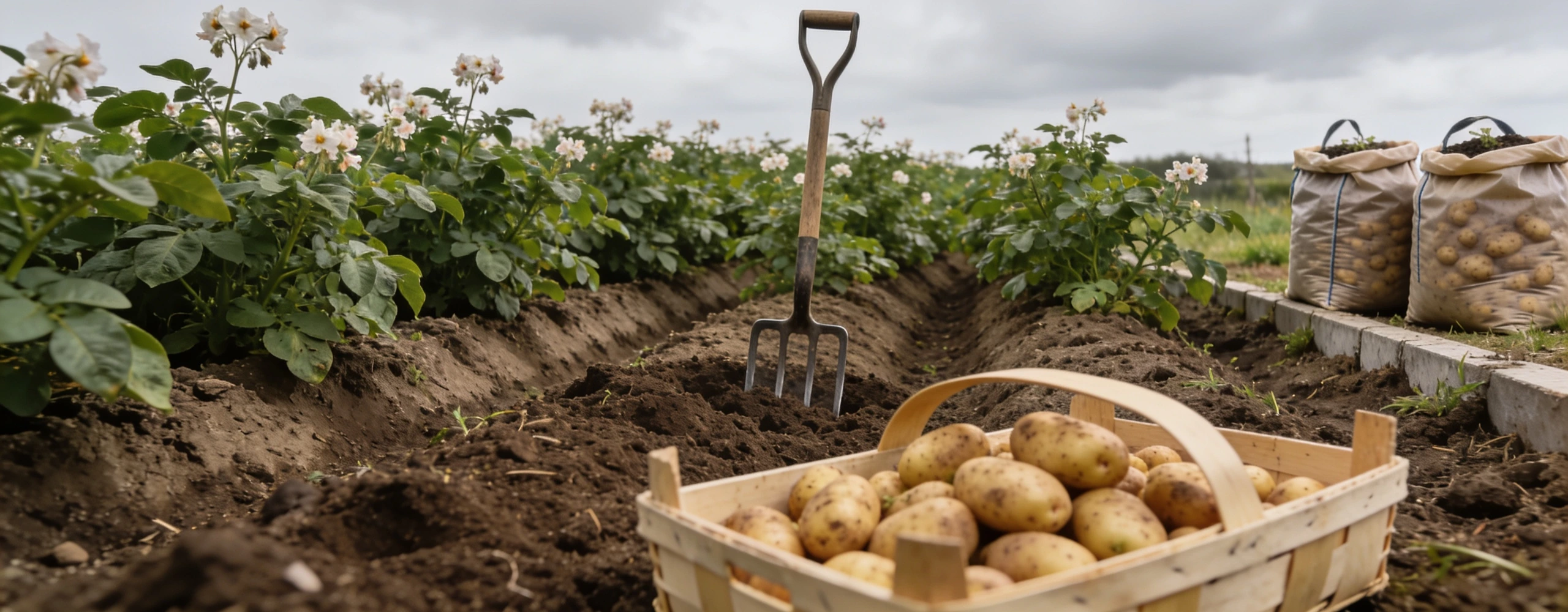
Potatoes are the crop where I would push back on the received wisdom. Everyone grows them and for most small gardens maincrop potatoes are a poor use of the ground, because they occupy a bed for five months to produce something that costs almost nothing in a shop. First earlies are a completely different proposition, and they are what I would grow.
The short answer
Grow first earlies, not maincrop, unless you have space to spare. Chit them for a few weeks, plant 12 to 15 cm deep and 30 cm apart after the frost risk passes, and earth up twice as the shoots grow. Harvest earlies when the flowers open, about ten to twelve weeks. One seed potato per 20 to 30 litres in a bag. Never eat green tubers, and store the crop in complete darkness.
Which type, and why earlies win in a small garden#
- First earlies
- Ten to twelve weeks. New potatoes, thin skinned, eaten fresh within days. The ones genuinely better than shop bought, and they clear the bed by midsummer for something else.
- Second earlies
- Thirteen to fifteen weeks. A useful compromise, and they miss the worst of the blight season.
- Maincrop
- Twenty weeks or more, and they store for months. Cheap to buy, and they hold a bed all season. Grow them for flavour or variety, not to save money.
- Salad varieties
- Waxy, often second earlies. Expensive to buy and excellent home grown, which makes them one of the better value choices.
The other argument for earlies is blight. Potato blight arrives in warm wet weather in mid to late summer, and a first early crop is usually lifted before the worst of it.
Chitting, planting and spacing#
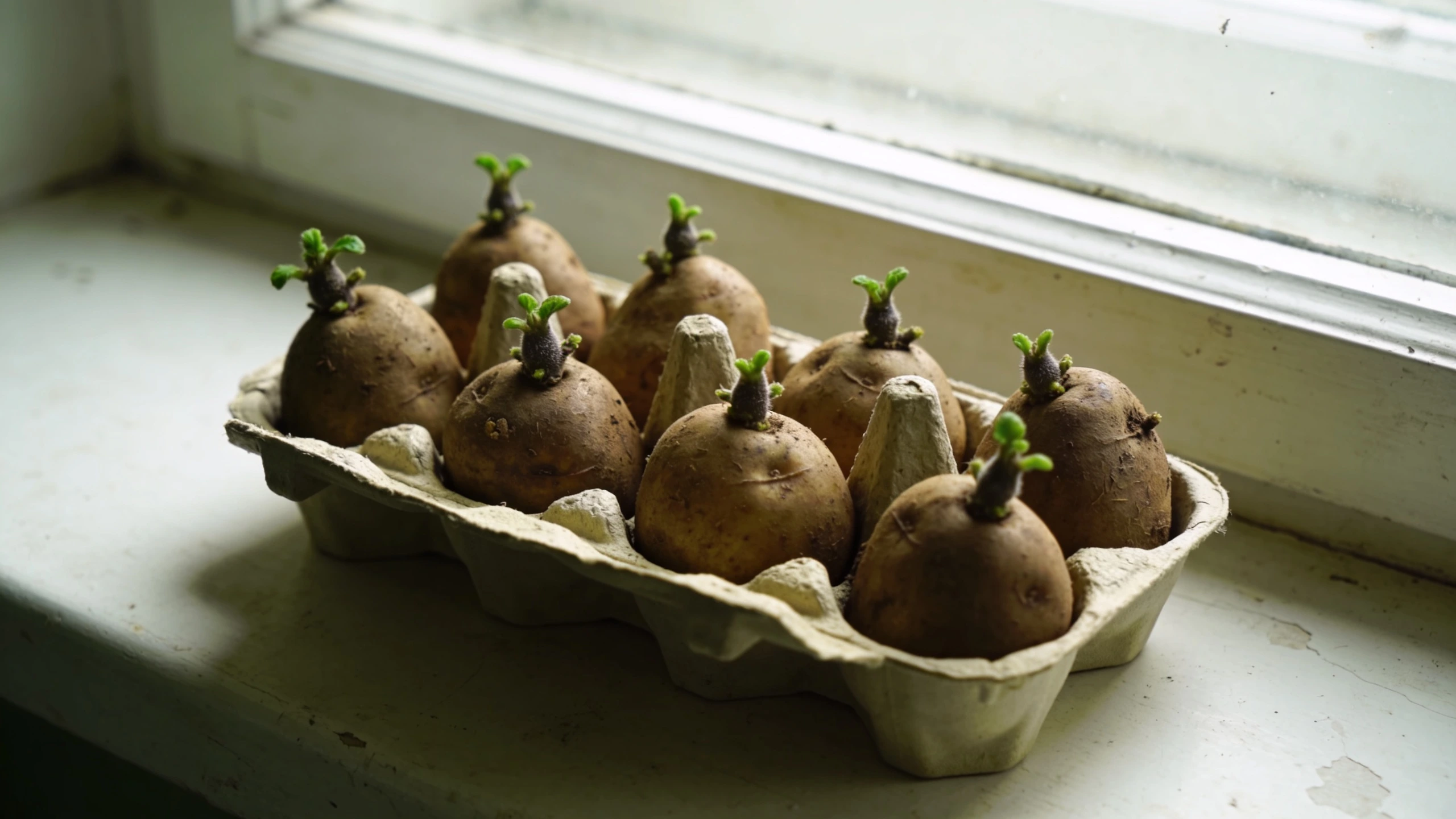
Chitting is standing the seed potatoes somewhere light, cool and frost free for three or four weeks until short shoots appear. An egg box on a cool windowsill is the classic method. It gives earlies a head start of a week or two.
Plant after the worst frost risk has passed, because the foliage is frost tender even though the tubers are underground. If a late frost is forecast after the shoots are up, draw soil over them or cover with fleece.
Key points
- Depth: 12 to 15 cm. Shallow planting produces green tubers near the surface.
- Earlies: 30 cm apart, rows 50 cm apart.
- Maincrop: 40 cm apart, rows 75 cm apart, because the plants are much bigger.
- In containers: one seed potato per 20 to 30 litres, planted in the bottom third.
- Do not plant into ground that grew potatoes or tomatoes last year, because they share diseases.
Earthing up, which is not optional#
Once the shoots reach about 20 cm, draw soil up around the stems into a ridge, covering the lower part of the plant. Repeat a few weeks later.
This does two jobs. It keeps developing tubers in the dark, which prevents them going green, and it gives the plant more depth of soil to form tubers in, which increases the crop.
In a bag or container the same job is done by adding compost as the plant grows, filling the bag up in stages rather than all at once.
Watering and feeding#
Potatoes are thirsty, particularly from the point when the plants flower, which is when the tubers are swelling. A dry spell at that stage costs you a noticeable amount of crop.
Water deeply and consistently rather than lightly and often, and mulch to hold the moisture.
Feeding is rarely needed in decent soil, and a bed that had compost added over winter will grow potatoes without any additional feed. In containers, a general liquid feed every couple of weeks once the plants are established is enough. Do not overfeed with nitrogen, which gives you a fine display of leaves and modest tubers.
Harvesting and storing#
Earlies: when the flowers open, roughly ten to twelve weeks after planting. Dig carefully at one plant first to see what size they are rather than lifting the lot on a guess. They do not store; eat them within a few days, which is the point.
Maincrop: leave until the foliage yellows and dies down. Cut the tops off, then leave the tubers in the ground for a fortnight to firm their skins, which is what makes them store. Lift on a dry day, let them dry on the surface for a few hours, and store in paper sacks in complete darkness somewhere cool and frost free.
Check stored potatoes monthly and remove any that have gone soft, because one rotting tuber spreads.
Blight, briefly#
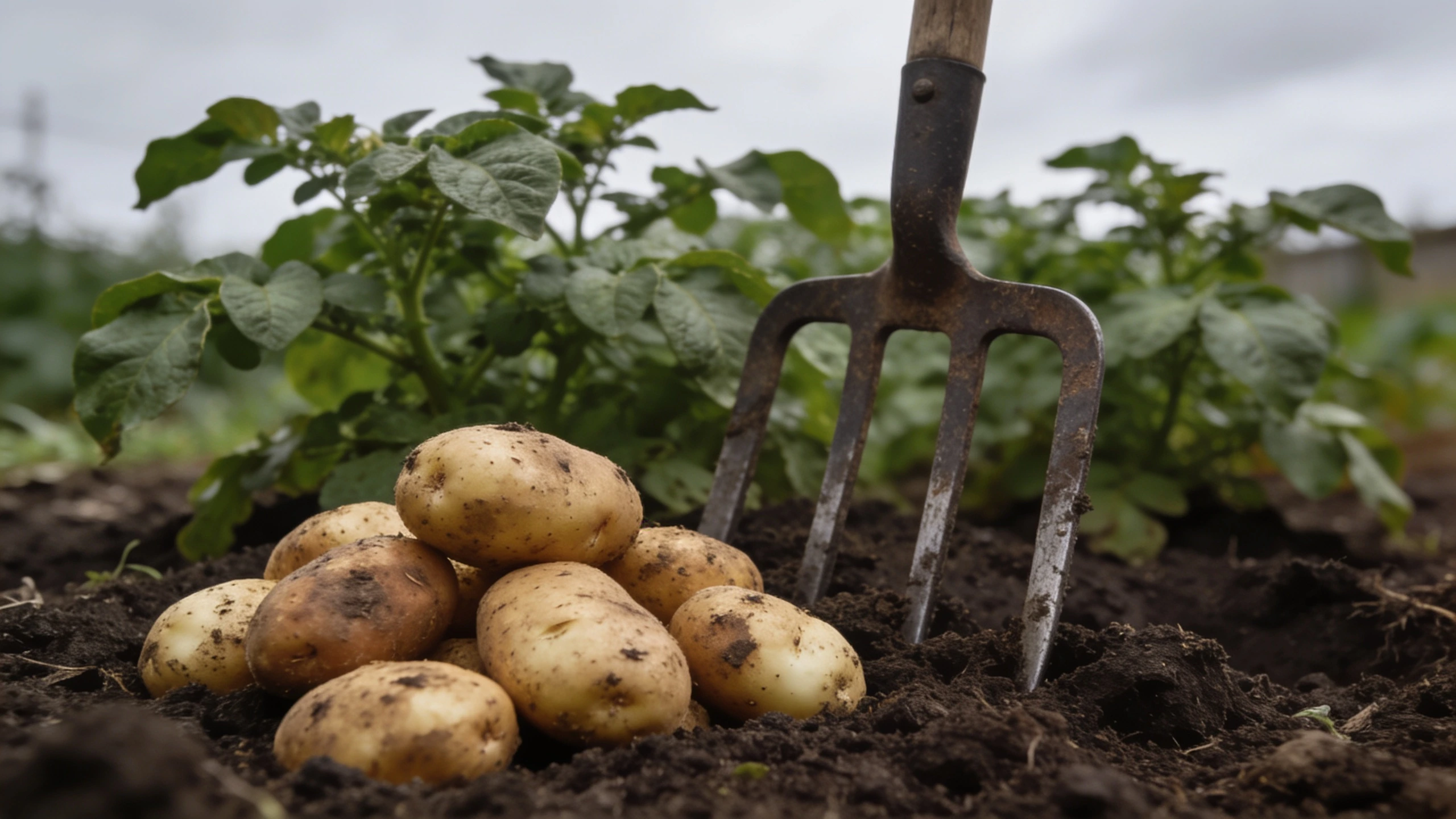
Potato blight and tomato blight are the same organism. In warm humid weather it produces dark brown patches on leaves that spread rapidly, and it can rot the tubers underground.
If it strikes, cut off and bin all the foliage immediately, which stops spores washing down to the tubers, and leave the potatoes in the ground for two or three weeks before lifting. Do not compost blighted material.
Growing earlies, spacing generously and choosing resistant varieties are the practical defences. There is no home cure.
What it costs#
- Certified seed potatoes, 1 kg
- $5 to $12, and that is roughly eight to twelve tubers. Do not substitute supermarket potatoes.
- A potato growing bag
- $4 to $12, reusable for several seasons. Or use any 30 litre container with holes.
- Compost to fill a bag
- $8 to $15. The main cost of container growing.
- Paper sacks for storage
- $5 to $12. Paper, not plastic, which sweats and rots the crop.
Where this needs adjusting#
In a very small garden, grow earlies in bags on a patio and skip maincrop entirely. The bed space is worth more under salad or beans.
In a hot dry climate, plant earlier so the crop matures before the worst heat, and mulch heavily, because tuber formation slows badly in hot soil.
And if your ground has grown potatoes for several years running, take a break from them. Eelworm and disease build up in soil, which is the main practical reason rotation exists.
Where the guidance here comes from#
The argument for earlies over maincrop in a small garden is mine and I would defend it on ground economics rather than flavour. The spacing, depths and harvest signals are conventional, and I check them against the RHS advice on growing your own. Garden Organic is the better source on blight management and on rotation, which matters more for potatoes than for almost anything else.
The short version#
Grow first earlies. Chit them, plant 12 to 15 cm deep and 30 cm apart after the frost risk, earth up twice, and water hard once they flower. Lift earlies when the flowers open and eat them within days. Never eat a green tuber, and store maincrop in paper in complete darkness.
Related reading#
- How to start a vegetable garden: where a crop like this fits in a first plan.
- How to grow tomatoes: the same blight, and why not to grow them next to each other.
- Garden planner: rotation, which matters here more than for most crops.
- Container gardening: the pot volume a potato actually needs.
Frequently asked questions
What is the difference between first earlies, second earlies and maincrop?
It is how long they take and how well they store. First earlies are ready in about ten to twelve weeks and are eaten fresh. Second earlies take thirteen to fifteen. Maincrop takes twenty or more and stores for months. For a small garden first earlies are the ones worth growing, because new potatoes straight from the ground are genuinely better than shop bought and maincrop is very cheap to buy.
Do I need to chit potatoes?
It helps earlies and matters little for maincrop. Chitting means standing the seed potatoes in a light, cool, frost free place for a few weeks until short stubby shoots appear, which gives them a head start. Long pale straggly shoots mean it was too warm and too dark. If you have no time for it, plant them unchitted and lose a week or so.
How deep and how far apart do I plant them?
About 12 to 15 cm deep, with earlies 30 cm apart in rows 50 cm apart, and maincrop 40 cm apart in rows 75 cm apart. Deeper is better than shallower, because tubers forming near the surface go green. In a bag or large container, one seed potato per 20 to 30 litres, planted in the bottom third with compost added as the plant grows.
What does earthing up do?
Two things. It stops tubers near the surface being exposed to light, which turns them green and mildly toxic, and it gives the plant more depth to form tubers in. Draw soil up around the stems to make a ridge once the shoots are about 20 cm tall, and again a few weeks later. In a bag you do the same by adding compost.
When do I harvest potatoes?
Earlies once the flowers open, or about ten to twelve weeks after planting. Have a careful dig at one plant to check the size rather than guessing. Maincrop is left until the foliage yellows and dies back, then cut the tops off and leave the tubers in the ground for two more weeks to firm their skins for storage.
Are green potatoes safe to eat?
No. Green skin means the tuber has been exposed to light and has produced solanine, which is toxic and does not cook out. Cut away small green patches generously, and throw out any potato that is green through. Prevention is earthing up properly and storing the crop in complete darkness.
Can I plant supermarket potatoes?
You can and I would not. Seed potatoes are certified free of the virus and eelworm problems that build up in soil, and supermarket potatoes are often treated to suppress sprouting. The bigger issue is disease: introducing potato problems into a small garden is hard to undo, and certified seed costs very little.
Topics in this article
About the author
Jeff has gardened professionally for over twenty years, mostly on heavy clay, and writes everything here from beds he still works himself. More from Jeff Tanun →
Keep reading
How to Grow Courgettes
How to grow courgettes and zucchini: how many to plant, why the first fruits rot, hand pollination, and picking small enough to keep the plant producing.
Updated
How to Grow Peas
How to grow peas that crop before the mildew. Why early sowing beats late, support even for dwarf varieties, and picking from the bottom of the plant up.
Updated
How to Grow Salad Leaves
How to grow salad leaves that keep coming. Cut and come again rather than whole hearts, why lettuce bolts, and the fortnightly sowing that beats a glut.
Updated