How to Grow Beans: Build the Frame Before You Sow
How to grow climbing and dwarf beans. Runner against French, why flowers fail to set in heat, how to keep picking, and the nitrogen the roots leave behind.
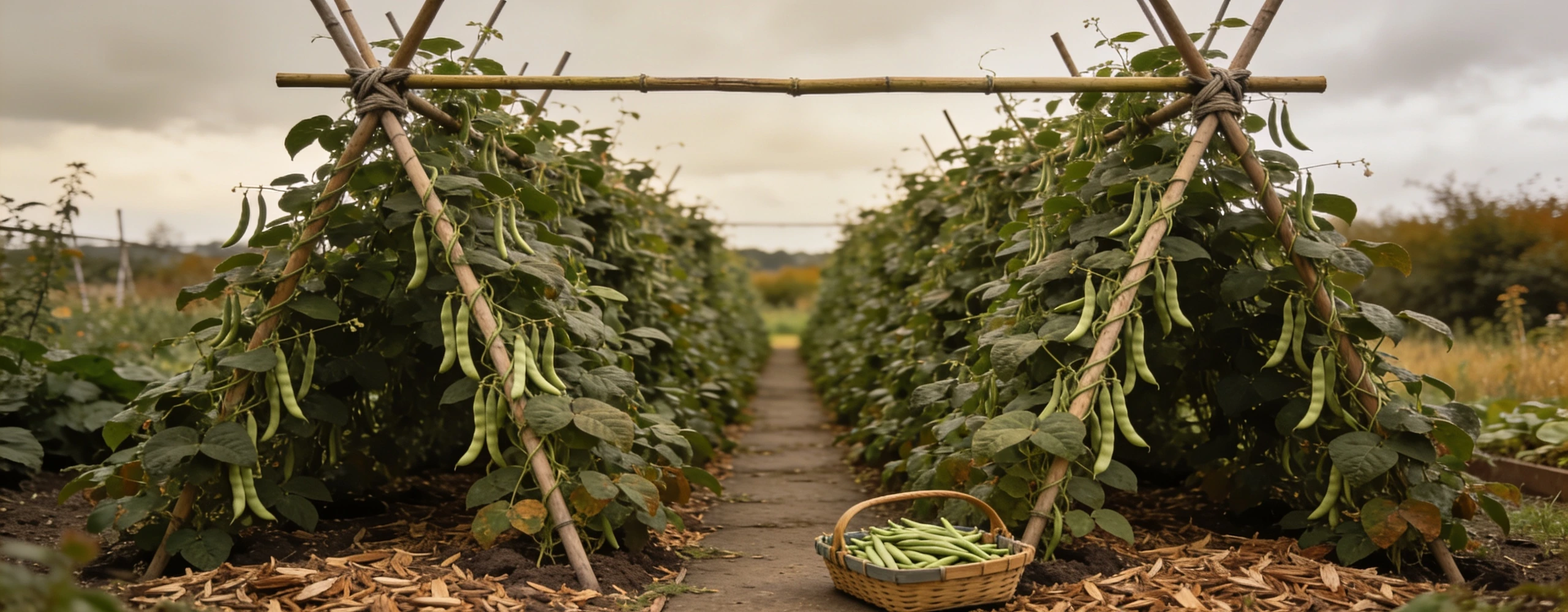
Beans are the most productive thing I grow per square metre, and the two mistakes that spoil them are both about sequence rather than skill: building the support after sowing, and not picking often enough. Get those right and one short row will feed you for two months.
The short answer
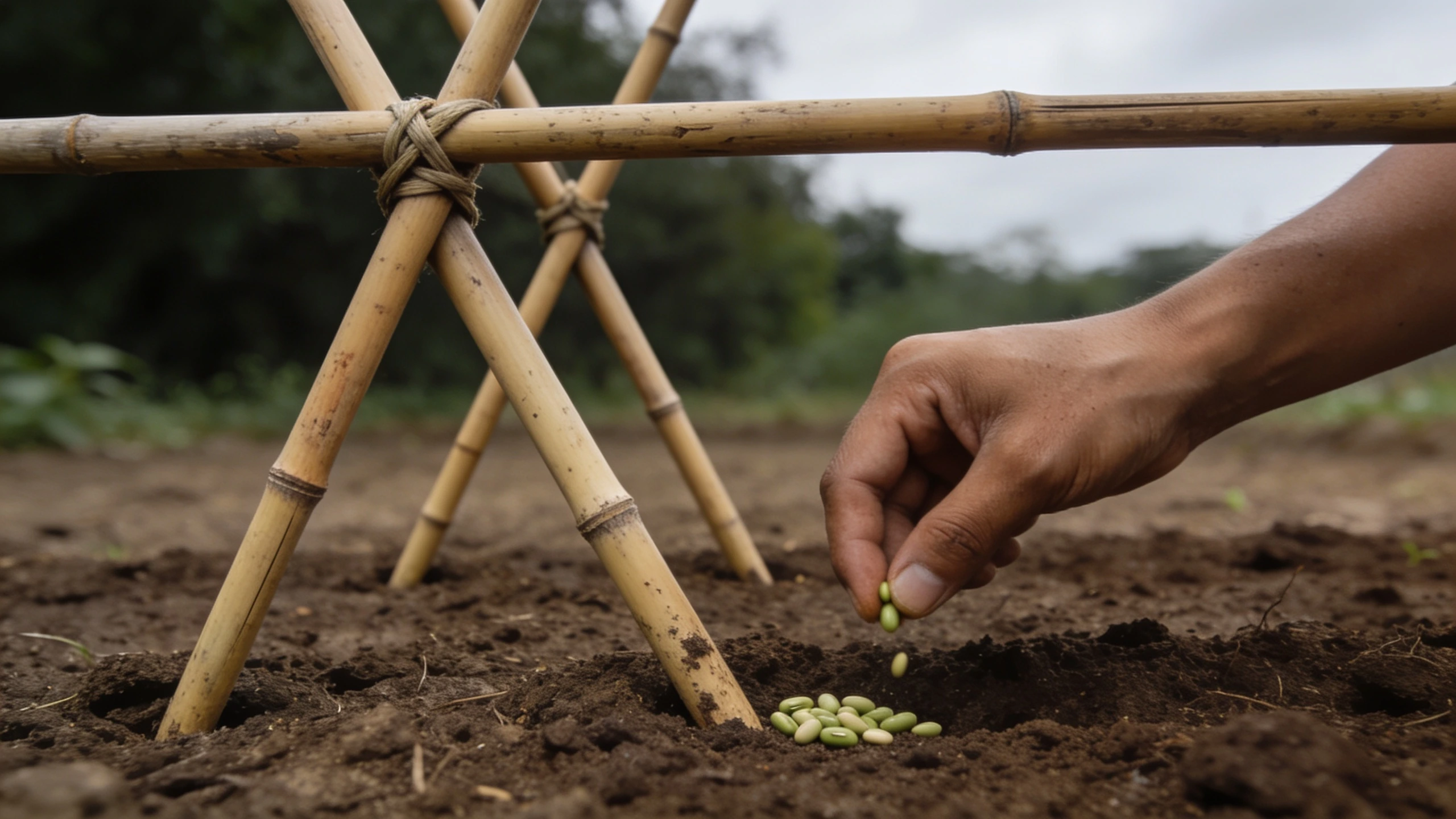
Build the frame first, then sow at the base of each cane, because a climbing bean reaches within days. Sow only after the last frost, and direct into soil that has reached about 12C. Water deeply and consistently once flowering starts, which is when runner beans drop flowers if they are dry. Then pick every two or three days and pick young, because one pod left to mature slows the whole plant.
Which bean, and my recommendation#
- Climbing French beans
- Round, fine pods, mild flavour, sets reliably in heat, crops for six to eight weeks. What I would grow if choosing one.
- Runner beans
- Heavier cropping, long flat pods that get coarse and stringy if left. Needs consistent moisture or the flowers drop. Traditional and demanding.
- Dwarf French beans
- No support needed, crops in a shorter concentrated burst. Ideal for containers and for succession sowing every three weeks.
- Borlotti and drying beans
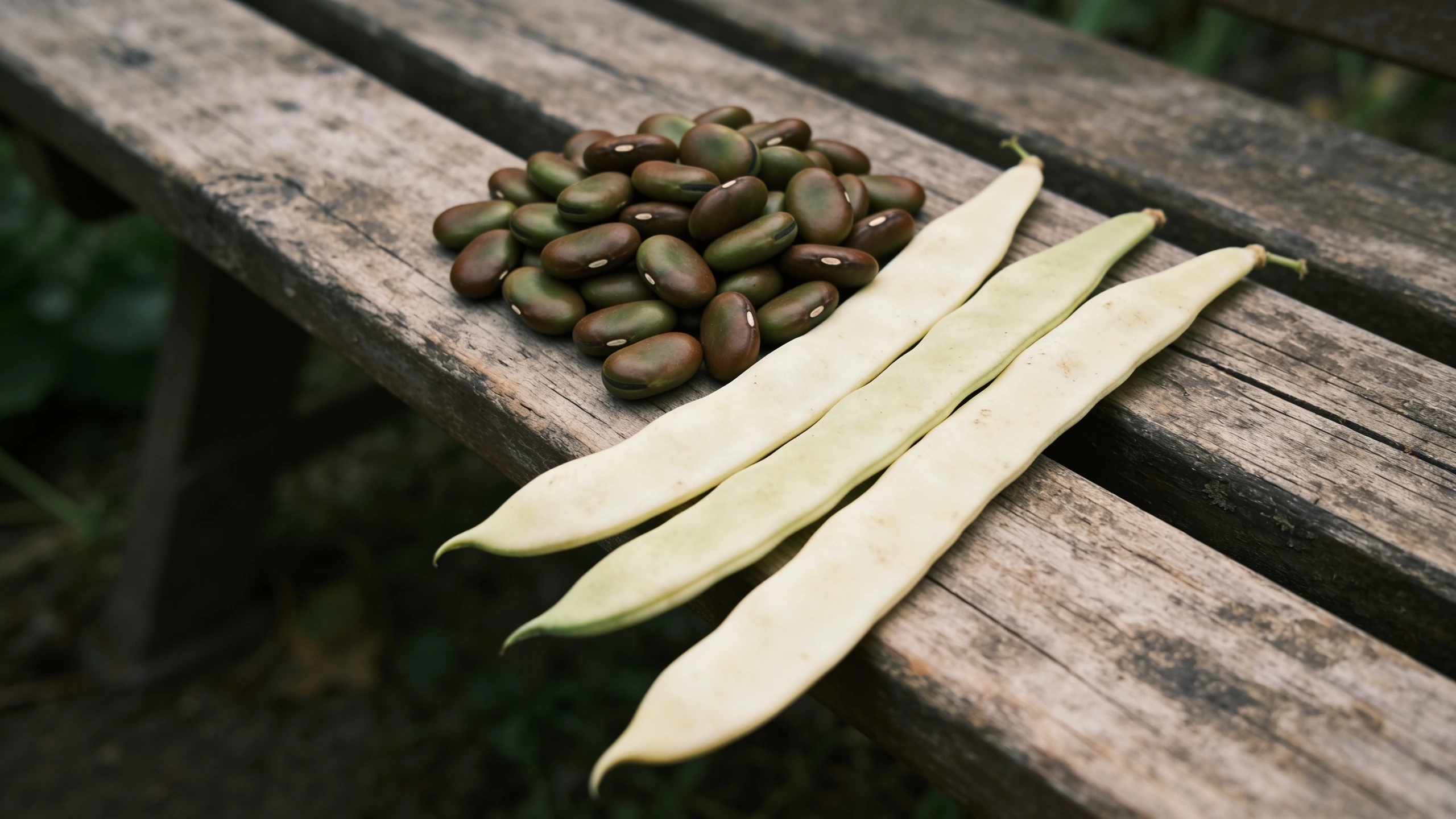
- Grown to maturity and shelled or dried rather than eaten in the pod. Needs a long warm season.
- Broad beans
- A different crop entirely: sown in autumn or very early spring, hardy, and finished before the others start.
The traditional choice in Britain is runner beans and I think climbing French beans are the better plant for most gardens. The pods are finer, the flavour is better, and they do not sulk and drop flowers the moment the weather turns hot and dry.
Build the support first#
This is not fussiness. A climbing bean seedling puts out a searching shoot within days of emerging, and if there is nothing to grip it flops and tangles into its neighbours.
Pushing canes in later means driving them through the root zone of an established plant, which checks it badly.
- Cane wigwam
- Six to eight canes tied at the top. Stable in wind because it is a tripod, and it fits a container. My default.
- Double row with crossed canes
- Two rows of canes crossed and tied to a horizontal cane along the top. Most productive per length of bed and easiest to pick.
- Net between two posts
- Cheapest for a long run, and nothing to tie in. Posts need sinking 60 cm, because a netted row of beans in August is a sail.
- Height
- Two metres minimum. Beans will reach the top and keep going, and you will be picking on tiptoe if you go shorter.
Sink the posts or canes deeper than feels necessary. A frame loaded with beans in a summer gale is the most common structural failure in a vegetable garden.
Sowing, and not being early#
Beans are completely frost tender and they rot in cold wet soil rather than germinating.
Two options. Sow indoors in pots two to three weeks before your last frost date, harden off, and plant out after it. Or sow direct once the soil has warmed to about 12C, which in many places is a fortnight after the frost date.
Direct sown beans catch up with indoor sown ones remarkably quickly, so the head start is smaller than it feels.
Sow two seeds per cane, 5 cm deep, and thin to the strongest if both come up. Keep a few spares in pots to fill gaps, because slugs take young beans reliably.
Watering, and the flowers that will not set#
This is the section that matters, because it explains the commonest bean complaint.
Beans flower and then fail to set pods when they are hot and dry at flowering. Runner beans are notably worse for this than French beans.
So from the appearance of the first flowers, water deeply and consistently, and mulch the base of the plants to hold it. That is the fix.
Key points
- Water at the base, deeply, two or three times a week in dry weather rather than a light daily sprinkle.
- Mulch once the plants are established. It does more for consistency than any watering routine.
- Above about 30C, runner bean flowers will drop regardless. Climbing French beans cope far better.
- Spraying the flowers with water is widely advised and does not help. The water needs to be at the roots.
- Poor pollination is rarely the cause. Beans are largely self fertile, and it is almost always moisture.
Picking, constantly#
A bean plant exists to make seed. Once a pod matures, the plant has succeeded and slows down.
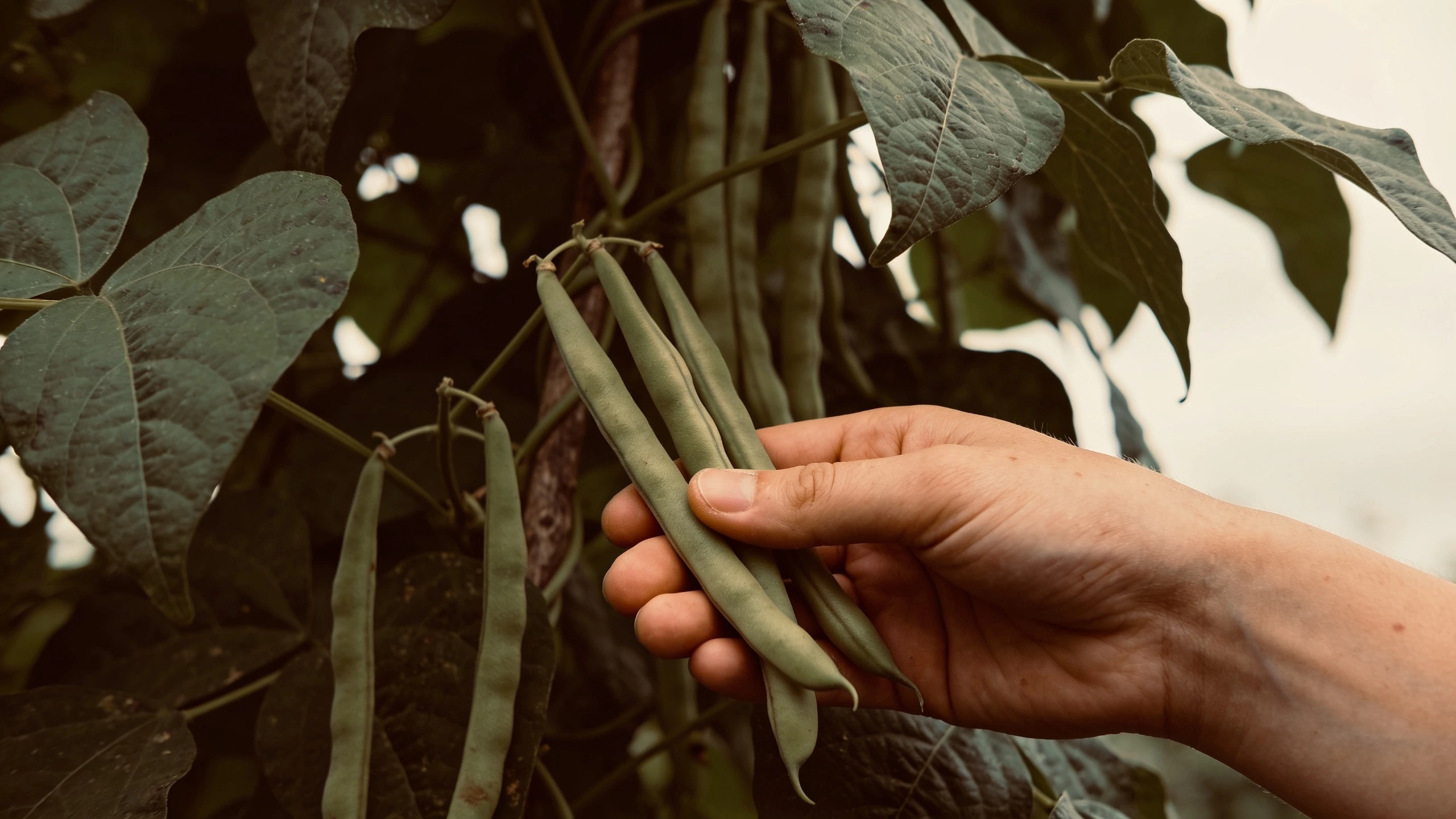
So pick every two or three days in high summer, and pick young. French beans at pencil thickness, runner beans while they still snap cleanly and before the pods go lumpy and stringy.
Look underneath and inside the frame, where the ones you miss are hiding and quietly stopping the plant.
Done properly, one row of climbing beans crops for six to eight weeks. Left for a fortnight it more or less stops, and getting it going again is slow.
Feeding, and the nitrogen question#
Beans need very little feeding. In soil with compost in it they want nothing, and a nitrogen rich feed gives you a magnificent leafy plant with modest cropping.
On the nitrogen fixing: beans do fix atmospheric nitrogen via bacteria in root nodules, and most of it ends up in the plant rather than free in the soil. The practical way to capture it is to cut the tops off for the compost heap at the end of the season and leave the roots in the ground, rather than pulling the whole plant out.
That is a real contribution and a modest one. It is the reason brassicas traditionally follow legumes in a rotation, and it is not a substitute for adding organic matter.
What can go wrong#
Slugs on young plants. The main early threat. Keep spares in pots, and go out at dusk for the first fortnight.
Blackfly on the growing tips. Pinch out the affected tips, which removes most of the colony, and let the ladybirds and hoverflies deal with the rest. Rarely worth spraying.
Halo blight, brown spots with pale rings, spread by wet foliage and seed. Water at the base, do not save seed from affected plants, and rotate.
Tough stringy pods. Left too long, every time.
What it costs#
- A packet of seed
- $2 to $5, and enough for two or three seasons. Beans are among the cheapest crops to start.
- Eight bamboo canes
- $8 to $18, and they last several years if stored dry over winter.
- Pea and bean netting with two posts
- $25 to $50 for a long run, and the least fiddly option to pick from.
- Mulch
- $0 to $30. Free if you make compost, and it is what keeps the flowers setting.
- Nothing else
- No feed needed in decent soil, no netting against birds, no special equipment.
Where this needs adjusting#
In a hot climate, grow climbing French beans rather than runners, mulch heavily, and consider afternoon shade for the flowering period.
In a short season, start indoors, choose an early variety and grow dwarf French beans, which crop faster than climbers.
In a windy garden, use a wigwam rather than a flat netted row, sink the canes deeper, and consider dwarf varieties, which present nothing to the wind.
Where the guidance here comes from#
The frame-first rule and the pick-young rule are the two things I would want anyone to take from this, and both come from doing the opposite. The nitrogen fixing explanation is deliberately measured, because the benefit is routinely overstated. For sowing temperatures, spacing and disease the RHS advice on growing your own is the reference I check, and Garden Organic is the better source on rotation and on why the roots should be left in the ground.
The short version#
Build the frame before you sow, two metres tall, sunk deep. Sow after the frost into soil at about 12C. Water deeply and mulch from the first flower, because that is when dry plants drop their flowers. Pick every two or three days at pencil thickness. Cut the tops for compost at the end and leave the roots in.
Related reading#
- Vertical gardening: why a netted row of beans yields four times what the same ground would sprawling.
- How to start a vegetable garden: where beans fit in a first year.
- Garden planner: rotation, and why brassicas follow legumes.
- Container gardening: pot volume for dwarf and climbing beans.
Frequently asked questions
What is the difference between runner beans and French beans?
Runner beans are heavier cropping with longer, flatter, coarser pods, and they need consistent moisture or the flowers drop. Climbing French beans have rounder, finer pods, a milder flavour, and they set more reliably in hot weather. Dwarf French beans need no support and crop in a shorter burst. For most gardens I would grow climbing French beans, because the eating quality is better and they are less fussy.
Do I need to build supports before sowing?
Yes, always. A climbing bean reaches for a support within days of germinating, and pushing canes or posts in around established plants means breaking roots and snapping stems. Put the frame up first, then sow or plant at the base of each cane. This is the single most common sequencing mistake with beans.
Why are my beans flowering but not setting pods?
Usually heat and dryness, and runner beans are the worst affected. Above about 30C, or when the soil is dry at flowering, the flowers drop without setting. Water deeply and consistently once flowering begins, mulch the base, and if your summers are hot grow climbing French beans instead, which set far more reliably. Spraying the flowers with water does not help, despite the advice.
When should I sow beans?
After the last frost, because they are completely frost tender. Sow indoors two to three weeks before the last frost date if you want a head start, or direct outdoors once the soil has warmed to around 12C. Beans sown into cold wet soil often rot rather than germinating, so waiting a fortnight for warmth usually beats sowing early.
How do I keep beans producing?
Pick constantly and pick young. A pod left to swell and mature signals to the plant that it has reproduced, and production slows. Check every two or three days in high summer and pick anything of usable size. Done properly, one row of climbing beans crops for six to eight weeks; left unpicked for a fortnight it more or less stops.
Do beans really improve the soil?
They fix atmospheric nitrogen through bacteria in root nodules, and most of that nitrogen is in the plant rather than the soil. So the practical benefit comes from cutting the tops for compost and leaving the roots in the ground rather than pulling them out, which returns the nodules. It is a real but modest contribution, and it is why brassicas traditionally follow legumes.
Can I grow beans in containers?
Dwarf French beans do well in a container of 20 litres or more, three or four plants per pot. Climbing beans need a large container, at least 40 litres, with a wigwam of canes, and they will need daily watering in summer because the plant is large relative to the root volume. Both are worth growing in pots; the climbers just demand more attention.
Topics in this article
About the author
Jeff has gardened professionally for over twenty years, mostly on heavy clay, and writes everything here from beds he still works himself. More from Jeff Tanun →
Keep reading
How to Grow Peas
How to grow peas that crop before the mildew. Why early sowing beats late, support even for dwarf varieties, and picking from the bottom of the plant up.
Updated
How to Grow Courgettes
How to grow courgettes and zucchini: how many to plant, why the first fruits rot, hand pollination, and picking small enough to keep the plant producing.
Updated
How to Grow Carrots
How to grow carrots that are not forked or stumpy. Why manure ruins them, how to sow so you barely thin, and the mesh height that stops carrot fly.
Updated