How to Grow Onions: Sets Are Easier Than Seed
How to grow onions from sets or seed. Autumn against spring planting, why bolting happens, when to stop watering, and how to dry them so they keep to spring.
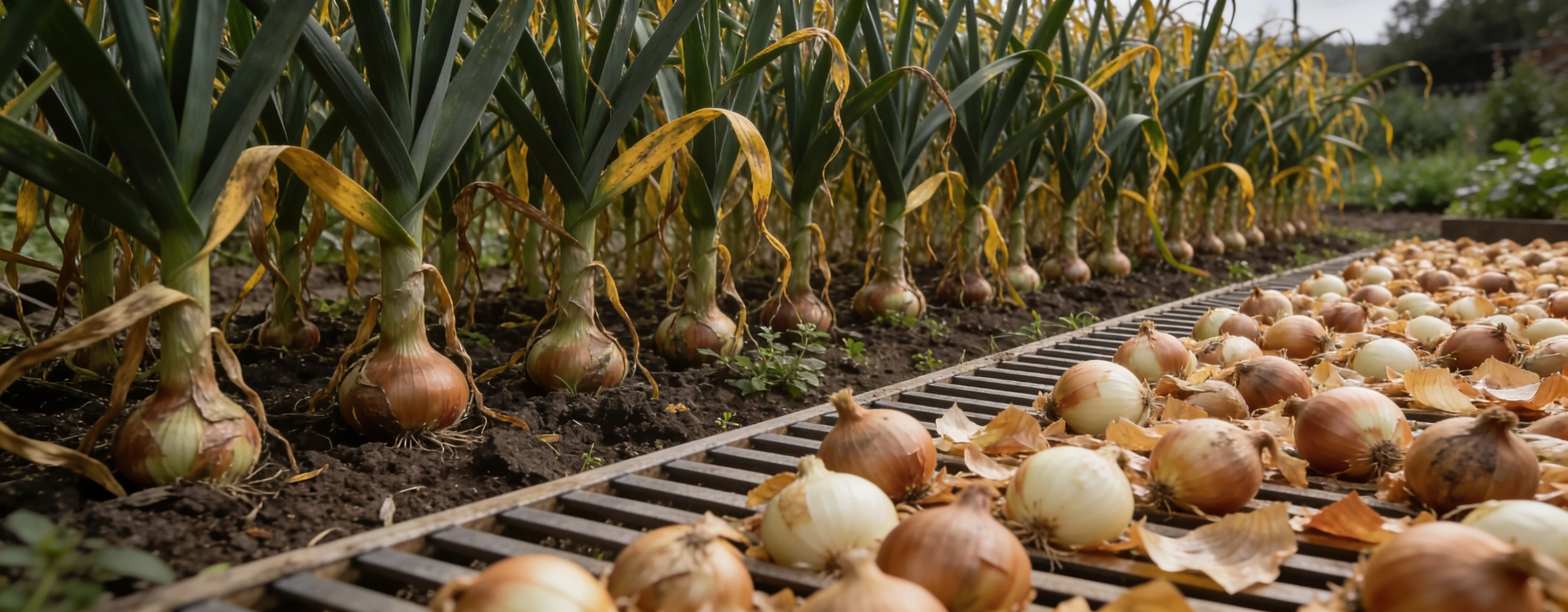
Onions are the crop where the work is all at the beginning and the end, and almost nothing in between. Plant sets in the right window, keep the weeds off them, then stop watering at the right moment and dry them properly. That last part is where most home grown onions are lost, because a badly dried onion rots in October rather than lasting until spring.
The short answer
Use sets rather than seed unless you are keen. Plant in autumn for an early summer crop or in spring for the main storing crop, 10 cm apart with the tip barely under the surface. Keep them scrupulously weed free, because onions compete badly. Stop watering two to three weeks before harvest, lift when the tops flop of their own accord, and dry for two to four weeks until the necks are papery.
Sets or seed#
- Sets
- Small immature onions. Planting is a five second job, they tolerate poor weather, and they crop weeks earlier. What I would use.
- Seed
- Cheaper per plant, far more varieties, often better storing bulbs. Needs sowing indoors in midwinter and more care. Worth graduating to.
- Overwintering sets
- Specific varieties planted in autumn for an early summer harvest. They do not store well, so eat them fresh.
- Shallots
- Grown exactly like onion sets, and each set multiplies into a cluster. Excellent storers and worth the space.
One useful detail on sets: choose small ones, under about 2 cm across. Large sets are far more likely to bolt, and a bolted onion will not store.
Two planting windows#
Autumn, September or October, using overwintering varieties. These give you onions in June and July, which is genuinely useful because it is the point in the year when last year's crop has run out. They do not keep, so use them fresh.
Spring, March or April as soon as the soil is workable. This is the main storing crop, harvested late summer, and it is the one that should carry you through winter.
Doing both is worth it, because they harvest months apart and neither competes with the other for bed space.
Planting and spacing#
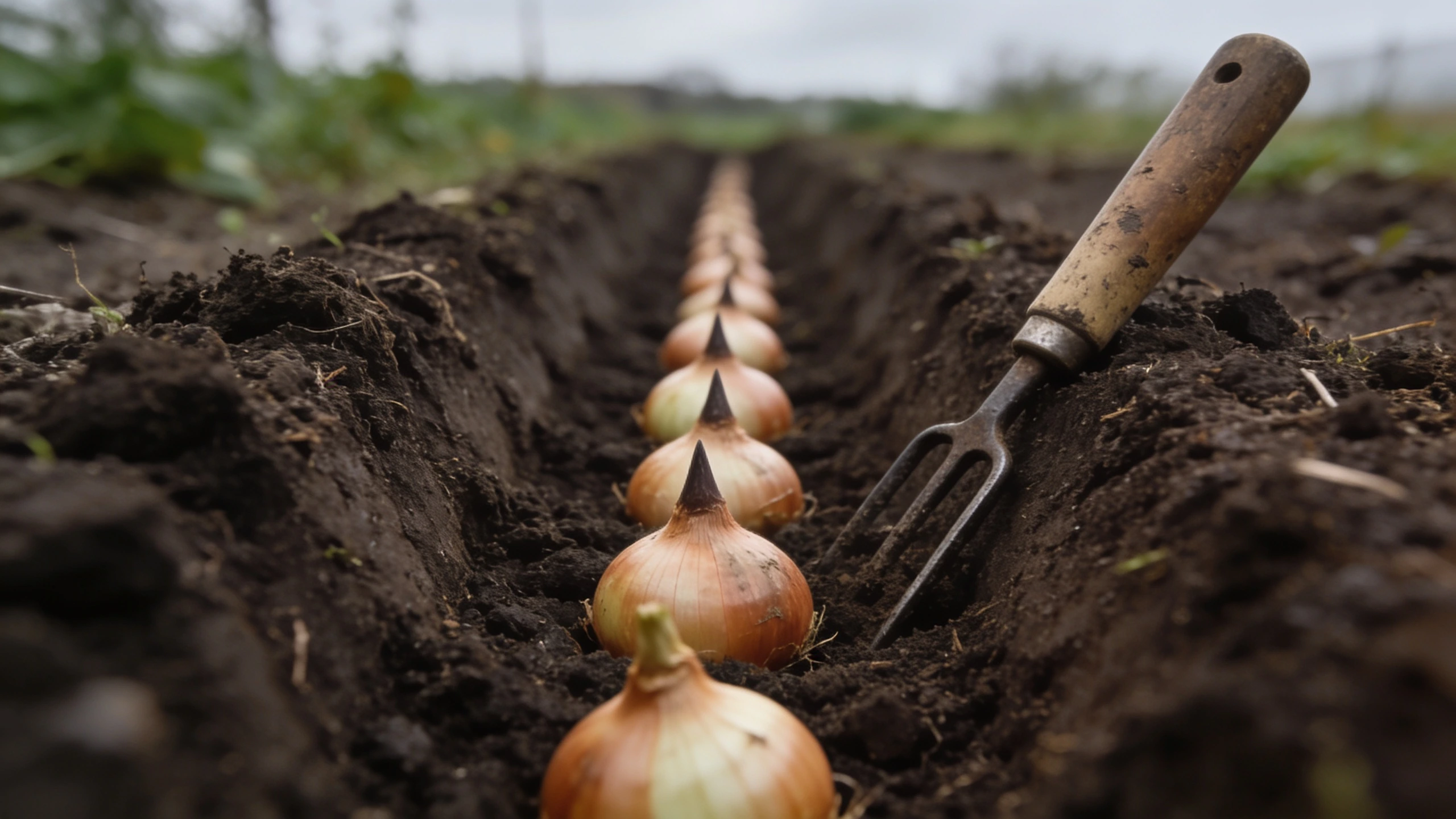
Ten centimetres apart in rows 25 to 30 cm apart, tip just at or barely below the surface.
Do not bury them. Do not push them in, because that compacts the soil directly beneath the base plate, which is precisely where roots need to go. Make a shallow drill or a hole and drop them in.
Onions want sun and free draining soil. They will not do well in ground that sits wet, and they resent freshly manured soil less than carrots do but still prefer ground enriched the previous season.
Birds pull newly planted sets out for entertainment. A layer of fleece or netting for the first fortnight, or simply pushing any lifted ones back in each morning, deals with it.
Weeding, which is the whole maintenance job#
Onions have thin upright leaves and cast almost no shade, so they compete very badly with weeds. A weedy onion bed produces small onions, reliably.
Hand weed rather than hoeing close, because the roots are shallow and near the surface. Get in early and often, while weeds are small.
That is essentially the entire job between planting and harvest. Weeds, and water in a dry spring.
Watering, and the deliberate dry off#
Water through the growing period, particularly in a dry spring while the bulbs are forming. A dry spell then costs you size directly.
Then stop, deliberately, two to three weeks before you expect to harvest.
That drying period is part of the crop rather than neglect. Onions watered right up to lifting have soft thick necks, and a soft neck is the entry point for rot in storage. The difference between an onion that keeps to March and one that goes off in October is largely made in those final weeks.
Feeding is rarely needed in decent soil. If your ground is poor, a light feed in spring is enough, and stop by early summer, because late nitrogen gives you leaves and soft bulbs.
Bolting, and how to avoid it#
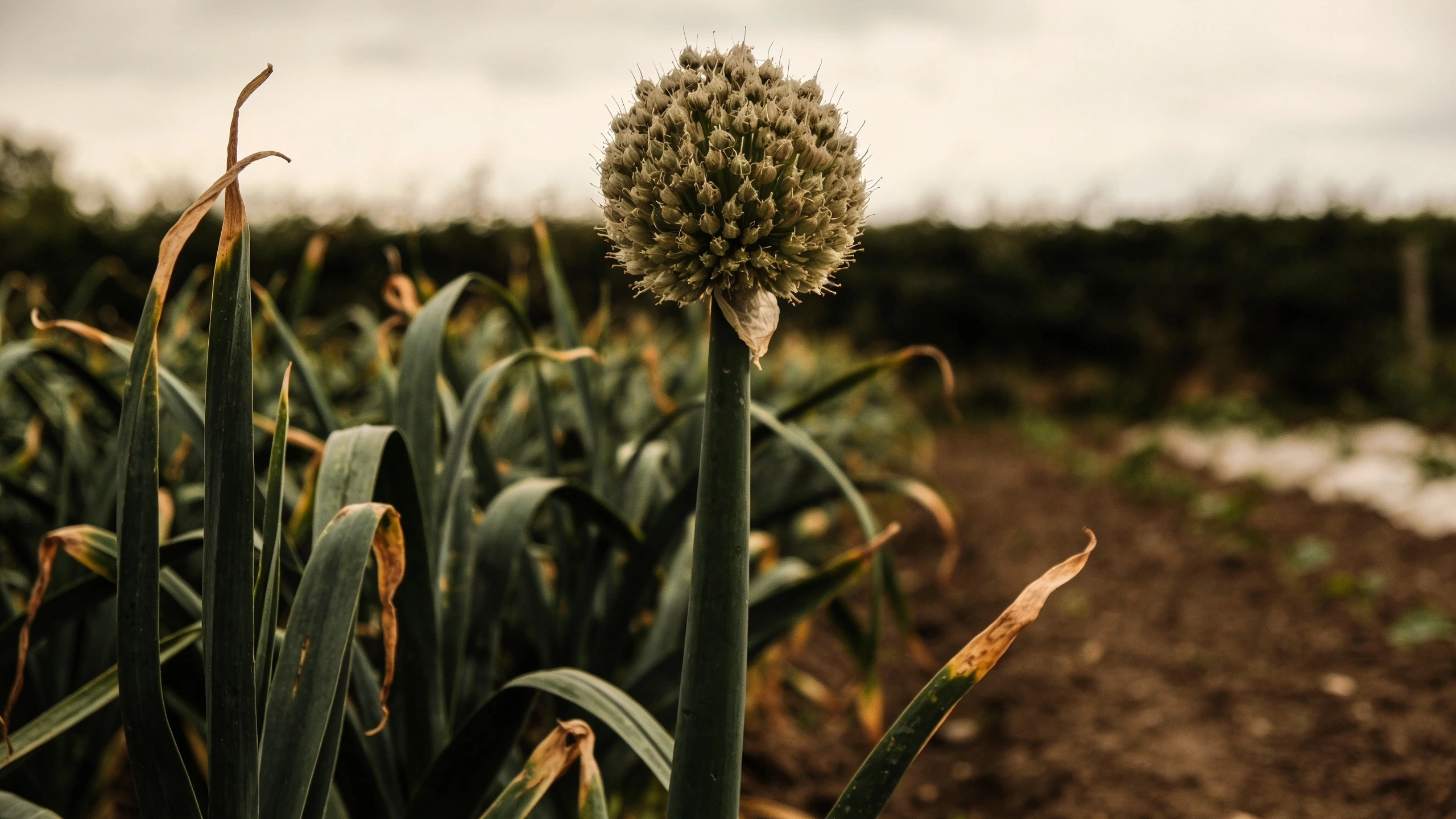
A bolting onion sends up a thick round flower stem. Once that happens the bulb will not store, and the centre becomes tough.
It is triggered by stress: a cold snap after planting, drought, or most commonly a set that was too large to begin with.
Key points
- Choose small sets, under about 2 cm. This is the biggest single factor.
- Look for heat treated sets, which have been processed specifically to reduce bolting.
- Do not plant spring sets too early into cold soil. Wait for workable, warming ground.
- Keep the moisture steady, because drought stress is the other trigger.
- If one bolts, snap the stem out and use that onion first. It will not keep.
Harvesting at the right moment#
Wait until the foliage yellows and flops over by itself, usually mid to late summer for a spring planting.
Do not bend the tops over yourself. That is old advice, it damages the neck, and it shortens storage life rather than hastening ripening.
Ease the bulbs up with a fork, do not pull by the tops. Leave them on the soil surface for a few dry days if the weather allows, turning them once, then move them somewhere airy to finish.
Drying and storing, where the crop is won#
This is the part that decides whether you have onions in March.
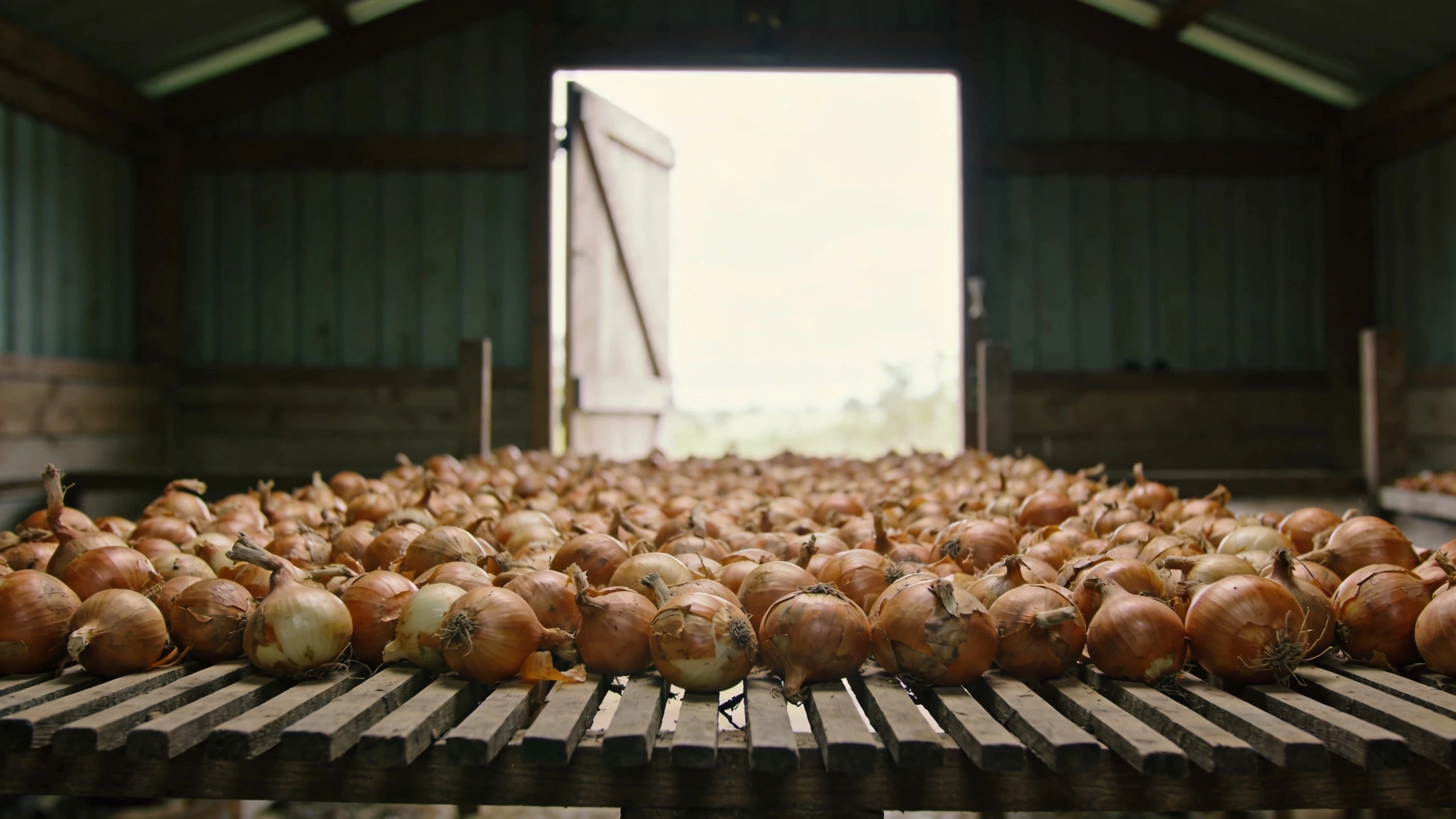
Dry them for two to four weeks somewhere airy, dry and out of rain: a shed with the door open, a porch, a greenhouse with the vents wide. Spread them in a single layer on a rack or hang them in bunches. The requirement is air movement.
They are ready when the skins rustle, the necks are dry and papery, and the whole bulb feels firm.
Then trim the roots close, cut the tops to about 3 cm, or leave them long and plait them. Store in nets, trays or plaits somewhere cool, dry and airy. Not sealed bags, which sweat.
Check them monthly. Any bulb with a soft neck or a soft shoulder should be used at once, because one rotting onion spreads through a net.
What can go wrong#
Small bulbs. Weed competition, then a dry spring, then planting too late. In that order.
White rot, white fluffy fungus at the base and the plant collapses. It persists in soil for many years, and it is the main reason to rotate alliums and to buy clean stock.
Downy mildew in a wet season, showing as greyish patches and dying leaf tips. Space for air movement and lift promptly.
Onion fly, whose larvae eat into the base. Fine mesh over the bed prevents it, the same solution as for carrot fly.
What it costs#
- A bag of onion sets
- $4 to $10 for enough to fill a decent row, and heat treated ones are worth the small premium.
- Shallot sets
- $5 to $12, and each one multiplies into a cluster, so the yield per set is much higher.
- A packet of seed
- $2 to $5 if you want variety and are prepared to sow indoors in midwinter.
- Fine mesh
- $15 to $40 if onion fly is a problem locally, and it does several other jobs.
- Nets or trays for storage
- $5 to $20, reused for years. Anything with air movement works.
Where this needs adjusting#
In a mild wet climate, autumn planted onions do well and storage is harder, so lean towards eating fresh and growing shallots, which keep better.
In a very cold garden, spring planting only, and start sets a little later into warmer soil to reduce bolting.
On heavy clay, plant on a slight ridge or in a raised bed. Waterlogged soil in winter is what kills autumn planted sets.
Where the guidance here comes from#
The stop-watering rule and the do-not-bend-the-tops correction are the two things I would most want someone to take from this, because both directly determine whether the crop keeps. For variety choice, bolting and white rot the RHS advice on growing your own is the reference I check, and Garden Organic is the better source on allium rotation and on managing white rot, which has no chemical answer for a home grower.
The short version#
Small sets, planted 10 cm apart with the tip barely covered, in autumn for an early crop or spring for storing. Weed relentlessly, because onions lose more to competition than anything else. Stop watering two to three weeks before harvest. Lift when the tops flop by themselves, then dry for two to four weeks until the skins rustle, and store in nets somewhere cool and airy.
Related reading#
- How to grow garlic: the same family, the same autumn window, and the same drying discipline.
- Garden planner: rotation, which matters for alliums because of white rot.
- October gardening jobs: where autumn onion sets fit in the month.
- How to start a vegetable garden: whether onions are worth your first bed at all.
Frequently asked questions
Should I grow onions from sets or seed?
Sets, for almost everyone. A set is a small immature onion, it goes in as a five second job, it copes with poor weather and it crops weeks earlier. Seed is cheaper per plant, gives a much wider choice of variety and often better storing bulbs, and it needs an early indoor sowing and more attention. Start with sets and move to seed if you get keen.
When should I plant onions?
Two windows. Autumn planting, in September or October, using overwintering varieties, gives you onions in early summer, which fills the hungry gap. Spring planting, in March or April as soon as the soil is workable, gives the main crop in late summer, and those store far better. Many gardeners do both, because they harvest months apart.
Why are my onions bolting?
The plant has been through a cold or stressed spell and decided to flower rather than bulb up. Common causes are planting sets that were too large, a cold snap after planting, or drought stress. Once the flower stem is up the bulb will not store, so use those onions first. Prevention: choose heat treated sets, plant sets smaller than about 2 cm across, and keep the moisture steady.
How far apart do I plant onion sets?
About 10 cm apart in rows 25 to 30 cm apart, with the tip just at or barely under the surface. Do not bury them deeply and do not push them in, which compacts the soil under the base plate where the roots need to go. Wider spacing gives bigger bulbs and closer spacing gives more, smaller ones.
When should I stop watering onions?
Two to three weeks before you expect to harvest. Watering right up to lifting produces bulbs with soft necks that rot in store. Water through the growing period, particularly in a dry spring, then deliberately let them dry off as the foliage starts to yellow. That drying period is part of the crop, not neglect.
When are onions ready to lift?
When the foliage yellows and flops over of its own accord, usually mid to late summer for a spring planting. Do not bend the tops over yourself, which is old advice that damages the neck and shortens storage life. Ease them up with a fork, leave them on the surface for a few dry days, then move them somewhere airy to finish.
How do I store onions so they keep?
Dry them thoroughly first, two to four weeks somewhere airy and out of rain, until the skins rustle and the necks are papery. Then trim the roots, cut the tops to about 3 cm or plait them, and store somewhere cool, dry and airy in nets or trays rather than sealed bags. A thick soft neck means it will not keep, so eat those first.
Topics in this article
About the author
Jeff has gardened professionally for over twenty years, mostly on heavy clay, and writes everything here from beds he still works himself. More from Jeff Tanun →
Keep reading
How to Grow Garlic
How to grow garlic from cloves. Why it needs winter cold, hardneck against softneck, when to cut scapes, and how to dry it so it keeps until spring.
Updated
How to Grow Courgettes
How to grow courgettes and zucchini: how many to plant, why the first fruits rot, hand pollination, and picking small enough to keep the plant producing.
Updated
How to Grow Peas
How to grow peas that crop before the mildew. Why early sowing beats late, support even for dwarf varieties, and picking from the bottom of the plant up.
Updated