How to Grow Strawberries: Replace Them Every Three Years
How to grow strawberries properly. Why plants decline after three years, how runners give you free replacements, and the two jobs that stop fruit rotting.
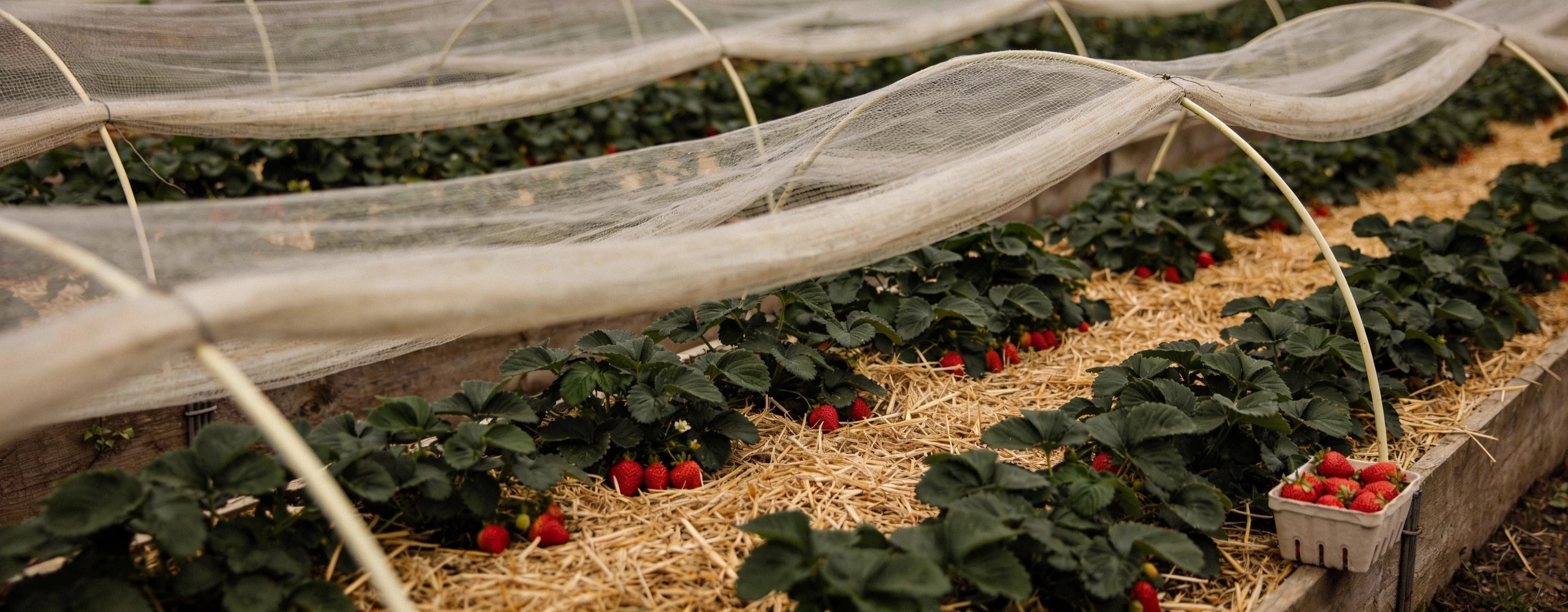
Strawberries are the fruit most worth growing, because a shop strawberry is bred to survive transport rather than to taste of anything. They are also the crop where people most often keep going with tired old plants and blame the variety. Three years is the productive life, and the plants give you their own replacements for nothing.
The short answer
Plan on a three year cycle: root a few runners every summer so you always have first, second and third year plants, and never buy again. Plant in late summer for a full crop the following June. Tuck straw under the plants once fruit sets and water at the base, which between them prevent most rotting. Net before the berries colour, not after. In containers allow 3 to 5 litres per plant and feed high potassium weekly.
The three year cycle, which is the whole method#
A strawberry plant cropping heavily in its second year will be visibly poorer in its fourth. Yield drops, fruit gets smaller, and viruses accumulate over time even in plants that look healthy.
The mistake is treating that as something to fix. It is a life cycle, and the plant provides the answer itself.
- Year one
- Establishing. A light crop if planted in spring, a full one if planted the previous late summer. Remove runners so the plant builds.
- Year two
- The best crop. Let a few runners root now to become next year's new bed.
- Year three
- Still good. Take runners again, and plan to remove these plants after harvest.
- Year four
- Declining. Take them out. Do not replant strawberries in the same ground; move to a fresh bed.
Run three small beds or three groups of containers at different ages and you have a continuous supply, free plants forever, and no year where the crop disappoints.
Summer fruiting or perpetual#
Both, is the honest answer.
Summer fruiting varieties give one heavy crop over two or three weeks in early summer. That is what you want if you are making jam or want a proper glut.
Perpetual, sometimes sold as everbearing, produce smaller flushes from midsummer until autumn. Less dramatic, and a longer season.
A bed of each gives you strawberries from June to October, which most households prefer to a single intense fortnight followed by nothing.
Planting, and when to do it#
Late summer or early autumn is the best time. The plants establish through autumn and crop fully the following summer.
Spring planting works and gives a lighter first crop. If you plant in spring, consider removing the first flush of flowers so the plant puts its energy into roots and leaves, which pays back the following year.
Key points
- Full sun. Strawberries in shade produce soft, pale, poorly flavoured fruit.
- Space 30 to 45 cm apart in rows 75 cm apart. Crowded plants get grey mould.
- Plant so the crown sits exactly at soil level. Buried crowns rot; exposed roots dry out.
- Free draining soil with compost worked in. They dislike waterlogging.
- Do not plant into ground that grew strawberries recently, because disease builds up.
Bare root runners bought in their dormant season are much cheaper than potted plants and establish perfectly well.
The two jobs that stop fruit rotting#
Grey mould is the main reason home strawberries are lost, and it comes down to moisture sitting where it should not.
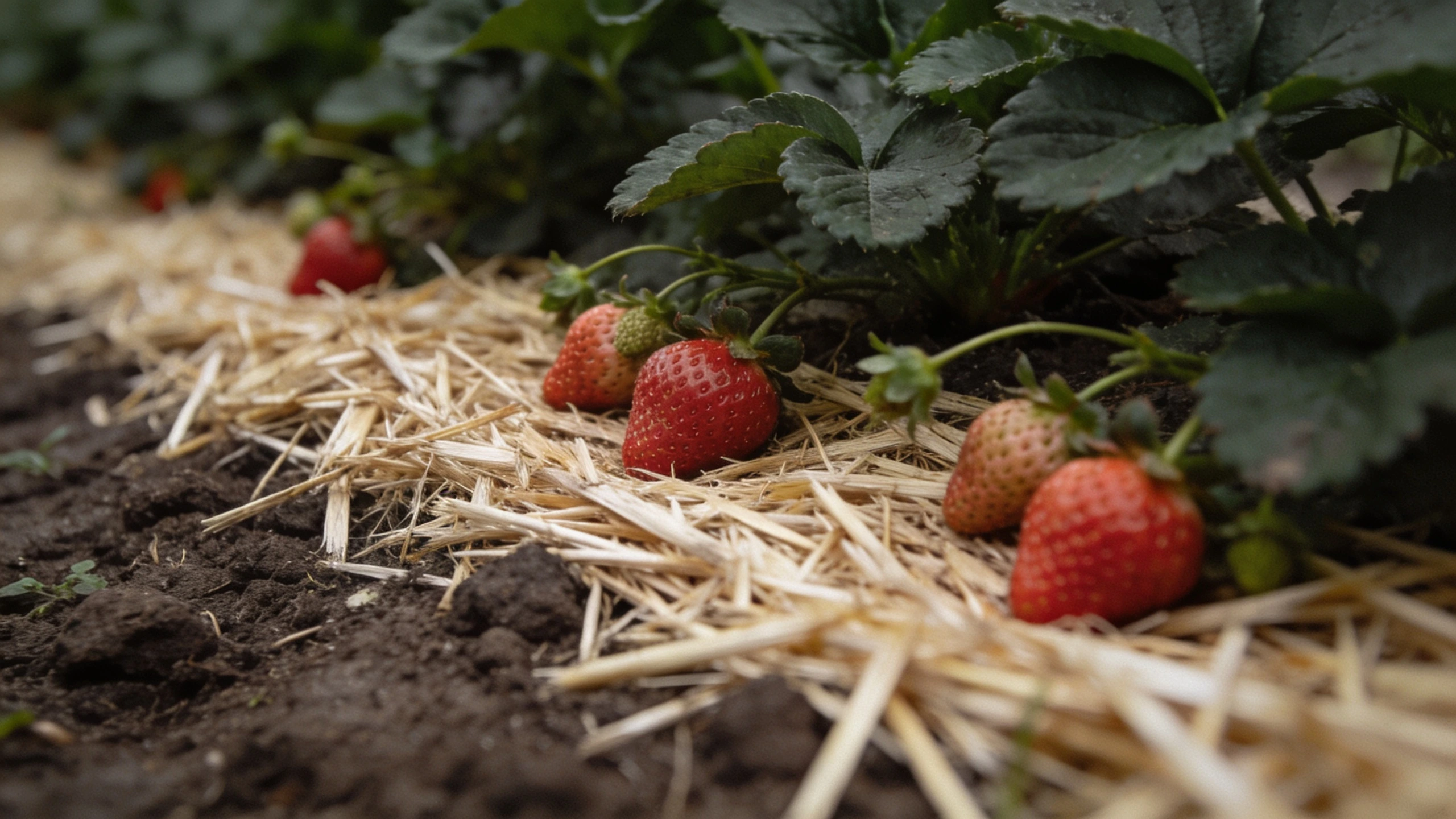
Straw under the plants, once the fruit has set and started to swell. It keeps every berry off damp soil, which is where the mould starts. It is where the name comes from, and mats or slate work too.
Water at the base, never over the foliage. Wet leaves and wet fruit in the evening is the condition grey mould wants.
Air movement is the third factor, which is why spacing matters. Remove any leaves that are yellowing or crowding the centre of the plant.
Feeding and watering#
Water consistently while the fruit is swelling, which is the period that decides size. Once picking is underway, ease off slightly, because very wet conditions dilute flavour and encourage mould.
Feed with a high potassium liquid feed weekly from the appearance of the first flowers until the end of picking. Potassium supports fruiting; a nitrogen rich feed gives you a magnificent leafy plant and few berries.
In containers, feeding is not optional, because the compost is exhausted within about six weeks.
Netting, before they colour#
Birds find ripening strawberries with remarkable efficiency, and they start before you would call the fruit ripe.
Net on hoops so the netting is held clear of the fruit, because birds can peck through netting lying directly on a berry, and small birds get tangled in loose netting.
Put it up a week before you think you need it. The first ripening berry is usually eaten by something else.
Slugs are the other competitor. Straw helps, raised containers help more, and going out at dusk with a torch for two nights early in the season removes a surprising proportion of the population.
After harvest, the tidy up that matters#
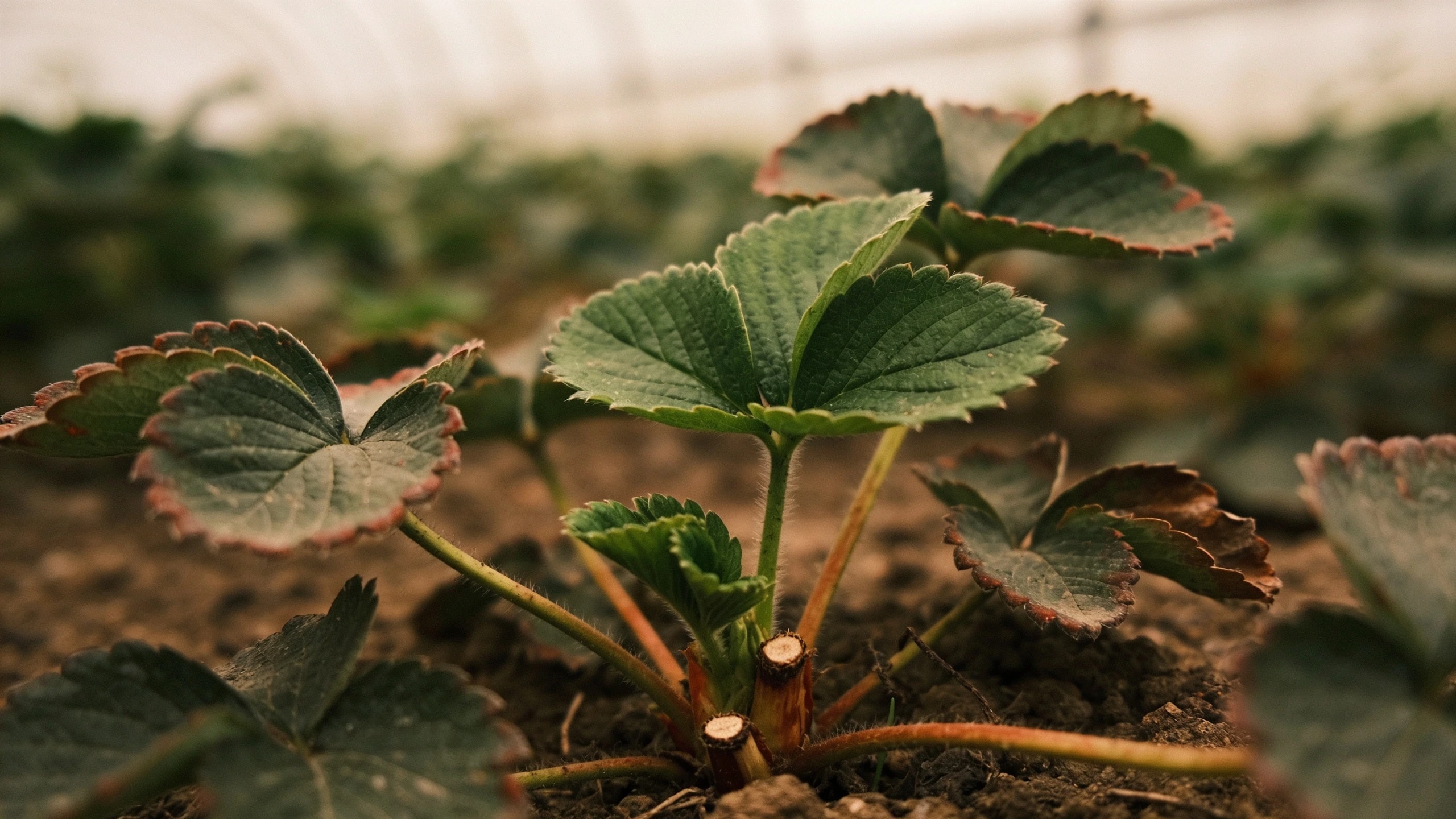
Once picking finishes on summer fruiting varieties, cut the old foliage back to about 10 cm above the crown, leaving the central young leaves. Clear away the old straw and any debris.
That does two things: it removes the leaves carrying this year's mould and mildew spores, and it lets light into the crown so the plant builds buds for next year.
Then feed and water, and let it grow back. Do not cut back perpetual varieties, which are still fruiting.
Containers, which solve two problems at once#
Strawberries suit containers unusually well, and it is not a compromise.
The fruit hangs clear of soil, which largely removes the rotting problem. A raised or hanging container is harder for slugs to reach. And it is easy to net.
Allow 3 to 5 litres of compost per plant, use a loam based compost so it does not dry to a block, water daily in summer, and feed weekly once flowering starts. Replace the plants on the same three year cycle.
What it costs#
- Ten bare root runners
- $12 to $30 in the dormant season, and far cheaper than potted plants.
- Six potted plants
- $20 to $45. Convenient, and you only need to buy once if you take runners.
- A bale of straw
- $8 to $25 from a farm supplier, and it does several years of beds.
- Netting and hoops
- $25 to $60, reused for years, and it also covers brassicas and carrots.
- High potassium feed
- $8 to $18, and one bottle does a season.
- After year one
- Close to nothing, because the runners replace the plants for free.
Where this needs adjusting#
In a hot climate, some afternoon shade helps and perpetual varieties often outperform summer fruiting ones, which can struggle to set in heat.
In a cold garden, a cloche or fleece in early spring brings the crop forward by two or three weeks, and it also protects the flowers from a late frost, which is the main risk to the crop.
In deep shade, do not bother. Strawberries need sun for flavour, and shaded fruit is soft and bland whatever else you do.
Where the guidance here comes from#
The three year cycle and the runner system are conventional practice, and they are the thing I would most want someone to adopt, because it turns strawberries from a purchase into a permanent free supply. For variety choice, spacing and disease the RHS advice on growing your own is the reference I check, and Garden Organic is good on grey mould and slug management without chemicals, which for a fruit you eat raw matters more than usual.
The short version#
Run a three year cycle and root a few runners every summer, so you never buy plants again. Plant in late summer, in full sun, crown at soil level. Straw under the fruit and water at the base to prevent mould. Net before the berries colour. Feed high potassium weekly while fruiting. Cut summer varieties back after picking.
Related reading#
- Container gardening: pot volume and compost, which suit this crop particularly well.
- Food garden ideas: strawberries as a front edging rather than in a fruit bed.
- How to start a vegetable garden: where a perennial fruit fits in a first plan.
- Garden planner: tracking which bed is in which year of the cycle.
Frequently asked questions
How long do strawberry plants last?
Three good years, then they decline. Yield and fruit size drop noticeably in year four and virus builds up over time. The answer is not to keep nursing old plants but to root runners each summer, so you always have a bed in its first, second and third year. Done that way you never buy plants again and you never have a poor year.
What is the difference between summer and perpetual strawberries?
Summer fruiting varieties give one heavy crop over two or three weeks in early summer, which is what you want for jam and for gluts. Perpetual, also called everbearing, produce smaller flushes from midsummer to autumn. A bed of both gives you strawberries from June to October, and most people are happier with that than with one big fortnight.
Why are my strawberries rotting before they ripen?
Fruit sitting on damp soil, almost always. Grey mould thrives where a berry touches wet ground or wet foliage. Two jobs fix it: tuck straw or a mat under the plants once the fruit sets so nothing touches soil, and water at the base rather than over the leaves. Good air movement between plants matters too, so do not crowd them.
How do I use strawberry runners?
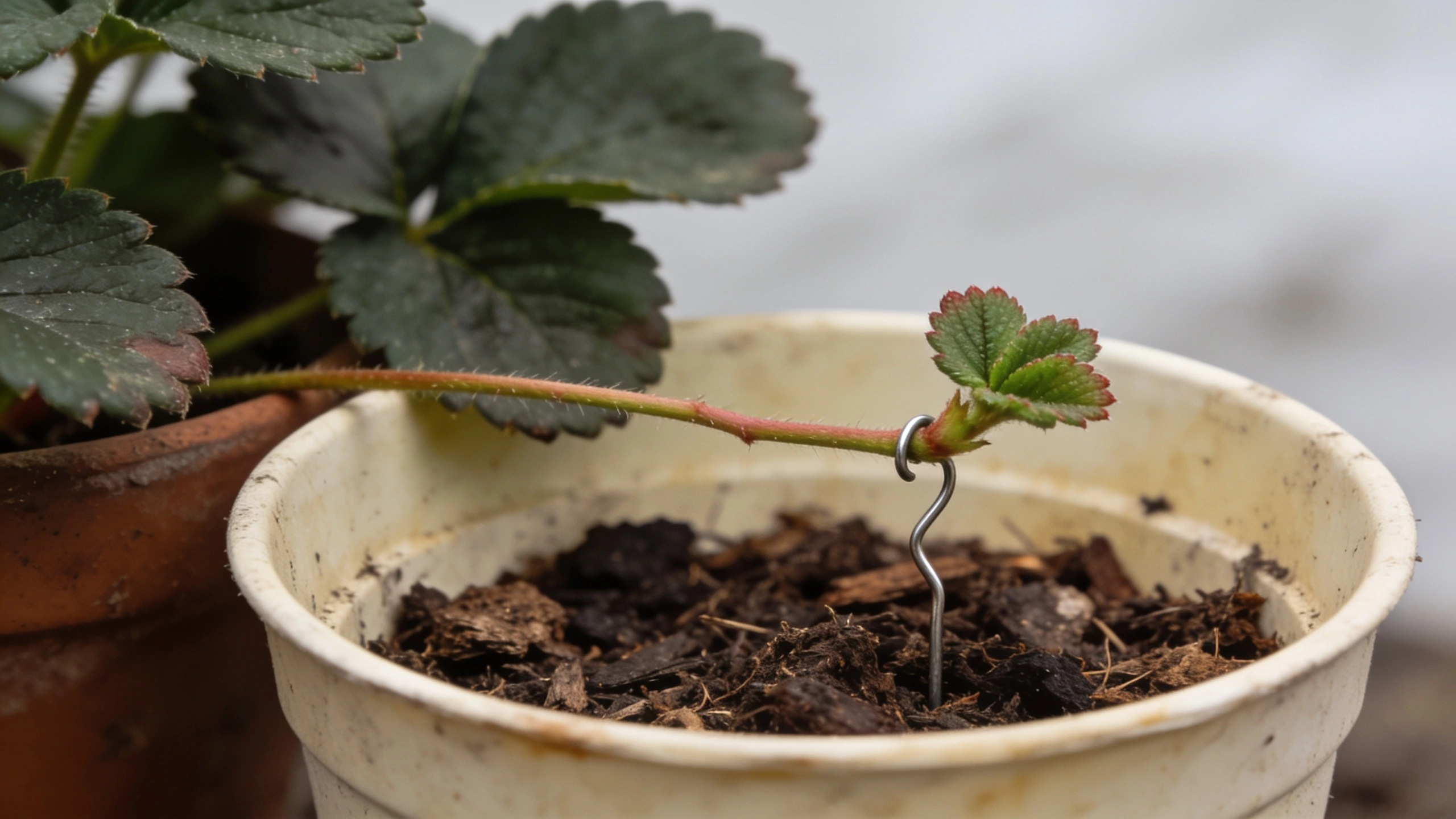
Runners are the long stems with a small plantlet part way along. Pin the plantlet down onto the soil or into a small pot of compost with a piece of wire, keep it damp, and it roots in three or four weeks. Then cut it from the parent and you have a free plant. Take runners only from healthy plants, and remove all runners from plants you want to fruit heavily.
When should I plant strawberries?
Late summer or early autumn is best, because the plants establish over autumn and crop properly the following summer. Spring planting works and usually gives a light first crop, and many growers remove the first flowers from a spring planting to let the plant build instead. Bare root runners are cheapest and go in during their dormant season.
Can I grow strawberries in pots or hanging baskets?
Very well, and containers solve the rotting problem because the fruit hangs clear of soil. Allow about 3 to 5 litres per plant, use a loam based compost, and expect to water daily in summer and feed weekly with a high potassium feed once flowering starts. Containers are also easier to protect from birds and slugs.
How do I stop birds and slugs eating them?
Netting for birds, on hoops so it is not touching the fruit, and put it up before the berries colour rather than after. For slugs, straw under the plants helps, and containers raised off the ground help more. Both pests find ripening strawberries reliably, so protection needs to be in place a week before you think you need it.
Topics in this article
About the author
Jeff has gardened professionally for over twenty years, mostly on heavy clay, and writes everything here from beds he still works himself. More from Jeff Tanun →
Keep reading
How to Grow Courgettes
How to grow courgettes and zucchini: how many to plant, why the first fruits rot, hand pollination, and picking small enough to keep the plant producing.
Updated
How to Grow Potatoes
How to grow potatoes in beds or bags. Why first earlies earn their space and maincrop often does not, how deep to plant, when to earth up, and avoiding blight.
Updated
Garden Soil vs Potting Soil
Garden soil vs potting soil, explained by what each one is for. Why garden soil fails in a pot, why potting compost is wasted in a bed, and what to buy for what.
Updated