How to Grow Tomatoes: Water, Feed and Pinch Out
How to grow tomatoes from seed to harvest. Cordon or bush, the watering that prevents split skins and blossom end rot, when to feed, and how to spot blight early.
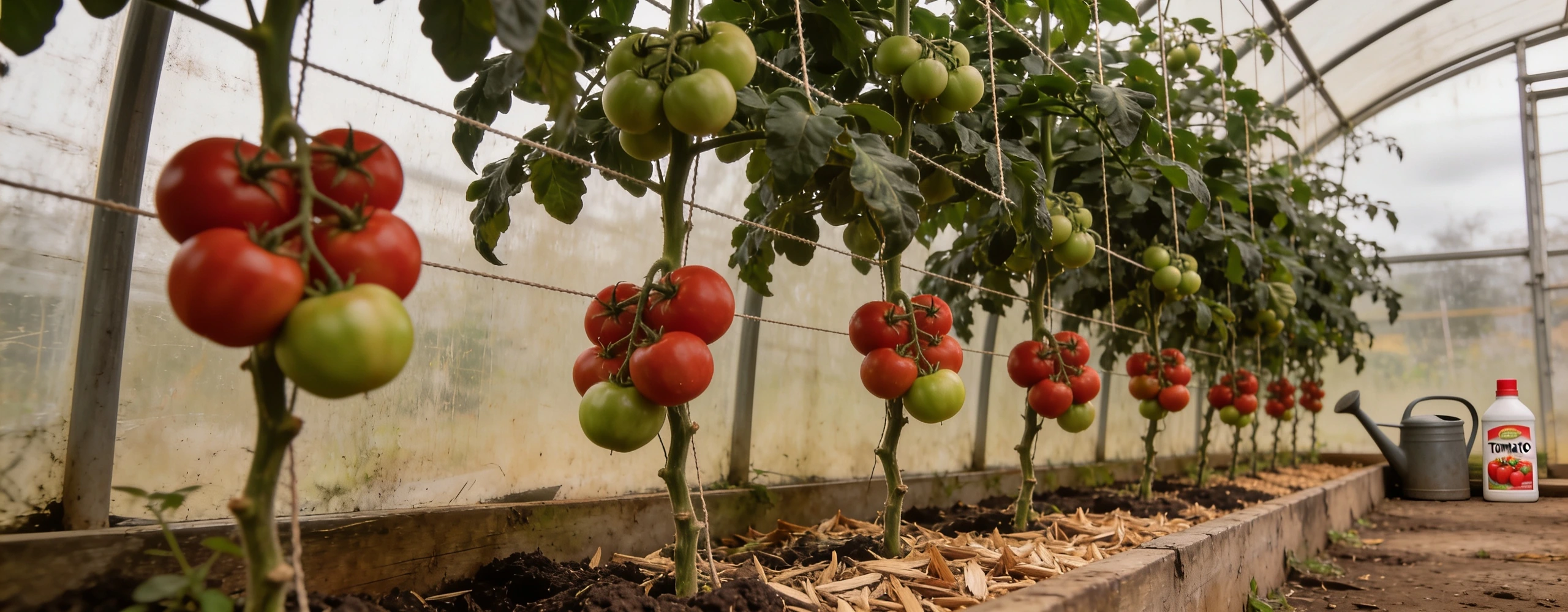
Tomatoes are the crop most people try first and the one where small mistakes show up most visibly. Almost every tomato problem I have had, and every one I get asked about, traces back to one of three things: irregular watering, feeding at the wrong time, or not knowing whether the plant needed pinching out. Get those three right and the rest is picking.
The short answer
Find out whether your variety is cordon or bush, because cordons need a support and weekly pinching out and bush types need neither. Water consistently rather than heavily, since splitting and blossom end rot are both watering-consistency problems. Start a high potassium feed only once the first fruit has set. Thirty to forty litres minimum in a container. In warm wet weather watch for blight, which kills a plant in a week and has no cure.
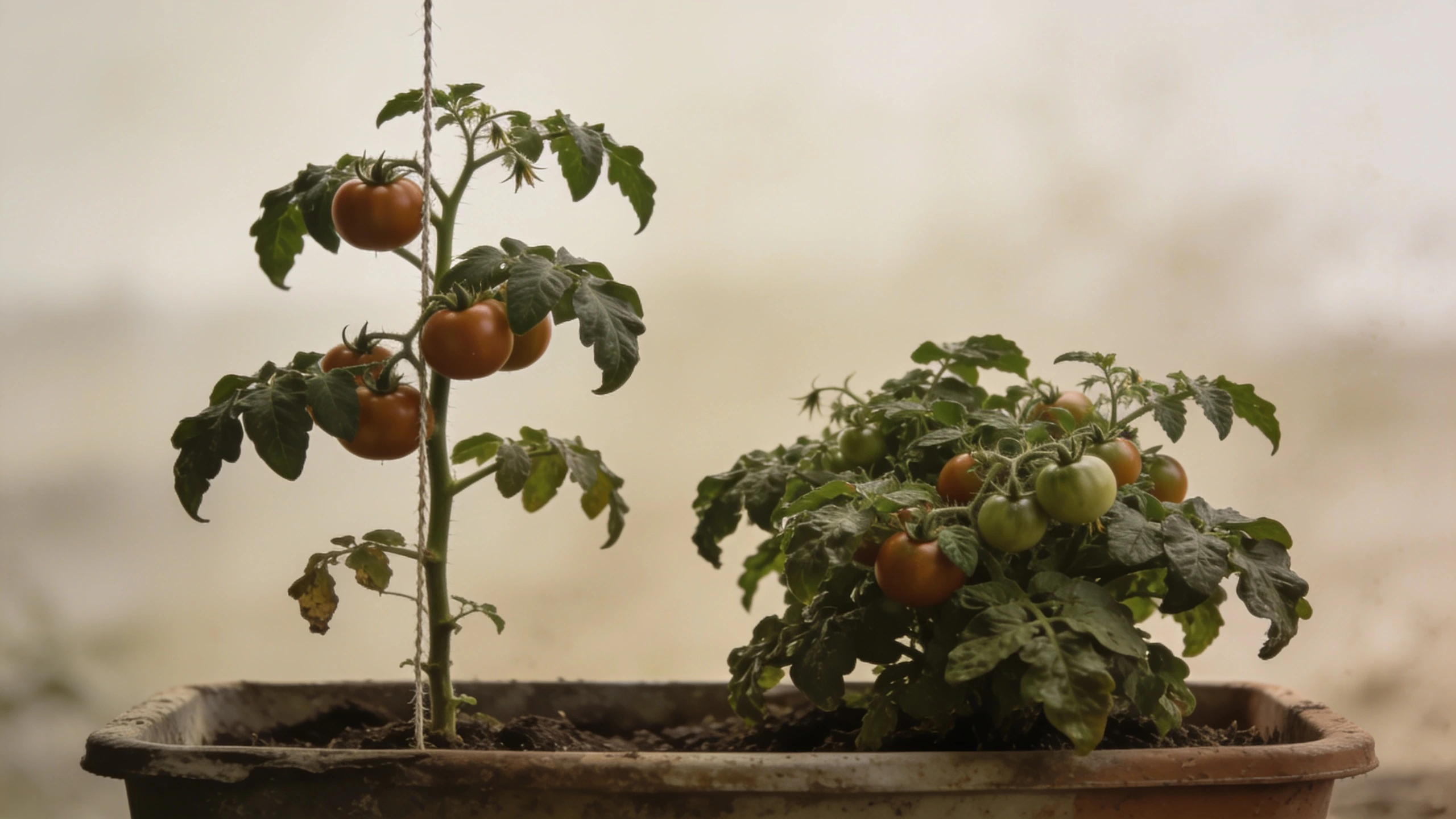
Cordon or bush: check before you plant#
This single fact changes how you grow the plant, and the packet tells you.
- Cordon, indeterminate, vine
- One tall stem, up to two metres. Needs a cane or string support. Side shoots pinched out weekly. Fruits steadily over months. Most greenhouse varieties.
- Bush, determinate
- Low and spreading. No pinching, often no staking. Fruits in a shorter concentrated burst. Suits containers and hanging baskets.
- Semi-determinate
- In between, and treat it as a bush. Some support helps, pinching does not.
Pinching out a bush variety is the classic error, because you remove the shoots that were going to carry the crop. If the packet is lost and the plant is sprawling sideways rather than upwards, treat it as a bush.
Sowing and planting out#
Sow indoors six to eight weeks before your last frost date. Any earlier and the plants get leggy on a windowsill before it is safe to put them out.
Two seeds per small pot, thin to the strongest. Keep them at around 18 to 21C to germinate, then somewhere as bright as possible. Leggy pale seedlings are short of light, not warmth.
Pot on into a larger pot once the first true leaves are established. Tomatoes can be planted deeper than they were growing, and they will root from the buried stem, which makes a leggy seedling recoverable.
Harden off for a week and plant out only after the last frost. They are completely frost tender.
Pinching out, weekly, on cordons only#
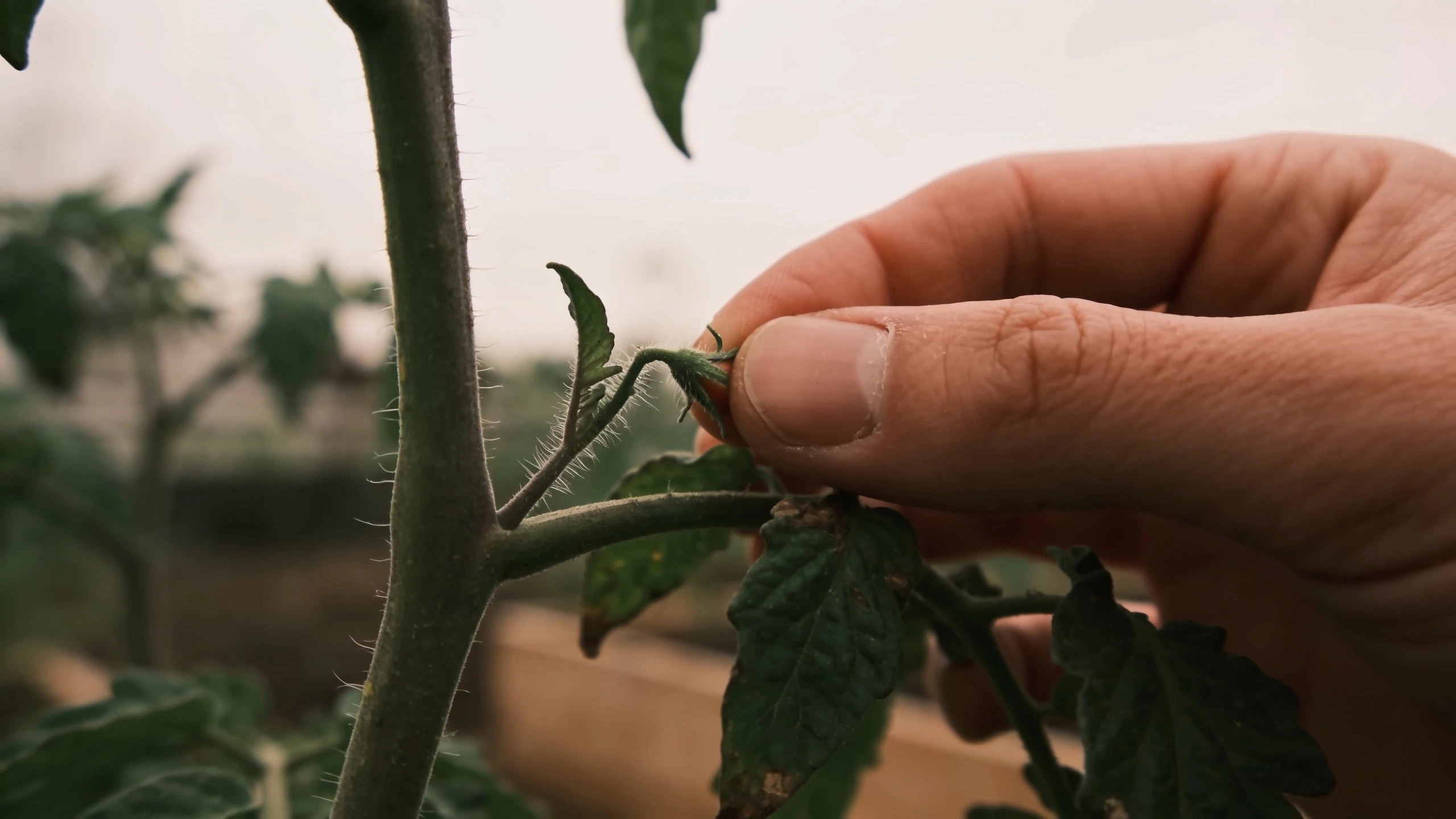
Every leaf joint on a cordon produces a side shoot. Left alone each one becomes a full stem with its own leaves and flowers, and the plant puts its energy into growing rather than ripening.
So once a week, snap out each side shoot while it is small, a couple of centimetres at most. Fingers are better than secateurs, which spread disease between plants.
In late summer, pinch out the growing tip too, once the plant has as many trusses as it can realistically ripen. In an average season that is four or five trusses outdoors and six or seven under cover. After that the plant should be finishing what it has, not starting more.
Watering: consistency beats volume#
This is the section that prevents most tomato problems, because three separate complaints are the same underlying issue.
Split skins happen when the skin sets at one size and then a heavy watering swells the flesh faster than the skin can stretch. Blossom end rot, the dark sunken patch on the base of the fruit, is a calcium uptake failure caused by the water supply stopping and starting, not by a shortage of calcium in the soil. And flowers dropping without setting is often drought stress.
All three are fixed the same way: water little and often rather than drought followed by a flood.
Key points
- In hot weather a container tomato may need water twice a day. Check by pushing a finger into the compost rather than guessing.
- Water the compost, not the leaves. Wet foliage invites blight and mildew.
- Mulch containers and beds. It evens out the moisture more effectively than any watering routine.
- Bigger pot, better outcome. Thirty litres minimum, forty for a cordon.
- Adding calcium for blossom end rot almost never helps, because the calcium is usually already there.
Feeding, and when to start#
Not until the first fruit has set. Feeding a young plant pushes leaf growth at the expense of flowers, and a huge green tomato plant with three fruits on it is a well fed plant.
Once fruit has set, use a high potassium tomato feed weekly, or every second watering for containers. Potassium is what supports fruiting; nitrogen is what makes leaves.
Never feed a plant that is dry. Water first, feed second, or you risk scorching the roots.
Stop feeding a couple of weeks before you expect to finish picking. By then the plant is ripening rather than building.
Blight, and recognising it in time#
Blight is the thing that ends outdoor tomatoes in a wet summer, and it moves faster than people expect.
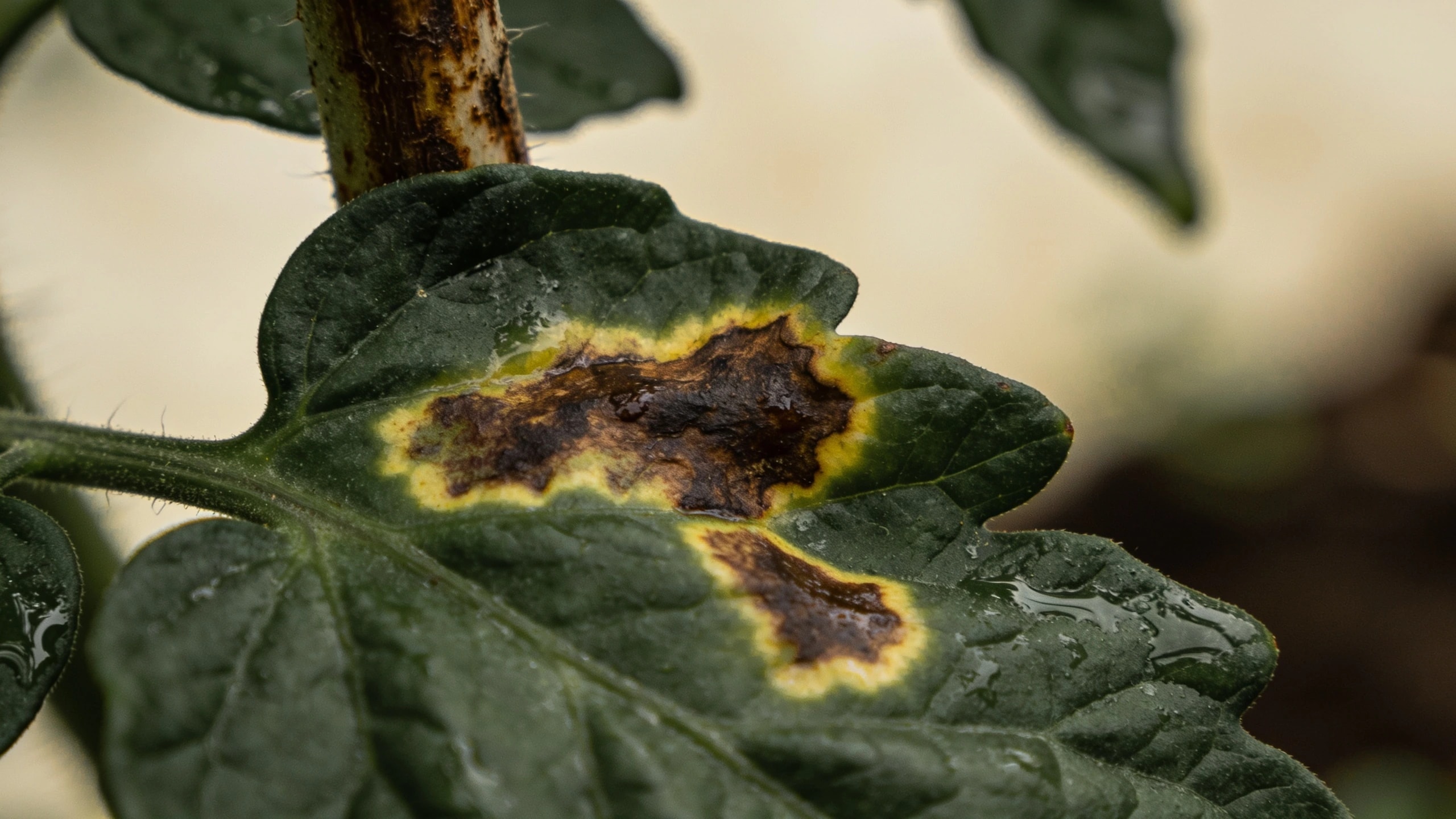
The signs: dark brown patches on leaves, often with a pale yellowish halo, brown streaks on the stems, and fruit turning brown and firm from the shoulders down. In warm humid weather a healthy plant can be finished inside a week.
There is no cure once it is established. What you can do:
- Remove and bin
- Not compost. Bag affected foliage and fruit and dispose of it. Spores overwinter on debris.
- Grow under cover
- A greenhouse or polytunnel keeps foliage dry and dramatically reduces blight risk. This is the single most effective measure.
- Choose resistant varieties
- Blight resistant varieties exist and are genuinely useful outdoors. Not immune, but they buy weeks.
- Space and ventilate
- Air movement dries foliage. Crowded plants blight first.
- Water at the base
- Wet leaves in the evening is exactly the condition blight wants.
Potato blight and tomato blight are the same organism, so do not grow the two next to each other if you can avoid it.
Ripening and the end of the season#
Tomatoes ripen on warmth rather than sunlight, so the plant does not need to be in full sun for fruit to colour up.
Late in the season, remove the lower leaves to improve air movement and let light onto the trusses, pinch out the top, and stop feeding.
When frost threatens, pick everything including green fruit. Green tomatoes ripen indoors in a paper bag, faster with a banana in it, or they make chutney. Fruit left outside once nights turn cold will not ripen and will rot.
What it costs#
- A packet of seed
- $3 to $6, and it contains far more than you need for several years.
- Three young plants
- $10 to $25 if you missed the sowing window, which is a perfectly reasonable way to start.
- One 40 litre container
- $25 to $70. The highest impact purchase for a container grower.
- Canes or string support
- $5 to $20 for cordons.
- High potassium tomato feed
- $8 to $18 a bottle, and one lasts a season for several plants.
- Grow bags
- $4 to $10 each, and honestly too shallow for a good cordon. Use them for bush varieties or double them up.
Where this needs adjusting#
In a short or cool season, grow under cover if you possibly can, choose early ripening varieties, and expect fewer trusses. Pinch the top out sooner.
In a hot climate, afternoon shade helps, flowers can drop above about 35C regardless of watering, and the watering demand roughly doubles.
Indoors on a windowsill, choose a dwarf bush variety, expect a modest crop, and hand pollinate by tapping the flower stems, since there is no wind or insect movement to do it.
Where the guidance here comes from#
The three-problems-one-cause framing for splitting, blossom end rot and flower drop is the most useful thing I know about tomatoes, and I learned it by treating them as three separate problems for two seasons. For variety choice, blight resistance and feeding the RHS advice on growing your own is the reference I check, and Garden Organic is good on blight management without spraying, which for a home grower is mostly about cover, spacing and variety.
The short version#
Check cordon or bush first. Sow six to eight weeks before your last frost, plant out after it. Pinch side shoots weekly on cordons only. Water little and often, at the base, in a pot of at least 30 litres. Feed high potassium once fruit sets, never before. Watch for blight in warm wet weather and bin it rather than composting it.
Related reading#
- How to start a vegetable garden: where tomatoes fit in a first year.
- Container gardening: pot volume, which decides most tomato outcomes.
- Vertical gardening: growing cordons on strings for far more fruit per square metre.
- Garden planner: sowing dates and why they are worth writing down.
Frequently asked questions
What is the difference between cordon and bush tomatoes?
Cordon, also called indeterminate or vine, grows as one tall stem, needs a support and needs its side shoots pinched out, and it fruits over a long season. Bush, also called determinate, grows as a low spreading plant, needs no pinching and often no staking, and fruits in a shorter burst. The seed packet will say which. Pinching out a bush variety by mistake removes most of the crop.
How do I pinch out a tomato?
On a cordon variety only, snap out the small shoot that appears in the angle between the main stem and each leaf, while it is still a couple of centimetres long. Do it weekly. Those side shoots grow into whole extra stems that compete with the fruit for energy. Leave the growing tip alone until late summer, then pinch that out too so the plant ripens what it has.
Why are my tomatoes splitting?
Irregular watering. The fruit skin sets at one size, then a heavy watering after a dry spell swells the flesh faster than the skin can stretch, and it cracks. The fix is consistency rather than volume: water little and often in hot weather rather than drought followed by a soaking, and mulch containers to even out the moisture.
What causes blossom end rot?
A dark sunken patch on the base of the fruit, and it is a calcium uptake problem caused by inconsistent watering rather than a calcium shortage in the soil. There is almost always enough calcium; the plant cannot move it when the water supply keeps stopping. Water consistently and the following fruits will be fine. Adding calcium rarely helps.
When should I start feeding tomatoes?
Once the first flowers have set fruit, not before. Feeding earlier gives you a large leafy plant with few tomatoes. Use a high potassium tomato feed weekly, or every other watering for plants in containers. Stop feeding about two weeks before you expect the last harvest, and never feed a plant that is bone dry.
How do I know if it is blight?
Blight arrives in warm wet weather and moves fast: dark brown patches on leaves with a pale halo, brown streaks on stems, and fruit going brown and firm from the shoulders. Within a week a plant can be finished. There is no cure once it takes hold. Remove and bin affected plants, do not compost them, and grow blight resistant varieties or under cover next year.
Can I grow tomatoes in pots?
Yes, and the pot size decides the outcome. Thirty litres minimum for a bush variety and forty or more for a cordon. In anything smaller the plant dries out daily, the fruit stays small and both splitting and blossom end rot become routine, because all three are watering consistency problems and a small pot makes consistency impossible.
Topics in this article
About the author
Jeff has gardened professionally for over twenty years, mostly on heavy clay, and writes everything here from beds he still works himself. More from Jeff Tanun →
Keep reading
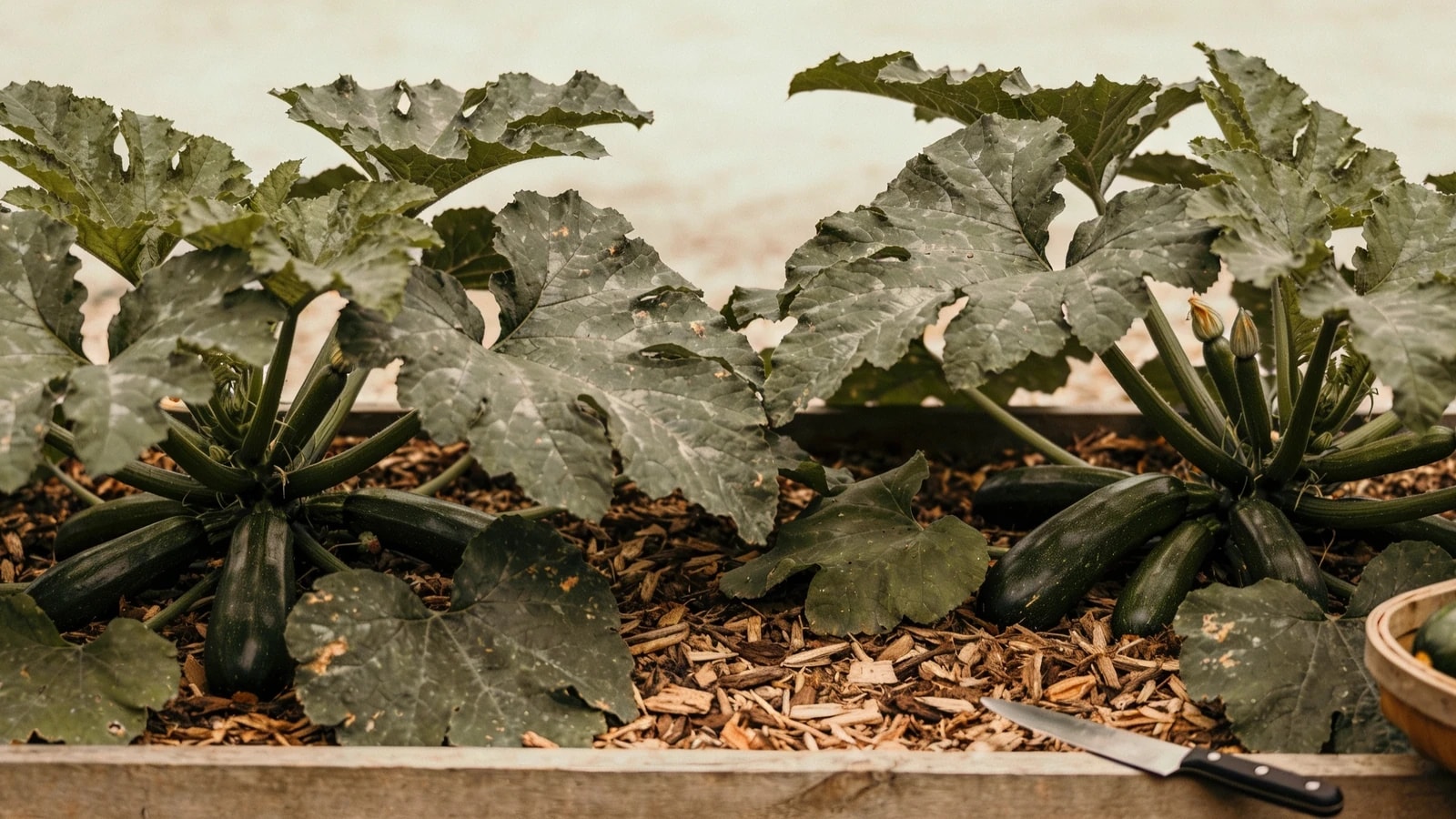
How to Grow Courgettes
How to grow courgettes and zucchini: how many to plant, why the first fruits rot, hand pollination, and picking small enough to keep the plant producing.
Updated
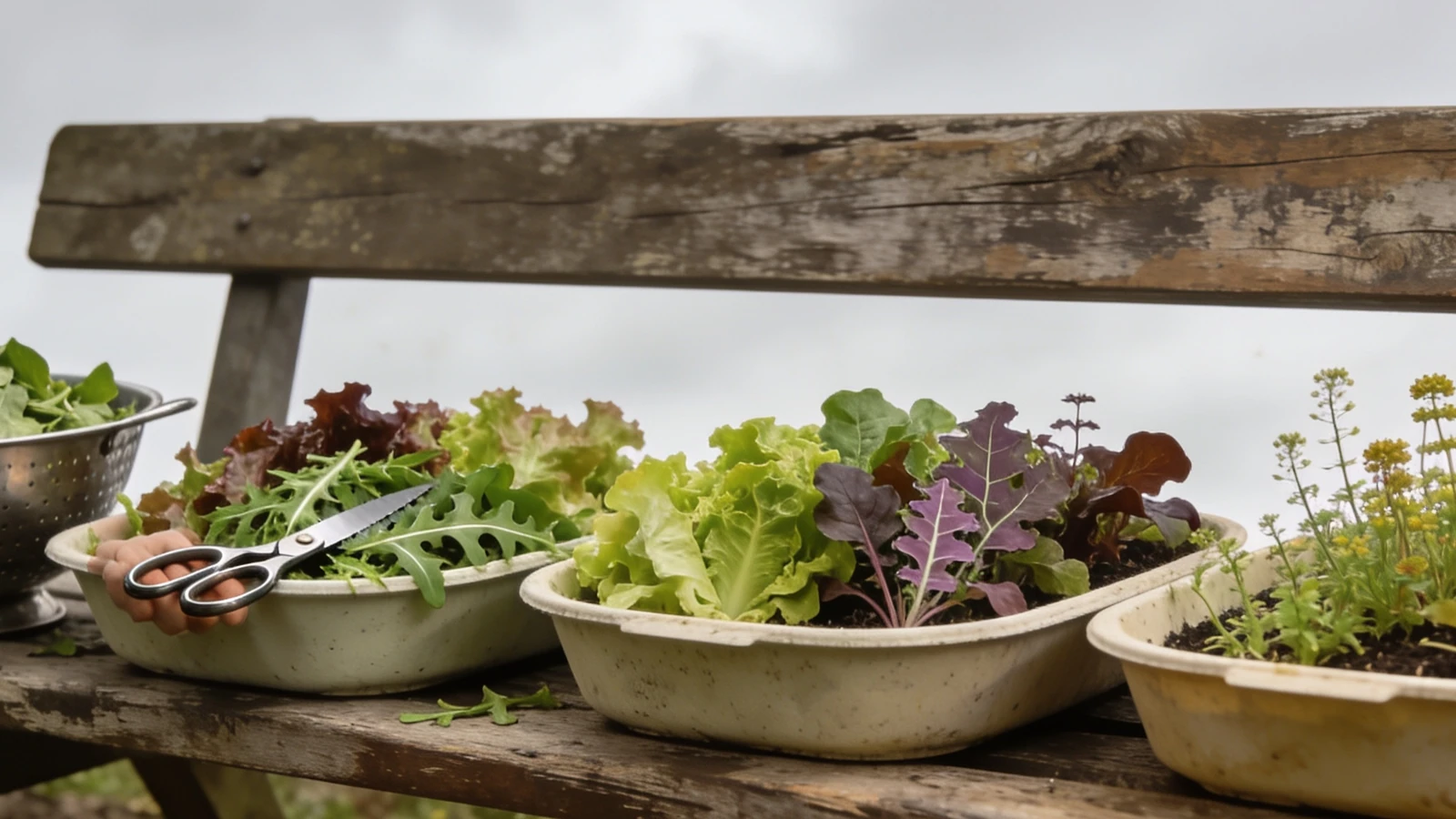
How to Grow Salad Leaves
How to grow salad leaves that keep coming. Cut and come again rather than whole hearts, why lettuce bolts, and the fortnightly sowing that beats a glut.
Updated
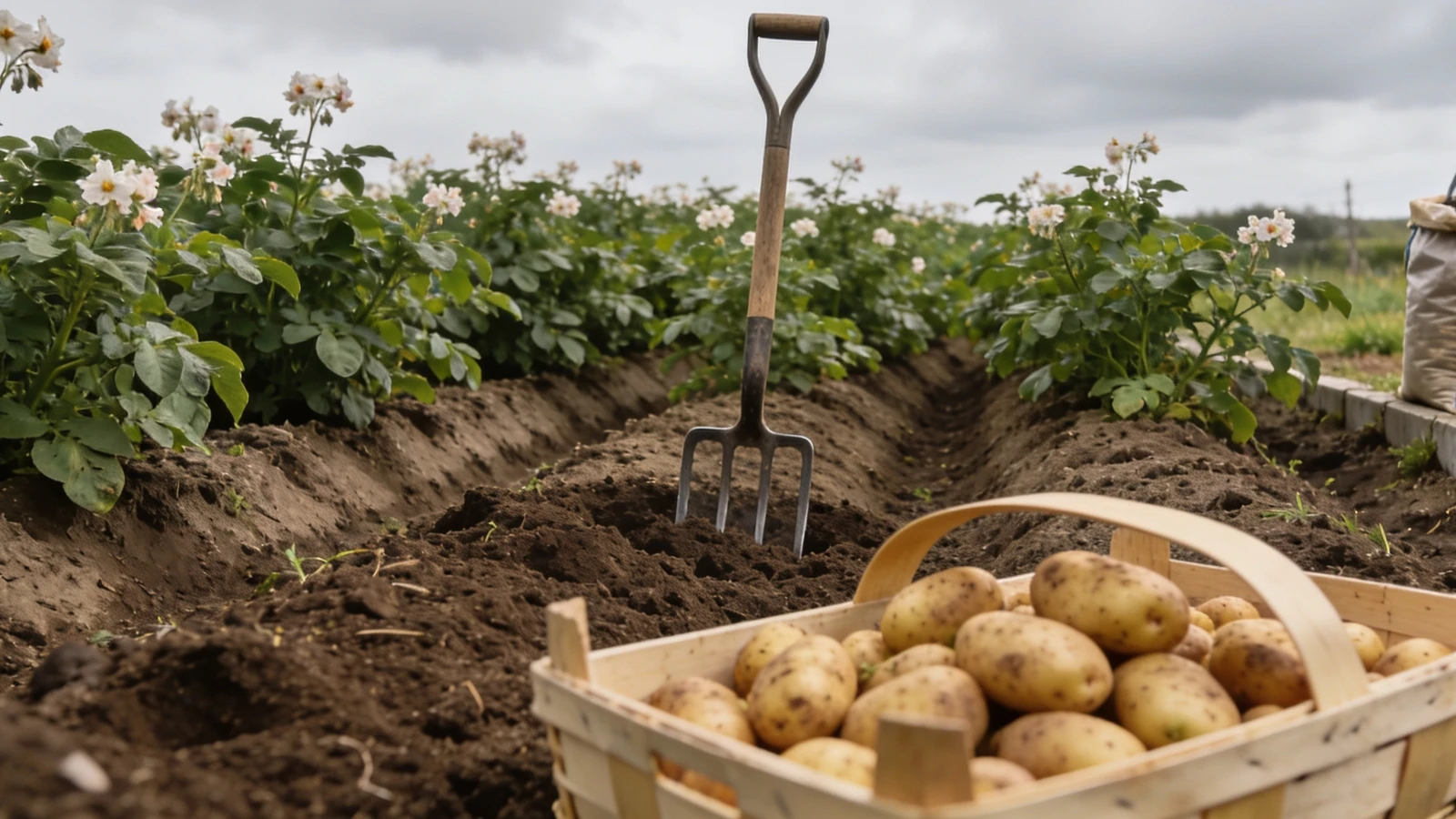
How to Grow Potatoes
How to grow potatoes in beds or bags. Why first earlies earn their space and maincrop often does not, how deep to plant, when to earth up, and avoiding blight.
Updated