Keeping Deer Out of a Garden: Height Is the Only Answer
Keeping deer out of a garden honestly. Only a tall fence reliably works, deterrents fade, and no plant is truly deer proof. What to do at each budget.
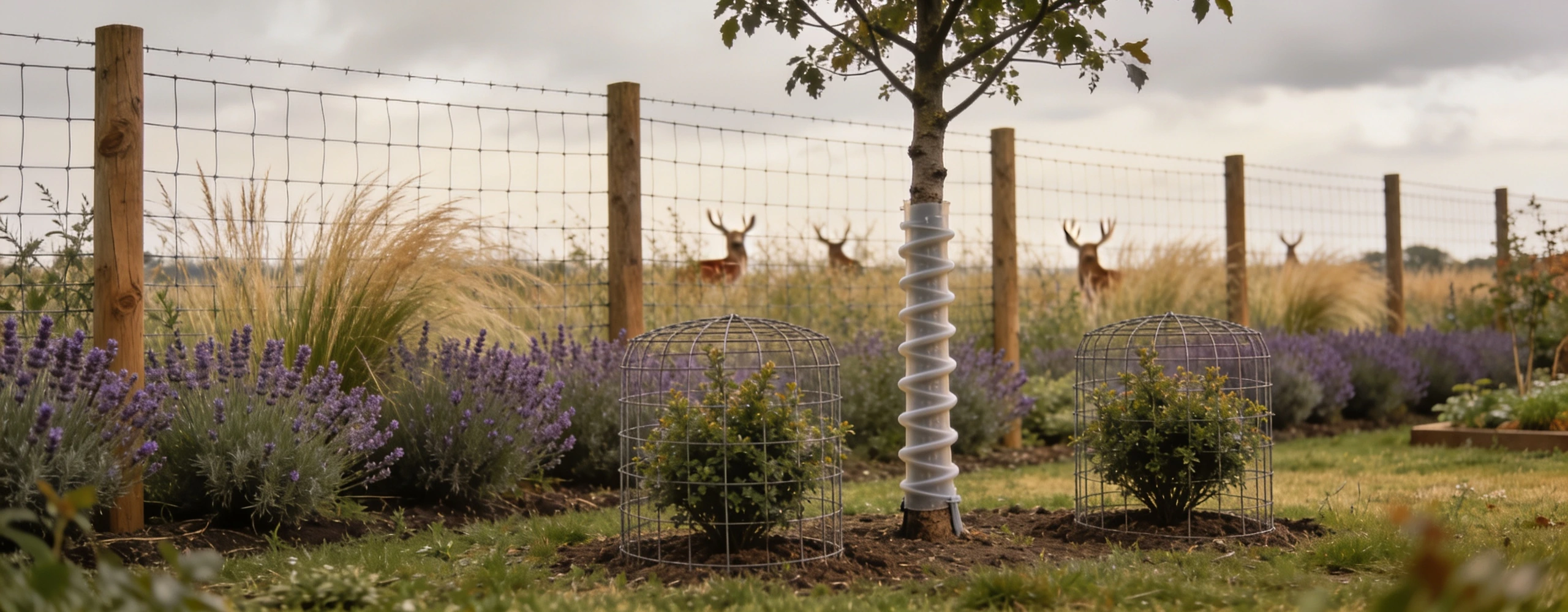
Deer are the one garden problem where I would rather be blunt than encouraging. Only one thing reliably works, it is expensive, and almost everything else sold as a solution stops working once the deer realise nothing bad happens. I have tried most of the alternatives and the honest version of this advice is short.
The short answer
A 2.5 m fence is the only reliable answer, or two parallel lower fences a metre apart, which works because deer judge depth poorly. Everything else is mitigation. Deterrents fade as deer habituate, so rotate them. No plant is deer proof, though aromatic herbs, tough leaves and grasses are eaten last. If you cannot fence the boundary, cage individual young trees and shrubs, which is where the permanent damage happens.
The fence, and the number that matters#
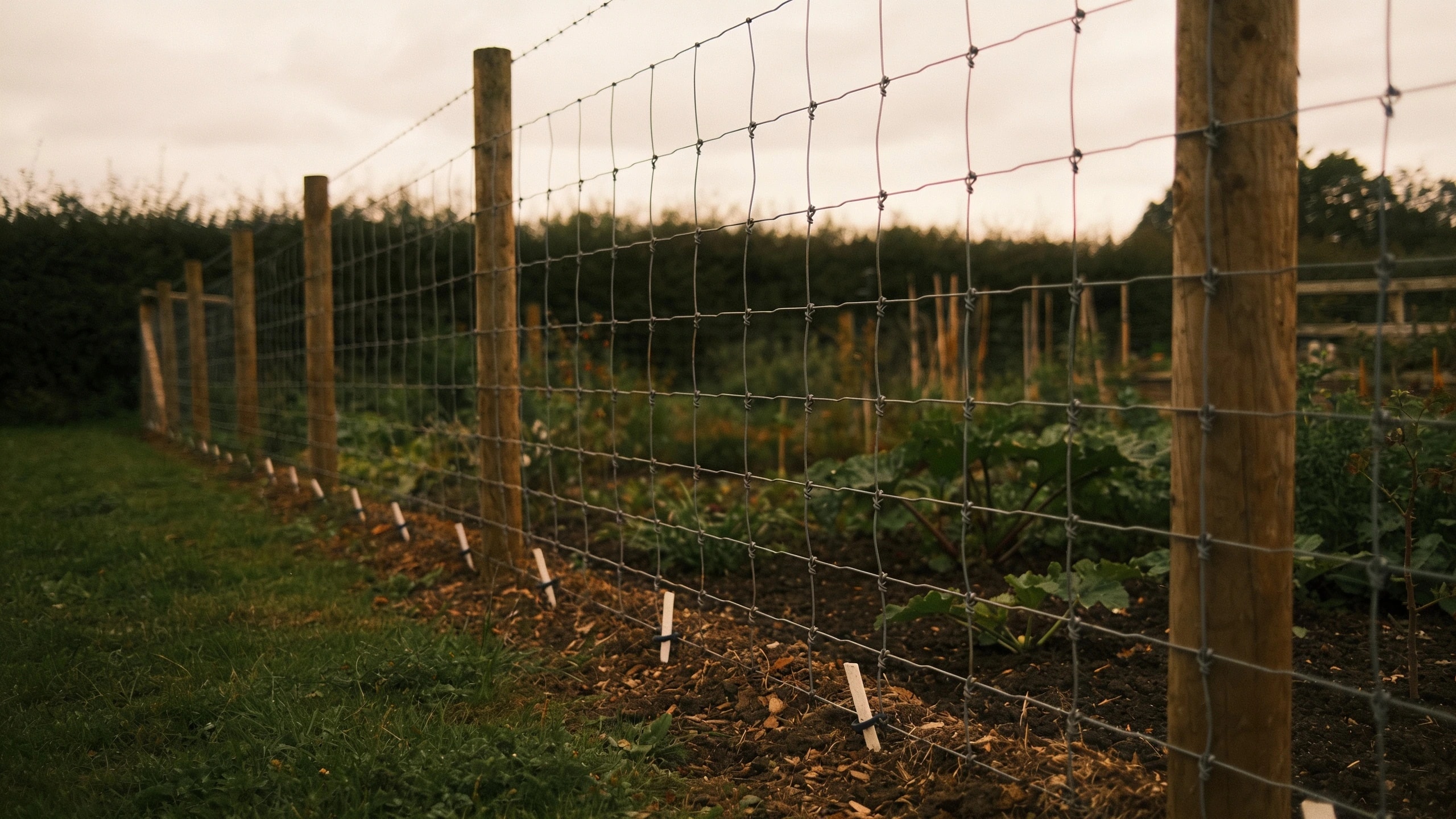
Two and a half metres, roughly eight feet. That is the figure, and shorter fences fail because a deer can clear them.
If that height is impossible, unaffordable or against local rules, there are two ways to cheat, and both exploit the same weakness: deer have poor depth perception and dislike jumping into a space they cannot judge.
- Single fence at 2.5 m
- The direct answer. Wire mesh on posts is far cheaper than panels and equally effective, since you are stopping deer rather than screening a view.
- Two parallel fences
- Two fences of about 1.5 m, set a metre apart. Deer will not commit to a jump into a narrow gap. Uses more ground and less height.
- Angled fence
- A fence leaning outwards at 45 degrees at the top. The overhang makes the jump read as longer than it is.
- Sloped or dropped ground
- A fence at the top of a bank is effectively taller from the deer's side. Free height if the ground gives it to you.
Check the bottom as well as the top: deer will go under a fence with a gap, and rabbits certainly will. Peg the mesh to the ground or bury the bottom 15 cm.
And check local rules before building, because 2.5 m is over the usual permitted height for a boundary fence in many places.
Why deterrents stop working#
This is the part most advice skirts around, and understanding it saves money.
Every scent, sound and visual deterrent works on the same principle: the deer encounters something unfamiliar and avoids it. Then it encounters it again, nothing bad happens, and it stops caring. That process takes days to a few weeks.
Key points
- Scent repellents work for one to three weeks, less after rain, and need reapplying all season.
- Soap, hair and other folk deterrents work the same way and fade the same way.
- Ultrasonic devices are the least convincing of the lot in my experience.
- Reflective tape and scarecrows fail fastest, usually within days.
- Motion activated sprinklers hold up longest, because water is an actual consequence rather than a signal.
So if you use deterrents, rotate them. Three different products alternated through the season keeps the novelty going longer than one used continuously. It is management rather than a fix.
Plants: resistant, never proof#
There is no deer proof plant. Anything is edible to a hungry deer, and a hard winter clears every list published anywhere.
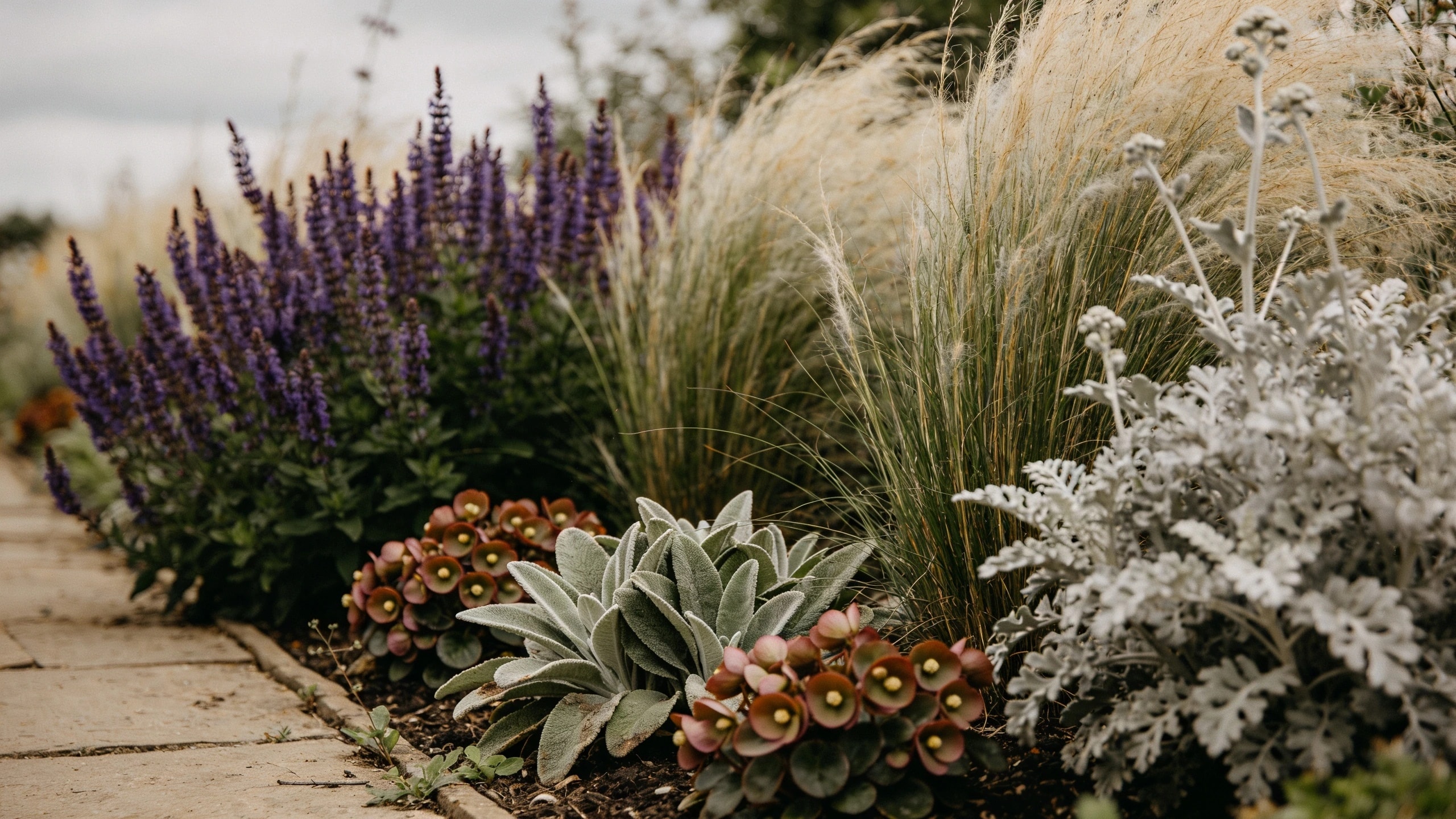
What does exist is a reliable order of preference. Deer eat the soft, sweet and tender first and the aromatic, tough and hairy last.
- Usually left alone
- Lavender, rosemary, sage, thyme, catmint, bergenia, lamb's ear, ferns, ornamental grasses, euphorbia, foxglove, daffodils.
- Sometimes browsed
- Hydrangea, viburnum, geranium, sedum, most shrubs once established. Damage varies by year and by pressure.
- Eaten first, every time
- Roses, tulips, hostas, beans, fruit tree shoots, young trees, anything just planted.
Daffodils are worth a mention because they are one of the few genuinely dependable ones: toxic, and deer know it. If you want spring bulbs in a deer area, plant narcissus rather than tulips and stop fighting.
Protect individuals rather than the boundary#
If a full fence is out of reach, this is where the money goes furthest, because it protects the damage that is permanent rather than annual.
A browsed perennial recovers. A young tree girdled by antler rubbing in October dies.
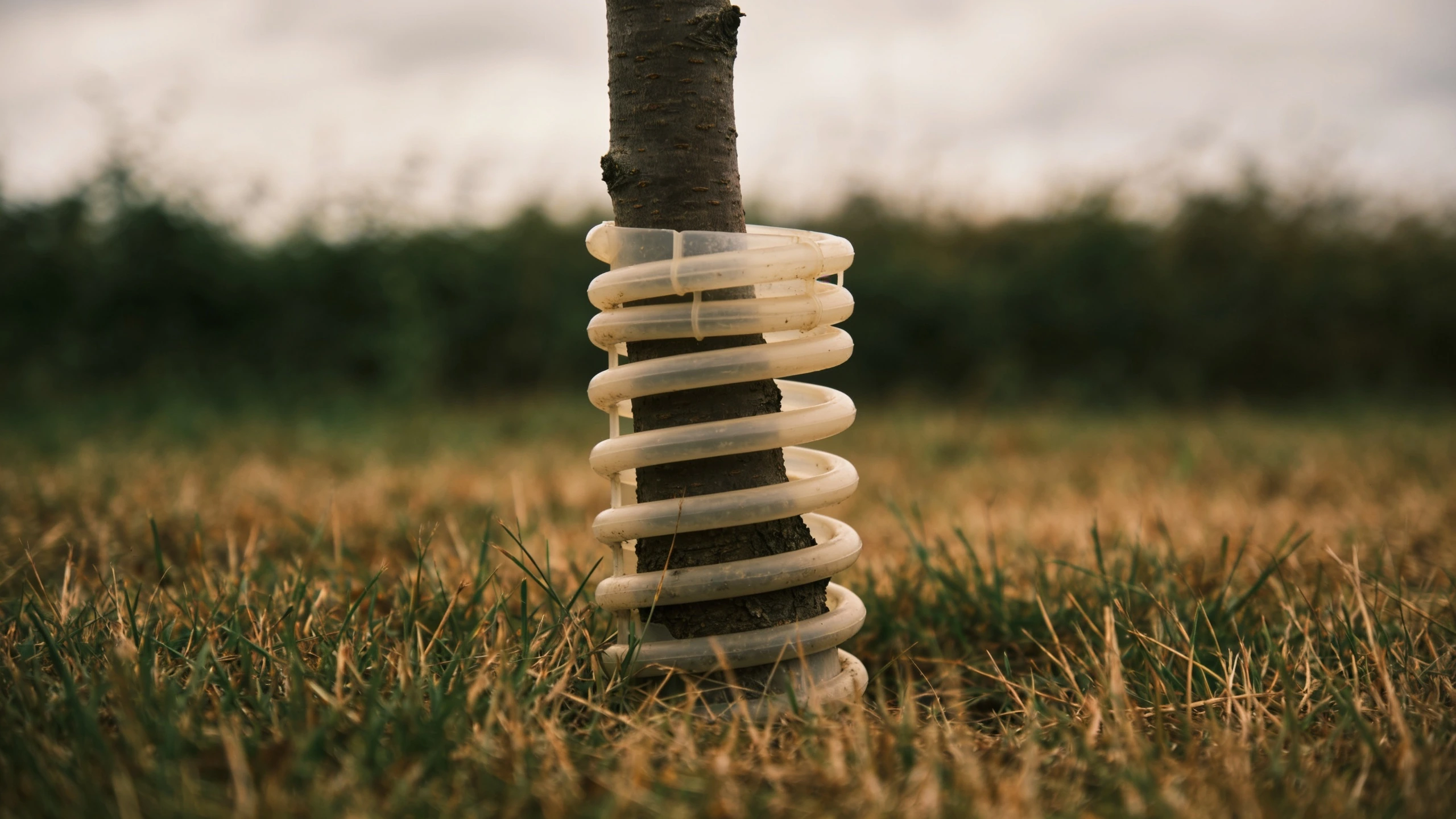
- Spiral tree guards
- A few dollars each and they stop antler rubbing on a young trunk. The single cheapest, highest value deer measure there is.
- Wire cages on new shrubs
- A cylinder of mesh round each new plant for its first two seasons. New planting is the most attractive thing in the garden.
- Netting over vegetable beds
- Hoops and mesh. Also handles butterflies, birds and late frosts, so it is not single purpose.
- A cage round the roses
- Unglamorous, and if you insist on roses in deer country it is the realistic option.
What it costs#
- Spiral guards, ten trees
- $15 to $40. Start here regardless of what else you do.
- Wire cages for new shrubs
- $30 to $80 for mesh and canes for several plants.
- Motion activated sprinkler
- $40 to $110. The deterrent with the longest useful life.
- Scent repellent for a season
- $40 to $100, reapplied all summer, and it stops working when you stop.
- Mesh deer fence, 2.5 m, per 10 m
- $180 to $450 in materials. Far cheaper than panels and the only permanent answer.
- Two parallel fences
- Comparable in materials to one tall one, and it costs you a metre of ground all the way round.
Where this needs adjusting#
Deer species differ, and so does the height they clear. If you are in an area with larger species, take local advice rather than a number from a page written elsewhere.
In a rural garden with heavy pressure, accept the constraint and design for it: aromatic and grassy planting, fruit inside cages, daffodils not tulips. Fighting it plant by plant is a losing arrangement.
In a suburban garden with occasional visits, individual protection plus a rotated deterrent is usually proportionate, and a full fence is overkill.
And if the damage is at ankle height on soft growth with clean angled cuts, check whether you actually have rabbits rather than deer. The fence that stops one does not stop the other, and a 1.2 m fence with the bottom buried handles rabbits well.
Where the guidance here comes from#
The height figures and the depth perception trick are standard published guidance, and the observation that deterrents fade is mine, from trying several and watching each one stop working. For plant lists the RHS advice pages are useful, and any local wildlife or extension service will have better species-specific advice than a general page can, because deer pressure and species vary enormously by region. Fence height limits are local regulation, so check before building.
The short version#
If you can build a 2.5 m fence, do that and stop reading. If you cannot, use two parallel lower fences or an outward angle. Otherwise put the money into spiral guards on every young trunk and cages on new shrubs, rotate two or three deterrents through the season, and plant aromatic, tough and grassy things while accepting that nothing is truly deer proof.
Related reading#
- Hedging plants: what a boundary hedge will and will not stop.
- Garden privacy screens: height rules and structure, which apply to deer fencing too.
- Gardening tools for raised beds: hoops and netting, which do several protection jobs at once.
- Pollinator garden: aromatic planting deer avoid and insects like, which is a useful overlap.
Frequently asked questions
How tall does a deer fence need to be?
Two and a half metres, or about eight feet, for the deer species most gardeners deal with. That is the only figure that reliably works, because a deer can clear less. A shorter fence works only if you make it visually confusing: two parallel fences a metre apart, or a fence angled outwards at the top, because deer judge depth poorly and dislike jumping into a space they cannot read.
Do deer deterrents actually work?
Temporarily, and then they stop. Scent repellents, soap, hair, ultrasonic devices and reflective tape all work while they are novel and fail once the deer learn there is no consequence. Rotating between several extends the effect. Motion activated sprinklers hold up longest because they deliver something the deer cannot habituate to comfortably, and even those get worked around eventually.
Are any plants genuinely deer proof?
No. Deer eat almost anything when hungry enough, and a hard winter empties every list. What exists is deer resistant, meaning eaten last: strongly aromatic herbs like lavender, rosemary, sage and thyme, tough textured leaves like bergenia, fuzzy foliage like lamb's ear, ferns, and most ornamental grasses. Plant those and you reduce damage; you do not stop it.
What do deer eat first in a garden?
Soft new growth, roses, fruit tree shoots, tulips, hostas, beans and anything just planted. New plants are the most vulnerable because they smell freshly disturbed and have tender growth. Protecting the first two seasons of a new planting with individual cages does more good than any garden-wide measure.
Is a low fence better than nothing?
For rabbits yes, for deer barely. A 1.2 m fence is a formality to a deer. If a tall fence is not possible, protect individual plants instead: wire cages round young trees and shrubs, and netting over vegetable beds. Concentrating the money where the damage matters beats spreading it thinly around a boundary that will not hold.
Will a dog keep deer away?
A dog with garden access is one of the more effective deterrents, because it introduces a real and unpredictable consequence. It is also not something to acquire for the purpose. If you already have one, its presence and scent genuinely reduce deer visits, particularly overnight.
What about tree damage from antlers?
Rubbing damage in autumn can kill a young tree by stripping the bark right round the trunk, and it is separate from browsing. A plastic spiral guard or a wire mesh sleeve on every young tree trunk prevents it, costs very little, and is the single cheapest deer protection there is.
Topics in this article
About the author
Jeff has gardened professionally for over twenty years, mostly on heavy clay, and writes everything here from beds he still works himself. More from Jeff Tanun →
Keep reading
Cat Friendly Garden
A cat friendly garden covers two problems: keeping your own cat safe, and keeping other people's cats out of your seedbeds. Both have practical answers.
Updated
Shade Garden Plants
Shade garden plants chosen by the kind of shade you have. Dry shade under trees needs a different list from damp shade, and that distinction fixes most failures.
Updated
Hedging Plants
Hedging plants compared by growth rate, cost and upkeep. What to plant for privacy, how many per metre, and the two mistakes that cost you a whole season.
Updated