Hedging Plants: What to Plant and How Fast It Grows
Hedging plants compared by growth rate, cost and upkeep. What to plant for privacy, how many per metre, and the two mistakes that cost you a whole season.
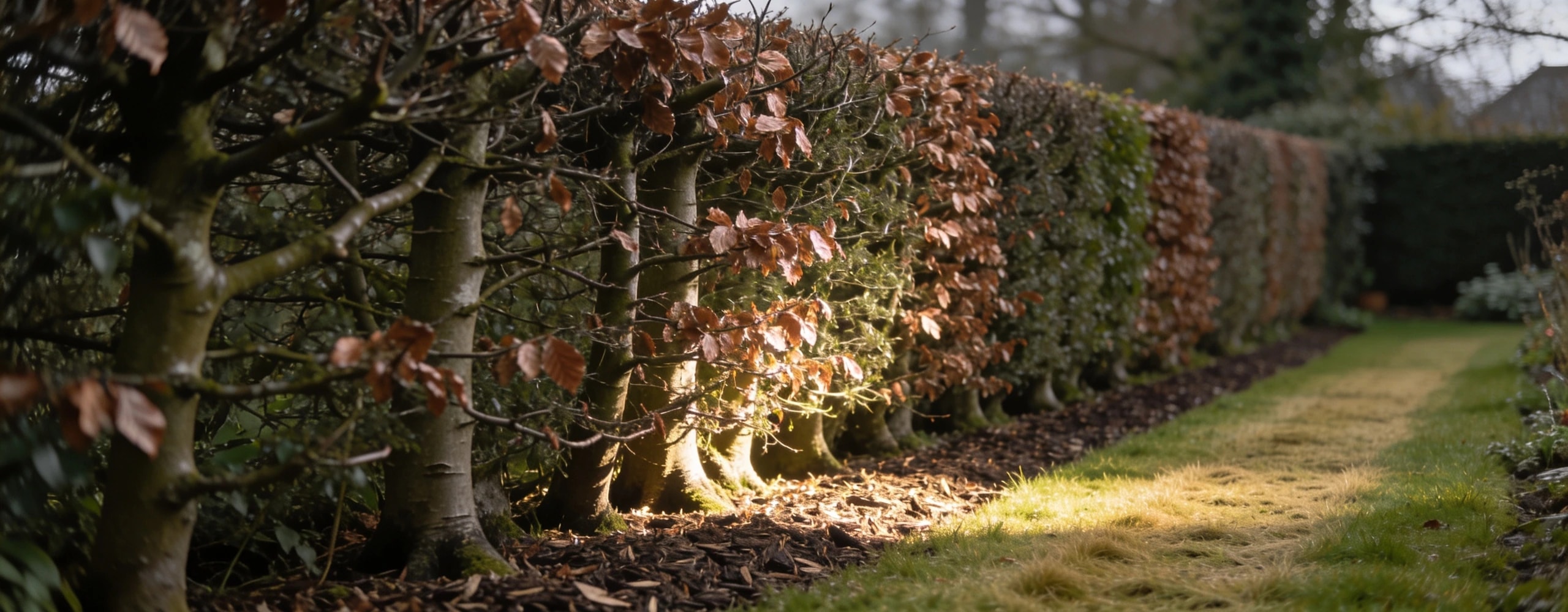
Hedging plants are the cheapest boundary you can buy and the slowest one you can install, and that trade is the whole decision. I have planted hedges in two gardens now, once badly and once properly, and the difference came down to two things nobody mentions on a plant label: the spacing, and keeping grass away from the base for the first couple of years.
The short answer
Plant bare-root between November and March at three plants per metre, 33 cm apart. For privacy without a twenty year wait, western red cedar or beech; skip Leyland cypress. Budget $2 to $6 a plant bare-root against $40 or more for a fence panel. Then mulch a weed-free strip either side and water deeply for two summers. That last part is what decides whether it knits together or sulks.
Choosing hedging plants: growth rate against upkeep#
Every hedge is a trade between how fast it screens and how much cutting it demands afterwards. Fast growth is not a free gift. Anything that puts on 60 cm a year will keep doing that after it reaches the height you wanted.
- Beech
- 40 to 60 cm a year. Holds crisp brown leaves through winter, so it screens all year without being evergreen. One cut in August. My first choice for most gardens.
- Hornbeam
- Similar to beech and better on heavy or wet clay, where beech sulks. Almost identical look and the same single annual cut.
- Western red cedar
- 40 to 60 cm a year, properly evergreen, and it tolerates being cut back hard, which conifers usually do not. The sane alternative to Leyland.
- Yew
- 20 to 30 cm a year, so slow, and worth it. Lives for centuries, takes any amount of cutting, and thrives in shade. Poisonous to livestock and children should know not to eat the berries.
- Hawthorn
- 40 to 60 cm a year, thorny, cheap, and the best thing here for wildlife. Not evergreen. Ideal for a boundary you want stock-proof rather than pretty.
- Laurel
- 30 to 60 cm a year, big glossy evergreen leaves, fast cover. Gets wide, so do not plant it where you cannot give it a metre of depth.
- Privet
- 30 to 50 cm a year, semi-evergreen, cheap and forgiving. Needs two or three cuts a year to stay tidy, which is the price of that speed.
Bare-root in winter, and why it matters so much#
This is the single biggest saving available in the whole garden, and it is only available for about four months of the year.
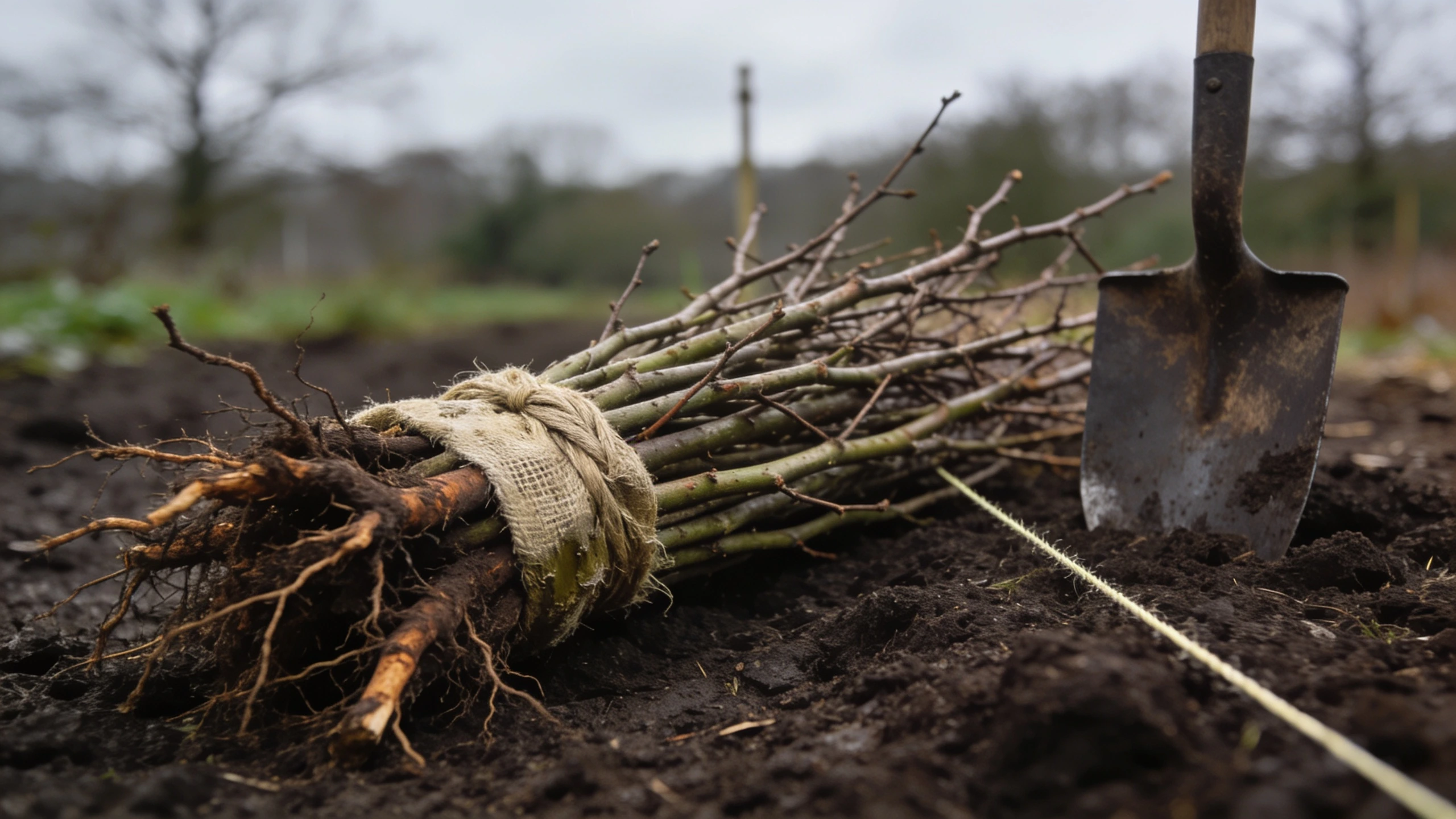
Bare-root plants are lifted while dormant and sold with no soil on the roots. They cost a fraction of potted stock, they establish faster because the roots are not circling in a pot, and they only exist between roughly November and March.
Buy potted hedging in June and you will pay several times more for a plant that needs watering all summer to survive its first season. I have done both. The winter-planted hedge overtook the summer-planted one inside two years, and cost a quarter as much.
Spacing, and the mistake that never repairs itself#
Three plants per metre. Thirty-three centimetres apart. Write it on your hand.
Planting further apart feels sensible, saves money and looks fine for two years. What happens then is that the plants meet at the top and never fill in at the bottom, and you have a hedge with a gappy base that you cannot fix without starting again. Bottom growth comes from close planting and from cutting the leader early, and neither can be added later.
For a genuinely dense screen, plant a double staggered row: two lines about 40 cm apart, plants offset, five per metre in total.
Planting: a trench, not a row of holes#
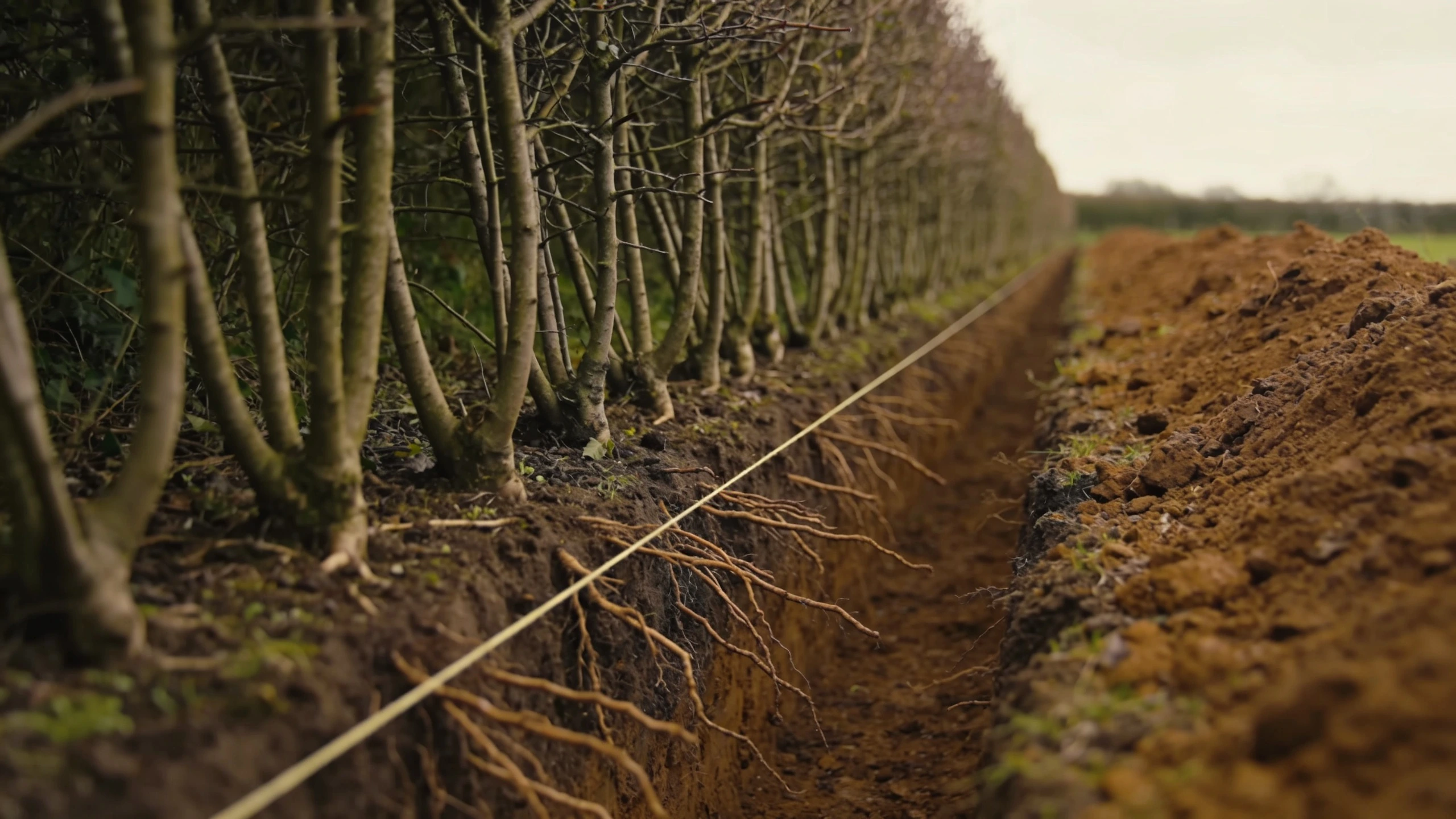
Dig a trench along the line rather than a hole per plant. It is quicker, and it stops the spacing drifting as you go.
Fork the bottom over so roots are not sitting on a compacted pan. Spread the roots out rather than cramming them into a slot, set each plant so the soil mark on the stem is level with the surface, then firm with your heel as you backfill. Firming matters: a bare-root plant that rocks in wind will not root out.
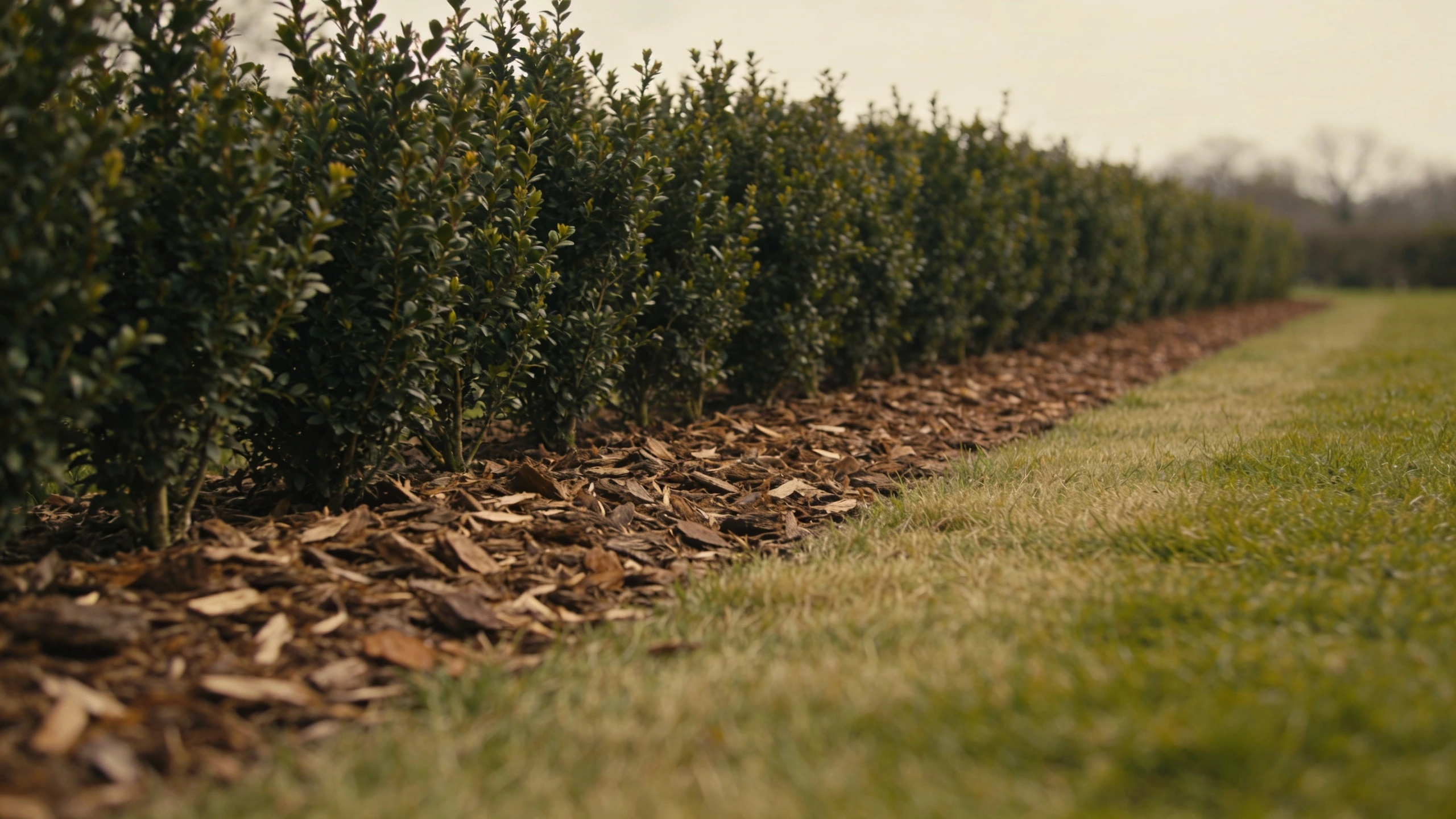
Then mulch. Ten centimetres of compost or bark over a strip about 45 cm either side of the line, kept off the stems themselves.
The first two years decide everything#
A new hedge has two enemies and neither is frost.
The first is grass. Turf growing right up to a young hedge competes for water and nitrogen at exactly the depth the new roots are working in, and it slows establishment more than most people believe. Keep a clean mulched strip either side for two years.
The second is drought in the first two summers. Deep, infrequent watering, so the water reaches down rather than encouraging shallow roots. The EPA WaterSense watering guidance explains the principle better than I can in a paragraph, and it applies to hedges more than to anything else because the roots are trying to go down.
What it costs#
Rough bands for ten metres of hedge, which is a typical garden boundary run.
- Bare-root hawthorn or privet
- $60 to $120 for 30 plants. The cheapest boundary you can buy that is also alive.
- Bare-root beech or hornbeam
- $90 to $180 for 30 plants. My default recommendation, and worth the extra.
- Bare-root yew
- $180 to $450 for 30 plants. Slow and expensive and it will outlive the house.
- Potted evergreen, 60 to 80 cm
- $300 to $700 for 30 plants. The price of not waiting for winter.
- Compost and bark mulch
- $40 to $90. Do not skip this to save money on plants.
- Fence panels and posts, for comparison
- $400 to $900 for ten metres. Instant, and it needs replacing in fifteen years.
Cutting, and when#
Most hedges want one cut a year, in late summer once the current season's growth has hardened. Beech and hornbeam in August. Yew in late summer, and it will take a second cut if you want it crisp. Privet and laurel need two or three cuts to look tidy, which is the real cost of their speed.
Check for nesting birds before you cut anything between spring and late summer. In the UK it is an offence to damage an active nest, and a hedge is exactly where birds nest. This is one of several reasons the single annual cut lands in August.
Cut the sides to a slight taper, wider at the bottom than the top. It lets light reach the lower growth, which is the other half of keeping a dense base.
Mistakes I have made#
Planting too far apart, in my first garden, at about two plants per metre because it looked plenty. Ten years later that hedge still had a see-through bottom metre.
Not cutting the leaders back at planting. Same hedge, same result, and the two errors compound.
Letting grass grow to the stems because a mown edge looked neater than a mulch strip. The hedge I mulched put on visibly more growth than the one I did not, in the same soil.
Buying potted in June because I was impatient. Four times the price for a worse outcome.
When a hedge is the wrong answer#
If you need privacy this year, plant nothing and put up a fence, then plant the hedge in front of it. In five years the fence is irrelevant and you have had privacy the whole time.
If the boundary is under a metre wide, most hedges will outgrow it and you will be fighting them forever. A trellis with climbers is a better fit.
And if the strip is in deep dry shade under mature trees, be realistic. Yew will manage. Almost nothing else will.
Where the guidance here comes from#
The spacing, the winter buying and the mulch strip are what I have found matters most, in my soil. For species selection and the finer points of pruning timing, the RHS pages on hedges are the best free reference there is, and the RHS garden jobs calendar will tell you what month to be cutting. Anything about boundary height, light or protected wildlife is local law rather than horticulture, so check it where you live before you plant.
The short version#
Buy bare-root in winter. Three per metre. Cut the tops back a third at planting. Mulch a clean strip either side and keep it clear for two years, and water deeply through the first two summers. Choose beech, hornbeam or western red cedar over anything sold on speed alone.
Related reading#
- Garden design basics: where a boundary sits in the order of work, and why it comes before planting.
- Low-maintenance garden ideas: hedges that need one cut a year rather than three.
- How to water a garden properly: the deep watering this page keeps insisting on.
- Composting for beginners: where the mulch comes from if you would rather not buy it.
Frequently asked questions
What is the fastest growing hedge?
Leyland cypress, at up to 90 cm a year, and I would still think hard before planting it. It does not stop at the height you wanted, it goes brown if you cut back into old wood, and it is the single most common cause of boundary disputes between neighbours. Western red cedar gives you 40 to 60 cm a year, takes a hard prune far better, and is the one I would plant instead.
How many hedging plants do I need per metre?
Three per metre in a single row for most bare-root hedging, which is 33 cm apart. For a thicker screen, plant a double staggered row with five per metre in total. Wider spacing works but takes longer to knit together, and the gap at the bottom that you get from planting too far apart never really closes.
When should I plant a hedge?
Bare-root season, roughly November to March while the plants are dormant and the soil is not frozen. Bare-root stock is a fraction of the price of potted, establishes better and is only sold in that window. Potted hedging can go in any time the ground is workable, but you will pay several times more and water far more in the first summer.
How long does a hedge take to give privacy?
Three to five years for a screen at head height from small bare-root plants, and two to three if you buy larger potted stock. If you need privacy this summer, a hedge is not the answer on its own. Put up a fence or a trellis panel now and plant the hedge in front of it, and in five years the fence stops mattering.
Is a hedge cheaper than a fence?
Much cheaper to buy and more expensive in time. Bare-root hedging runs from about $2 to $6 a plant, so a ten metre hedge is around $60 to $180 against $400 or more for fence panels and posts. The trade is one or two cuts a year, forever, and three to five years of waiting.
How high can I grow a hedge?
Check locally before you plant, because many places have rules on boundary hedge height and on blocking a neighbour's light. In England the usual trigger for a complaint is an evergreen hedge over two metres. Beyond the legal question there is a practical one: anything over about 2.5 m needs a ladder to cut, which changes an hour's job into a day's.
Do I need to feed a new hedge?
Feed matters far less than water and mulch in the first two years. Get compost on the surface after planting, keep a weed-free strip either side, and water deeply in dry spells through the first two summers. Grass growing right up to a young hedge steals more from it than any fertiliser can put back.
Topics in this article
About the author
Jeff has gardened professionally for over twenty years, mostly on heavy clay, and writes everything here from beds he still works himself. More from Jeff Tanun →
Keep reading
Keeping Deer Out
Keeping deer out of a garden honestly. Only a tall fence reliably works, deterrents fade, and no plant is truly deer proof. What to do at each budget.
Updated
Garden Privacy Screens
Garden privacy screens that work: why raising the whole boundary is the wrong move, how to block one sightline cheaply, and what to plant for fast cover.
Updated
Hummingbird Garden
A hummingbird garden built on planting rather than sugar water. Which flower shapes they can actually use, feeder rules that avoid harm, and how to plan for territoriality.
Updated