Gardening Tools for Seniors and Arthritic Hands
Ergonomic garden tools that reduce grip force, wrist strain and bending, plus the design details that matter more than the word “ergonomic” on the packaging.
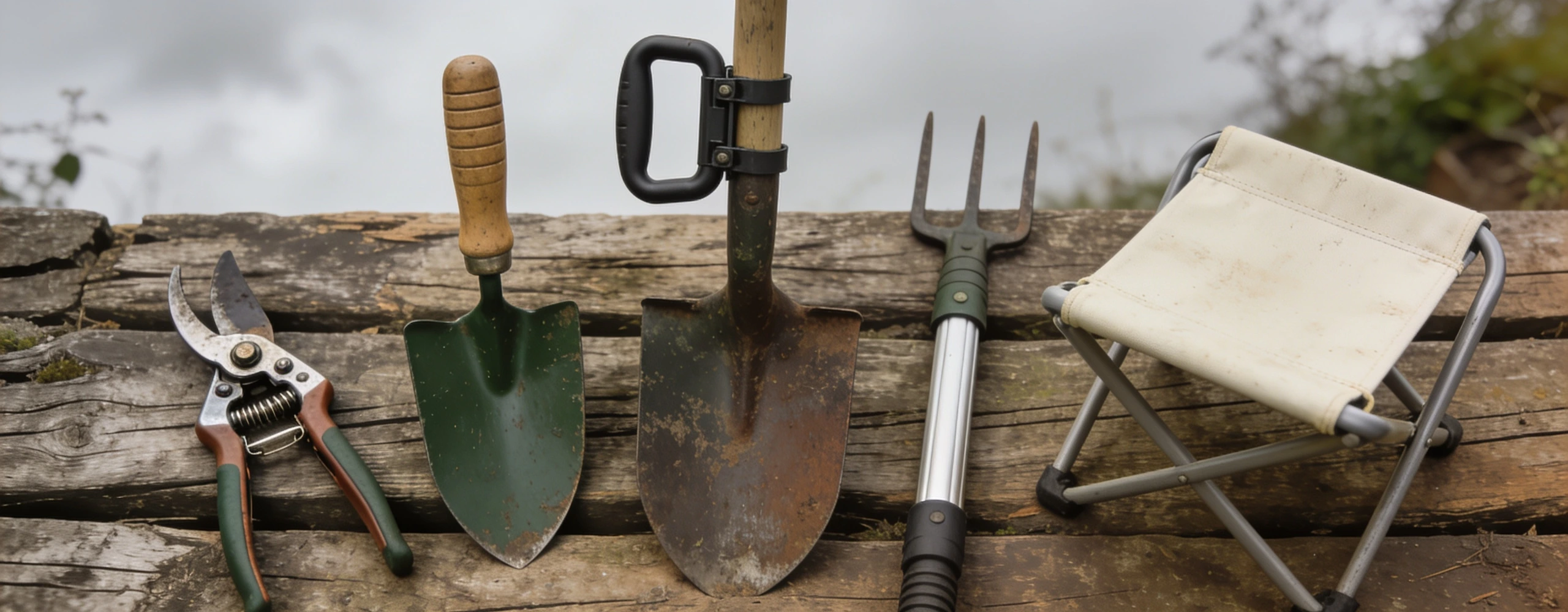
At a glance
| What | Best for | Typical price |
|---|---|---|
| Ratchet secateurs | Best for weak or painful grip | $25–$50 |
| Geared bypass secateurs | Best for frequent pruning | $40–$80 |
| Add-on grip handle for spades and forks | Best low-cost upgrade | $20–$40 |
| Radius-handle trowel and fork | Best for wrist pain | $18–$40 |
| Long-handled bulb planter or transplanter | Best for planting without kneeling | $25–$55 |
| Kneeler-seat with steel push-up frame | Best for getting back up | $30–$60 |
| Telescopic lightweight hoe or cultivator | Best for reach | $25–$50 |
| Lightweight two-wheeled garden cart | Best for moving things | $70–$160 |
| Roll-up garden hose on a reel with a slow-open tap | Best for watering without lifting | $40–$90 |
Sometimes Gardening may earn a small commission if you buy through links on this page, at no extra cost to you. It never changes what we recommend, here's how that works.
Most gardening tools for seniors are sold as ergonomic, which usually means a rubber overmould on the same tool as before. The features that genuinely reduce pain are specific and measurable, and once you know what they are you can spot them on a shelf in a few seconds, including on tools that make no ergonomic claim at all.
The short answer
The three changes that help most: ratchet or geared secateurs to cut grip force, radius-handle hand tools to keep the wrist neutral, and an add-on second handle on your spade or fork to move lifting load off the lower back. Look for grips 30–40 mm across, oval rather than round, and handles angled so your wrist stays straight. Then raise the beds, 60 cm for seated work, 75–90 cm for standing.
What to look for in gardening tools for seniors#
Key points
- Grip diameter of roughly 30–40 mm. Narrow round handles force a full-strength pinch grip; wider oval handles let the whole hand share the load.
- A wrist-neutral handle angle. If the tool makes you bend your wrist sideways to work, it will hurt. That is the mechanism behind most trowel-related pain.
- Mechanical advantage in cutting tools: ratchets, gears, cams or longer handles. This is the only way to genuinely reduce the force your hand supplies.
- Non-slip grips that work when wet. Losing grip means gripping harder, which is the thing you are trying to avoid.
- Length that fits the job so you are not stretching. Reach at full extension is where shoulders get injured.
- Weight matched to purpose, light for carrying and sweeping, adequately heavy for digging.
Cutting: where the biggest gains are#
Ratchet secateurs
$25–$50Best for weak or painful grip
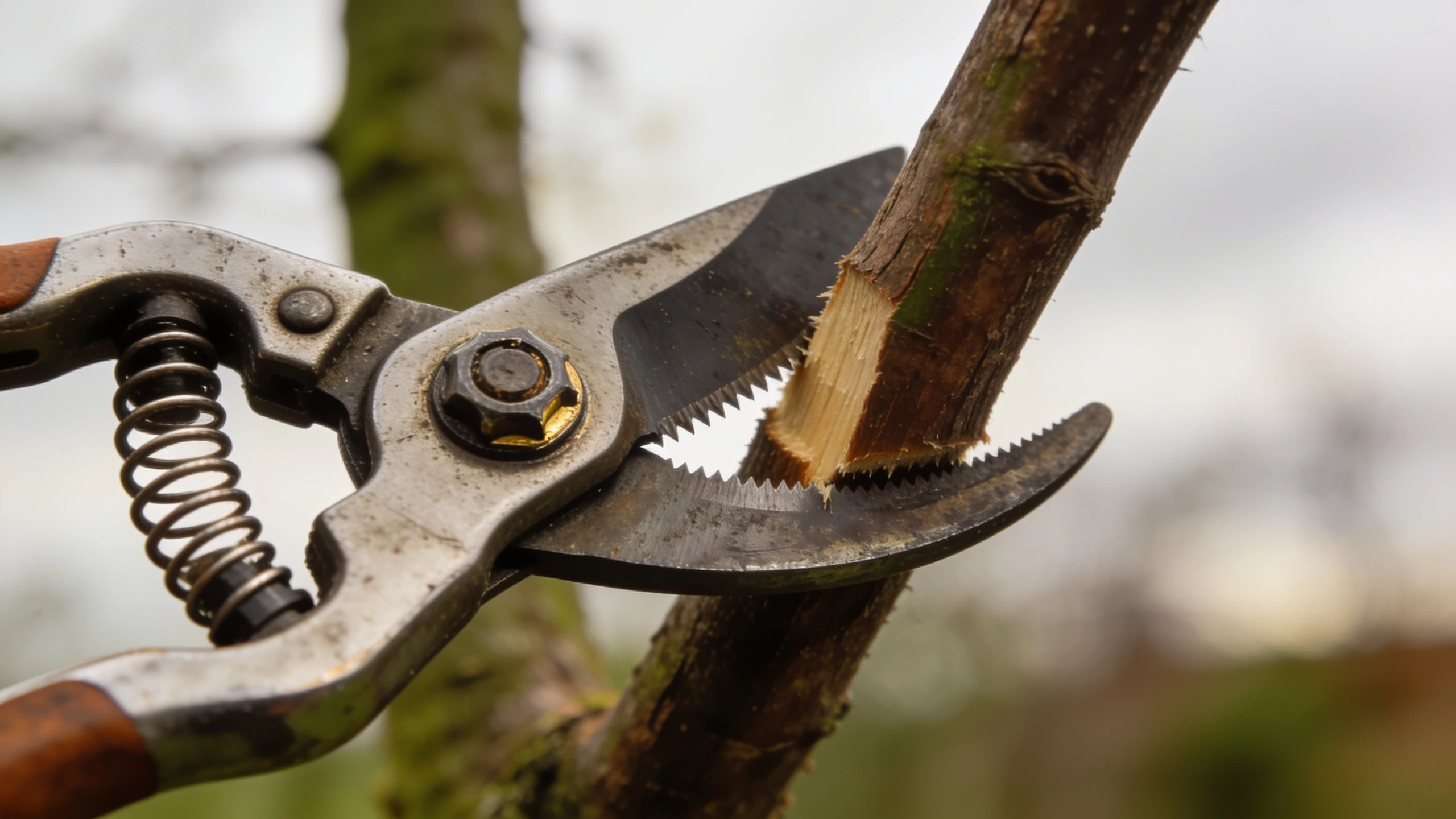
The mechanism holds its position between squeezes, so a cut that would need one hard compression becomes three or four gentle ones. For arthritic hands, hand tremor, reduced grip strength or recovery from injury, this is the single most effective tool change available.
The trade-off is speed: multiple squeezes per cut is slower, and it can feel fussy on a hedge full of thin stems. Many gardeners keep ratchets for anything over 10 mm thick and standard secateurs for the light stuff.
Geared or cam-assisted bypass secateurs
$40–$80Best for frequent pruning
A gear, cam or compound linkage multiplies the force you apply throughout the stroke, with no stop-start. Less dramatic than a ratchet on a single hard cut, but far faster over an hour, and the leverage is genuinely useful.
Check that the blade and spring are replaceable, and pick the smallest frame size your hand can comfortably span at full opening.
Long-handled loppers instead of secateurs
$30–$70Best for anything over 15 mm
Often overlooked: the simplest way to reduce hand force is a longer lever. Anything thicker than about 15 mm is easier and safer with loppers than with any secateur, and the two-handed grip spreads the load across both arms and shoulders.
Hand tools: keep the wrist straight#
Radius-handle trowel and hand fork
$18–$40Best for wrist pain
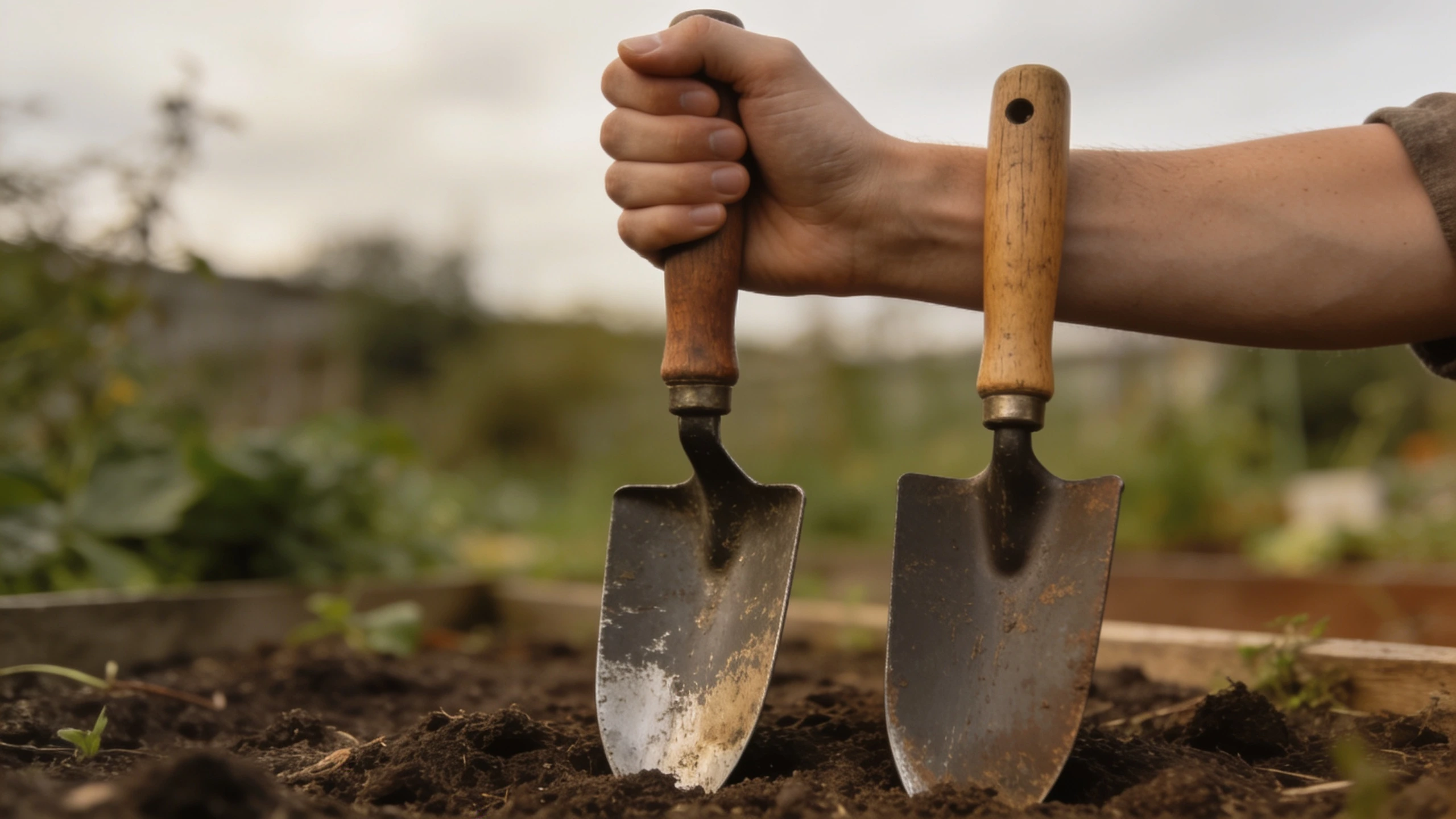
A conventional trowel handle sits in line with the blade, so digging bends your wrist sideways against resistance. A radius or upright handle puts your hand above the blade with the wrist in a neutral position, letting you push with the forearm.
They look odd and take a session to get used to. Most people who switch because of wrist pain do not switch back.
Add-on grip handle for spades and forks
$20–$40Best low-cost upgrade
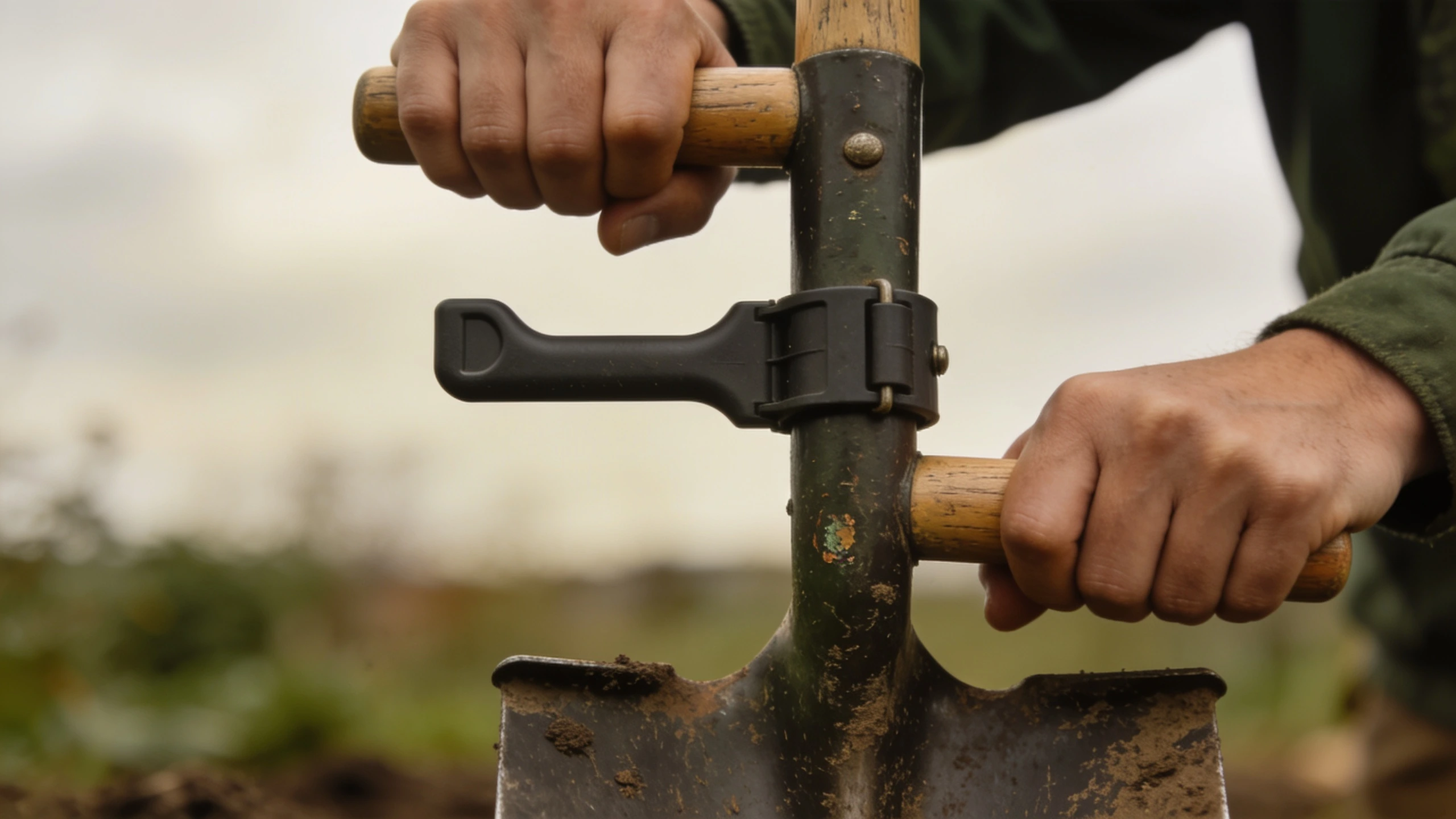
A D-shaped or T-shaped handle that clamps around the middle of an existing shaft. It costs very little and transfers the lifting effort from your lower back to your forearm and shoulder, the same principle as lifting a heavy box with two hands rather than one.
It fits the tools you already own, which makes it the cheapest meaningful improvement on this page.
Telescopic lightweight hoe or cultivator
$25–$50Best for reach
An adjustable shaft lets you weed from standing or from a seat without leaning into the bed. Aluminium or composite shafts keep the weight down, which matters when the tool is extended and the leverage is working against you.
Keep the blade sharp. A sharp hoe slices; a blunt one requires you to pull, which is exactly the force you are trying to avoid.
Long-handled bulb planter or transplanter
$25–$55Best for planting without kneeling
Step-down planters cut and lift a plug of soil while you stand, using body weight rather than hand strength. If kneeling is difficult or off the table, this converts bulb and bedding planting from impossible into a job you can finish.
Getting up and down, and staying up#
Kneeler-seat with a steel push-up frame
$30–$60Best for getting back up
The padding is not the point; the side rails are. They let you lower yourself under control and push back up with your arms rather than your knees. Flipped over, the same frame is a low bench for potting or for sitting to weed a bed edge.
Look at the rail height and how much weight the frame is rated for, and check that the hinges lock positively rather than relying on friction.
Rolling garden seat or scoot stool
$40–$90Best for long weeding sessions
A low wheeled seat lets you work along a bed edge or a row without repeatedly standing and kneeling. Best on firm, level ground, paths, patios, between raised beds, and poor on soft soil or slopes, where the wheels sink.
Carrying and watering#
Lightweight two-wheeled garden cart
$70–$160Best for moving things
Two wheels remove the balancing effort that makes a single-wheel barrow genuinely risky if your balance or grip is not what it was. Look for pneumatic tyres, a low loading height and handles at a height that does not make you stoop.
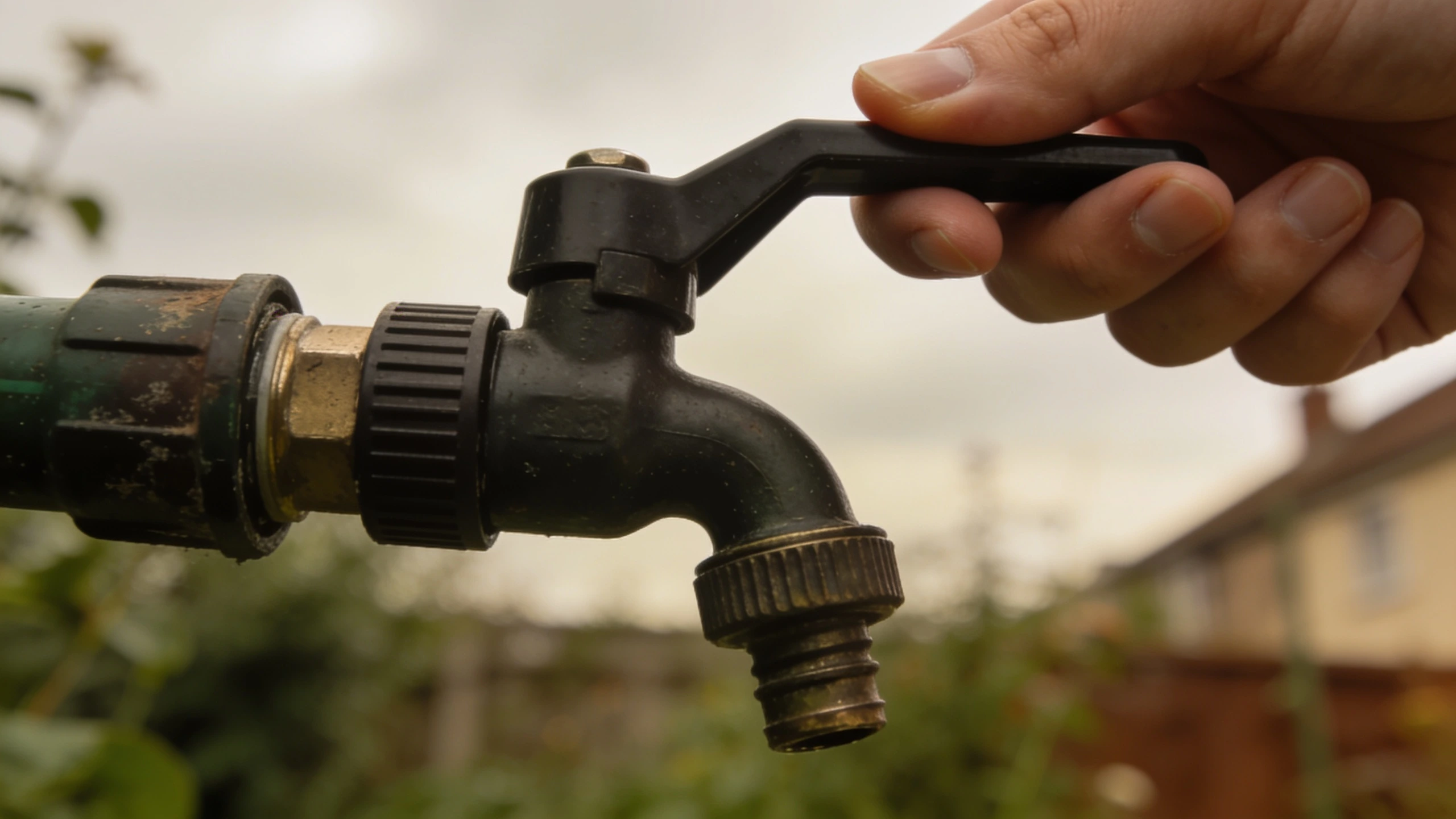
Hose on a reel, with a lever tap
$40–$90Best for watering without lifting
A full 9-litre watering can weighs about 9 kg, and it is usually the heaviest thing anyone lifts in a garden day, repeatedly. A hose on a wall-mounted reel removes that entirely.
Add a lever-handle tap adaptor if turning a round tap head is painful; they cost very little and are far easier on finger joints. Our watering guide covers doing this efficiently so you make fewer trips in the first place.
Change the garden, not just the tools#
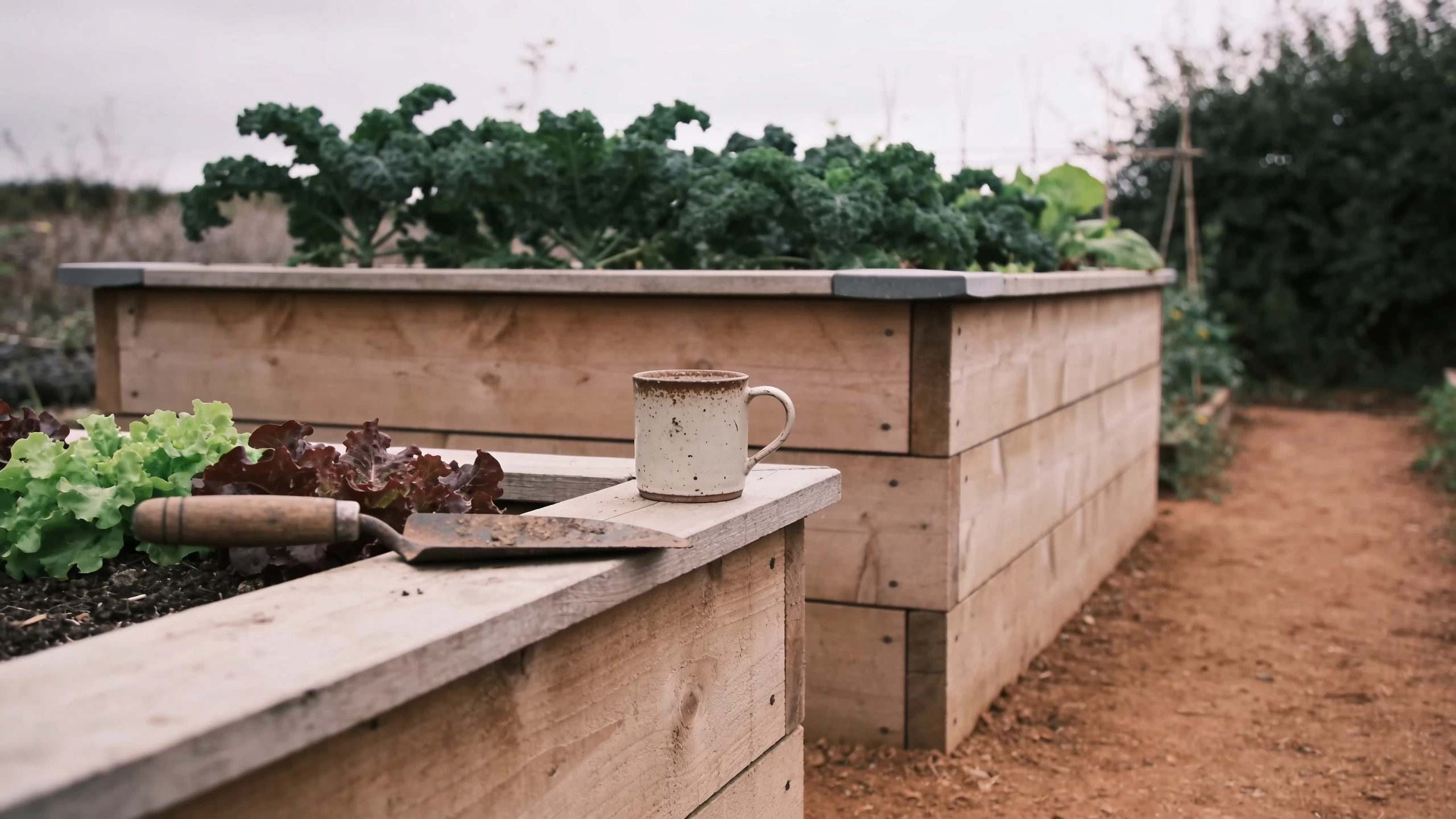
Tools can only do so much. The structural changes matter more:
| Change | Height / spec | What it fixes |
|---|---|---|
| Raised beds for seated work | 60 cm high, max 60 cm deep | Bending and kneeling |
| Raised beds for standing work | 75–90 cm high | Bending entirely |
| Table-top planters | 80–90 cm | Sowing, potting, salad crops |
| Wheelchair-accessible bed | 60–70 cm with knee recess | Reach from a seated position |
| Wide, firm paths | 90 cm+, no gravel | Barrow and walker access, trip hazards |
| Vertical growing and wall pots | At chest height | Removes ground-level work entirely |
| Watering system on a timer | , | Removes daily carrying |
Our raised bed layout ideas covers dimensions in more detail, including why a bed wider than 1.2 m becomes unreachable from the sides.
Working habits that help as much as any tool#
- Shorter, more frequent sessions. Twenty minutes four times a week is far kinder than eighty minutes once.
- Alternate tasks. Repetitive identical movement is what inflames joints. Weed, then prune, then sow.
- Warm hands work better. Gardening on a cold morning with stiff joints is harder than the same job at midday.
- Two smaller cans beat one large one, carried one in each hand, the load balances and each arm carries half.
- Sharpen everything. A sharp tool needs a fraction of the force. See cleaning and sharpening garden tools.
Where the guidance here comes from#
I am not a physiotherapist and nothing here is medical advice. What I can tell you is which tools reduce force and which reduce bending, because that is mechanical. For the rest, two organisations are better placed than I am. Thrive is the UK charity for gardening as therapy and has practical advice on adapting a garden to a body. The HSE guidance on musculoskeletal disorders is written for workplaces, but the principles on load, reach and repetition apply just as well to a border. If you have a specific joint problem, ask someone who can see it.
Related reading#
- Gardening tools for beginners: the baseline kit, with construction quality explained.
- Garden kneelers and seats: a closer look at the options.
- Gardening gifts for mum: several of these tools make genuinely good presents.
Frequently asked questions
What are the best garden tools for arthritic hands?
Ratchet or geared secateurs, radius-handle trowels and forks, and tools with a soft, wide, oval grip rather than a narrow round one. The common principle is reducing peak grip force and keeping the wrist straight. Ratchet secateurs are the highest-impact single change, because they split one hard squeeze into three easy ones.
Do ergonomic garden tools really work?
The design features do; the label does not guarantee them. What genuinely reduces strain is measurable: a grip diameter of roughly 30–40 mm, a handle angled so the wrist stays neutral, mechanical leverage in cutting tools, and lower overall weight. Plenty of tools marketed as ergonomic have none of those and simply add a rubber overmould.
How can I keep gardening if I cannot kneel or bend?
Raise the garden and lengthen the tools. Raised beds at 60–90 cm and waist-height tables bring the work to you; long-handled transplanters, telescopic hoes and grabbers cover the rest. A rolling garden seat or a kneeler-seat with push-up rails handles the middle ground where you can get low but need help returning.
Are lightweight aluminium tools better for seniors?
For long-handled tools that you carry and swing, yes, less mass means less fatigue over an hour. For digging tools, weight actually helps drive the blade so you use less of your own force, and a very light spade can mean more effort rather than less. Prioritise light for reach and carry, and adequate weight for digging.
What height should a raised bed be to avoid bending?
About 60 cm (24 inches) for comfortable work while seated on a stool, and 75–90 cm (30–36 inches) for working while standing. If you use a wheelchair, aim for 60–70 cm with a clear knee recess and keep the bed no more than 60 cm deep so the centre is reachable from one side.
Topics in this article
About the author
Jeff has gardened professionally for over twenty years, mostly on heavy clay, and writes everything here from beds he still works himself. More from Jeff Tanun →
Keep reading
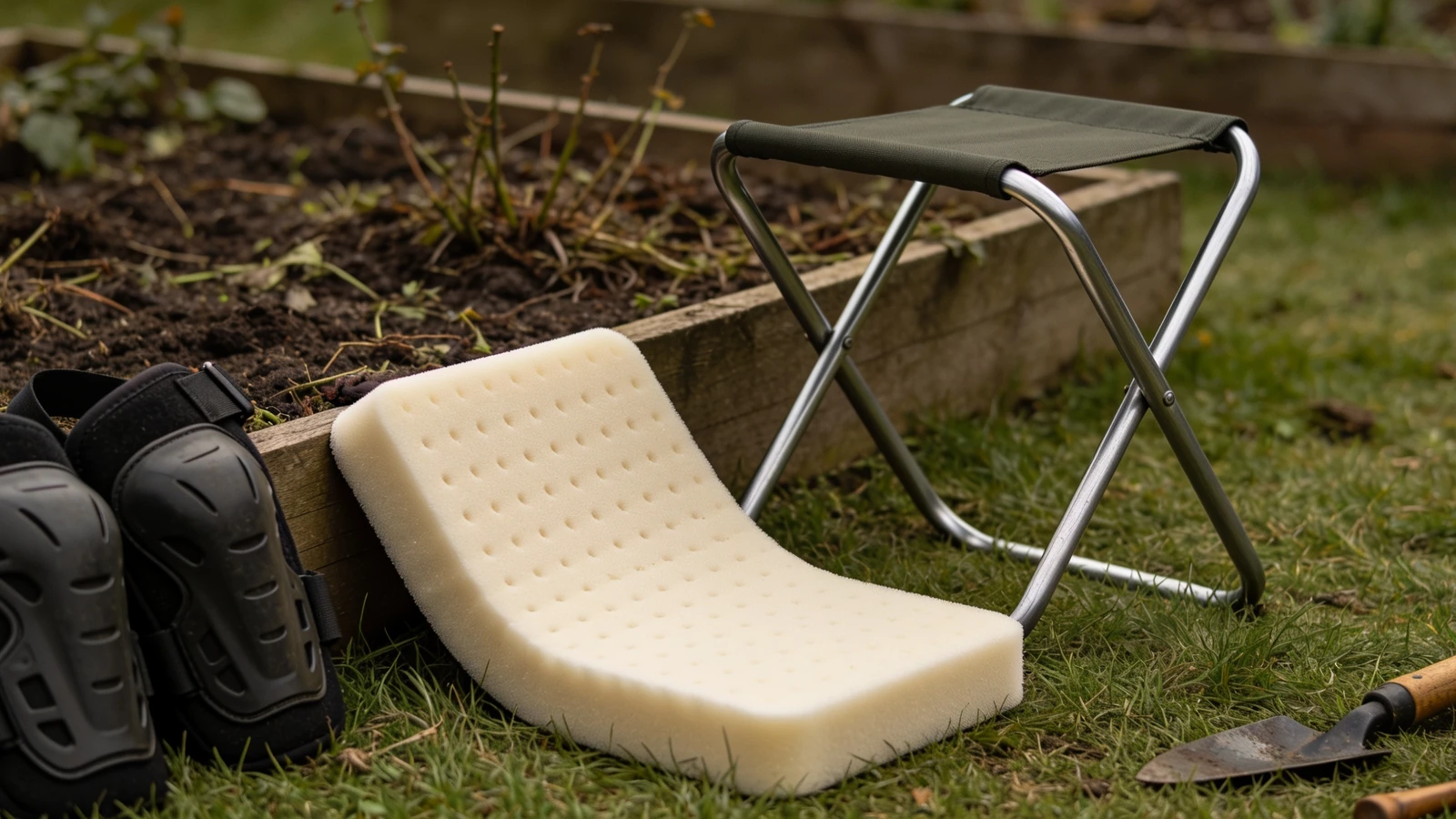
Garden Kneelers & Seats
Kneeling pads, kneeler-seats, rolling stools and garden trolleys compared, what each is genuinely good for, and what to check before you buy.
Updated
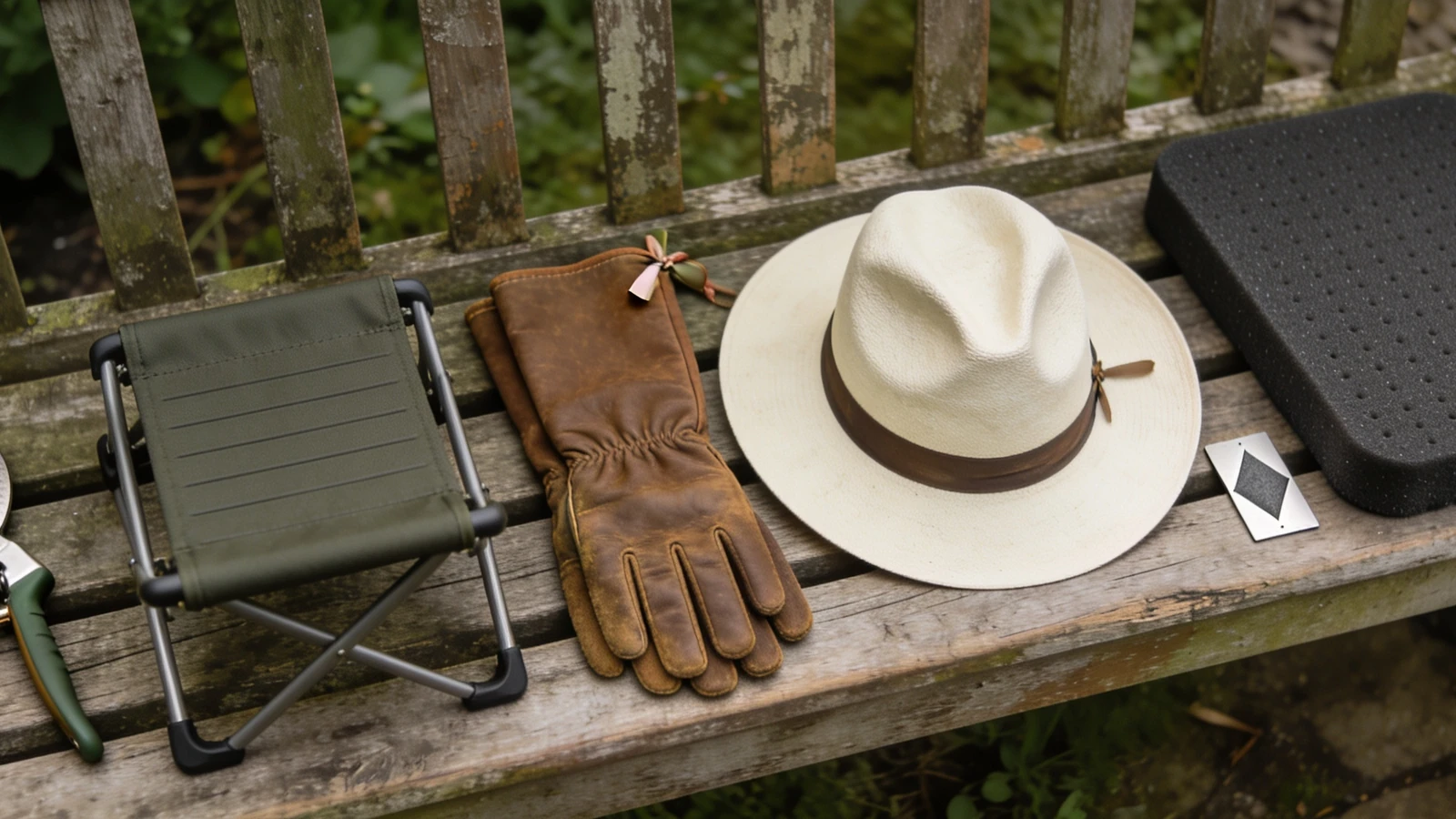
Gardening Gifts for Mom
Gardening gifts for mothers who genuinely garden, sorted by budget, with a note on what to check before you order so it does not end up in the shed.
Updated
Gardening Tools for Beginners
The twelve tools a new gardener genuinely needs, what to look for in each, what to spend, and the eight popular tools you can safely skip in your first year.
Updated