Gardening Tools for Beginners: The 12 Worth Buying
The twelve tools a new gardener genuinely needs, what to look for in each, what to spend, and the eight popular tools you can safely skip in your first year.
At a glance
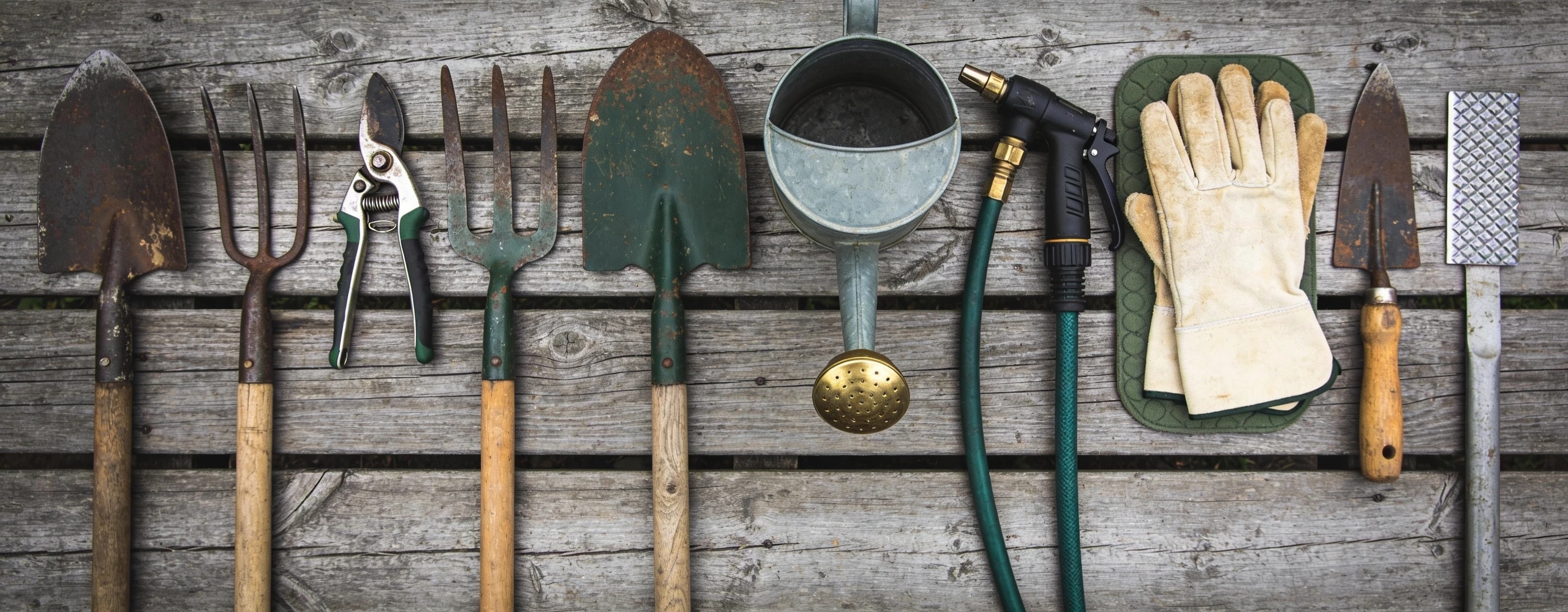
| What | Best for | Typical price |
|---|---|---|
| Forged hand trowel | The one tool you cannot skip | $15–$35 |
| Hand fork | Best for weeding and loosening | $12–$30 |
| Bypass secateurs | Best all-round cutter | $25–$60 |
| Digging spade | Best for beds and edges | $35–$80 |
| Digging fork | Best for compost and heavy soil | $35–$80 |
| Watering can with rose head | Best for seedlings | $18–$40 |
| Gloves that fit | Best comfort upgrade | $8–$20 |
| Garden hose with adjustable nozzle | Best time-saver | $25–$60 |
| Wheelbarrow or garden cart | Best back-saver | $60–$150 |
| Garden kneeler or kneeling pad | Best for long sessions | $12–$45 |
| Hand hoe or onion hoe | Best for weeding at speed | $15–$35 |
| Diamond sharpening card | Best value purchase overall | $10–$20 |
Sometimes Gardening may earn a small commission if you buy through links on this page, at no extra cost to you. It never changes what we recommend, here's how that works.
Most lists of gardening tools for beginners are too long. The tool aisle is designed to make you feel underequipped. In practice a productive garden runs on about six tools, plus a few more once you are working real ground. Everything else is either a specialist item for one job a year or a solution to a problem you do not have.
This list is what we would buy again, ordered by how much difference each item makes.
The short answer
Buy five things first: a forged hand trowel, a hand fork, bypass secateurs, a watering can with a rose head, and gloves that fit. That is a complete kit for containers or one raised bed, for around $80. Add a spade, digging fork, hand hoe and a diamond sharpening card when you start working open ground. Skip boxed tool sets, they pad the count and compromise the two tools you will actually use.
Judging gardening tools for beginners in ten seconds#
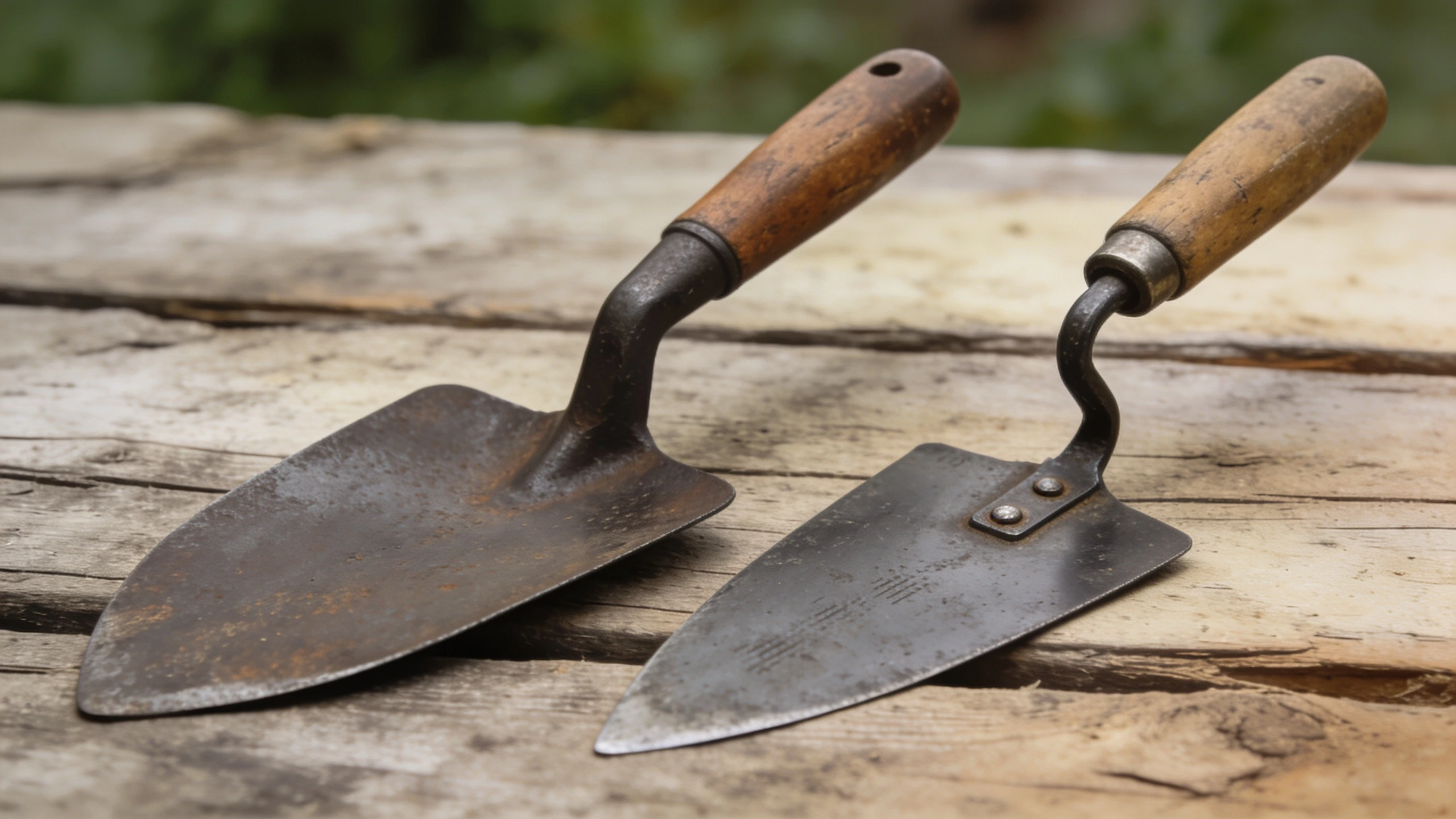
Before the list, the test that matters. Nearly every disappointing hand tool fails in the same place: the join between the working end and the handle.
Key points
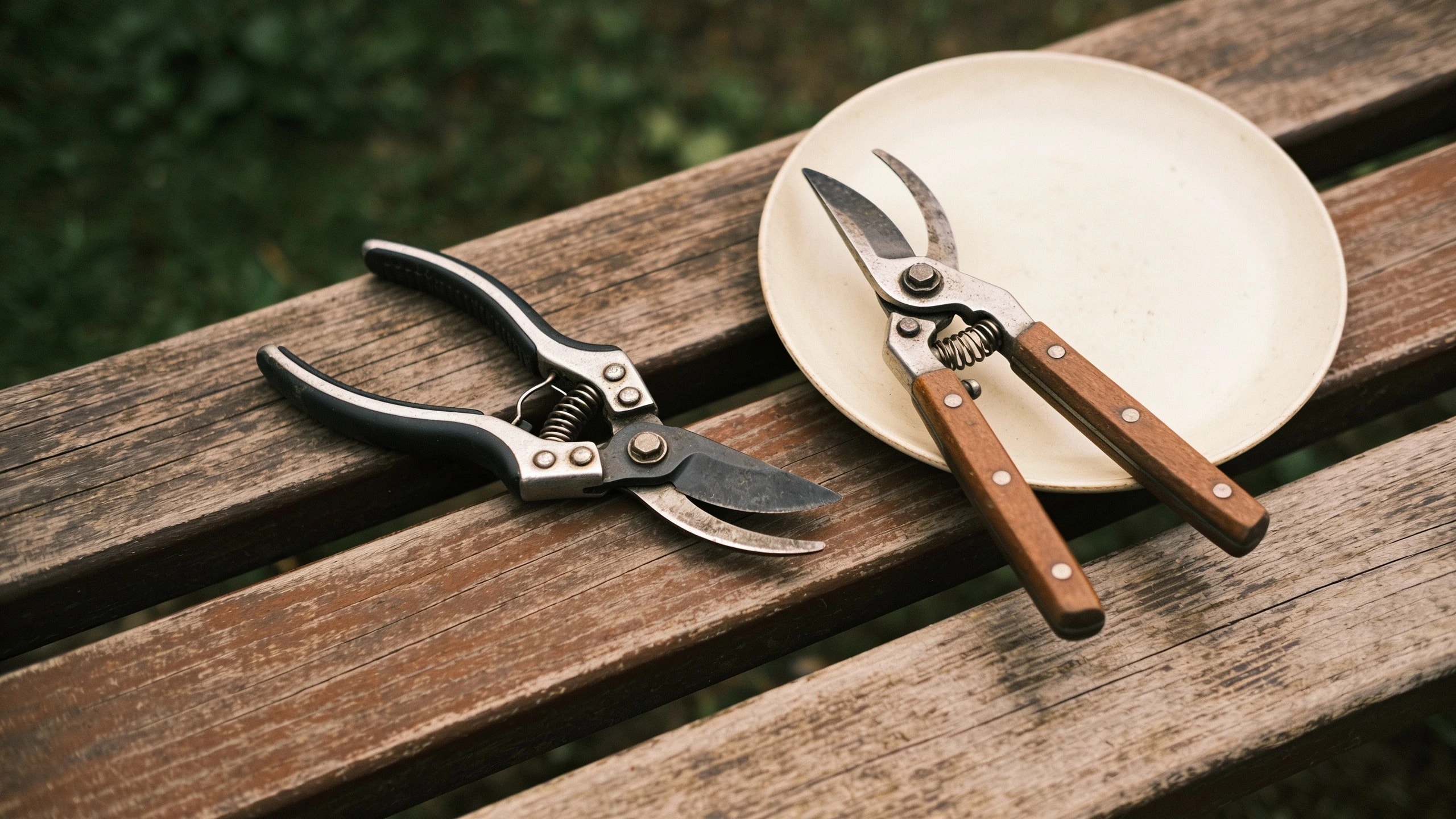
- Forged in one piece beats stamped and riveted. On a trowel, look for the metal continuing as a shaft into the handle rather than a flat blade crimped onto a neck.
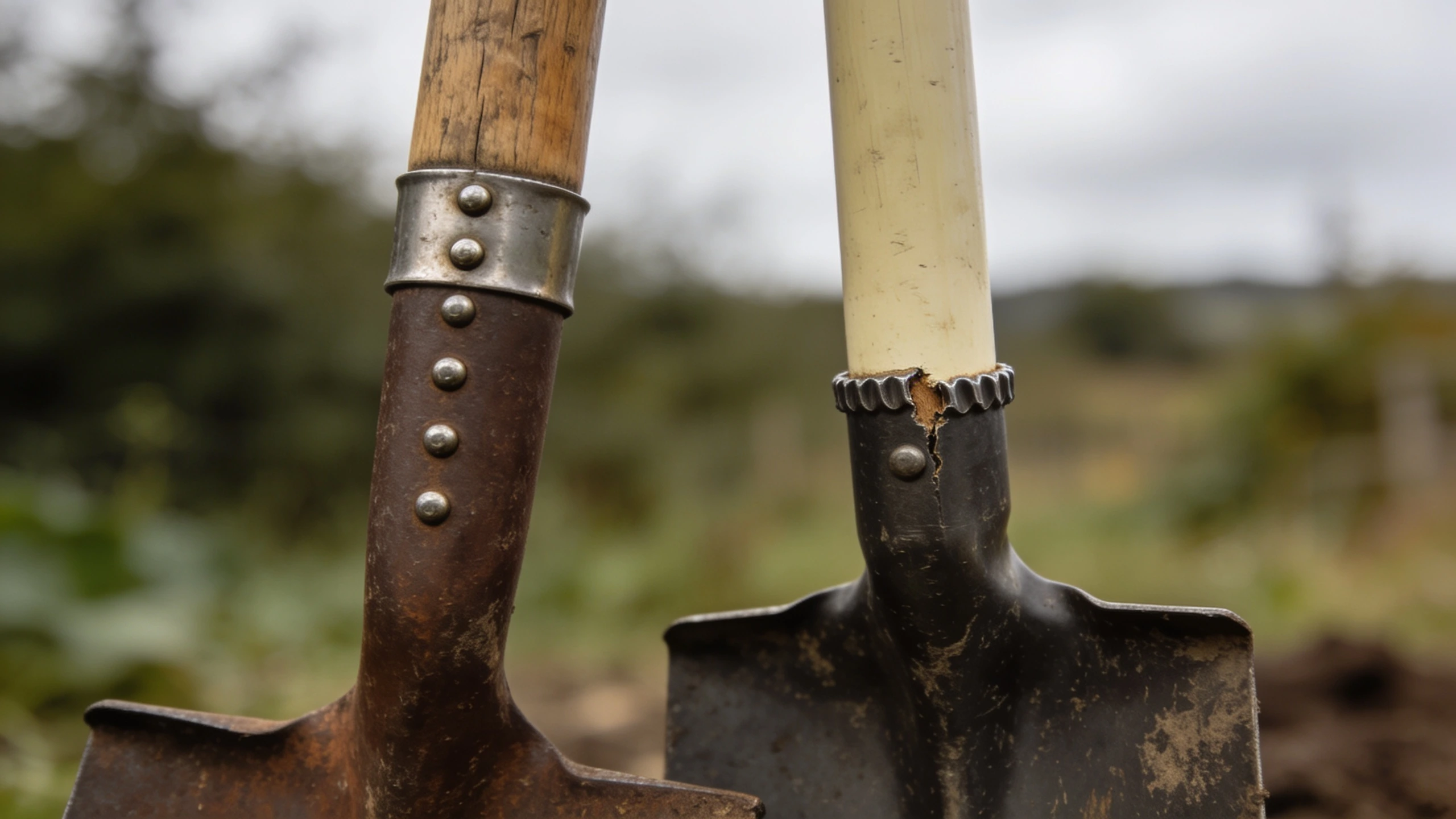
- For long-handled tools, check socket depth. The metal should swallow several inches of the shaft, not just cap the end.
- Grip the handle and squeeze. If the tool has a spring or a pivot, work it, grit, slop and stiffness are all visible before you buy.
- Ask whether a blade, spring or handle can be replaced. Serviceable tools are a different purchase from disposable ones.
- Weight is a feature, not a fault. Heavier digging tools do more of the work for you; heavier hand tools tire your wrist.
The five you need on day one#
Forged hand trowel
$15–$35The one tool you cannot skip
You will use this more than everything else combined, planting, transplanting, scooping compost, digging out weeds, mixing potting mix. Buy the forged version. A stamped steel trowel riveted to a neck will bend the first time you lever against a stone, and it will always be the tool nearest to hand when that happens.
Look for a blade about 6 cm wide for general work. Narrow "transplanting" trowels are for bulbs and bedding; a mid-width blade is more versatile.
Hand fork
$12–$30Best for weeding and loosening
Does the half of close-up work a trowel does badly: teasing out weed roots without cutting them, loosening compacted surfaces, working compost into a small area. Three forged tines, same construction test as the trowel.
Buy the trowel and fork as a matched pair if the construction is right, they get used together constantly.
Bypass secateurs
$25–$60Best all-round cutter
The tool where spending more genuinely returns more. Bypass secateurs cut with a shearing action between two passing blades, which leaves a clean wound on living stems. Anvil types crush.
Three things to check:
- Size. Most brands make two or three frame sizes. A pair too large for your hand cannot be closed at full extension, which is where you need the leverage most.
- Replaceable blade and spring. These are the parts that wear. A tool where you can buy both is one you keep for twenty years.
- The safety catch. You will operate it several hundred times a season. If it needs two hands or an awkward thumb reach, you will stop using it, and that is how people get cut reaching into a pocket.
Keep them sharp, our guide to cleaning and sharpening garden tools covers exactly how, and it takes about ten minutes.
Watering can with a rose head
$18–$40Best for seedlings
Nine litres is roughly the practical limit for carrying any distance, 9 kg at arm's length adds up fast. Two smaller cans, one in each hand, are easier on your back than one large one.
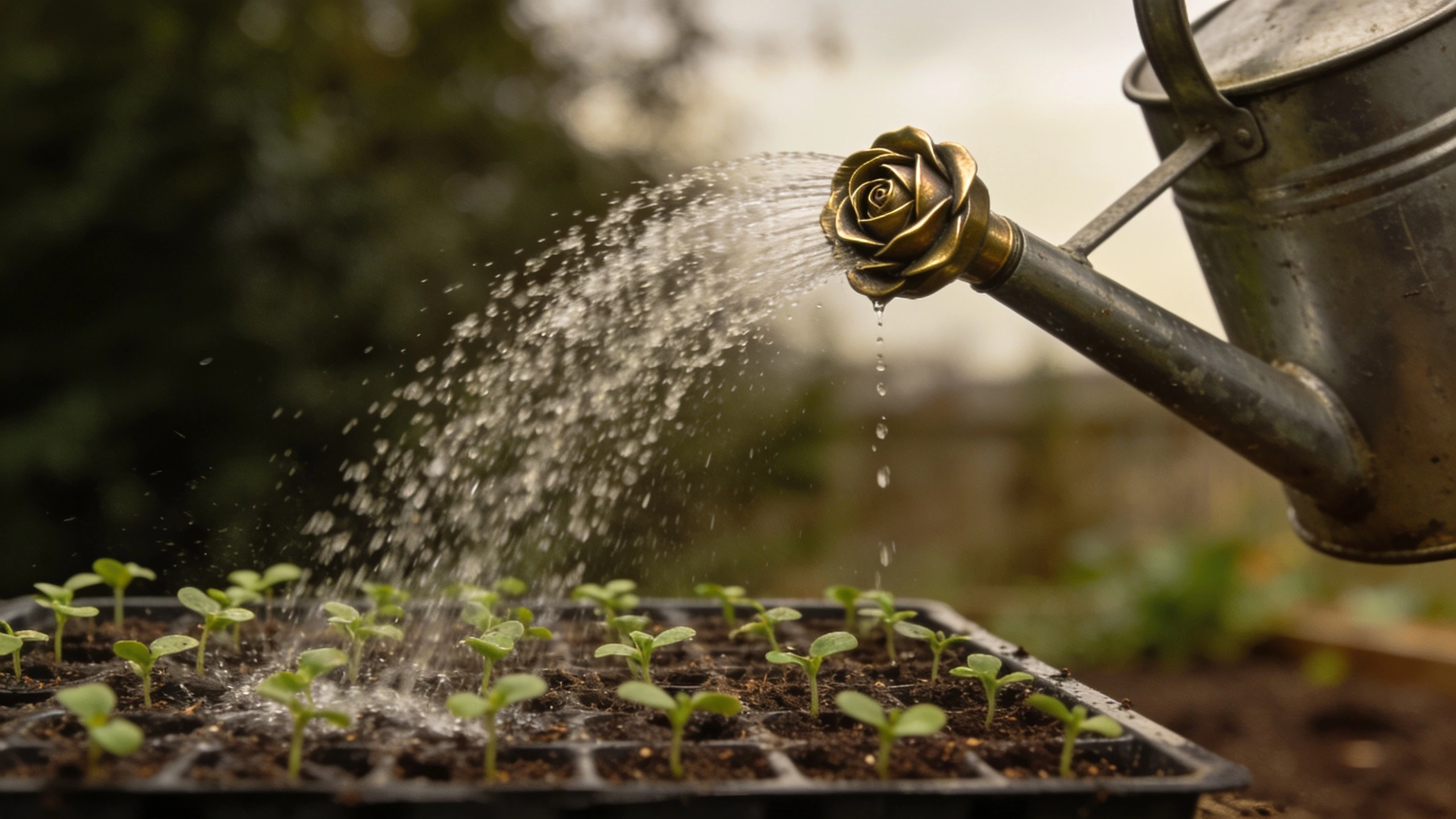
The rose head is the point. A bare spout blasts a crater in the soil, washes seed sideways and flattens seedlings. A removable brass rose lasts indefinitely; moulded plastic ones crack at the collar within a couple of seasons.
Gloves that fit
$8–$20Best comfort upgrade
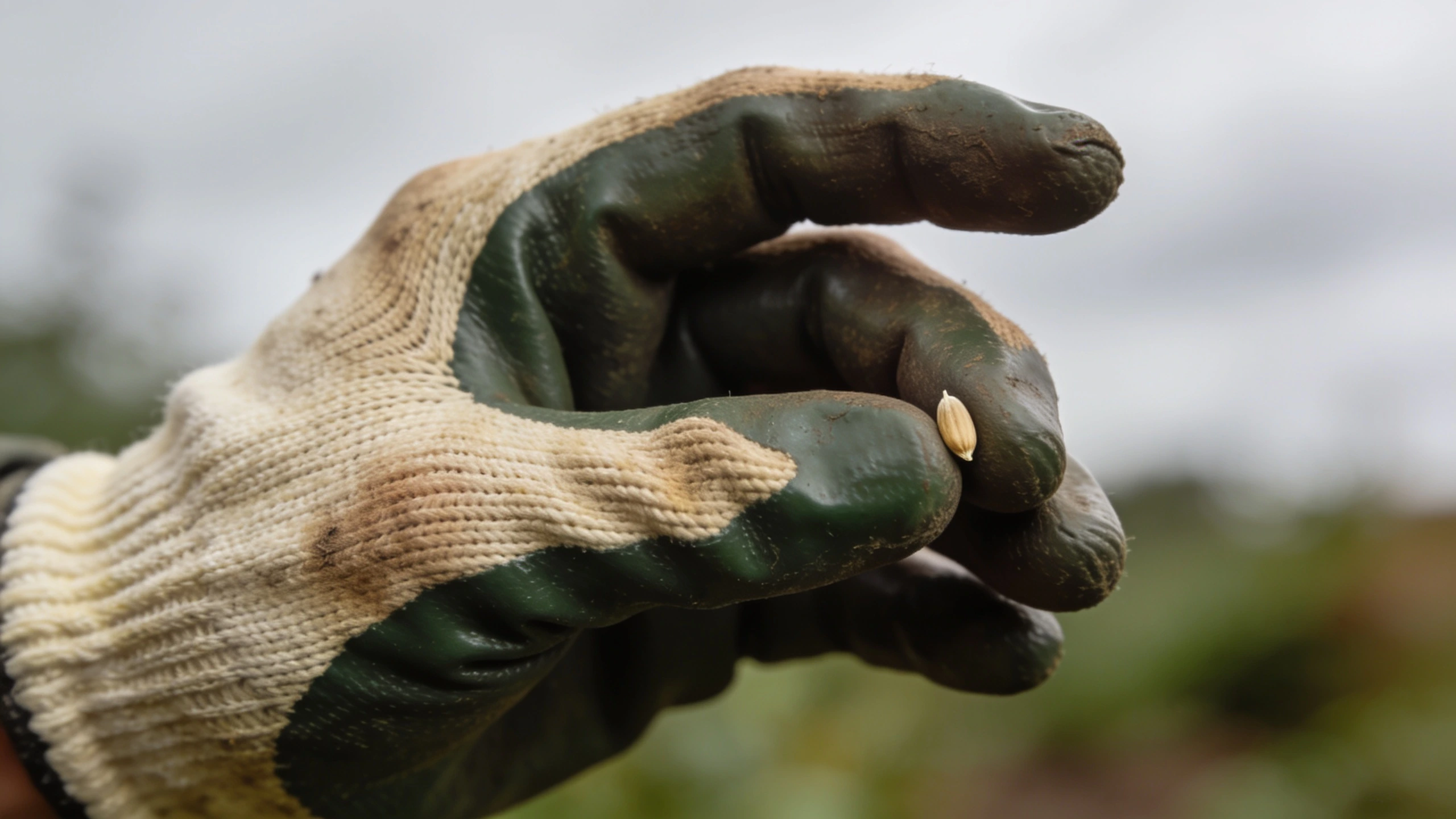
Fit matters more than material. Loose gloves bunch, cause blisters and cost you the dexterity to pick up a seed. Nitrile-coated knitted gloves are the best general-purpose choice, grippy, washable, dextrous, cheap enough to own three pairs.
You will eventually want a second, tougher pair for thorns and a longer gauntlet for roses and brambles. Our gardening gloves guide breaks down which type suits which job.
The next four, once you have ground to work#
Digging spade
$35–$80Best for beds and edges
For cutting edges, digging planting holes and moving soil. Check the socket, the metal collar that holds the shaft, is deep and solidly fixed, because that is where cheap spades break.
A stainless blade is genuinely worth it on clay soil, where carbon steel accumulates a heavy sticky wedge that you spend the afternoon scraping off. If you are shorter than about 5'6", look for a smaller "border spade", which is easier to control and not a compromise.
Digging fork
$35–$80Best for compost and heavy soil
More useful than a spade in more situations than people expect. It turns compost, lifts potatoes and root crops without slicing them, breaks up clay without smearing it into an airless surface, and aerates without inverting soil layers.
If you only buy one long-handled digging tool and you have heavy soil, buy the fork.
Hand hoe or onion hoe
$15–$35Best for weeding at speed
Weeding by hand, plant by plant, is why people give up on vegetable beds. A hoe slices weed seedlings off at soil level in a standing sweep, and if you do it weekly while weeds are tiny, the whole bed takes four minutes.
A long-handled Dutch or oscillating hoe is better still for larger beds because you work standing upright. Either way, keep the edge sharp, a blunt hoe drags weeds out and replants them.
Garden hose with adjustable nozzle
$25–$60Best time-saver
What you are paying for is kink resistance. A cheap hose that folds shut every four metres will annoy you every single time you use it, which is daily in summer.
An adjustable nozzle with a genuine off switch at the business end saves walking back to the tap constantly. See our watering guide for how to use it well. Most people water far too shallowly.
The three that make gardening comfortable#
Garden kneeler or kneeling pad
$12–$45Best for long sessions
The cheapest item here that changes how long you can work. A closed-cell foam pad costs almost nothing. A kneeler-seat, the folding steel frame that flips over into a low bench, does double duty and has handles to push yourself back up, which becomes the main feature over time.
More on the options in our guide to garden kneelers and seats.
Wheelbarrow or two-wheeled garden cart
$60–$150Best back-saver
The moment you are moving compost, prunings or bagged soil, this stops being optional. A two-wheeled cart is considerably more stable than a traditional single-wheel barrow and far easier to manage alone, especially on a slope. A classic barrow tips more easily into a narrow bed and manoeuvres better in tight spaces.
Buy a pneumatic tyre, not solid. Solid wheels transmit every bump into your wrists and sink into soft ground.
Diamond sharpening card
$10–$20Best value purchase overall
For the price of a coffee and a half, every cutting tool you own gets better. Blunt secateurs crush stems, which is both harder work and worse for the plant. Blunt spades take noticeably more body weight to drive into turf.
A 300–600 grit diamond card is the whole kit for garden tools. Full method in our sharpening guide.
What to skip in year one#
Worth it because
- Buy individually rather than in sets, three good tools beat nine mediocre ones
- Spend up on cutting tools and anything forged in one piece
- Save on plastic, cans, kneeling pads, trugs and buckets are fine at the cheap end
- Second-hand forged tools are often better than new budget ones; rust cleans off, bad forging does not
Bear in mind
- Boxed tool sets, padded with duplicates and single-use oddities
- Bulb planters, a trowel does it, unless you are planting hundreds
- Powered cultivators, destroy soil structure and are unnecessary under no-dig
- Soil pH meters under $30, cheap probes are wildly unreliable; use a test kit or a lab
- Long-handled weed pullers, fine for lawn dandelions, useless in a bed
- Pressurised sprayers, only if you actually spray, which most home gardeners need not
- Leaf blowers, a spring-tine rake is quieter, cheaper and no slower on a domestic garden
- Heated propagators, worth it in year three, not year one
Storing them so they last#
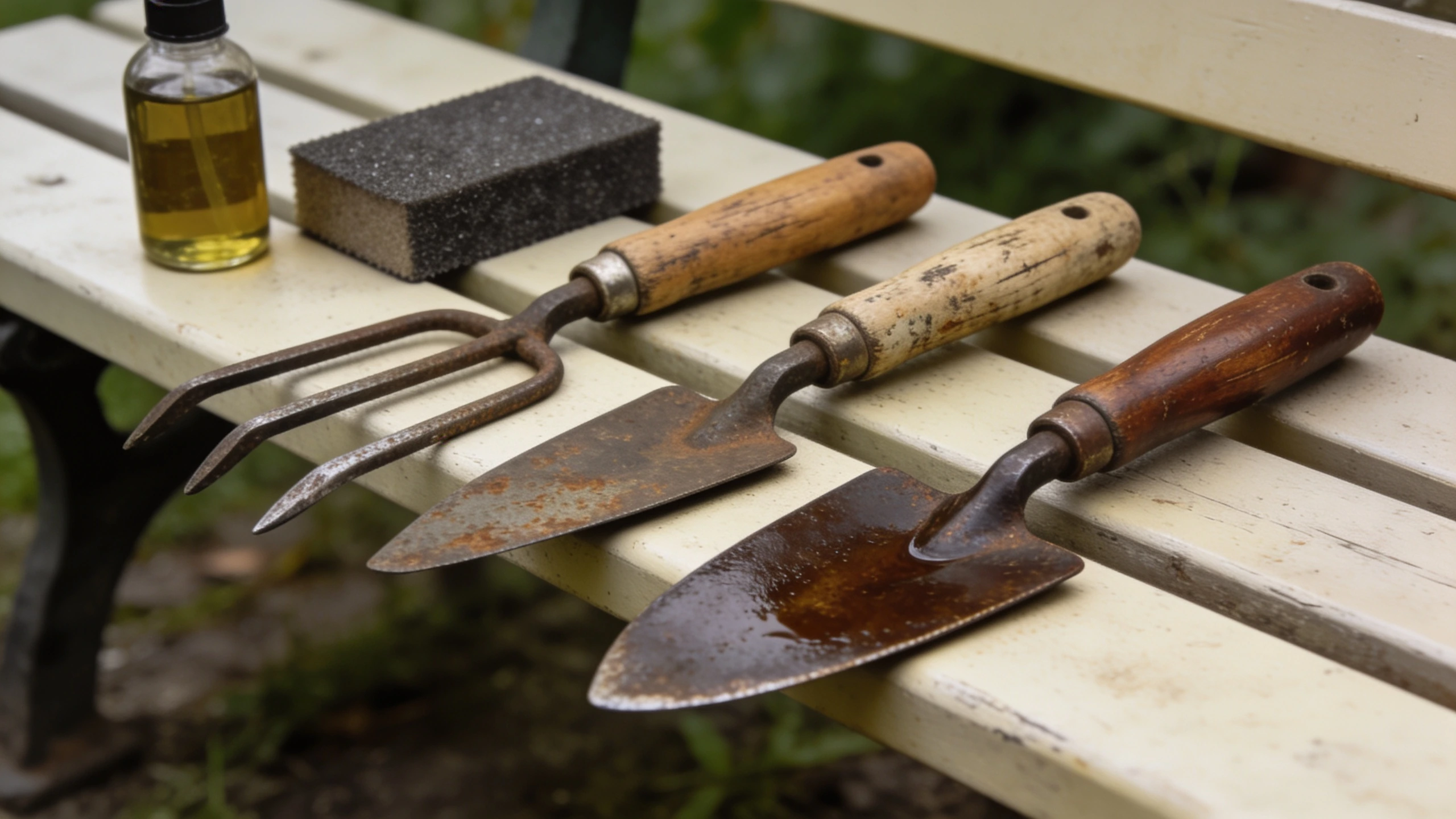
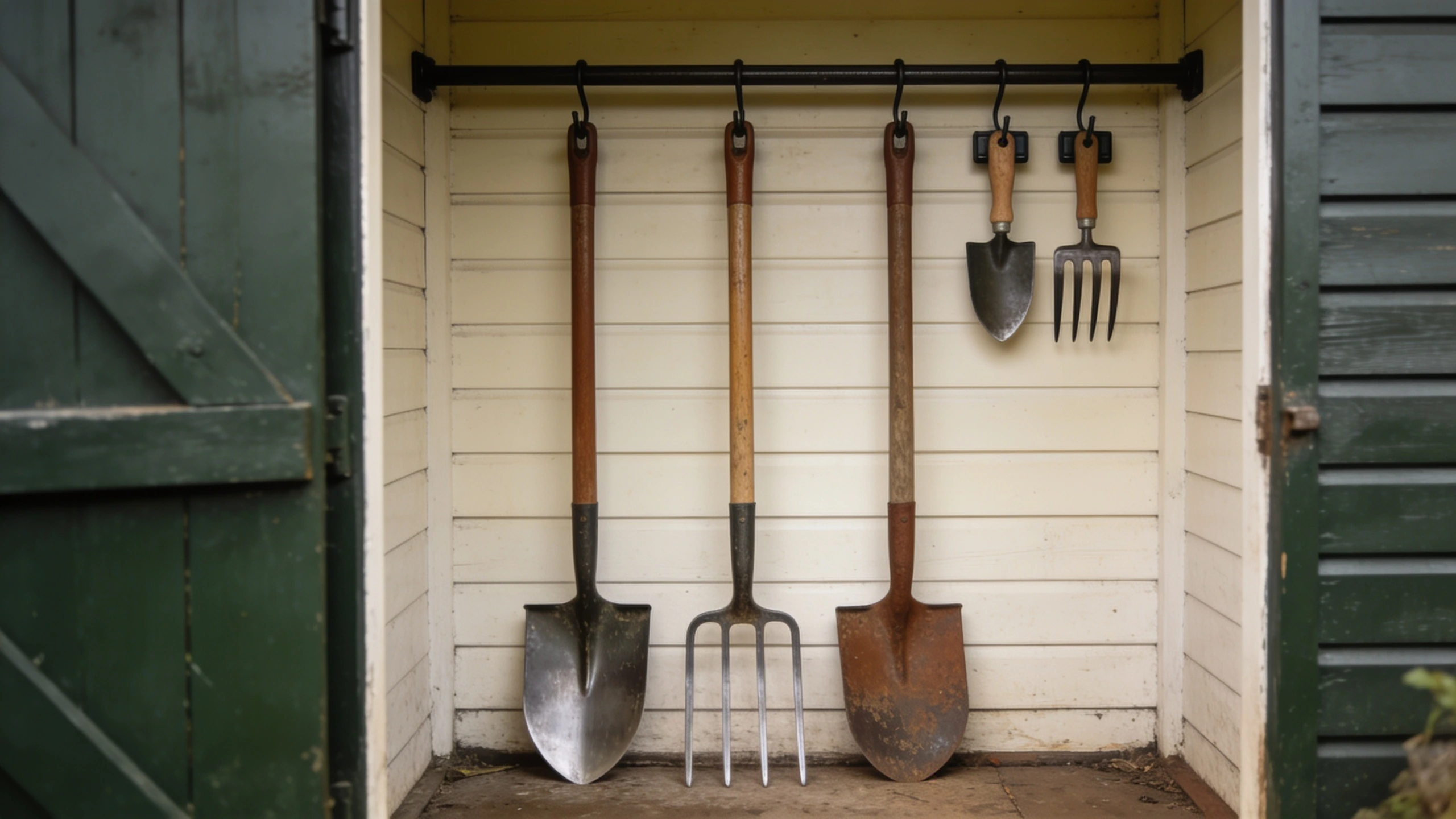
Tools fail in the shed more often than in the garden. Hang them rather than standing them on a damp floor, wipe blades with oil before storing, and rub linseed oil into wooden handles once a year. Ten minutes in November is the difference between tools that last five years and tools that last thirty.
How I know this#
The construction tests here, forging versus stamping and socket depth, are standard tool-trade judgements rather than results from a rig. For servicing and sharpening specifics, Felco and Fiskars both publish instructions for their own tools and those override anything general.
Prices are rough bands and labelled as such. Our editorial policy explains how corrections work.
Related reading#
- Different hands need different tools: see gardening tools for seniors and arthritic hands.
- Working in containers only? Gardening tools for small spaces is a shorter, cheaper list.
- Buying for someone else? Gardening gifts for beginners picks from this list by budget.
Frequently asked questions
What are the most essential gardening tools for a beginner?
A hand trowel, a hand fork, bypass secateurs, a watering can with a rose head and gloves that fit. Those five will cover a container garden or a single raised bed completely. Add a spade, a digging fork and a hand hoe when you start working actual ground.
How much should I spend on my first set of garden tools?
Around $120 to $200 buys good versions of the core five plus a spade and a fork. Spend the money on the cutting tools and anything forged in one piece. That is where cheap construction fails fastest. Save on plastic items like watering cans and kneeling pads, where the expensive version is barely better.
Are garden tool sets worth buying?
Usually not. Boxed sets pad the count with items you will never use, a mini rake, a duplicate trowel, a bulb planter, and the quality of the two tools you actually need is compromised to hit the price. Buying three good tools individually beats a nine-piece set at the same total cost.
What is the difference between bypass and anvil secateurs?
Bypass secateurs have two curved blades that pass each other like scissors, giving a clean cut on living stems. Anvil secateurs close a straight blade onto a flat plate, which crushes as it cuts. Buy bypass for almost everything; anvil is only preferable for dry deadwood, and even then loppers usually serve better.
Should I buy stainless steel or carbon steel garden tools?
Stainless resists rust and sheds heavy soil much better, which matters a lot on clay. Carbon steel takes and holds a keener edge and is easier to sharpen, which matters for cutting tools. A practical split is stainless for digging tools and good carbon steel for blades.
Topics in this article
About the author
Jeff has gardened professionally for over twenty years, mostly on heavy clay, and writes everything here from beds he still works himself. More from Jeff Tanun →
Keep reading
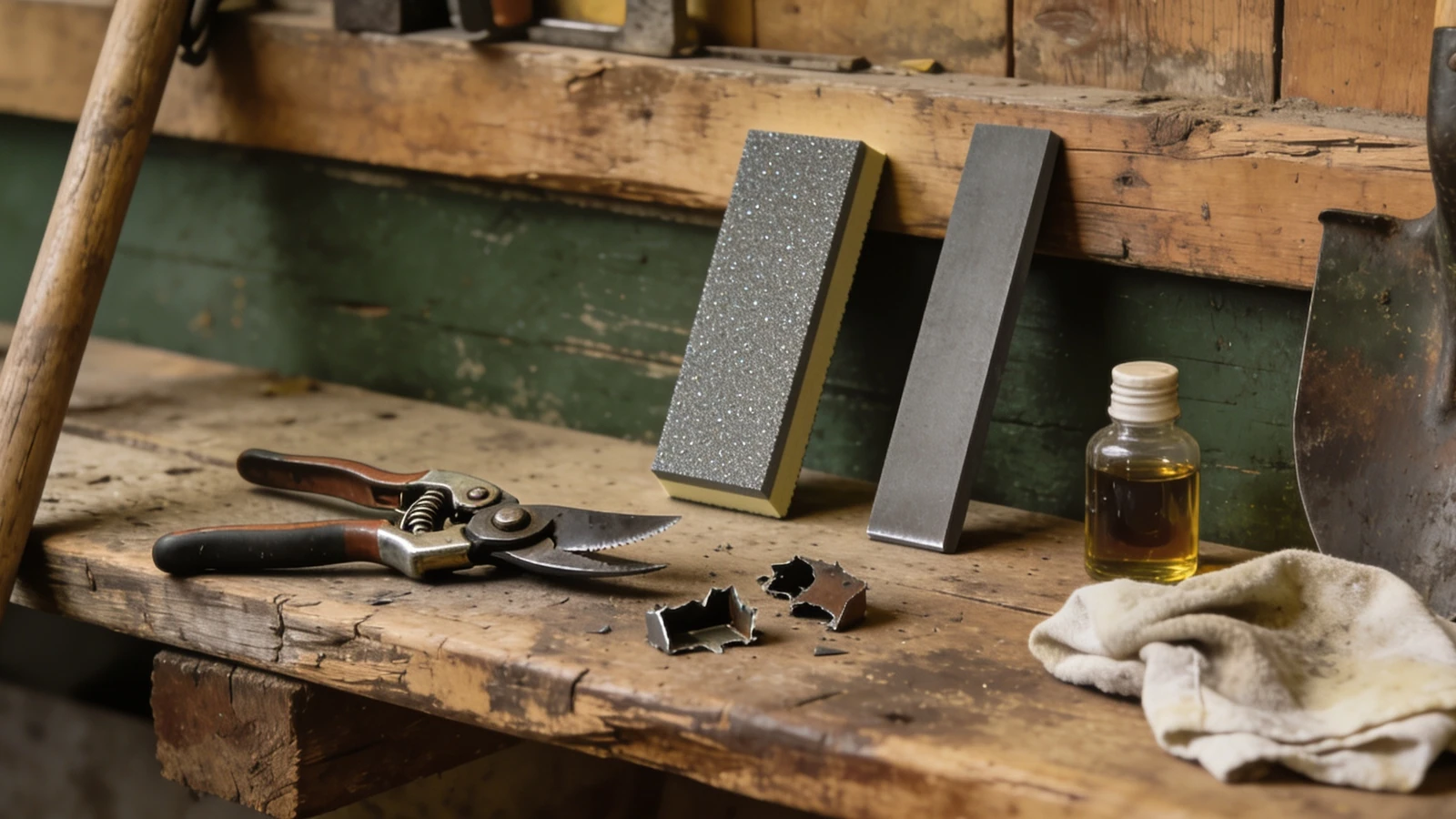
Cleaning & Sharpening Garden Tools
A twenty-minute routine for cleaning, sharpening and oiling secateurs, spades, hoes and shears, the single highest-return maintenance job in gardening.
Updated
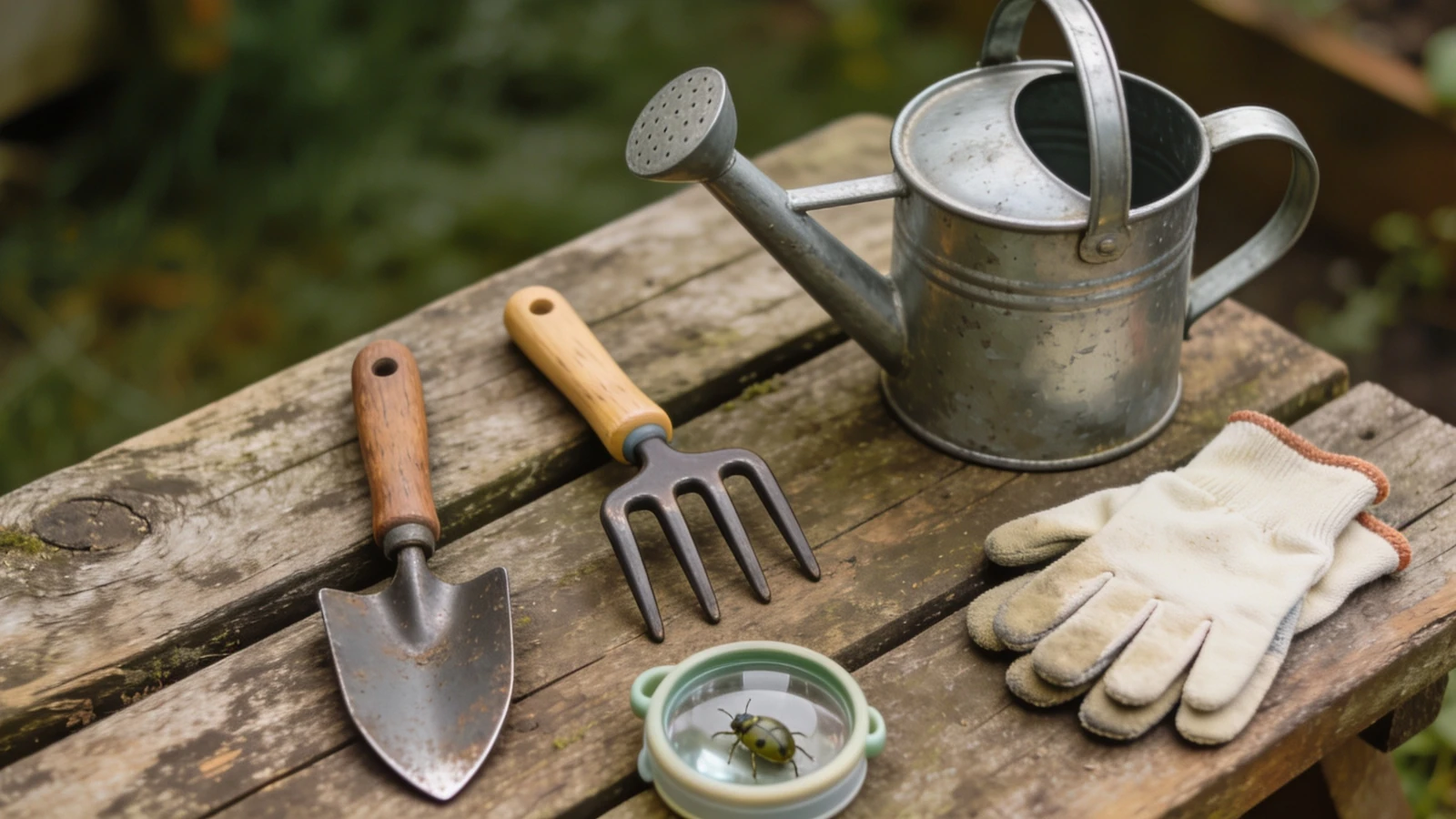
Gardening Tools for Kids
Which children's garden tools actually work, what to buy at each age, and why most brightly coloured plastic sets put kids off gardening rather than into it.
Updated
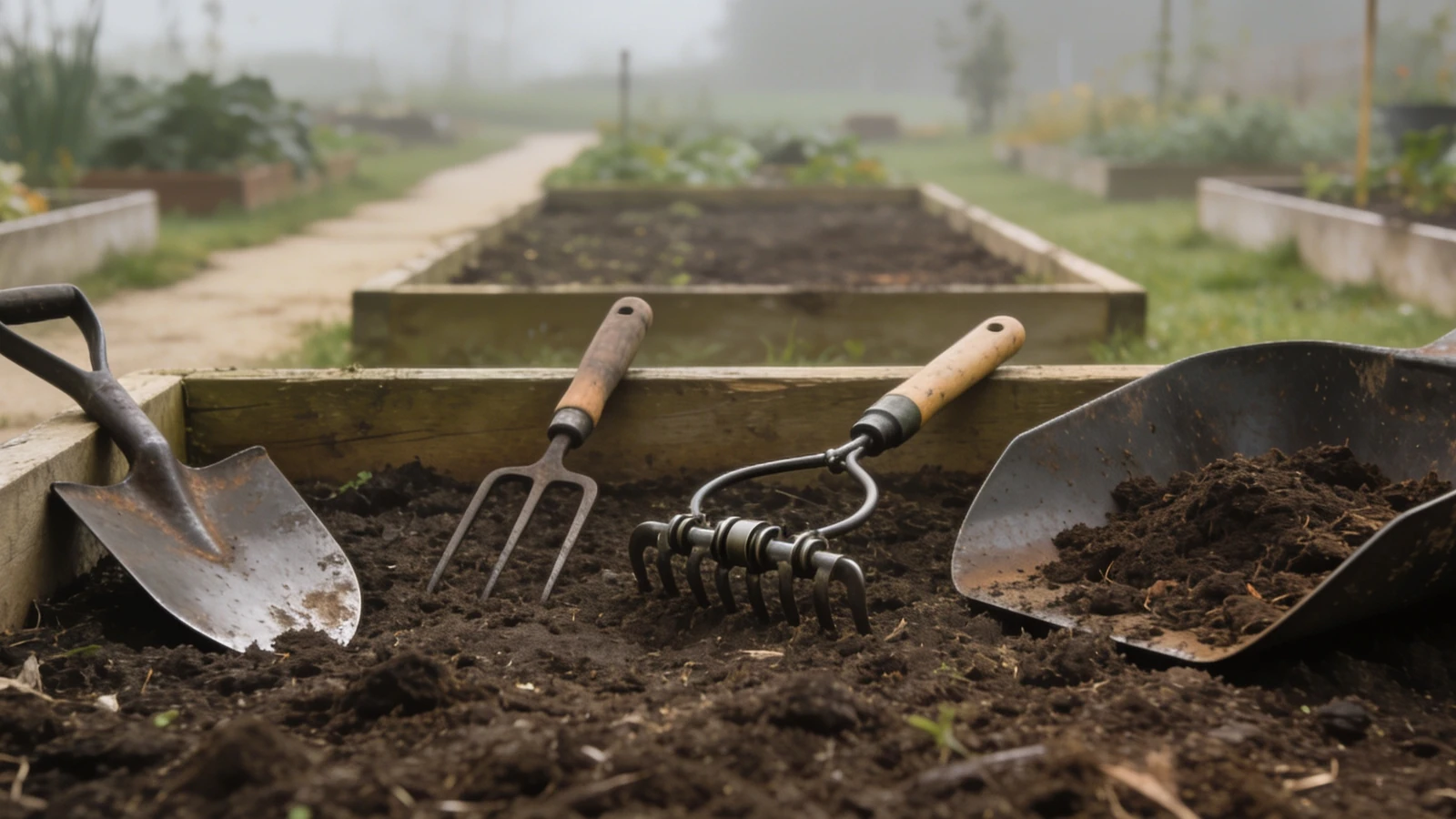
Gardening Tools for Raised Beds
Raised beds need a different tool kit from open ground: shorter handles, no spade, and a few things you would never buy otherwise. Here is the list.
Updated