Moon Garden: Planting for the End of the Day
A moon garden is planted in white and silver for dusk, when most people are actually in the garden. What to plant, what smells at night, and where to put it.
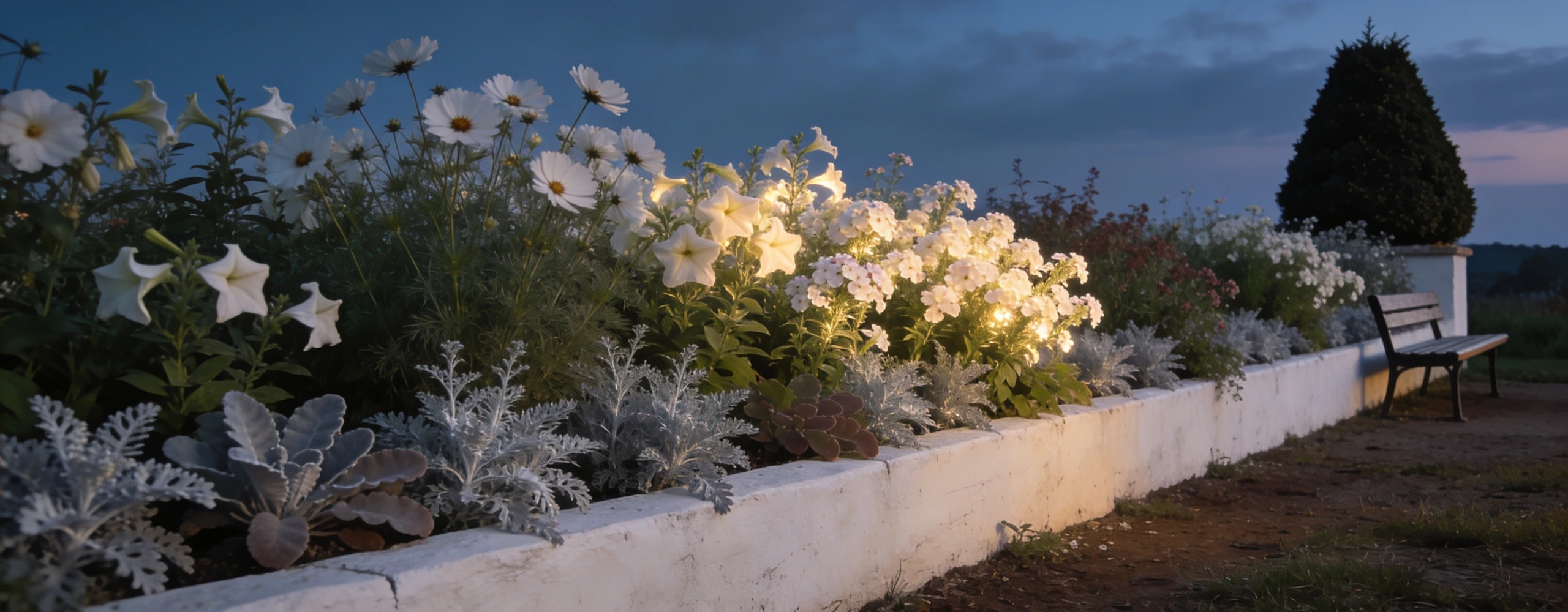
A moon garden is planted for the end of the day, in white, silver and scent. It sounds like a conceit and it is actually the most practical piece of garden design I have come across, for one reason: most people with jobs are only in the garden at dusk, and almost all planting advice assumes you are looking at it in bright afternoon light.
The short answer
Plant three things together, not just the white flowers: white and pale blooms that hold their brightness at dusk, silver foliage that catches low light, and something scented in the evening. Put it beside wherever you sit after work, in a sheltered spot so the scent pools. Add one dark plant as a foil so it does not look washed out at midday. It also feeds moths, which is a genuine bonus.
Why white works after sunset#
There is real physics behind this rather than just taste.
As light falls, human colour vision shifts. Reds and deep purples are the first to go, collapsing into a flat dark grey, while whites and pale yellows keep reflecting what light is left and stay legible for a surprisingly long time. A red border is finished half an hour before a white one is.
Silver and grey foliage does something related. It reflects more than green does, so it holds shape and outline when green has become a mass.
And scent is genuinely different at night. Many plants pollinated by night flying insects release most of their fragrance after dusk, because that is when their pollinators are working. It is not your imagination that the honeysuckle is stronger at nine than at two.
Key points
- White and pale yellow stay visible far longer than red or purple as light falls.
- Silver and grey foliage reflects low light and holds structure after green has gone flat.
- Evening scent is real and biological, not a trick of a quieter garden.
- Moths are significant pollinators and they are drawn to exactly this combination.
- It is the only planting scheme designed around when working people are actually outside.
The three layers, and why you need all three#
The common mistake is planting only white flowers and wondering why it does not have the effect.
- White and pale flowers
- White cosmos, nicotiana, phlox, Japanese anemone, white foxglove, white astrantia, single white dahlia. These are the points of light.
- Silver and grey foliage
- Artemisia, stachys, santolina, lavender, cardoon. This is the layer that does the work at dusk and carries the border at midday.
- Evening scent
- Nicotiana, night scented stock, honeysuckle, star jasmine, philadelphus, sweet rocket. Plant these where you sit, not at the far end.
- One dark foil
- Yew, box, a purple heuchera or dark leaved sedum. Without something dark the white reads as faded rather than bright.
What to plant, by how much trouble it is#
Ordered by effort, because the annuals do the most work in a first year and the shrubs do it for the next twenty.
- Annuals from seed, cheapest and fastest
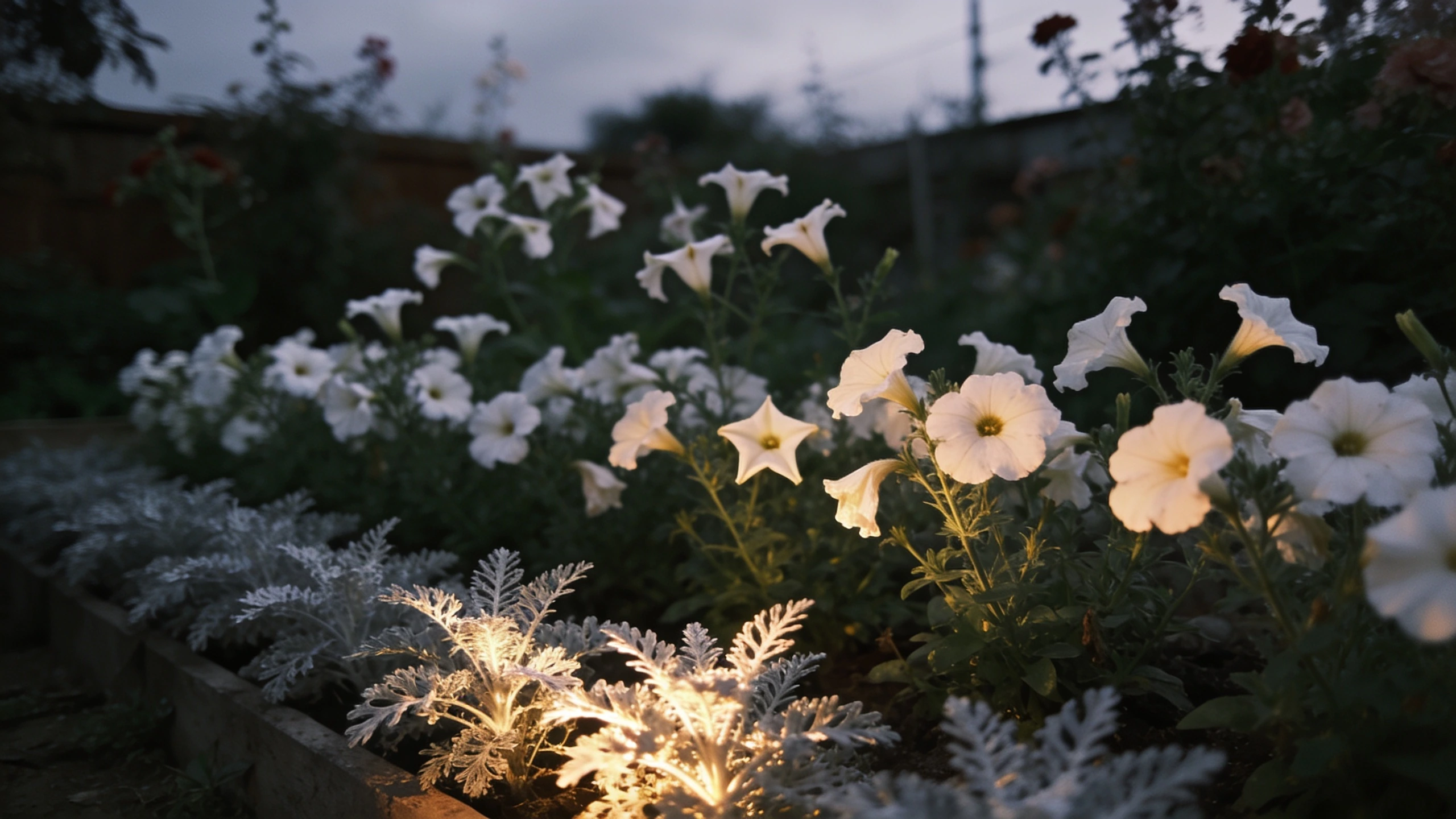
- White cosmos, nicotiana affinis, night scented stock, white sweet peas. A few dollars of seed fills a border in a first summer.
- Perennials, the backbone
- White phlox, Japanese anemone, white astrantia, white geranium, stachys, artemisia. Plant in threes, split them in two years.
- Climbers, for scent at head height
- Honeysuckle and star jasmine. Both do most of their scent in the evening and both want a support by the seat.
- Shrubs, the long term
- Philadelphus for June scent, white lilac, a white hydrangea for late season. Slower, and they carry the whole thing eventually.
- Night specialists, for interest
- Moonflower and evening primrose actually open at dusk, which children find genuinely magical. Both are easy from seed.
Placement matters more than plant choice#
This is where a moon garden succeeds or fails, and it is not horticultural.
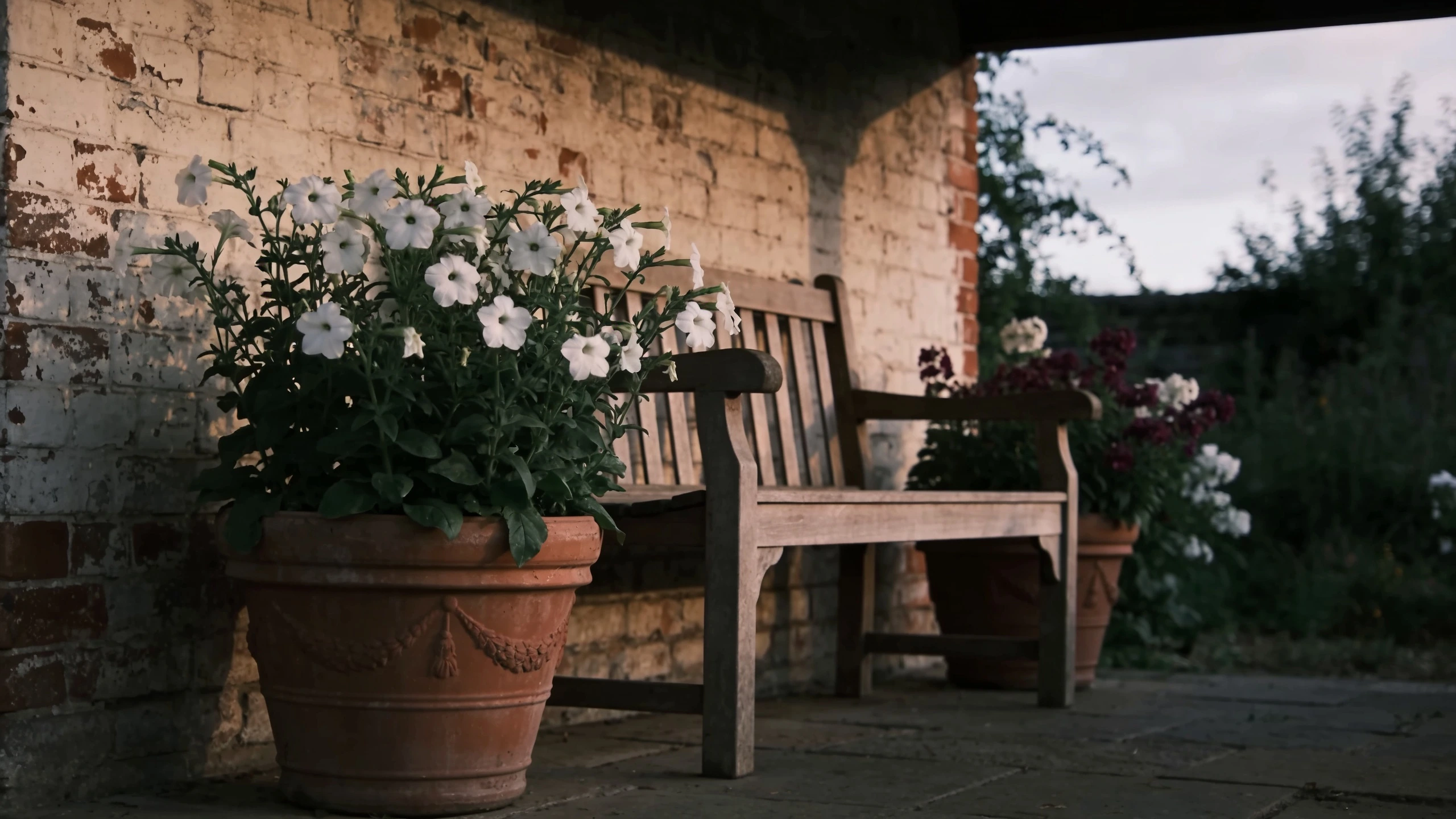
Put it where you sit. Not in the best border, not where there happens to be space, but within a couple of metres of the chair you are actually in at nine o'clock. Scent falls off fast with distance.
Choose a sheltered spot. Scent pools in still air and disperses in wind, so an enclosed corner, a courtyard or a spot against a warm wall is worth far more than an open bed.
Think about the route too. A path you walk after dark, brushing past scented planting, is the cheapest possible version of this idea. Lavender and thyme along a path edge do it with no design at all.
West facing is usually the answer, because it holds the last of the light and stays warm, which helps the scent.
Lighting, and how to not ruin it#
There is an obvious temptation and it undoes the whole thing.
Bright lighting destroys the effect completely. Once there is a spotlight in the garden, your eyes adapt to it and the pale planting stops glowing, because the whole point was that your night vision was doing the work.
If you want light, keep it very low, very warm and pointed down. A couple of candles or a single low warm path light is more than enough. The garden should be lit at the level of a full moon, which is the name of the thing.
I would also mention the wildlife side. Artificial light at night disrupts moths badly, and moths are the pollinators this planting is designed to attract. Lighting a moon garden brightly is working against its own purpose in two directions at once.
The moth and bat side of it#
This part surprised me and is now one of my favourite things about it.
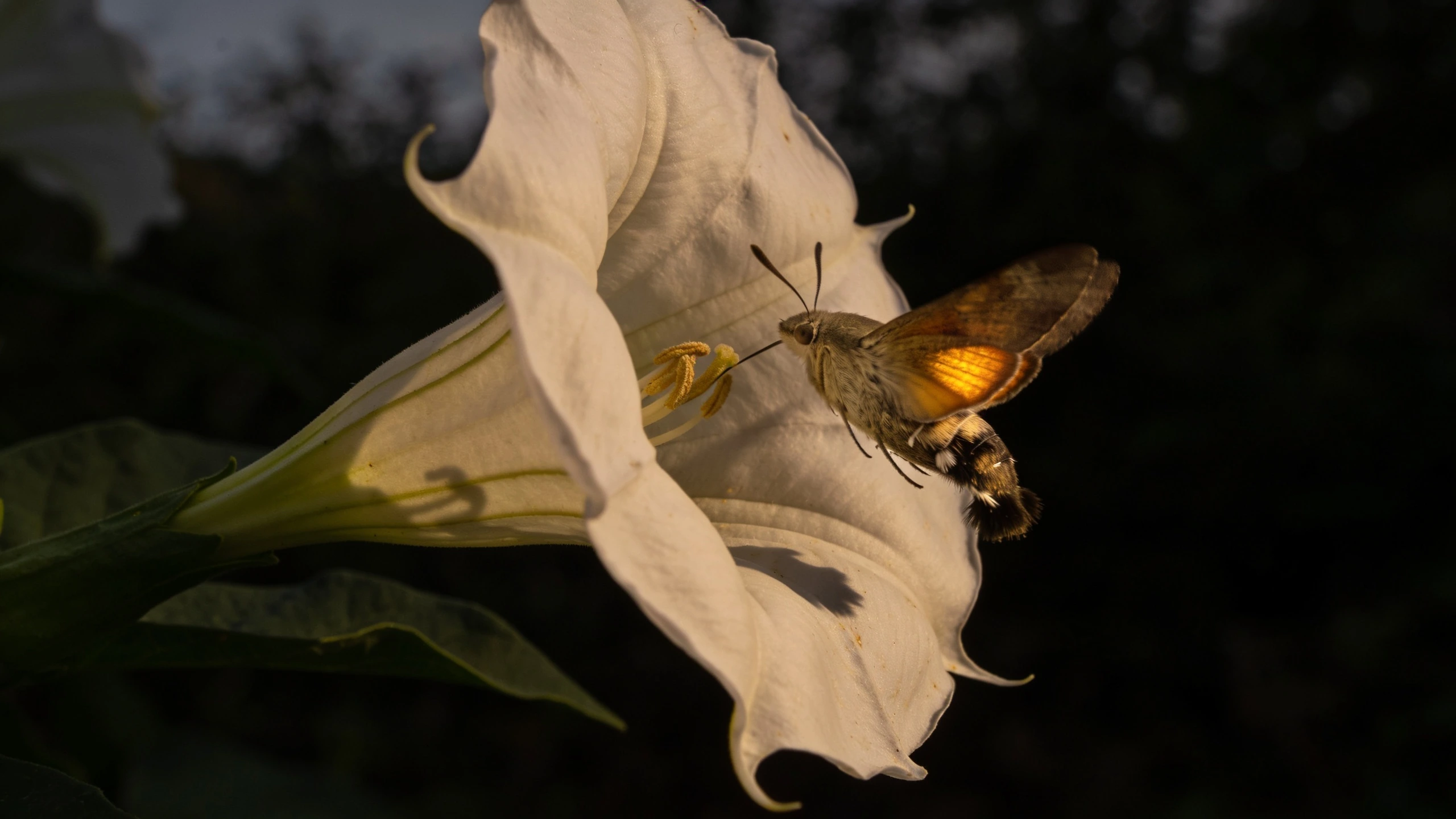
Pale flowers and evening scent evolved together to attract night flying pollinators. Plant nicotiana, honeysuckle and evening primrose and you will get moths, often within a week, and in numbers that are genuinely startling if you go out with a torch.
Where there are moths there are frequently bats, which feed on them. So a small planted corner beside a bench turns into something to watch as well as smell, which is more than most borders offer.
The RHS wildlife pages cover night pollinators properly, and it is worth reading because moths get a fraction of the attention bees do while doing a comparable amount of work.
What it costs#
- Seed for the annuals
- $10 to $25 for cosmos, nicotiana, night scented stock and sweet peas. This is most of the effect in a first year.
- Nine perennials
- $70 to $160. Three each of phlox, artemisia and stachys, planted in groups.
- One climber and a support
- $30 to $80. Honeysuckle or star jasmine by the seat.
- One philadelphus
- $20 to $45. June scent, and it will still be there in twenty years.
- Three large pots, if no soil
- $60 to $150. The container version, placed exactly where you sit.
- Lighting
- Almost nothing, and less is better. Two candles beat any installation.
Where this needs adjusting#
In heavy shade, the flower list shrinks but the foliage layer holds up. White foxglove, white astrantia, hosta and fern will still read at dusk, and honeysuckle tolerates more shade than people expect.
In a hot dry garden, lean on the Mediterranean silvers, artemisia, santolina, lavender and stachys, which prefer it, and drop phlox and anemone which will not.
And if you have no evening at home in summer, be honest that this scheme is for someone else. A moon garden earns its place by being used after work, and if you are never out there, plant for the mornings instead.
Where the guidance here comes from#
The planting combinations and the placement advice are what has worked in my own garden, and the observation about placement close to the seat came from getting it wrong first. On the wildlife side, the RHS wildlife pages are the reference for night pollinators, and Garden Organic is good on growing scented annuals from seed without reaching for anything sprayed.
The short version#
White flowers, silver foliage and evening scent, all three, planted within two metres of where you sit, in a sheltered west facing spot. One dark plant as a foil. Keep the lighting almost absent. Then go and sit in it at nine, which is the only test that matters.
Related reading#
- Pollinator garden: the daytime version, and how the two schemes complement each other.
- Flower gardening for beginners: border structure and how to plant in threes.
- Garden design basics: choosing where the seat goes, which this whole idea depends on.
- Garden lighting and decor: how little light you actually need, and why more is worse here.
Frequently asked questions
What is a moon garden?
A garden planted to work at dusk and after dark, using white and pale flowers, silver foliage and night scent. The reasoning is practical rather than romantic: white reflects the small amount of light left at dusk and stays visible long after reds and purples have gone flat, and most scented plants release far more fragrance in the evening than at midday.
What plants should I use in a moon garden?
Three groups. White flowers that hold their brightness at dusk: white cosmos, nicotiana, phlox, Japanese anemone, white foxglove. Silver and grey foliage that catches low light: artemisia, stachys, santolina, lavender. And evening scent: nicotiana, night scented stock, honeysuckle, jasmine, philadelphus. A good moon garden needs all three, not just the white flowers.
Which flowers actually open at night?
Moonflower, evening primrose, nicotiana and four o'clocks all open or intensify in the evening. Night scented stock and honeysuckle release most of their fragrance after dusk without visibly changing. Be aware that a lot of plants sold as night bloomers simply stay open and happen to be white, which is fine but different.
Where should a moon garden go?
Right beside wherever you sit in the evening, and near a door or path you use after dark. Scent needs shelter to pool rather than blow away, so an enclosed corner or a spot against a wall works far better than an open border. If you have a west facing seat, that is almost always the answer.
Does a moon garden help wildlife?
Yes, and this is an underrated part of it. Night flying moths are significant pollinators and they are drawn to pale flowers and evening scent, which is exactly what these plants evolved to offer. A moon garden is effectively a pollinator border for the night shift, and it will bring in moths and the bats that feed on them.
Is a white garden boring in daylight?
It can be if it is only white flowers. The fix is foliage: silver, grey, and a range of leaf shapes and textures carry the border through the middle of the day when the flowers are doing least. Add one dark plant as a foil, a deep green yew or a purple heuchera, and the white reads as deliberate rather than washed out.
Can I do this in containers?
Very well, and containers have an advantage here. Nicotiana, night scented stock, white cosmos and jasmine all grow happily in pots, and a pot can be placed exactly where you sit rather than where there happens to be soil. Three pots beside a bench will do more for an evening than a whole white border twenty feet away.
Topics in this article
About the author
Jeff has gardened professionally for over twenty years, mostly on heavy clay, and writes everything here from beds he still works himself. More from Jeff Tanun →
Keep reading
Flower Gardening
Flower gardening made simple: pick plants that suit your light, plant them closer than feels right, and get colour from spring to frost. With costs.
Updated
Native Plant Garden
A native plant garden without the purism. Why native means local rather than national, how to find your own list, and where non-natives still earn a place.
Updated
Permaculture Garden
A permaculture garden without the ideology. Zones, stacking and catching water are genuinely useful; some of the rest is untested. What to take and what to leave.
Updated